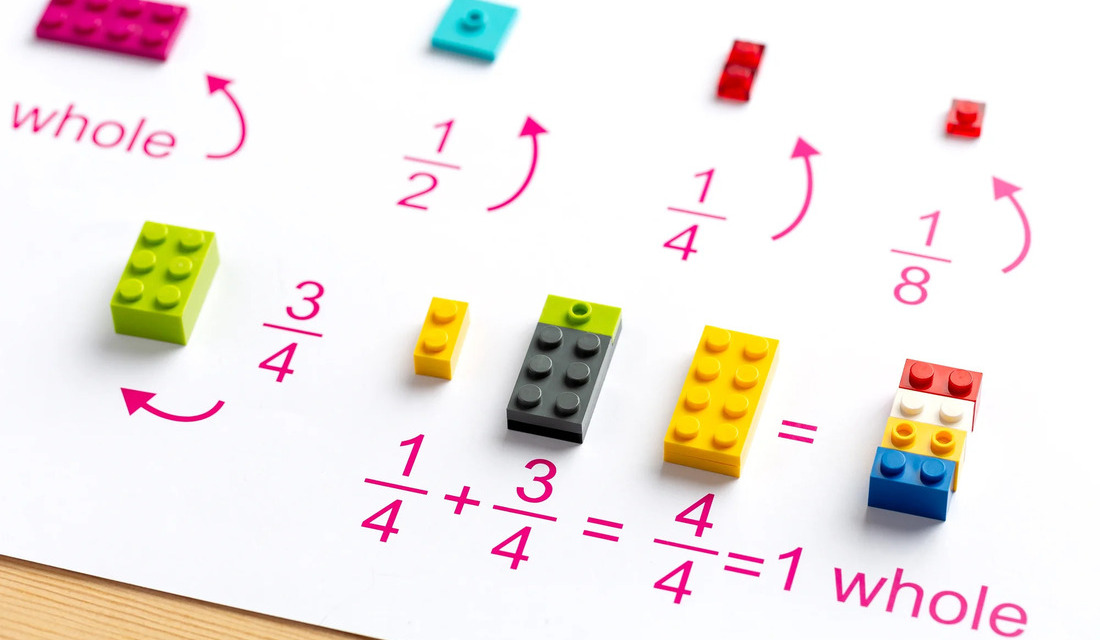
Algebra tends to feel like a sudden jump, a new subject with new rules. The truth is that the skills algebra demands are the same skills your child builds in fractions, and that connection runs deeper than it first seems.
Today, Mathnasium tutors break down the research behind the fractions-algebra connection, the specific skills the two subjects share, the signs of a fraction gap to watch for, and the grade-by-grade progression that prepares your child for algebra.

What Research Tells Us About Fractions and Algebra Achievement
Fraction knowledge in fifth grade predicts how well students perform in algebra years later, according to a 2012 study published in Psychological Science.
In that longitudinal study, a team of researchers led by Robert Siegler followed students from fifth grade through high school. Their findings showed that fraction knowledge in fifth grade predicted algebra achievement in high school more reliably than:
That tells us something important. How well a ten-year-old understands fractions is one of the most reliable signals we have of how they will perform in algebra years later.
Why fractions specifically?
Researchers point to a straightforward reason. Fractions are the first place in a student's math journey where numbers stop behaving the way whole numbers do.
-
Adding fractions requires a common denominator, unlike whole numbers.
-
Multiplying them produces a smaller result than either factor.
-
A fraction can represent the same value in an infinite number of ways.
Each of these ideas requires a student to reason flexibly about numbers, and that kind of flexible thinking is precisely what algebra demands from the very first lesson.
📕 You May Also Like: 4 Elementary Math Foundations Parents Should Not Skip
What Fractions and Algebra Have in Common
Fractions and algebra share the same core rules of mathematics — both move from specific numbers to general concepts. Our tutors see this play out in three specific places, and each one shows exactly why fraction fluency matters so much.
A. Division
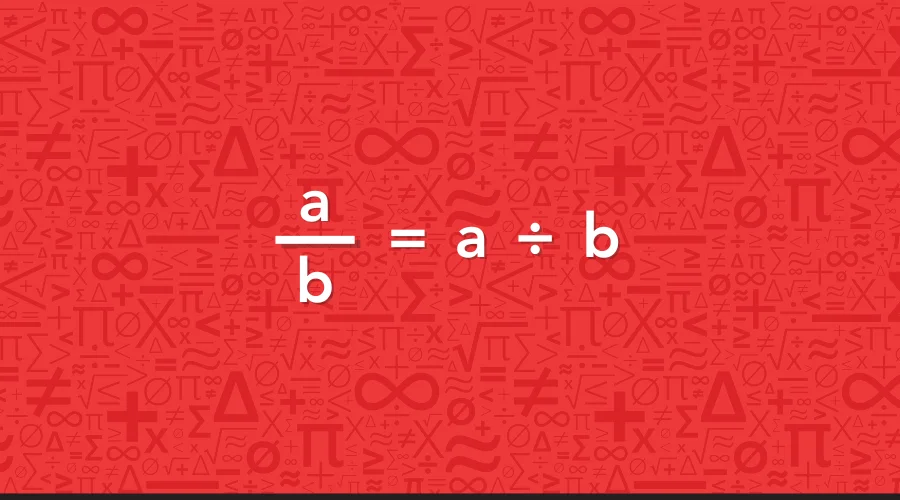
Your child already knows that the fraction bar in \(\Large\frac{3}{4}\) means that 3 is divided by 4.
Algebra uses that same idea. Every time your child sees a variable expression written as a fraction, they are reading division, just with letters instead of specific numbers.
B. Variables
In fraction problems, your child fills in a missing numerator or denominator to make the equation balance.
Variables in algebra work the same way. They are placeholders for an unknown value your child needs to find, using the same logic they already practiced with fractions.
C. Equivalence
Both fractions and algebra follow the same rule: “Whatever you do to one side, you do to the other.”
Your child learned this with fractions when they found equivalent values by multiplying the top and bottom by the same number. Algebra applies that exact rule to equations with unknowns.
📕 You May Also Like: How to Do Algebra With Fractions? A Simple Guide
Five Signs Your Child May Have Fraction Gaps
A fraction gap forms when a child memorizes procedures without building a real sense of what a fraction represents.
Here are five things our tutors look for, each one tied to a specific, observable behavior.
1. They add numerators and denominators straight across
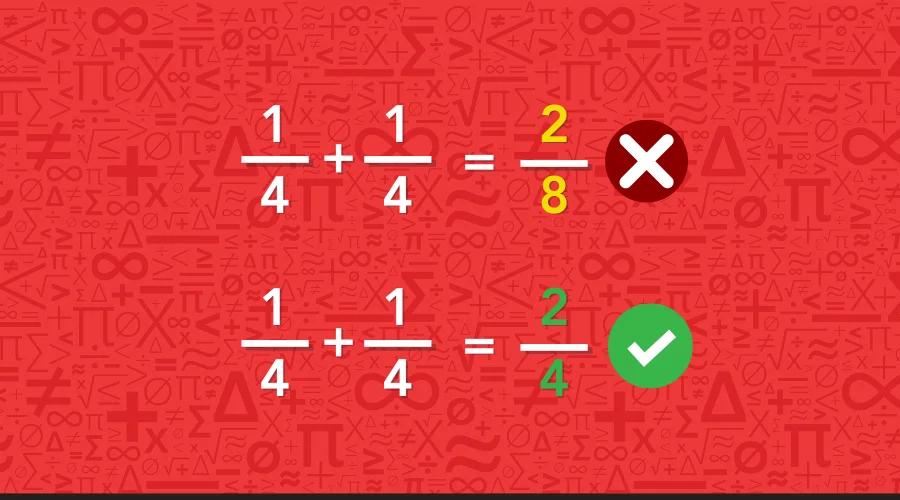
Ask your child to solve \(\Large\frac{1}{4}\) + \(\Large\frac{1}{4}\) and see what they get. If the answer is \(\Large\frac{2}{8}\), they are treating the numerator and denominator as two separate whole numbers rather than parts of a single value.
The concept of a common denominator has not landed yet, and that gap follows them directly into algebra.
2. They judge a fraction by the size of its numbers
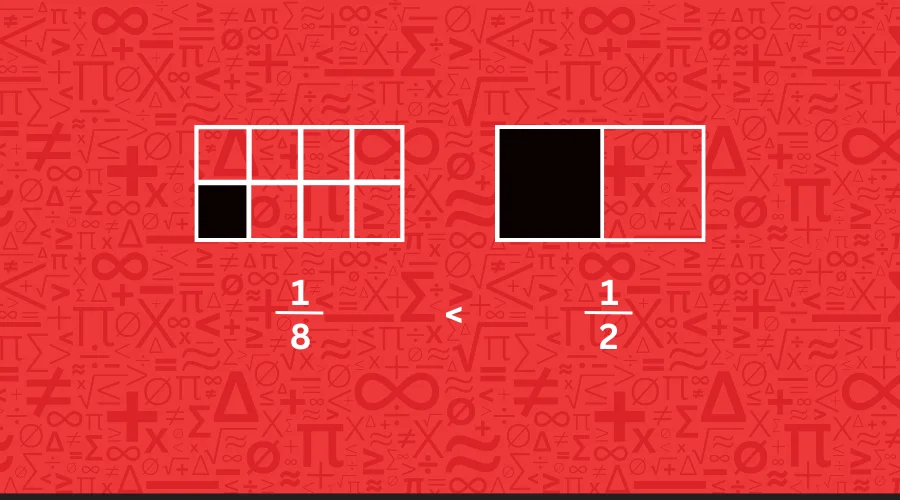
If they insist that \(\Large\frac{1}{8}\) is greater than \(\Large\frac{1}{2}\) because 8 is bigger than 2, they are treating both numbers as independent whole numbers rather than parts of a single value.
A larger denominator means smaller pieces, and that idea is one of the most important in all of fraction work.
3. They avoid fraction problems specifically
Your child completes multiplication worksheets without a problem but hesitates or leaves the page blank when fractions appear.
Targeted avoidance of fraction work, as opposed to general homework resistance, is a signal that the foundation feels unreliable to them.
4. They get the right answer but cannot explain it
They simplify \(\Large\frac{4}{6}\) to \(\Large\frac{2}{3}\) correctly, but cannot tell you why those two fractions are equal. They have memorized the mechanical steps of dividing by 2 without building the underlying concept of equivalence.
The first time a problem looks slightly different, that memorized step breaks down.
5. They count pieces without checking whether they are equal
Show them a shape divided into uneven sections and ask them to name the fraction.
A child with a fraction gap counts the total pieces regardless of size, missing the core rule that a fraction only exists when the whole is divided into perfectly equal parts.
📕 You May Also Like: Types of Fractions—Your Comprehensive, Beginner-Friendly Guide
What Your Child Should Know About Fractions in Grades 3 to 6
Fraction fluency builds in four stages between grade 3 and grade 6. Each one prepares your child for what algebra asks of them later.
School districts sequence their math curriculum differently, so the grade levels below reflect a general progression your child's school may follow or adjust based on their specific curriculum.
Grade 3: What a fraction actually is
In grade 3, your child learns that a fraction is a single number representing one exact point on a number line. It is a unified value rather than two separate numbers.
The goal is to view a fraction as one unified number rather than two separate digits, and that concept is the foundation on which everything else is built.
Here's a simple activity our tutors suggest trying at home:
-
Fold a piece of paper into equal parts.
-
Ask your child what fraction each part represents.
-
Then fold the paper again and ask the same question.
-
Note that more folds create smaller pieces, which helps the core idea land.
Grade 4: The same value, written differently
This is the stage where your child discovers that two fractions can look different and still represent the same value.
That idea, equivalence, is the same logic algebra uses when it simplifies expressions.
To make the concept land, we recommend these steps:
-
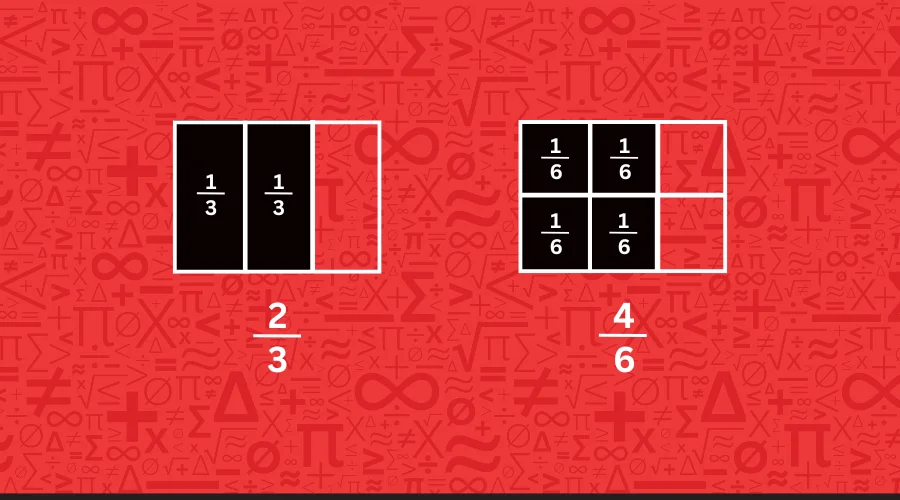
Draw a rectangle and shade two-thirds of it.
-
Then divide each section in half and ask your child to name the shaded portion.
-
If they see that four-sixths is the same as two-thirds, equivalence is taking hold.
Grade 5: Fractions as division
By grade 5, your child sees the fraction bar as a sign of division.
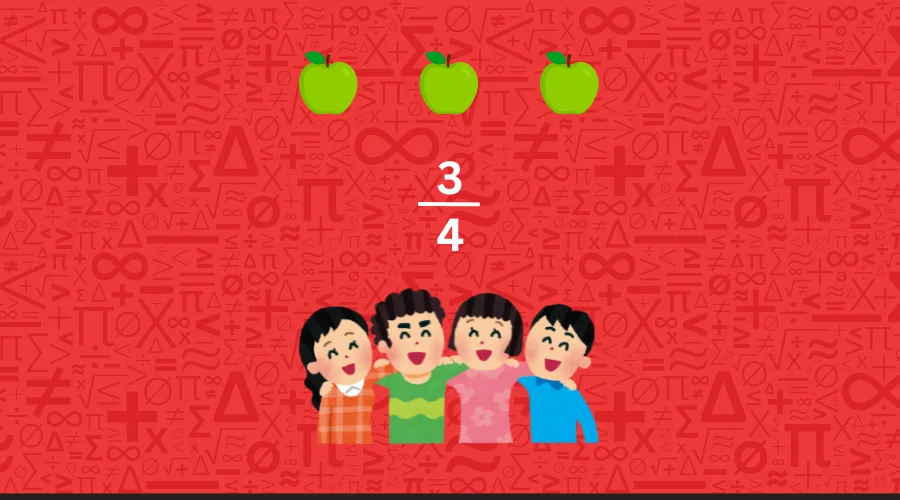
3 ÷ 4 is the same as \(\Large\frac{3}{4}\).
That connection is the exact format algebra uses in expressions and equations.
Here's a hands-on way our tutors like to bring this to life:
-
Ask your child to split 3 apples equally among 4 friends.
-
Ask them for the total amount each friend gets.
-
If they arrive at three-fourths of an apple, they have made the connection between fractions and division in a real-world context.
Grade 6: Fractions meet variables
This is where fraction fluency and algebra start to overlap. Your child works with rates, ratios, and expressions like \(\Large\frac{x}{3}\), which means "any number divided by 3."
Solid fraction foundations at this stage allow your child to step into that work with confidence. Gaps here cause algebra to feel shaky from the very first lesson.
Our tutors suggest this final check to confirm your child is ready for what's next:
-
Ask your child what \(\Large\frac{x}{4}\) means in their own words.
-
Then ask them to explain what \(\Large\frac{x}{4}\) would equal if x were 12.
-
If they say "x divided by 4" and can solve it as 3 without hesitating, the fraction-as-division connection has carried over into algebra.
-
If they get stuck on either step, revisit the grade 5 activity above as a quick refresher before algebra begins.
 Mathnasium tutors use personalized learning plans and hands-on techniques to help students build solid fraction foundations before algebra begins.
📕 You May Also Like: How to Order Fractions from Least to Greatest
How Mathnasium Helps Students Build Solid Math Foundations
Mathnasium is a math-only learning center empowering K-12 students of all skill levels to learn and master math.
Fraction gaps rarely travel alone. A child who arrives with shaky fraction foundations almost always has gaps in the concepts that led up to them, such as place value, division, or number sense. That is why we never just patch the surface. We go back to where the understanding breaks down and build forward from there.
Our starting point is always a diagnostic assessment, a relaxed interaction that provides a clear picture of exactly where your child stands.
From those insights, we build a personalized learning plan that targets the right concepts at the right level. We develop this plan using the Mathnasium Method™, an approach we designed around how each student learns best.
Our specially trained tutors work with your child face-to-face in a supportive, engaging environment. We use everyday language and a mix of verbal, visual, mental, tactile, and written techniques so that concepts land in a way that makes sense.
If a topic needs more time, we slow down, break it into smaller steps, and walk through both the "how" and the "why" until the concept is solid.
Our sessions are game-based and hands-on, and we celebrate every step of progress your child makes. That consistent recognition builds confidence alongside skill, and parents see the difference.
The results speak for themselves:
-
94% of parents report an improvement in their child's math skills and understanding
-
93% of parents report their child's improved attitude toward math after attending Mathnasium
-
90% of students saw an improvement in their school grades
With over 1,100 learning centers across North America, there is likely a Mathnasium close to you.
For families in and near Cherry Hills, CO, Mathnasium of Cherry Hills is a trusted local center with years of experience helping students close fraction gaps and step into algebra with confidence.
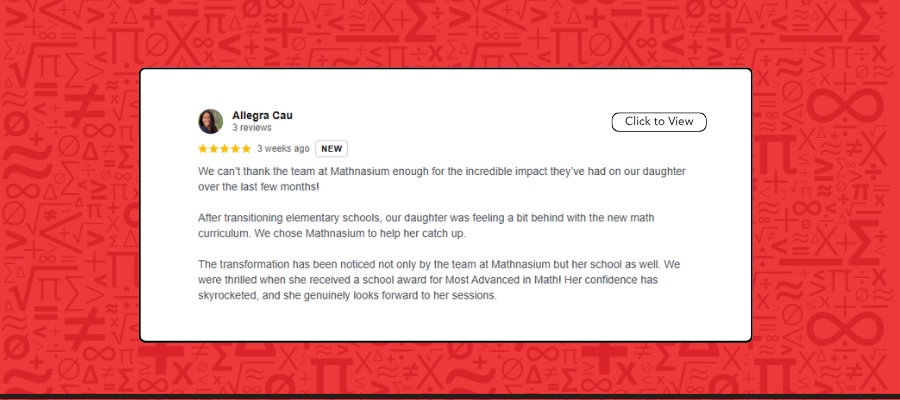
You can read how our program helps children earn school math awards.
Whether your child is looking to catch up, keep up, or get ahead, our team is happy to assist!
📅 Schedule a Free Diagnostic Assessment at Mathnasium of Cherry Hills
Not near Cherry Hills?
📍 Find Mathnasium Learning Centers Near You


 (720) 474-1878
 (720) 474-1878