6th grade builds directly on five specific 5th-grade skills, and a few weeks of focused summer review can make September easier.
These five skills show up in the first weeks of 6th grade, often before a parent has any reason to suspect a gap exists. By the time a struggle becomes visible in a grade or a homework meltdown, the class has usually moved on to the next thing that depends on it.
Mathnasium’s math tutors put this guide together to help you check where your child stands on each of the 5 skills and to show you exactly what to listen for when you do.
What Sixth Grade Builds On
California's 6th-grade math standards assume students arrive already fluent in five foundational areas:
These are direct prerequisites. The first units of most California 6th-grade courses pull on all five within the opening weeks, and the pace moves quickly. The students pick up where the 5th grade left off, expected to apply these skills to new material almost immediately.
Summer review can cover exactly that ground without reteaching a full year. The work is to check these five areas, reinforce anything that's gotten rusty, and give your child a confident start before September.
📕 You May Also Like: Common 6th Grade Math Problems & How to Help
The 5 Math Skills Rising 6th Graders Should Review Before September
Each skill below is a direct building block for 6th-grade material. We've organized them by how immediately they show up in the new school year, starting with the ones your child will need from the first week.
Skill 1: Adding and Subtracting Fractions with Unlike Denominators
6th grade opens with ratio and proportional reasoning, and that work assumes your child can already handle fractions without hesitation. Unlike denominators that still cause confusion in 5th grade, equivalent ratios and unit rates will feel harder once the new school year begins.
By the end of 5th grade, your child should be able to:
To check this skill, go one step further than the answer and ask your child to explain the reasoning behind each step.
Here is a quick check to try at home:
-
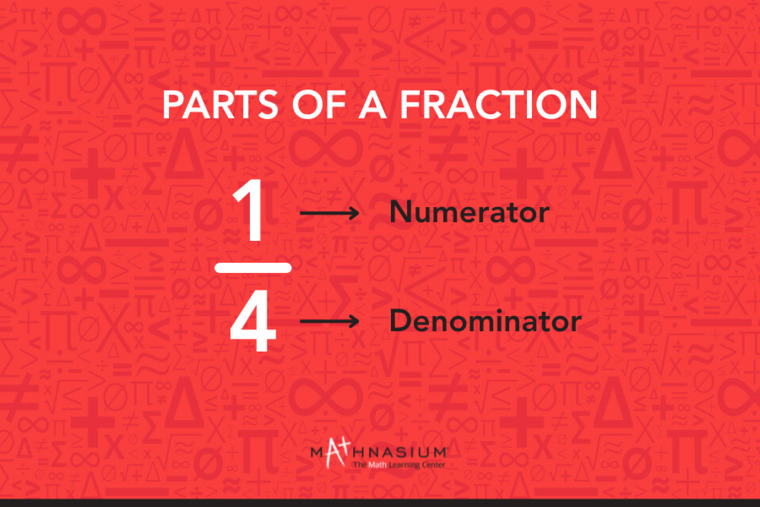
Ask your child to solve 2/3 + 3/4 on paper, then ask them to walk you through their thinking.
-
We want to listen for the reasoning.
-
Can they tell you that the pieces need to be the same size before you add them?
-
If yes, they are in good shape. If they go through the steps without being able to explain why, that is the right place to focus this summer.
📕 You May Also Like: Adding and Subtracting Fractions with Unlike Denominators
Skill 2: Multiplying and Dividing Fractions
Division of fractions is one of the most commonly missed 5th-grade standards, and the gap shows up quickly in 6th grade.
Ratios, unit conversions, and proportional reasoning all require your child to be comfortable with these operations. By comfortable, we mean understanding what the operation means and being able to explain the reasoning behind each step.
By the end of 5th grade, your child should be able to:
-
Divide a whole number by a fraction; for example, 3 ÷ ¼
-
Divide a fraction by a whole number; for example, ⅓ ÷ 4
-
Explain what multiplying by a fraction means; that you are taking a part of a number, so the result comes out smaller than what you started with
The answer alone doesn't tell you enough. Ask your child to explain the reasoning behind each step.
Here is a quick check to try at home:
-
Ask your child to put 3 ÷ ¼ into words before they solve it.
-
We want to listen for the reasoning.
-
Can they say something like "how many quarters fit into 3?"
-
If yes, they understand what the division is asking. If they reach straight for "flip and multiply" without being able to explain why, that is the right place to focus this summer.
📕 You May Also Like: Multiplying and Dividing Fractions: The Why Behind the How
Skill 3: Decimal Operations and Place Value
6th grade moves quickly into rational numbers, where integers, fractions, and decimals appear on the same number line. Uncertainty about decimal place value, or consistent errors in decimal multiplication and division, will make that transition harder than it needs to be.
By the end of 5th grade, your child should be able to:
-
Read, write, and compare decimals to the thousandths place; understanding that 0.3 and 0.300 are the same value and that 0.42 is greater than 0.405
-
Multiply decimals with confidence and divide a decimal by a whole number
-
Round decimals to any place, so 4.637, rounded to the nearest tenth, becomes 4.6
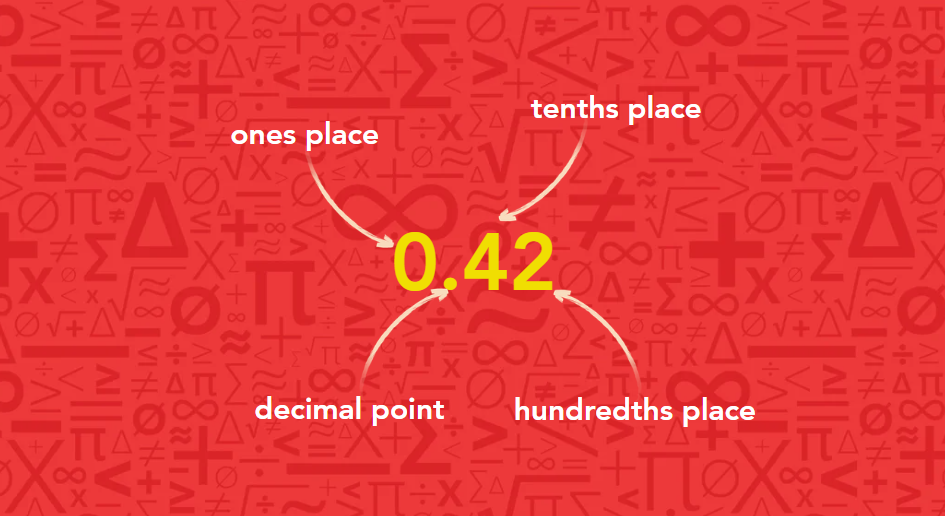
Ask your young learner to explain the reasoning behind each step.
Here is a quick check to try at home:
-
Ask your child to put these decimals in order from smallest to largest: 0.6, 0.58, 0.605.
-
We want to listen for the reasoning.
-
Can they explain why 0.58 comes before 0.6, even though 58 looks bigger than 6?
-
If yes, they understand place value at the decimal level. If they order by the length of the number or go quiet when asked to explain, that is the right place to focus this summer.
Skill 4: Multi-Step Word Problems
6th grade asks students to read, interpret, and solve problems that require two, three, or even four steps. Single-step procedures and jumping straight to calculation, without reading carefully first, are habits that make 6th-grade problem-solving overwhelming.
Here are the three habits to see in place before September:
-
Reading the problem carefully and identifying what is being asked before doing any math
-
Choosing an appropriate operation rather than guessing
-
Checking whether the answer makes sense in context once the calculation is done
Go one step further than the answer and ask your child to explain the reasoning behind each step.
Here is a quick check to try at home:
-
Give your child a two-step word problem and ask them to tell you what the problem is asking before they write anything down.
-
We want to listen for the reasoning.
-
Can they identify what they are solving for and which operation to use first?
-
If yes, they have the habits in place. If they dive into calculation without reading carefully or cannot explain their first step, that is the right place to focus this summer.
Skill 5: Basic Expressions and Order of Operations
Most parents associate variables and expressions with 6th grade, but the groundwork starts in 5th grade. California's standards expect students to write and interpret numerical expressions using parentheses, and to generate and analyze number patterns.
These feed directly into 6th-grade work with algebraic expressions and equations.
Here’s what your student should know how to do by the end of 5th grade:
-
Evaluate expressions like 4 × (6 + 2) correctly, understanding that parentheses change what gets calculated first
-
Write a numerical expression to represent a verbal description
-
Spot the rule in a number pattern and use it to predict what comes next
Here is a quick check to see if your child can explain the reasoning behind each step:
-
Ask your child to write a math expression for "add 5 and 3, then double the result."
-
We want to listen for the reasoning.
-
Can they write (5 + 3) × 2 and explain why the parentheses come first?
-
If yes, they are ready for the algebraic thinking that the 6th grade introduces. If they write 5 + 3 × 2 and arrive at 11, order of operations is the right place to focus this summer
📕 You May Also Like: The Order of Operations in Math — A Complete & Kid-Friendly Guide
 Mathnasium instructors use hands-on activities and game-based techniques to help students build the reasoning skills they carry into 6th grade.
How Mathnasium Helps Rising 6th Graders Build a Solid Start
Mathnasium is a math-only learning center dedicated to helping K–12 students of all skill levels learn and master math.
We have worked with thousands of students heading into 6th grade who felt underprepared for the jump. Some were missing a specific skill. Others had the right procedures in place but lacked the reasoning behind them. In both cases, we helped them close those gaps before they became a problem in the new school year.
To do that, we use the Mathnasium Method™, our proprietary teaching approach designed around each student's needs and the way they learn. It's a structured, personalized path through math, built around the way your child actually learns.
That path starts with a diagnostic assessment. Before we teach anything, we find out exactly where your child stands. We look at what they already know, where the gaps are, and what needs to come first. Your child's struggle with ratios in September can turn out to be a fractions gap from 5th grade. The assessment is how we find it.
With those insights, we create a personalized learning plan that sets out exactly what your child needs to work through, in the right order, at the right pace.
With the plan in place, our instructors focus on teaching for understanding. We strip out jargon, use language your child already knows, and approach each concept from multiple angles (verbal, visual, mental, tactile, and written) until it truly makes sense.
Our instructors are trained in the emotional side of teaching as well. They know how to build trust, how to respond when a child goes quiet, and how to keep a session moving forward without adding pressure.
And then there is the fun side. Sessions at Mathnasium are designed to be enjoyable, with games, hands-on activities, and plenty of encouragement built in. Your child leaves each session feeling good about math and comes back ready to try again. Session by session, that is how lasting confidence builds.
The Mathnasium Method™ brings measurable results:
-
94% of parents report an improvement in their child's math skills and understanding
-
93% of parents report their child's improved attitude toward math after attending Mathnasium
-
90% of students saw an improvement in their school grades
With over 1,100 learning centers across the US, there is likely a Mathnasium near you.
If you are in or around Cypress, Mathnasium of Cypress works with students from kindergarten through 12th grade on exactly this kind of preparation. We identify where the foundations need reinforcing and help your child build the skills and confidence to make 6th grade a successful year.
Ready to get started?
📅 Schedule a Free Assessment at Mathnasium of Cypress
Not near Cypress?
📍 Find a Mathnasium Learning Center Near You


 (714) 995-6284