Bilingual students may know more math than their classroom performance initially reflects. For students still developing English proficiency (ELLs), research consistently shows that math vocabulary and word problems add an extra layer of language processing on top of the math itself.
Academic math vocabulary develops separately from conversational English, which means students may recognize the calculation but still need extra time to interpret the language surrounding it.
At Mathnasium of Jersey City, we work with bilingual families every day, and our education specialists drew on four research studies to explain why this happens and how families can support math learning confidently at home.
What Research Shows About Language and Math for Bilingual Learners
The pattern bilingual families notice at the homework table is one of the most consistently documented findings in mathematics education research. Our education specialists looked at four studies that explain the specific mechanisms behind it:
-
Jourdain and Sharma, Waikato Journal of Education, 2016: Bilingual students typically develop conversational English within two to three years but require five to seven years to develop the academic language proficiency that math demands. Students using their home language during math showed greater confidence and deeper engagement with math concepts than students restricted to English only.
-
Espinas and Fuchs, Child Development Perspectives, 2022: A review of cross-sectional and longitudinal research found that language instruction meaningfully improves math performance across multiple domains throughout K-12 education. The relationship between language ability and mathematical development is consistent across every grade level, not just in early elementary.
-
González-Martín and colleagues, Education Sciences, 2024: A systematic review of 71 studies covering 305,136 participants found that low language proficiency negatively impacts math performance, while bilingual students with sufficient proficiency perform as well as or better than their monolingual peers. Your child also performs best in the language in which they first learned mathematics, which means your home language is a real cognitive asset.
-
Lariviere and colleagues, Journal of Learning Disabilities, 2025: Among students with mathematics difficulty, mathematics-specific vocabulary was the best language predictor of word-problem success. The solution is not more general English practice but specifically math vocabulary development.
Together, these findings show us that support in a home language helps strengthen mathematical reasoning, which is why targeted vocabulary work and consistent math conversations are so important for long-term confidence with word problems.
📕 You May Also Like: Why Math Vocabulary Is Important
The Hidden Hurdles: Word Problems and Math Vocabulary for ELL Students
Word problems and academic math vocabulary are the two areas where language most consistently interferes with mathematics for ELL students.
Word problems require several cognitive tasks simultaneously. When your child reads a word problem, they must decode the English, identify what the question requires, and solve the mathematics at the same time.
Two research findings help explain why this becomes difficult so quickly.
-
Sweller's cognitive load research established that working memory has a finite capacity, and heavy language processing can reduce the mental space available for mathematical reasoning even when the underlying math knowledge is solid.
-
Earlier research from Jourdain and Sharma points to the same pattern, noting that ELL students may need more processing time because they navigate multiple linguistic systems simultaneously during math tasks.
Word problems in English use specific signal words that tell your child which mathematical operation to use. These words are easy to misread, especially when English is not the language your child thinks in most naturally:
Math vocabulary does not mean the same thing as everyday English. Words your child already knows carry different meanings in a mathematical context. Jourdain and Sharma document this directly, noting that the following words shift meaning entirely in a math context:
Abedi and Lord, cited in Jourdain and Sharma's research, found that simpler wording in math problems significantly improved comprehension for ELL students even when the mathematics remained the same. The difficulty came from the language surrounding the math.
📕 You May Also Like: How to Solve Word Problems on Math Tests (3-Step Framework)
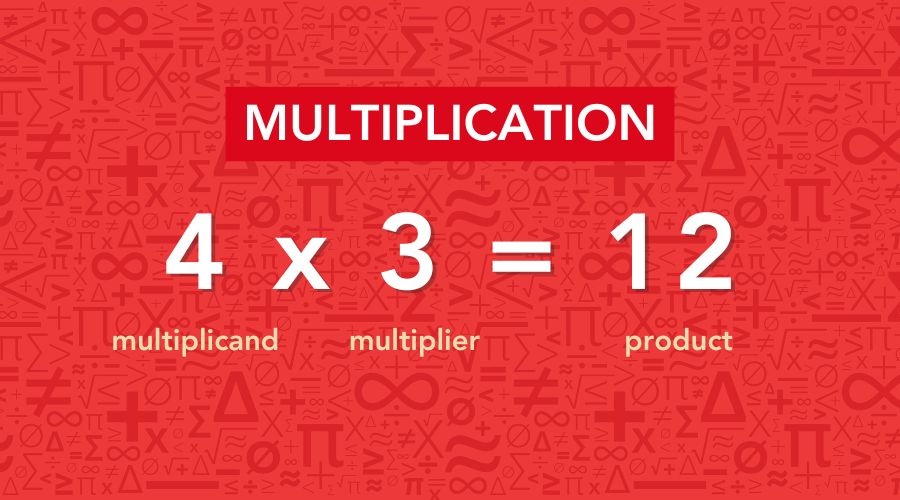
In mathematics, words like “product” carry precise meanings that differ completely from everyday English usage.
5 Practical Ways to Support Bilingual Math Learners at Home
Bilingual math learners benefit most from support that targets the specific places where language and mathematics overlap. These five strategies address vocabulary gaps, word-problem processing, and effective use of your home language as a learning tool.
1. Let Your Child Explain Math in Either Language
Your child explaining a math problem in Spanish, Portuguese, or any home language still demonstrates mathematical reasoning that transfers directly into classroom learning.
Earlier research from Jourdain and Sharma supports this pattern, showing that students who could access their home language during math developed greater confidence and engagement with math concepts.
Ask your child to explain how they approached a problem in whichever language feels most natural first. Once the reasoning is clear, introduce the English math vocabulary connected to that same process.
2. Slow Word Problems Down Before Any Calculation Begins
Word problems move too fast when reading and solving happen at the same time. A three-pass approach separates the two tasks:
-
Read the problem once for the overall story
-
Read it a second time to identify what the question is asking
-
Read it a third time to locate the numbers and the words that indicate the mathematical operation
This approach directly reduces the cognitive load that Sweller's research identifies as the mechanism behind performance drops under language pressure. The mathematics becomes accessible once the language layer has been processed separately.
3. Build a Personal Math Vocabulary List in Both Languages
Math vocabulary is the most direct lever your child has for improving word-problem performance.
As Lariviere and colleagues found, math-specific vocabulary predicts word-problem success more consistently than general English proficiency. Simple terms like these carry precise mathematical meaning that your child needs to decode before the calculation even begins:
-
total: the result of adding all amounts together
-
remaining: what is left after subtraction
-
shared equally: division into equal groups
-
times as many: multiplication
Your child builds math vocabulary more effectively through a few regularly reviewed words than through large amounts of worksheet practice.
4. Read Word Problems Aloud Before Touching the Numbers
Children process the language of a word problem differently when hearing the problem read aloud, and that shift makes the problem itself easier to understand.
A problem read aloud creates a natural pause between interpreting the language and solving the mathematics, which gives comprehension more time before calculation begins.
Earlier research from Jourdain and Sharma showed that ELL students benefit from additional processing time during math tasks. Your child gains extra processing time naturally when you read homework problems aloud together.
5. Consider Structured Math Support
Home support reaches its limits when vocabulary gaps or comprehension barriers begin interfering with your child’s ability to access the math itself.
A structured math environment helps by making mathematical concepts easier to access through more than one pathway at the same time:
-
direct explanations of math vocabulary inside the problem itself
-
visual representations that connect symbols to mathematical meaning
-
step-by-step instruction that separates the language layer from the calculation
-
verbal discussion that allows your child to explain mathematical reasoning out loud
The language barrier becomes much easier to navigate when the mathematics underneath is presented clearly, visually, and step by step instead of only through dense written instructions.
📕 You May Also Like: 7 Practical Ways to Help Your Child Get Better at Math

At Mathnasium, education specialists use multiple instructional pathways to help bilingual students understand mathematics clearly before language barriers interfere with the process.
How Mathnasium Supports Students of All Skill Levels and Backgrounds
Mathnasium is a math-only learning center dedicated to empowering K-12 students of all skill levels to excel in math.
Students who come to us for math support arrive with different needs and starting points. For many students in Jersey City, the challenge isn't the mathematics itself but the language layer surrounding it. Word problems, academic math vocabulary, and reading-heavy assignments can make math feel harder than it actually is.
To support learners with different needs and goals, we don't use a one-size-fits-all curriculum but the Mathnasium Method™, a proprietary teaching approach designed around each student's individual learning needs and style.
Our approach begins with a diagnostic assessment that tells us where each student stands, which concepts are secure, where the gaps are, and how they think about math.
From those insights, we build a personalized learning plan and deliver face-to-face instruction with specially trained tutors who use verbal, visual, written, and hands-on techniques so that mathematical concepts can be understood through more than one pathway at once.
For bilingual learners, that means math doesn't have to wait for language to catch up, a concept explained visually or verbally can land clearly even when the written form is still unfamiliar. This flexible approach gives students more than one way to engage with challenging concepts and build confidence during math practice.
The results speak for themselves:
-
94% of parents report improvement in their child's math skills and understanding
-
93% of parents report an improved attitude toward math after attending Mathnasium
-
90% of students saw improvement in their school grades
With over 1,100 learning centers across North America, there is likely a Mathnasium close to you.
Families across Jersey City, including Downtown, Newport, Paulus Hook, and Hamilton Park, trust Mathnasium of Jersey City to help their children build solid math foundations and lasting confidence.
If your child's math ability isn't showing up the way it could, our team is ready to help.
📅 Schedule a Free Assessment at Mathnasium of Jersey City
Not near Jersey City?
📍 Find a Mathnasium Learning Center Near You


 (201) 434-6284