Students usually meet coordinate grids in 4th or 5th grade. At first, the grid helps us find exact spots, just like a map helps us find places. In later grades, we use it to find points in more directions, show number patterns, and understand math ideas that build toward algebra.
Today, we'll find out what a coordinate grid is, how to read and plot ordered pairs on it, and a few common mistakes to watch out for along the way.

What Is a Coordinate Grid?
A coordinate grid is a flat surface made of two number lines that cross each other, used to describe exactly where a point is located.
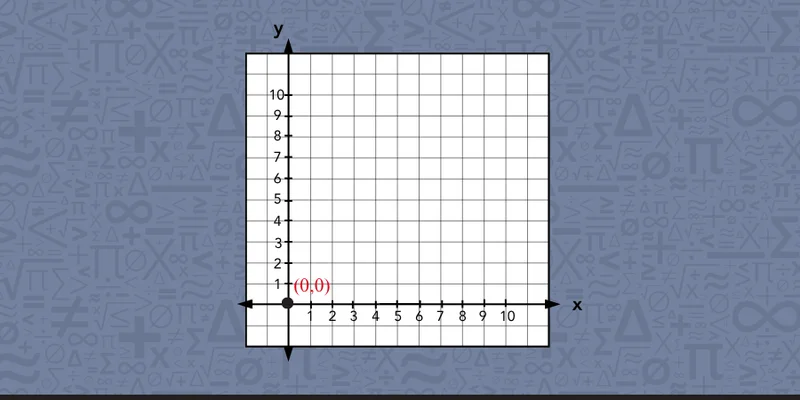
It has three main parts:
Imagine a Battleship board. The labels that run across the top work like the x-axis, helping us look side to side. The labels that run along the side work like the y-axis, helping us look up and down.
A coordinate grid works in a similar way. The x-axis and y-axis help us describe one exact point, and the place where those two axes meet is called the origin, or (0, 0).
📕 You May Also Like: How the Coordinate Plane Works: Guide
What Is an Ordered Pair?
An ordered pair is a set of two numbers, for example, (3, 5), that tells us exactly where a point sits on the coordinate grid.
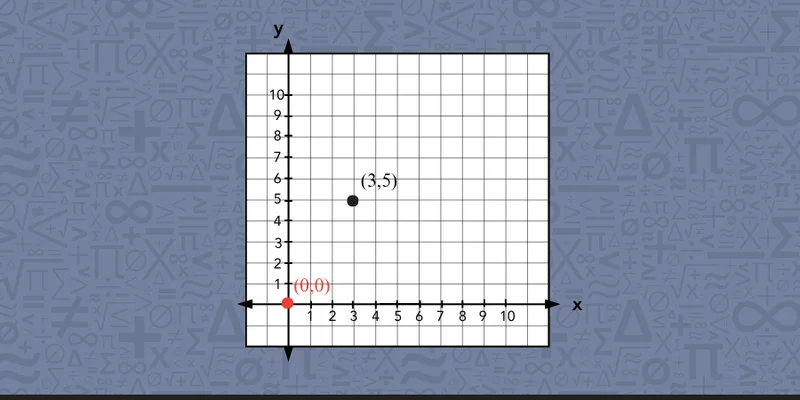
We can think of an ordered pair like a seat location in a movie theater. A ticket might say Row 4, Seat 8 to identify one specific seat. An ordered pair works the same way. In (3, 5), the 3 tells us where to go across, and the 5 tells us where to go up. Together, they name one exact point on the grid.
When we work with ordered pairs, we need to pay attention to the order of the numbers because switching the numbers can lead us to the wrong point. (3, 5) and (5, 3) are usually two different points, just like Row 4, Seat 8 is not the same as Row 8, Seat 4.
How to Read an Ordered Pair
To read an ordered pair, we find the horizontal (left/right) value first, and the vertical (up/down) value second.
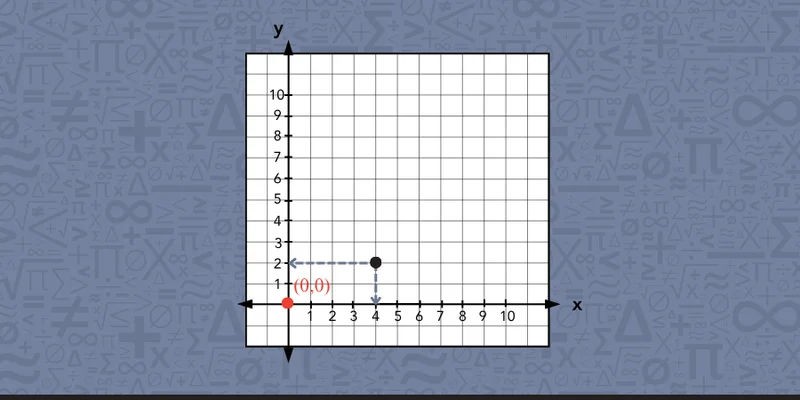
At Mathnasium, we like explaining math topics through examples. So, let's read the ordered pair of this point together.
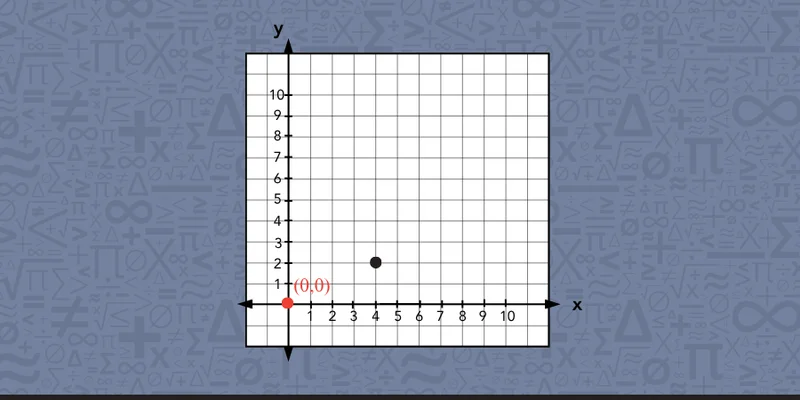
Step 1: Find the X-Coordinate Value
To identify the first number of the ordered pair for our example, we look straight down to the X-axis and note the number we land on. The point is located at 4 on the x-axis.
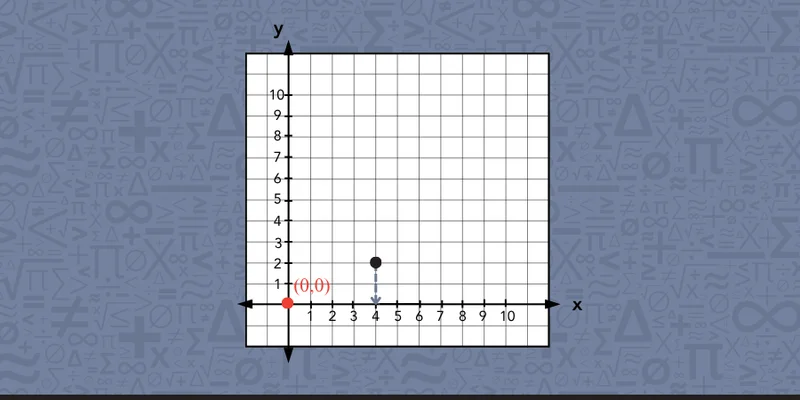
Step 2: Find the Y-Coordinate Value
We look straight across to the Y-axis from the point and note the number we land on. Our point has a y-coordinate of 2.
Step 3: Put X and Y Coordinates Together
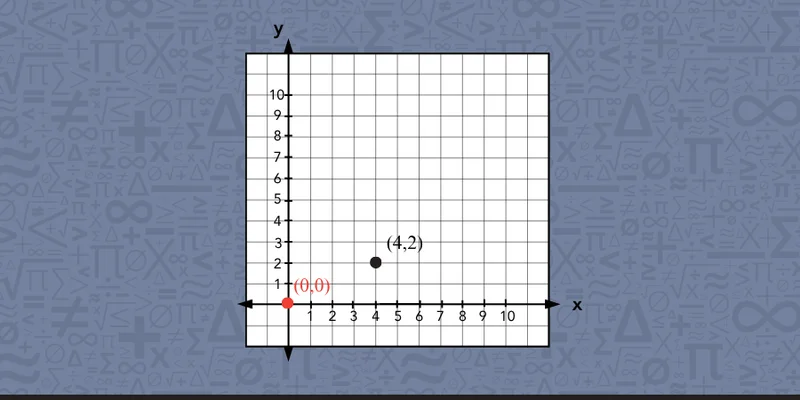
We can describe the location of our point with this ordered pair (4,2). 4 units along the x-axis and 2 units along the y-axis.
How to Plot an Ordered Pair
To plot an ordered pair, we start at the origin, move along the x-axis first, then move up along the y-axis, and mark the spot where we land.
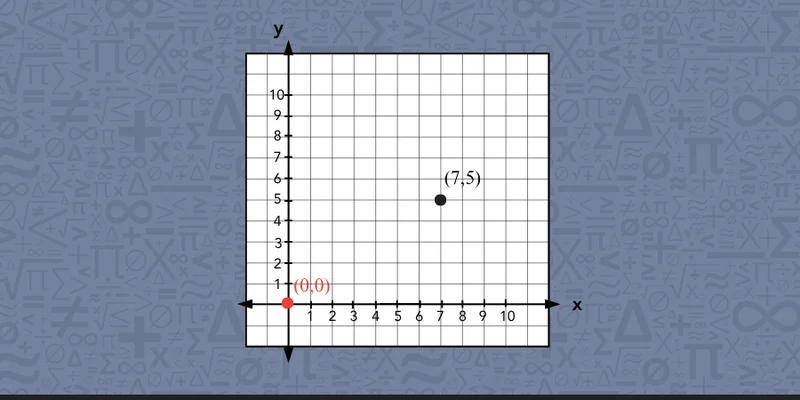
Let's plot the ordered pair (7, 5) together.
Step 1: Start at the Origin
Every point we plot starts its journey at the origin, (0, 0), the corner where the x-axis and y-axis meet.
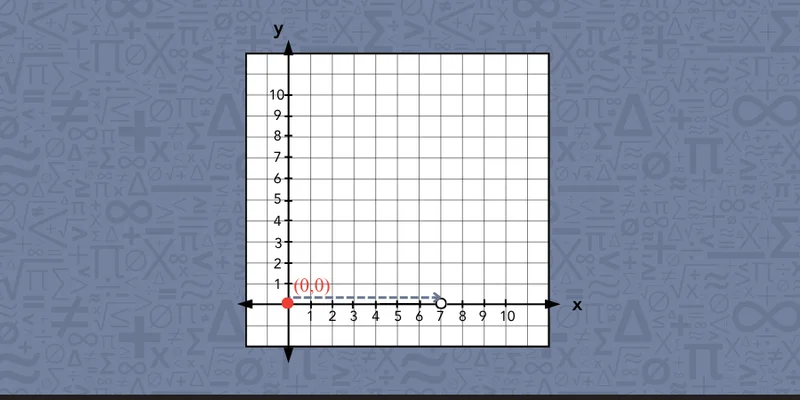
Step 2: Move Along the X-Axis
Since the x-coordinate is 7, we move 7 units to the right along the x-axis.
Step 3: Move Up Along the Y-Axis
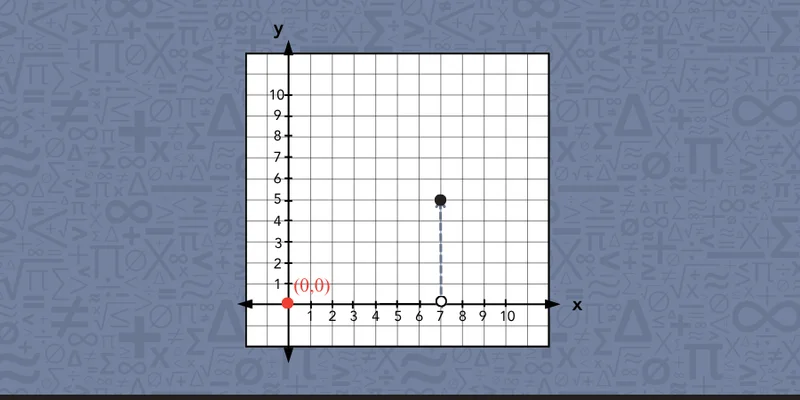
From that spot, we move 5 units up, since the y-coordinate is 5.
Step 4: Mark the Point
We place a dot at the spot where we landed and label it (7, 5). That dot is the one exact location this ordered pair describes.
📕 You May Also Like: Why Upper Elementary Math Gets Harder in 4th Grade
Common Mistakes to Avoid With the Coordinate Grid
From our work with students, we see these common mix-ups come up when students work with a coordinate grid. The good news is that when they know what to watch for, those mistakes become much easier to spot and fix.
-
Flipping the order of the pair: This error can lead us to the wrong point. To avoid it, we should always use the x-coordinate first, so we move side to side before we move up or down.
-
Mixing up the axes: The x-axis runs side to side: it is the horizontal one. The y-axis runs up and down: it is the vertical one. To remember this, we can picture the x-axis running across like a horizon line, while the y-axis runs up and down like the stem of the letter Y.
-
Starting from the wrong point: On a coordinate grid, we always begin at the origin, (0, 0), before moving across or up and down.
-
Miscounting the grid squares: Busy grids can make it easy to move one space too few or one space too many, so we slow down and check each step along the axis.
📕 You May Also Like: How to Turn Math Mistakes into Learning Tools at Home
Your Turn! Try Solving Challenges on the Coordinate Grid
Now, practice your coordinate grid skills on your own. You can check your answers at the bottom of the page.
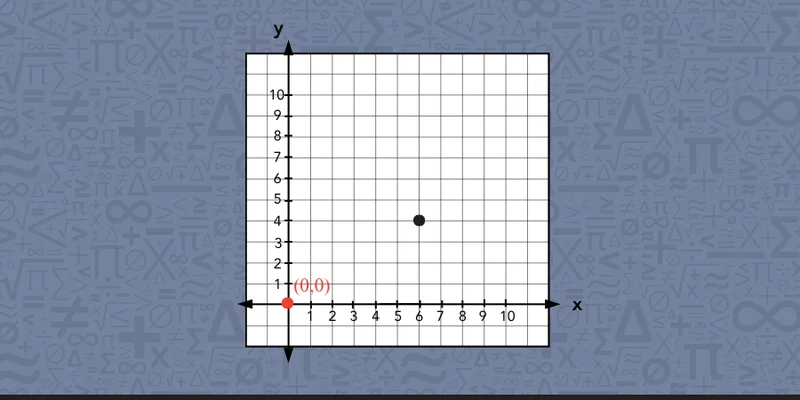
Challenge 1: A point is plotted on a coordinate grid. What ordered pair describes this point?
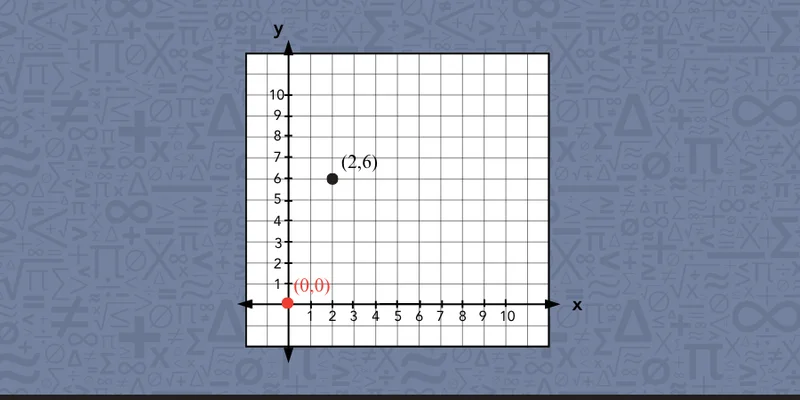
Challenge 2: Plot and label the ordered pair (2, 6) on a coordinate grid.

Mathnasium tutors support students through a personalized learning plan, helping them build the foundational understanding they need for coordinate plane concepts.
How Mathnasium Helps Students Master the Coordinate Grid Skills (and Any Other Math Topic)
Mathnasium is a math-only learning center dedicated to helping K–12 students of all skill levels excel in math. In our work with students, we aim to build a true understanding of math concepts, including the coordinate grid.
To do that, we use the Mathnasium Method™, our proprietary teaching approach, to meet students where they are and guide them toward math mastery, step by step.
Each student begins their Mathnasium journey with a diagnostic assessment, which helps us identify which math skills are secure, and which need support, including number sense, spatial reasoning, and coordinate plane skills behind coordinate grids. From there, we build a personalized learning plan around those specific gaps.
Our specially trained tutors help children master the skills through a mix of verbal, visual, written, tactile, and mental techniques, so that abstract concepts like the coordinate grid are truly solid.
Fun is a core part of our approach, too. We use game-based activities, let students earn rewards, and celebrate their progress together, so learning stays enjoyable and confidence grows with every session.
The impact is clear in the results:
-
94% of parents report an improvement in their child's math skills and understanding
-
93% of parents report their child's improved attitude toward math after attending Mathnasium
-
90% of students saw an improvement in their school grades
With over 1,100 centers, Mathnasium brings top-rated instruction close to your home.
For students in and near Jersey City, NJ, Mathnasium of Jersey City brings that same example-led approach close to home.
If your child is hitting a wall with the coordinate grid or any other math topic, our tutors would be happy to help.
📅 Schedule a Free Assessment at Mathnasium of Jersey City
Not near Jersey City?
📍 Find a Mathnasium Learning Center Near You
Pssst! Check Your Answers Here
Ready to see how you did? Here are the worked solutions to the practice problems above.
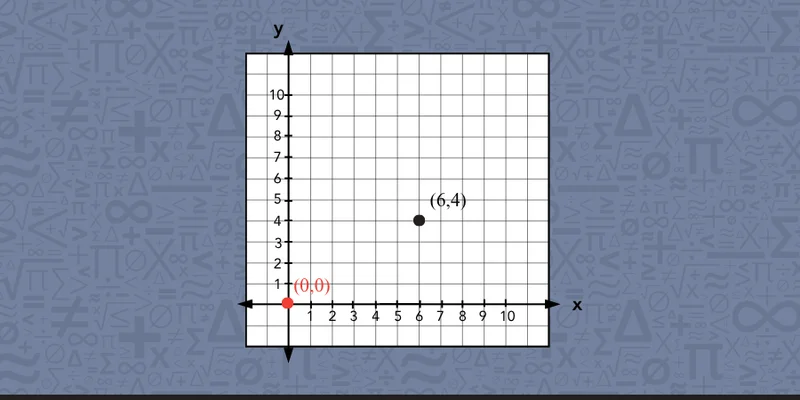
Challenge 1
Starting at the origin, we count 6 units right along the x-axis, then 4 units up along the y-axis. The ordered pair is (6, 4).
Challenge 2
Starting at the origin, we move 2 units right along the x-axis, then 6 units up along the y-axis, and mark the point. That gives us our plotted point, (2, 6).


 (201) 434-6284