Winter break is meant to be a time to rest, reset, and enjoy family traditions.
But once school starts again, you may notice that math feels harder for your child than it did just a few weeks earlier. You might have noticed that homework takes longer, or that they seem to have forgotten familiar topics, or that they are getting frustrated more easily than before.
It’s common to fall behind in math after winter break, and it doesn’t mean your child forgot everything or stopped trying. In many cases, it’s the result of a natural pause in learning combined with the way math builds over time.
Understanding why this happens and what it looks like can help parents step in early, before small challenges turn into lasting math learning gaps.
To help, Mathnasium tutors have prepared a detailed explanation of this winter slide as well as the four major pitfalls students tend to fall into.

What Is the Winter Slide and Why Does It Affect Math?
After winter break, as many parents know firsthand, students return to school with different rhythms than they had in December. Schedules change, and the mental flow of daily learning is interrupted.
Math tends to reveal these changes faster than other subjects. That’s because it depends on regular practice.
Skills are practiced and applied day after day. Time away from that routine can make it harder for students to jump back in, even when the concepts are familiar.
A student may remember learning something earlier in the year but feel unsure about how to use it again.
This is the winter slide, and it usually grows from a mix of factors rather than one single issue.
Students are adjusting to new expectations, lessons start moving forward again, and teachers expect understanding of previous lessons. Put together, these changes can make math suddenly feel tougher. That’s why the weeks after winter break can surprise so many families.
Let’s break down the four most common problem areas that contribute to this experience and share ways parents can help their child get back on track.
📕 You May Also Like: Real-Life Guide to Rebuilding Math Momentum After Winter Break
Pitfall #1: Loss of Consistent Math Practice
Math skills rely on repetition. If daily lessons and homework pause, those skills can feel less familiar when school resumes. Students may remember learning how to solve a type of problem, but struggle to do it independently.
This can show up as slower work or more frequent mistakes on topics your child has already seen. The knowledge is usually still there, but it needs time and practice to feel accessible again.
Without support, this gap between knowing and doing can widen. That’s how small math learning gaps begin to feel bigger after winter break.
How to Restore Consistent Math Practice
Short, regular opportunities to use math can make a big difference. Ask your child to explain how they solved a problem, talk through a homework question together, or use numbers in everyday situations to help skills resurface naturally.
Give your child space to slow down and talk through their thinking. The idea is to help math feel comfortable again.
📕 You May Also Like: How to Support Your Student's Math Homework [Parent Tips]
Pitfall #2: Disrupted Routines and Structure
Winter break changes daily life for most families. Bedtimes are pushed back, mornings feel slower, and school expectations fade into the background. Once children have to return to structured days, it can feel tiring at first, especially during math lessons that require sustained focus.
In class, this may look like trouble keeping track of steps or staying engaged through longer problems. At home, homework may feel more draining than it did before the break.
This adjustment period can make math feel heavier than other subjects, regardless of whether your child understands the material.
How to Rebuild Math-Friendly Routines
A return to structure starts with energy and focus. Helping your child ease back into school days through consistent sleep and calmer mornings can improve attention during math class.
It helps to break math into smaller chunks. Tackle a few problems at a time to make it feel more manageable and reduce stress. Talk to your student openly about what feels hardest right now as you support them in readjusting.
📕 You May Also Like: 5 Morning Routines for Math Success in the New School Year
Pitfall #3: Small Math Learning Gaps Becoming Bigger
Winter break acts like a pause button, and that pause can highlight unfinished learning. Before the break, lessons may include review and guided practice. After the break, math often moves forward quickly.
Students are expected to apply what they learned earlier with less guidance. This is when knowledge gaps become more visible. A child who relied on examples before may now be asked to solve problems independently. If part of the foundation is missing, everything built on top can feel shaky.
Parents might notice this during homework. Your child stares at the page longer, says the math looks unfamiliar, or struggles to get started. These moments can make falling behind in math feel sudden, even though the gap existed earlier.
How Parents Can Address Math Learning Gaps Early
Look for patterns rather than isolated mistakes. Repeated trouble with the same type of problem usually points to something worth revisiting.
Ask your child to explain their thinking to reveal where understanding breaks down.
Then narrow the focus. Work on one skill at a time and make sure it makes sense before piling on more. Small gaps feel manageable when addressed early. Left alone, they tend to snowball into frustration.
📕 You May Also Like: Parents’ Guide to Identifying Early Math Gaps (Grades 2-8)
Pitfall #4: Math Avoidance After Early Struggles
After winter break, some students begin to approach math with hesitation. This can show up in small ways. Homework takes longer. Your child asks for help sooner. They rush just to be finished. Or they just seem distracted during math time.
These behaviors usually follow a few early struggles when school resumes. Math feels harder, and students respond by pulling back.
Over time, avoiding math reduces practice, which allows math learning gaps to grow. That’s how the winter slide can become more noticeable.
📕 You May Also Like: Understanding Math Anxiety and How to Overcome It
How Parents Can Support a Healthier Relationship With Math
Keep math conversations relaxed to help lower the pressure. Let your child talk through what feels confusing without rushing to fix it.
Focusing on curiosity rather than correction keeps your child engaged. Simple questions like “What do you notice here?” invite participation without stress. With patience and encouragement, students can ease back into math and rebuild comfort.

Mathnasium tutors focus on making math fun and approachable so that students don’t feel stress or anxiety when learning new concepts.
How Mathnasium Helps Students Stay on Track Year-Round
Mathnasium is a math-only learning center dedicated to helping K-12 students of all skill levels stay on track year-round.
Families often turn to Mathnasium for support after winter or summer breaks, as students may experience learning loss and need to catch up.
In those moments, we don’t focus solely on remediation. We provide structured, well-rounded instruction designed to build a deep understanding of math concepts and skills that last.
To build lasting understanding in any math concept or skill, our proprietary approach, the Mathnasium Method™, relies on:
-
Personalized learning plans: Each student begins with a diagnostic assessment that identifies what they know, what they may have missed, and how they think through math. This allows us to address math learning gaps directly while supporting current classroom work, helping students reconnect with skills that feel uncertain after time away.
-
Teaching for understanding: We teach math using clear, everyday language and support concepts with visual, verbal, written, mental, and hands-on techniques. This layered approach helps students make sense of math again, especially when concepts feel harder after winter break.
-
Caring guidance: Our tutors are trained to work with students who may feel discouraged or hesitant after returning to school. They know how to explain ideas clearly, provide encouragement, and help students move forward without pressure.
-
Independent problem solving and critical thinking: During sessions, students spend time working through problems on their own. This helps them practice applying what they learn, trust their thinking, and reconnect the how and the why behind each concept.
-
Singular focus on math: Mathnasium focuses exclusively on math. Our program spans thousands of pages and has been refined over more than 20 years, allowing us to support consistent learning and long-term retention, even after breaks in routine.
-
Empowering, fun group environment: Students learn in a caring and fun group environment designed to keep them engaged. Interactive materials, progress milestones, and positive reinforcement help students stay motivated as they continue moving forward.
The results speak volumes:
-
94% of parents report an improvement in their child's math skills and understanding
-
93% of parents report an improved attitude towards math after attending Mathnasium
-
90% of students saw an improvement in their school grades
With a network of more than 1,100 centers across the country, Mathnasium brings top-rated instruction close to your home.
For families located in or near Manhattan Beach, CA, Mathnasium of Manhattan Beach is a trusted local center with years of experience helping students excel in math.
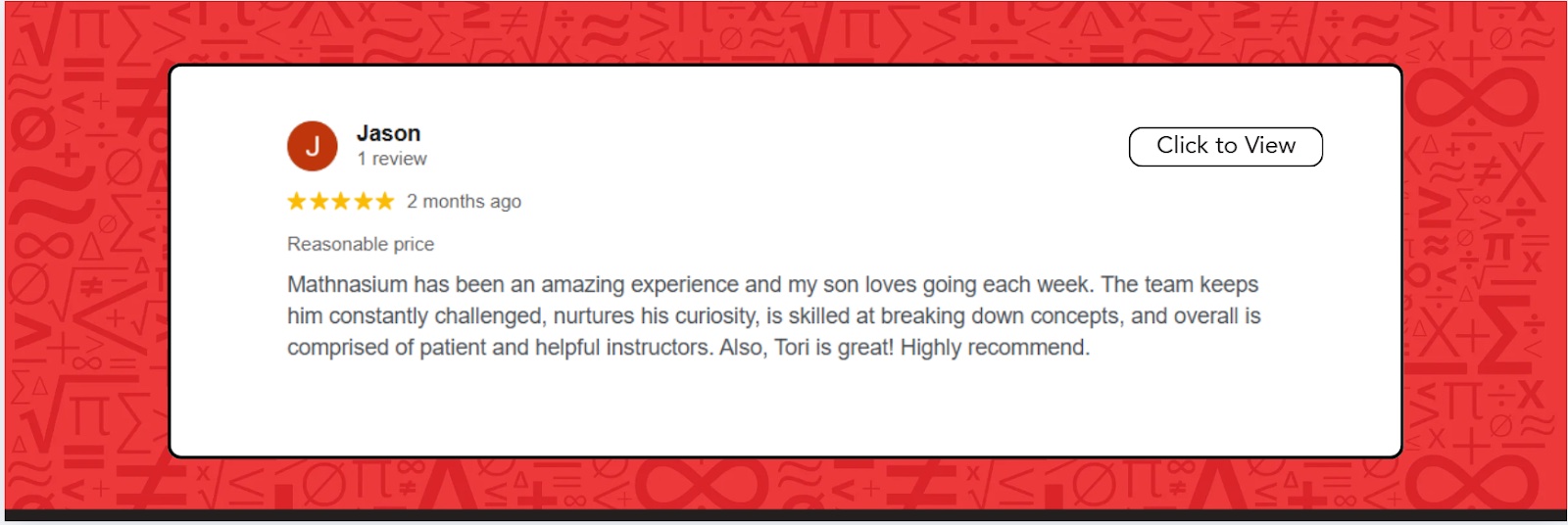
Here’s what one parent had to share about their child’s experience at our center.
Whether your child is looking to catch up, keep up, or get ahead in math, our team is happy to assist.
Ready to get started?
📅 Schedule a Free Diagnostic Assessment at Mathnasium of Manhattan Beach
Not near Manhattan Beach?
📍 Find Mathnasium Learning Centers Near You


 (310) 905-6284