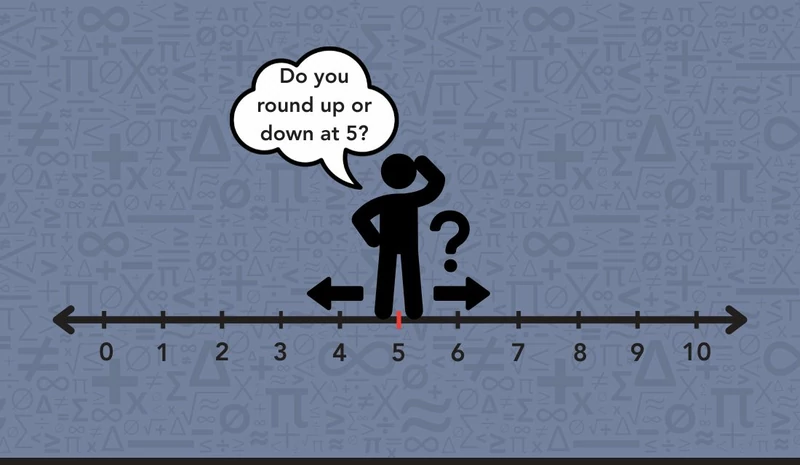
When we learn to round numbers, one question comes up more than any other: when the digit is exactly 5, do we round up or down? And it’s a fair question. 5 sits perfectly in the middle, exactly halfway between two options, and the rule feels less obvious than it does for any other digit.
To clear up the confusion around rounding at 5, our tutors put together this guide. We'll answer the question directly, walk you through a clear rule for rounding numbers, and give you a chance to practice it yourself.

A Quick Reminder: What Is Rounding in Math?
Rounding, also called rounding off, is a way of expressing a number to the nearest specified place value, like the nearest 10, 100, or whole number.
In simpler terms, we swap a number for one that's close by but easier to work with.
And why do we round numbers? We usually round to make numbers simpler to work with in everyday situations, like estimating prices, distances, or time.
Instead of using the exact value, we find a nearby number that ends in zero or has fewer decimal places.
For example:
-
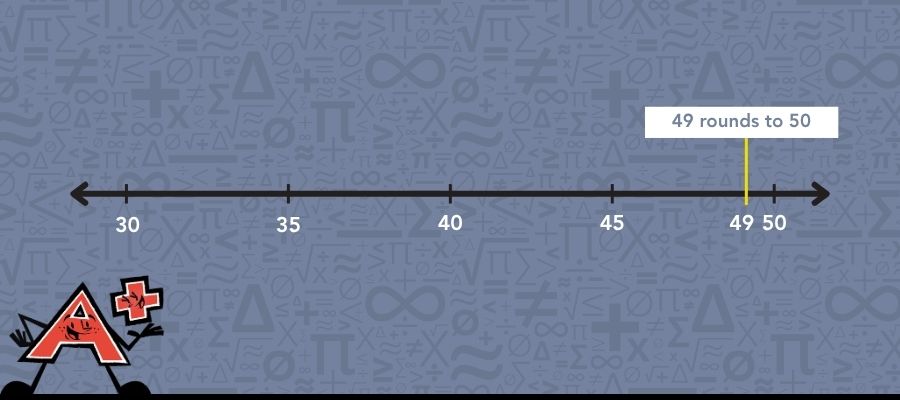
49 rounds to 50.
-
123 rounds to 120.
-
5.92 rounds to 6.
If you’d like to brush up on your rounding skills, check out our comprehensive guide on rounding numbers in math.
So, Do We Round Up or Down at 5?
We round up.
A digit of 5 rounds up every time, just like any digit from 5 to 9.
Whenever you’re not sure, just remember the general rule:
-
Look at the digit immediately to the right of the place you're rounding to.
-
If that digit is 0 to 4, keep the rounding digit the same.
-
If that digit is 5 to 9, add 1 to the rounding digit.
Still, this doesn’t always settle the dilemma, and students ask us, "But if 5 is right in the middle, why do we always round up?”
The answer is consistency.
Math works best when everyone follows the same rule. If we use one clear convention, it means every student, every calculator, and every textbook gets the same answer. That predictability is what keeps rounding reliable.
Let's see it with examples that include a 5.
-
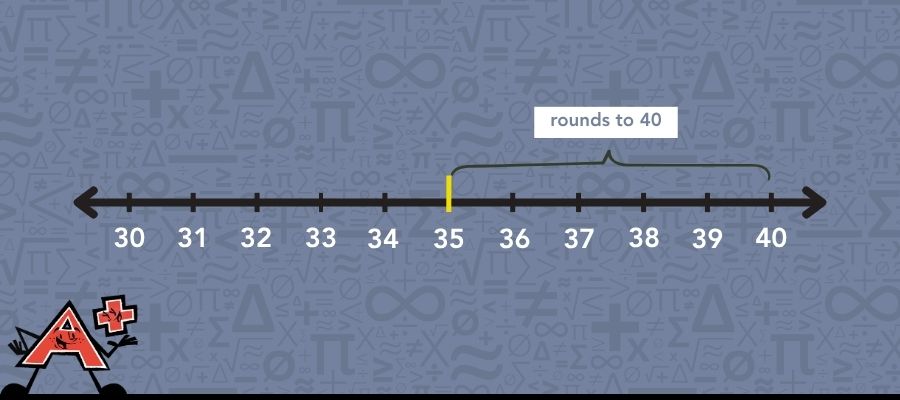
35 rounded to the nearest 10. The tens digit is 3. The ones digit is 5, so we round up to 40.
-
125 rounded to the nearest 10. The tens digit is 2. The ones digit is 5, so we round up to 130.
-
2.5 rounded to the nearest whole number. The ones digit is 2. The tenths digit is 5, so we round up to 3.
📕 You May Also Like: Why Is 1 Neither Prime Nor Composite? A Complete Overview
Rounding Whole Numbers That Are Exactly Halfway
If 5 always rounds up, what about numbers that sit perfectly halfway between two benchmarks? They don't lean left or right, just a clean split down the middle. Does the rule still hold?
It does. We just need to know exactly which digit to look at.
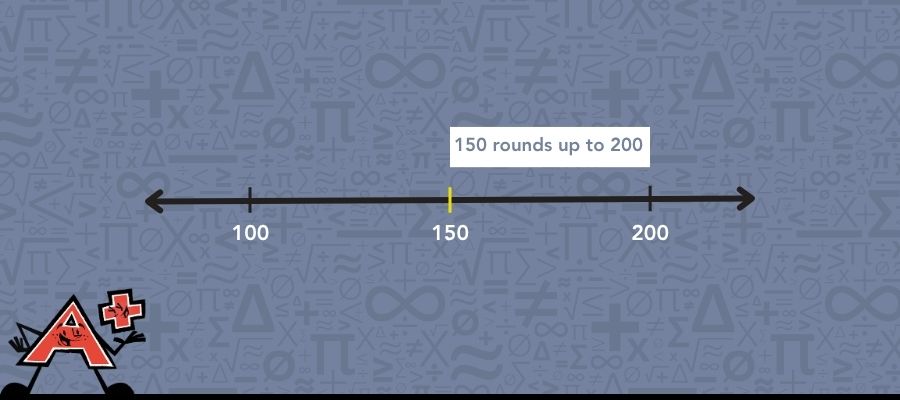
Say we want to round 150 to the nearest hundred.
We're rounding to the hundreds place. The digit immediately to the right of the hundreds place is the tens digit. In 150, that's 5. Five or more means we round up to 200.
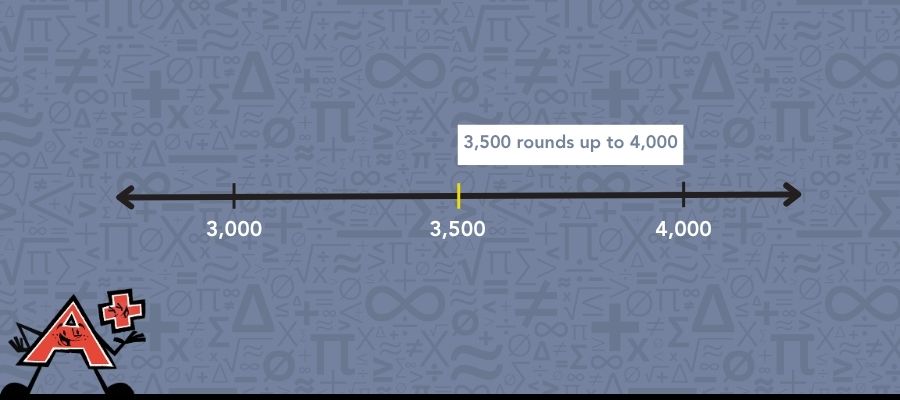
And what about 3,500 rounded to the nearest thousand?
We're rounding to the thousands place, so we look at the hundreds digit, the one sitting immediately to its right. In 3,500, that's 5. Five or more means we round up to 4,000.
📕 You May Also Like: Midpoint in Math Explained: What It Means and How to Find It
Rounding Decimals With a 5
Decimals work exactly the same way. The digit immediately to the right of the place we're rounding to make the call, and 5 always rounds up.
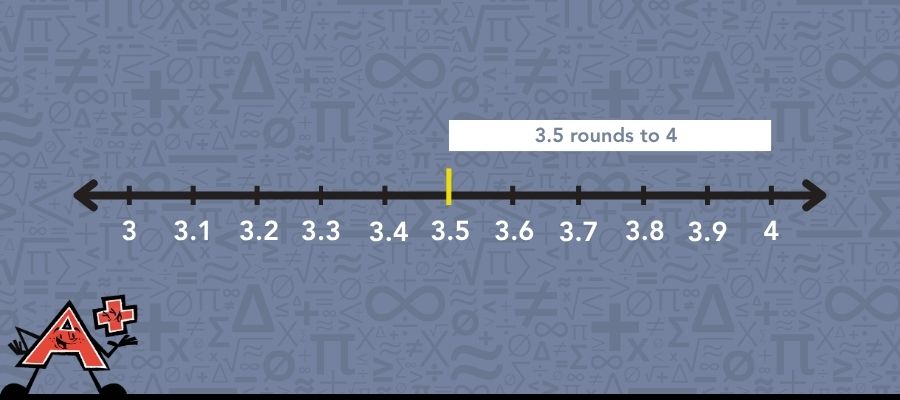
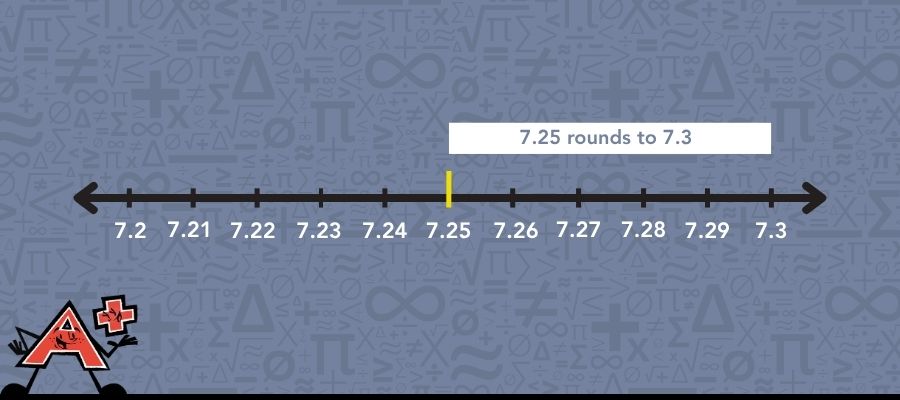
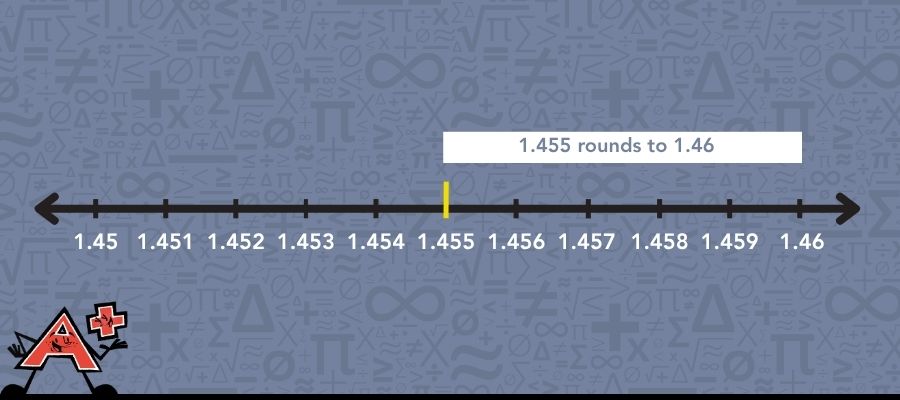
And that's all there is to it. The same rule works every time, whether we're rounding whole numbers or decimals.
📕 You May Also Like: Why Is 1 Neither Prime Nor Composite? A Complete Overview
Your Turn: Can You Round These Numbers?
You've gotten the hang of rounding, and 5 is no longer a dilemma. Let's see how you handle these:
-
Round 43 to the nearest 10.
-
Round 678 to the nearest 100.
-
Round 250 to the nearest 100.
-
Round 6,500 to the nearest 1,000
-
Round 7.5 to the nearest whole number.
-
Round 3.85 to the nearest tenth.
-
Round 4,350 to the nearest 1,000.
-
Round 0.265 to the nearest hundredth.
When you're done, scroll all the way down to check your answers.

Mathnasium uses personalized learning plans and proven teaching techniques to help students build a deep understanding of concepts like rounding.
How Mathnasium Helps Students Master Any Math Concept
Mathnasium is a math-only learning center empowering students of all skill levels to learn and master math.
When students turn to us for support, whether that means building foundational skills like number sense and place value, or mastering specific concepts like rounding, we make sure they leave with a deep, lasting understanding of the math they came in for.
To build that level of understanding, we use a proprietary teaching approach called the Mathnasium Method™.
It begins with a diagnostic assessment, a relaxed interaction that helps us pinpoint each student's strengths and knowledge gaps. With those insights, we develop a personalized learning plan tailored to their needs.
Once the plan is ready, our specially trained tutors follow it closely, delivering face-to-face math instruction in an engaging and confidence-building environment.
When we teach concepts like rounding, we use simple, everyday language and a mix of verbal, visual, mental, tactile, and written techniques so students can see the concept from different angles and truly make sense of it.
When a student gets stuck, we break the concept down into manageable parts, guiding them through both the how and the why. In time, this builds the problem-solving skills and critical thinking they can use across all areas of math and beyond.
Fun is a major part of how we work. Our activities are often game-based, and students earn rewards along the way, keeping them engaged and genuinely enjoying the process. We track their progress and celebrate every win, so confidence grows with every session.
The results speak for themselves:
-
94% of parents report an improvement in their child's math skills and understanding
-
93% of parents report an improved attitude toward math after attending Mathnasium
-
90% of students saw an improvement in their school grades
With over 1,100 learning centers across the U.S., Mathnasium brings top-rated math instruction close to you.
For families in and near Manhattan Beach, CA, Mathnasium of Manhattan Beach is a trusted local center with years of experience helping students excel in math.
Whether your student is looking to catch up, keep up, or get ahead in math, our team is happy to assist!
📅 Schedule a Free Diagnostic Assessment at Mathnasium of Manhattan Beach
Not near Manhattan Beach?
📍 Find Mathnasium Learning Centers Near You
Pssst! Check Your Answers Here
If you've given our rounding challenges a go, check your answers here:
-
43 → nearest 10: ones digit is 3, less than 5 → 40
-
678 → nearest 100: tens digit is 7, more than 5 → 700
-
250 → nearest 100: tens digit is 5, five or more → 300
-
6,500 → nearest 1,000: hundreds digit is 5, five or more → 7,000
-
7.5 → nearest whole number: tenths digit is 5, five or more → 8
-
3.85 → nearest tenth: hundredths digit is 5, five or more → 3.9
-
4,350 → nearest 1,000: hundreds digit is 3, less than 5 → 4,000
-
0.265 → nearest hundredth: thousandths digit is 5, five or more → 0.27


 (310) 905-6284