Thirteen is five and eight. But it’s also six and seven. Or ten and three.
When we understand that a number can be made in different ways, we start to see how math really works. And these relationships aren’t just facts to memorize, but patterns we can use. That’s where number bonds help.
Number bonds help students visualize how numbers break apart and come back together. They support flexible thinking and make mental math easier, especially when students begin working with addition, subtraction, multiplication, and division.
Today, we’ll explore how number bonds work, how they support each of the four operations, and how they help students build strong foundations for math mastery.
You’ll see clear explanations, engaging visuals, practical examples, a quick quiz, and answers to the most common questions from parents and students.
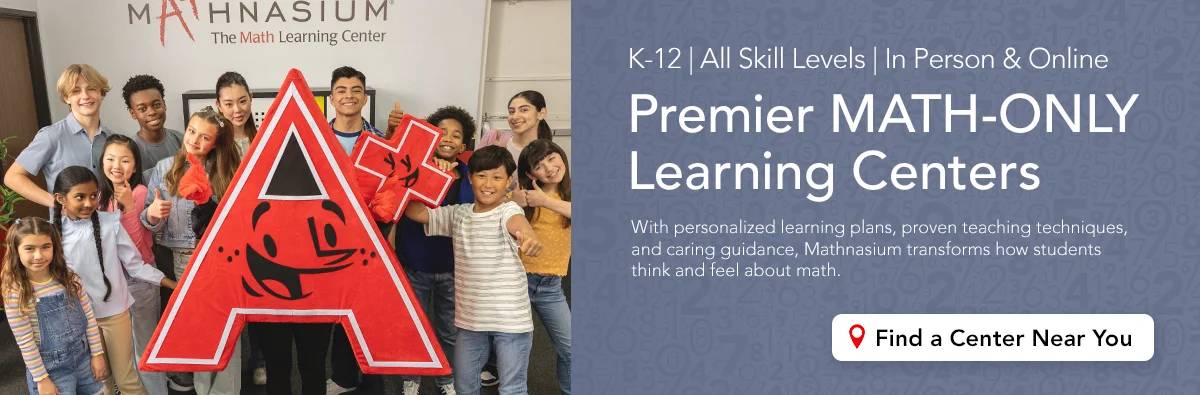
What Are Number Bonds?
Number bonds, also called complements, are pairs of numbers that add up to a given total.
For example, 3 and 7 are number bonds to 10 because 3 + 7 = 10.
When we combine these pairs with their related subtraction facts, we get a fact family—a set of equations that show how addition and subtraction are connected:
-
3 + 7 = 10
-
7 + 3 = 10
-
10 – 3 = 7
-
10 – 7 = 3
So, that would be four facts in this family.
And why do we need number bonds, you might ask?
Number bonds help us see number relationships clearly. Instead of just memorizing facts, we start to notice patterns and understand how numbers are connected.
That’s why number bonds are often one of the first tools we use to build number sense.
Number bonds also make math easier in many ways. They help us:
-
Get faster at solving problems in our heads
-
Understand how opposite operations work (like subtraction and addition)
-
Break big problems into smaller, easier steps
-
Think about numbers in different ways to solve problems more confidently
Next, we’ll see how number bonds help us solve problems in all four operations: addition, subtraction, multiplication, and division.
📕 You May Also Like: What Is a Bar Model in Math? A Complete Overview
Using Number Bonds for Addition and Subtraction
Number bonds help us understand how parts come together to make a whole and how we can break a whole into parts.
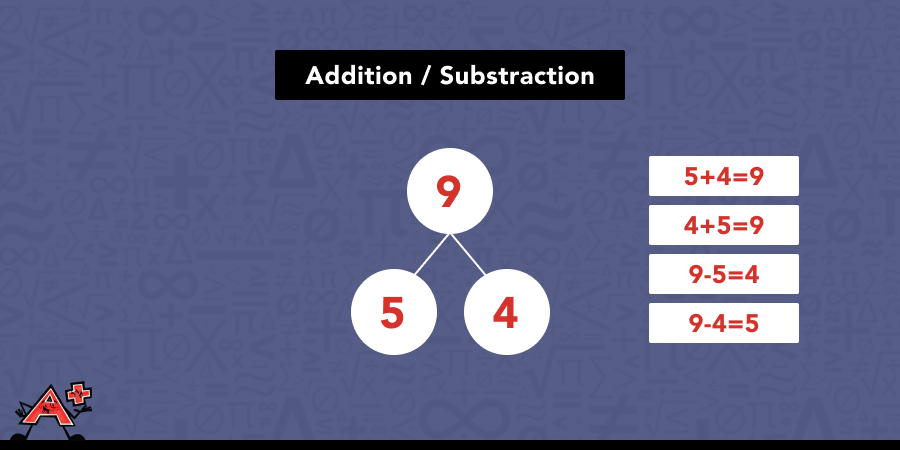
Let’s take the number 9.
We can break it into 4 and 5.
That gives us two addition facts:
And using the same bond, we can find two subtraction facts:
So one number bond gives us four math facts.
Addition and subtraction are really just two ways of looking at the same relationship.
When we understand how number bonds work, we don’t have to memorize each fact separately. We can figure one out by using another.
📕 You May Also Like: What Is Number Sense & Why It Matters in Early Math Education
Using Number Bonds for Multiplication and Division
Number bonds can also show us how numbers work in multiplication and division.
Let’s look at the number 12.
If we split 12 into four equal groups of 3, we can show it like this:
Now, let’s turn it around. If we start with 12 and split it into equal parts, we can write:
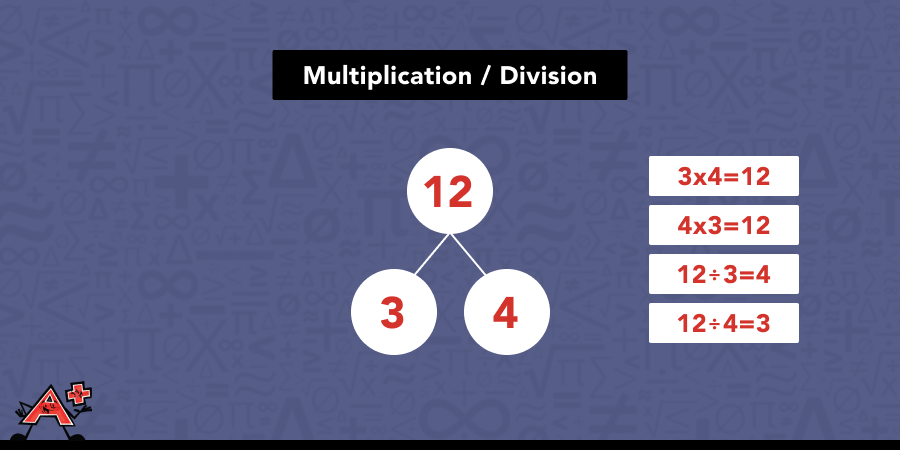
So just like with addition and subtraction, multiplication and division are connected. If you know one fact, you can figure out the others.
Quiz Time: Practice Your Knowledge of Number Bonds
Now that you’ve learned how number bonds work, it’s time to put your skills to the test! Try these quick questions to see how well you understand how numbers fit together.
When you’re done, check your answers at the bottom of the guide.
Task 1
Find all the number bonds to 11 using addition.
Task 2
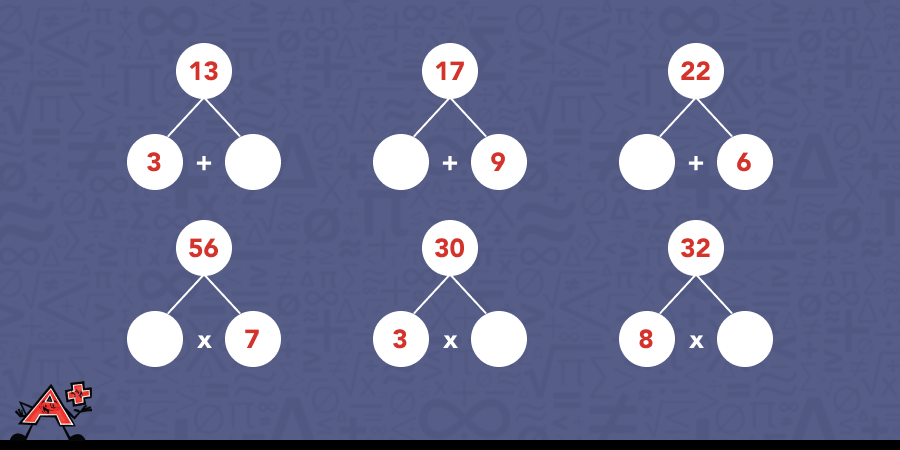
Finish each of the number bonds.
Task 3
Pick any two numbers that add up to 13, and create a fact family with four related facts.
Task 4
Using multiplication, find number bonds of 20.
Frequently Asked Questions About Number Bonds
At Mathnasium, we love teaching number bonds because they help students develop number sense, build confidence, and think flexibly about math. But that doesn’t mean they come without questions!
We’ve gathered some of the ones we hear most often from students, along with answers to clear up any dilemmas.
1. What grade do students start learning number bonds?
Most students start learning number bonds in kindergarten or first grade. That’s when they begin exploring how numbers can be broken into parts and put back together in different ways.
As they move through elementary school, they keep using number bonds to understand bigger numbers and more complex math.
2. Do we only use number bonds with whole numbers?
Nope! You can use number bonds with all kinds of numbers, including fractions and decimals.
Once you understand how number bonds work with whole numbers, you can apply the same idea to break apart or combine any numbers, even more complex ones.
3. Do number bonds always use just two numbers?
Most number bonds show two parts that make a whole, but you can break a number into more than two parts, too!
Starting with two parts helps keep things simple, but as you get more confident, you can explore other combinations that involve three or more numbers.
4. Are number bonds the same as fact families?
Not exactly. Number bonds focus on how parts combine to make a whole, usually through addition.
Fact families include both addition and subtraction (or multiplication and division) facts using the same three numbers. Number bonds can be a great first step toward understanding fact families.
5. How can number bonds help with word problems?
Number bonds make it easier to understand what a word problem is really asking. They help you see the parts and the whole, so you can figure out whether you need to add, subtract, multiply, or divide.
When you break the numbers apart or put them together, the problem becomes easier to solve.
How Mathnasium Helps Students Excel in Math
At Mathnasium, number bonds are just one of the many tools we use to show students how math truly works. That focus, helping students understand how math works, is at the core of our proprietary teaching approach, the Mathnasium Method™.
Our effective and time-tested approach has been transforming how students think and feel about math for over 20 years.
The Mathnasium Method™ builds math mastery through:
1. Personalization on a granular level: Every student begins with a diagnostic assessment. This helps us uncover their strengths, knowledge gaps, and just as importantly, how they approach math. Based on these insights, we create a learning plan personalized to their needs.
2. Teaching for understanding: Our instructors teach math face-to-face using natural, everyday language that students can understand. We use Socratic questioning and direct instruction along with verbal, visual, mental, tactile, and written techniques to make math make sense.
3. Caring instructors: Our specially trained instructors understand both the technical and emotional aspects of teaching math. They support students when they need it and challenge them when they’re ready.
4. Critical thinking and problem solving: We go beyond memorizing steps or supplying answers. Students learn how and why math works, and they get time to struggle productively on their own before we rejoin them. This process builds critical thinking tools and problem-solving skills they can use in math and beyond.
5. A singular focus on math: Our curriculum focuses on math and math only. This allows us to go much deeper into how students absorb, understand, and retain mathematical concepts.
6. A fun and confidence-building environment: Our learning centers are designed to be engaging and motivating. From game-based activities to reward systems, we help students feel empowered and enjoy learning math.
Our approach brings measurable results:
-
94% of parents report an improvement in their child's math skills and understanding
-
93% of parents report an improved attitude towards math after attending Mathnasium
-
90% of students saw an improvement in their school grades
Whether your child is looking to catch up, keep up, or get ahead in math, your local Mathnasium Learning Center is ready to help. Contact us today to schedule a diagnostic assessment and get a personalized learning plan that puts them on the best path to math mastery.
Pssst! Check Your Answers Here
If you’ve given our exercise a try, check your answers below.
Task 1
- 0 + 11
- 1 + 10
- 2 + 9
- 3 + 8
- 4 + 7
- 5 + 6
Once you reach halfway, you can just flip the numbers to get the rest:
- 6 + 5
- 7 + 4
- 8 + 3
- 9 + 2
- 10 + 1
- 11 + 0
That’s 12 number bonds in total!
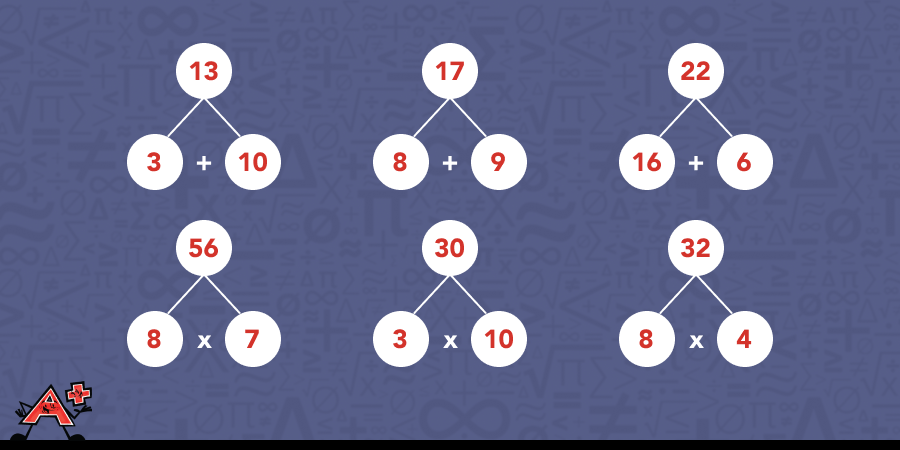
Task 2
Task 3
Let’s say you chose 5 and 8.
Your fact family would be:
- 5 + 8 = 13
- 8 + 5 = 13
- 13 – 5 = 8
- 13 – 8 = 5
Task 4
These are the multiplication number bonds (factor pairs) of 20:
- 1 × 20
- 2 × 10
- 4 × 5
- 5 × 4
- 10 × 2
- 20 × 1


 (469) 248-8844
 (469) 248-8844