At first glance, rectangles and squares might look like two entirely different shapes to us. But if we take a closer look, geometry will tell us a different story!
These two shapes are not just related. One is a special version of the other, and after we understand that connection, it totally changes how we think about both of them.
Today, Mathnasium tutors will help you see that connection and break down the properties of both squares and rectangles, show where they overlap, and explain why every square qualifies as a rectangle, even if the reverse isn't true!

Rectangles and Squares: Definitions and Properties
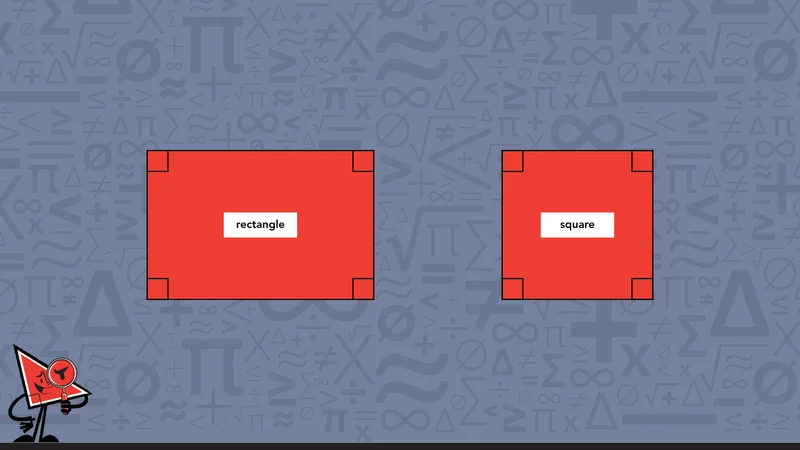
The properties of a rectangle and a square overlap more than we expect, and understanding where they differ is what helps us start to make sense of geometry.
What Makes a Rectangle?
Think of a sheet of notebook paper or a textbook cover. It’s a clear example of a rectangle, with two long sides, two short sides, and four corners. These features define the geometry of a rectangle:
-
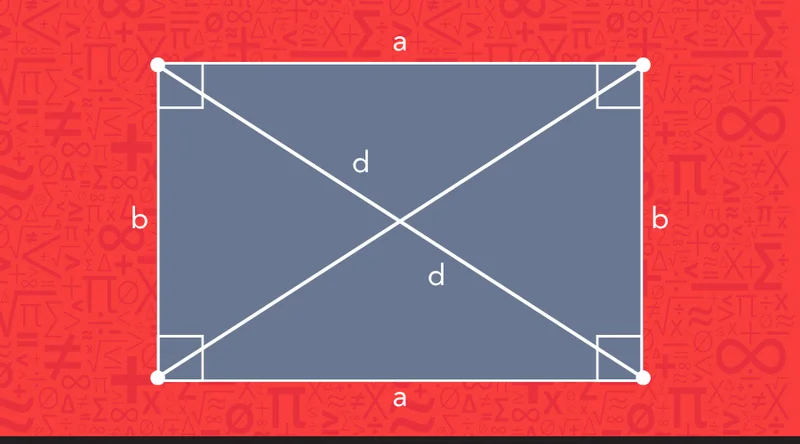
Opposite Side Symmetry: Opposite sides match in length and run parallel to each other. Because both conditions are met, rectangles belong to the parallelogram family.
-
Four Right Angles: If we take a closer look at the corners, we will notice they all measure 90 degrees. This separates rectangles from other four-sided shapes like parallelograms, which have opposite sides that are parallel and equal but do not require 90-degree corners.
-
Intersecting Diagonals: Let’s grab a ruler and draw a line connecting the opposite corners of our rectangle. We will notice that these diagonals (d) cross at their midpoints, which cut them into equal halves.
What Makes a Square?
Picture a piece of grid paper or a chessboard. Notice how every individual box is shaped? They’re all identical squares. Each box features four sides of equal length and four 90-degree angles. Here is how those features work geometrically:
-
Two pairs of parallel sides: Same as with a rectangle, each side runs parallel to the one opposite it.
-
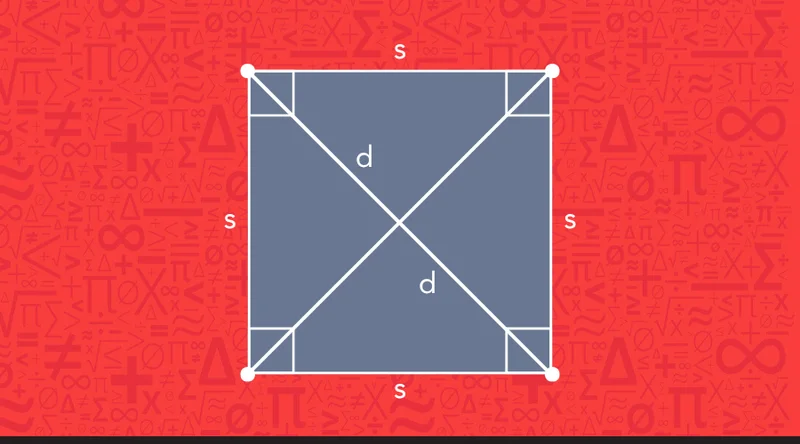
Four equal sides: Unlike a rectangle, where only opposite sides match, here every side is the same length.
-
Four right angles: Every corner of a square measures at 90 degrees
-
Diagonals bisect each other at right angles: Draw a diagonal line on your square and you will notice that the diagonals cross at their midpoints and form a 90 degree angle.
Rectangle vs. Square: A Side-by-Side View
We’ve covered both shapes separately. Now we will put them next to each other to see where their properties overlap and where they differ.
|
Rectangle
|
Square
|
|
Opposite sides are equal.
|
All four sides are equal.
|
|
Two pairs of parallel sides.
|
Two pairs of parallel sides.
|
|
Diagonals bisect each other.
|
Diagonals bisect each other at right angles.
|

Rectangles and Squares in the Real World
Have you ever wondered why doors, phone screens, and cereal boxes are rectangles instead of squares? The geometric properties of each shape give them distinct advantages in everyday design:
1. Design and architecture
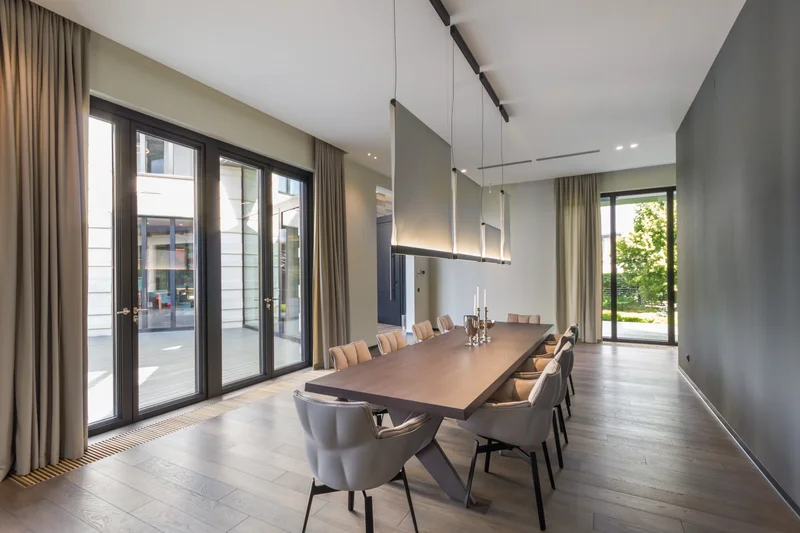
If you walk into a room and immediately feel like it is cozy and balanced, there is a good chance the layout is closer to a square.
Square rooms feel open, and we don’t have a dominating wall, while rectangular rooms feel more directional and pull your eye toward the longer wall.
That difference comes from the equal versus unequal side lengths we identified in the definitions.
2. Screens and displays
Think about your phone screen. It is not an accident that it’s designed as a rectangle. Unequal side lengths allow us to read and scroll through content easily and much more efficiently.
Early television screens were closer to squares, and later changed to rectangular-shaped widescreens because our eyes naturally scan a wider field of view.
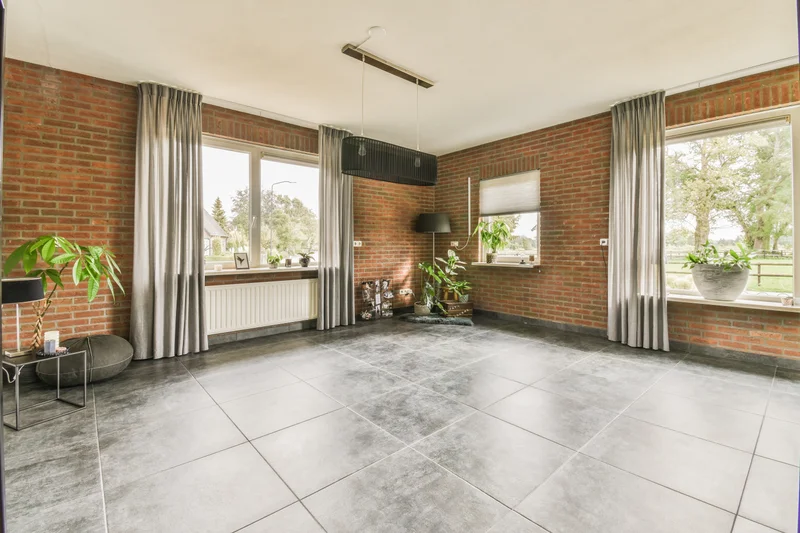
3. Tiling and patterns
Next time you walk past a tiled bathroom floor or a brick wall, take a close look at how the shapes fit together.
Squares tile a surface in multiple orientations. We can rotate them 90 degrees, and the pattern still works cleanly.
Rectangle-shaped bricks have fewer options because the unequal sides limit how we can combine and rotate them.
4. Art and photography
Pay attention to any movie poster, and you will notice they are usually rectangular. Photographers and designers use rectangular frames to create a natural sense of movement in an image, since square frames feel more centered and still.
📕 You May Also Like: What Is Symmetry in Math? A Kid-Friendly Guide with Examples
FAQs About Rectangles & Squares
We’ve gathered some of the questions we commonly hear about rectangles and squares and answered them here.
1. If a square is a rectangle, can we use rectangle formulas to find the area and perimeter of a square?
Yes. Because a square is a rectangle, every rectangle formula works for a square.
We find the area by multiplying length times width, and since a square's length and width are equal, that simplifies to side times side.
We find the perimeter by adding two times the length and two times the width, which simplifies to four times the side length.
2. What is a Golden Rectangle? Is it a square?
No, it is not a square. A Golden Rectangle is a rectangle whose side lengths are in the Golden Ratio, approximately 1 to 1.618.
This proportion appears frequently in architecture and nature, such as the Parthenon in Greece or the spiral of a nautilus shell, creating a naturally balanced visual structure.
3. How many lines of symmetry does each shape have?
A rectangle has two lines of symmetry, while a square has four.
We can fold a rectangle in half both horizontally and vertically to get matching pieces.
A square has the same two lines of symmetry as the rectangle, plus it folds cleanly along both diagonals to create two identical triangles, which comes directly from having four equal sides.
📕 You May Also Like: Perimeter vs. Area: How to Teach the Difference at Home

Our specially trained tutors use personalized learning plans and interactive teaching techniques to help students build a deep understanding of geometry.
How Mathnasium of Pembroke Pines Helps Students Build Geometry Confidence
Mathnasium is a math-only learning center that helps K–12 students catch up, keep up, and get ahead in math.
When students come to us for math or specifically geometry support, they may be working on foundational skills, such as understanding and working with shapes like rectangles and squares, or they may be ready for a greater challenge. Either way, we can meet them where they are and provide the support they need.
We personalize each student’s learning experience through the Mathnasium Method™, our proprietary teaching approach. Here’s how it works.
Every student begins with a diagnostic assessment that identifies their current skill level, knowledge gaps, and what they are ready to learn next. From there, our specially trained tutors build a personalized learning plan around what that student specifically needs.
To help students truly make sense of the concepts they learn, we use natural language and a mix of verbal, visual, mental, tactile, and written techniques.
When a student is stuck on a concept, we break it down into manageable bits, teaching both the how and the why behind it. As sessions go by, our students gain their own problem-solving skills and critical thinking tools they can use in math and beyond.
Fun is an integral part of our approach. We keep our sessions lively through game-based activities, rewarding progress, and celebrating every victory, big or small. As students see their own growth, their confidence naturally grows.
Families who work with us see real results.
-
94% of parents report an improvement in their child's math skills and understanding
-
93% of parents report their child's improved attitude toward math after attending Mathnasium
-
90% of students saw an improvement in their school grades
We operate over 1,100 learning centers across North America, bringing our proven approach close to your community.
Mathnasium of Pembroke Pines works with families across Pembroke Pines, Miramar, Salt Lakes and Town Gate.
Whether your child is encountering geometry for the first time or preparing for more advanced coursework, Mathnasium of Pembroke Pines geometry tutors can help.
📅 Schedule a Free Assessment at Mathnasium of Pembroke Pines
📍 Find a Mathnasium Learning Center Near You


 (954) 441-6284