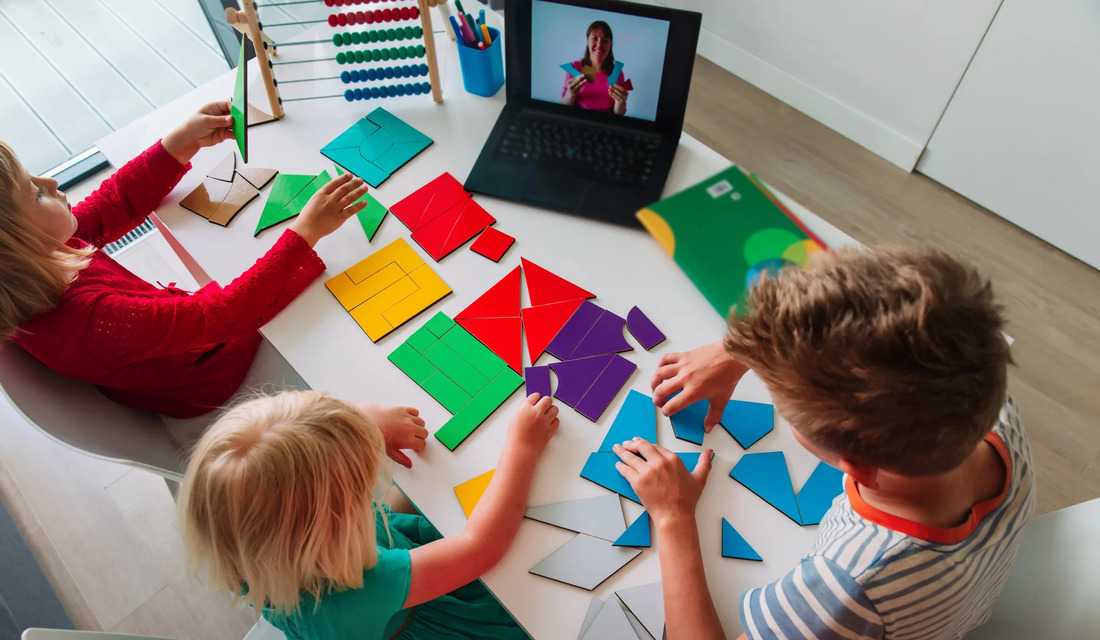
Geometry develops across your child’s K–12 math education rather than appearing for the first time in high school. In elementary school, it begins with shapes and measurement, then expands into area, angles, coordinates, and spatial reasoning.
That continuity carries into Poway Unified high schools, where students work with geometry throughout Integrated Math I, II, and III instead of taking a separate Geometry course. For families in 4S Ranch, this makes geometry easier to see as a set of skills your student keeps developing across grades.
To help you see which elementary topics form that foundation, our education specialists will break the skills down grade by grade and share simple ways to practice with your learner.

What Geometry Concepts Students Encounter in Elementary School
Your child’s geometry work usually falls into a few core areas across their school years. The National Council of Teachers of Mathematics outlines them in its Principles and Standards for School Mathematics (2000):
-
Recognizing shapes and explaining what makes them different
-
Describing the location of objects using coordinates and other spatial tools
-
Working with flips, turns, slides, and symmetry
-
Picturing shapes and space mentally to solve problems
The California Common Core State Standards for Mathematics, which Poway Unified follows, show how those broader geometry ideas are introduced and developed across the grades.
With that framework in mind, let’s look more closely at the geometry skills your child is expected to work on in elementary school.
Kindergarten–Grade 2
By the end of the early elementary years, students are expected to:
-
Recognize flat (2D) and solid (3D) shapes, even when they are turned
-
Describe shapes by features such as sides and corners rather than appearance alone
-
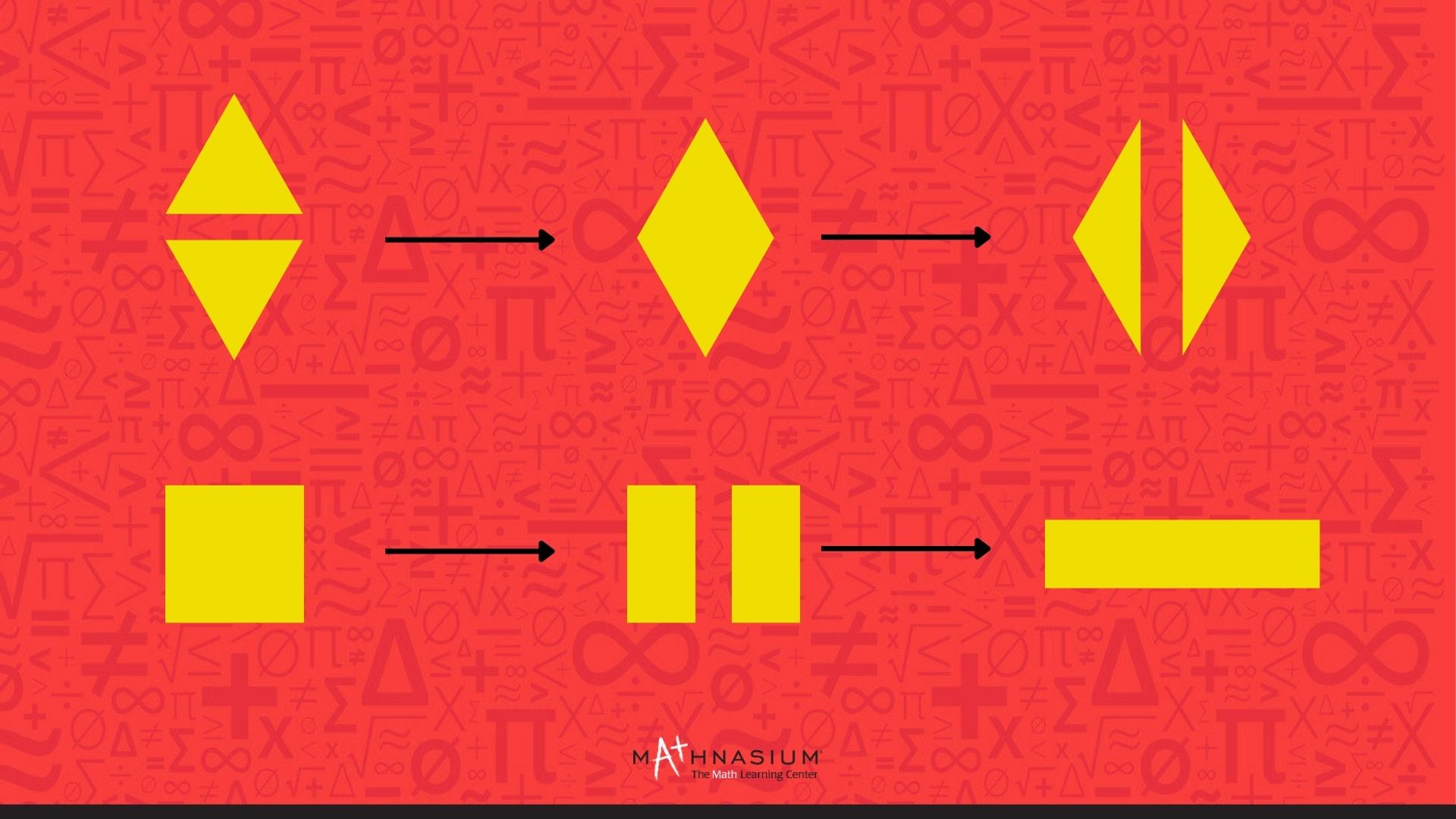
Combine and break apart shapes
-
Divide shapes into equal parts
-
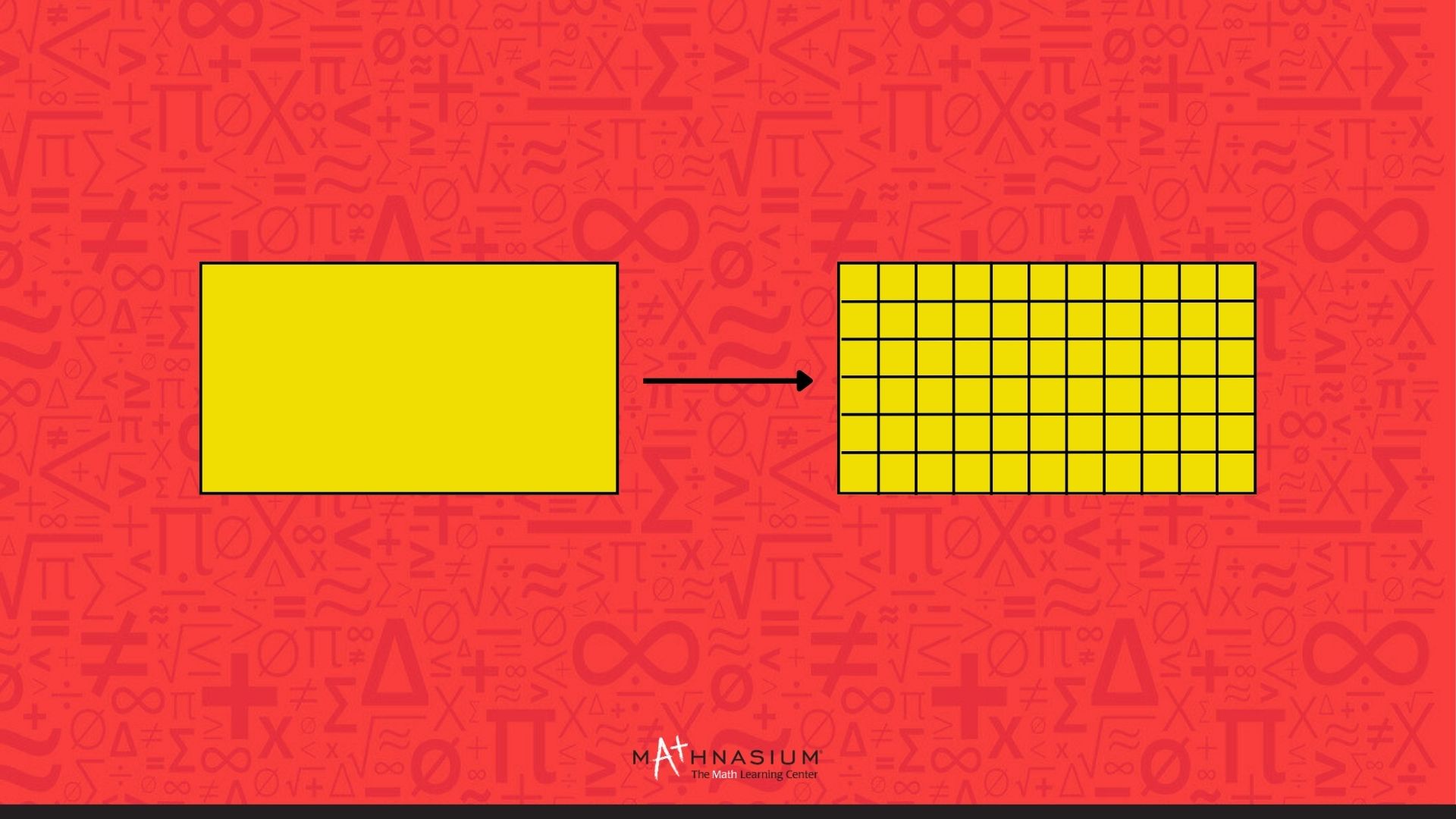
By 2nd grade, split rectangles into rows and columns of equal squares
These early skills are highly visual and hands-on, so they lend themselves well to practice beyond worksheets.
At Mathnasium, we use hands-on activities, different teaching approaches, and real-life examples to help learners make sense of new ideas.
Building on that approach, we’ve put together a few grade-matched activities you can use to reinforce what your child is learning:
A. Kindergarten
Gather a mix of flat and solid objects. Have your student sort them, name the shapes, and explain what features helped them decide where each one belongs.
B. Grade 1
Give your child paper shapes and ask them to build a new shape, take it apart in another way, and then divide one of the shapes into equal halves or fourths.
C. Grade 2
Draw a rectangle and invite your learner to split it into equal rows and columns of squares. Then see whether they can work out how many squares there are altogether and whether the parts are equal.
📕 You May Also Like: Geometry Vocabulary: 59 Terms for Students in Grades 1-8
Grades 3–4
At this stage, your child moves beyond simply recognizing shapes and starts reasoning about why they belong in certain groups. They also learn to distinguish between the space inside a shape and the distance around it, and to describe lines and angles more precisely.
More specifically, students learn to:
California’s standards place area, perimeter, and angle measurement under Measurement and Data, so you may see these skills listed separately in grade-level standards. But we’ve included them here because they are closely tied to geometry.
You can try these simple activities to practice the skills at home:
A. Grade 3:
1. Build a quadrilateral family. Cut out several squares, rectangles, rhombuses, and trapezoids, then have your child organize them by shared properties. Encourage them to place a shape in more than one group when it fits.
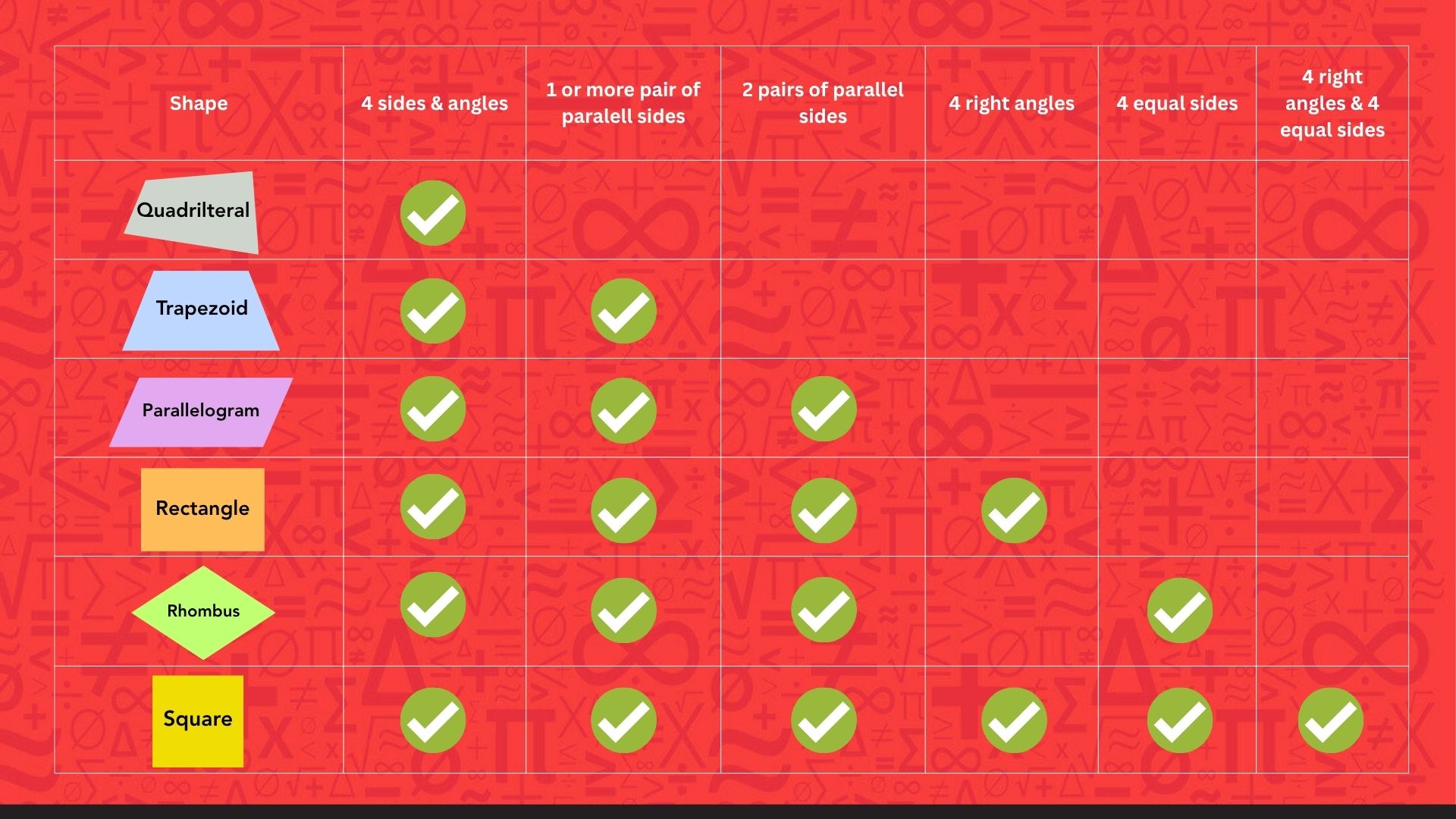
For example, a square can belong with rectangles because it has four right angles and with rhombuses because all four sides are equal. This turns shape classification into reasoning about properties rather than appearance.
2. Design the same area in different ways. On grid paper, draw one rectangle and one different shape that both cover 24 square units. For example, you might use a 6 × 4 rectangle and an L-shaped figure made from 24 squares.
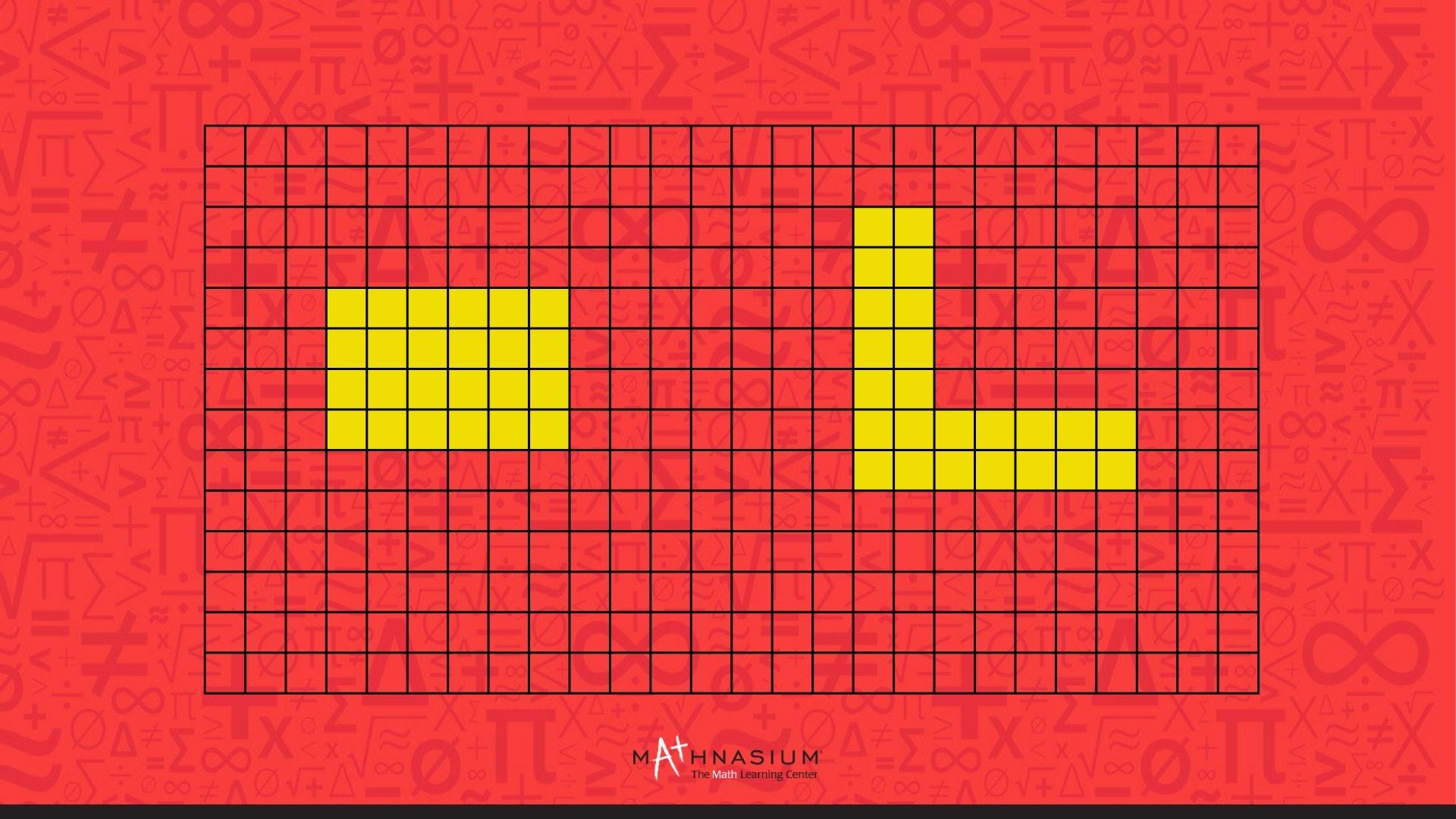
Then count the squares together to confirm that both shapes have the same area, and trace around the edges to compare their perimeters. This can help your child see that area and perimeter describe different features of the same shape.
B. Grade 4:
1. Create an angle-and-line map. On a blank sheet, have your child draw a simple street or park map using points, lines, rays, and intersections. They can label parallel and perpendicular lines, identify different angles, and use a protractor to measure a few of them.
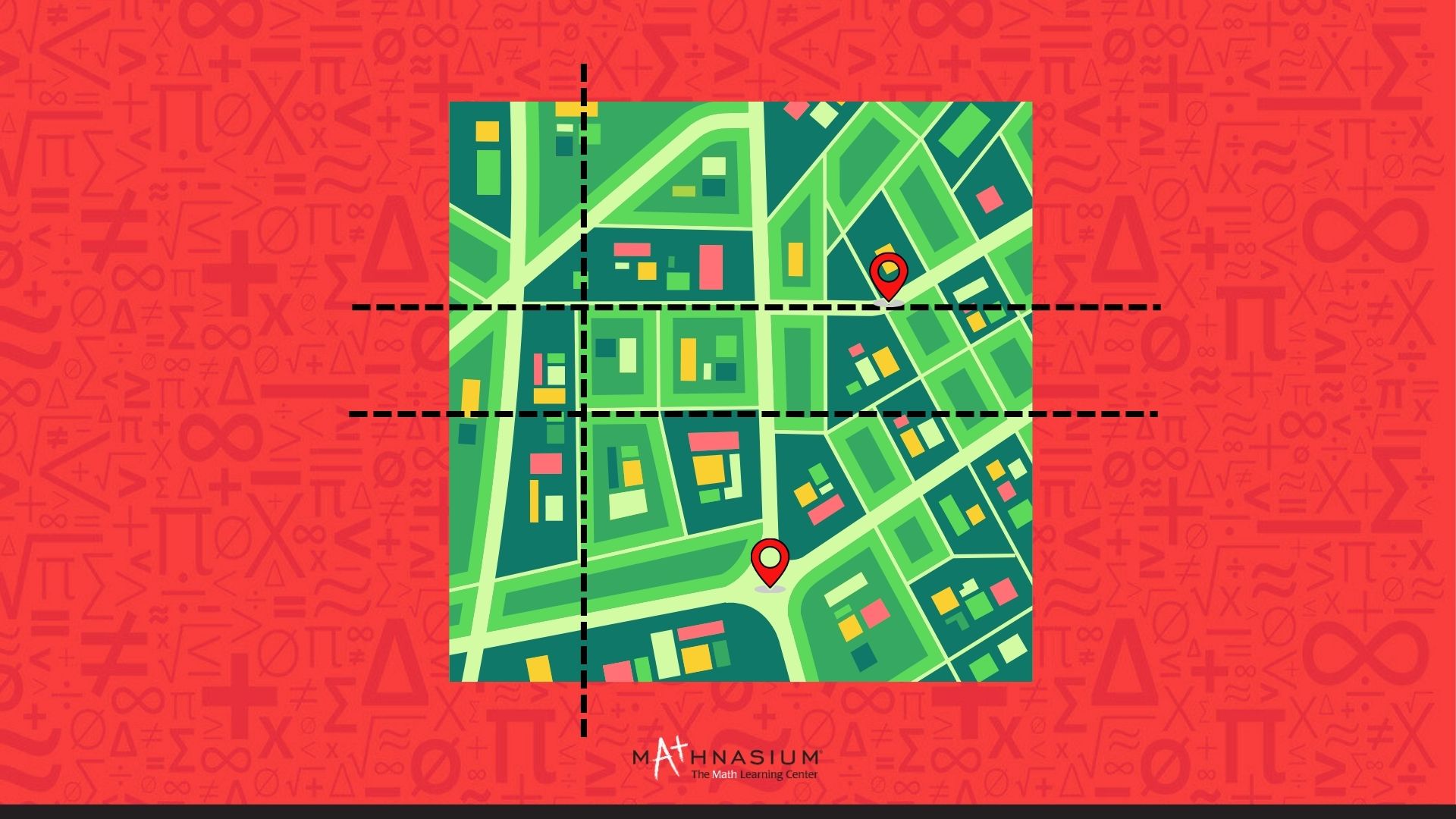
The finished map gives each geometry term a visible role instead of leaving it as vocabulary to memorize.
2. Design with symmetry. Give your child a sheet of paper and have them fold it in half. Ask them to draw half of a simple shape along the fold, such as a heart, butterfly, or tree, then unfold the paper and complete the other half so both sides match. Use the fold to point out the line of symmetry.

📕 You May Also Like: How to Use Origami to Teach Geometry - Kid-Friendly Guide
Grade 5
5th-grade geometry topics build on earlier ideas in more structured ways. Your child needs to:
-
Plot points in the first quadrant using ordered pairs such as (3, 5)
-
Use ordered pairs correctly, recognizing that (3, 5) and (5, 3) mark different locations
-
Classify 2D shapes by their properties and relationships, such as recognizing that every square is also a rectangle
-
Find the volume of rectangular prisms
Here’s what practice with these 5th-grade geometry skills might look like at home:
1. Build and compare shapes on a coordinate grid. You can give your child four ordered pairs that form a rectangle or square and have them plot and connect the points.
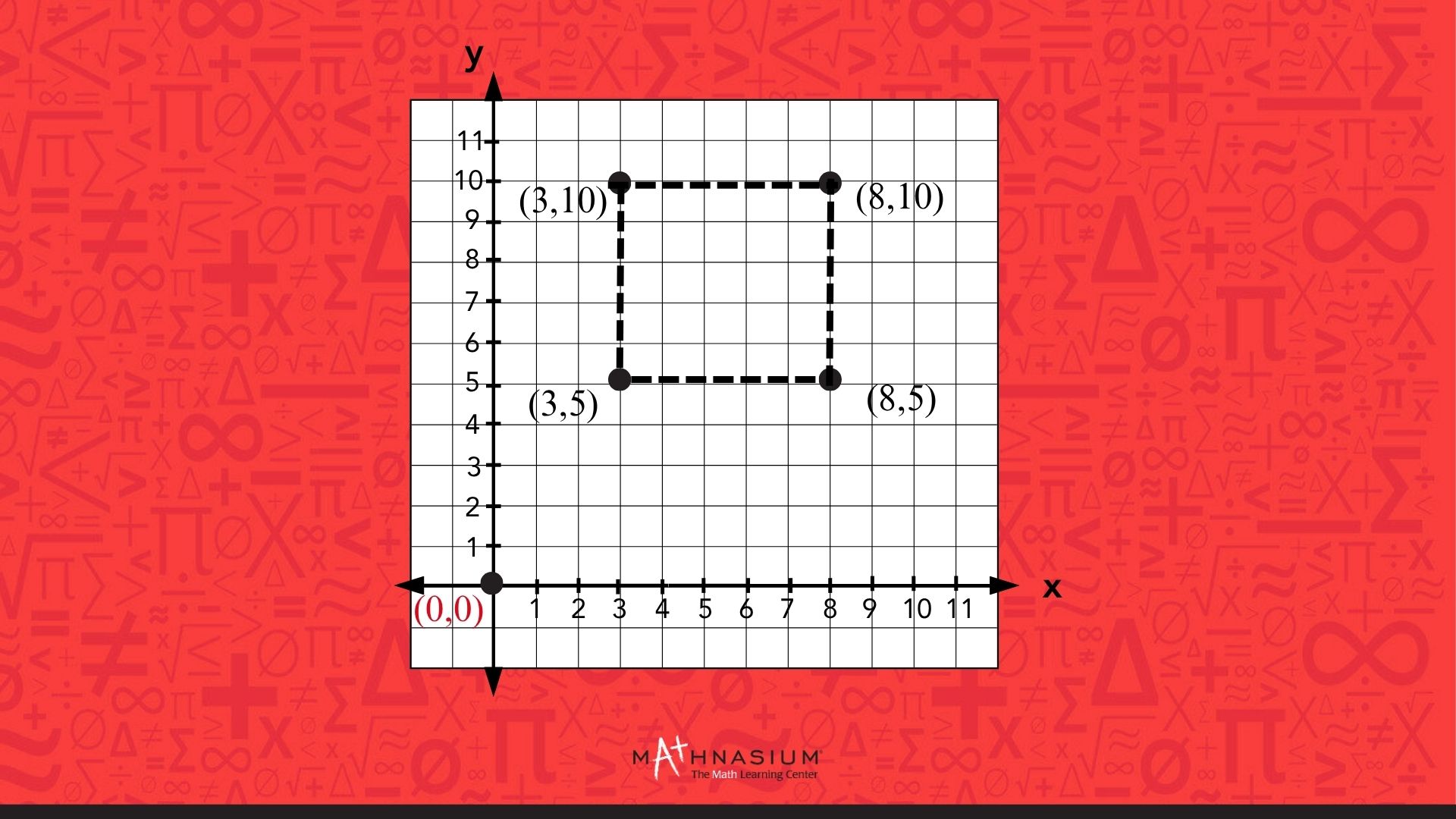
Then switch two coordinates, such as (3, 5) and (5, 3), and compare how the figure changes. Ask them to explain why the order of each pair affects the location.
2. Model volume with cubes. Use unit cubes to make two different rectangular prisms with the same volume. Have your child count the cubes in one layer, determine the number of layers, and explain how those numbers produce the total.
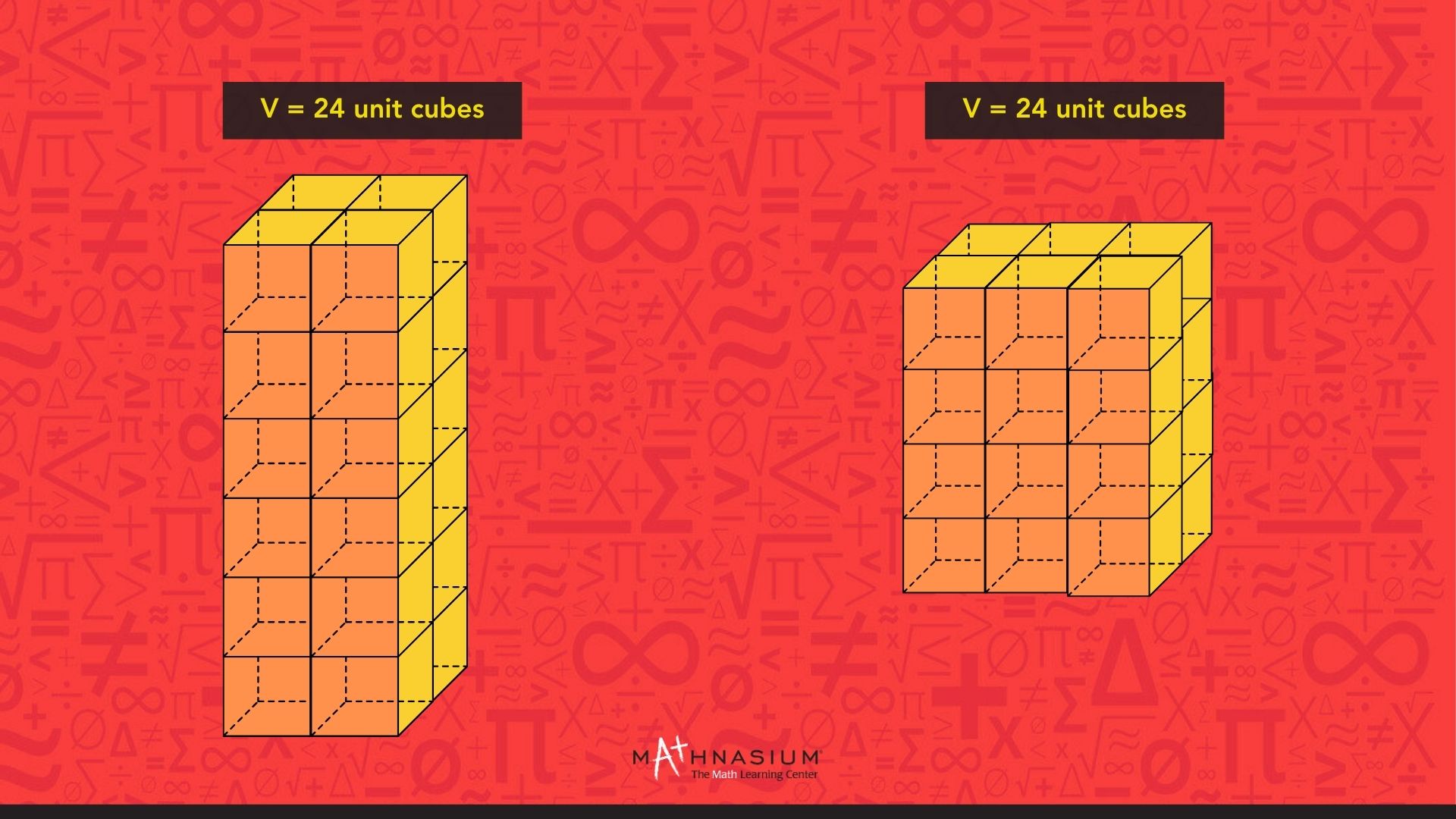
After that, compare the two prisms to show that different dimensions can still result in the same volume.

How Elementary Foundation Supports Later Geometry Progress
To see how middle and high school geometry builds on skills your student masters in elementary school, take a look at the connections below:
Elementary geometry skill
|
How your child builds on it later
|
Comparing shapes by sides, angles, and other properties
|
Classifying more complex figures and using their properties to solve problems and justify geometric relationships
|
Recognizing symmetry and exploring flips, turns, and slides
|
Working with transformations, congruence, and similarity in middle and high school
|
Understanding area and breaking shapes into smaller parts
|
Finding the area and surface area of more complex figures and choosing the right formulas
|
Building and measuring 3D shapes
|
Working with the volume of prisms and other solids and solving multi-step measurement problems
|
Plotting and reading points on a coordinate grid
|
Working across all four quadrants and using coordinates to analyze shapes, distances, and geometric relationships
|
When these early skills are secure, your learner can give more attention to the new reasoning middle and high school geometry requires. But gaps such as confusing area with perimeter or mixing up coordinates can keep resurfacing as the problems become more complex.
That’s why we begin our work with students by finding where their understanding starts to break down. Through our diagnostic assessment, we pinpoint the specific concepts that require support, and from there build a personalized learning plan around them.
If your learner struggles with geometry-related topics, our geometry tutors at Mathnasium of 4S Ranch can help them work through those underlying skills and prepare for more advanced geometry with greater confidence.
📕 You May Also Like: Geometry Prep: 10 Skills to Know Before 10th Grade
 At the Mathnasium of 4S Ranch, tutors use a range of teaching techniques and hands-on activities to help students build true understanding of math concepts.
How Mathnasium of 4S Ranch Helps Students Build Solid Geometry Foundations
Mathnasium of 4S Ranch in San Diego, CA, is a math-only learning center that helps K–12 students excel in math.
When students turn to us for geometry support, we help them understand the ideas behind the rules they use. In geometry, that might mean seeing why a square is also a rectangle, why area is measured in square units, or how coordinates locate a point on a grid. Those connections give students a clearer foundation for the geometry they meet later.
This is all part of our proprietary teaching approach, called the Mathnasium Method™.
Here’s how it works.
Each student begins with a diagnostic assessment that helps us understand their current skill level, knowledge gaps, goals, and how they think and feel about math.
Using these insights, we create a personalized learning plan focused on the skills the student needs most, whether that means practicing shape recognition, building measurement skills, working with area and perimeter, or preparing for middle school geometry.
Our specially trained tutors follow the plan closely and provide live, face-to-face instruction in a caring and fun group environment, in-center or online. They use mental, verbal, visual, tactile, and written techniques, including hands-on shape work, drawing, grid activities, and comparing diagrams, to help students make sense of geometric relationships.
Students also get room to think through problems before tutors step in. Our tutors guide them to explain what they notice, compare shapes, identify relationships, and check whether their reasoning makes sense. This helps build the problem-solving and visual reasoning skills that later geometry depends on.
Fun is part of the approach, too. We use game-based activities, rewards, and consistent encouragement to keep students engaged as they explore shapes, measurements, patterns, and spatial relationships.
Families see the difference:
-
94% of parents report an improvement in their child's math skills and understanding
-
93% of parents report their child's improved attitude toward math after attending Mathnasium
-
90% of students saw an improvement in their school grades
Since 2021, Mathnasium of 4S Ranch has been recognized as a Top 10 Performing Mathnasium Learning Center and honored by our local community with:
You’ll find our center at 10543 4S Commons Drive, Suite 175, in the 4S Commons Town Center, close to home for families from Stone Ranch, Monterey Ridge, and other 4S Ranch schools.
If your child needs support with geometry or any other math topic, a free diagnostic assessment is a great place to start. Using what we learn, we create a personalized learning plan focused on the skills they need next.
📅 Schedule a Free Assessment at Mathnasium of 4S Ranch
Not near 4S Ranch?
📍 Find a Mathnasium Learning Center Near You


 (858) 312-8888
 (858) 312-8888