At Mathnasium, we see long division as one of the defining milestones in elementary math. It brings together basic math facts, keeping numbers lined up, and step-by-step problem-solving all in one place.
The moment students master this step-by-step process, they build the procedural confidence they need for higher-level math, such as fractions and algebra, down the road.
Today, Mathnasium’s seasoned tutors break down what long division is and how to do it step by step with visuals, practice examples, and FAQs.

What Is Long Division?
Long division is a step-by-step method that helps us solve division problems with large numbers by breaking the problem down into smaller, manageable steps.
Instead of trying to divide a big number all at once, we work with one digit at a time from left to right.
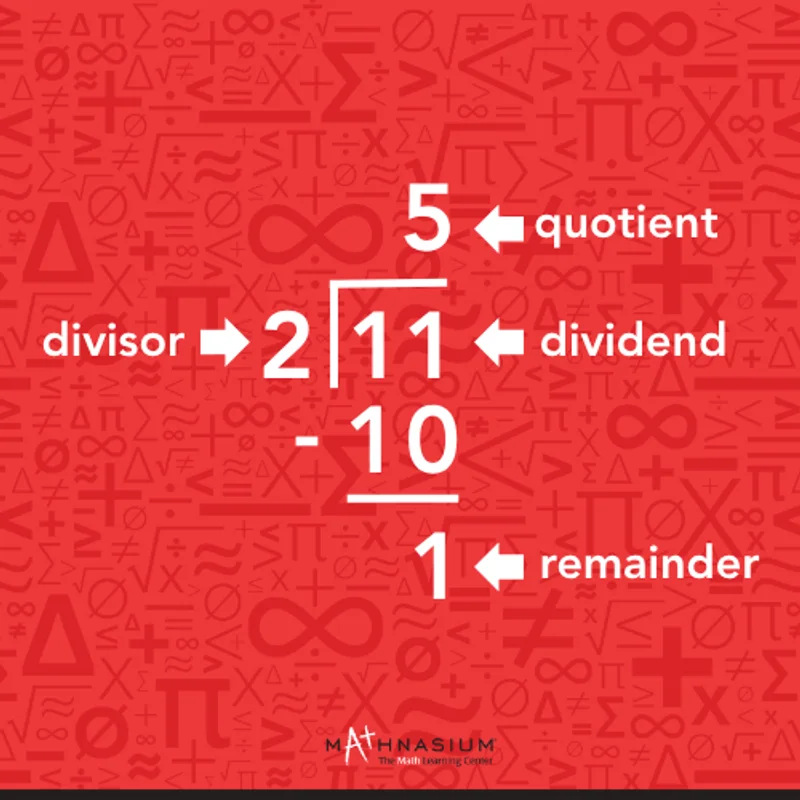
Before we get to the process, let’s get familiar with the terms we often see in long division problems.
How to Do Long Division
No matter how big the numbers get, long division follows the same 4 steps every single time.
-
Divide
-
Multiply
-
Subtract
-
Bring down
We simply repeat these four steps in order as many times as needed until every digit in the main number has been divided.
To see how this works, let’s divide 351 by 3.
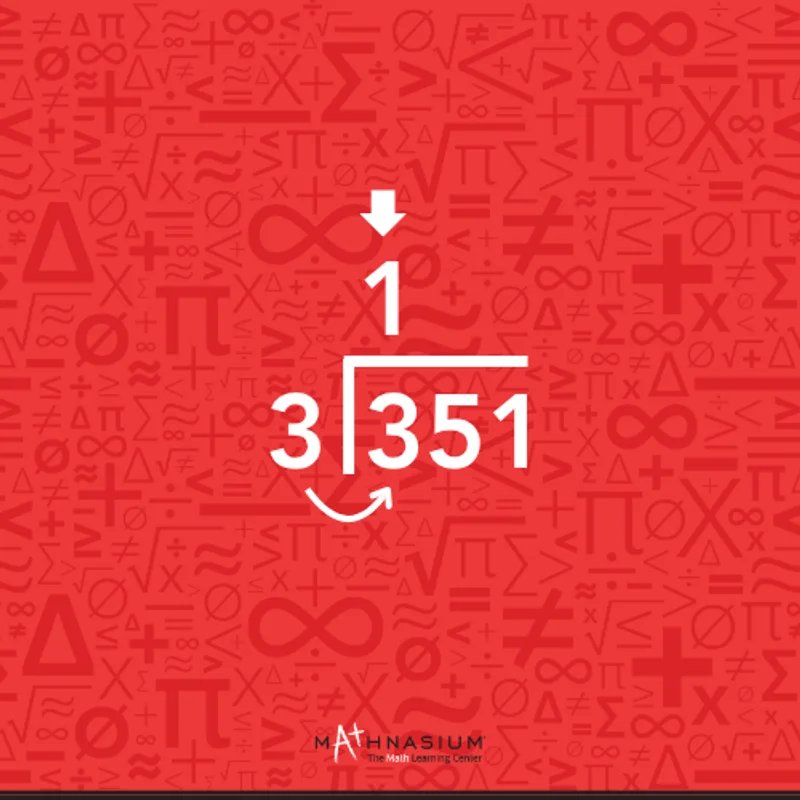
Step 1: Divide
First, we ask ourselves, “What is the first digit of 351?” It is 3. Then, we ask how many times 3 fits into 3. The answer is 1 time, so we write 1 on top, above the 3.
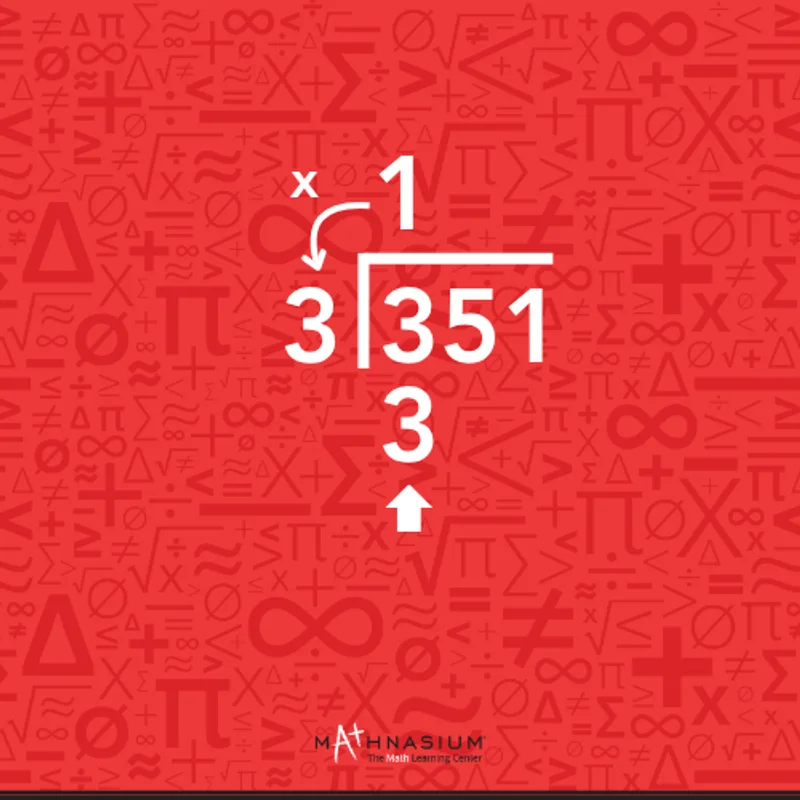
Step 2: Multiply
Then, we multiply 1 by 3, and the result (3) goes under the first digit of our dividend.
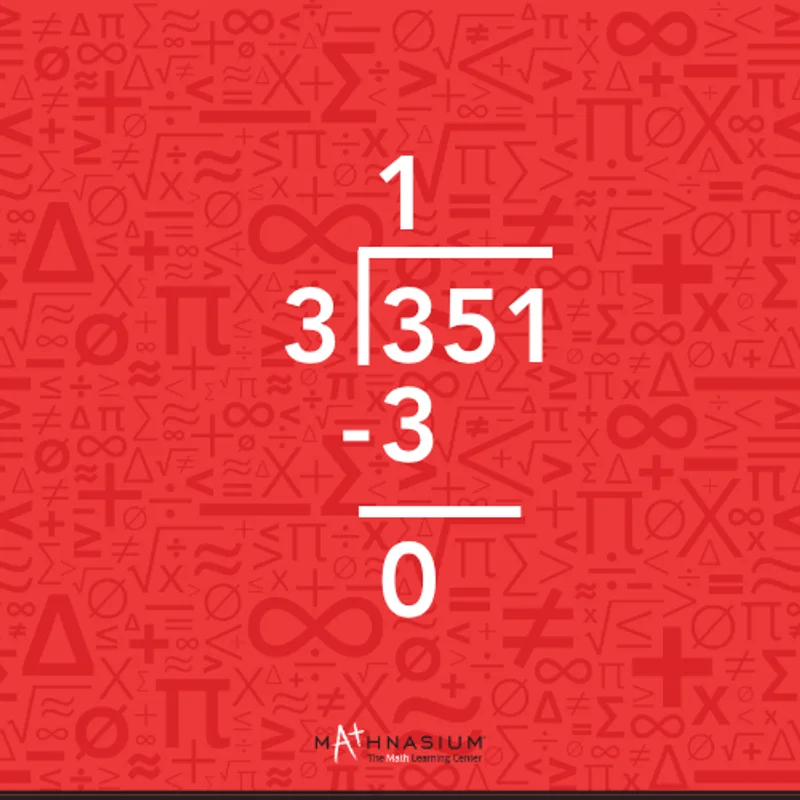
Step 3: Subtract
Now, we subtract 3 from 3, leaving us with 0.
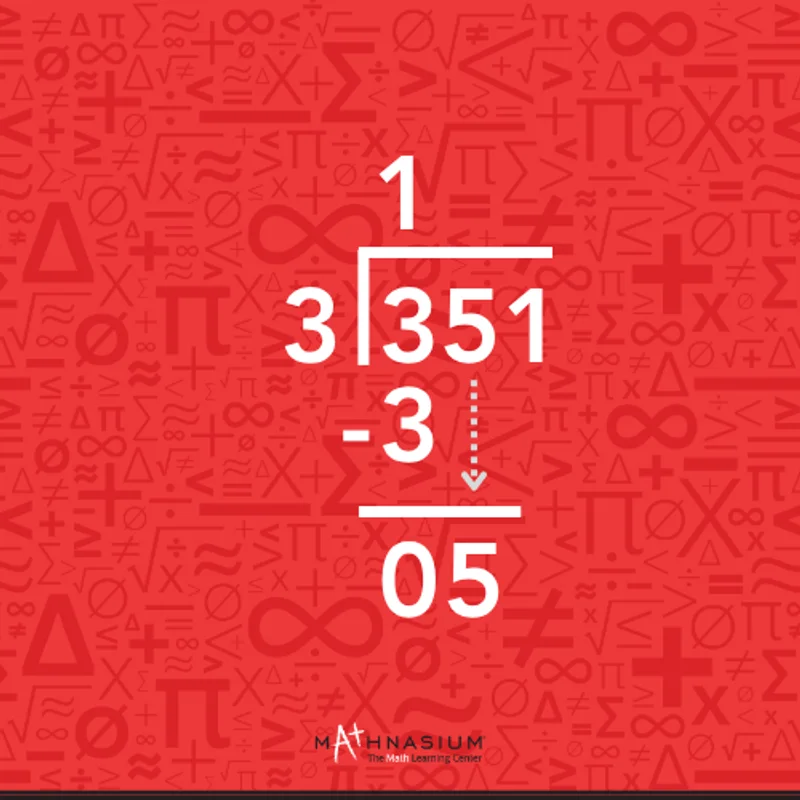
Step 4: Bring Down
We bring down the next digit from 351, which is 5, and place it next to the 0.
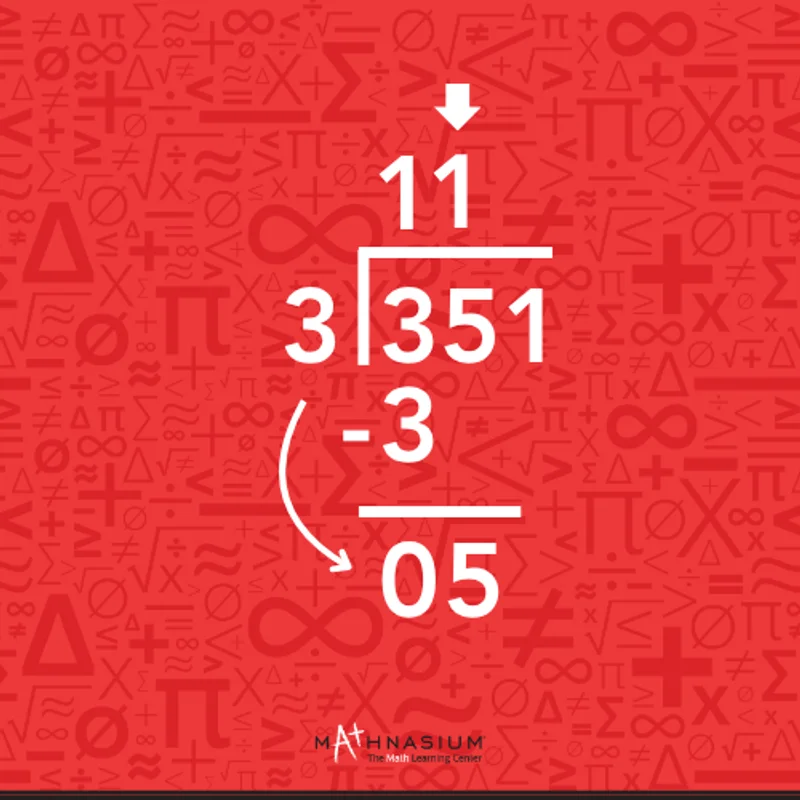
Step 5: Divide Again
Since we can still divide, we repeat the steps in the exact same order. We ask how many times 3 fits into 5. The answer is once, so we write 1 on top next to the first 1.
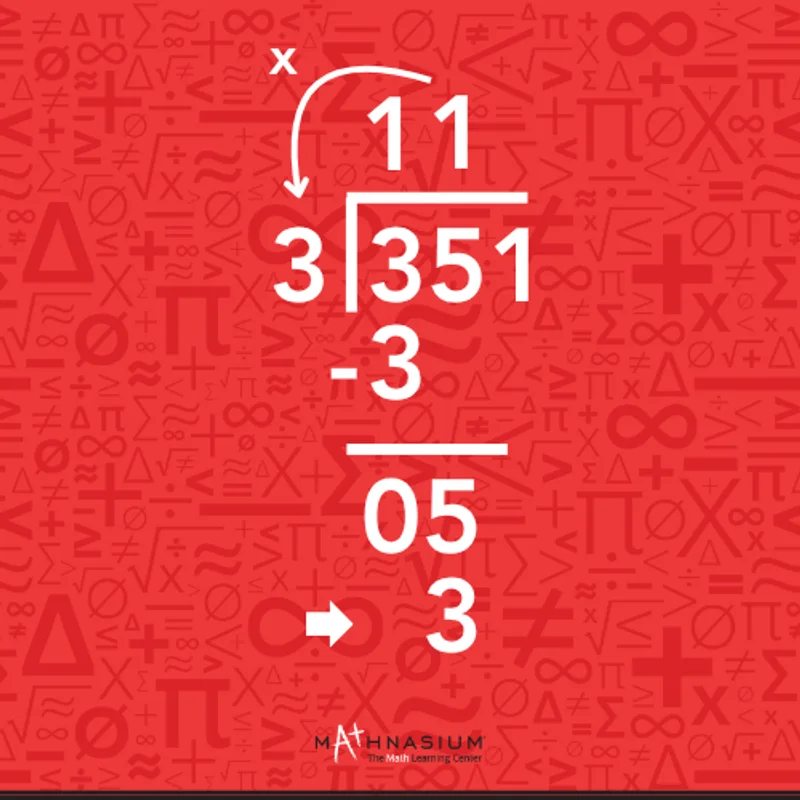
Step 6: Multiply Again
We multiply 1 by 3 to get 3, writing 3 underneath the 5.
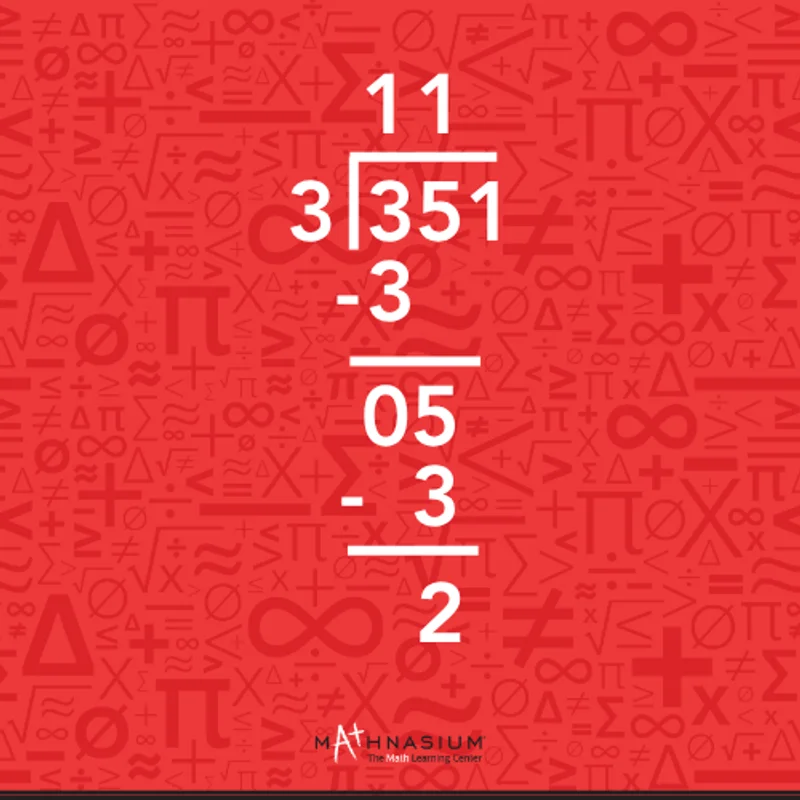
Step 7: Subtract Again
Now, we subtract 3 from 5, leaving us with 2.
Step 8: Bring Down Again
We bring down the final digit from 351, which is 1, and place it next to the 2. That gives us 21.
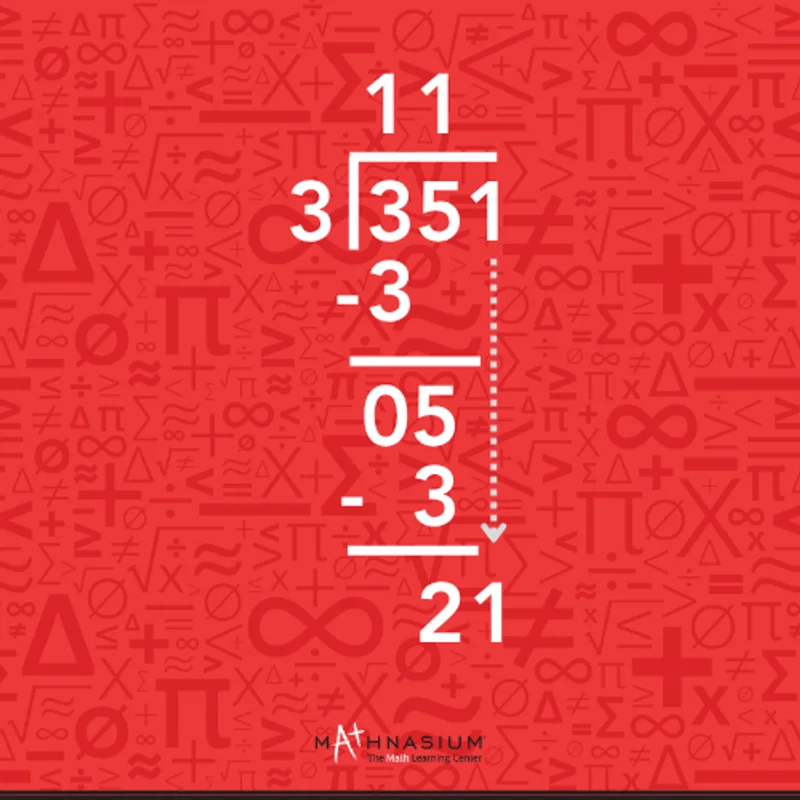
Step 9: Divide Again
We divide 21 by 3, which fits exactly 7 times. We write 7 on top next to the 11.
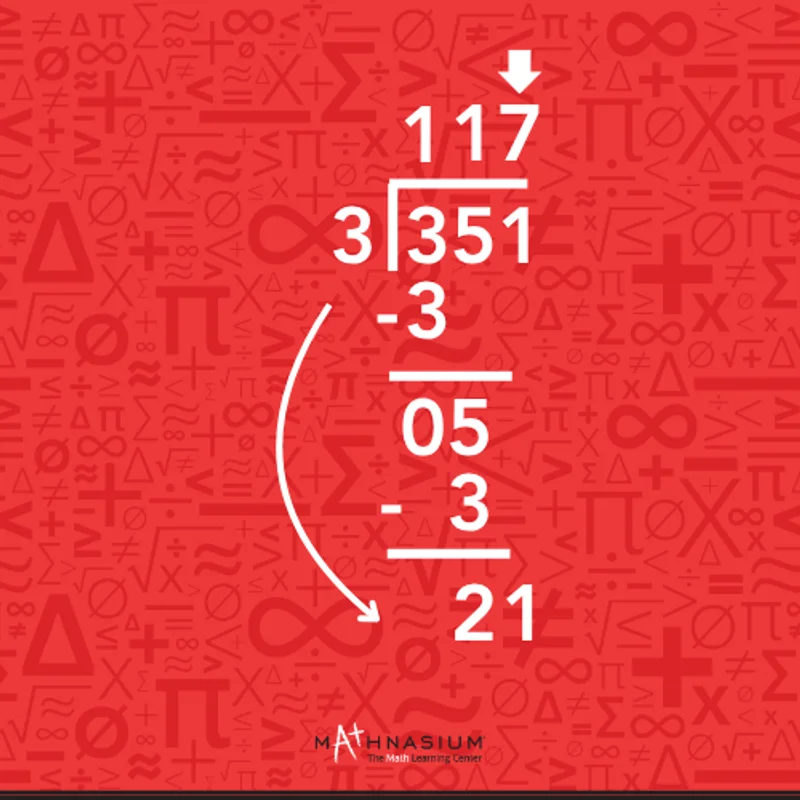
Step 10: Multiply Again
We multiply 7 by 3 to get 21, writing 21 under the 21.
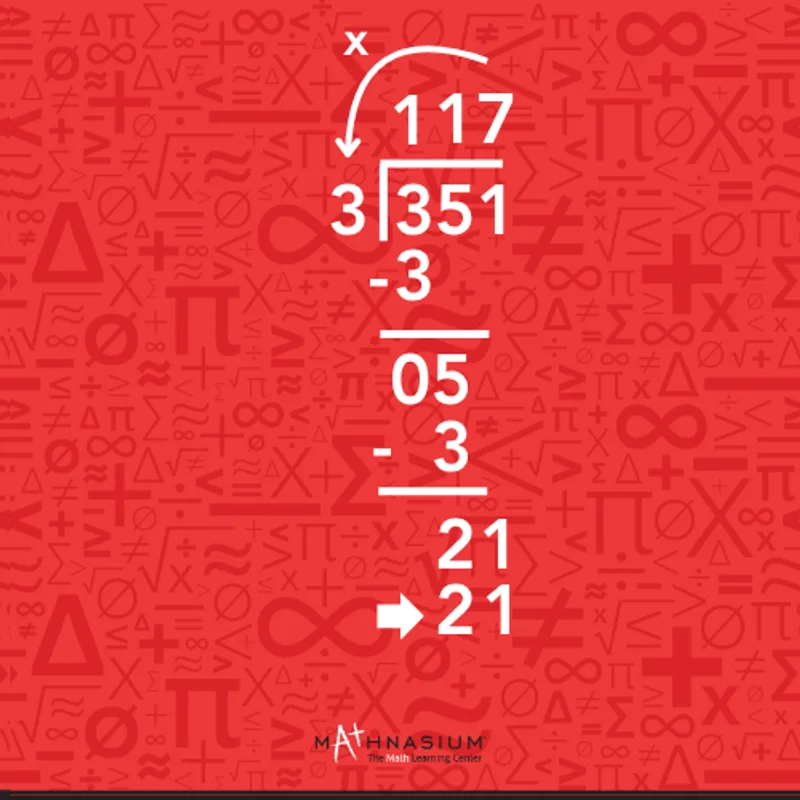
Step 11: Subtract Again
As the subtraction step goes after multiplication, we subtract 21 from 21, which leaves 0.
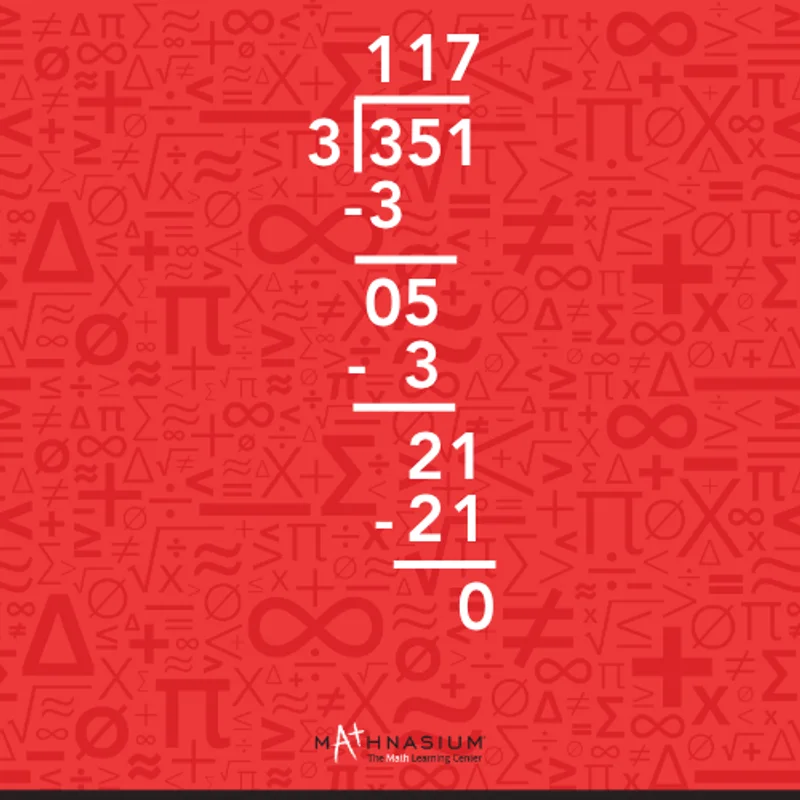
Since there are no more digits to divide, we have solved the problem, and the final answer is:
35 ÷ 13 = 117
Not so difficult, right?

Solved Examples of Long Division
Let’s go through a few more examples to tackle different scenarios we may find when doing long division.
Example 1: Long Division with a Remainder
Like any division problem, long division doesn’t always divide evenly and can leave a remainder. Let’s divide 437 by 4 to see what it looks like.
Before we start dividing, we write 437 (dividend) under the division symbol (⟌ ) and 4 (divisor) outside to the left.

Step 1: Divide
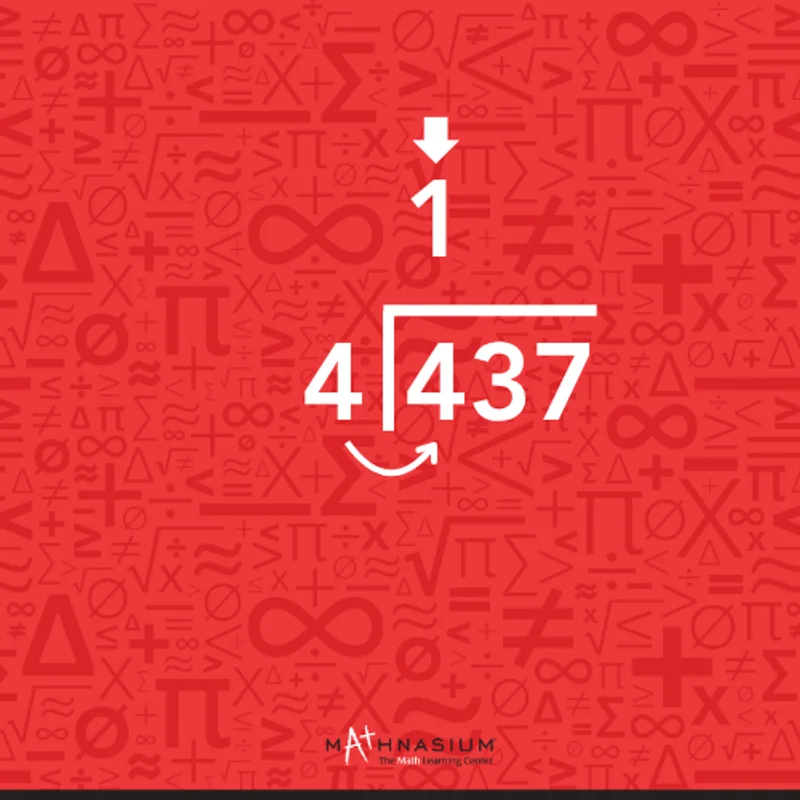
We always start by looking at the first digit of 437, which is 4. 4 fits into 4 exactly once, so we write 1 on top above the 4.
Step 2: Multiply
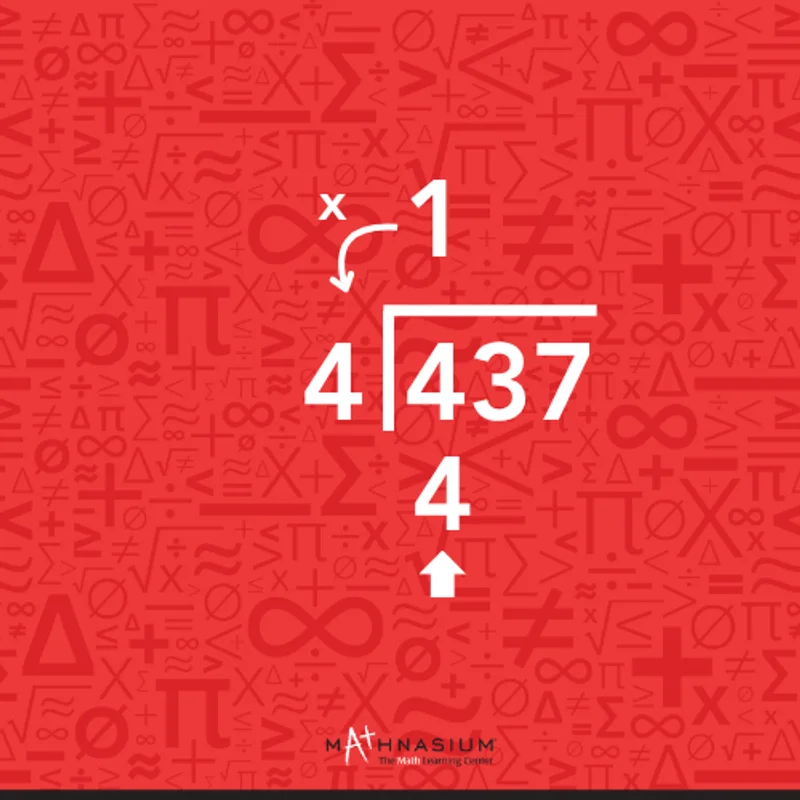
Then, we multiply 1 by 4 to get 4, and write the result under the first digit of the dividend.
Step 3: Subtract
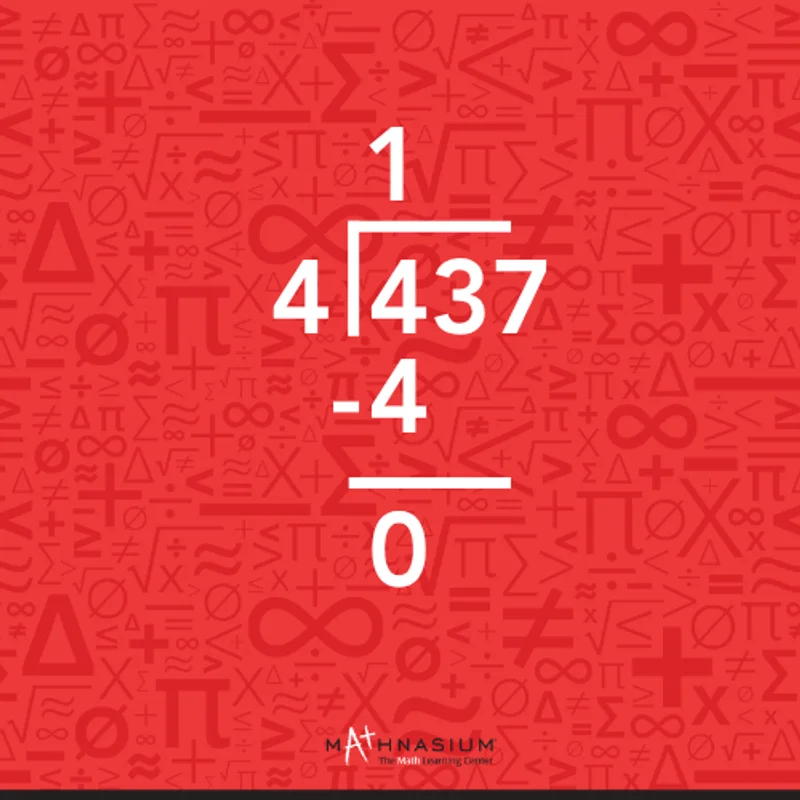
The next thing we do is subtract 4 from 4, giving us the result of 0.
Step 4: Bring Down
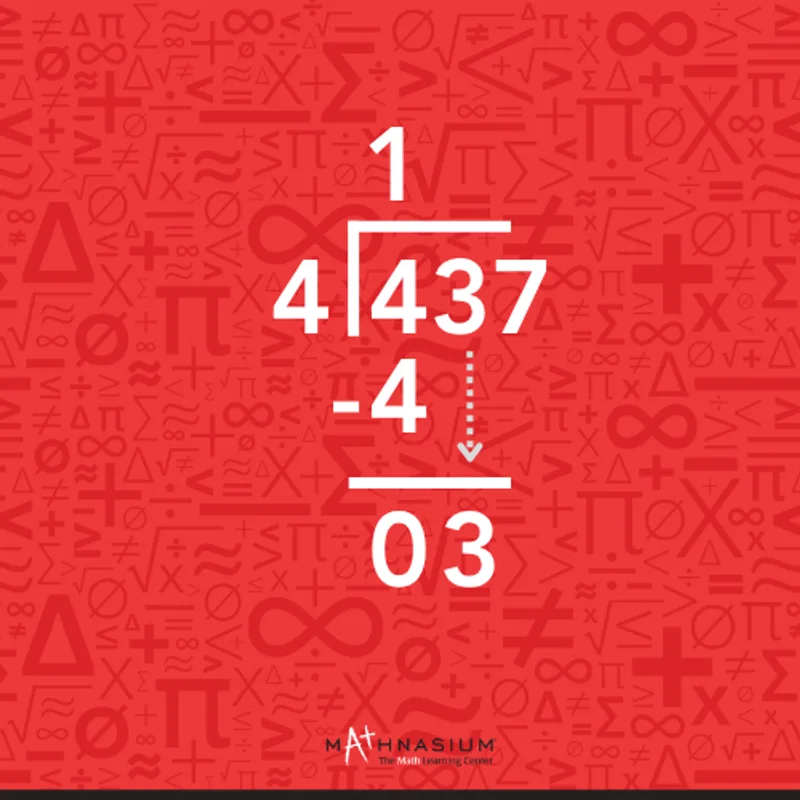
Next to the 0 we got from subtracting, we bring down the next digit, which is 3.
Step 5: Divide Again
Then, we ask how many times 4 fits into 3. It fits 0 times, so we write 0 on top above the 3 in our dividend.
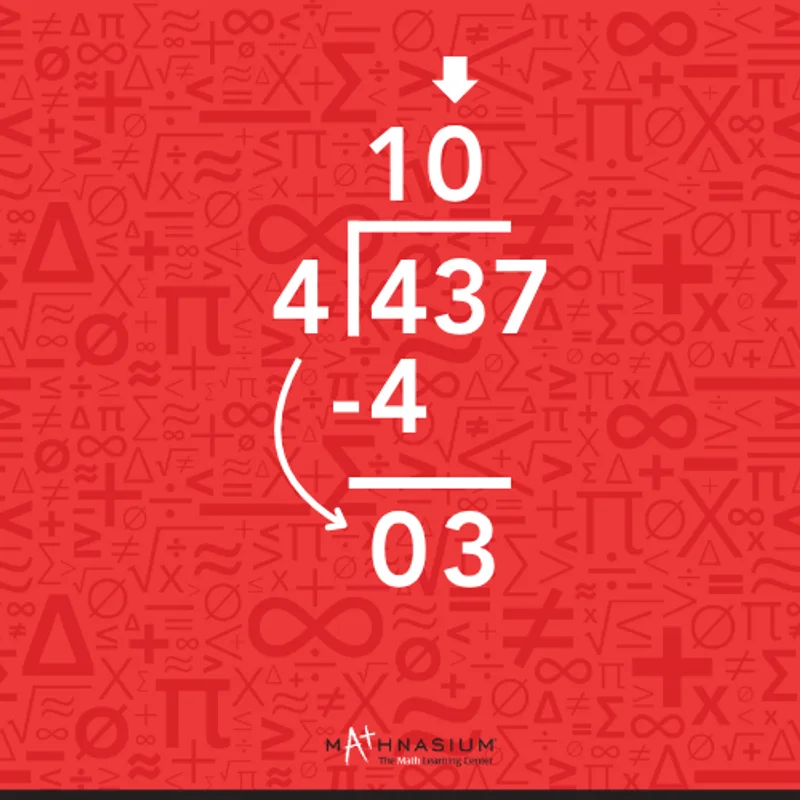
Step 6: Multiply Again
We multiply 0 by 4, which is 0. So, we are writing 0 under the 3.
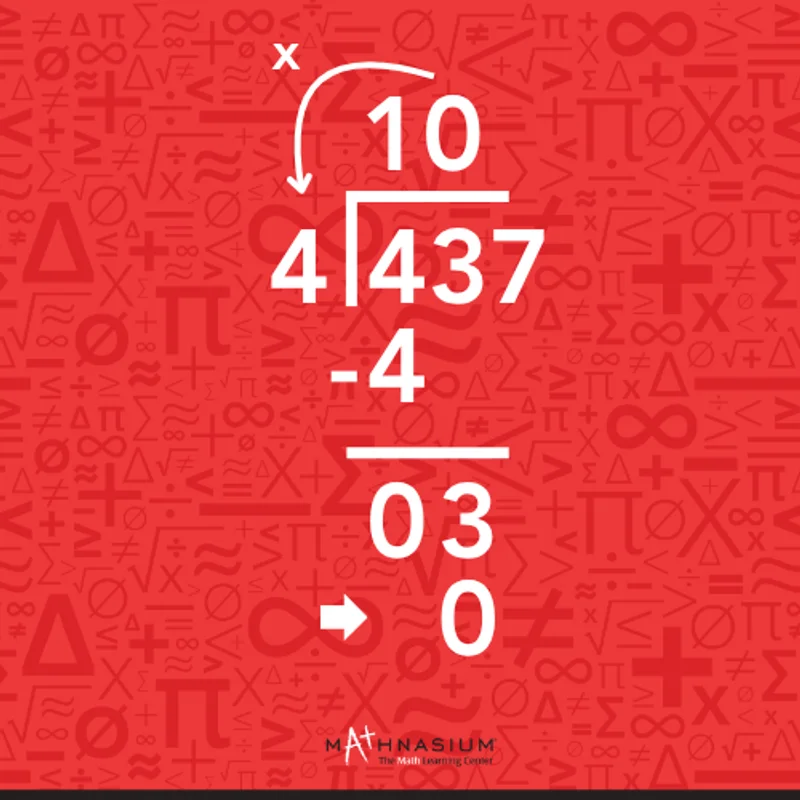
Step 7: Subtract Again
We need to subtract again. So, by subtracting 0 from 3, we get 3 and write it under 0.
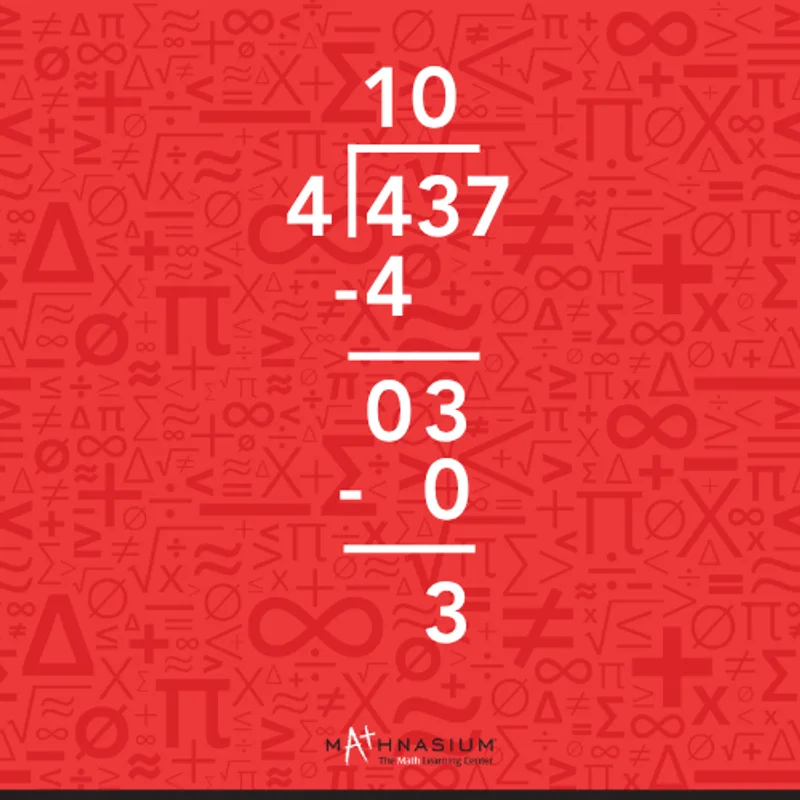
Step 8: Bring Down Again
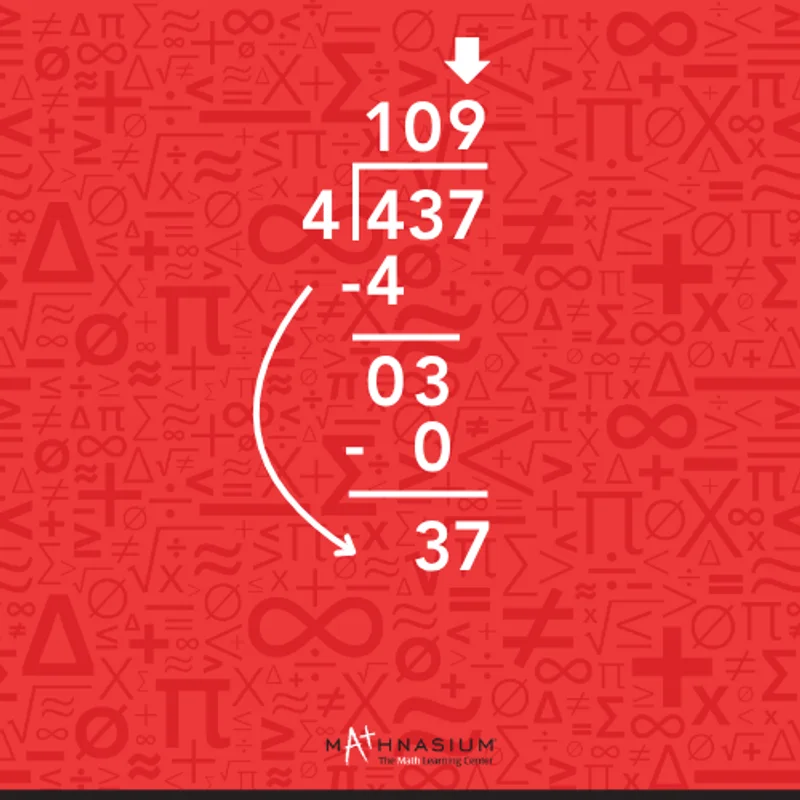
As we can see, there’s one more digit (7) to bring down. So, we bring it down to place it next to 3 to make 37.
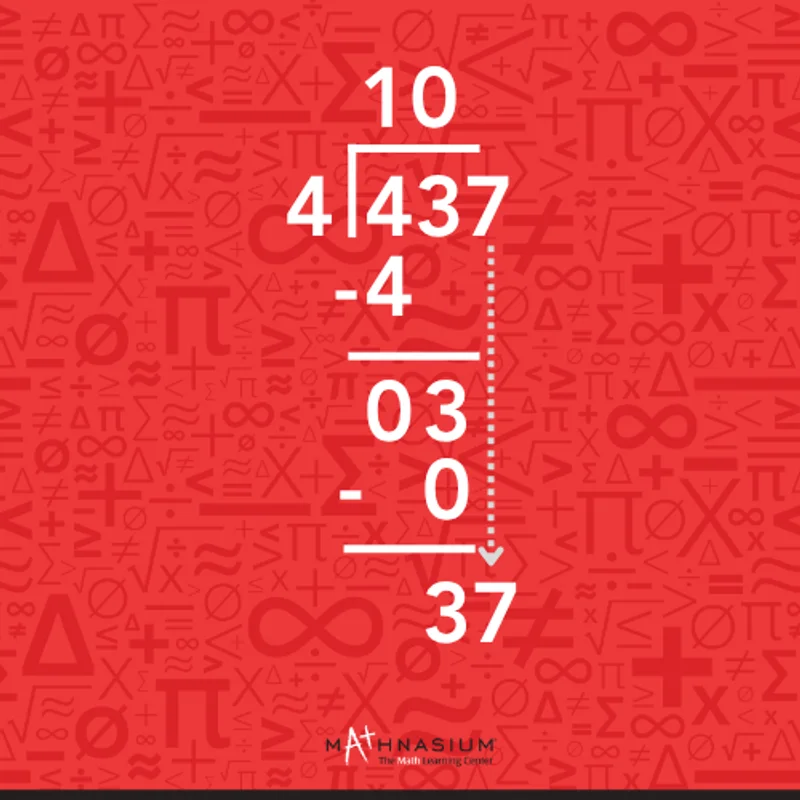
Step 9: Divide One More Time
We ask how many times 4 fits into 37. It fits 9 times (9 × 4 = 36). We write 9 on top above the 7.
Step 10: Multiply One More Time
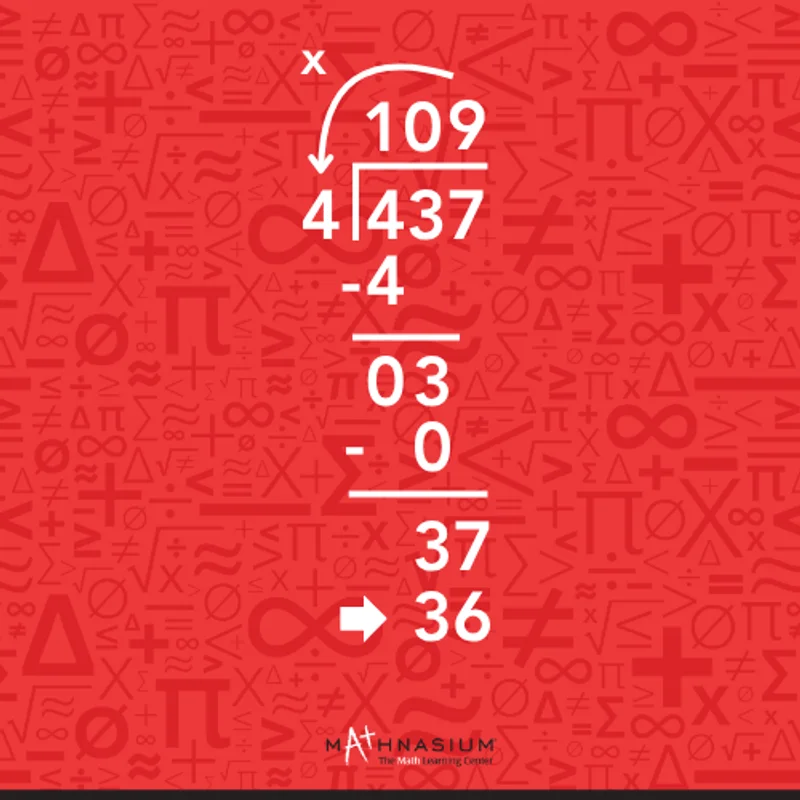
We multiply 9 by 4 to get 36, and write 36 under 37.
Step 11: Subtract One More Time
With two numbers left, we subtract 36 from 37 to get 1.
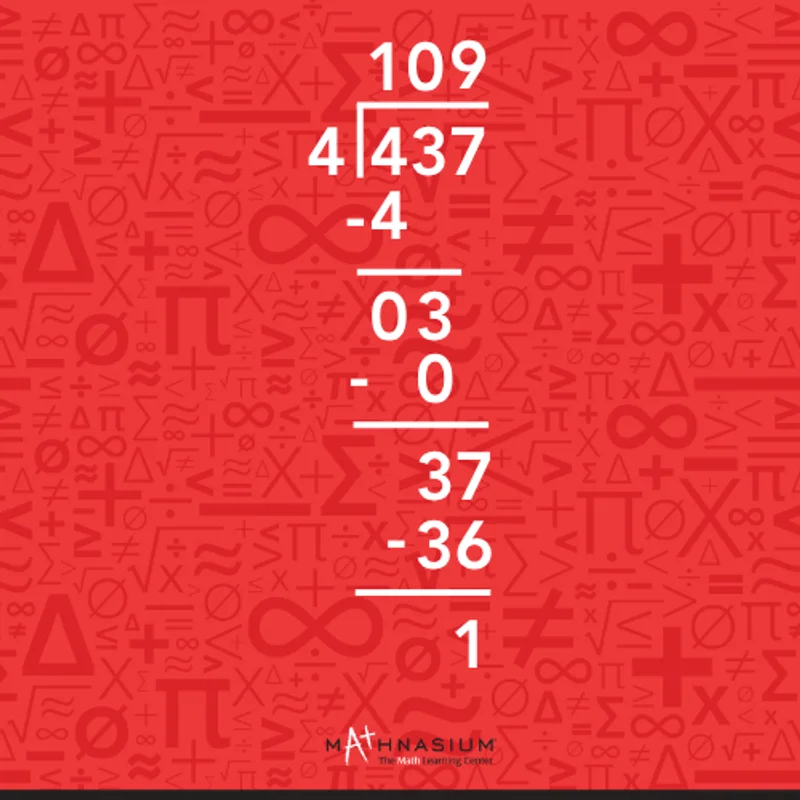
Since we can’t divide 1 by 4, that leftover 1 becomes our remainder.
So, our final answer is:
437 ÷ 4 = 109 R1
📕 You May Also Like: How to Do Long Division with Remainders - A Kid-Friendly Guide
Example 2: Dividing a Three-Digit Number by a Two-Digit Number
Now, let's look at how the same steps work when dividing a three-digit number by a two-digit number.
Step 1: Divide
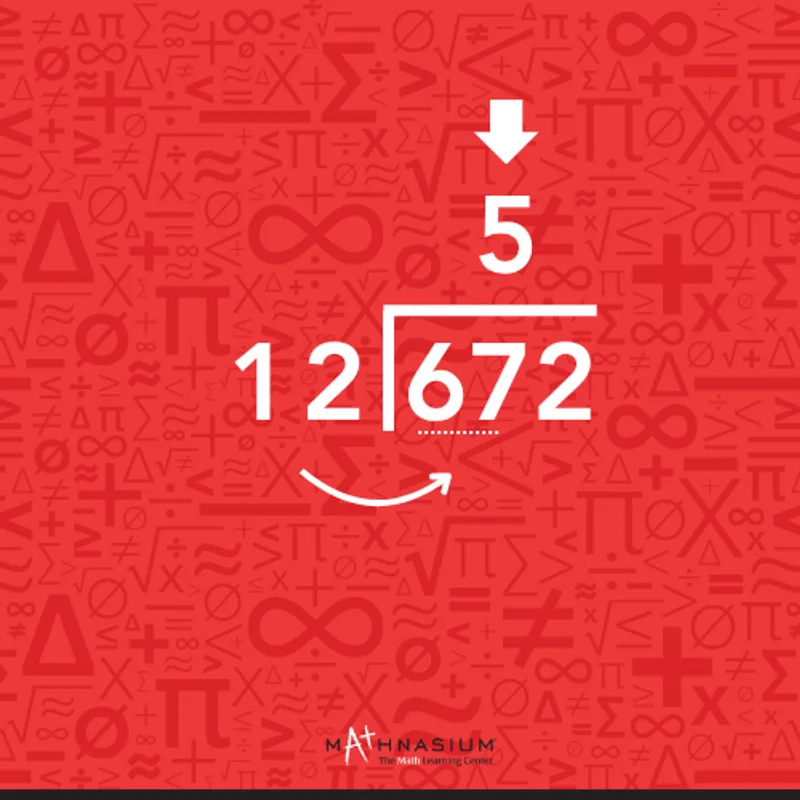
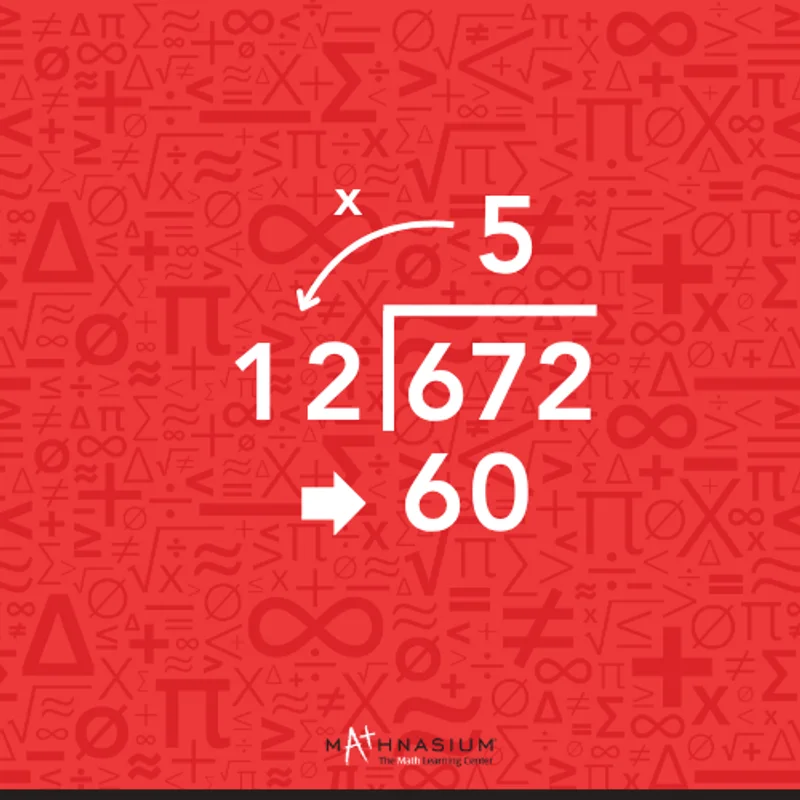
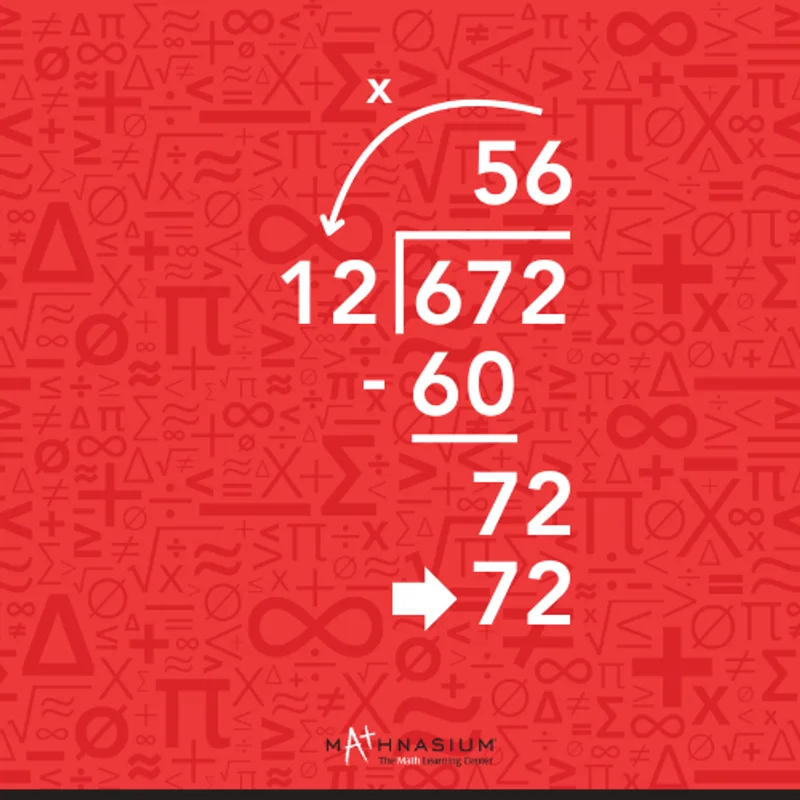
As we are dividing by a 2-digit number, we notice here that 12 cannot fit into 6. Instead, we look at the first two digits together (67). 12 fits into 67 a total of 5 times (5 × 12 = 60). So, we write 5 on top, above the 7.
Step 2: Multiply
We multiply 5 by 12 and write the multiplication product (60) under 67.
Step 3: Subtract
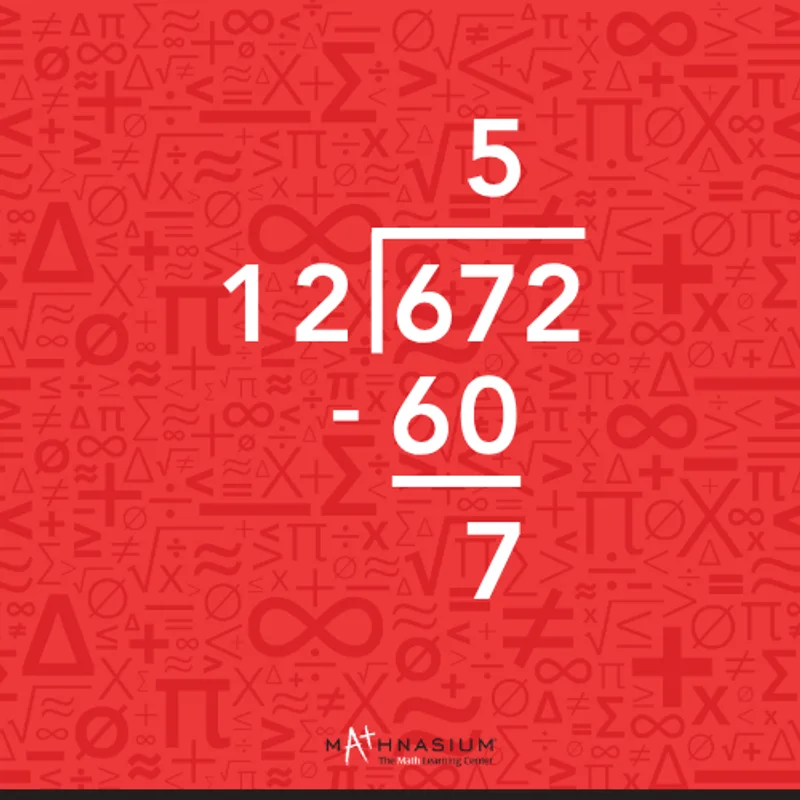
The next thing we do is subtract 60 from 67, which gives us 7.
Step 4: Bring Down
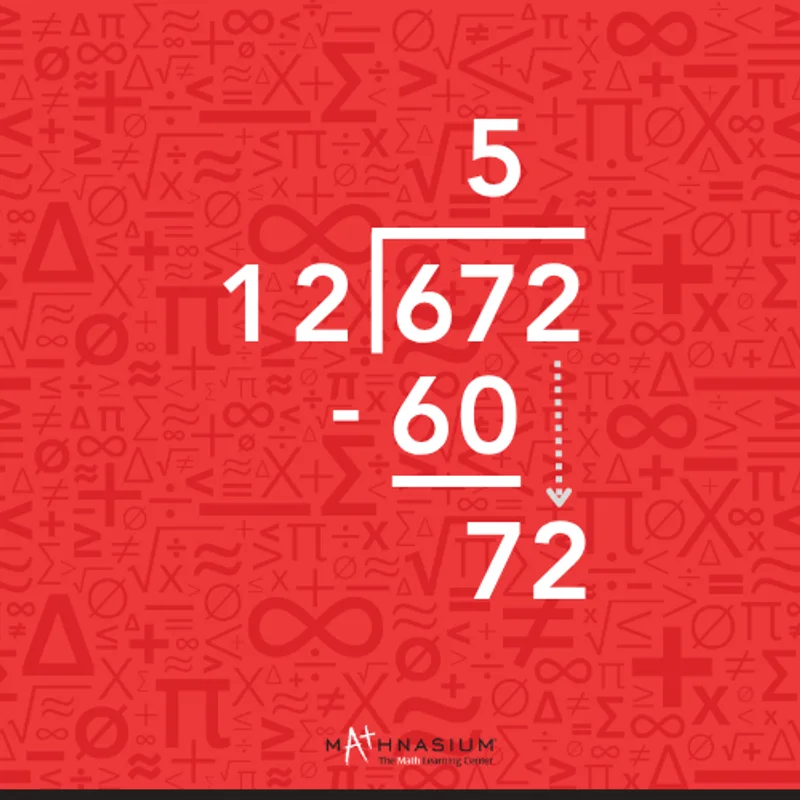
We bring down the next digit, 2, placing it next to the 7 to make 72.
Step 5: Divide Again
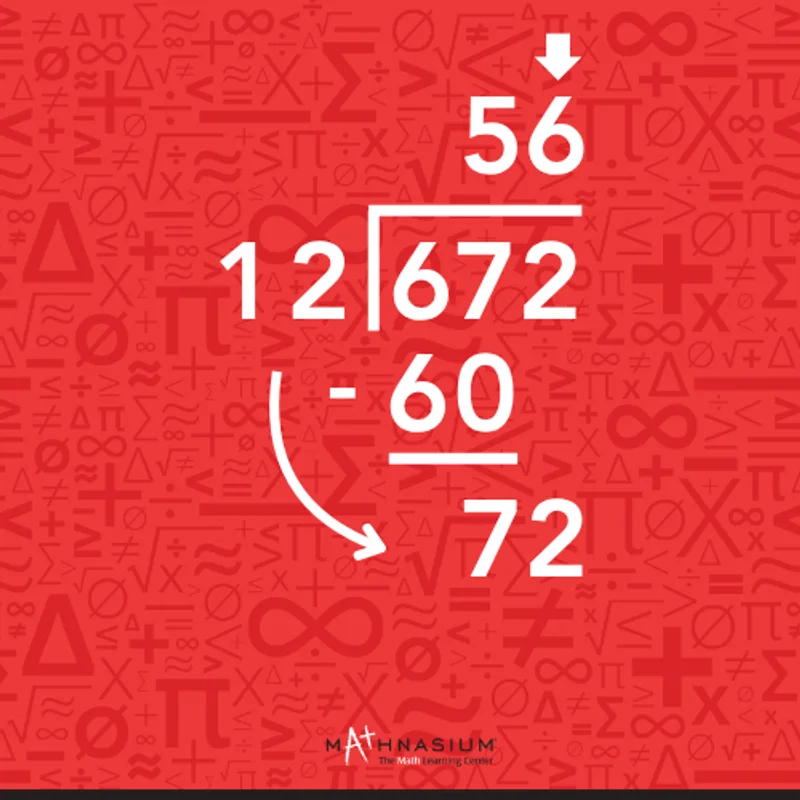
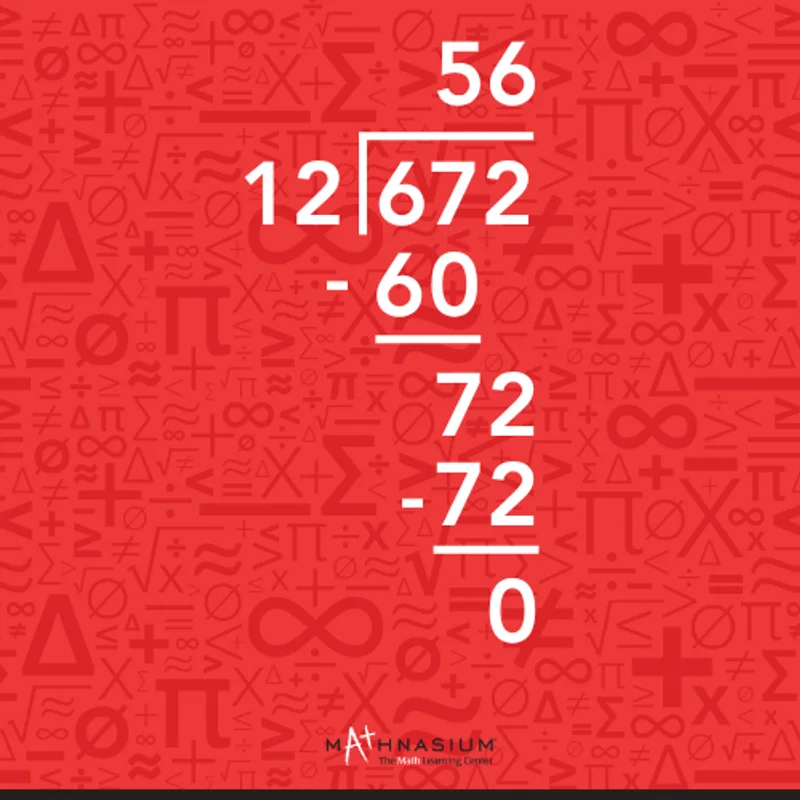
We divide 72 by 12. 12 fits into 72 exactly 6 times, so we write 6 on top above the 2.
Step 6: Multiply Again
We multiply the newest digit in the quotient (6) by 12 to get 72, and write it under 72.
Step 7: Subtract Again
We subtract 72 from 72, which is 0. With no more digits to bring down, the answer to our division is 56 with no remainders.
📕 You May Also Like: What Is a Quotient? A Complete, Kid-Friendly Guide
Practice Time: Check What You've Learned About Long Division
Let’s put what we covered into practice. Give these long division challenges a try and check your answers at the bottom of the guide. Good luck!
-
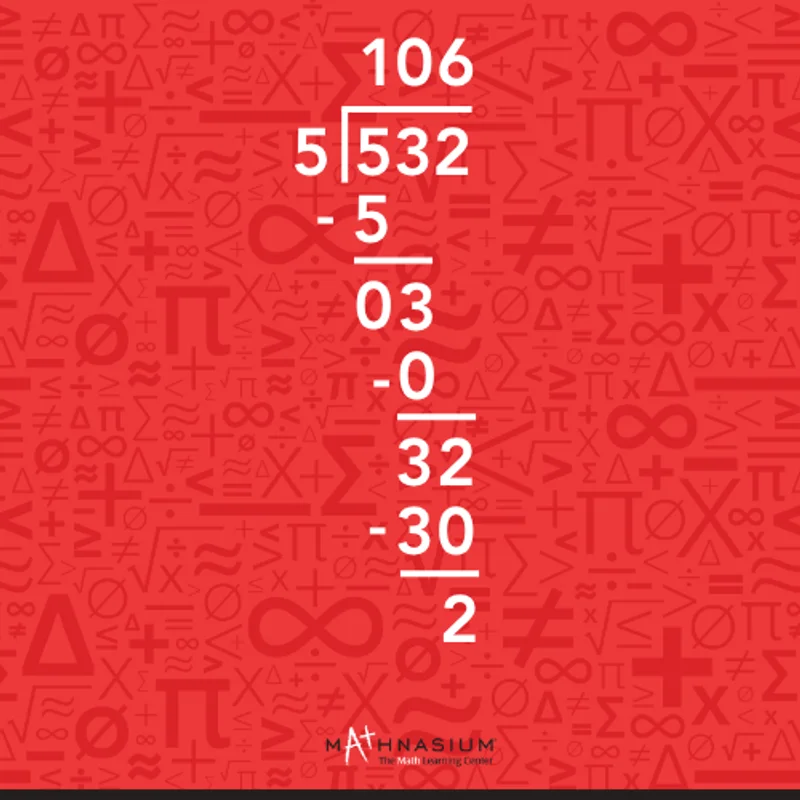
Challenge 1: 523 ÷ 5
-
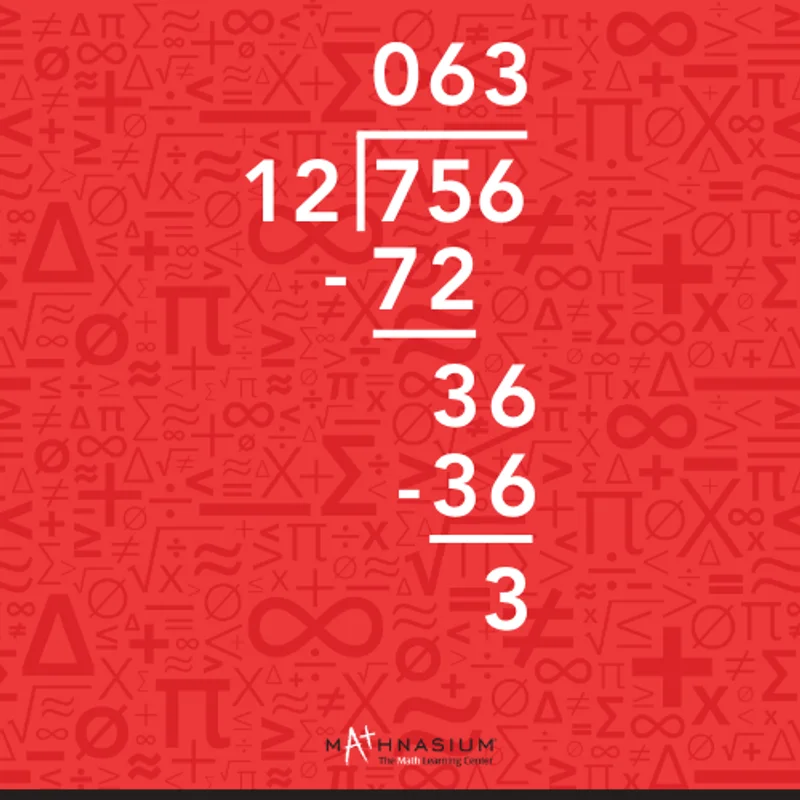
Challenge 2: 756 ÷ 12
FAQs About Long Division
At our Mathnasium centers, we work with students on long division problems all the time. Here are some of the most common questions we hear from them in the process, with their answers.
1. How can I check whether my long-division answer is correct?
To check whether our long-division answer is correct, we multiply the quotient by the divisor and, if there are any remainders, we add them to the product. The result should equal the dividend. For example:
-
No remainder: We solved 102 ÷ 3 = 34 and want to check whether it’s correct. What do we do? If we multiply 34 by 3, we get 102. The result equals the dividend, and that means we did the calculation properly.
-
With remainder: We divided 523 ÷ 5 = 104 R3. The way we check stays the same with one small addition. We multiply 104 by 5. The result is 520. If we add the remainder, we get 523, meaning our calculation is correct.
📕 You May Also Like: Long Division Explained: The Reasoning Behind Each Step
2. What do I do when the divisor does not fit into the first digit?
If the divisor does not fit into the first digit, we simply look at the first two digits together. For example, 156 ÷ 12. What do we do in this case?
-
Step 1: We look at the first digit and ask, ‘’Can 12 fit into 1?’’ The answer is no.
-
Step 2: Combine the first and second digits to make 15 if 12 fits there. 12 fits into 15 once.
-
Step 3: Place your first answer digit (the quotient) above the 5 and proceed with the long division steps.
3. How does long division work with negative numbers?
We perform the long division steps as usual, ignoring the signs until the very end. Once we have the answer, we apply these rules to determine the sign:
-
If the signs (of the divisor and dividend) are the same (both positive or both negative), the answer is positive.
-
If the signs (of the divisor and dividend) are different (one positive and one negative), the answer is negative.

Mathnasium's specially trained tutors help students work through long division in a caring and fun group environment.
How Mathnasium Helps Students Master Long Division (or Any Other Math Concept)
Mathnasium is a math-only learning center that helps K-12 students catch up, keep up, and get ahead in math.
When students hit a tricky topic like long division, we teach for deep understanding over simple rote memorization. We find that when kids actually get the why behind the steps, the skills stay with them, and they feel far more confident using them down the road.
To help them reach that level of understanding, we use our proprietary teaching approach called the Mathnasium Method™, designed around each student's individual needs and learning style.
Each student starts their Mathnasium journey with a diagnostic assessment that helps us spot current skills and knowledge gaps. With those insights, we then create a personalized learning plan tailored to their needs and goals.
With the plan in place, our specially trained tutors follow it closely, delivering face-to-face instruction in a supportive and engaging environment.
We phrase math in plain, everyday language instead of heavy jargon, blending verbal, visual, mental, tactile, and written techniques so each concept truly lands.
Our tutors are trained in both math and the emotional side of teaching, so they know how to support a student who feels overwhelmed and how to challenge one who's ready to move ahead.
We also give students room for productive struggle before stepping back in to check their reasoning, teaching both the how and the why behind the math so they build critical-thinking skills that carry into future courses.
Sessions often don't look like lectures. Games, earned rewards, and steady celebration of progress keep learning enjoyable and help students grow in confidence with every visit.
The results reflect that approach:
-
94% of parents report an improvement in their child's math skills and understanding
-
93% of parents report their child's improved attitude toward math after attending Mathnasium
-
90% of students saw an improvement in their school grades
With over 1,100 learning centers, there is likely a Mathnasium close to you
For families in and near Jacksonville, FL, Mathnasium of Beach Blvd offers hands-on support with long division and any other math topic standing in the way of math confidence.
Whether your child is looking to catch up, keep up, or get ahead in math, we can support them. Schedule a free diagnostic assessment, and we'll use it to understand exactly where they are and build a personalized plan from there.
📅 Schedule a Free Assessment at Mathnasium of Beach Blvd
Not near Beach Blvd?
📍 Find a Mathnasium Learning Center Near You
Pssst! Check Your Answers Here
If you've given our practice challenges a go, here are the answers.
How did you do?


 (904) 619-1048