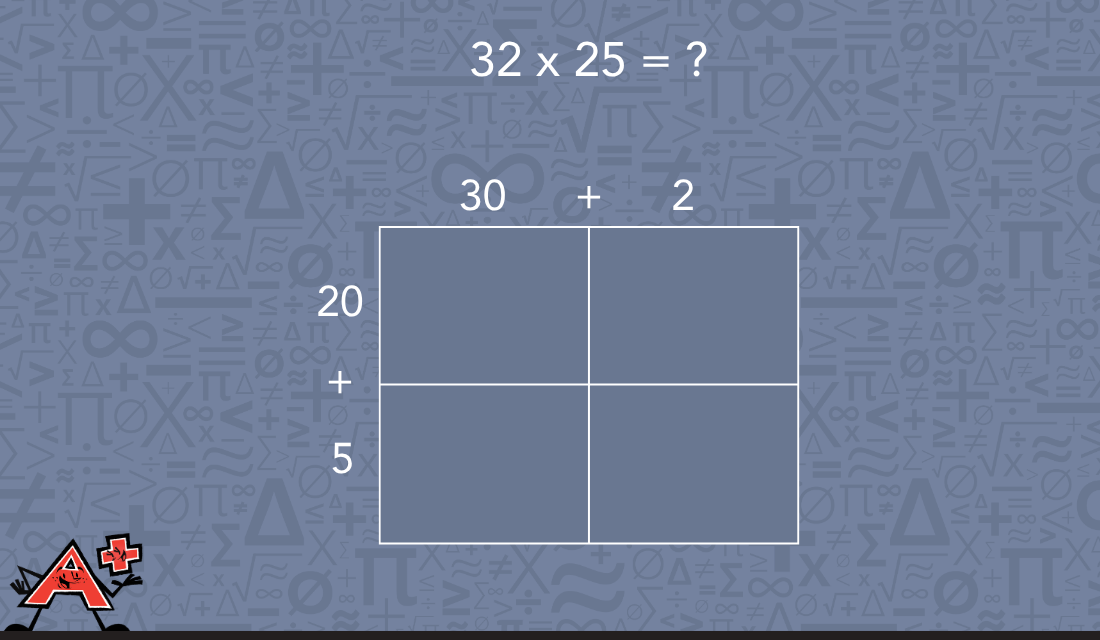
We all know that multiplication can sometimes get messy. In a problem like 32 x 25, we can easily lose track of carried digits or misalign a long stack of numbers.
That is why mathematicians thought of a neat, visual method that keeps every step organized. It’s called the area model.
Today, tutors at Mathnasium of Calabasas will show you what an area model for multiplication is, explain how to use it for any problem, and give you a chance to try it yourself with a few challenges.

What Is an Area Model?
An area model is a visual tool that helps us solve multiplication by breaking larger numbers into their expanded place values.
So, for example, when we get a bigger problem like 32 x 25, we can split 32 into 30 and 2, and split 25 into 20 and 5. Then, we draw a simple grid box to multiply those friendly, smaller parts one by one before adding them back together.
You might also hear people call this a box model or grid method. They are all the exact same visual strategy.
📕 You May Also Like: 9 Tips to Help Your Child Master Multiplication Facts
How Do We Use an Area Model for Multiplication?
To show you how to use the area model for multiplication, let's circle back to our example, 32 x 25, and show you the steps you can repeat for any problem.
1. Expand the numbers into place values
First, we break each number down by its place value:
-
32 becomes 30 and 2
-
25 becomes 20 and 5
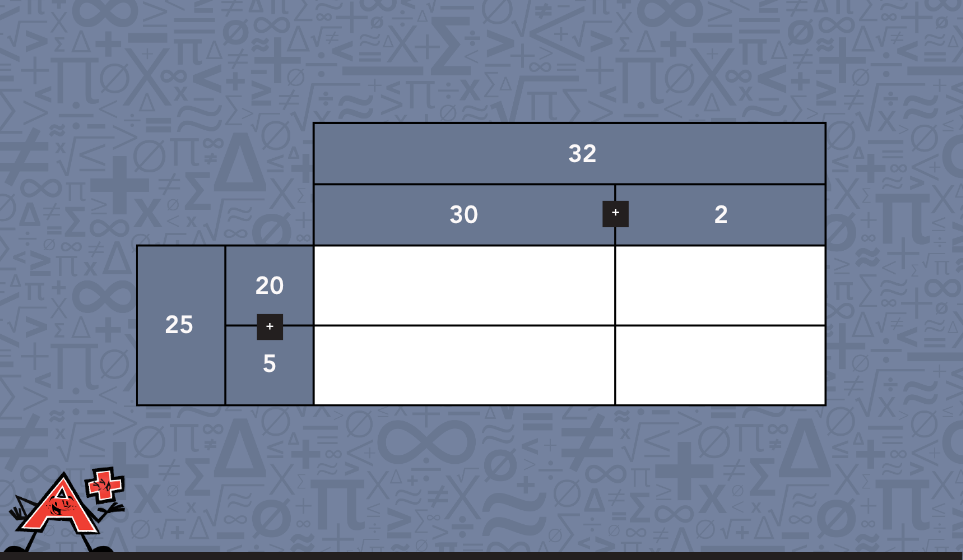
2. Draw the grid
Draw a large box and split it into four smaller boxes (two rows and two columns). Write 30 and 2 across the top edge, then write 20 and 5 down the left side like so:
3. Multiply to fill each box
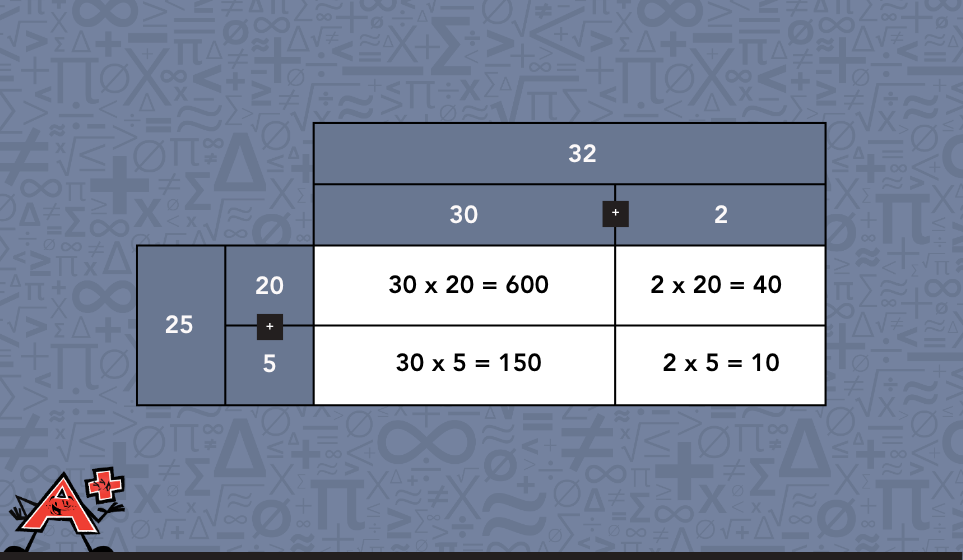
Multiply the top number by the side number for each box to find the partial answers:
-
Top-left box: 30 x 20 = 600
-
Top-right box: 2 x 20 = 40
-
Bottom-left box: 30 x 5 = 150
-
Bottom-right box: 2 x 5 = 10
4. Add all numbers together
Take the numbers from inside all four boxes and add them up below the box to find our final answer:
600 + 150 + 40 + 10 = 800
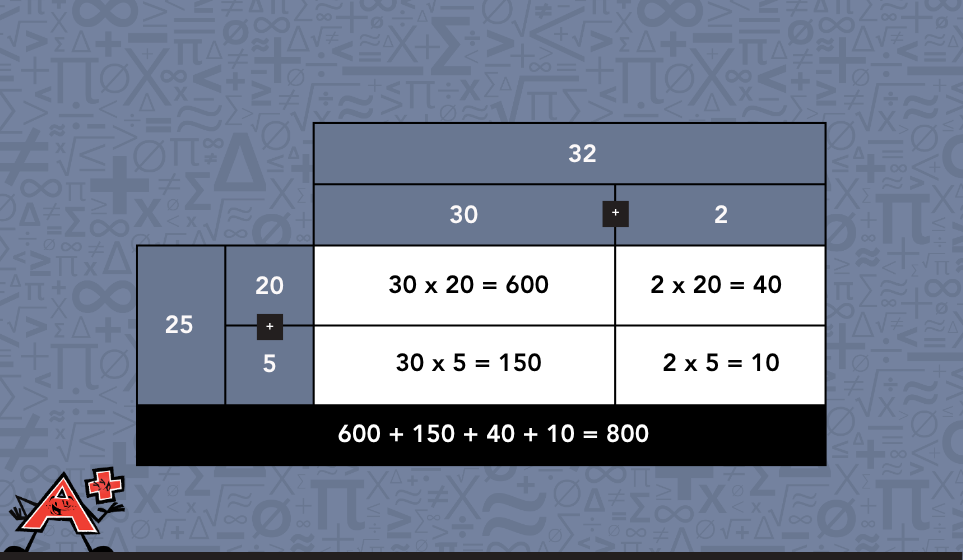
So, 32 x 25 = 800.
See how neat that is? No lost digits, no messy stacks!

Area Models in Different Multiplication Problems (Solved Examples)
So far, we've seen how efficient the area model is for two-digit numbers. But what about other problems? Let's work through a couple more together.
Scenario A: Single-Digit by Multi-Digit
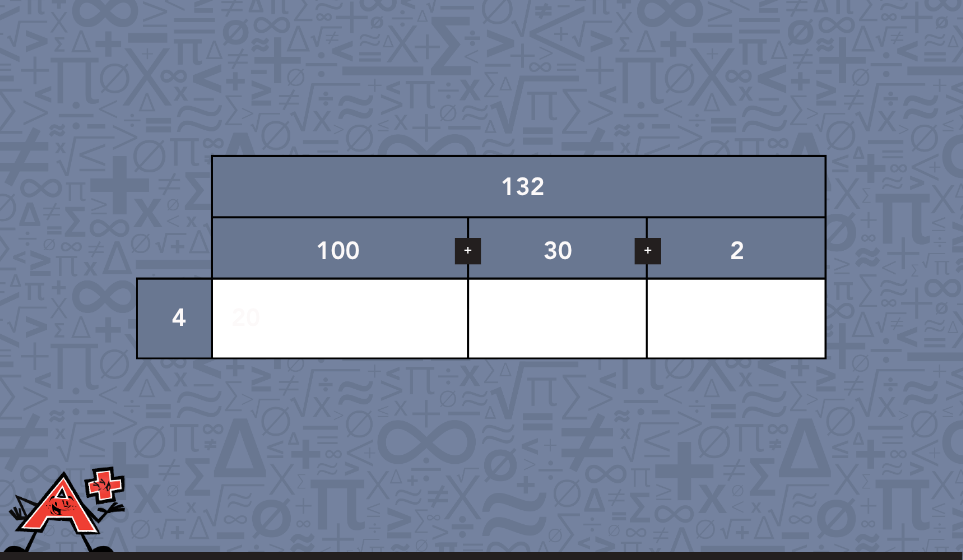
When we multiply a single digit by a larger number, our grid simply gets wider or taller. Say we want to work out 4 x 132.
We follow the same steps.
1. Expand the numbers into place values
We break each number down by its place value:
2. Draw the grid
Draw 1 row with 3 columns. Place 4 on the left side, and write 100, 30, and 2 across the top.
3. Multiply to fill each box
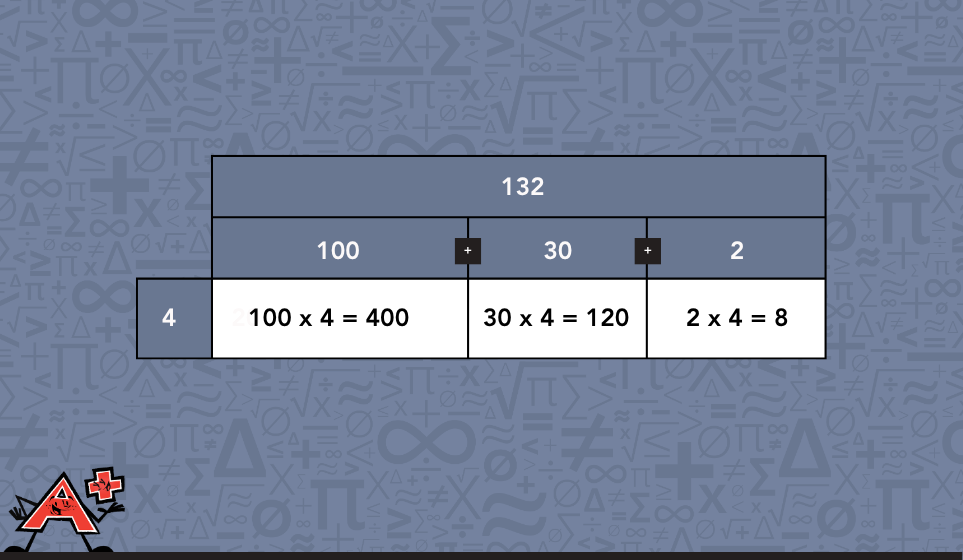
Now, we multiply the top number (132) by the side number (4) for each box to find the partial answers:
4. Add all numbers together
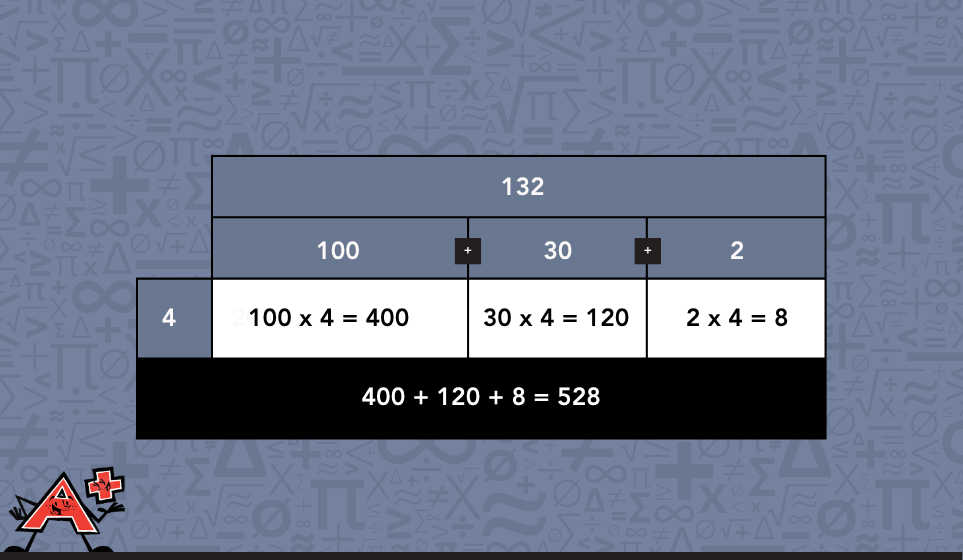
Finally, we take all the numbers inside the boxes and add them together.
And that's how we multiply a single digit by a multi-digit number without getting tangled up!
📕 You May Also Like: How to Use the Standard Algorithm for Multi-Digit Multiplication
Scenario B: Three-Digit by Two-Digit
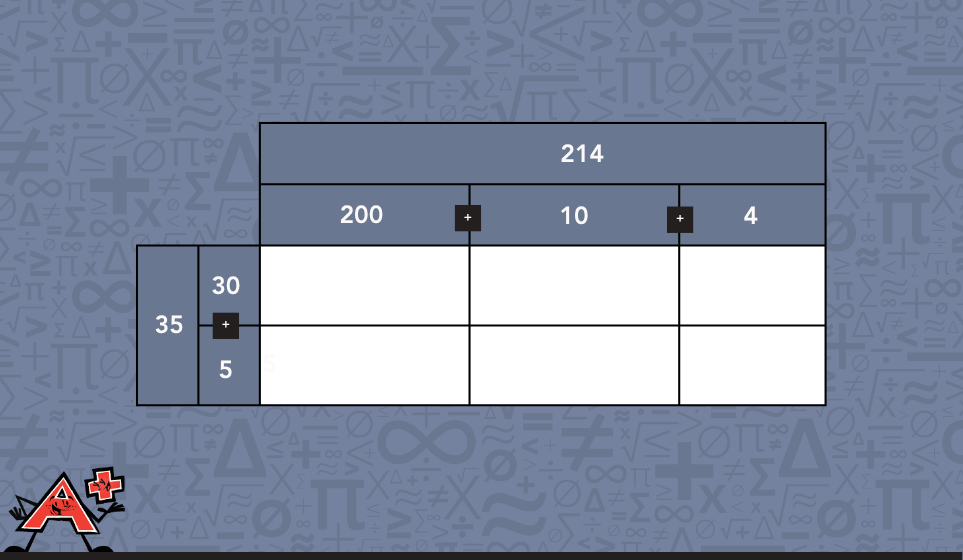
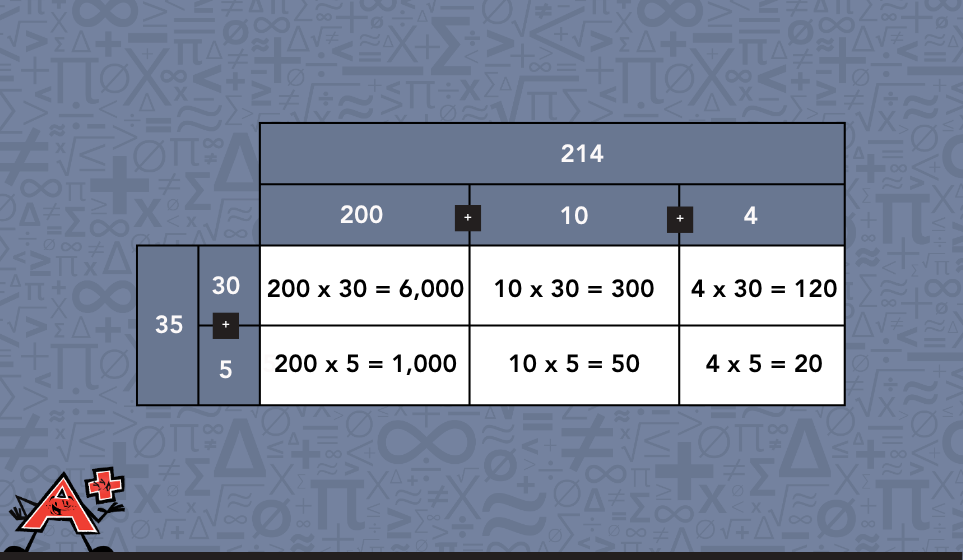
When we multiply three-digit numbers by two-digit numbers, the exact same rules apply. We just draw a slightly larger grid! Let’s see that in action with this example: 214 x 35.
1. Expand the numbers into place values
We expand 214 into 200, 10, and 4. We expand 35 into 30 and 5.
2. Draw the grid
We draw a grid with 2 rows and 3 columns. We put 200, 10, and 4 across the top, and we put 30 and 5 down the left side.
3. Multiply to fill each box
Now, we multiply the top number by the side number for each box to find the partial answers:
4. Add all numbers together
Lastly, we take all the numbers inside the boxes and add them together.
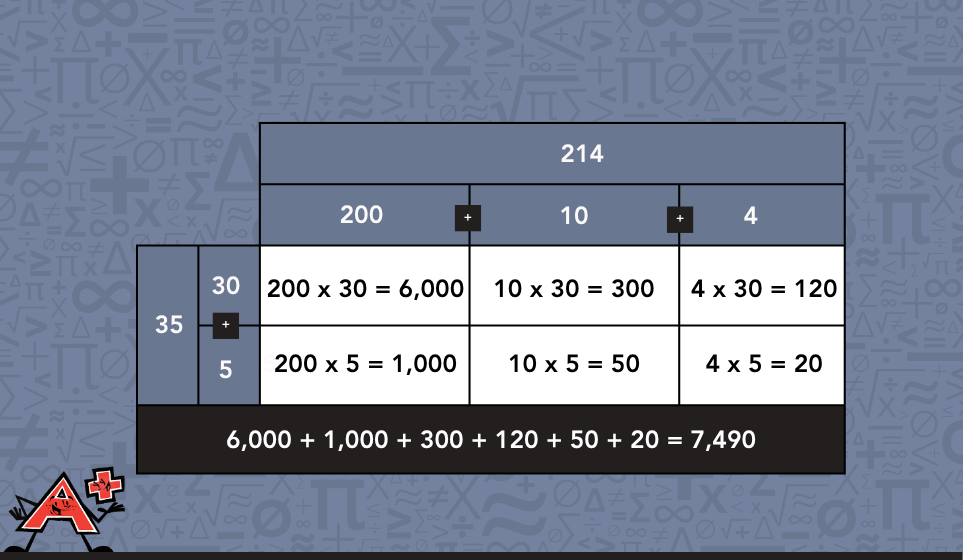
So, 214 x 35 = 7,490.
Over to You: Work Through These Multiplication Problems Using the Area Model
You've seen how the area model helps turn complicated multiplication into simple, bite-sized steps. Now it's your turn to try!
Here are 3 different challenges to test your skills:
-
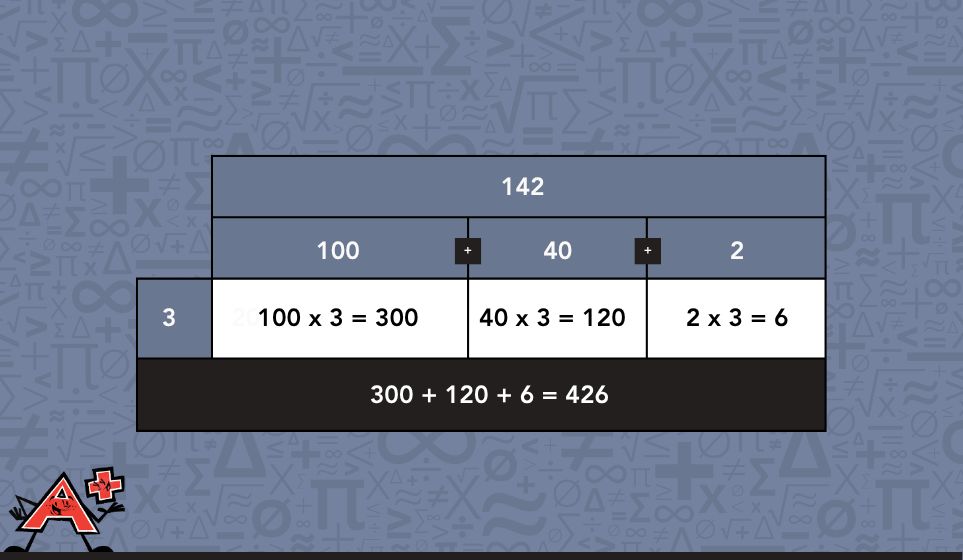
Challenge 1: 3 x 142
-
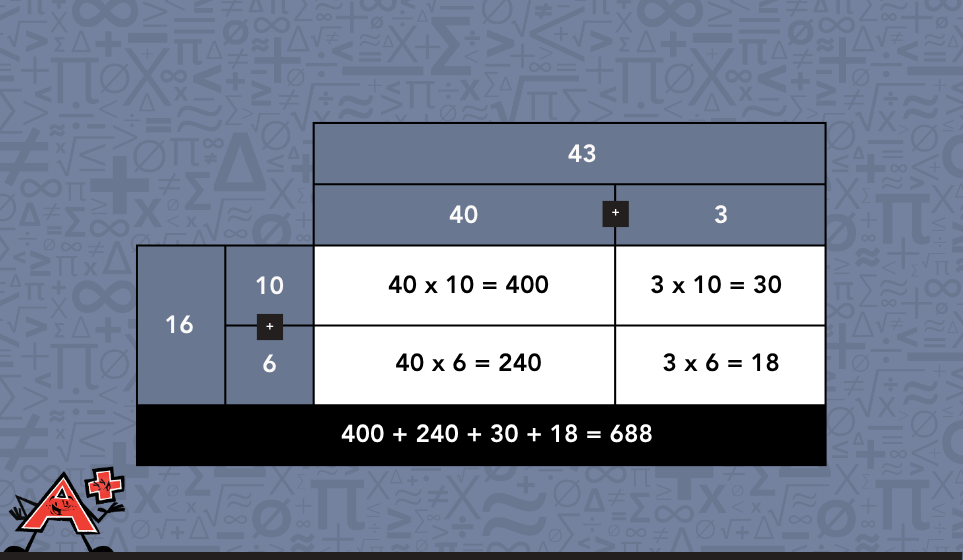
Challenge 2: 43 x 16
-
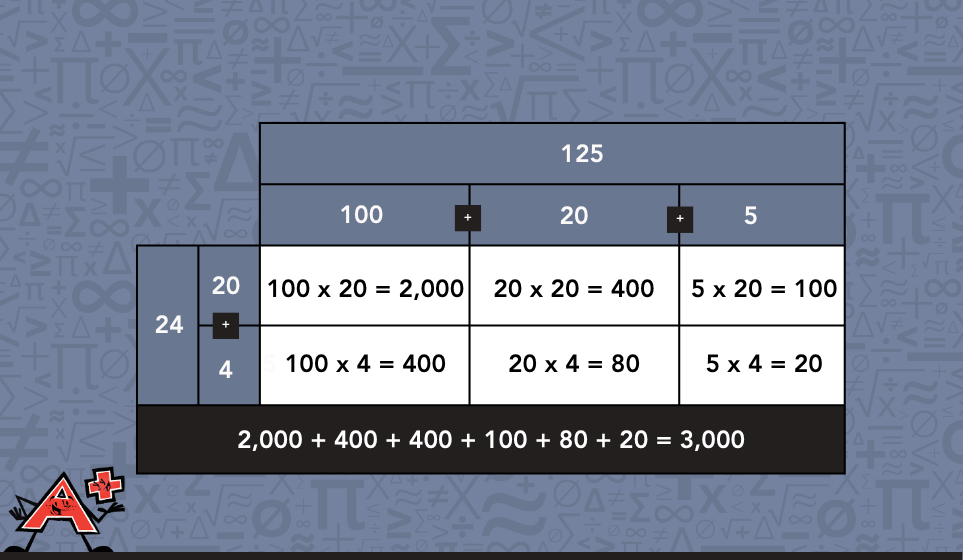
Challenge 3: 125 x 24
Grab a sheet of paper, draw your grids, and give them your best shot! When you're done, scroll down to the bottom of our guide to check your answers and see how you did.
Frequently Asked Questions About Area Models
We’ve gathered the questions we often hear from students at Mathnasium of Calabasas and answered them here.
1. Can we use area models for any other math operations?
Yes! While we use area models a lot for multiplication, we can also use them backward to make long division super visual. As you move into higher math, you'll even use the exact same grid strategy to multiply fractions, decimals, and algebraic expressions.
2. What happens if one of our expanded numbers has a zero in it?
If you have a zero in a place value (like expanding 204 into 200, 0, and 4), you can still draw the box for 0, and since anything times 0 is 0, that box will just be 0! Or, if you prefer, you can skip drawing that column entirely to save space on your paper.
3. Why is it called an "area" model?
It gets its name from geometry! The area of a real-life rectangle is found by multiplying its length by its width. When we draw our grid, we are using that exact same idea or treating the factors as side lengths to find the total "space" inside.
 At Mathnasium of Calabasas, we use personalized learning plans and interactive teaching techniques to help students build a deep understanding of any math concept, area model included.
How Mathnasium of Calabasas Helps Students Master Any Math Concept
Mathnasium of Calabasas is a math-only learning center serving Calabasas and surrounding communities and is part of a worldwide network of over 1,100 Mathnasium locations.
We help local students of all skill levels build confidence and excel in math. Whether a student needs to rebuild foundational skills like multiplication and fractions, keep up with schoolwork, or tackle advanced concepts, we meet them right where they are.
Instead of relying on a one-size-fits-all curriculum, we personalize every student's journey through the Mathnasium Method™, our proprietary approach designed to build true understanding.
To help students master any concept—including the area model—our approach focuses on:
-
Assessment and Personalized Learning Plans: Each student begins their Mathnasium journey with a diagnostic assessment that identifies current skills, strengths, and gaps. From those findings, we build a personalized learning plan tailored to their goals.
-
Teaching for Understanding: Our specially trained tutors use natural language and a mix of verbal, visual, mental, tactile, and written techniques so each concept lands before we move forward.
-
Problem-Solving and Critical Thinking: We give students time to work through problems independently. That productive struggle helps them learn to trust their own reasoning. When we do step in, we explain both the how and the why behind each answer, so students build problem-solving and critical thinking skills they can use in math and beyond.
-
An Engaging and Fun Learning Environment: Sessions include games, earned rewards, and consistent celebration of progress. Students build confidence alongside fluency, and many develop a more positive relationship with math over time.
Our approach brings measurable results:
-
94% of parents report an improvement in their child's math skills and understanding
-
93% of parents report their child's improved attitude toward math after attending Mathnasium
-
90% of students saw an improvement in their school grades
Whether your student is looking to catch up, keep up, or get ahead in math, our team is ready to assist!
Start by scheduling a free diagnostic assessment with our center. We’ll use it to create a learning plan customized to their needs and set them on the best path to math mastery.
📅 Schedule a Free Assessment at Mathnasium of Calabasas
Not near Calabasas?
📍 Find a Mathnasium Learning Center Near You
Pssst! Check Your Answers Here
If you’ve given our practice exercises a try, check how you did below.
Challenge 1: Setting up 3 x 142 with an area model gives us a grid that looks like this:
Challenge 2: For 43 x 16, our grid fills in like this:
Challenge 3: Mapping out 125 x 24 gives us our largest grid:
So, how did you do?


 (818) 741-2880