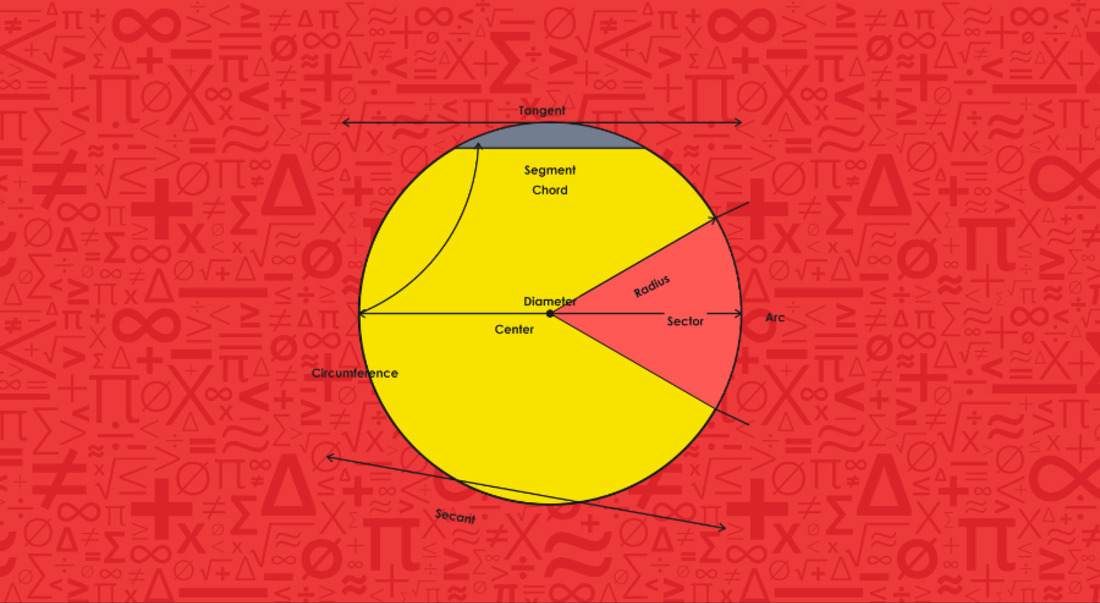
Circle vocabulary shows up in geometry coursework from Grade 5 onward, and the names of different circle components are often where students need a clear reference point.
Our tutors at Mathnasium put together this guide as both a visual reference and a teaching tool. Students will find definitions for each circle component, diagrams, a comparison table for the terms students mix up most, and real-world examples that bring the vocabulary to life.

What Is a Circle?
A circle is a perfectly round, flat shape where every point on the boundary sits at the same distance from a fixed central point.

Two measurements help us describe the size of a circle:
-
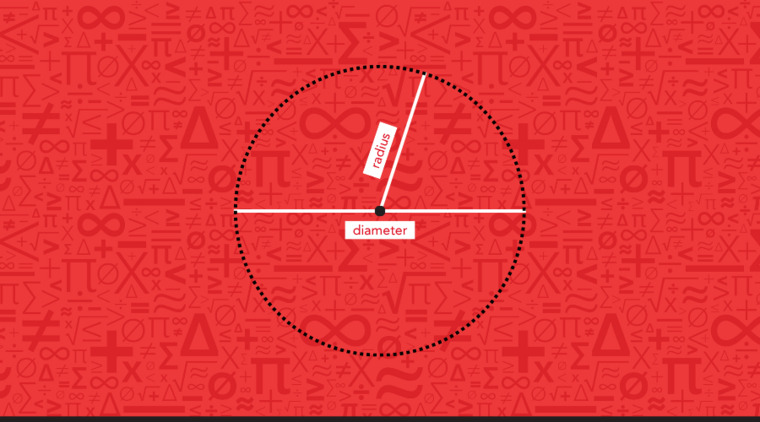
Radius: The distance from the center to any point on the circle's boundary. Every circle has infinitely many radii, but they all have the same length.
-
Diameter: The distance straight across the circle through the center. The diameter always equals exactly twice the radius.
The center, radius, and diameter are only the beginning. Next, we'll look at the other components that make up a circle.
📕 You May Also Like: What Is a Diameter & How to Measure It? A Beginner’s Guide
What Are Circle Components?
Circle components include the parts that sit inside a circle or form part of its boundary. Together, they help us describe and measure circles in geometry.
Let's take a closer look at each one.
1. Chord of a Circle
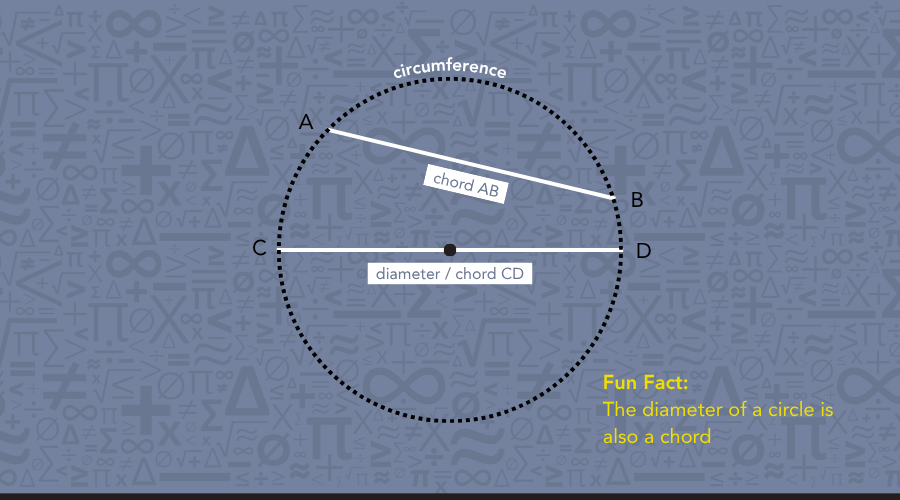
A chord connects two points on a circle's boundary. Most chords do not pass through the center.
The diameter is the longest possible chord because it stretches across the circle through the center. Any other chord is shorter.
2. Arc of a Circle
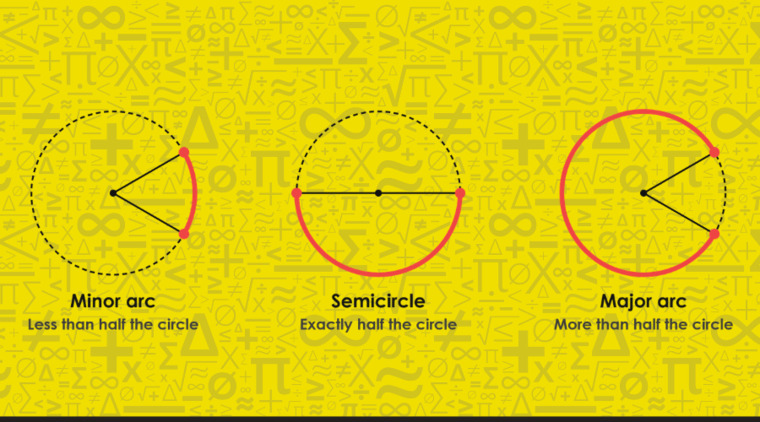
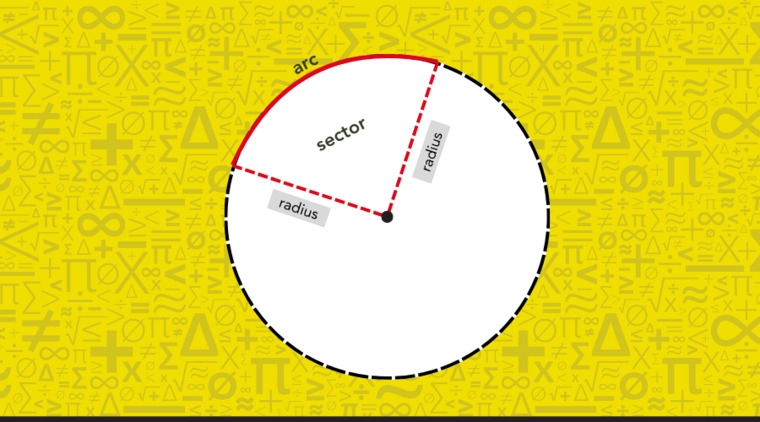
An arc is a curved segment that forms part of a circle's boundary. Students encounter three types of arcs most often in geometry coursework:
-
Minor arc: less than half the circle
-
Major arc: more than half the circle
-
Semicircle: exactly half the circle, a special case students encounter frequently in area and perimeter problems
3. Sector of a Circle
A sector is a region inside a circle bounded by two radii and the arc they enclose. Pizza slices provide a familiar example of a sector. The two straight edges represent the radii, and the curved crust represents the arc.
Students encounter sector area later in geometry, where the radius and the angle between the two radii determine how much of the circle the sector covers.
📕 You May Also Like: 10 Geometry Concepts Students Should Master Before 10th Grade
Lines That Intersect a Circle
Not all circle vocabulary refers to parts of the circle itself. Here are two lines students encounter frequently in geometry.
A. Tangent Line
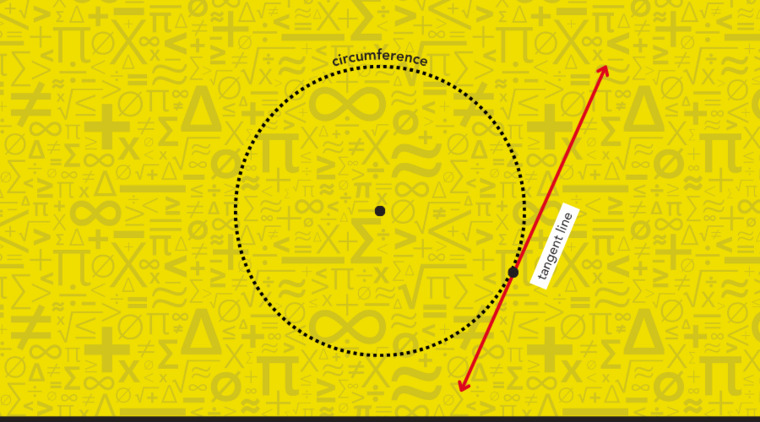
A tangent line touches a circle at exactly one point, called the point of tangency, and never crosses inside it.
The radius drawn to the point of tangency always forms a right angle with the tangent line. This relationship appears regularly in later geometry proofs.
We can see a tangent relationship when a bicycle tire touches the road. The tire meets the flat surface at exactly one point.
B. Secant Line
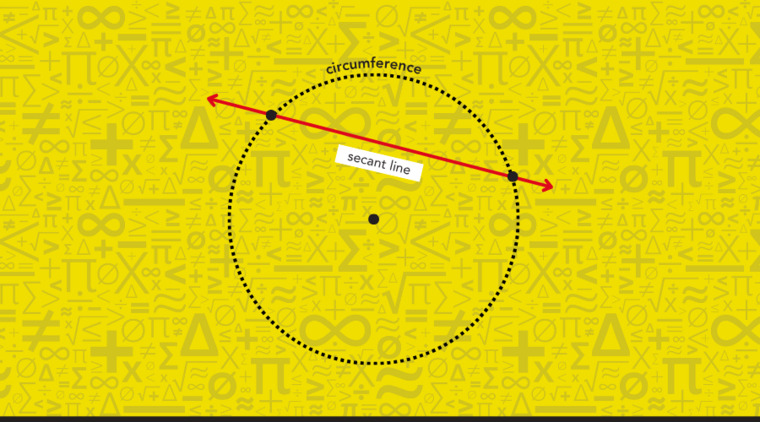
A secant line crosses through a circle and intersects its boundary at exactly two distinct points.
Secants and chords use the same two points on the circle. The chord is the segment between those points, while the secant is the entire line that extends beyond the circle in both directions.
We can see a secant relationship when a spotlight beam passes through a circular area of light. The beam enters the circle at one point and exits at another.
📕 You May Also Like: Complementary and Supplementary Angles - A Complete Guide
Chord, Tangent, and Secant: What’s the Difference?
Chords, tangents, and secants differ in how many points they share with the circle and whether they stay inside, touch, or cross it.
Let’s summarize the difference between the three terms.
| Term |
Position Relative to the Circle |
Points of Intersection |
Main Distinction |
| Chord |
Stays inside |
2 |
A segment with both endpoints on the circle |
| Tangent |
Outside the circle |
1 |
Touches the circle at exactly one point |
| Secant |
Crosses through |
2 |
A full line that extends beyond both intersection points |
📕 You May Also Like: What Is a Line of Symmetry? A Kid-Friendly Guide
Parts of a Circle in the Real World
Circle vocabulary appears in objects and systems we encounter every day. Here are a few examples:
-
Arc: Clock hands trace arcs as they move around the face. The path from 12 to 3 is a minor arc. The path from 12 to 9, the long way around, is a major arc.
-
Sector: Radar and sonar screens divide their sweeps into sectors. Each wedge-shaped region on the display represents a sector of the full circular screen.
-
Tangent: Train wheels roll along flat rails. At any given moment, the rail is tangent to the wheel because the two meet at exactly one point.
-
Secant: Some walking paths cross circular gardens or plazas. The path intersects the circle at two points, which makes it a secant.
Geometry can seem abstract on paper, but many of the shapes and relationships we study in math appear in everyday life.
📕 You May Also Like: Math for Life: Why Math Skills Matter Beyond School
Circle Vocabulary in Later Math
Students first encounter most circle vocabulary in Grades 5 and 6, then continue using those same terms throughout middle school and high school geometry.
Here are some of the concepts that build on this foundation.
-
Circumference: The full distance around a circle. Radius and diameter become important when students learn how to measure circular boundaries.
-
Arc length: The length of part of a circle's boundary. Minor arcs, major arcs, and semicircles all return when students begin measuring curved portions of circles.
-
Sector area: The amount of space inside a sector. Students build on their understanding of sectors when they learn how to measure portions of a circle.
-
Circle theorems: Formal rules about angles, chords, tangents, and secants appear in high school geometry proofs.
Geometry can feel distant at first, especially when students are learning new vocabulary and visual relationships. Many students benefit from a structured learning environment where diagrams, discussion, and problem-solving work together to build understanding.
📕 You May Also Like: Geometry Vocabulary: 59 Most Important Terms for Students in Grades 1-8
 At Mathnasium, we help students build understanding through visual learning, discussion, and guided practice before moving on to more advanced concepts.
How Mathnasium Helps Students Master Geometry Concepts
Mathnasium is a math-only learning center dedicated to helping K–12 students of all skill levels excel in math.
Students come to us for support at different points of their math journey, whether they are building foundational geometry skills, working on specific concepts like circles and their properties, or ready to dive into more advanced coursework like trigonometry and coordinate geometry.
The path forward is built around exactly where each student is.
We build that path through the Mathnasium Method™, our proprietary teaching approach.
To help students build a solid foundation of any math skill, our approach combines:
-
Assessment and Personalized Learning Plans: Each student begins with a diagnostic assessment that identifies current skills, strengths, and knowledge gaps. From those findings, we build a personalized learning plan tailored to their goals. That process helps us determine whether a student needs support with foundational geometry vocabulary, visual reasoning, or more advanced concepts.
-
Teaching for Understanding: Our specially trained tutors use natural language and a mix of verbal, visual, mental, tactile, and written techniques so each concept lands before we move forward. That approach helps students make sense of diagrams, relationships, and geometric ideas instead of simply memorizing definitions.
-
Problem-Solving and Critical Thinking: We allow time for productive struggle so students can rely on their own reasoning. When we step in, we make sure to show both the how and the why behind the answer. Over time, this helps students build their own problem-solving skills and critical thinking tools.
-
An Engaging and Fun Learning Environment: Our sessions often include games, earned rewards, and consistent celebration of progress. Students build confidence alongside fluency, and many develop a more positive relationship with math over time.
Families consistently report positive outcomes:
-
94% of parents report improvement in their child's math skills and understanding
-
93% of parents report an improved attitude toward math after attending Mathnasium
-
90% of students saw improvement in their school grades
With over 1,100 learning centers across North America, there is likely a Mathnasium close to you.
Families across Farmington, Kaysville, Fruit Heights, and Centerville trust Mathnasium of Farmington to help their children build real confidence in geometry and every math concept that follows.
If circle vocabulary or any other math concept is giving your child trouble, our team is ready to help.
📅 Schedule a Free Assessment at Mathnasium of Farmington
Not near Farmington?
📍 Find a Mathnasium Learning Center Near You


 (801) 928-7671
 (801) 928-7671