Let's test that definition with a couple of examples.
2: Only 1 and 2 divide evenly into 2. Two factors total, which makes 2 a prime number.
7: We can only divide it by 1 and 7. This makes 7 a prime number.
13: No number between 1 and 13 divides it except those two. 13 is also prime.
Now let's test 4.
Divide it by 2, and we get 2, with nothing left over. That means 4 has three factors, instead of just two.
1, 2, and 4.
Can you remember what we call a number that has more than two factors?
That’s right! A number with more than two factors is called a composite number.
Every whole number greater than 1 falls into one of these two groups, prime or composite. In this guide, we'll use both of them as building blocks to break down all other numbers.
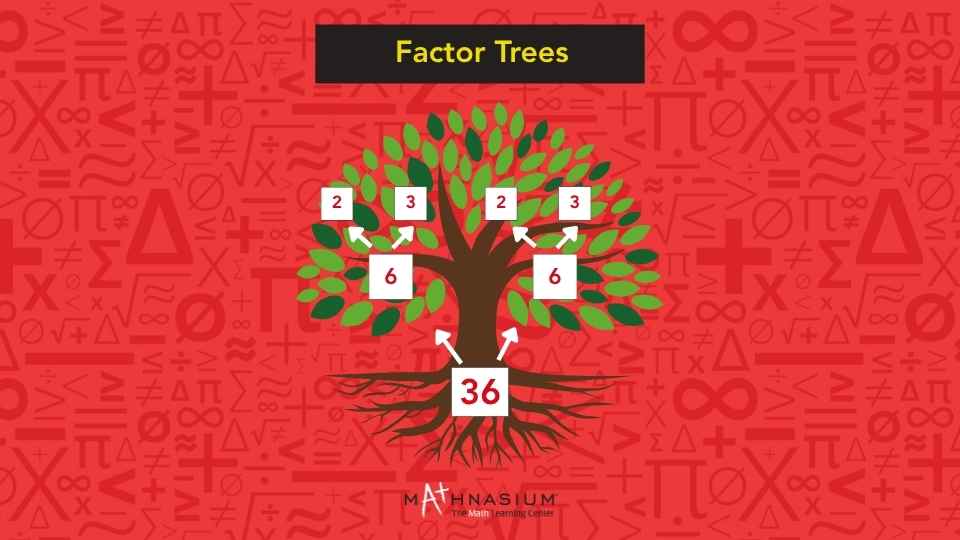
Prime factorization is the process of breaking down a composite number into a set of prime numbers that multiply together to produce the original number.
Let's try splitting 12 until we are left with only prime numbers.
We can start with 2 × 6, which gives us 12.
2 is prime.
6 is composite.
Six is composite, so we need to split it. One way to split 6 is 2 × 3.
2 is prime
3 is prime, too.
Every part of our split now ends in a prime number, so we stop here.
The prime factors of 12 are 2, 2, and 3.
We can also write it like this: 12 = 2 × 2 × 3.
That's prime factorization in essence. We split 12 apart, one piece at a time, until every piece left was prime.
A composite number is always built from a unique set of prime numbers multiplied together, and prime factorization is how we uncover that set.
How Do We Find Prime Factors? (The Factor Tree Method)
We can find prime factors by drawing a factor tree, a diagram that splits a number into smaller and smaller pieces until every piece left is prime.
Let's build one for 60.
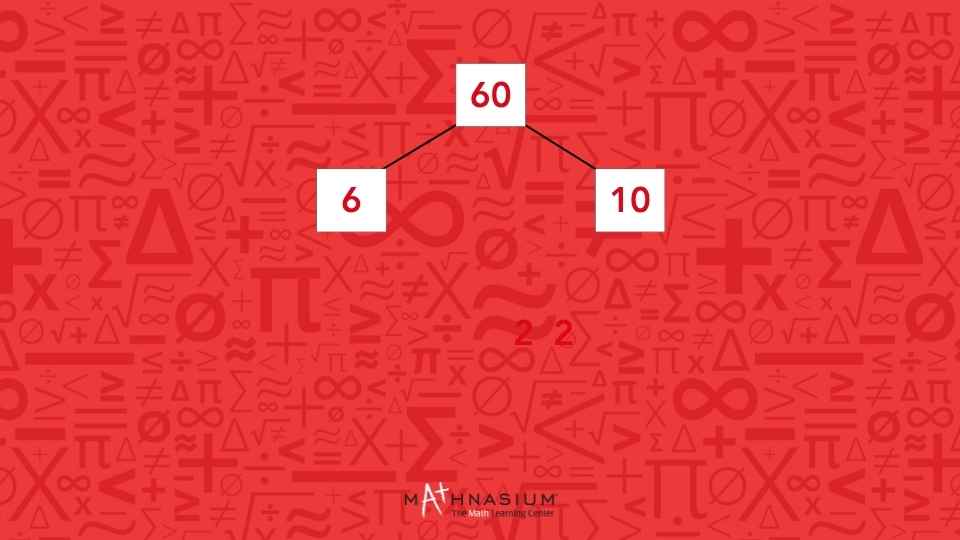
First, we draw 60 at the top. That's the number we're breaking down.
Next, we split 60 into two factors. 6 × 10 gives us 60, so we draw those two numbers as branches beneath it.
Now we check each branch.
6 is composite, so it needs to split again.
10 is composite, so it needs to split again as well
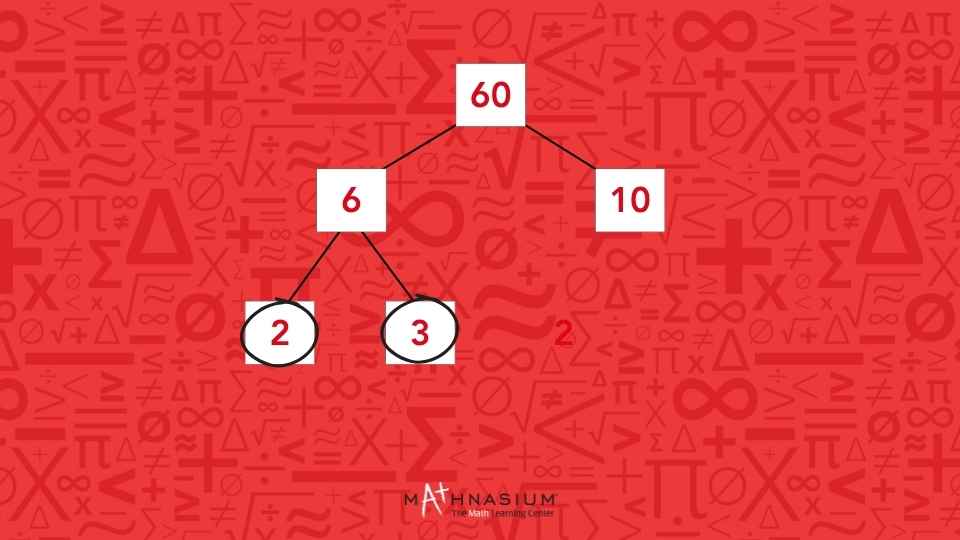
We take the branch on the left first, where our 6 stands. Let's split 6 into 2 × 3.
Hey, we got two prime numbers here! We mark them with a circle, and we are done here.
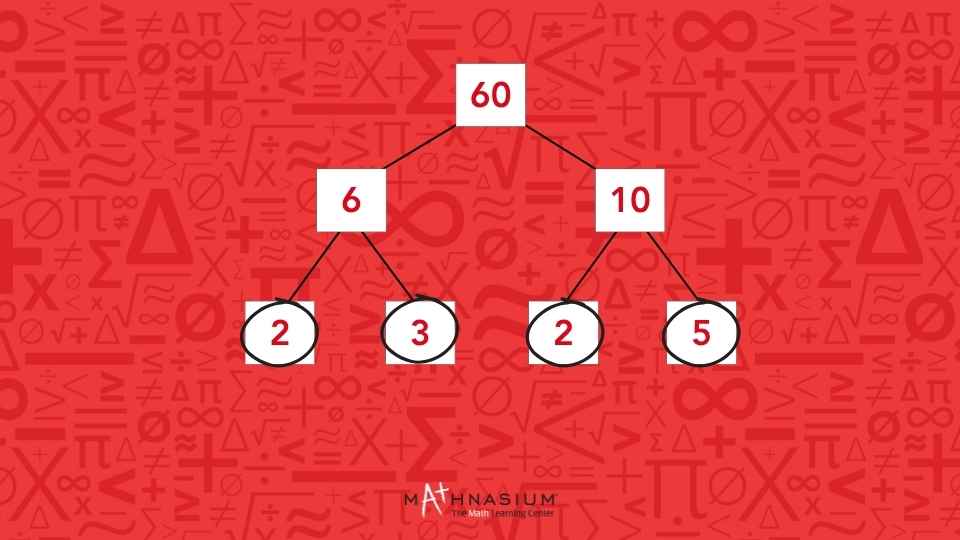
Now we go back to our branch on the right, where our 10 stands.
We can split 10 into 2 × 5. Both of those are prime, so we circle them as well.
Every branch now ends in a prime number, so the tree is complete. We've done it!
The prime factors of 60 are 2, 3, 2, and 5. Written in order, 60 = 2 × 2 × 3 × 5.
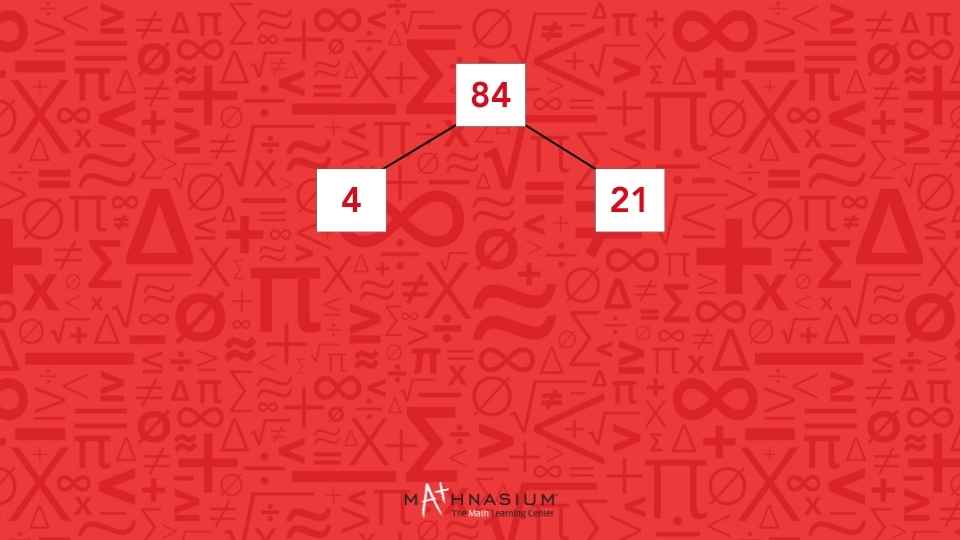
Now let's try a second tree, this time for 84.
We put 84 at the top first.
From there, we look for two factors that multiply to 84. What about 4 × 21? That will do the job! Since 4 × 21 = 84, those become our first two branches.
Neither number is prime yet.
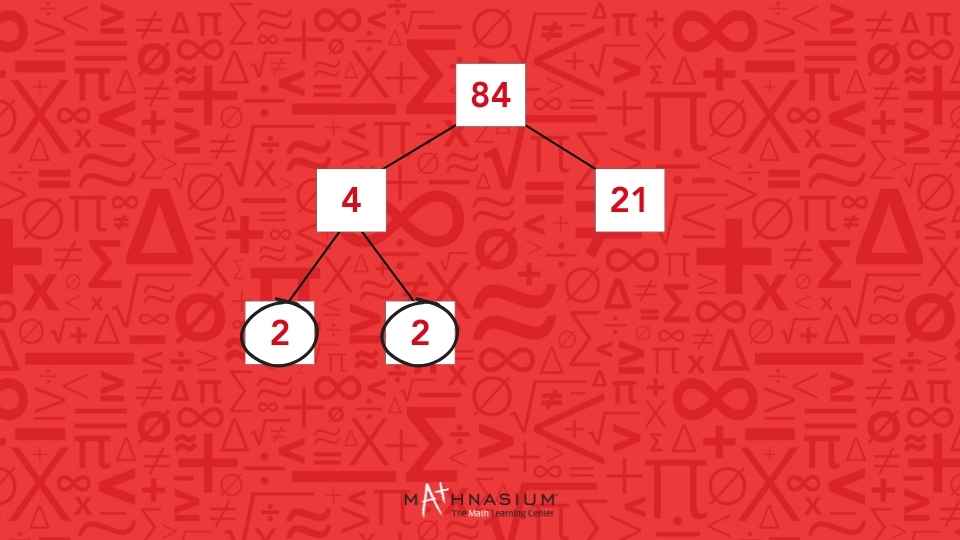
4 is composite, so we need to break it down further.
21 is composite too, so it gets another split.
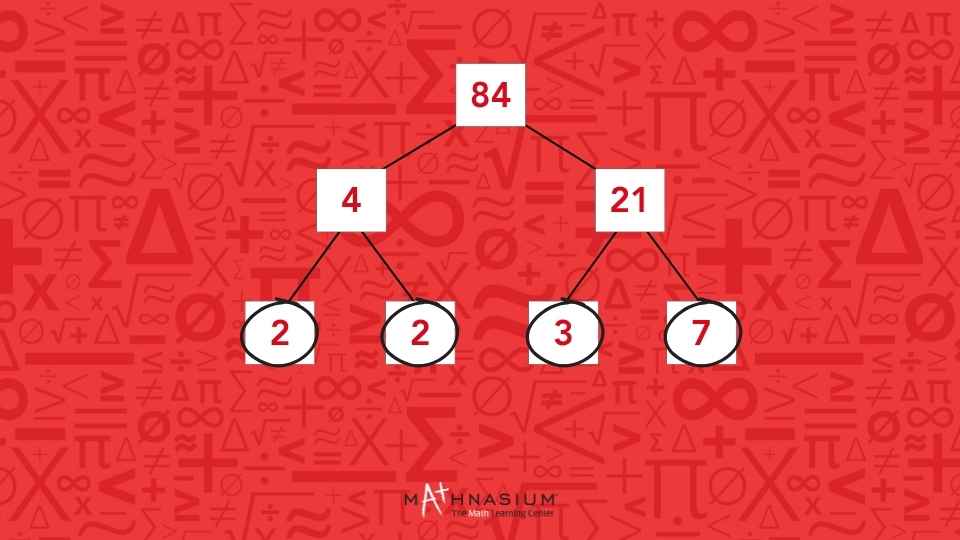
Let's start on the left, with 4. We split it into 2 × 2. Both numbers are prime, so we circle them right away. One branch down!
Over on the right, 21 splits into 3 × 7. Since both 3 and 7 are prime, we circle those too, and that side is done!
We are left with nothing to split. Every branch on our tree ends in a prime number, which means our task is complete. Good job!
The prime factors of 84 are 2, 2, 3, and 7.
Both trees followed the same steps. Draw the number at the top, split it into two factors, check each one, and split any composite factor again. The factor tree is completed the moment every branch ends in a prime number.
For a deeper look at prime factorization, watch one of our Mathnasium tutors explain everything in detail.
Why Prime Factorization Matters
Prime factorization matters because it gives us the exact building blocks we need to find the greatest common factor and the least common multiple of two numbers.
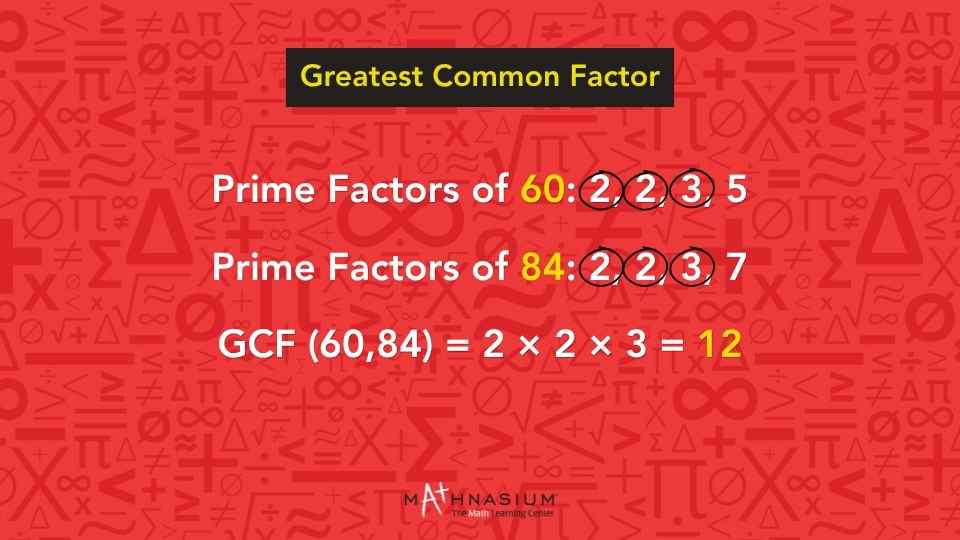
Let's use the same two numbers from before, 60 and 84, along with the prime factors we already found for each.
60: 2 × 2 × 3 × 5
84: 2 × 2 × 3 × 7
The greatest common factor, or GCF, is the largest number that divides evenly into two or more numbers. When we compare both lists, we can see that 60 and 84 share two 2s and a 3.
Multiply those shared primes together, and 2 × 2 × 3 gives us 12.
That's the GCF of 60 and 84.
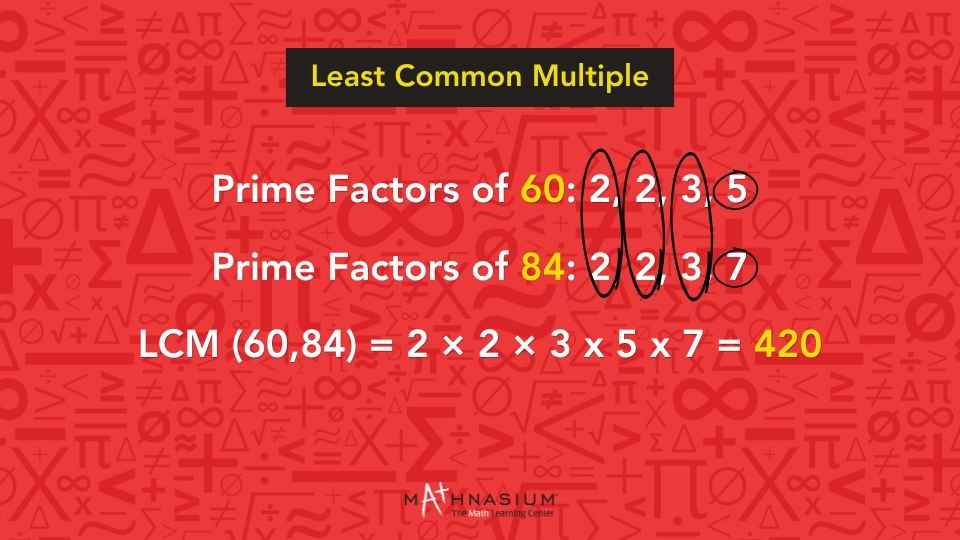
The least common multiple (LCM) is the smallest number that both numbers divide into evenly. We can build it straight from our prime factor lists:
Take one number from each matching pair, plus all remaining factors.
That gives us 2 × 2 × 3 × 5 × 7, which equals 420.
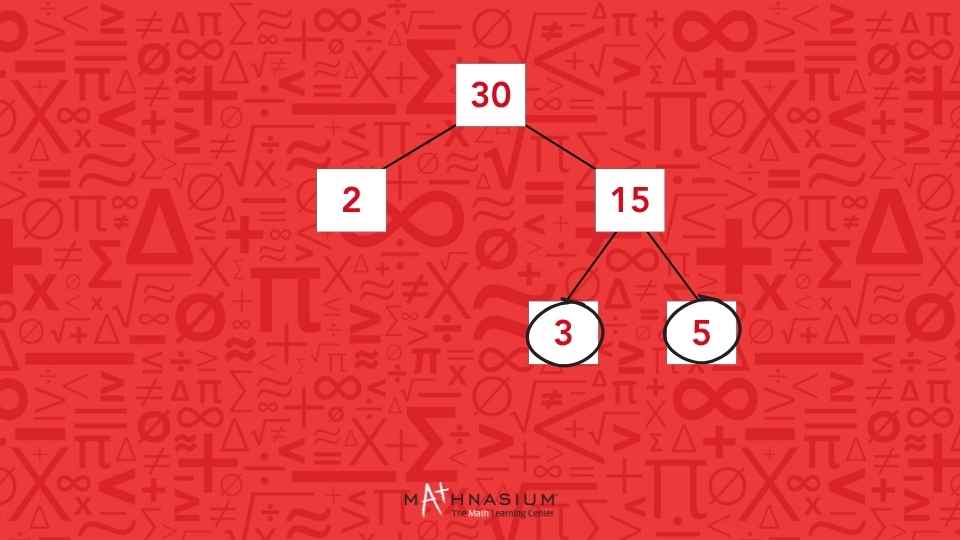
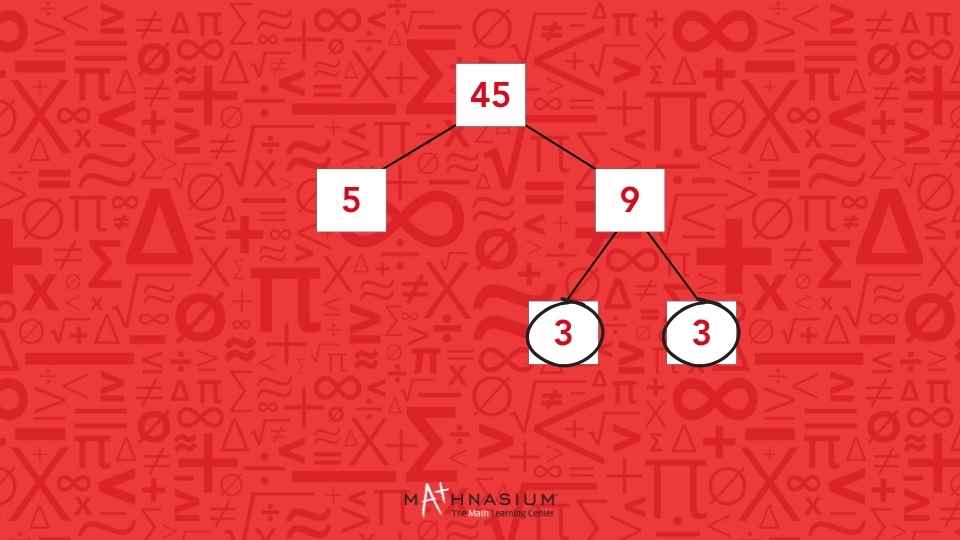
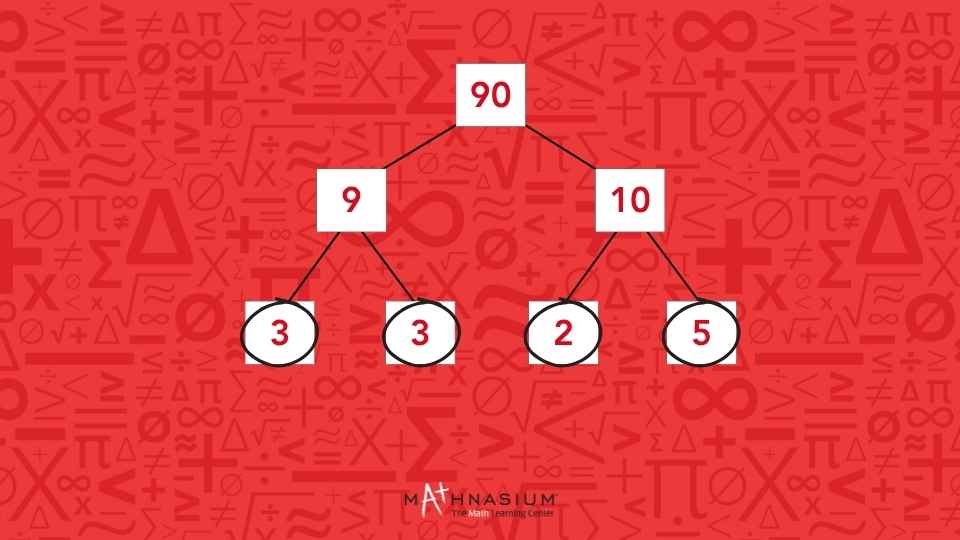
Our tutors put together a practice set, one number for each level of difficulty. Build a factor tree for each number below, then write out its full prime factorization.
30
45
90
Check the answers at the bottom of the guide to see how you did!
Mathnasium tutors bring prime factorization to life with visual tools like the factor tree.
How Mathnasium Helps Students Master Any Math Concept
Mathnasium is a math-only learning center that helps K–12 students of every skill level learn and master math.
Whether a student needs support with foundational concepts like prime numbers and factor trees or is ready to apply that skill to fractions, ratios, and problem-solving further down the road, we teach for deep understanding.
To help students reach that level of understanding, we use a proprietary teaching approach called the Mathnasium Method™.
Here is what that looks like in practice:
Diagnostic Assessment and Personalized Learning Plans: Every student begins with a diagnostic assessment that identifies both visible skill gaps and the reasoning behind them. From that starting point, we build a personalized learning plan tailored to their needs and goals.
Teaching for Understanding: Our specially trained tutors use plain, everyday language and a mix of verbal, visual, mental, tactile, and written techniques, so concepts land in a way that makes sense to each student.
Problem-Solving and Critical Thinking: When a student gets stuck, we break the concept into smaller steps and guide them through both the how and the why. Over time, this builds the problem-solving skills and critical thinking they use in math and everyday life.
An Engaging and Fun Learning Environment: We design sessions to keep students motivated, and we celebrate every bit of progress along the way. Over time, students build a more positive relationship with math and greater confidence in their own abilities.
The results reflect that approach:
94% of parents report improvement in their child's math skills and understanding.
93% of parents report an improved attitude toward math after attending Mathnasium.
90% of students see improvement in their school grades.
We operate over 1,100 centers across North America, bringing our proven approach to communities everywhere.
Families across Nora, Carmel, Indianapolis, and the surrounding area can visit Mathnasium of Nora, a trusted local center with a proven record of building confident math thinkers.
Whether your student is looking to catch up, keep up, or get ahead in math, our local team is happy to help.
Your factor tree might look different from ours, depending on which two factors you split first.
That's completely fine. As long as the final prime factorization matches, the tree took a correct path to get there.
Here's how we built ours, along with the final answer for each number.
30: 2 × 3 × 5
45: 3 × 3 × 5
90: 2 × 3 × 3 × 5
Visit Us at Mathnasium of Nora
Mathnasium of Nora is a math-only learning center for K-12 students in Indianapolis,
IN. Trusted by over a million parents, Mathnasium uses personalized learning plans
and the proprietary Mathnasium Method™ to help students catch up, keep up, and get ahead on their math journey.
Our specially trained tutors deliver face-to-face instruction in a supportive and fun small-group environment,
working with students to develop a deep understanding of math, build confidence,
and improve academic performance.
Mathnasium tutors explain why negative numbers may confuse your child and share easy ways of how you can help them build a solid understanding of integers.


 (317) 733-9100