As your child moves into grades 5–6, they meet integers, the family of numbers that includes positive whole numbers, zero, and negative whole numbers. The negative numbers in that family are usually what trips them up, even if they had been progressing steadily up to this point.
That reaction makes complete sense. Negative numbers introduce a new way of thinking about numbers and relationships, so it is natural for your learner to feel lost or confused with these ideas.
Today, our tutors will walk you through why integers can feel hard, what they mean, and how to explain the topic in plain, concrete language, and with examples you can try at home.

Why Negative Numbers May Feel Confusing for Your Child
Negative numbers can trip students up because, until this point, much of their math has focused on positive quantities. Negative numbers ask them to make sense of values less than zero, which can take time to get comfortable with.
Many of the number concepts your child has built so far are easier to picture with real objects: three apples, eight blocks, or twenty dollars. Numbers grow as quantities grow. Your student is used to this framework, which has worked reliably for years. Negative numbers are different because they represent direction, loss, debt, or position below a starting point.
In our work with students at Mathnasium, we see that many children hit a wall with these specific parts of the concept.
-
The first is the idea that a number can mean less than nothing. You can picture zero easily: an empty plate, an empty wallet, nothing left. But −1? That seems to require something that doesn’t exist yet. You can’t hold −3 apples.
-
The second is the way negative numbers reverse a pattern learners have used for years. They know that 8 is greater than 3. Now they find out that −8 is less than −3. The digits are the same, but the relationship has flipped. That reversal can feel puzzling.
Both points of confusion are completely normal and fixable. Students make progress when negative numbers are connected to real-world anchors before they are asked to learn the concept formally.
📕 You May Also Like: Why Zero Is So Hard for Young Math Learners to Understand
How to Connect Negative Numbers to Real Life
Negative numbers are not abstract. These integers describe real situations your child already understands, they just need to connect them to the notation.
Here is how you can help your student notice where negative numbers already show up in everyday life, so the idea feels familiar before they meet the symbols and rules.
A. Weather & Temperature
Temperature is one of the easiest ways to help your learner understand negative numbers because it connects the concept to something they may have already felt.
A winter forecast or weather app can make it visible that numbers can drop below zero. If the forecast shows −10°F, that means the temperature is 10 degrees below 0°F. The negative sign shows how far below zero it has dropped.
For a child in a state like Indiana (our center’s home state), especially in its northern part, this example can feel real right away. A cold January morning gives them something concrete to connect to the integer.

Temperature gives students a familiar way to understand negative numbers by connecting the concept to something they may have already felt.
B. Elevation
You can also illustrate the concept of negative numbers spatially using water, or the water surface, rather.
Here, the water surface represents zero. If we climb above it, let’s say we’re hiking, we are moving into positive integers, +1ft, +2ft, +10ft, and so on.
But if we dive below the surface, we move below zero. If we dive 3ft below, we’ll represent this as −3ft underwater.
C. Money & Debt
Many 5th and 6th-graders already have a clear sense of money, which makes it a reliable bridge to negative numbers.
Start with a simple scenario: Your student has nothing in their pocket, so $0, and they borrow $5 from a friend. They no longer have $0, they are now at −5 dollars, which represents their debt. They’d need to earn five dollars just to get back to zero: -5 + 5 = 0.
📕 You May Also Like: How to Teach Kids Money Skills with Math
Use the Number Line to Visualize Integers
The number line is one of the most useful tools for building integer intuition because it makes the relationship between positive and negative numbers visible. Before your learner memorizes rules, they can see where the numbers are and how they relate to zero.
At Mathnasium, we often use visual models like number lines to help students reason through new concepts that are hard to picture, like negative numbers.
You can follow these steps when working with a number line:
Step 1: Draw the Number Line Together With Your Student
Start by drawing a number line together with your child. A piece of paper and a ruler are all you need.
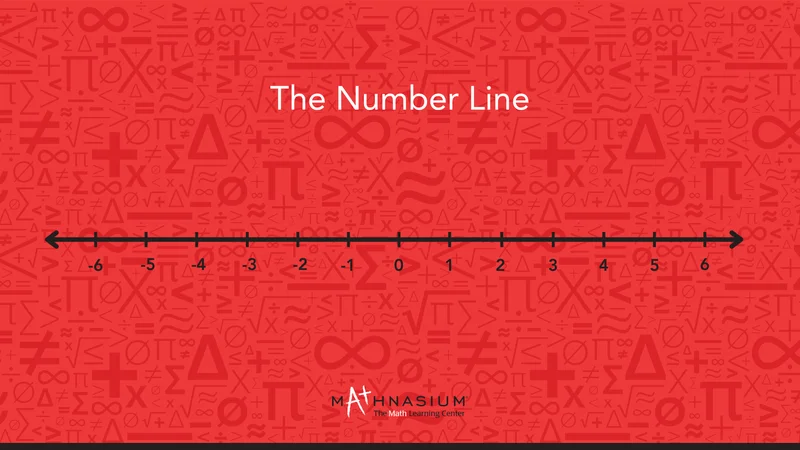
Mark 0 in the center, count to the right up to 6, and count to the left down to −6. Let them help write the numbers in.
Step 2: Explain What Two Directions of the Number Line Hold
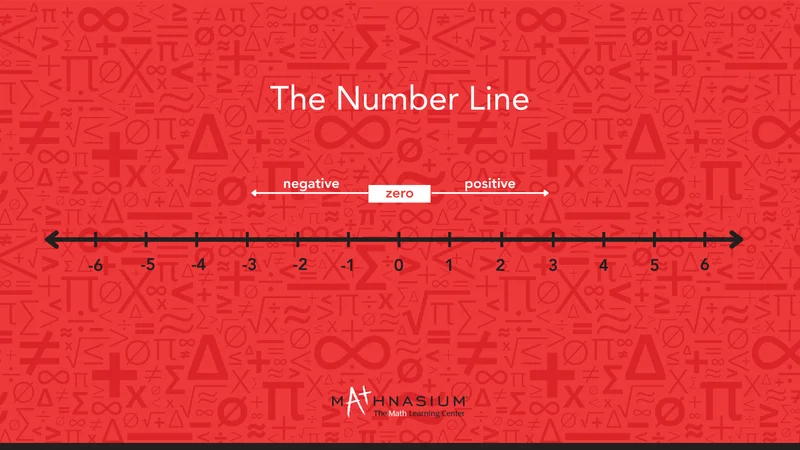
As you build the number line, point out that it runs in both directions.
Positive numbers move to the right of zero, negative numbers move to the left of zero, and zero acts as the reference point between the two sides.
Step 3: Address the Confusion With Comparing Negative Numbers
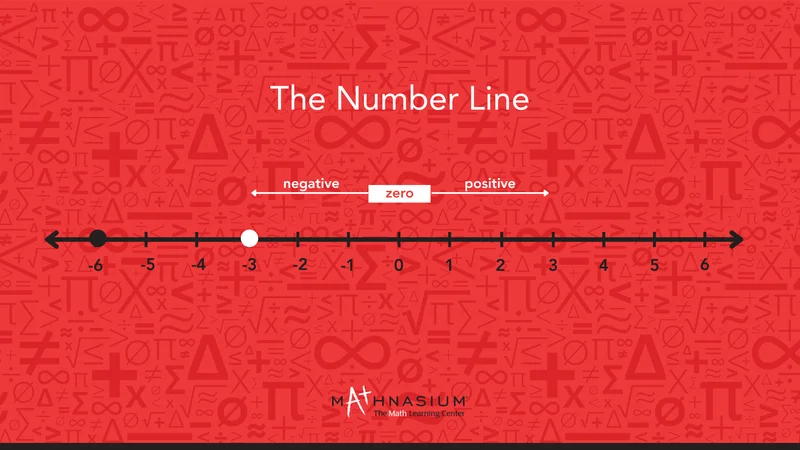
With the number line in front of your child, talk through one of the most common points of confusion: why −6 is less than −3.
Your 5th or 6th grader has spent years learning that larger digits usually mean larger numbers. So it makes sense that they may first think −6 is greater than −3 because 6 is greater than 3.
The number line helps them see why that pattern changes with negative numbers. When we work on the left side of zero, we need to pay attention to the number’s position on the line. The number −6 is farther left than −3, so it is smaller.
Step 4: Secure the Number Line Skill
Check how comfortable your student is with the number line by using a simple exercise. Write five numbers on slips of paper, such as 4, −2, 7, −5, 0, and ask them to place the numbers on the line. Talk through each placement:
“Where does −5 go? Is it to the left or right of −2?”
As your child walks you through their thinking, you can see whether they understand how positive numbers, negative numbers, and zero relate to one another.
📕 You May Also Like: How Number Lines Improve Math Understanding (Grades 1-5)
What Full Understanding of Integers Looks Like?
Before your learner begins integer operations in grade 7, they should have a clear understanding of what negative numbers mean, how they relate to zero, and how distance from zero works. These ideas create the foundation they need to add, subtract, multiply, and divide integers with more confidence.
Here are a few signs that your student’s understanding of integers is solid:
-
They can correctly place positive numbers, negative numbers, and zero on a number line and explain why each number belongs where it does.
-
When comparing two negative numbers, they look at the numbers’ positions on the line, not only at the digits. For example, they can reason through why −6 is less than −2 by showing that −6 is farther left on the number line.
-
Your 6th-grader understands absolute value as distance from zero. They can see that |−5| is 5 because −5 is five steps away from zero. If they say |−5| is −5, it may mean they need to return to the number line and look again at the distance.
-
Students with secure integer understanding see zero as a point they can move through rather than a stopping place. They can move from negative to positive, or from positive to negative, without freezing when the problem crosses zero.
If one of these ideas still feels shaky, it is better to fill the gap now, before formal integer rules are introduced.
📕 You May Also Like: How to Subtract Positive and Negative Integers? A Simple Guide

Mathnasium tutors use a mix of verbal, visual, mental, tactile, and written techniques to help students build a solid understanding of integers and negative numbers in particular.
How Mathnasium Helps Students Make Sense of Integers (And Any Other Math Topic)
Mathnasium is a math-only learning center dedicated to helping K–12 students of all skill levels excel in math.
As students move into integers, negative numbers can be one of the first concepts that makes math feel less intuitive. A child may know how to count forward, compare whole numbers, or follow a rule, but still find it hard to understand what numbers less than zero mean, where they belong on a number line, and how to compare.
Our specially trained tutors use a proprietary teaching approach, the Mathnasium Method™, to meet students where they are and guide them toward math mastery, step by step.
Each student begins their Mathnasium journey with a diagnostic assessment, which lets us identify their current skills, knowledge gaps, and how they think about math, including the number sense, place value, and number line reasoning behind integer concepts.
From there, we create a personalized learning plan focused on their specific learning needs. Our tutors follow the plan closely, delivering face-to-face instruction in a supportive environment, using a mix of verbal, visual, written, tactile, and mental techniques so each concept lands clearly.
Fun is a core part of our approach, too. We use game-based activities, let students earn rewards, and celebrate their progress together, so learning stays enjoyable and confidence grows with every session.
Families see the difference:
-
94% of parents report improvement in their child’s math skills and understanding
-
93% of parents report a more positive attitude toward math after attending Mathnasium
-
90% of students saw improvement in their school grades
With over 1,100 learning centers across North America, there is likely a Mathnasium close to you.
For families in the Indianapolis area, Mathnasium of Nora brings that same approach to your community, with tutors who understand both the Indiana Academic Standards and the students working through them.
If your child is working through integers, negative numbers, or any other math concept and needs more targeted support, our team is ready to help.
📅 Schedule a Free Diagnostic Assessment at Mathnasium of Nora
Not near Nora?
📍 Find a Mathnasium Learning Center Near You


 (317) 733-9100