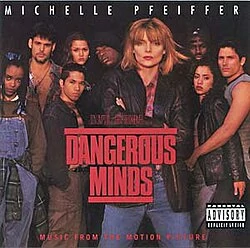
“Dangerous Minds” (1995) sits in a very particular corner of ’90s pop culture: it’s both a deeply earnest inspirational-teacher drama and a lightning rod for criticism about race, poverty, and “white savior” narratives. It became a box-office hit, powered as much by Coolio’s “Gangsta’s Paradise” as by the movie itself, yet critics were notably cool on it. Nearly three decades later, it’s a fascinating film to pick apart—not just for what’s on screen, but for what it says about how Hollywood wanted to talk about education and inner-city life in the mid-’90s.
Below is a long-form deep dive into how Dangerous Minds came to be, who brought it to life, what actually happens in the story, how it was received, and why it still sparks debate.
Origins: From Marine to Teacher to Movie Hero
Dangerous Minds is based on the 1992 memoir My Posse Don’t Do Homework by LouAnne Johnson, a former U.S. Marine who became an English teacher at Carlmont High School in East Palo Alto, California.(Wikipedia) Her book recounts her experience teaching mostly Black and Latino students from economically disadvantaged backgrounds in a community dealing with violence, poverty, and institutional neglect.
Hollywood quickly saw potential in the story. The film adaptation was produced by Don Simpson and Jerry Bruckheimer—the powerhouse duo behind high-octane hits like Top Gun and Beverly Hills Cop.(Wikipedia) On the surface, a grounded classroom drama might seem like a strange project for them, but the underdog teacher versus a broken system is its own kind of high-stakes narrative, and the story promised emotion, conflict, and a built-in “feel good” arc.
The director, John N. Smith, came from a more modest, character-driven background, known for intimate, socially minded projects rather than blockbuster spectacle.(Variety) Screenwriter Ronald Bass, already respected for work like Rain Man, adapted Johnson’s memoir for the screen.(Wikipedia) Unsurprisingly, the script condensed and simplified Johnson’s real experiences into a more traditional Hollywood structure: one class, one teacher, a handful of emblematic students, and a season-long arc of transformation.
The movie also arrived in a landscape that had already seen other “hero teacher” stories—To Sir, With Love, Stand and Deliver, Dead Poets Society—and in some ways it leans heavily into that tradition. But where Stand and Deliver grounded itself in the specifics of calculus and real-life East L.A., Dangerous Minds leans more on the emotional beats and stylized danger implied by its title.
Casting: Michelle Pfeiffer and a Classroom of Rising Faces
The entire film rests on the presence of Michelle Pfeiffer, cast as LouAnne Johnson. Pfeiffer was a major star by the mid-’90s, known for roles in Scarface, The Fabulous Baker Boys, Batman Returns, and more. Casting her as a former Marine turned teacher was a deliberate choice: a glamorous A-lister dropped into a gritty classroom, bringing both toughness and vulnerability.(Wikipedia)
Michelle Pfeiffer as LouAnne Johnson
Pfeiffer plays LouAnne as a mix of ex-Marine discipline and genuine, if sometimes naïve, compassion. She doesn’t look like a stereotypical teacher, and the film leans into that contrast—her leather jacket, blonde hair, and cool demeanor are part of how the movie sells its premise: she doesn’t belong here, and that’s exactly why she’ll change everything.
Her performance was widely seen as the film’s strongest element. Even critics who disliked the movie often singled her out for praise—she makes LouAnne calm, self-possessed, and quietly stubborn instead of preachy or manic.(rottentomatoes.com)
The Supporting Adults
The school staff around LouAnne provide both obstacles and context:
-
George Dzundza as Hal Griffith – The principal who hires LouAnne, he’s weary but not cartoonishly evil. He reflects the bureaucracy and resignation in the system.(Wikipedia)
-
Courtney B. Vance as George Grandey – A fellow teacher and sometimes ally, he provides a counterpoint: someone who’s already been ground down by the system.(Wikipedia)
-
Robin Bartlett as Carla Nichols – Another staff member who is both skeptical and occasionally supportive, illustrating how even well-meaning educators can be trapped in institutional constraints.(Wikipedia)
These characters largely exist to highlight LouAnne’s supposed exceptionalism: they show the “normal” way things are done, so her unorthodox methods stand out more.
The Students: Callie, Raul, Emilio, and Others
The real emotional core of Dangerous Minds is the group of students, played by a roster of mostly young, lesser-known actors at the time:
-
Bruklin Harris as Callie Roberts – A bright student facing teen pregnancy and the assumption that her future is already narrowed.(Wikipedia)
-
Renoly Santiago as Raúl Sanchero – Charismatic and gifted, but pulled toward the streets and crime, he becomes one of LouAnne’s success stories.(Wikipedia)
-
Wade Dominguez as Emilio Ramírez – Perhaps the most tragic figure: volatile, proud, and suspicious of authority. His arc becomes the film’s emotional tipping point.(Wikipedia)
-
Beatrice Winde as Mary Benton – A more traditional educator representing institutional norms.(Wikipedia)
-
Lorraine Toussaint as Irene Roberts – Callie’s mother, who embodies parental fear, skepticism, and protectiveness.(Wikipedia)
Many of these actors brought authenticity and electricity to their roles. Tragically, Wade Dominguez, whose performance as Emilio is one of the film’s most memorable, died in 1998 at the age of 32 from respiratory failure, cutting short a promising career.(BET)
The casting of Black and Latino teens, many of them new faces, was central to the film’s marketing and tone. They’re presented as tough, skeptical, funny, and smart—but also, critics argued, somewhat flattened into types that match the film’s needs more than the complexities of real kids.
Plot Summary: “Welcome to the Jungle”
Setting the Stage
The film opens with LouAnne Johnson arriving at an inner-city high school in California to interview for a teaching position. She’s a former Marine who has recently completed teacher training. The administration is so desperate to staff a notoriously difficult class that she’s hired almost on the spot to teach a group of so-called “bright but underachieving” students in a special program.(Wikipedia)
Her first encounters are discouraging. The class is loud, dismissive, and hostile. The students test her with insults, sexual comments, and open defiance. They’re used to teachers quitting on them; LouAnne looks like just another temporary visitor.
Unconventional Methods
Instead of giving up, LouAnne rethinks her approach. She discards the stiff professional attire and shows up in a leather jacket, signaling she’s not like the others. She introduces unorthodox rewards—like taking students to an amusement park or paying for dinner—as incentives for academic engagement. She brings in karate moves, streetwise language, and a more informal classroom energy to get their attention.
Crucially, she introduces poetry and literature in ways designed to connect with their lives. She uses Bob Dylan lyrics and Dylan Thomas’s “Do not go gentle into that good night” as touchstones, linking artistic expression to their experiences with violence, loss, and injustice.(Wikipedia)
The turning point comes when she frames learning as a personal survival tool—arguing that knowledge is power in a world stacked against them. Slowly, students like Raul and Callie begin to open up, completing assignments, sharing personal stories, and daring to imagine futures beyond the immediate crisis of their neighborhoods.
Building Relationships
As the semester progresses, LouAnne’s relationship with the class deepens. She learns about their home lives: gang pressure, broken families, economic hardship, teen pregnancy, and the constant threat of violence. For many, school is less about enrichment and more about sheer survival.
She intervenes in specific students’ stories:
-
With Raul, she helps him see his artistic and intellectual abilities as something valuable, not just a liability in a tough environment.
-
With Callie, she insists that pregnancy doesn’t have to end her education and advocates with the administration for her.
-
With Emilio, she desperately tries to pull him away from gang conflicts that everyone else has written off as inevitable.
These arcs highlight the film’s central message: one adult who cares and pushes can change a young person’s trajectory.
Tragedy with Emilio
Emilio’s storyline becomes the emotional centerpiece. He is suspicious of LouAnne at first, convinced that teachers are just another form of authority waiting to hurt him. Gradually, he begins to trust her, pushed by her insistence that she’s on his side.
When Emilio becomes entangled in a conflict with a local gang member, LouAnne attempts to involve the principal and police to keep him safe. But Emilio distrusts the system and, after refusing further institutional help, ends up killed off-screen.(Common Sense Media)
His death is a devastating blow to LouAnne and the class. It underscores one of the film’s key tensions: can individual care overcome larger structural dangers like gangs, poverty, and racism? The movie doesn’t have a sophisticated answer; it uses Emilio’s fate as both a tragedy and a rallying point.
The Crisis and the Choice
After Emilio’s death and repeated clashes with bureaucracy, LouAnne reaches her breaking point. Disillusioned with the system and wracked with guilt that she couldn’t save him, she decides to quit teaching and return to a safer life.
In the film’s climax, the students confront her about leaving. They argue that she taught them not to give up on themselves, so how can she give up on them? It’s a classic emotional reversal: the teacher who inspired them now needs to be reminded of her own message.
Their emotional pleas pull her back. LouAnne decides to stay, and the film ends on a note of hope—students more engaged, futures slightly more open, and one teacher recommitted to the hard, imperfect work of teaching in a broken system.
Behind the Scenes: Real Schools, Pop Soundtracks, and Hollywood Simplification
Filming and Setting
Though the story is inspired by Johnson’s real experience at Carlmont High School in East Palo Alto, Dangerous Minds was primarily shot in and around Los Angeles.(Giggster) The fictional high school stands in as a stylized version of “inner-city America”: graffiti, metal detectors, crowded hallways, and a constant sense of underlying danger.
The film compresses Johnson’s years of teaching into a contained, cinematic timeframe. Real-life complexities—bureaucratic negotiations, evolving policies, incremental student progress—are boiled down into a single intense semester with a single class.
Adapting the Memoir
Johnson’s My Posse Don’t Do Homework presents a more nuanced and detailed view of her students, their socioeconomic context, and the education system. The film adaptation, as critics and scholars have noted, pushes those details toward a more straightforward heroic narrative.(MJoy's Thoughts)
Academic analyses of the film often highlight how it positions LouAnne as a quasi-radical teacher using “outside the box” methods, yet ultimately keeps the story within a fairly conservative framework: individual moral transformation rather than systemic critique.(americanaejournal.hu) Gangs and poverty are constant threats, but the camera rarely looks beyond the classroom or deeply interrogates how institutions and policies sustain those conditions.
Music: “Gangsta’s Paradise” and the Sound of the ’90s
One reason Dangerous Minds lodged itself in the ’90s cultural memory is simple: Coolio’s “Gangsta’s Paradise”.
The song, featuring singer L.V., became a massive hit—topping charts around the world and becoming one of the decade’s defining hip-hop tracks. Critics and commentators have noted that no movie has benefitted more from an association with a song than Dangerous Minds did with “Gangsta’s Paradise.”(goodmovie.substack.com) The track’s moody, introspective lyrics and haunting choir backing gave the film an aura of gravity and authenticity that its script sometimes struggled to match.
The rest of the score, composed by Wendy Melvoin and Lisa Coleman (formerly of Prince’s band The Revolution), blends synth, guitars, and atmospheric textures, underscoring classroom tension and quieter moments alike.(rottentomatoes.com) But it’s “Gangsta’s Paradise” that dominates, used heavily in marketing and instantly evoking the film for anyone who lived through its theatrical run or VHS dominance.
The Simpson–Bruckheimer Touch
While Dangerous Minds isn’t an action movie, the Simpson–Bruckheimer influence shows up in the pacing and emotional beats. Scenes often build toward big, cathartic moments; conflict is heightened; the stakes are always immediate and personal. The movie repeatedly underscores danger and crisis—even when, in reality, much of teaching is repetitive, slow, and low-drama.
That Hollywood smoothing and sharpening is both part of the film’s appeal and a major target of its critics.
Box Office: A Modest Drama, A Massive Return
Financially, Dangerous Minds was a major success—especially for a mid-budget, R-rated drama about a schoolteacher.
-
Production budget: around $23 million.(The Numbers)
-
Domestic box office (U.S.): about $84.9 million.(The Numbers)
-
Worldwide box office: roughly $179–180 million.(Simple English Wikipedia)
That’s a return of roughly 7–8 times the production budget worldwide, a hefty profit margin for a film of this type.(The Numbers) It opened in August 1995 and held strong in theaters, sticking around long enough to pull in steady revenue rather than being a one-weekend wonder.(The Numbers)
In adjusted numbers, the domestic gross alone has been estimated at well over $200 million in today’s dollars, underscoring just how widely seen it was.(The Numbers)
For Disney’s Hollywood Pictures label, this was a clear win. The studio had a prestige narrative—based-on-a-true-story, social issues, acclaimed star—paired with a soundtrack that dominated radio and MTV. From a business standpoint, Dangerous Minds did exactly what it needed to do and more.
Critical Reception: Mixed-to-Negative, But With Caveats
If you only looked at the box-office numbers, you’d assume critics loved Dangerous Minds. They didn’t.
On Rotten Tomatoes, the film holds a critics score under 40%—one source cites 29%, while another summary of Michelle Pfeiffer’s filmography places it around 36%.(Disney Fandom) On Metacritic, it scores 47, signalling mixed to negative reviews.(Disney Fandom) The Rotten Tomatoes critics’ consensus describes the film as “rife with stereotypes” that undercut its good intentions.(Rotten Tomatoes Editorial)
Common points of criticism:
-
White Savior Narrative
Many reviewers and later scholars argued that the film fits squarely into the “white savior teacher” trope, where a white protagonist enters a community of mostly students of color and “rescues” them through personal charisma and moral courage.(Cord Cutters News)
In this view, the film centers LouAnne’s emotional journey more than the actual lived realities of the students, making systemic issues like racism and poverty background décor rather than central subjects.
-
Simplified Social Problems
Critics argued that the film treats complex issues—gang violence, structural inequality, racist policing, underfunded schools—as basically solvable through one person’s determination and a few classroom tricks, rather than through policy, resources, or sustained community change.(Cord Cutters News)
-
Stereotyping
Some reviews pointed out that the students’ home lives and identities are sketched with broad strokes. They’re often defined by a single dramatic issue—pregnancy, gang ties, poverty—rather than fully fleshed characters.(Common Sense Media)
-
Emotional Manipulation
Several critics felt the film leaned too heavily on sentimentality, tragedy, and triumphant speeches to move the audience, instead of trusting smaller, more grounded moments.(rottentomatoes.com)
At the same time, even mixed reviews frequently singled out Michelle Pfeiffer’s performance as a redeeming feature. Some critics admitted that while the movie was formulaic, her presence and the energy of the young cast made it emotionally effective in the moment.(rottentomatoes.com)
Also, as a cultural artifact, the film was widely compared—sometimes favorably—to earlier teacher movies like To Sir, With Love, with some critics framing Dangerous Minds as a ’90s update of that formula.(Common Sense Media)
Audience Reception: Inspiration, Nostalgia, and the Power of a Soundtrack
Audiences were much kinder than critics. The box office numbers alone prove that millions of people connected with the film, or at least were drawn in by its marketing and music.
Emotional Response
Many viewers—especially teens and young adults in the ’90s—remember the film as an emotional, even inspiring story about a teacher who cared. Online discussions and retrospectives often mention that they first saw the film as students themselves, or on home video and cable, and felt moved by its portrayal of a teacher who refused to give up on “difficult” kids.(Reddit)
The emotional hook is straightforward:
-
A teacher believes in students everyone else has labeled as hopeless.
-
She uses real talk, not sugarcoating, and respects their intelligence.
-
She fights, however imperfectly, against a system stacked against them.
That resonates, even if the movie’s depiction of that fight can be simplistic or romanticized.
Cultural Memory: “Gangsta’s Paradise”
For a lot of people, Dangerous Minds is almost inseparable from “Gangsta’s Paradise.” Viewers remember the music video—with Pfeiffer and Coolio in a moody, backlit interrogation-style room—just as vividly as any actual scene from the film.(goodmovie.substack.com)
Over time, some have argued that the song basically overshadowed the movie itself. Discussion threads and retrospectives sometimes note that the film is “mostly forgotten aside from the famous Coolio song.”(Reddit) That’s a brutal assessment, but it speaks to how strongly the soundtrack shaped the film’s reputation.
Reappraisal and Ongoing Debate
More recent commentary tends to be split:
-
Some writers look back on the movie with nostalgia, acknowledging its flaws but still appreciating its emotional impact and Pfeiffer’s performance.(Cryptic Rock)
-
Others critique it more sharply in light of contemporary conversations about representation, race, and educational inequality, seeing it as a textbook example of the white-savior, “gritty but safe” approach Hollywood liked in the ’90s.(Cord Cutters News)
Parents’ guides like Common Sense Media highlight the film’s profanity, depictions of violence, and emotional trauma (including a student’s offscreen death), but also its themes of perseverance and empowerment.(Common Sense Media)
Legacy: TV Spin-Offs, Academic Articles, and a Snapshot of the ’90s
The TV Series
Dangerous Minds even spawned a television spin-off that premiered in 1996, starring Annie Potts as LouAnne Johnson. The show attempted to continue the “unconventional teacher in a tough school” premise week to week. On Rotten Tomatoes, the series’ first season sits around 53% with critics, and it was ultimately short-lived.(rottentomatoes.com)
Interestingly, critics of the series leveled similar complaints as those directed at the film: a lack of authenticity and an overreliance on formula.(rottentomatoes.com) The brand, however, was strong enough that the title and premise carried into another medium, at least briefly.
Academic and Critical Analysis
Because of its clear-cut structure and bold thematic claims, Dangerous Minds has been a frequent target for academic analysis. Scholars have examined:
-
How the film constructs the idea of the “radical teacher” within a very conservative educational framework.(americanaejournal.hu)
-
How the narrative centers the teacher’s growth over the students’ agency.(americanaejournal.hu)
-
How the film fits into a broader cultural pattern of stories where predominantly white authority figures enter communities of color as saviors.(Cord Cutters News)
Some analyses point out that the source material and Johnson’s other writing reveal a more complex, critical view of the school system than the film chooses to portray.(MJoy's Thoughts) The difference between book and movie becomes an example of how Hollywood can sand down nuance to fit a familiar, marketable arc.
’90s Time Capsule
However you feel about the film’s politics or storytelling, Dangerous Minds is undeniably a ’90s time capsule:
-
The soundtrack, especially “Gangsta’s Paradise.”
-
The fashion, slang, and portrayal of “urban danger.”
-
The early-internet-era discourse around “at-risk youth” and school violence.
-
The appetite for inspirational-educator films.
Its success also showed studios that there was real money in issue-driven dramas if they were paired with star power and a powerful song. In that sense, Dangerous Minds paved the way for similar projects, even as later films tried—sometimes more thoughtfully—to grapple with the very issues this one simplified.
Conclusion: A Flawed but Revealing Film
Dangerous Minds is a contradiction. It’s:
-
Earnest and manipulative
-
Well-acted and often shallow
-
Socially conscious in intent and yet full of clichés in execution
-
Critically maligned and financially triumphant
Michelle Pfeiffer’s performance, the charisma of the young cast, and the powerhouse presence of “Gangsta’s Paradise” gave the movie a lasting imprint that its script alone probably wouldn’t have achieved.(rottentomatoes.com) At the same time, the film’s ongoing criticism—around race, representation, and the limits of individual heroics in the face of structural problems—makes it a useful artifact for conversations about how Hollywood tells stories about schools and inequality.
As a piece of ’90s cinema, Dangerous Minds is less a definitive statement on education than a snapshot of how mainstream American movies wanted to feel about education: that one passionate person could walk into a broken system, stare it down, and win by sheer force of will. Whether you find that inspiring, infuriating, or both probably says as much about you—and the era you watched it in—as it does about the film itself.


 (618) 624-6402