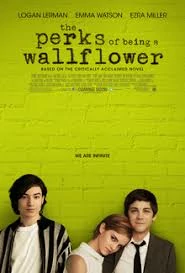
The movie’s unlikely superpower: sincerity without apology
Plenty of teen movies flirt with emotional honesty. Perks commits to it. The film follows Charlie, a shy freshman who observes more than he speaks, absorbing the world like a bruise. The story could’ve been flattened into a “quirky outsider finds friends” formula—but it keeps returning to something more difficult: the idea that adolescence isn’t just embarrassing; it can be disorienting, grief-soaked, and haunted.
That’s largely because the film is built from the same DNA as the book. Stephen Chbosky wrote the novel in 1999, and years later wrote and directed the 2012 film adaptation himself. He’d been hesitant to hand the story over, eventually agreeing to sell the rights on the condition he could write and direct—an unusually protective move that set the tone for everything that followed. Wikipedia+1
This author-as-director setup matters. You can feel it in the movie’s rhythm: the pauses aren’t “dead air,” they’re Charlie thinking. The big moments don’t arrive with a wink; they land with the uncomfortable force of real memory.
Casting the wallflower: choosing faces that feel lived-in
A story like Perks lives or dies on casting. These characters can’t feel like polished archetypes. They have to feel like people you met once and never forgot.
Logan Lerman (Charlie) is the film’s anchor. Charlie isn’t written as charismatic; he’s written as present. That’s a hard role—less about delivering lines, more about registering the world. Chbosky has said that meeting Lerman and seeing his audition sealed the decision, describing him as “perfect” for Charlie. Backstage
Lerman plays Charlie with a kind of careful fragility: shoulders slightly rounded, eyes always processing, like he’s bracing for the emotional weather to change. It’s not showy, which is exactly why it works.
Emma Watson (Sam) had a particularly tricky assignment. Sam could’ve become the manic-pixie stereotype—beautiful, damaged, and designed to “save” the main character. Instead, Watson plays her as warm but not mystical, wounded but not fragile. Sam is the kind of senior who seems fearless until you realize she’s just learned how to perform confidence.
Ezra Miller (Patrick) is the movie’s jolt of electricity. Patrick is the friend who drags you into the light—funny, flamboyant, and aching underneath. In the hands of a lesser performer, Patrick could’ve felt like comic relief. Miller makes him a full person.
Around the trio, the supporting cast fills out the world with recognizable texture: Mae Whitman, Paul Rudd, Joan Cusack, Kate Walsh, Dylan McDermott, Nina Dobrev, and others. Wikipedia+1
And because the story is so character-driven, the casting doesn’t just “fit”—it creates a believable gravitational field. Charlie’s pull toward Sam and Patrick feels inevitable.
Plot summary: the year everything changes (and what it costs)
The film is set in the early 1990s and unfolds across Charlie’s freshman year. He begins as an observer—sweet, socially anxious, recently shaken by a friend’s suicide, and quietly struggling with panic and depression. His voice arrives through letters (a key element from the book that the film keeps as structural framing), giving the story the intimacy of confession.
Charlie’s life shifts when he meets two seniors: Sam and Patrick. They adopt him into their group, bringing him to parties, mixtape moments, late-night drives, and the kind of friendship that feels like oxygen after months underwater. There’s joy here—genuine joy—because Perks understands that healing often begins as borrowed happiness.
But the movie never lets the audience forget Charlie is carrying something he doesn’t fully understand. His mental health struggles intensify. He dissociates. He breaks down. The film reveals, piece by piece, that Charlie’s pain is rooted in childhood trauma—memories he has buried so deeply they return as fragments, not narrative.
The story builds toward two parallel crescendos:
-
The social turning point: relationships shift as graduation approaches. Charlie’s dependence on the group becomes more visible, and he makes choices that complicate friendships and romance.
-
The psychological turning point: Charlie’s mind stops protecting him from the truth, and what’s been hidden surfaces all at once.
By the end, Perks isn’t just about finding friends. It’s about surviving yourself long enough to accept help—and learning that being loved doesn’t automatically erase what hurt you. It just makes it possible to walk through the hurt without being alone.
Adapting a beloved book: what stayed, what changed, and why it mattered
Because Chbosky wrote and directed the film, the adaptation choices feel less like “Hollywood sanding down edges” and more like a second draft from the same author—compressing, clarifying, and (in some places) softening or refocusing.
Chbosky has discussed cutting or altering certain elements to keep the film’s emotional language coherent—particularly around flashbacks and how much secondary trauma to stack onto an already heavy narrative. In at least one interview, he described removing material because it distracted from the story’s core emotional throughline. San Diego Reader
This is part of why the film works for both audiences:
-
Book fans recognize the emotional truth and key moments.
-
New viewers get a story that feels complete on its own, not like a cliff-notes version of a longer book.
And then there’s the big symbolic change that became iconic…
Behind the scenes: Pittsburgh as a memory museum
One of the film’s most effective choices is its sense of place. Perks doesn’t feel like it was shot on a generic “teen movie street.” It feels specific.
Principal photography took place in the Pittsburgh metropolitan area from May 9 to June 29, 2011 (about fifty days). Wikipedia The locations aren’t just pretty backdrops—they’re part of the story’s identity, tied to Chbosky’s own history in the region.
The production filmed in South Hills areas like Upper St. Clair and used real local landmarks, which helps the film feel like a lived-in recollection rather than a manufactured high school fantasy. Wikipedia
Even the Rocky Horror Picture Show sequence is rooted in authenticity: the scenes were filmed at The Hollywood Theater in Dormont, a place Chbosky had a personal connection to. Wikipedia That detail matters because Perks is partly about cultural inheritance—older kids passing down music, movies, and permission to be weird.
The tunnel scene: engineering a legend
If the movie has a single image burned into pop culture memory, it’s this: Sam standing in the back of a pickup truck, arms out, as the car bursts through the Fort Pitt Tunnel into the Pittsburgh skyline.
It’s the film’s “infinite” moment—the instant where adolescence feels limitless because the people beside you finally make life feel survivable.
That scene wasn’t just emotionally difficult—it was logistically complicated. Shutting down a major tunnel, filming safely, stitching shots together—this is the kind of sequence that could’ve looked corny. Instead, it became transcendent.
Local coverage emphasized how personal the tunnel was to Chbosky—something he’d driven through countless times, now turned into the story’s emotional gateway. CBS News
But the real behind-the-scenes twist is the music.
The soundtrack decision that changed everything: “Heroes”
In the book, the “tunnel song” is different. For the film, Chbosky wanted something bigger—less soft, more propulsive, something that felt like a life cracking open.
In a 2012 interview, he explained that they needed an “epic” track, and music supervisor Alexandra Patsavas suggested David Bowie’s “Heroes.” Vanity Fair
Years later, reflecting on the film’s legacy, Chbosky reaffirmed that “Heroes” would remain the choice—partly because the movie introduced the song to many younger viewers, like an older sibling handing you a secret playlist. Vanity Fair
That’s exactly what Perks is about: art as a passed-down lifeline.
Release and box office: a modest hit with unusually strong “legs”
The Perks of Being a Wallflower premiered at the Toronto International Film Festival on September 8, 2012, then released theatrically in the U.S. on September 21, 2012. Wikipedia
Financially, it wasn’t a blockbuster—and it wasn’t meant to be. It was a mid-budget coming-of-age drama with a literary soul.
-
Reported budget: about $13 million Wikipedia+1
-
Worldwide gross: around $33 million Wikipedia+1
-
Domestic gross: about $17.7 million Box Office Mojo
What stands out is how it expanded: it opened in very few theaters and grew from there, indicating strong word-of-mouth rather than front-loaded hype. The Numbers+1
This matches the film’s personality. Perks isn’t a movie that screams for attention. It spreads like a recommendation—someone quietly telling you, “I think you need this.”
Critical and audience reception: a rare alignment
Critically, the film landed well:
-
Rotten Tomatoes lists an approval rating in the mid-80s range (commonly cited as 85%), with critics highlighting sincerity and performances. Wikipedia+1
-
Metacritic places it in the “generally favorable” range (often cited as 67/100). Wikipedia+1
-
Audiences polled by CinemaScore reportedly gave it an “A” grade—unusually high for a drama this emotionally heavy. Wikipedia
That last piece is important. Perks doesn’t “entertain” in the easy way. It asks viewers to sit with pain. An “A” suggests something deeper: people didn’t just like it—they felt represented by it.
Reviewers frequently praised the lead trio and the film’s refusal to mock its own sensitivity. Even when the story edges toward melodrama, the performances keep it human.
Why it hit so hard: the movie as a permission slip
A big part of Perks’ endurance is that it doesn’t treat teenage feelings as fake feelings. It treats them as the first time you experience emotions at full volume, without the life experience to interpret them.
Charlie’s arc isn’t “become cool.” It’s “become present.” He learns that friendship can be transformative—but also that friends can’t replace the work of healing.
Chbosky has talked about the intensity of audience responses over the years, including people who connected to the film during dark periods—an impact that goes beyond standard fandom and into something closer to testimony. Vanity Fair
And it’s not accidental that the film remained culturally sticky online. It became quote-fuel, tattoo text, Tumblr mythology—not because it’s clever, but because it articulates what many people felt in adolescence and couldn’t say out loud. Vanity Fair
The legacy: a time capsule that still breathes
Rewatch Perks today and you’ll notice something: it’s a period piece that doesn’t feel dusty. The clothes and music place it in a specific era, but the emotional mechanics—loneliness, anxiety, the hunger to belong—are not trapped in time.
That’s why the film still gets rediscovered in waves. Cast members have shared behind-the-scenes photos years later, sparking fresh nostalgia and reminding people how intensely the production bonded—like a real adolescent friend group that formed quickly and felt permanent. Teen Vogue
And maybe that’s the final trick of The Perks of Being a Wallflower: it doesn’t just depict a formative friend group—it recreates the feeling of having one. For two hours, you get to step into a world where someone notices you, pulls you into the circle, hands you the right song, and says, “You’re not alone.”
For anyone who has ever felt like an observer in their own life, that’s not just a movie. It’s a lifeline.


 (618) 624-6402