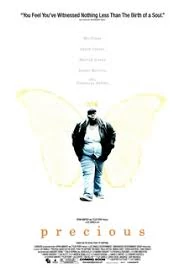
The movie that dared you to stay in your seat
The full title—Precious: Based on the Novel “Push” by Sapphire—isn’t subtle, and neither is the film. It tells you up front: this is an adaptation, and this is going to be heavy. The story centers on Claireece “Precious” Jones, a 16-year-old Black girl in 1987 Harlem navigating extreme trauma and deprivation while carrying a fierce, often hidden inner life.
If you only know Precious by reputation, it’s usually described in superlatives: “harrowing,” “important,” “devastating.” All accurate. But what made the film stick wasn’t just that it portrayed suffering—plenty of movies do that. It’s that it portrayed interiority—the private psychic strategies a person uses to survive when the world keeps telling them they don’t matter.
That’s the first crucial move the film makes: it doesn’t treat Precious as a symbol. It treats her as a human being with fantasies, cravings, blind spots, humor, longing, and a battered but real hope.
Casting choices that turned the film from “issue drama” into something electric
Gabourey Sidibe as Precious: the alchemy of a debut
Gabourey Sidibe wasn’t a known quantity. She didn’t arrive with a résumé full of screen credits. The story that matters is that the production searched—and then found someone who could hold the camera’s attention without pleading for it. Sidibe was discovered at an open-call audition in New York City and selected over hundreds of other auditions. Wikipedia
Her performance has a rare quality: it feels simultaneously guarded and transparent. Precious doesn’t narrate her pain to earn your sympathy. She often can’t even name it yet. Sidibe plays her as someone who has learned to keep her feelings inside because the outside world has never been safe.
Just as importantly, Sidibe sells the film’s tonal tightrope—those sudden, bright fantasy sequences where Precious imagines herself as adored, glamorous, chosen. These moments aren’t “cute breaks.” They’re psychological oxygen.
Mo’Nique as Mary: a performance that refuses comfort
Mo’Nique’s casting was inspired and risky. She was widely known as a comedian and media personality; the film asks her to play Mary, Precious’s mother, as a relentless force of humiliation, manipulation, and violence. The performance doesn’t soften the character to make her palatable—but it also doesn’t turn her into a cartoon. It’s a portrait of a person who has weaponized cruelty as a way of controlling her own terror and powerlessness.
Mo’Nique and Lee Daniels had worked together before on Shadowboxer, which helped build trust for a role that required going to very dark places. Wikipedia
This is where the film becomes more than a plot summary: Mo’Nique makes you feel the texture of abuse—the way it can be petty, repetitive, performative, and intimate. She doesn’t just scream. She strategizes.
Paula Patton, Mariah Carey, and the unexpected supporting ensemble
Paula Patton plays Blu Rain, a teacher at an alternative school who becomes one of Precious’s first consistent witnesses—someone who doesn’t just pity her but expects something from her. Wikipedia
Mariah Carey appears as Ms. Weiss, a social worker whose guarded professionalism slowly opens into a more human connection. Wikipedia
And then there’s the broader cast: Sherri Shepherd, Lenny Kravitz—faces you may not have expected in a drama this raw. That contrast works. It echoes Precious’s own experience: life is not neatly categorized into “serious” and “not serious.” Sometimes the person who helps you most is someone you didn’t expect.
Plot summary: what happens—and why it hits so hard
Precious is set in Harlem in 1987. Precious is 16, illiterate, overweight, socially isolated, and pregnant with her second child. She lives with her mother, Mary, whose abuse is constant—emotional, physical, and psychological. Precious’s father is the source of a deeper horror: prolonged sexual violence that the film treats with directness but not sensationalism.
At school, Precious is treated as disposable: a problem, not a person. When she becomes pregnant again, she is pushed out of the traditional school system and sent to an alternative program. This is the story’s hinge. Not because the alternative school becomes a fairy tale—nothing here is easy—but because Precious enters a space where the adults are trained (or at least trying) to see past the obvious.
At the alternative school, Ms. Rain begins teaching Precious basic literacy and, more importantly, basic self-recognition. Precious starts writing. She starts speaking with more clarity. The film treats literacy as more than a skill; it’s a doorway. When you can read and write, you can hold your own story in your own hands.
Parallel to this, a social worker (Ms. Weiss) conducts interviews that slowly excavate the family’s reality. These scenes are structured like pressure tests: can Precious tell the truth out loud? Can the system hear it without turning away? Can anyone intervene?
The most emotionally volatile scenes remain at home. Mary’s cruelty isn’t random; it’s controlling. She punishes Precious not just for existing, but for threatening the story Mary tells herself about her own life. Precious becomes a scapegoat, a container for Mary’s shame and rage.
Eventually, the film moves toward rupture: Precious leaves her mother and begins trying to build a life with support systems—school, social services, a small community of women around her. This isn’t presented as a triumphant finale. The movie doesn’t pretend that one brave decision erases years of damage. But it does insist on something radical: Precious has a future that belongs to her, even if it’s fragile and unfinished.
Behind the scenes: adapting a difficult novel and building a film that could withstand its own subject matter
From Push to Precious
The film is adapted from Sapphire’s 1996 novel Push, with the screenplay written by Geoffrey S. Fletcher. Wikipedia
The title shift mattered: “Push” is a loaded word, and the new title put the protagonist front and center. The movie, whatever else it is, is about her.
Shooting in New York, grounding the story in place
The film was shot on location in New York City, which helps the story feel lived-in rather than staged. Wikipedia+1
That sense of place is part of the film’s credibility: the cramped apartments, the institutional hallways, the classroom spaces that feel under-resourced but real.
A set that needed lightness to survive the darkness
One of the more surprising production notes is that—by accounts from the cast—the set atmosphere could be light and joking despite the material, as a coping mechanism for everyone involved. Wikipedia
That tracks with what you’re watching: the film itself is grim, but not humorless. The people making it also needed oxygen.
The “Oprah and Tyler Perry present” factor—and the business drama around distribution
A major piece of the Precious story is not just artistic but industrial: it premiered at Sundance in January 2009 and drew enough heat that the distribution rights became contested. Lionsgate ultimately released the film, and the marketing push included high-profile support connected to Oprah Winfrey and Tyler Perry’s companies. Wikipedia
There was also a legal dispute between distributors over release rights that played out publicly and later reached a settlement. Reuters+1
This matters because it shaped how the movie entered the culture. Precious was not a quiet indie that politely asked for attention. It became an event—a prestige film with a populist megaphone.
Box office: the rare prestige film that expanded like a breakout hit
Precious had a budget reported around $10 million and ultimately earned about $63 million worldwide, with roughly $47.5 million in the U.S./Canada range depending on source reporting. Wikipedia+2Rotten Tomatoes+2
The release strategy is part of the story: it opened in limited release and then expanded dramatically as word-of-mouth and awards buzz grew. Its early per-theater numbers were especially strong for a small release. The Numbers+1
That kind of performance suggests two things at once:
-
The marketing was effective (it reached beyond art-house regulars).
-
The film’s emotional impact motivated people to talk—sometimes to recommend it, sometimes to argue about it, but either way to amplify it.
Audience and critical reception: acclaim, discomfort, and debate
Critically, Precious landed hard. Rotten Tomatoes shows it as strongly reviewed (with a score in the 90% range and extensive critical consensus material over time). Rotten Tomatoes+1
It also became an awards powerhouse, including six Academy Award nominations and wins for Mo’Nique (Supporting Actress) and Geoffrey Fletcher (Adapted Screenplay). Wikipedia+1
But audience reception wasn’t just “everyone loved it.” It was more complicated, and that’s important to say plainly.
Why it was celebrated
-
Because it made an invisible person visible, without “prettifying” her.
-
Because it treated literacy, care, and community as lifesaving forces—not sentimental clichés.
-
Because the lead performances (Sidibe and Mo’Nique especially) felt undeniable.
Why it was contested
Some viewers and commentators debated the film’s relationship to “trauma spectacle”—whether it risked becoming a catalog of suffering for mainstream consumption rather than a portrait of survival. Those critiques existed alongside the praise, and the film’s cultural footprint includes both.
The truth is: the movie is designed to be difficult. It asks you to sit with a story many people would rather pretend doesn’t exist, and it refuses to offer the kind of ending that lets you congratulate yourself and move on.
Craft choices: fantasy, sound, and the “internal camera”
One of the boldest creative decisions is the use of fantasy/escape sequences—glamour visions, imagined applause, imagined romance. These aren’t random stylistic flourishes. They are how Precious survives: she builds an inner world because her outer world is punishing.
In less skilled hands, this could have felt manipulative or tonally chaotic. Here it becomes part of the film’s moral logic: it insists that Precious has always had a self, even when no one around her honored it.
Legacy: what Precious changed—and what it still provokes
More than a decade later, Precious remains a cultural reference point because it sits at the intersection of art, social reality, and mainstream appetite. It helped launch Gabourey Sidibe into instant prominence and cemented Mo’Nique as an Oscar-winning dramatic actor.
It also remains a movie people recommend with a warning: “It’s amazing… but brace yourself.” That warning is part of the legacy, too. It speaks to the film’s power—and to the fact that it doesn’t let the audience consume pain as entertainment without consequence.


 (618) 624-6402