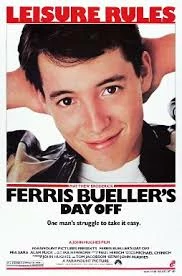
Few films from the 1980s have remained as beloved, iconic, and culturally durable as Ferris Bueller’s Day Off. Written and directed by John Hughes, the creative force behind The Breakfast Club, Sixteen Candles, and Planes, Trains & Automobiles, the film stands as both a teen wish-fulfillment fantasy and a genuinely insightful meditation on youth, freedom, and the pressure to grow up.
On its surface, it’s a comedy about cutting class. Underneath, it’s about fear, identity, friendship, rebellion, and the fleeting nature of adolescence. Its characters—Ferris, Cameron, and Sloane—have become archetypes in teen cinema. Its lines and scenes are quoted, referenced, and parodied decades later. And Ferris himself has become a kind of American folk hero: the charming trickster who games the system with ease and style.
This article explores the film in depth: its casting, story structure, production history, reception, and legacy.
Casting Choices: The Faces Behind the Fantasy
Matthew Broderick as Ferris Bueller
Hughes always imagined Ferris as a charming, whip-smart kid who bends the world to his will. He needed someone who could be mischievous without being obnoxious, smug without being unlikable, and precocious without becoming unbelievable.
Matthew Broderick, then 23, had already gained acclaim on Broadway and had starred in WarGames (1983). Hughes felt Broderick brought an innate sincerity beneath the bravado. Ferris regularly breaks the fourth wall—something few teen actors could pull off with natural charisma. Broderick delivered it effortlessly.
His line delivery, especially in his monologues to the audience, is one of the film’s signatures. No matter how absurd Ferris’s schemes are, Broderick plays them with such calm confidence that we believe every second of it.
Alan Ruck as Cameron Frye
Casting Cameron was trickier. He had to be the nervous foil to Ferris’s fearless persona—an anxious, repressed, guilt-ridden kid whose emotional arc is the real heart of the movie.
Alan Ruck, older than most of the cast at 29, had performed with Broderick in Biloxi Blues. Hughes liked their contrast: Broderick was light and fluid; Ruck’s energy was stiff, clenched, and brittle. Ruck brought tragicomic depth to Cameron, portraying a teenager terminally afraid of his own father. His vulnerability made the film far more than a simple comedy.
Ruck’s reading of Cameron’s breakdown scene—“If I didn’t want it, I wouldn’t have let you take the car out”—is still considered one of the film’s emotional high points.
Mia Sara as Sloane Peterson
Casting Sloane required finding someone who could avoid the “generic love interest” stereotype. Hughes wanted Sloane to have intelligence and presence. Mia Sara, only 18 and fresh off Legend (1985), gave Sloane a grounded charm that balanced the boys’ antics.
Sloane doesn’t just accompany Ferris and Cameron—she witnesses their emotional journeys and often provides the calm, rational counterweight. Her farewell scene with Ferris, marked by an improvised kiss, is still quoted for its sweetness.
Jeffrey Jones as Principal Ed Rooney
Rooney is the comedic antagonist—equal parts inspector, bureaucrat, and cartoon villain. Jeffrey Jones had a knack for dry-faced exasperation, making Rooney’s escalating humiliation both funny and satisfying. His physical comedy—being attacked by Ferris’s dog, falling in the mud, being nearly trapped in a bus full of students—adds Looney Tunes energy to the film’s tone.
Jennifer Grey as Jeanie Bueller
Jeanie is the resentful sibling who seethes at her parents’ blind love of Ferris. Jennifer Grey’s sharp comedic timing and emotional authenticity create one of the film’s funniest and most relatable characters. Her eventual breakdown in the police station adds the film’s final element: sometimes, letting go is the only way to win.
Charlie Sheen’s Cameo
Charlie Sheen, playing the mysterious delinquent in the police station, created one of the most memorable five-minute appearances in teen-movie history. To achieve the right look, he reportedly stayed awake for over 48 hours.
Plot Summary: A Day of Freedom, Friendship, and Fear
The Setup
Ferris Bueller wakes up on a beautiful spring day and decides it would be a crime to spend it in school. He delivers one of the greatest openers in teen-movie history: a monologue on how to fake being sick, how to manipulate clueless parents, and why sometimes you just need a day off.
His parents buy it instantly—Ferris is their perfect golden child.
But his sister Jeanie sees through him and fumes with jealousy.
Ferris’s girlfriend, Sloane, is at school. His best friend, Cameron, is at home genuinely sick (psychosomatically), riddled with anxiety and existential dread.
Ferris convinces Cameron to help him spring Sloane from school by pretending her grandmother has died. They succeed, partly because Rooney sees through Ferris—but lacks proof.
The Ferrari
Cameron’s father’s prized 1961 Ferrari 250 GT California becomes the vehicle—literally and symbolically—for the film's emotional stakes. Cameron doesn’t want to take it. Ferris, of course, insists.
The car is not just transportation; it represents Cameron’s fear, repression, and the impossible expectations placed on him by his father.
The City Adventure
The trio heads to downtown Chicago, and John Hughes turns the city into a joyful playground:
-
They visit the Sears Tower.
-
They eat lunch at Chez Quis after Ferris pretends to be the “Sausage King of Chicago.”
-
They attend a Cubs game.
-
Cameron suffers an existential panic attack in the Art Institute of Chicago, the film’s surprisingly tender, wordless interlude.
-
Ferris jumps on a parade float and lip-syncs to “Twist and Shout,” creating one of the most iconic scenes in teen-film history.
Throughout the day, Ferris is effortlessly confident. Cameron is constantly on the brink of collapse. Sloane acts as the emotional mediator.
Rooney’s Quest
Meanwhile, Principal Rooney launches a personal crusade to expose Ferris. His pursuit becomes increasingly absurd, and he is repeatedly defeated by circumstances, technology, Ferris’s ingenuity, and a Rottweiler. His storyline provides slapstick contrast to the main trio’s emotional journey.
Cameron’s Crisis
The plot’s emotional peak comes when Cameron stares at the mileage on the Ferrari. He realizes the valets joy-rode it, and the car now has thousands of extra miles. Something breaks inside Cameron—not the car, but his fear.
He has a cathartic meltdown in the pool. Later, during the attempt to run the car in reverse to erase the miles, Cameron finally confronts centuries of abuse and neglect from his father.
“It’s my fault,” he says. “I let him do this to me.”
This is the real arc of the movie. Ferris takes a day off; Cameron takes his life back.
The Race Home
After dropping Cameron and Sloane off, Ferris races home before his parents return. The sequence is a fast-paced romp through backyards, fences, and trampolines.
He arrives just in time—only to find Jeanie waiting. But instead of busting him, she covers for him. After her encounter with Charlie Sheen’s character, she’s gained perspective. Ferris slips back into bed as his parents check on their “sick” son.
Final Message
Ferris addresses the audience one last time:
“Life moves pretty fast. If you don’t stop and look around once in a while, you could miss it.”
Behind the Scenes: Creation of an Instant Classic
John Hughes's Writing Process
Hughes wrote the script astonishingly quickly—reportedly in under a week. This was typical for him; he often wrote scripts in bursts of creative intensity. But Ferris was personal. To Hughes, Ferris represented not youthful rebellion, but the spirit of freedom he wanted Chicago kids to feel.
He described Ferris as “the kind of person I always wanted to be.”
Chicago as a Character
Hughes was devoted to Chicago and wanted the film to be a love letter to the city. Much of the film was shot on location:
The parade scene itself was shot during real downtown events, including the Von Steuben Day Parade. Broderick actually lip-syncs atop a real float surrounded by a real crowd.
The city becomes a backdrop and a character, an escape from suburban pressure.
The Parade Scene
The “Twist and Shout” sequence is the film’s most iconic moment and almost never happened. Hughes wanted a big finale that expressed Ferris’s joy. The city allowed them unprecedented freedom, and the resulting scene is pure cinematic exuberance.
The Beatles’ song surged back onto the charts after the film’s release.
The Ferrari Myth
The Ferrari 250 GT California used in the film wasn’t a real one—it would have cost millions even then. Three replicas were built. The real car only appears briefly. The “crash” car was a fiberglass shell mounted on a rig designed to break apart on impact.
The story that the producers destroyed an actual Ferrari is a Hollywood myth.
Improvisation
Much of the film contains improvisational touches:
-
Broderick’s addressing of the camera
-
Cameron’s phone calls
-
Charlie Sheen’s dialogue (“Your problem is you.”)
-
Some of Jeanie’s outbursts
Ferris’s charm is partly written—but partly Broderick’s spontaneous playfulness.
Deleted Plotlines
Hughes originally considered giving Ferris younger siblings, expanding Jeanie’s role further, and giving Rooney more confrontations, but most were cut to preserve pacing.
Art Institute Scene
The museum scene stands out because Hughes loved the Art Institute and wanted to give teenagers a moment of pure stillness and introspection in an otherwise energetic story. The sequence with Cameron and George Seurat’s A Sunday Afternoon on the Island of La Grande Jatte has become one of the most analyzed scenes in teen-cinema history.
The Ending Cameo
Hughes added the post-credits scene (“You’re still here? It’s over. Go home.”) as a final joke—a rare technique at the time, long before Marvel made it standard.
Box Office Performance
Ferris Bueller’s Day Off was released on June 11, 1986, by Paramount Pictures.
Budget
Estimated at roughly $5–6 million, modest even by mid-80s standards.
Domestic Box Office
It earned about $70 million in the U.S. alone—an impressive figure for a teen comedy.
Global Reach
Though exact international numbers vary due to inconsistent reporting in the 1980s, estimates place its worldwide gross at over $75–80 million.
Financial Impact
The film was a major success, cementing John Hughes’s reputation as the preeminent chronicler of American teenage life. Paramount saw it as a dependable summer hit, and the film continued earning for decades through home video, cable, streaming, and merchandise.
Audience Reception
Critical Response
Reviews at the time were mixed to positive:
-
Roger Ebert gave it three out of four stars, praising Broderick and Ruck but questioning the film’s moral messaging.
-
Many critics lauded its humor, music, and style.
-
Others found it too whimsical or unrealistic.
But over time, critics nearly universally re-evaluated it. Today, it’s often considered Hughes’s masterpiece.
Audience Love
Audiences adored the film from the start:
-
Teens embraced Ferris as an icon.
-
Parents found nostalgia in the carefree spirit of the plot.
-
The film developed enormous home-video popularity.
-
The television airings on TBS and other networks in the 1990s made it a staple.
Today, it holds a robust rating on Rotten Tomatoes and consistently appears on lists such as:
-
“Top 100 Funniest Movies”
-
“Best Teen Movies of All Time”
-
“Most Quotable Films”
-
“Movies That Define the 1980s”
Cultural Penetration
So many lines and moments became part of everyday pop culture:
-
“Bueller? … Bueller?”
-
“Life moves pretty fast…”
-
“You’re not dying. You just can’t think of anything good to do.”
-
The parade dance
-
Rooney’s escalating humiliation
Even the monotone economics teacher (Ben Stein) became iconic.
Legacy: Why Ferris Still Matters
Nearly four decades later, Ferris Bueller’s Day Off remains uniquely timeless.
Ferris as Cultural Archetype
Ferris is the trickster hero—someone who refuses to accept arbitrary rules and finds joy in life. He is a symbol of freedom, rebellion, and optimism.
But he’s also more complex than people think. As Hughes said, Ferris is “the spark” that ignites others—particularly Cameron.
Cameron’s Transformation
Many viewers argue that Cameron, not Ferris, is the true protagonist. His emotional journey—from fear to collapse to liberation—is the film’s true heart. Ferris exists to force Cameron to confront his life, not to escape from school.
Chicago’s Immortalization
Hughes captured Chicago in a way few films have. It’s a city of culture, energy, and possibility. Locals often describe Ferris as “the best Chicago film ever made.”
Influence on Filmmaking
The movie influenced numerous techniques:
-
Fourth-wall breaks (later embraced by Deadpool, Saved by the Bell, Malcolm in the Middle)
-
Needle-drop musical sequences
-
Hybrid comedy/drama structure
-
Youth protagonists treated as emotionally serious
Enduring Themes
The film resonates because its themes remain universal:
-
The pressure to perform (Cameron)
-
The longing for freedom (Ferris)
-
The fear of imperfection (Jeanie)
-
The grind of routine
-
The desire to make a memory before growing up
Modern Interpretations
Some modern critics interpret the film through different lenses:
-
Ferris as a fantasy version of John Hughes
-
Cameron as the real depiction of teenage anxiety
-
Ferris as an unreliable narrator
-
The entire film as Cameron’s psychological journey
Whatever interpretation one prefers, the movie remains endlessly rewatchable and surprisingly rich.
Cultural Afterlife
The film inspired:
The “Save Ferris” slogan became a catchphrase, a band name, and even a political sign in Chicago.
Conclusion: The Day Off That Became a Lifetime Classic
Ferris Bueller’s Day Off endures because it captures a feeling everyone recognizes: the need to step away, breathe, live, and remember that joy still exists. It is a film built on charm, heart, humor, and an understanding that adolescence is brief and precious.
Ferris may be a legend, but Cameron is us. Sloane is the glue. Rooney is the comic punishment of every overbearing authority figure. And Chicago is the world where anything can happen if you’re bold enough to take the leap.
There are few films as effortlessly fun, as thematically gentle yet meaningful, and as stylistically confident. It remains one of cinema’s great celebrations of youthful freedom.
Life does move pretty fast.
And thanks to this film, none of us will forget to stop and look around.


 (618) 624-6402