Decimal multiplication can feel tricky at first because the decimal point does not stay in one fixed place.
To get the correct answer, we need to understand what decimal multiplication means, why the decimal point moves, and how to place it correctly in the product.
Today, our tutors at Mathnasium will walk through step-by-step examples, explain the reasoning behind decimal placement, and answer your most common questions.

What Does Multiplying Decimals Mean?
Decimal multiplication means multiplying numbers where at least one of them is a decimal.
We commonly see decimal multiplication in two forms:
-
A whole number times a decimal, such as 4 × 0.12
-
A decimal times a decimal, such as 1.5 × 2.3
When we multiply by a decimal, it acts like a scale. It tells us how much of the other number to take. For example, 0.5 means one-half, 0.25 means one-quarter, and 4.5 means four and a half times as much.
Let's say we want to solve 0.5 × 8.
It won't always work out as cleanly as this example. In many decimal multiplication problems, the decimal point changes position in the answer. For instance, 0.6 × 0.7 = 0.42.
So how do we know where the decimal point belongs? We'll see how that works next.
📕 You May Also Like: Why Kids Struggle With Multi-Digit Multiplication (and How to Fix It)
Why Does the Decimal Point Move?
The decimal point moves because decimal places represent powers of ten. When we multiply decimal numbers, those place values combine, and the product needs the correct number of decimal places.
Let’s look at 0.6 × 0.7.
Each number is in the tenths place. When we multiply tenths by tenths, the answer is in hundredths.
If we multiply the digits first, 6 × 7 = 42. Since the answer needs hundredths, 42 hundredths = 0.42. So, 0.6 × 0.7 = 0.42.
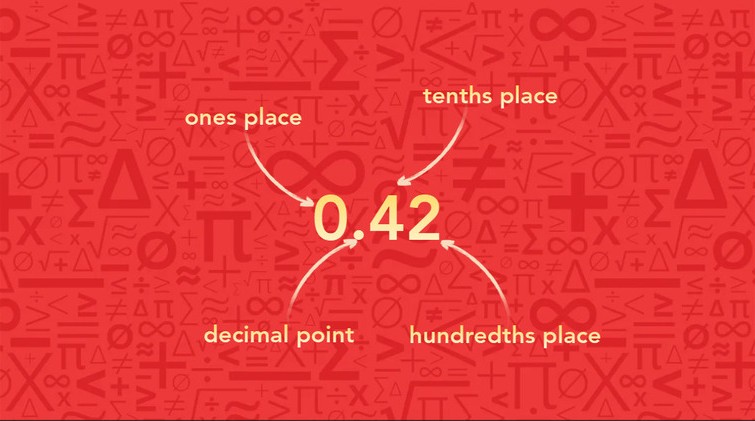
This is the main idea behind decimal placement. The total number of decimal places in the factors helps determine where the decimal point belongs in the product.
We typically encounter decimal multiplication in Grade 5 and continue building on the skill in Grade 6 as we begin working with rational numbers across all four operations.
📕 You May Also Like: Decimal Place Value Made Easy: A Fun, Kid-Friendly Guide
How to Multiply Decimals, Step by Step
The best way to learn decimal multiplication is by working through examples. Our tutors at Mathnasium build skills step by step, so we begin with simpler problems and then move on to more challenging decimal-placement examples.
The method works in two steps every time:
-
Step 1: Multiply the numbers as if they were whole numbers. Ignore the decimal points entirely during this step.
-
Step 2: Count the total number of decimal places across both factors.
-
Step 3: Count that many places from the right side of the product and place the decimal point.
It's time to put the method into practice.
Level 1: Whole Number Times a Decimal
We'll start by multiplying a whole number by a decimal to reinforce what we've already learned.
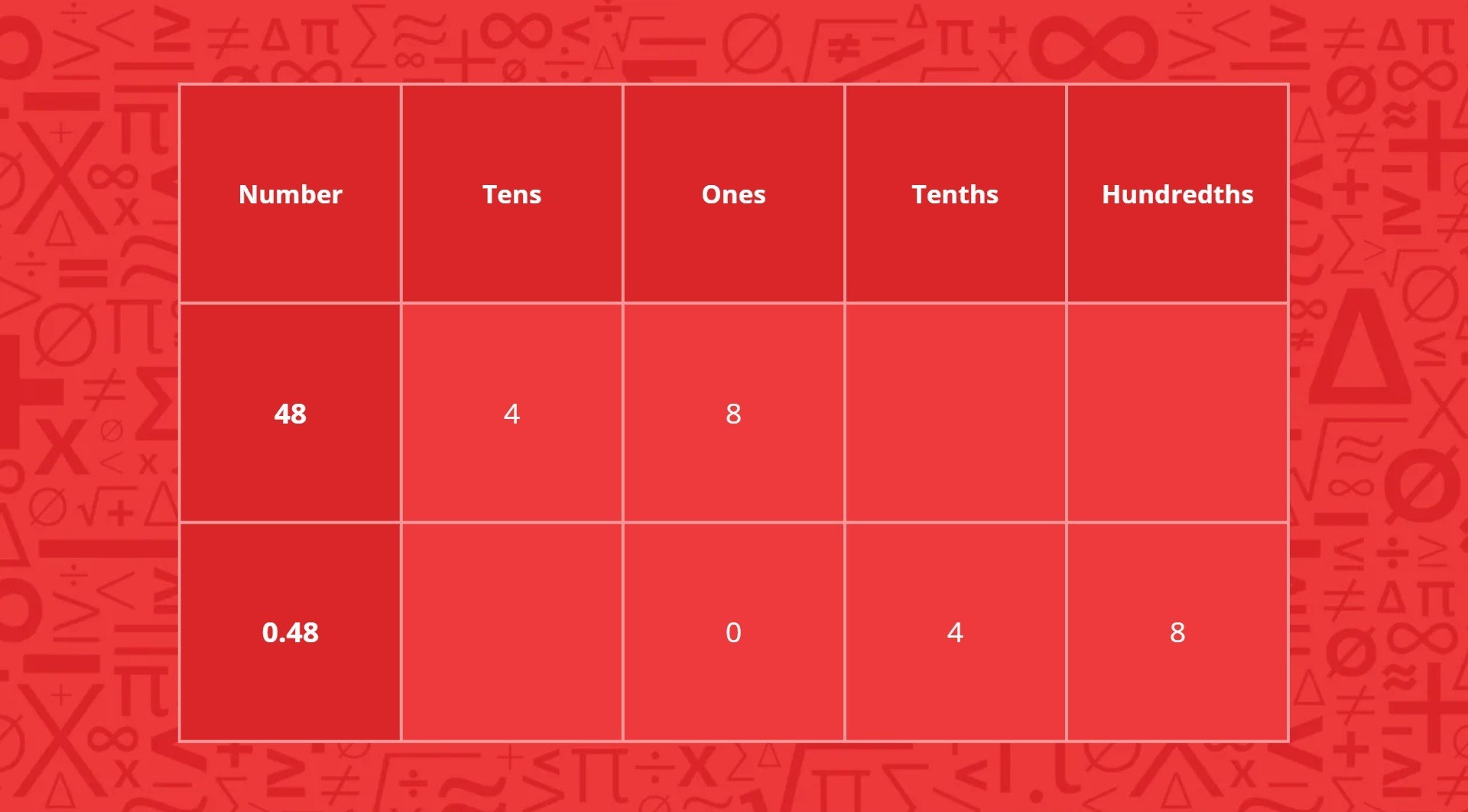
Let's multiply: 4 × 0.12
-
Step 1: Multiply as whole numbers. 4 × 12 = 48
-
Step 2: Count decimal places. 4 has zero decimal places. 0.12 has two decimal places, for a total of two decimal places. We always count the decimal places before placing the decimal point because this simple habit helps prevent common placement mistakes.
-
Step 3: Place the decimal two places from the right of 48.
So, our result is 0.48.
And here, we can see how placing the decimal point two places from the right turns 48 into 0.48.
Level 2: Decimal Times Decimal
Now we'll multiply two decimal numbers. The process stays the same, but this time, both factors contribute decimal places to the final answer.
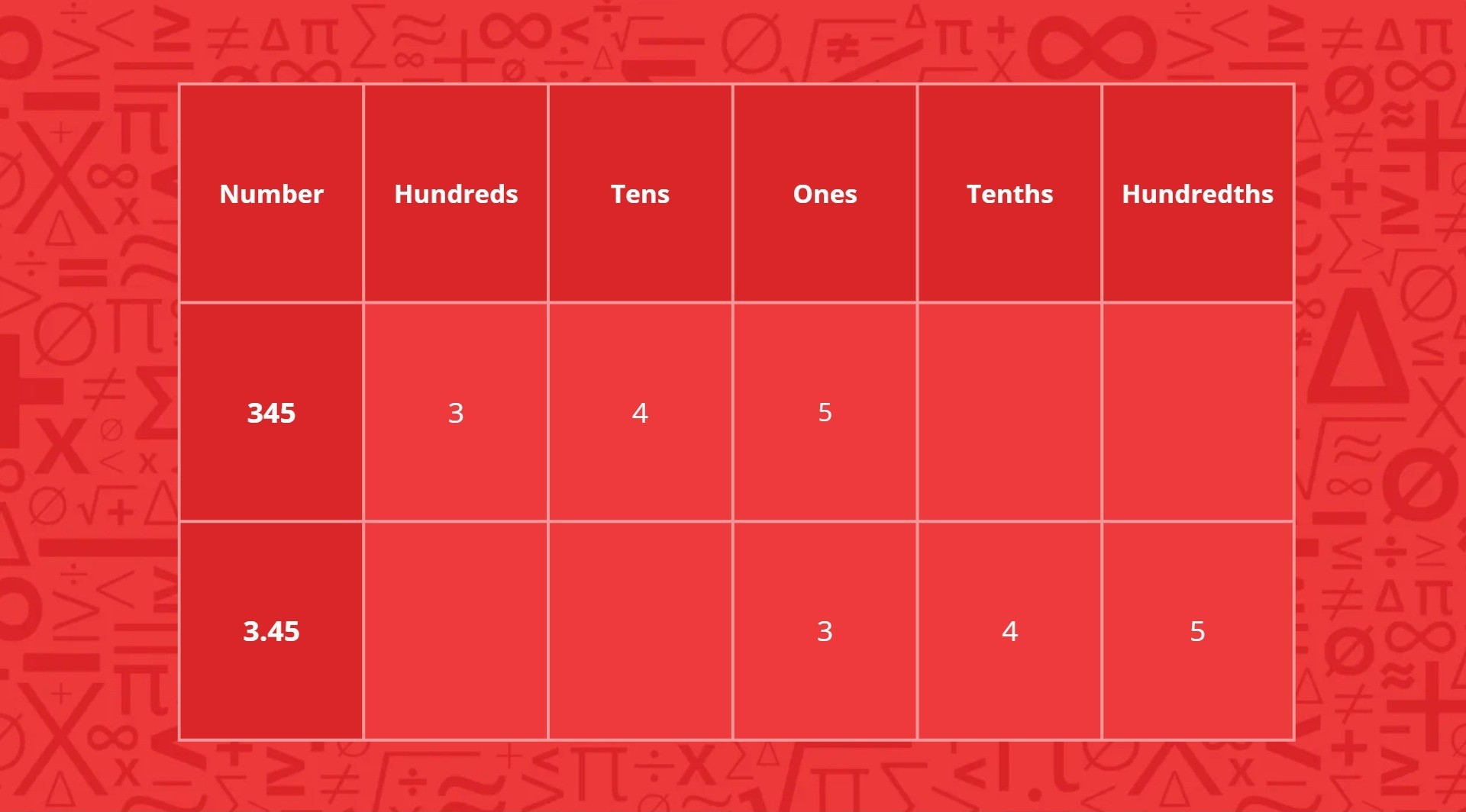
Let's solve: 1.5 × 2.3
-
Step 1: Multiply as whole numbers. 15 × 23 = 345
-
Step 2: Count decimal places. 1.5 has one decimal place. 2.3 has one decimal place, for a total of two decimal places.
-
Step 3: Place the decimal two places from the right of 345. We like to remind students that the decimal point goes into the answer, not between the two factors. Write the product of the whole numbers first, then count back from the right.
In this case, we’ve got 3.45.
Notice how 345 becomes 3.45 when we place the decimal point two places from the right. The digits stay the same, but their place values change.
Level 3: The Zero Filler Trap
We'll look at a situation where the product has fewer digits than the number of decimal places we need to count. This is where placeholder zeros become important.
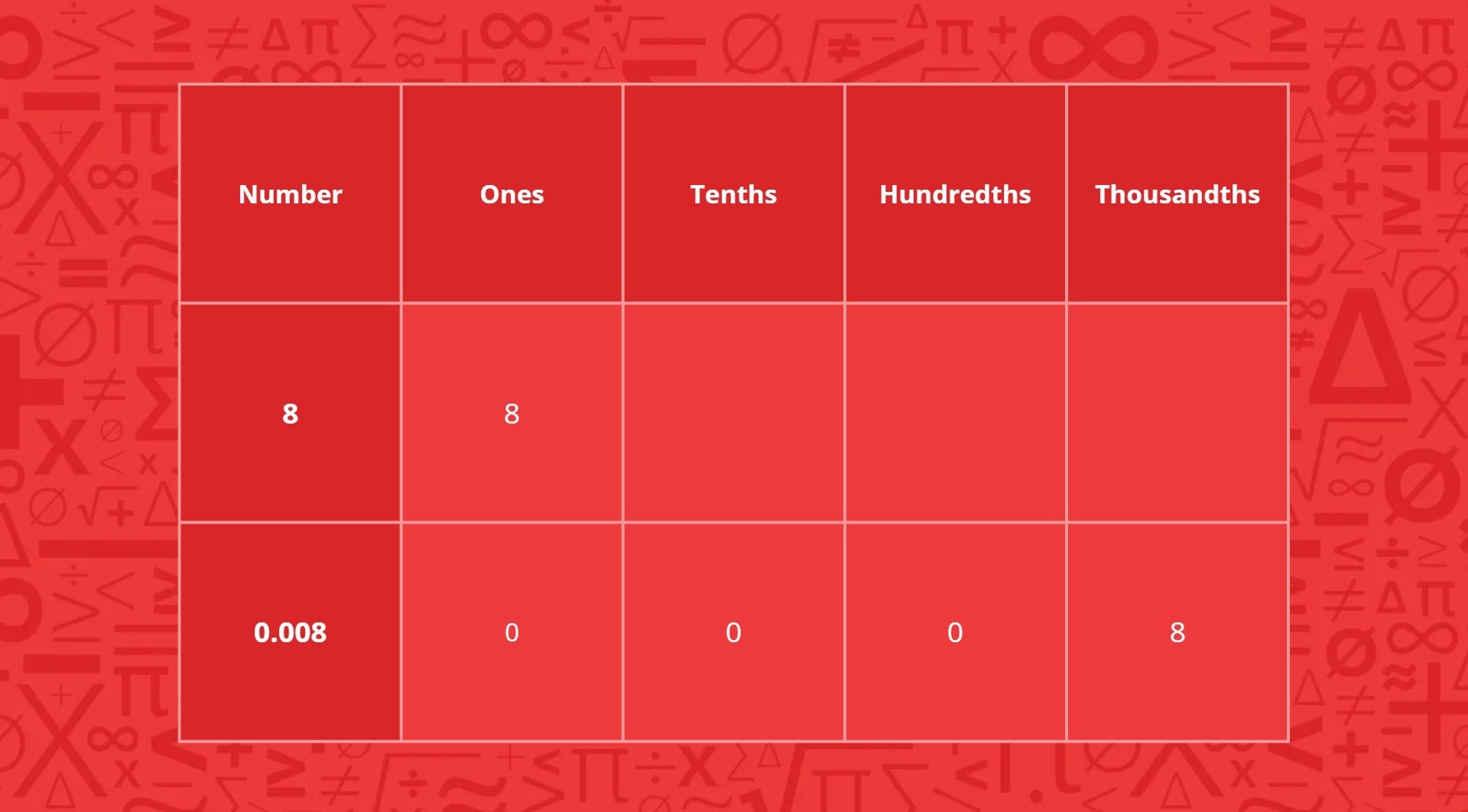
Let's work through: 0.2 × 0.04
-
Step 1: Multiply as whole numbers. 2 × 4 = 8
-
Step 2: Count decimal places. 0.2 has one decimal place. 0.04 has two decimal places, for a total of three decimal places.
-
Step 3: Place the decimal three places from the right of 8. Since the product has fewer digits than the number of decimal places we need, placeholder zeros fill the gap from the left. We often encourage students to count the spaces out loud before writing the answer.
Finally, we’ve reached 0.008.
Now we can see how the 8 moves from the ones place to the thousandths place. The extra zeros fill the spaces in between, which gives us 0.008.
📕 You May Also Like: How to Do Long Division with Decimals - Kid-Friendly Guide
How Is Multiplying Decimals Different From Adding Decimals?
One of the most common decimal multiplication mistakes is assuming it works the same way as decimal addition. However, the two operations follow different rules.
When adding decimals, alignment is everything because we are combining the same place values. In 2.4 + 1.35, we line up the decimal points so the tenths stay with the tenths and the hundredths stay with the hundredths. That is why we often rewrite 2.4 as 2.40 before adding.
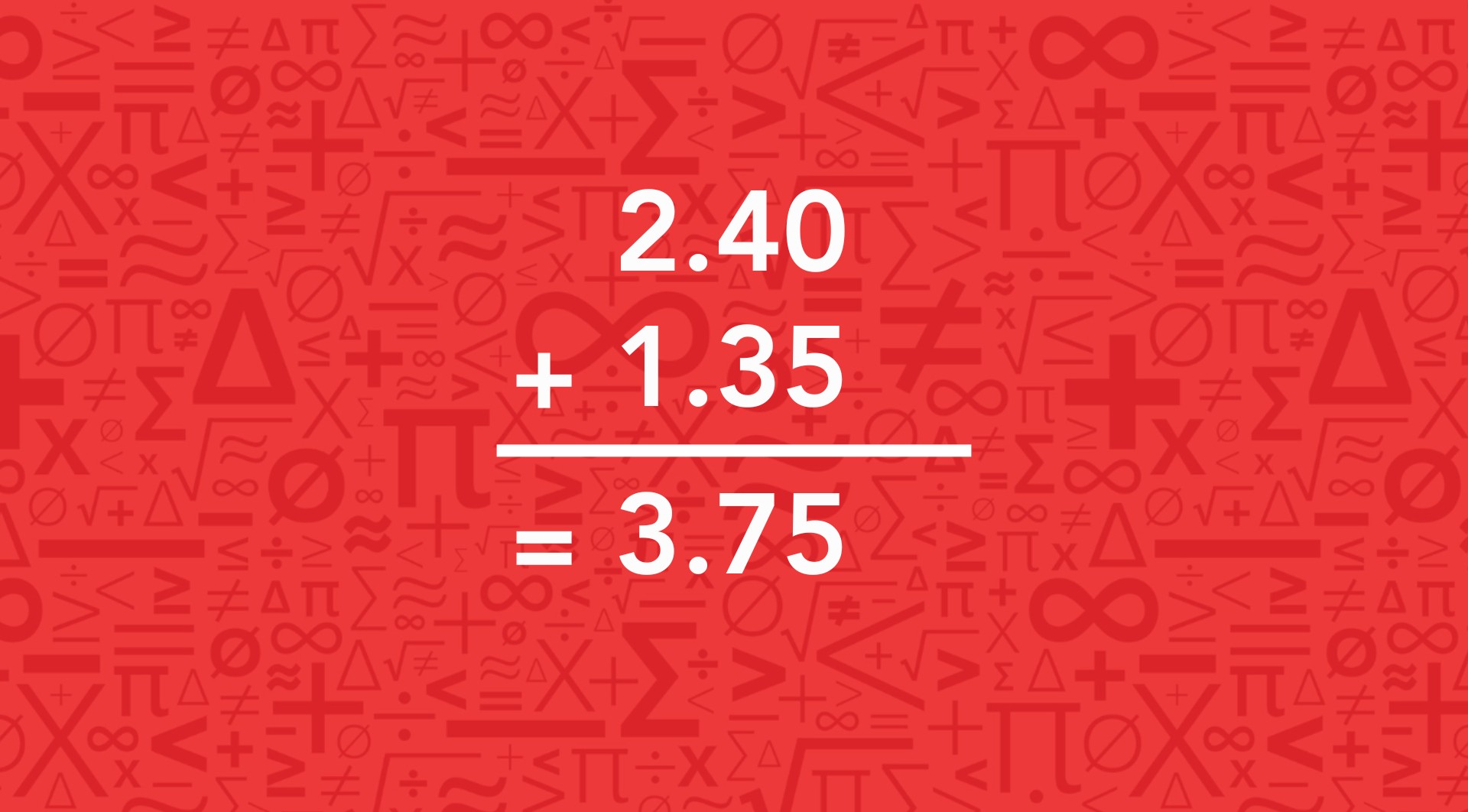
When multiplying decimals, we do not line up the decimal points. Instead, we multiply first and then place the decimal point in the product based on the total number of decimal places in the factors.
Remember:
📕 You May Also Like: How Number Sense Shapes Your Child's Problem-Solving Skills
Your Turn: Can You Multiply These Decimals?
Our tutors put together four problems using the same methods from the examples we discussed. Work through each one on paper before checking the answers at the end of this article.
-
4.2 × 3
-
1.6 × 2.5
-
0.8 × 0.7
-
Challenge: 3.04 × 0.6
Take extra time with the Challenge problem. It has three decimal places total and requires careful counting from the right.
FAQs About Multiplying Decimals
Our tutors at Mathnasium hear many of the same questions when students first learn decimal multiplication. Let's look at some of the most common ones.
1. Can You Multiply More Than Two Decimal Numbers at Once?
Yes. Multiply the numbers one at a time and keep track of the total number of decimal places across all factors. The same decimal placement rule still applies.
2. Does It Matter Which Number Comes First?
No. Multiplication is commutative, which means 0.4 × 5 and 5 × 0.4 produce the same result.
3. Why Doesn't a Calculator Show All the Decimal Places I Counted?
Calculators often remove trailing zeros automatically. For example, a calculator may display 0.1 instead of 0.1000, even though both values are equal.
4. Do Trailing Zeros Change the Answer?
No. 2.50 and 2.5 represent the same value. However, trailing zeros do count toward the total decimal places when determining where to place the decimal point in the product. In 2.50 × 0.04, counting two plus two gives four decimal places, producing 0.1000, which simplifies to 0.1.
📕 You May Also Like: 8 Common Mistakes Kids Make with Decimals & How to Fix Them
 At Mathnasium, our tutors help students master decimal placement, avoid common mistakes, and strengthen their overall number sense.
How Mathnasium Helps Students Build Confidence With Any Math Skill
Mathnasium is a math-only learning center dedicated to helping K-12 students of all skill levels excel in math.
Whether a student needs to rebuild foundational skills like place value and number sense or wants to sharpen specific skills, such as decimal multiplication, our objective is to help them develop lasting mathematical confidence and understanding.
We do that through the Mathnasium Method™, our proprietary teaching approach. Here is how it works:
-
Assessment and Personalized Learning Plans: Each student starts with a diagnostic assessment that identifies current skills, strengths, and gaps. From those findings, we build a personalized learning plan tailored to their goals, whether that means understanding why the decimal moves, eliminating placeholder errors, or building fluency across all decimal operations.
-
Teaching for Understanding: Our specially trained tutors use natural language and a mix of verbal, visual, mental, tactile, and written techniques to help students connect procedures with the mathematical ideas behind them.
-
Problem-Solving and Critical Thinking: We allow time for productive struggle so students can rely on their own reasoning. When we step in, we make sure to show both the how and the why behind the answer. Over time, this helps students build their own problem-solving skills and critical thinking tools.
-
An Engaging and Fun Learning Environment: Sessions include games, earned rewards, and consistent celebration of progress. Students build confidence alongside fluency, and many develop a more positive relationship with math over time.
That approach delivers measurable results:
-
94% of parents report improvement in their child's math skills and understanding
-
93% of parents report an improved attitude toward math after attending Mathnasium
-
90% of students saw improvement in their school grades
With over 1,100 learning centers across North America, there is likely a Mathnasium close to you.
Families across Prince Frederick, Lusby, and Huntingtown trust Mathnasium of Prince Frederick to help their children build real math confidence at every level.
If decimal multiplication or any other math concept is giving your child trouble, our team is ready to help.
📅 Schedule a Free Assessment at Mathnasium of Prince Frederick
Not near Prince Frederick?
📍 Find a Mathnasium Learning Center Near You
Pssst! Check Your Answers Here
If you've given our challenges a try, see how you did below.
-
12.6: multiply 42 × 3 = 126, one decimal place from the right
-
4.0: multiply 16 × 25 = 400, two decimal places from the right
-
0.56: multiply 8 × 7 = 56, two decimal places from the right
-
1.824: multiply 304 × 6 = 1824, three decimal places from the right. 3.04 has two decimal places, and 0.6 has one, requiring three total.


 (443) 883-8649