It is completely natural to want to help your child, whether that is with math or anything else in life. The intention is to help them move forward, but knowing how much help to give can be a little more difficult. There is a fine line between supporting their work and gradually doing more of it for them.
So, how can you support your child without taking over the work they need to do themselves? That question comes up a lot around math homework, and it is what we want to address today.
We’ll share how you can support your child’s math learning at home, which questions can keep them engaged with a problem, and how to recognize when they may need more support.

Why Well-Intentioned Math Help Can Sometimes Backfire
How you help with math homework can affect how much of the problem your child works through independently.
If you step in quickly with an explanation or solution, you may solve the immediate difficulty while also taking away some of the reasoning your child could have worked through.
Let’s look at why providing help can sometimes have the opposite effect:
-
Too much help can reduce opportunities for independent problem-solving. Parents may know how to solve the problem and simply want to move their child in the right direction. However, a meta-analysis of 20 studies involving more than 16,000 students found that more intrusive parental involvement was negatively associated with math achievement. The same research found a positive association with support that gave students room to explore problems, make choices, and find answers themselves.
-
Students’ persistence can be limited when difficulties are solved too quickly. Some math problems require more time and several attempts before students find a way forward. If a parent supplies the method or next step immediately, the child loses some of that opportunity. A longitudinal study of math homework found that students who received guidance while still searching for solutions themselves showed greater homework persistence over time. The finding supports giving your child room to keep working while offering guidance when they need it.
Well-intentioned help can backfire when it starts replacing parts of the problem-solving your child could do themselves.
Through our work with students, we’ve seen how the right questions and prompts can give your child the space to think through the problem while you guide them without immediately supplying the next step.

How to Efficiently Guide Your Child Through Math Problems
Parents can help with math homework without having to become the teacher or know the solution to every problem. Math covers a wide range of topics, and you may not always remember the method your child is learning at school or know much about that particular topic yourself.
That’s why we recommend building the habit of asking questions that guide your child’s thinking, and helping them develop independence and problem-solving skills along the way.
The Socratic method, a central part of how we teach at Mathnasium, follows this principle. It uses purposeful questions to help students draw on what they already know and reason their way toward new understanding.
Let’s look at how you can put this Socratic-style questioning approach into practice at home to build your child's problem-solving confidence.
1. “What Do You Know So Far?”
This type of question helps your child sort through the information they have and identify what the problem is asking them to find.
For example, “Soccer practice starts at 4:15 p.m. and lasts 45 minutes. What time does it finish?” Your child can first identify what they know, such as the start time (4:15 p.m.) and how long the practice lasts (45 minutes).
From there, you can ask, “What are we trying to find?” They can use those two pieces of information to focus on what they are solving for (the finish time) so they can count forward 45 minutes from 4:15 p.m. and reach 5:00 p.m.
📕 You May Also Like: Math Word Problem Strategies: A Guide for K-8 Grades
2. “What Would You Try First?”
Here, you are encouraging your child to choose a starting strategy and explain why they think it could work.
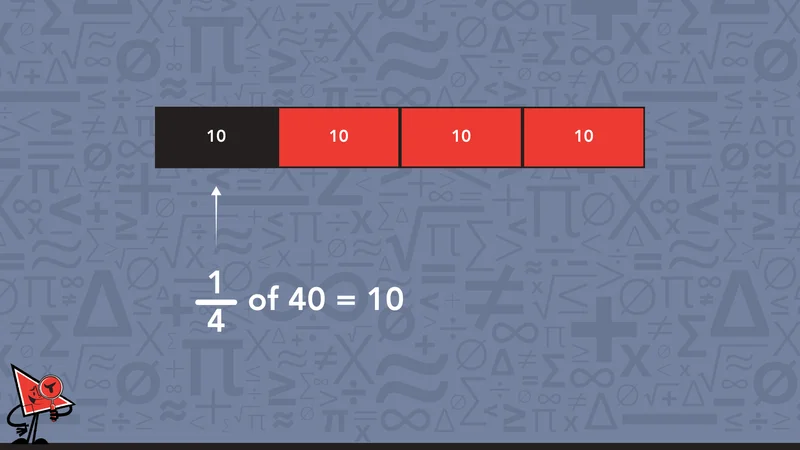
Let’s say the problem asks for 25% of 40, so your child might suggest finding \(\Large\frac{1}{4}\) of 40 first because they know 25% = \(\Large\frac{1}{4}\).
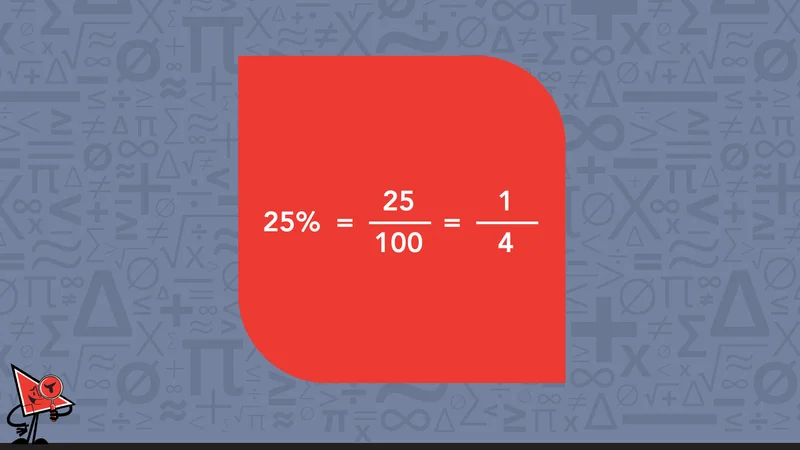
To guide them to the next step without giving away the calculation, you can ask: “How do we find a quarter of a number?”
This second question helps them recall that finding one quarter means dividing the whole into 4 equal parts, which leads them to work out 40 ÷ 4 = 10.
Let them talk you through that approach before suggesting a different one.
📕 You May Also Like: Percent to Fraction: Quick Conversion Steps
3. “What Has Your Teacher Shown You About This Type of Problem?”
Sometimes, the method your child needs is something they have already seen in class, and a quick reminder can help them make that connection.
If your child is unsure how to solve 72 ÷ 8, asking what their teacher showed them can remind them that they have used multiplication facts to work backwards from 8 × ? = 72 in class, and realize the answer is 9 on their own.
Your child’s notes, textbook, or a previous example can also help them recall the method without you having to teach it yourself.
📕 You May Also Like: Understanding New Math Methods: How Schools Teach Today
4. “Does Your Answer Make Sense?”
A reasonableness check encourages your child to consider whether the answer fits the problem rather than immediately accepting the result of a calculation.
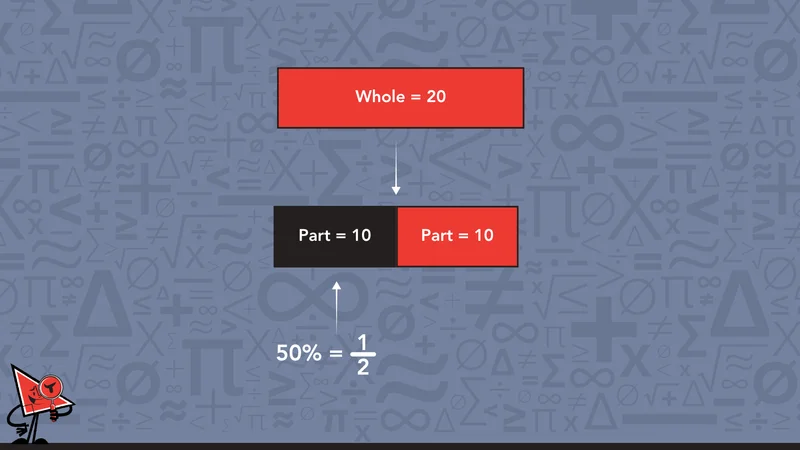
Imagine your child calculates 50% of 20 and gets 40. When you ask them if that answer makes sense, it forces them to reflect on what 50% means. Since 50% = \(\Large\frac{50}{100} = \Large\frac{1}{2}\), finding 50% of a number means finding half of it. Half of 20 cannot be greater than 20, so 40 doesn’t make sense.
This gives your child a reason to check the calculation and arrive at the correct answer, 10.
📕 You May Also Like: 5 Proven Strategies to Tackle Math Homework Challenges
5. “Could a Drawing or Simpler Numbers Help?”
Another representation can give your child a different way to explore the mathematical relationship when they are unsure how to approach the original problem.
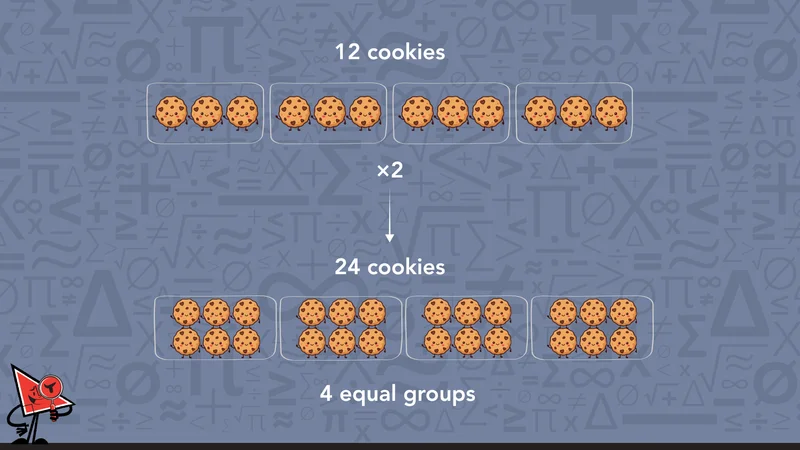
Suppose 24 cookies need to be shared equally among 4 children. Your child might draw 4 groups and distribute dots representing the cookies, or test the concept with a smaller, easier set of numbers.
For example, they could share 12 cookies equally among 4 children. Once they figure out that 12 cookies divided among 4 kids equals 3 cookies each, you can ask a second follow-up question: “How does that compare to our original problem?”
This prompt helps them notice that 24 is twice 12, so each share also doubles from 3 to 6, which leads them back to the original division problem: 24 ÷ 4 = 6.
📕 You May Also Like: 5 Practical Ways to Use Diagrams and Drawings for Math Problems

At Mathnasium, we go far beyond traditional tutoring to help kids understand and develop a love for math.
How Mathnasium Creates a Low-Pressure Math Learning Environment
Mathnasium is a math-only learning center dedicated to helping K–12 students of all skill levels excel in math.
We give students a supportive place to work through math at their own pace, ask questions, and build confidence without the pressure to finish tonight’s homework or keep up with a classroom lesson.
Our proprietary teaching approach, the Mathnasium Method™, is designed around each student's needs and learning style to help them learn and master math. Our approach includes:
-
Assessment and Personalized Learning Plans: Each student begins with a diagnostic assessment that identifies current skills, strengths, and knowledge gaps. From those findings, we build a personalized learning plan tailored to their goals.
-
Teaching for Understanding: We use natural language and a mix of verbal, visual, mental, tactile, and written techniques so each concept lands before we move forward.
-
Problem-Solving and Critical Thinking: We give students time to work through problems independently. That productive struggle helps them learn to trust their own reasoning. When we do step in, we explain both the how and the why behind each answer, so students build problem-solving and critical thinking skills they can use in math and beyond.
-
An Engaging and Fun Learning Environment: Sessions include games, earned rewards, and consistent celebration of progress, so students actively participate, solve problems, and engage with math instead of simply listening to a lesson.
The impact extends beyond the classroom:
-
94% of parents report improvement in their child's math skills and understanding
-
93% of parents report an improved attitude toward math after attending Mathnasium
-
90% of students saw improvement in their school grades
With over 1,100 learning centers across North America, there is likely a Mathnasium close to you.
Families throughout Sherman Oaks and nearby communities, including Van Nuys and Northern Bel-Air, trust Mathnasium of Sherman Oaks to help their children build lasting confidence in math.
If math homework or any other math topic is creating more stress than progress, our team is ready to help.
📅 Schedule a Free Assessment at Mathnasium of Sherman Oaks
Not near Sherman Oaks?
📍 Find a Mathnasium Learning Center Near You


 (818) 380-0169
 (818) 380-0169