Decimals rarely stop at a convenient place. A calculator result runs long, a measurement needs trimming, and suddenly we need to decide where to round.
The rule is the same one we use for whole numbers. What changes is knowing which place to stop, and what to do when a chain of nines sets the whole thing off.
Today, our tutors walk through rounding decimals to the nearest tenth, hundredth, and thousandth, with step-by-step examples and practice problems along the way.

What Does It Mean to Round a Decimal?
Rounding a decimal means replacing it with a shorter value at a specific place, like the nearest tenth, hundredth, or thousandth, while keeping the number as close to the original as possible.
We do the same thing with whole numbers when we look for the nearest ten, hundred, or thousand. We find the nearest ten, hundred, or thousand. With decimals, we just need to choose exactly which digit to stop at to the right of the decimal point.
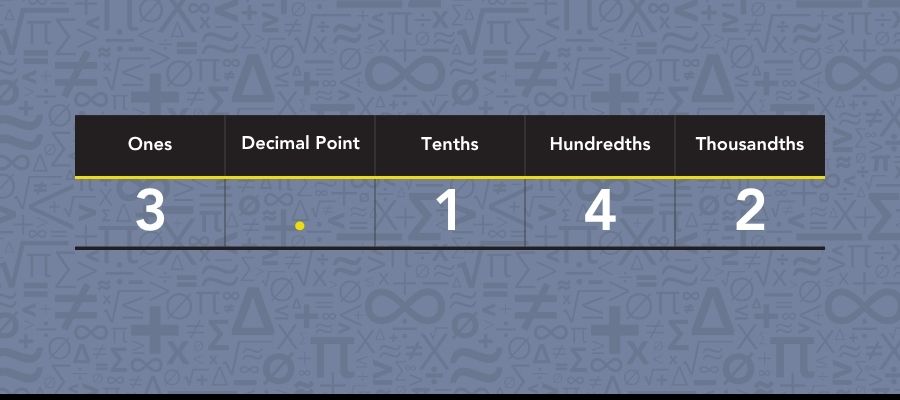
Let's look at how the same number, 3.14159, changes depending on where we choose to stop:
-
If we choose to stop at the tenths place, our number becomes 3.1.
-
If we choose to stop at the hundredths place, our number becomes 3.14.
-
If we choose to stop at the thousandths place, our number becomes 3.142.
We have the same number here, but we rounded it to three different levels of precision. Which one we choose simply depends on how exact we need to be.
To help us picture these stopping points, we can look at how these columns line up on a place value chart.
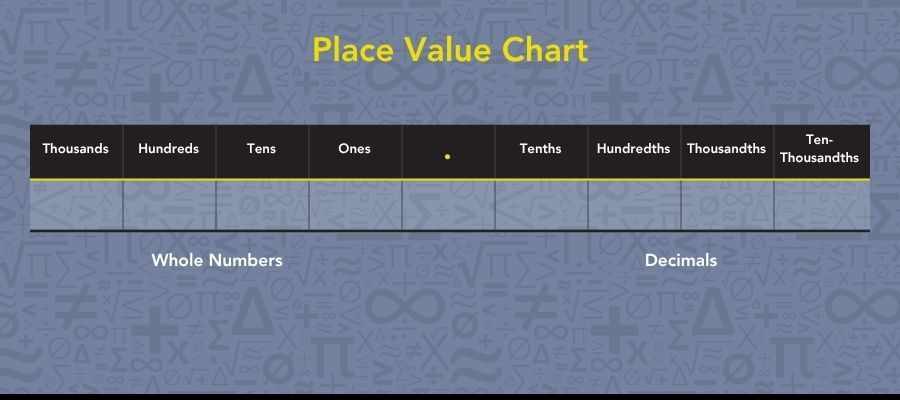
As we can see on our chart, our whole numbers stay on the left side of the decimal point, and our decimal columns sit on the right side.
📕 You May Also Like: What Is a Terminating Decimal? A Complete Overview
How the Rounding Rule Works
To round a decimal, we first see which position we want to round to. Once we have our target, we check the digit immediately to its right to make the decision.
Every decimal sits somewhere between two possible rounded values.
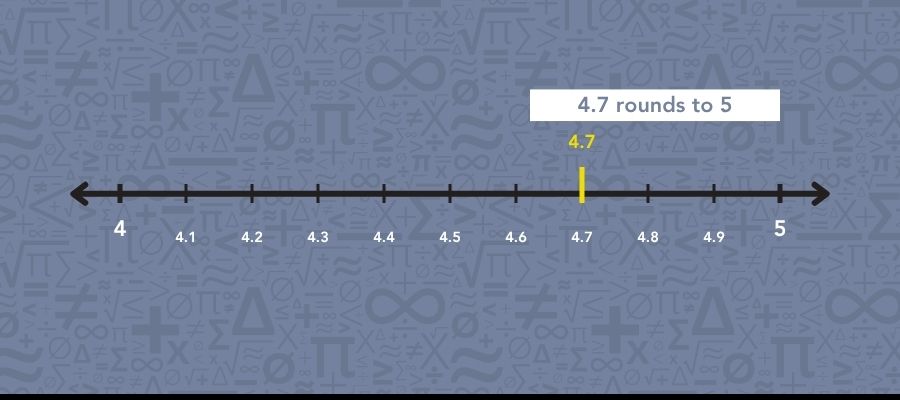
Take 4.73 rounded to the nearest whole number (the ones place). It sits between 4 and 5. The question is: Which of those two values is 4.73 closer to?
To find out, we look at how our two positions work together:
-
The Target: The position we want to round to. Here, it is the ones place, 4.
-
The Decision-Maker: The digit immediately to its right. For the ones place, we look next door at the tenths place, 7.
This process applies no matter which decimal position we choose as our target. We always look exactly one place to the right to let that neighbor make the decision for us.
That neighboring digit tells us which way to go:
Since our decision-maker is 7, which is 5 or more, we round up. The answer is 5.
And every digit further to the right, like the 3 in the hundredths place? It plays no role in the decision. Only that one neighboring digit makes the call.
📕 You May Also Like: Rounding Numbers in Math – A Kid-Friendly Guide
1. How to Round a Decimal to the Nearest Tenth
To round to the nearest tenth, we look at the first digit after the decimal point. That is our target.
The hundredths digit, the second digit after the decimal point, sitting immediately to its right, is the one that makes the decision.
Here is what we pay attention to:
-
The tenths digit is our target, the digit we are rounding.
-
The hundredths digit is our decision-maker, sitting immediately to the right of the tenths digit.
Now let's see it in action.
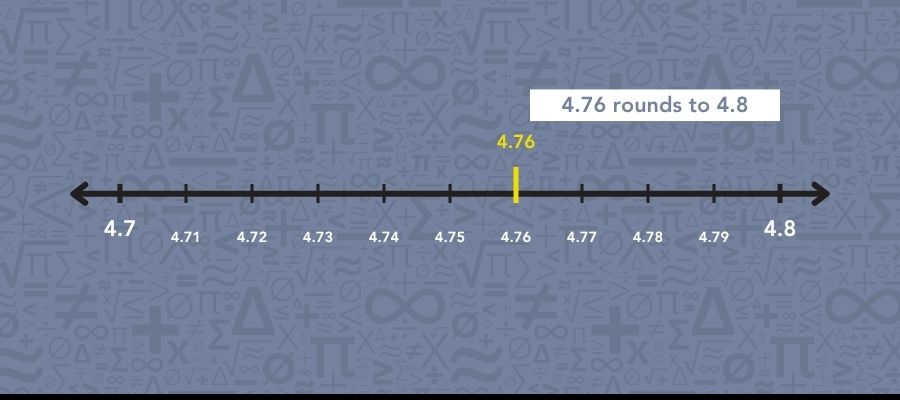
Take 4.76.
Which digit is our target? The tenths digit, 7. The hundredths digit to its right is 6. Six is 5 or more, so we round up.
The answer is 4.8.
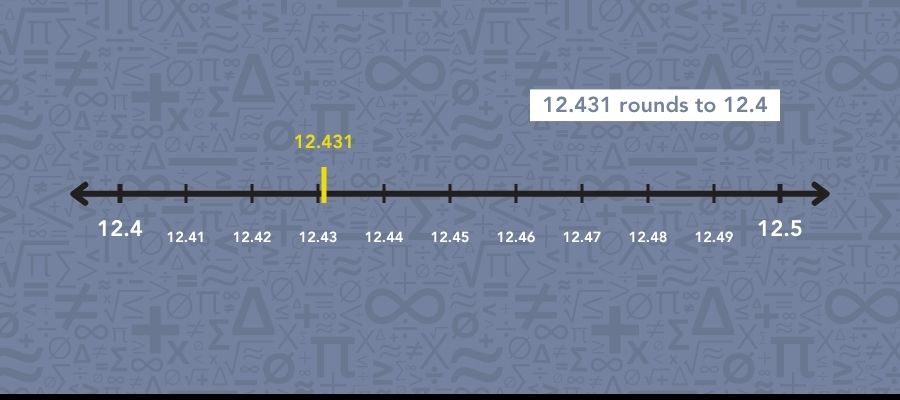
Let's look at another example: 12.431.
Our target tenths digit is 4. What does the hundredths digit tell us? Three is 4 or less, so the tenths digit stays the same.
The answer is 12.4.
2. How to Round a Decimal to the Nearest Hundredth
To round to the nearest hundredth, we look at the second digit after the decimal point. That is our target.
The thousandths digit, the third digit after the decimal point, sitting immediately to its right, is the one that makes the decision.
Here is what we pay attention to:
-
The hundredths digit is our target, the digit we are rounding.
-
The thousandths digit is our decision-maker, sitting immediately to the right of the hundredths digit.
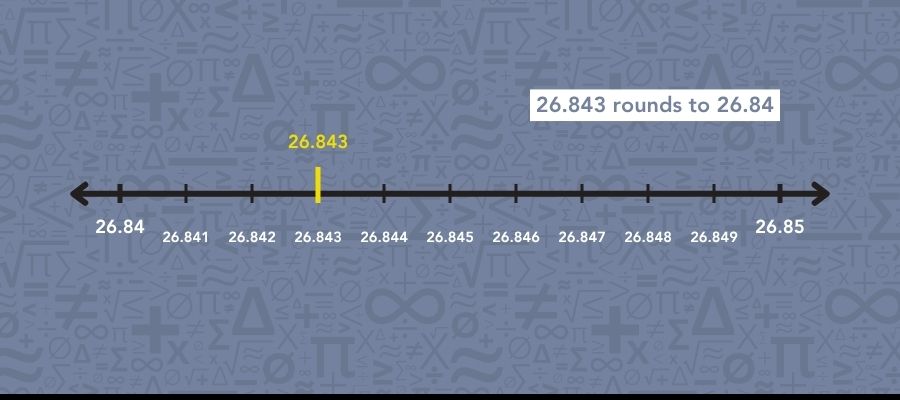
Take 26.843.
Our target hundredths digit is 4. What does the thousandths digit tell us? Three is 4 or less, so the hundredths digit stays the same.
The answer is 26.84.
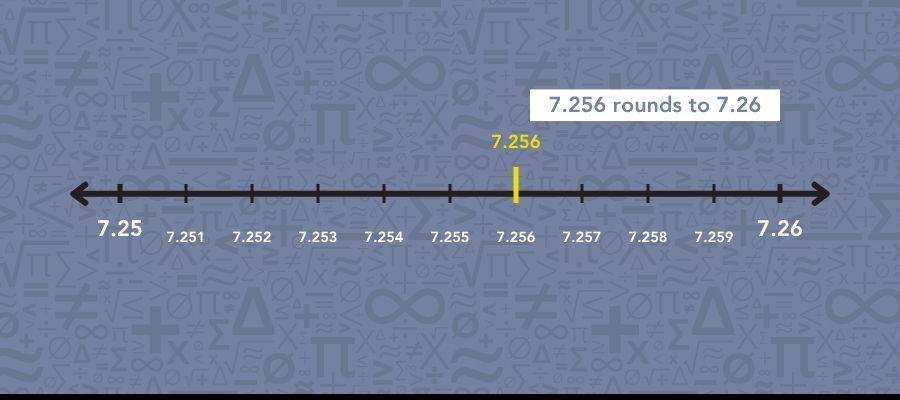
Let's try another one together: 7.256
Which digit makes the decision here? The thousandths digit is 6. Six is 5 or more, so we round up.
The answer is 7.26.
3. How to Round a Decimal to the Nearest Thousandth
To round to the nearest thousandth, we look at the third digit after the decimal point. That is our target.
The ten-thousandths digit, the fourth digit after the decimal point, sitting immediately to its right, is the one that makes the decision.
Here is what we pay attention to:
-
The thousandths digit is our target, the digit we are rounding
-
The ten-thousandths digit is our decision-maker, the fourth digit after the decimal point sitting immediately to the right of the thousandths digit
Now let's see it in action.
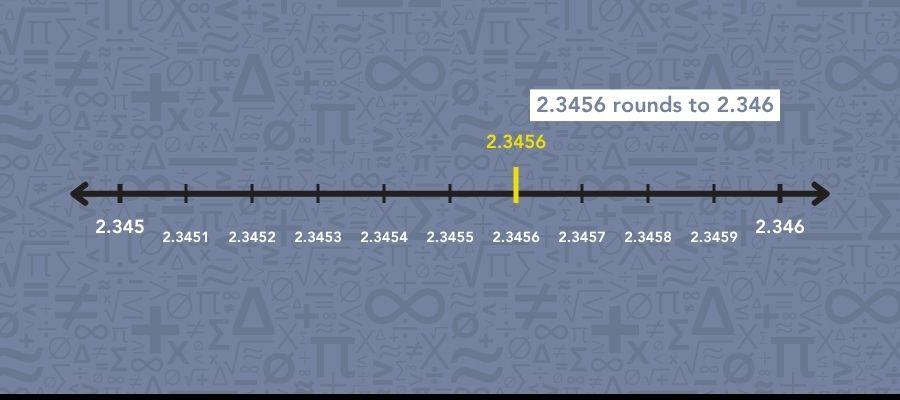
Take 2.3456.
What is the digit to the right of our target? The ten-thousandths digit is 6. Six is 5 or more, so we round up.
The answer is 2.346.
Now something trickier: 11.2895.
Our target thousandths digit is 9. The ten-thousandths digit to its right is 5. What does a 5 always tell us? We round up. Adding 1 to 9 gives us 10, so we place a 0 in the thousandths position and carry 1 to the hundredths place.
The answer is 11.290.
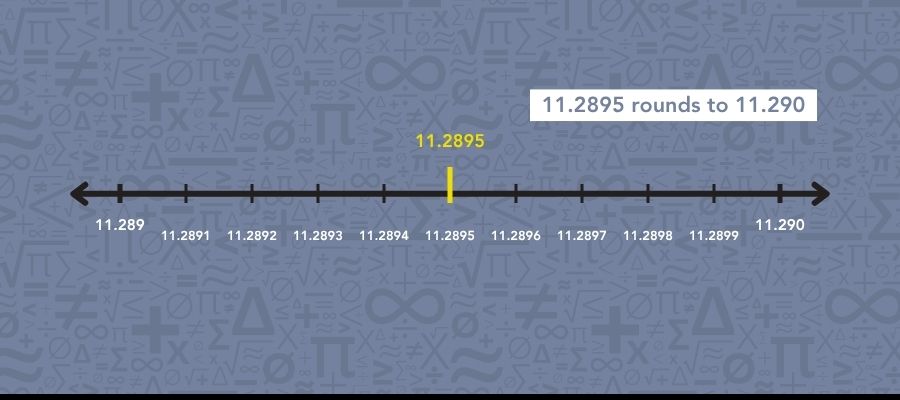
Notice that we keep the zero in the thousandths place. 11.29 and 11.290 have the same value, but they carry different information.
So, we see that the zero matters.
📕 You May Also Like: 8 Common Mistakes Kids Make with Decimals & How to Fix Them
What Happens When We Round a 9 in a Decimal?
We usually round one digit at a time. Target a 9, though, and the result can look like a different number entirely.
Adding 1 to a 9 gives us 10. That extra digit has to go somewhere, so we place a 0 in the current position and carry 1 into the position to the left.
That carry can trigger another change, and another, until it finds a digit it can add to cleanly.
This works exactly the way carrying does in addition.
1. Single Carry: One-Digit Changes
A single carry changes just one digit beyond our target.
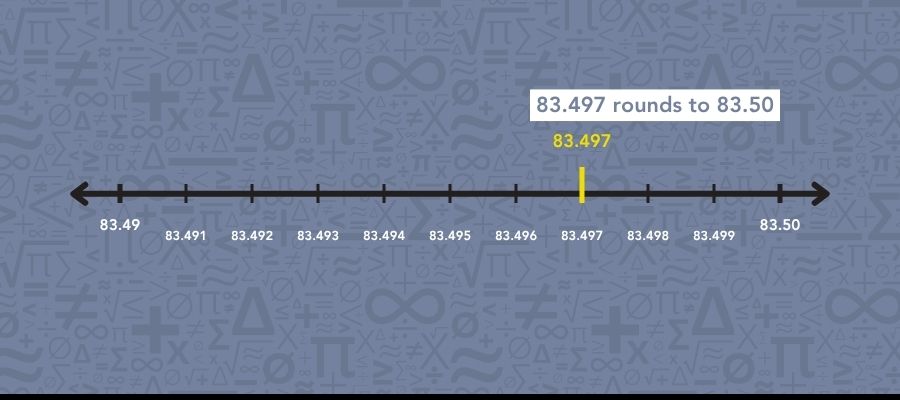
Take 83.497 rounded to the nearest hundredth.
Our target hundredths digit is 9. The thousandths digit to its right is 7. Seven is 5 or more, so we add 1 to our target 9.
What happens when we add 1 to a 9? We get 10. So we place a 0 in the hundredths position and carry 1 to the tenths place. The tenths digit increases from 4 to 5.
The answer is 83.50.
2. Single Carry: Crossing the Decimal Point
A carry moves right across the decimal point. It keeps traveling left the same way it does anywhere else in a number.
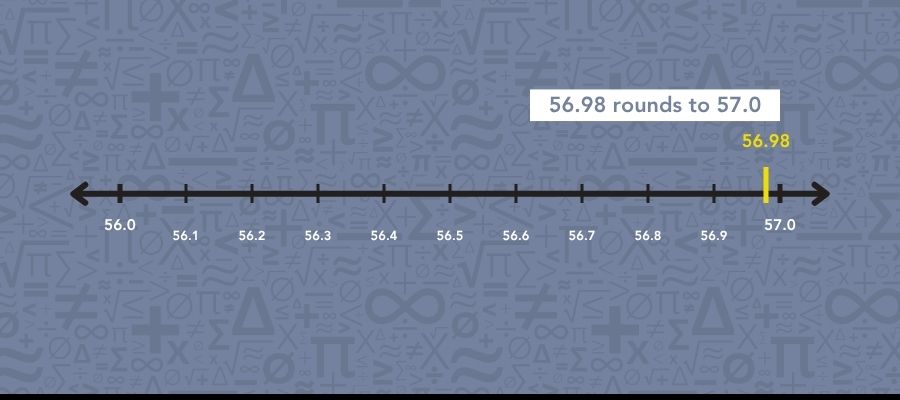
Take 56.98 rounded to the nearest tenth.
Our target tenths digit is 9. The hundredths digit to its right is 8.
Eight is 5 or more, so we add 1 to our target 9.
What does adding 1 to a 9 give us? Ten.
We place a 0 in the tenths position and carry 1 to the ones place. The ones digit increases from 6 to 7.
The answer is 57.0.
3. Double Carry: When the Chain Keeps Going
A double carry happens when the position to the left of our target also holds a 9.
Think of it like a row of falling dominoes: each 9 that gets a carry topples into the next one, and the chain keeps going until it reaches a digit it can add to cleanly.
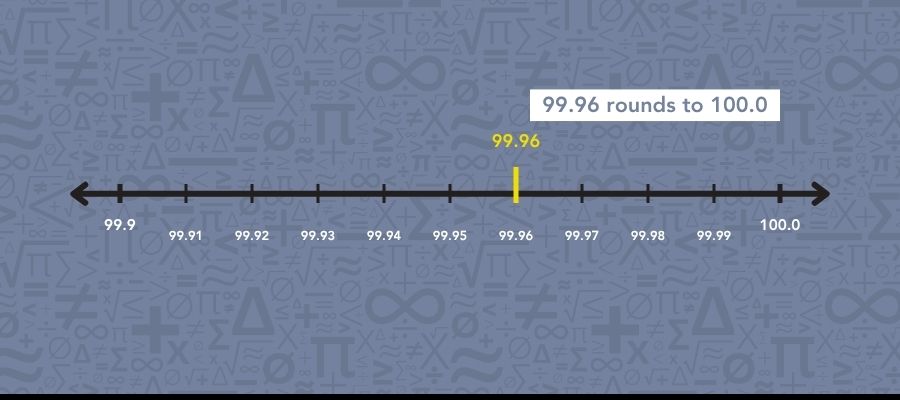
Let’s try, and round 99.96 to the nearest tenth.
Our target tenths digit is 9. The hundredths digit to its right is 6. Six is 5 or more, so we add 1 to our target 9.
-
Adding 1 to the first 9 turns it into a 0, and we push a carry one position to the left.
-
That carry reaches the next 9, turning it into a 0 and pushing the carry left again.
-
We keep moving left until we reach a digit we can add to cleanly.
The chain travels all the way through the number, turning 99.96 into 100.0.
📕 You May Also Like: Do We Round Up or Down at 5? The Rounding Rule Explained
Practice Time: Can You Round These Decimals?
Our tutors put together three exercises to help you practice what we covered today. Work through each one carefully, and keep an eye on the nines.
Exercise 1: Round to the Nearest Tenth
a) 8.43
b) 14.251
c) 6.2199999
Exercise 2: Round to the Nearest Hundredth
a) 3.847
b) 0.995
c) 7.697
Exercise 3: Round to the Nearest Thousandth
a) 1.4826
b) 9.2345
c) 0.6997
Check your answers at the bottom of the guide.
📕 You May Also Like: How to Do Long Division with Decimals - Kid-Friendly Guide

At Mathnasium, we break decimal places and rounding rules down into simple, manageable steps, using everyday language that helps students see the logic behind the numbers.
How Mathnasium Helps Students Master Number Sense
Mathnasium is a math-only learning center helping K-12 students catch up, keep up, and get ahead in math.
Number sense is built concept by concept. Place value leads to decimals. Decimals lead to rounding. Each idea depends on the one before it, which is why we focus on making sure students understand the reasoning behind each concept, not just the steps to follow.
Our proprietary teaching approach, the Mathnasium Method™, is designed around that kind of understanding, built around each student's individual needs and learning style.
It begins with a diagnostic assessment that identifies each student's strengths and knowledge gaps. From those insights, we build a personalized learning plan tailored to the student's needs and goals.
With the personalized learning plan in place, our specially trained tutors deliver face-to-face math instruction in a supportive and engaging environment.
We use clear, everyday language and a mix of verbal, visual, mental, tactile, and written techniques so each concept lands in a way that carries forward.
A concept that causes difficulty gets broken down into manageable steps, with attention to both the how and the why. Students build the problem-solving and critical thinking tools they carry into every math topic that follows.
Fun is an important part of how we work. Sessions are often game-based, students earn rewards along the way, and we celebrate every bit of progress. Confidence grows session by session.
The results speak for themselves:
-
94% of parents report an improvement in their child's math skills and understanding
-
93% of parents report their child's improved attitude toward math after attending Mathnasium
-
90% of students saw an improvement in their school grades
With over 1,100 learning centers across North America, Mathnasium brings top-rated math instruction close to home.
For families in and around South Elgin, IL, Mathnasium of South Elgin is a trusted local center with years of experience helping students build lasting number sense and confidence in math.
Start by scheduling a diagnostic assessment with us, and we will build their personalized plan for math mastery.
📅 Schedule a Free Diagnostic Assessment at Mathnasium of South Elgin
Not near South Elgin?
📍 Find a Mathnasium Learning Center Near You
Pssst! Check Your Answers Here
If you have worked through our practice problems, check your results below.
Exercise 1: Round to the Nearest Tenth
a) 8.43 rounds to 8.4
b) 14.251 rounds to 14.3
c) 6.2199999 rounds to 6.2
Exercise 2: Round to the Nearest Hundredth
a) 3.847 rounds to 3.85
b) 0.995 rounds to 1.00
c) 7.697 rounds to 7.70
Exercise 3: Round to the Nearest Thousandth
a) 1.4826 rounds to 1.483
b) 9.2345 rounds to 9.235
c) 0.6997 rounds to 0.700


 (224) 535-8755
 (224) 535-8755