Most second- and third-graders can recite the alphabet before they understand how words work. The same goes for multiplication. Rushing to memorize facts without first understanding what they mean leads to shaky recall.
It’s important to see times tables as shortcuts to deeper math thinking rather than just numbers to memorize. Kids who understand why 4 × 6 equals 24 are building number sense, recognizing patterns, and setting the stage for long-term fluency.
To help parents promote a deeper understanding of multiplication, our tutors have put together a practical, tried-and-tested sequence that starts with understanding and ends with real-world mastery. From arranging snacks in arrays to counting aloud during a walk, each step makes multiplication memorable and just a little more fun.

Step 1: Help Kids Understand What Multiplication Means
Before memorizing times tables, students need to understand what multiplication represents. When they try to memorize facts without meaning, frustration usually follows.
So, let’s make sure that understanding comes first. Fluency comes next.
At its core, multiplication is equal groups or repeated addition.
For example, 3 × 4 means three groups of four:
4 + 4 + 4 = 12
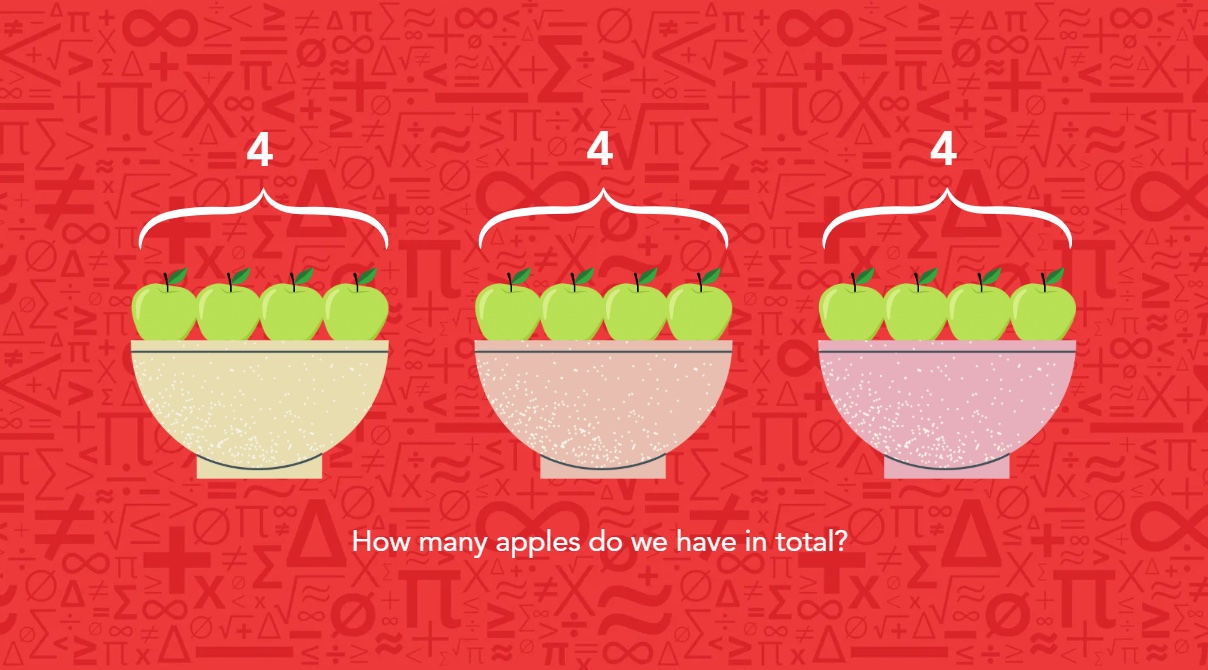
Make this idea concrete using arrays.
Arrange toys, snacks, or coins into rows and columns. Three rows of four crackers show 4 × 3 clearly. Ask questions like, “How many rows?” and “How many in each row?”

You can also connect multiplication to skip counting. Counting by 5s four times (5, 10, 15, 20) helps kids see that 5 × 4 = 20.
Why does this matter? Research shows that students who understand the concept behind multiplication learn facts faster and remember them longer.
📕 You May Also Like: Skip Counting: The Bridge Between Counting and Multiplication
Step 2: Start With the Easiest Tables
Begin with times tables that have simple, predictable patterns. This helps kids experience early success and, in doing so, helps build confidence.
-
1s: Always the same number (1 × 4 = 4).
-
2s: Just doubling (2 × 6 = 12).
-
5s: End in 0 or 5 (5 × 7 = 35).
-
10s: Add a zero (10 × 3 = 30).
Next, introduce the commutative property—the idea that 3 × 4 = 4 × 3. This cuts the number of facts they need to memorize almost in half!
Start with short, playful sessions and cheer them on. A quick win with the 5s or 10s can turn a tough day into a triumphant one.
📕 You May Also Like: Commutative Property for Beginners - A Complete Guide
Step 3: Use a Multiplication Chart to Spot Patterns
A multiplication chart is a pattern-finder.
Start with a blank 12×12 chart and help your child fill in one row at a time. Focus on noticing patterns:
Use color-coding to highlight number families or duplicate facts. This helps kids recognize structure and reduces the load of pure memorization.
Looking for patterns builds understanding, and fluency grows from there.
📕 You May Also Like: The Ultimate Guide to Math Fact Fluency for Young Learners
Step 4: Turn Tables Into Songs, Rhymes, and Rhythm
Rhythm helps memory stick.
Try chanting or clapping while skip-counting by 3s or 4s. Create silly rhymes or sing multiplication facts to the tune of a favorite song. There are also plenty of fun songs online (especially for 2s, 5s, and 9s).
Don’t forget rhythm tricks like the 9s finger method, which is a simple visual way to master 9s facts.
Using music, movement, or rhyme turns dry facts into something fun, familiar, and easier to remember. Plus, it keeps the mood light when practice gets tough.
📕 You May Also Like: 6 Surprising Connections Between Math and Music
Step 5: Play Games That Reinforce Facts
Games make times tables practice feel like play rather than work.
Try these easy, low-stress options:
-
Multiplication Bingo with small prizes
-
Card games like “multiplication war” (highest product wins)
-
Dice games for quick fact fluency
-
Online platforms like TT Rockstars, IXL, or Prodigy
The key is to keep sessions short and engaging. 10–15 minutes a day is often more effective than long drills.
Use these games to sneak in practice and encourage friendly competition. Just a few rounds a day can lead to big progress and a more positive attitude toward math.
📕 You May Also Like: 7 Multiplication Games to Build Times Tables Fluency
Step 6: Daily Practice With Purpose
Consistency matters more than cramming.
Short, daily sessions help kids retain facts better than once-a-week marathons. Try weaving times tables into daily routines:
-
Recite a table while walking the dog
-
Do a quick “quiz of the day” before dinner
-
Use a sticker chart to track progress and celebrate effort
Aim for just 5–10 minutes a day with focus. This approach, called spaced practice, strengthens memory and keeps stress low.
When kids see steady progress, motivation follows, along with true multiplication fluency.
📕 You May Also Like: 5 Ways Reflection Improves Math Retention & How to Encourage It at Home
Step 7: Connect Times Tables to Real Life
Times tables come to life when kids see them in action.
Use everyday moments to show how multiplication works:
-
Grocery math: “If we buy 3 packs of 4 apples, how many apples is that?”
-
Setting the table: “There are 4 people. Each gets 2 forks. How many forks total?”
-
Chores: “You folded 6 towels each day for 3 days; how many total?”
Real-life examples reduce math anxiety and make learning feel purposeful. Applying math consciously in everyday situations helps it stick.
📕 You May Also Like: 9 Math Skills Kids Use Every Day Without Realizing It
Step 8: Troubleshoot Tough Tables
Every child hits a wall with certain facts, and that’s okay! It’s important to expect this and give them space to process.
If a fact won’t stick, try these strategies:
-
Use tricks like the finger method for 9s
-
Break it down: 6 × 8 = (6 × 5) + (6 × 3)
-
Practice backwards: If 8 × 6 is hard, try 6 × 8 instead
-
Use arrays or skip counting to rebuild understanding
Stay patient and playful. Pressure slows progress, but steady exposure builds comfort, and eventually, fluency.
📕 You May Also Like: 7 Strategies to Move Beyond Memorization in Multiplication
Step 9: Assess and Adjust
Check in regularly, but gently. The goal shouldn’t be perfection, but progress.
Mix familiar facts with new ones during quick reviews. If your child struggles, step back to understanding instead of trying to push harder. Use visual tools like arrays or have them skip-count to rebuild confidence.
Ask questions like:
“Can you show me how you figured that out?”
Mistakes are helpful because they point to missing building blocks or shaken confidence. It is almost never about a lack of effort.
Adapt the pace, celebrate small wins, and keep practice positive.
📕 You May Also Like: Why Parents Should Teach Kids to Embrace Math Mistakes
Step 10: Focus on Building Confidence, Not Just Speed
Fluency matters, but confidence lasts longer.
Instead of focusing only on quick answers, again, remember to celebrate effort, strategy, and growth. If your child explains how they solved a problem, that’s a win, even if it took time.
Use prompts like:
Confidence builds through small successes and encouragement. When kids feel good about math, they’re more likely to stick with it and succeed long-term.
From our in-center experience to years of psychology research, we know that positive math experiences help reduce anxiety and boost learning outcomes.
📕 You May Also Like: 5 Reasons Why Students Should Not Prioritize Speed in Math

Mathnasium is a math-only learning center for K-12 students of all skill levels.
How Mathnasium Makes Math Learning Engaging and Lasting
At Mathnasium, we make multiplication facts make sense. When a student can recall a fact, explain it, and apply it weeks later, we know real learning has taken place.
That’s the heart of the Mathnasium Method™, our proprietary teaching approach that combines personalization, caring guidance, and teaching for understanding.
Here’s how we help students in South Elgin truly master math:
-
Personalized learning plans: Every student begins with a diagnostic assessment to identify their strengths, knowledge gaps, and learning style. We build their learning plan from there.
-
Step-by-step teaching: Using hands-on tools, visual models, and real-world examples, our tutors break concepts down in a way that clicks.
-
Supportive environment: Kids learn best when they feel safe, encouraged, and successful. That’s what we create every day in our center.
-
Independence and confidence: We guide students through concepts and empower them to find solutions independently. That builds lasting skills and self-belief.
With thousands of centers nationwide and a top-rated reputation, Mathnasium has helped over a million students improve their grades and love math again.
And right here in South Elgin, IL, we’ve helped hundreds of local students gain real fluency, confidence, and joy in math.
Mathnasium of South Elgin is your local learning center. We’ve helped hundreds of students improve their grades and build real confidence in their ability to learn and retain math.
🗓️ Schedule an Assessment Today!
Not near Crystal Lake?
📍 Find a Mathnasium Learning Center Near You


 (224) 535-8755
 (224) 535-8755