When a student comes to us for help with any algebra class, the first step we take is a diagnostic assessment.
Why?
Because in many (if not most) cases, it’s not the algebra that’s causing issues, but gaps in earlier foundational skills, like multiplication of facts, fractions, and integers. These are the building blocks of algebra, and when they’re shaky, everything built on top of them starts to wobble.
Today, our tutors are shedding light on four practical, research-backed tips to help you close foundational gaps and help your student improve in algebra this academic year.
1. Improve Multiplication Fact Fluency
Researchers have found that quick recall of multiplication facts works like a shortcut for the brain, leaving more power for the heavy lifting in algebra.
Without fluency, students often hesitate on basics like 7×8 or 6×9, which slows them down on multi-step problems and increases the chance of mistakes.
So what’s the way forward?
At Mathnasium, we teach students to understand multiplication, use strategies when recall falters, and then practice until those facts become automatic.
Here are four ways you can reinforce this at home:
-
Target the Trouble Facts: Instead of drilling every multiplication fact, identify the handful that trip your child up most often. Post them on a notecard or the fridge, and practice them for just a few minutes daily. Closing those gaps has an outsized impact on fluency.
-
Use Number Strategies: Multiplication facts can be solved through patterns when memory stalls. For example:
-
“Times nine” is “times ten minus one group” → 8 × 9 = (8 × 10) – 8 = 72.
-
“Times eight” is “doubling three times” → 9 doubled is 18, doubled again is 36, doubled once more is 72.
-
Build from a known fact → If 8 × 8 = 64, then 8 × 9 is 64 + 8 = 72.
-
Practice with Verbal Rehearsal: Encourage your child to say facts aloud as complete thoughts—“Seven times eight is fifty-six”—rather than just writing the answer. This engages auditory memory, speeds up recall, and reinforces accuracy.
-
Build Speed with Short Challenges: Use one-minute quizzes with a mix of easy and hard facts. Track progress weekly to show growth. The goal is not endless repetition, but short, focused bursts of practice that gradually turn effortful recall into automatic fluency.
📕 You May Also Like: 7 Multiplication Games to Build Times Tables Fluency
2. Master Fraction Operations
Fractions are one of the most common roadblocks we see in students who struggle with algebra.
And educators across disciplines agree: students with a solid fraction sense, especially the ability to reason multiplicatively with fractions, are far better equipped to write algebraic equations and understand algebraic relationships.
That means a student who can confidently see that \(\Large\frac{1}{2}\) of \(\Large\frac{3}{4}\) is \(\Large\frac{3}{8}\) is also more likely to grasp how coefficients interact in an equation, or why slope is expressed as a ratio.
By contrast, a student who avoids fractions altogether often skips entire sections of algebra homework or test problems, even when they understand the rest of the material.
To strengthen fraction sense, we usually recommend:
-
Use Number Line for Comparisons: Have your child place fractions like \(\Large\frac{5}{8}\) and \(\Large\frac{7}{12}\) on a number line. This builds flexibility in reasoning about size and equivalence, a skill that carries directly into understanding ratios and slopes in algebra.
-
Manipulatives: Tools like fraction tiles, fraction circles, or even paper strips help students see equivalence, addition, and subtraction of fractions. For an algebra student who never really grasped fractions earlier, this step can be the reset button — it grounds abstract numbers in something visual and tactile.
-
Practice Simplifying: Turn fraction reduction into a daily habit. Simplifying \(\Large\frac{12}{18}\) to \(\Large\frac{2}{3}\) strengthens factor knowledge and makes algebra problems less cluttered.
-
Fraction of a Fraction: Ask quick prompts such as, “What’s \(\Large\frac{2}{3}\) of \(\Large\frac{3}{4}\)?” These bite-sized exercises encourage multiplicative reasoning, a skill directly tied to success in algebra.
📕 You May Also Like: How to Help Your Child Make Sense of Wholes and Fractions
3. Build Confidence with Integers
Julie Nurnberger-Haag, a mathematics education researcher at Kent State University, found that integers form a key stepping stone to algebra because they expand students’ world from natural numbers into a broader number system.
In our centers, we see that sign errors cost students points and even chip away at their confidence. It’s like knowing how to solve the puzzle, but dropping pieces on the floor before you finish.
Students most often get tripped up on questions like -3 + (-4) or 5 – 8, unsure whether to add or subtract, or what sign the answer should carry.
What we’ve found that works is giving students multiple ways to reason through integers, not just memorizing “the rules”:
-
Use a Number Line for Direction: Start at -2, move right 4, and land at 2. Step-by-step plotting takes away the guesswork.
-
Think in Opposites: A negative sign signals the opposite action. For example, 6 + (-2) isn’t “adding” 2, it’s the opposite of adding 2, which means subtracting 2. Thinking in opposites helps students reason through the steps instead of relying on fragile memorization.
-
Tie It to Real Life: Relating integers to everyday scenarios makes them less abstract. If it’s 5 degrees outside and the temperature drops 8 degrees, it’s now -3. Or if you have $10 in your bank account and spend $12, you’re at -$2. These simple connections help students see why the math makes sense.
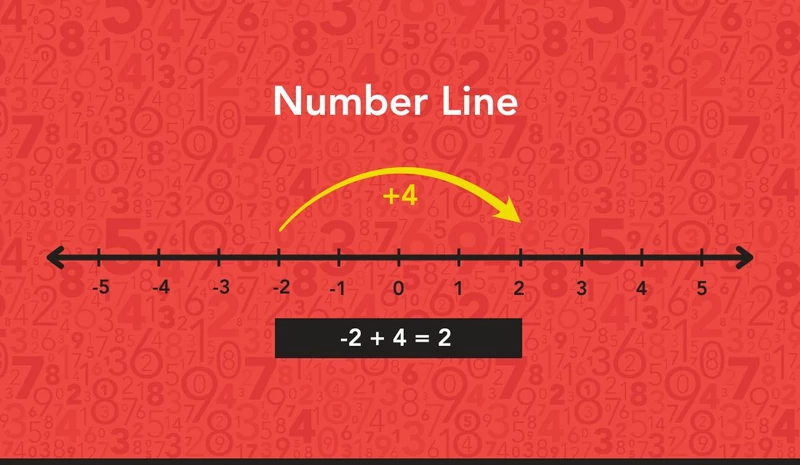
A number line is an efficient way to practice integers and visualize how positives and negatives work together.
4. Sharpen Equation Skills
Last but certainly not least, let’s talk about equations. Equations provide students with a concrete entry point into algebra concepts and reasoning. They’re the bridge between arithmetic and true algebraic thinking, yet they’re also where we see many students begin to struggle.
We often notice that students who are comfortable with arithmetic hesitate when the same ideas are expressed as equations.
For instance, they might know how to distribute 3(2 + 5) or evaluate -4 × -6, but when those skills appear together in an equation like 3(x – 4) + 7 = 19, confidence quickly fades. Common issues include dropping a negative sign, skipping a step, or freezing when asked to translate words into symbols.
What we’ve found that works is breaking equation practice into reliable habits:
-
Balance Both Sides: Treat the equation like a scale. For example, to solve x + 7 = 15, subtract 7 from both sides to keep the “balance.”
-
Step It Out: In multi-step problems, writing each line avoids small mistakes. Take 3(x – 4) + 7 = 19:
-
Distribute: 3x – 12 + 7 = 19
-
Combine like terms: 3x – 5 = 19
-
Add 5 to both sides: 3x = 24
-
Divide by 3: x = 8
-
Check the Solution: Substitute the result back into the original equation. If you find that x = 8, then 3(8 – 4) + 7 = 3(4) + 7 = 12 + 7 = 19. Seeing it work reinforces confidence.
-
Turn Words into Equations: Start small: “Three less than double a number is nine” becomes 2x – 3 = 9. Then solve:

Mathnasium’s specially trained tutors use the Mathnasium Method™ to help students strengthen foundational skills and build confidence in algebra.
How Mathnasium Helps Students Excel in Algebra and Beyond
Mathnasium is a math-only learning center dedicated to helping students of all skill levels excel in every area of math, including algebra.
At the core of how we work with students is the Mathnasium Method™, a proprietary and effective teaching approach designed to unlock each student’s math potential.
Our approach begins with a diagnostic assessment that pinpoints strengths, gaps, and learning preferences. This allows us to see whether foundational skills, such as multiplication fluency, fraction sense, or integer reasoning, are stalling progress in algebra.
With these insights, we create a personalized learning plan that targets the specific areas a student needs to strengthen.
During sessions, our tutors deliver face-to-face instruction in a supportive environment. We use a mix of Socratic questioning and direct teaching, combined with visual, verbal, mental, tactile, and written techniques to adapt to each learner's style of absorbing math.
If a student struggles with something like combining like terms or setting up an equation from a word problem, we break the concept into smaller, manageable parts. This way, students learn not just the answer, but the how and why. By learning the why and the how behind each concept, they develop critical thinking as well as problem-solving skills they can carry into higher-level math and beyond the classroom.
Families regularly report measurable results from our approach:
-
94% of parents say their child’s math skills and understanding improved.
-
93% of parents noticed a more positive attitude toward math.
-
90% of students saw better grades at school.
Mathnasium of Surprise, a Trusted Local Center
With over 1,100 learning centers nationwide, Mathnasium brings top-rated math and algebra support right into your community.
For families located in or near Surprise, AZ, Mathnasium of Surprise is your trusted local resource with years of experience working with students in grades 2–12 and helping them transform how they think and feel about math.
If you’re looking to help your child not only improve in algebra but also gain the tools for long-term math success, schedule a free diagnostic assessment today. From there, watch their skills and their confidence grow session by session.
📅 Schedule a Free Diagnostic Assessment at Mathnasium of Surprise
Not near Surprise?
📍 Find Mathnasium Learning Centers Near You


 (623) 533-4503