We count in tens every day without stopping to ask why. Why tens? Why does 10 use a one and a zero?
Today, our tutors trace how base 10 traveled across civilizations, explore the other counting systems that shaped our world, and explain the two ideas that made base 10 the global standard.

What Is the Base 10 Number System?
Base 10, also called the decimal number system, is a counting system that organizes numbers into groups of ten.
In simpler terms, we count using ten digits, 0 through 9.
Watch what happens as we reach the end of them:
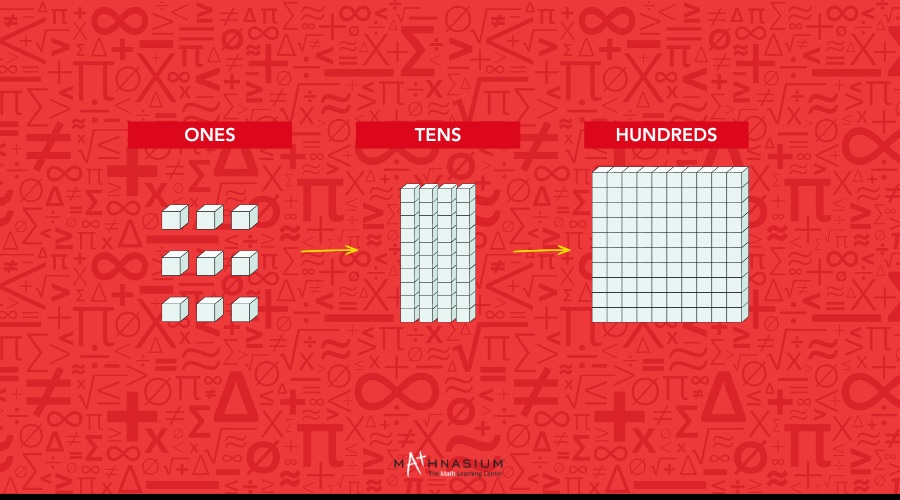
1, 2, 3, 4, 5, 6, 7, 8, 9. The next number has no single digit left to use, so we open a new position to the left and start again from zero. That gives us 10: one group of ten in the new position, zero ones remaining.
The same thing happens at every level:
-
Reach ten tens, and we open a new position to the left. That gives us 100.
-
Reach ten hundreds, and we open another new position to the left. That gives us 1,000.
That relationship between positions is what we call place value, and it is what makes multi-digit arithmetic work.
📕 You May Also Like: How to Teach Place Value Using Base-10 Blocks: A Parent’s Guide for Ages 7–8
Where Did Base 10 Come From?
The answer comes down to our own anatomy and our ten fingers.
Our ancestors counted on their hands, and that habit, repeated across generations and civilizations, shaped the number system the world uses today. Nobody recorded the moment it happened. But the evidence points consistently in one direction.
The system evolved over thousands of years, shaped by different civilizations and the demands of trade, record-keeping, and calculation:
-
3000 BC: Merchants and scribes in Ancient Egypt and Mesopotamia use groups of ten to track taxes and trade, marking the earliest traces of base 10.
-
5th to 7th century AD: Indian mathematicians invent zero and place value, giving the world tools for calculations that earlier number systems could not handle.
-
8th to 9th century AD: Arab scholars adopt the Indian system, translate its methods, and develop systematic rules for calculating with it.
-
12th to 15th century: Italian merchants and European bankers adopt these Arabic numerals for trade, finding base 10 faster and more reliable than Roman numerals.
-
Late 18th century: French scientists introduce the metric system during the French Revolution, applying base 10 to science and measurement worldwide.
Fingers were the most universal counting tool our ancestors had. Other civilizations reached for something different and built systems that still leave traces in our world today.

📕 You May Also Like: The History of Roman Numerals & Why They Still Matter
Other Base Systems in the History of Math
Across history, different civilizations built their counting systems around different numbers, and some of those systems still shape the world we live in today.
Base 12: Counting in Dozens
The duodecimal system counts in groups of twelve.
Twelve divides evenly by 1, 2, 3, 4, 6, and 12, and that flexibility made it practical for merchants and traders who needed to split quantities into equal groups, which is why so many ancient cultures reached for it naturally.
We still see base 12 in use today:
-
12 inches in a foot
-
12 months in a year
-
12 hours on a clock face
-
12 items in a dozen
Base 20: Fingers and Toes
The Mayan civilization counted in twenties, a system called "vigesimal," because fingers and toes together give us twenty.
Their system included a symbol for zero, invented completely independently of the Old World, and it handled large numbers with precision.
Traces of base 20 still show up in history and languages today:
-
The Mayan calendar tracked cycles of 20 days, 400 days, and 8,000 days, all built on powers of twenty
-
The French use base 20 for numbers above sixty: quatre-vingts means four twenties, their word for eighty
Base 60: The System Behind Our Clocks
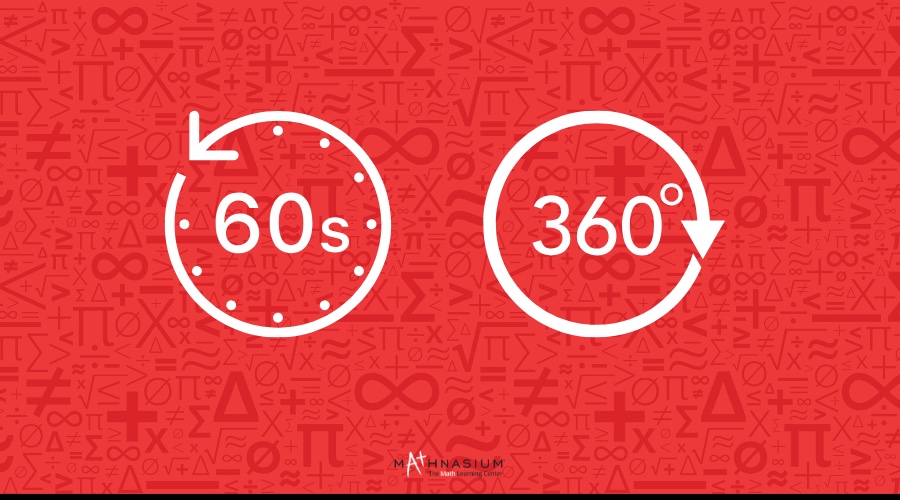
The Babylonians counted in base 60, a system called “sexagesimal”, which explains why we have 60 seconds in a minute and 360 degrees in a circle.
They chose 60 because it divides evenly by 1, 2, 3, 4, 5, 6, 10, 12, 15, 20, and 30. This enormous number of factors made calculations and measurements incredibly simple.
That flexibility echoes through our world today:
-
60 seconds in a minute
-
60 minutes in an hour
-
360 degrees in a circle
📕 You May Also Like: How to Use Tally Marks to Count and Organize Data
Why Did Base 10 Become the Global Standard?
Historians cannot point to a single moment when base 10 “won,” but several strands of evidence help explain why it became dominant.
Many scholars link its origins to finger‑counting: using ten distinct digits fits naturally with counting on ten fingers, and a number of ancient cultures with base‑10 systems also used finger‑based counting.
Later, the Hindu–Arabic decimal system added two crucial features: a written zero used as a placeholder, and positional notation, where a digit’s value depends on its place (ones, tens, hundreds, and so on). These innovations made arithmetic far more efficient and systematic than with many earlier systems such as Roman numerals or non‑positional notations.
Because calculations became faster, clearer, and easier to teach and reproduce, this decimal place‑value system offered practical advantages for trade, astronomy, and science.
As it spread from India through the Islamic world into Europe and beyond, those advantages helped it become the standard number system used globally today.
Zero as a Placeholder
Before zero existed as a written symbol, numbers were ambiguous. A number missing a marker for empty positions could mean 304, 34, or 3,004. The reader had to guess.
Zero solved that problem. As a placeholder, it gives every empty position an unambiguous symbol, so every digit lands in exactly the right place.
Here's what zero does in practice:
-
304: the 0 shows the tens position is empty, so 3 belongs in hundreds and 4 in ones
-
4,002: the two zeros show both the hundreds and tens positions are empty, so 4 belongs in thousands and 2 in ones
-
10: the 0 shows the ones position is empty, so 1 belongs in tens
Zero is what makes each of these writable and calculable with the same reliability every time.
Positional Notation
Positional notation means the value of a digit depends entirely on where we place it in a number.
Take the digit 3:
-
In 3, we place it in the ones position, so it means 3
-
In 30, we place it in the tens position, so it means 30
-
In 300, we place it in the hundreds position, so it means 300
The digit stays the same. Its position does all the work.
That's what made base 10 so powerful for calculation. With just ten digits arranged by position, we can express any number, and multiplication, division, and large figures all follow the same positional logic every time.
📕 You May Also Like: How to Do Long Multiplication — A Complete Overview

At Mathnasium, our specially trained tutors help students see the logic behind the math, building understanding that carries forward through every concept they encounter.
How Mathnasium Builds True Math Understanding
Mathnasium is a math-only learning center helping K-12 students catch up, keep up, and get ahead in math.
Our proprietary teaching approach, the Mathnasium Method™, is designed around each student's individual needs, helping them build the kind of understanding that makes every concept feel connected and logical, from base 10 all the way through the math they will encounter next.
It starts with a diagnostic assessment that identifies where knowledge gaps exist and which concepts need to be rebuilt from the ground up.
Those insights shape a personalized learning plan built around each student's specific needs and goals.
Our specially trained tutors follow the plan closely, teaching math face-to-face in a supportive and engaging group environment.
We use clear, everyday language and a mix of verbal, visual, mental, tactile, and written techniques so each concept lands solidly and carries forward into more complex material.
Fun is built into how we work. Our activities are often game-based, students earn rewards along the way, and we celebrate every bit of progress, growing confidence session by session.
The results speak for themselves:
-
94% of parents report an improvement in their child's math skills and understanding
-
93% of parents report an improved attitude toward math after attending Mathnasium
-
90% of students saw an improvement in their school grades
Mathnasium operates over 1,100 learning centers across North America, bringing our proven teaching approach close to your student.
For families in and around Buffalo Grove and the northwest Chicago suburbs, Mathnasium of Buffalo Grove is a trusted local center with years of experience building confident math thinkers.
Whether your child needs to strengthen foundational math skills, build fluency with the decimal number system, or take on more complex challenges, our team is ready to help.
📅 Schedule a Free Diagnostic Assessment at Mathnasium of Buffalo Grove
Not near Buffalo Grove?
📍 Find Mathnasium Learning Centers Near You


 (847) 777-1772
 (847) 777-1772