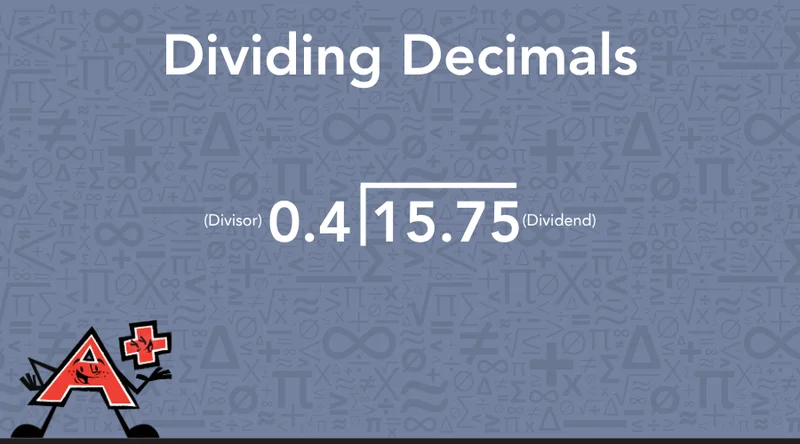
Students in Utah first learn to divide decimals by whole numbers in 5th grade and move on to dividing decimals by decimals in 6th grade.
Unlike decimal multiplication, where students can simply multiply the digits and count total decimal places at the end, decimal division often creates confusion. Moving decimal points back and forth during setup can easily feel like a set of arbitrary rules rather than logical math.
That’s why today, the tutors at Mathnasium of Farmington will help you break down the process step-by-step, explain the reasoning behind every move, and build a lasting mathematical understanding.

So, What Do We Mean by "Decimal Division"?
At its core, division is simply asking a grouping question: "How many times does one number fit into another?"
When we work with whole numbers like 12 divided by 3, our brains easily visualize taking 12 items and breaking them into groups of 3. We get 4 groups because 3 plus 3 plus 3 plus 3 equals 12.
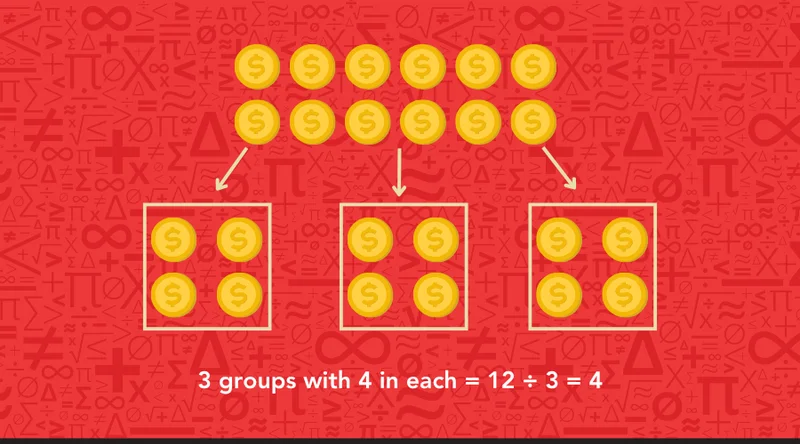
Dividing with decimals works the exact same way. The only difference is that our numbers now include parts of a whole, not just whole numbers.
Think of it like money or measurement:
-
4.8 divided by 1.2 is simply asking us: "How many $1.20 slices can we fit into $4.80?" Since 1.2 + 1.2 + 1.2 + 1.2 = 4.8, the answer is simply 4.
-
1.5 divided by 0.5 asks: "How many half-cups (0.5) do we need to make 1.5 cups?" The answer is 3.
-
3 divided by 0.5 (whole number by decimal) asks: "How many half-dollar coins (0.50) fit into 3 dollars?" Since it takes two half-dollars to make 1 dollar, 3 dollars gives us 6 coins.
📕 You May Also Like: How to Round Decimals: Nearest Tenth, Hundredth, and Thousandth
Why Do We Need Long Division to Divide Decimals?
When decimal problems are simple, mental math gets the job done. If we divide 3.6 by 1.2, we can easily see that 1.2 fits inside three times, giving us an answer of 3.
But what happens when we run into trickier problems, like dividing 0.832 by 0.16 or 326 by 0.4? We can’t really visualize the numbers in our head, right?
That is where a skill you remember from 4th and 5th grade comes in—long division.
Long division is a process, typically used for bigger numbers, that breaks division down into simpler steps to follow.
-
Divide: Figure out how many times your divisor (the number we are dividing by) fits into the first part of your dividend (the number we want to divide).
-
Multiply: Multiply that digit back by the divisor to see how much you have used so far.
-
Subtract: Take that answer away from the part of the dividend you are working on to find what is left over.
-
Bring Down: Drop down the next digit from your dividend to build your new starting number.
-
Repeat: Keep following these same steps until every digit from the dividend is used and no remainder is left.
(If you’re still having trouble recalling long division, our complete guide to long division can help you refresh!)
How to Divide Decimals Using Long Division
The process is almost identical to standard long division. The only difference is where the decimal point ends up in your final answer. To make this easy to master, we will focus on two main cases:
Let's break down each case step by step.
A. Dividing a Whole Number by a Decimal (Solved Example)
The easiest way to learn this is by walking through an example together. That way, we can see the reasoning behind each move and watch the steps in action.
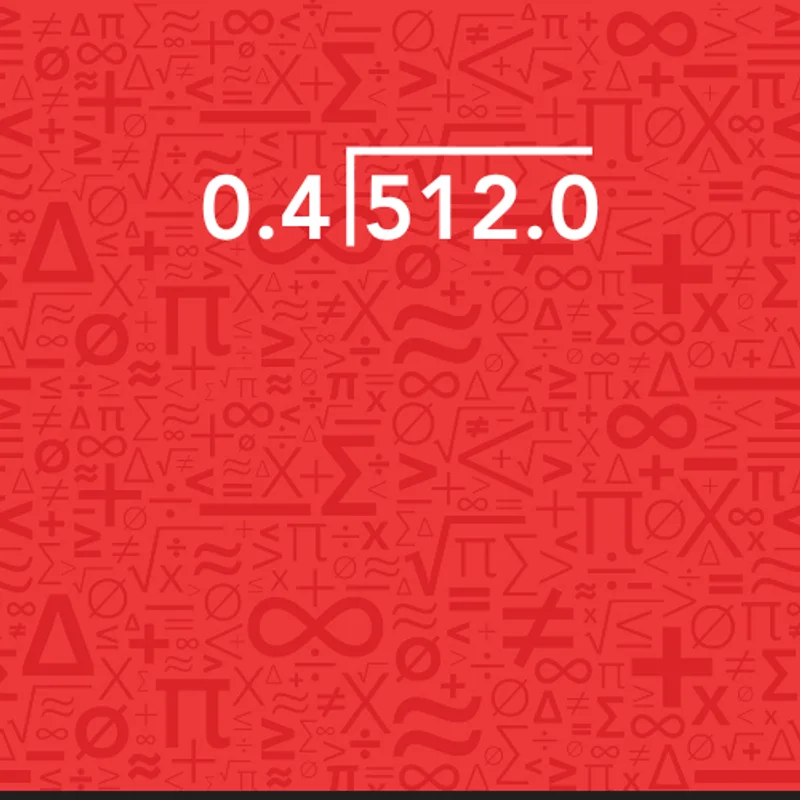
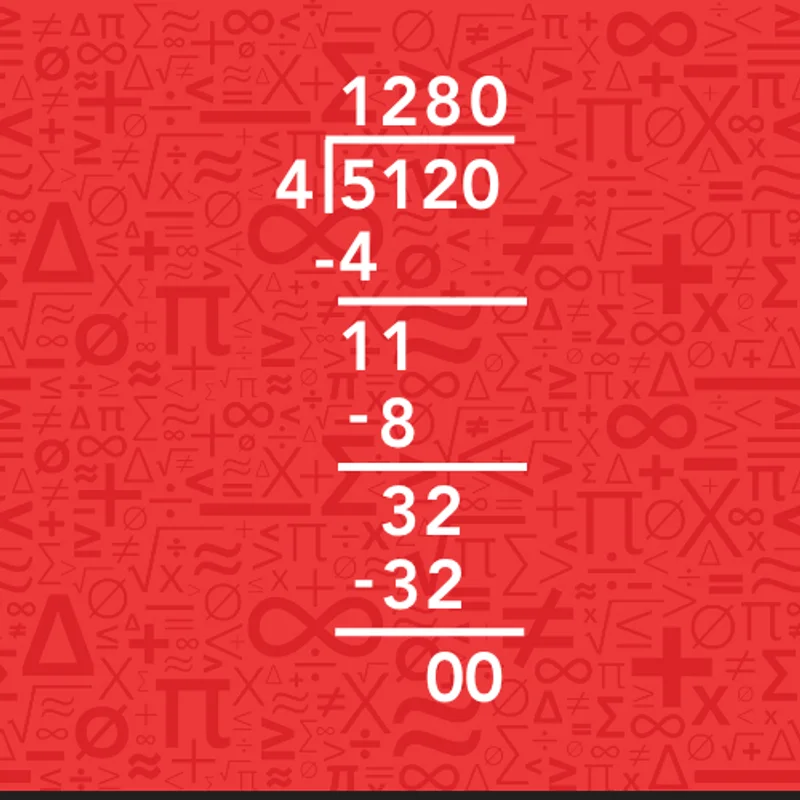
Say we want to divide 512 by 0.4
Before we start the steps, we write the dividend, 512, inside the division symbol and the divisor, 0.4, outside, to the left of the division symbol.
We write 512 as 512.0 since any whole number can end with a decimal and a zero. This helps us correctly place the decimal point in our answer later.
Step 1: Make the Divisor a Whole Number
Before dividing, we change the divisor into a whole number.
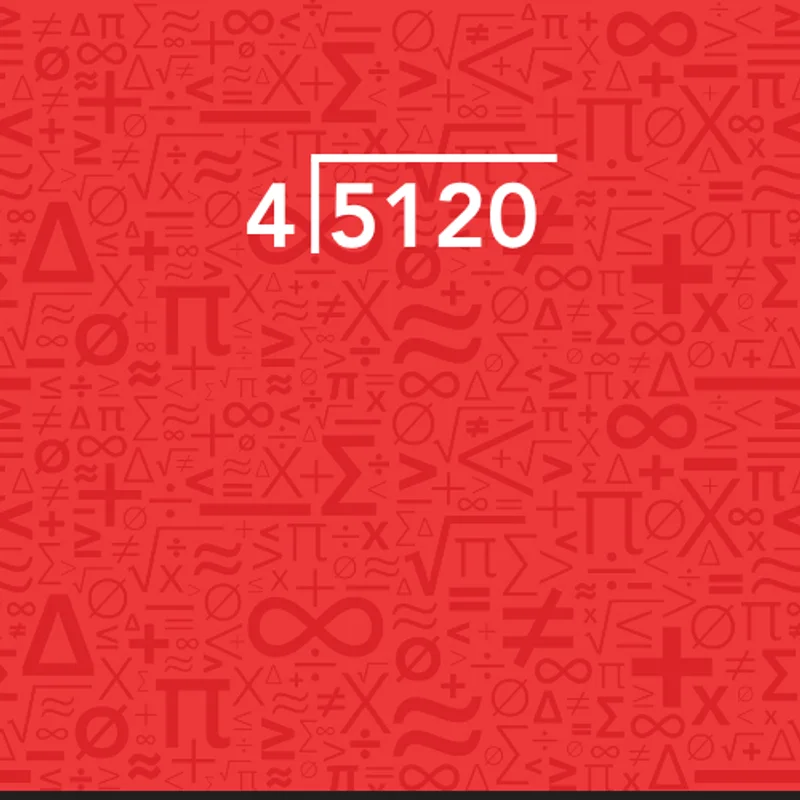
Since 0.4 (the divisor) has one decimal place, move its decimal point one place to the right to turn it into 4. This is the same as multiplying the divisor by 10.
Because we multiplied the divisor by 10, we must also multiply the dividend by 10, changing 512.0 to 5120.
Doing this gives us the exact same answer as dividing the original numbers.
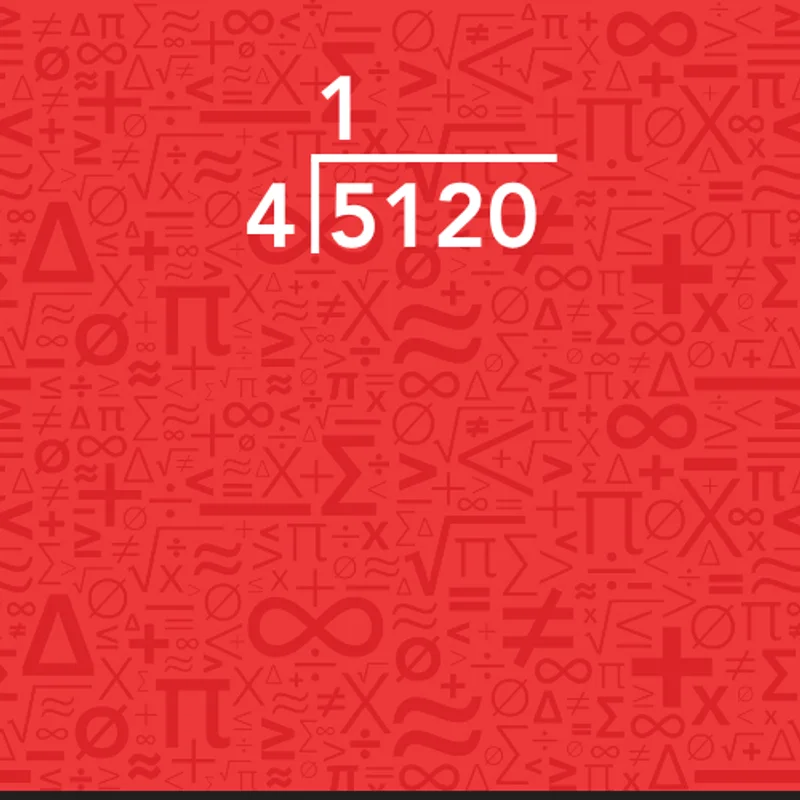
Step 2: Divide
Check how many times 4 (the divisor) goes into the first digit of 5120 (the dividend).
4 fits into 5 one time because 4 x 1 = 4.
Write 1 above the 5 in 5120. This is the first digit of our quotient.
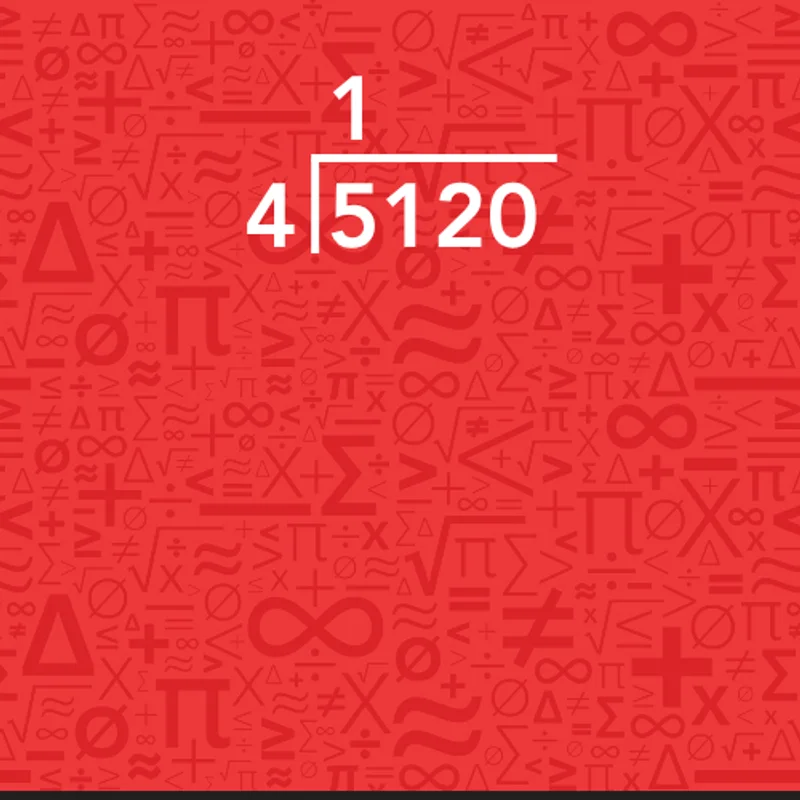
Step 3: Multiply
Multiply the new quotient digit (1) by the divisor (4).
1 x 4 = 4
Write the product (4) directly under the 5 in our dividend.
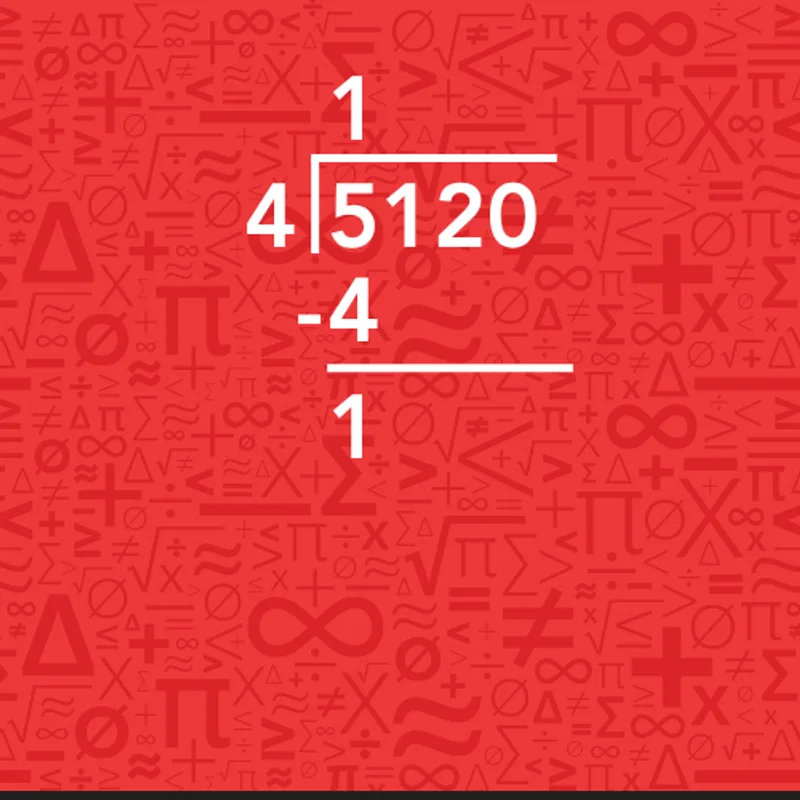
Step 4: Subtract
Subtract that product from the digit above it.
5 - 4 = 1
Write 1 below the line to show what is left over.
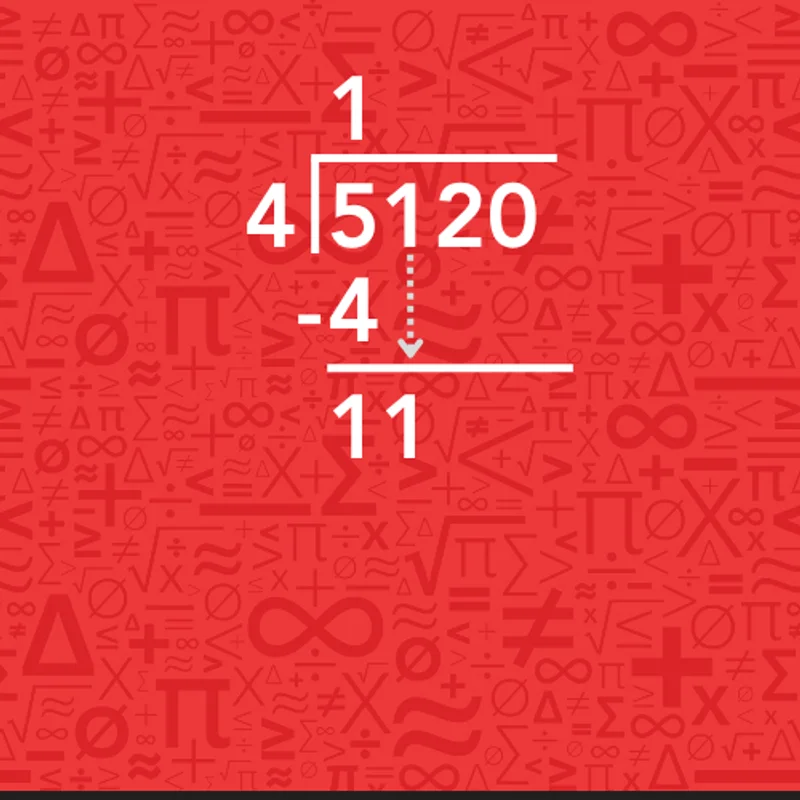
Step 5: Bring Down
Bring down the next digit of the dividend, 1, and write it next to the 1.
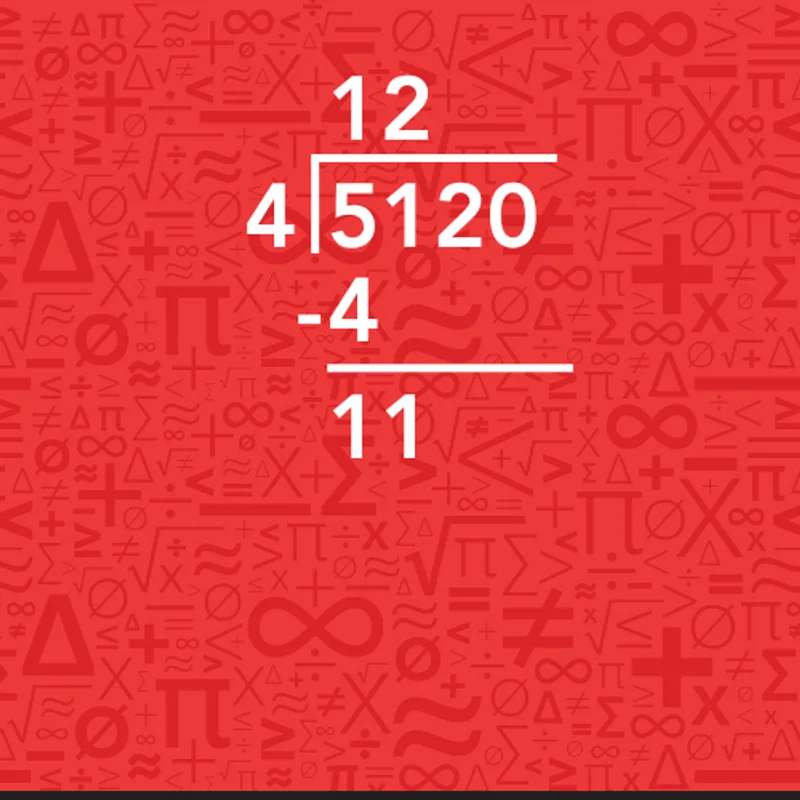
Step 6: Divide Again
Now, check how many times 4 (the divisor) goes into 11.
4 goes into 11 two times because 4 x 2 = 8.
Write 2 above the 1 in the dividend. Now, we have two digits of the quotient, 12.
Step 7: Multiply Again
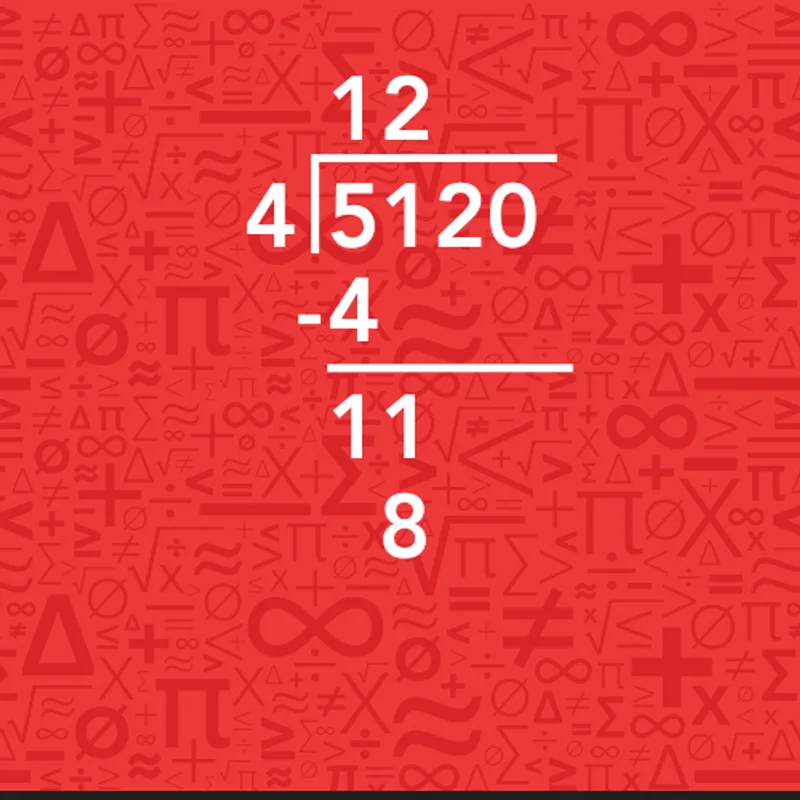
Multiply the new digit in our quotient (2) by the divisor (4).
2 x 4 = 8
Write 8 directly under the 11.
Step 8: Subtract Again
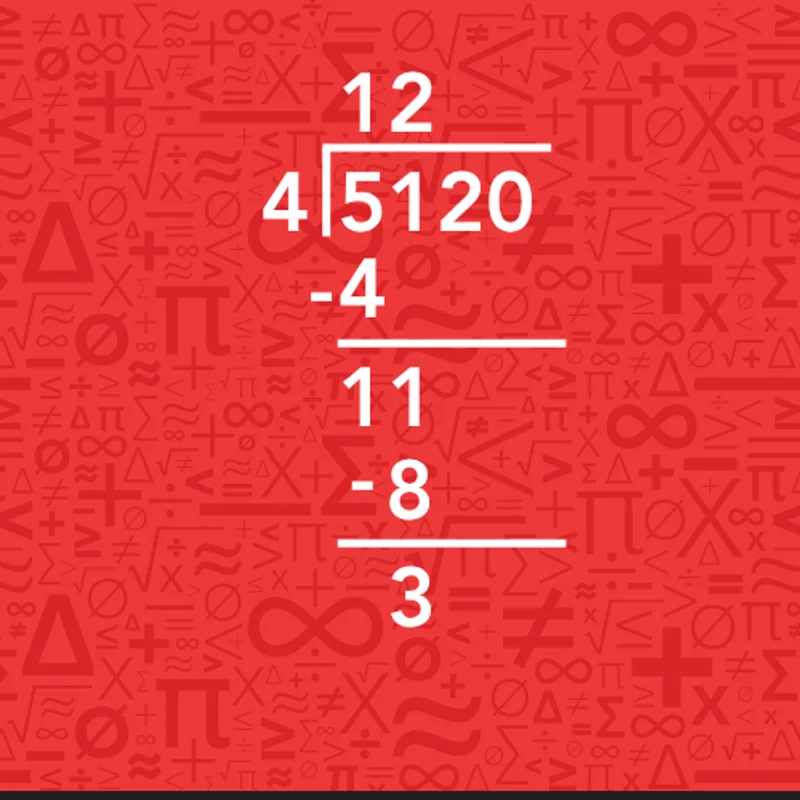
We subtract 8 from 11.
11 - 8 = 3
We write 3 below the line to show what is left over.
Step 9: Bring Down Again
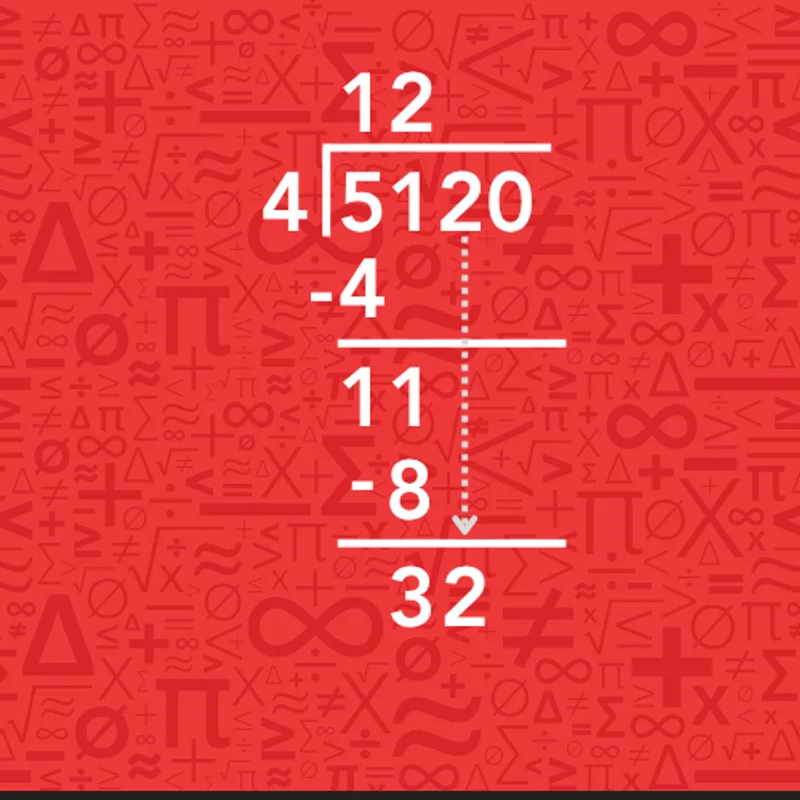
We bring down the next digit of the dividend, 2, and write it next to the 3 to make 32.
Step 10: Divide Again
We check how many times 4 goes into 32.
4 goes into 32 eight times because 4 x 8 = 32.
We write 8 above the 2 in our dividend. Now, we have three digits of the quotient, 128.
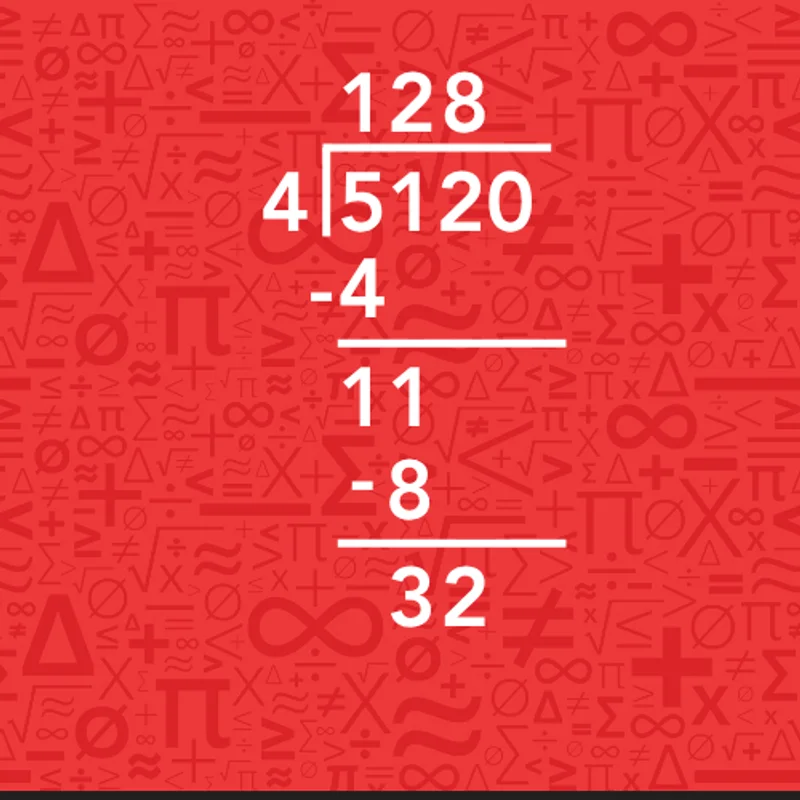
Step 11: Multiply Again
We multiply 8 by 4 to get 32.
8 x 4 = 32
We write 32 directly under the 32.
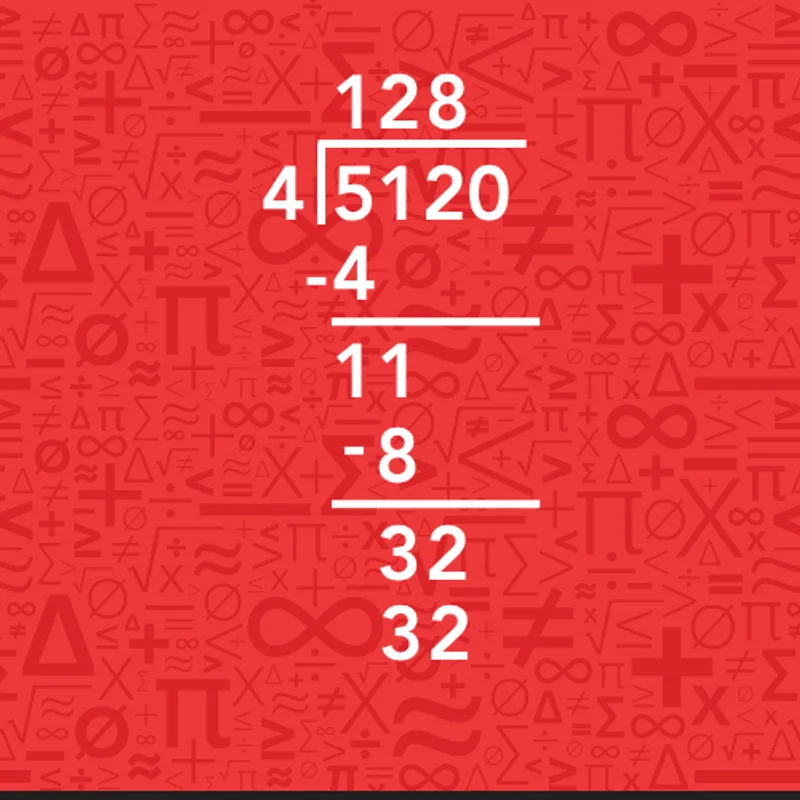
Step 12: Subtract Again
We subtract 32 from 32.
32 - 32 = 0
We write 0 below the line to show there is no remainder left from this part.
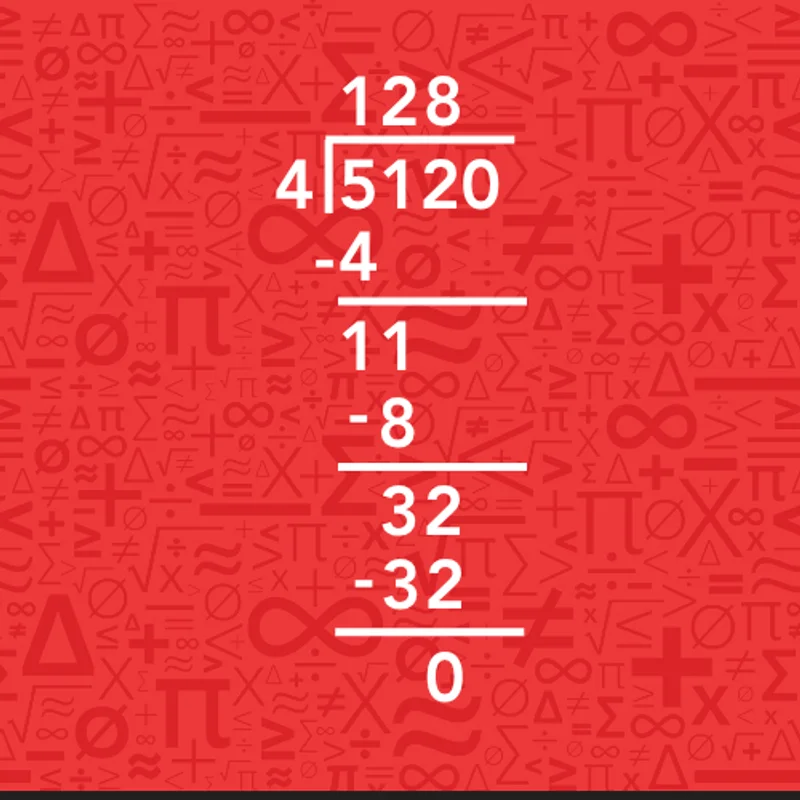
Step 13: Bring Down Again
We bring down the final zero from 5120 and write it next to the 0.
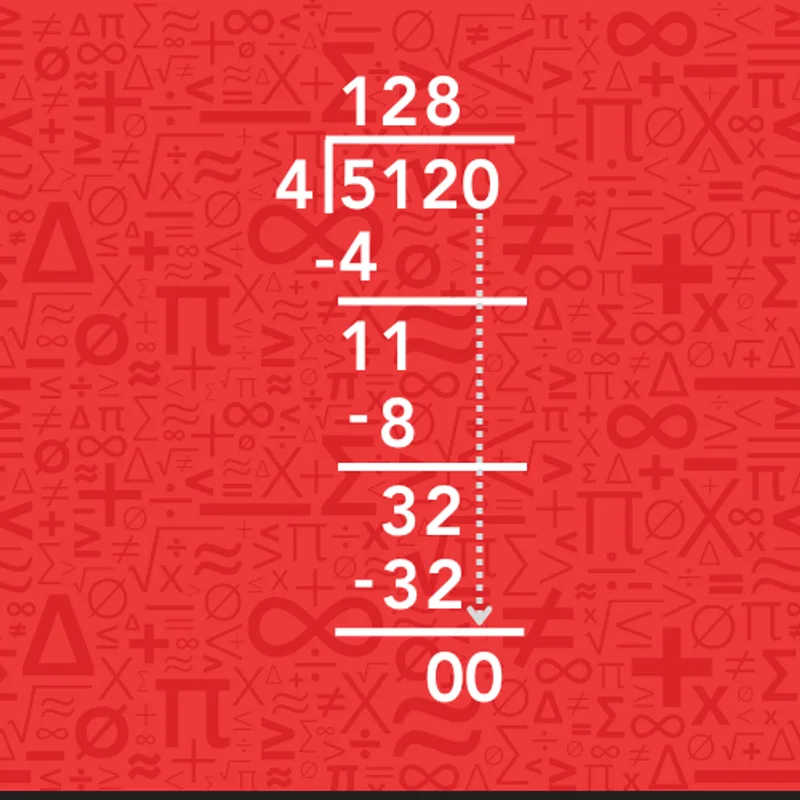
Step 14: Divide Again
We check how many times 4 goes into 0.
4 goes into 0 zero times because 4 x 0 = 0.
We write 0 above the final 0 in our dividend. Now, we have our final quotient, 1280.
We know we are done because we have brought down every digit from our dividend (5120) and we have no remainder left.
And that is how we divide a whole number by a decimal!
📕 You May Also Like: Multiplying Decimals: A Step-by-Step Guide
B. Dividing a Decimal by a Decimal (Solved Example)
Now, let's see how to divide a decimal by another decimal using an example.
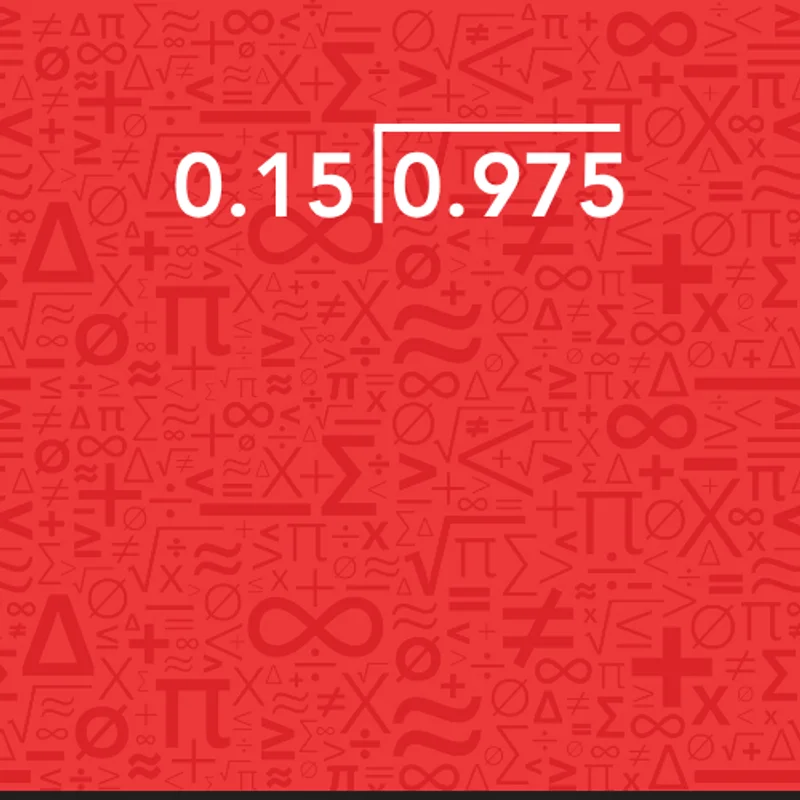
This time, we will divide 0.975 by 0.15.
Before starting the steps, we place 0.975 (the dividend) inside the division symbol and 0.15 (the divisor) outside, to the left.
Step 1: Make the Divisor a Whole Number
Before dividing by a decimal number, we'll turn the divisor into a whole number to make the next steps in the division easier.
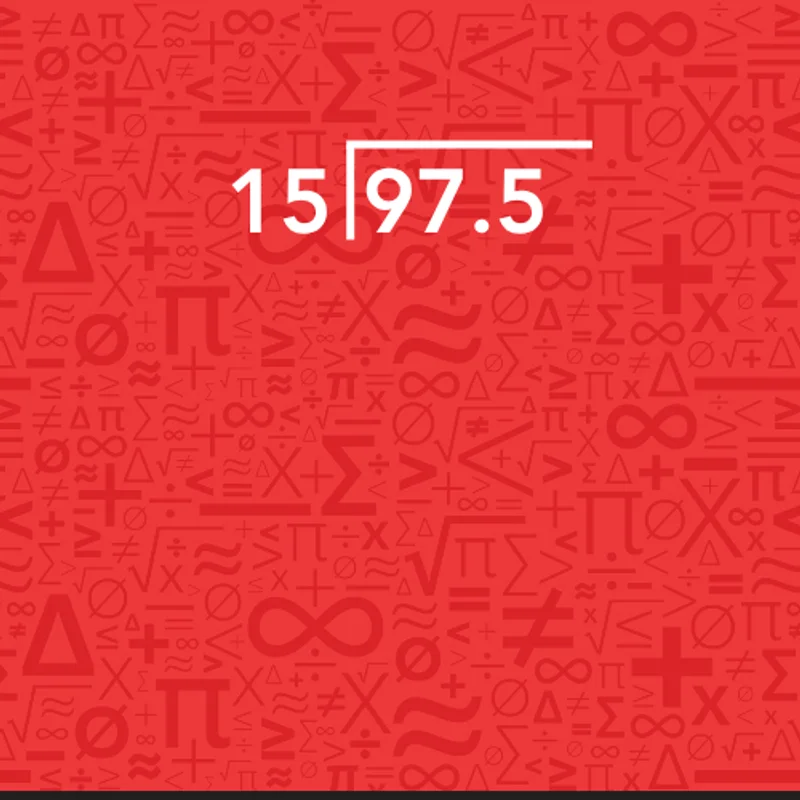
Since 0.15 (the divisor) has two decimal places, we multiply the divisor by 100 to move the decimal point two places to the right. This will change it to 15.
Now that we multiplied the divisor by 100, we must also multiply the dividend by 100, changing 0.975 to 97.5.
Step 2: Divide
Check how many times 15 (the divisor) fits into the first digit of 97.5 (the dividend).
Since 15 doesn’t fit into 9, we consider the first two digits, 97.
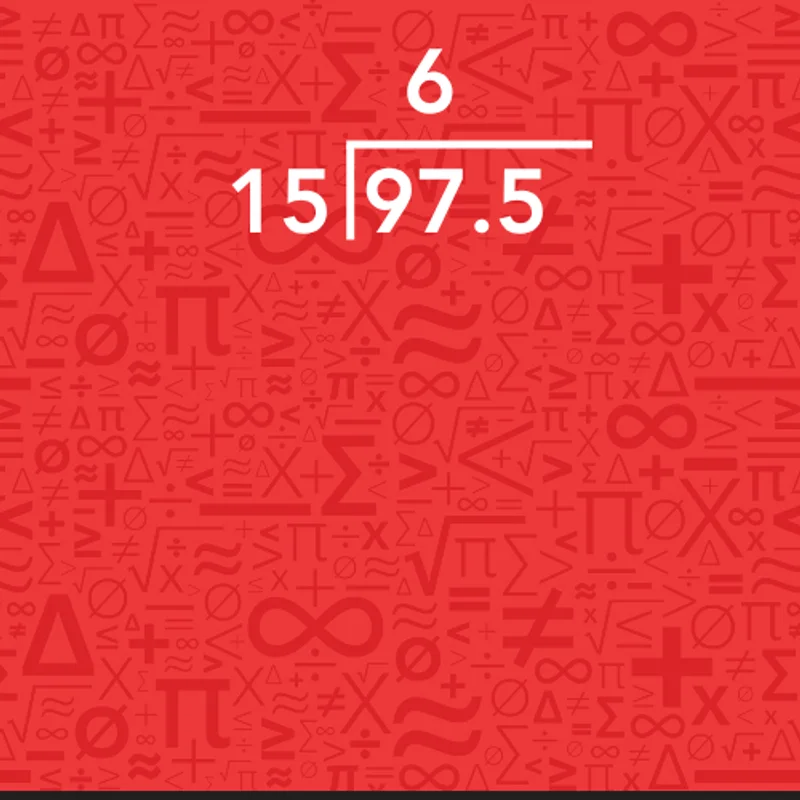
Next, check how many times 15 fits into 97. It goes in 6 times because 15 × 6 = 90.
Write 6 above the division symbol as the first digit of our quotient.
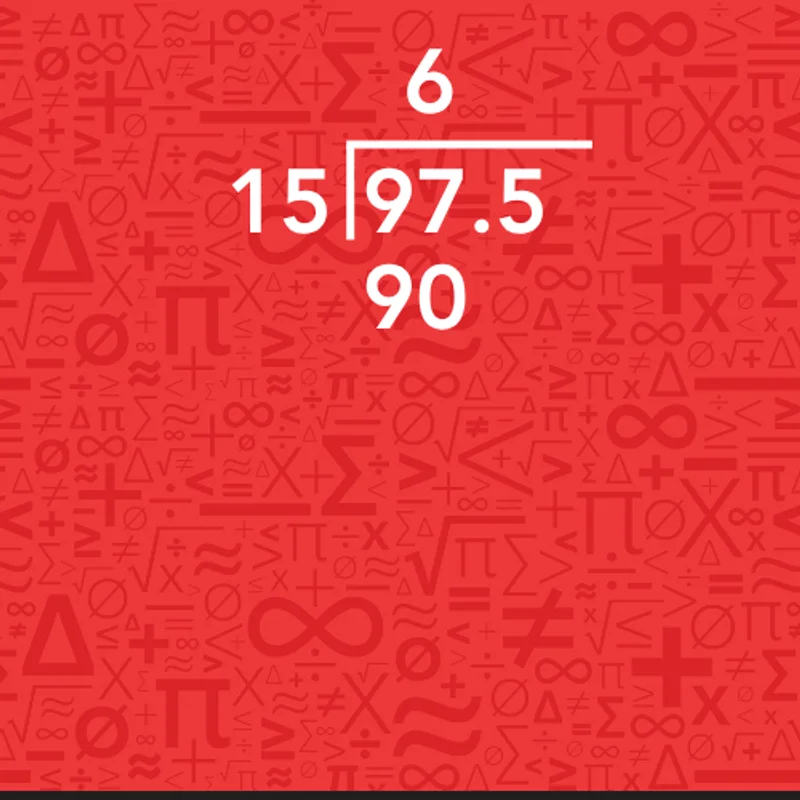
Step 3: Multiply
Find the product of 6 and 15.
6 × 15 = 90
Write 90 below 97.
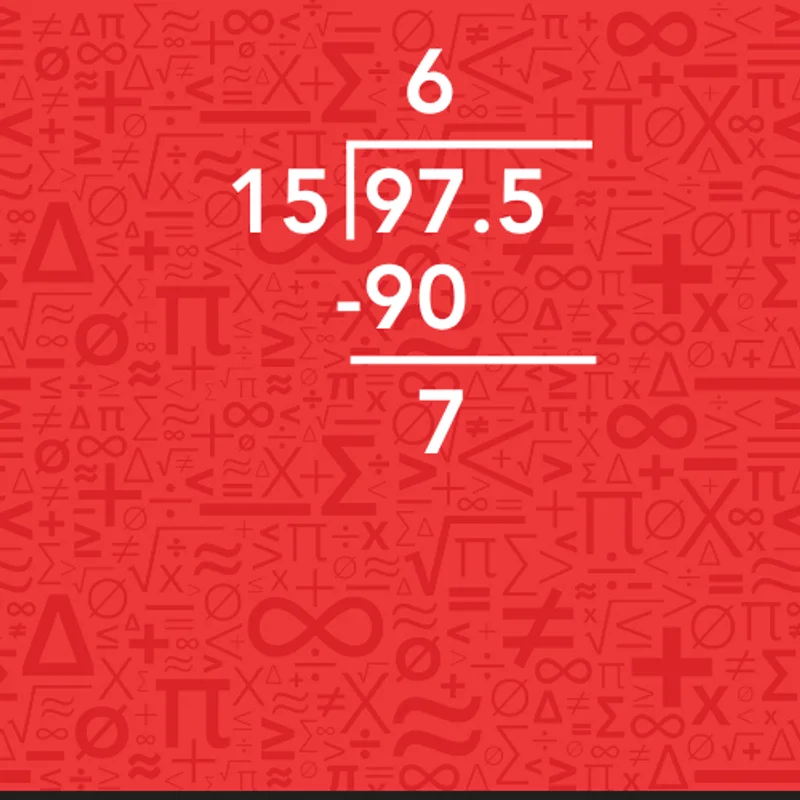
Step 4: Subtract
Subtract 90 from 97.
97 - 90 = 7
Write the result (7) below.
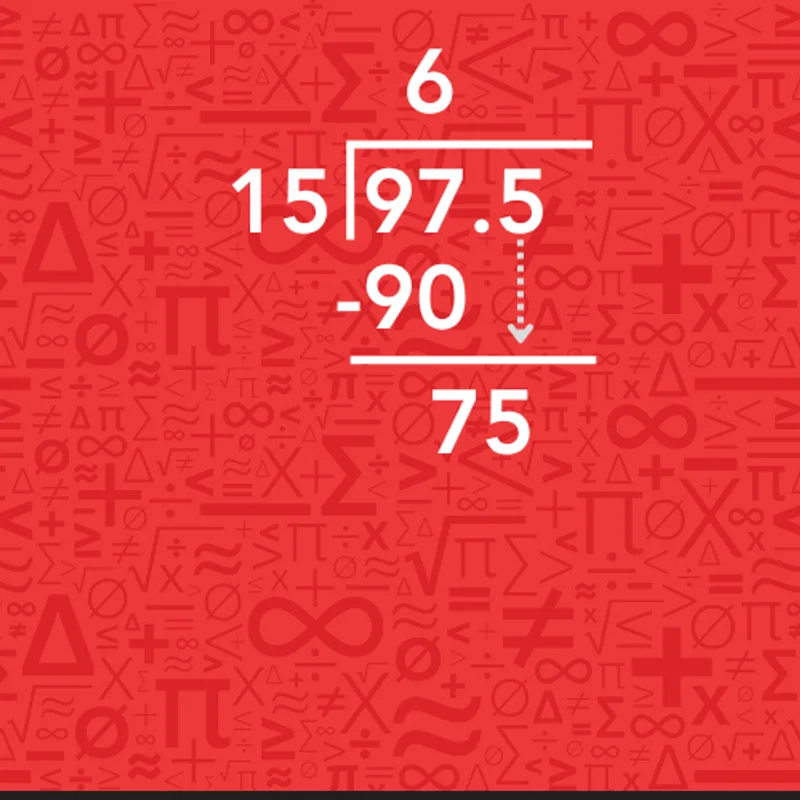
Step 5: Bring Down
Bring down the next digit of the dividend, 5, and place it next to 7, making 75.
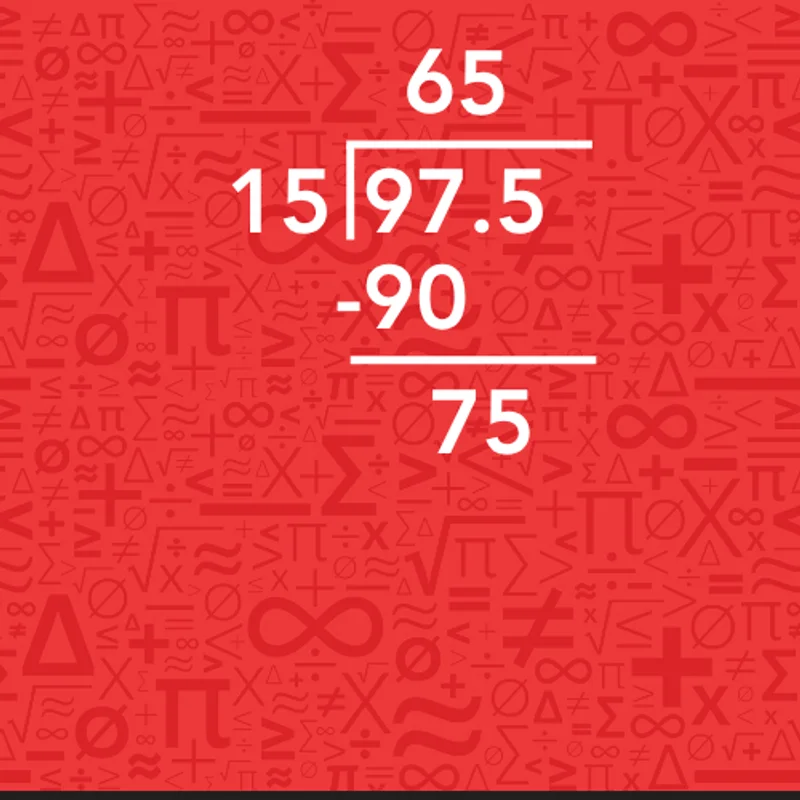
Step 6: Divide Again
Check how many times 15 (the divisor) fits into 75.
It goes in 5 times because 15 × 5 = 75.
Write 5 above the division symbol, to the right of 6.
Step 7: Multiply Again
Find the product of 5 and 15.
5 × 15 = 75
Write 75 below 75.
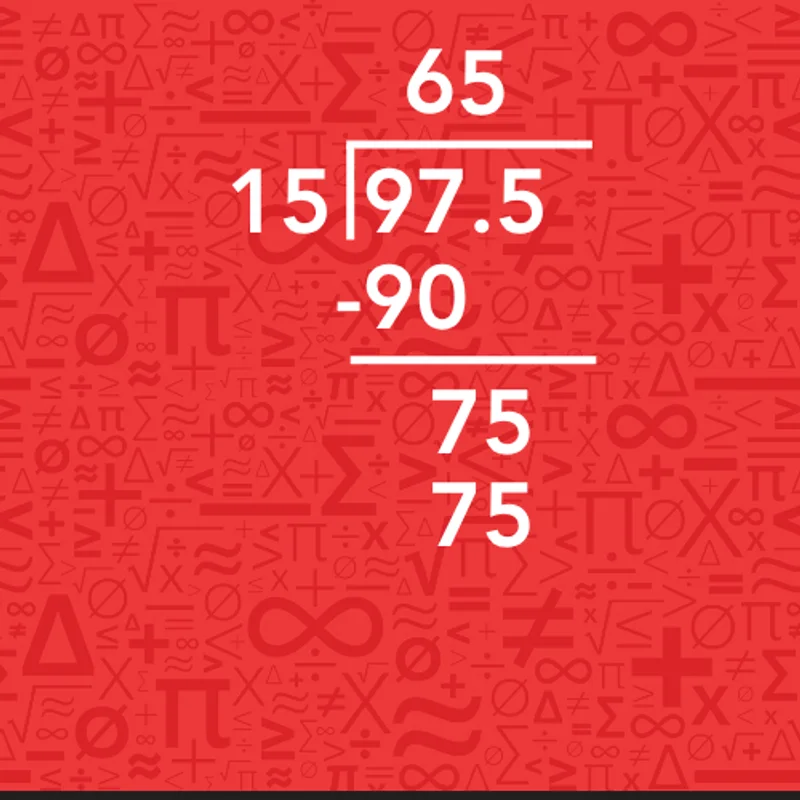
Step 8: Subtract Again
Subtract 75 from 75.
75 - 75 = 0
Write the result (0) below.
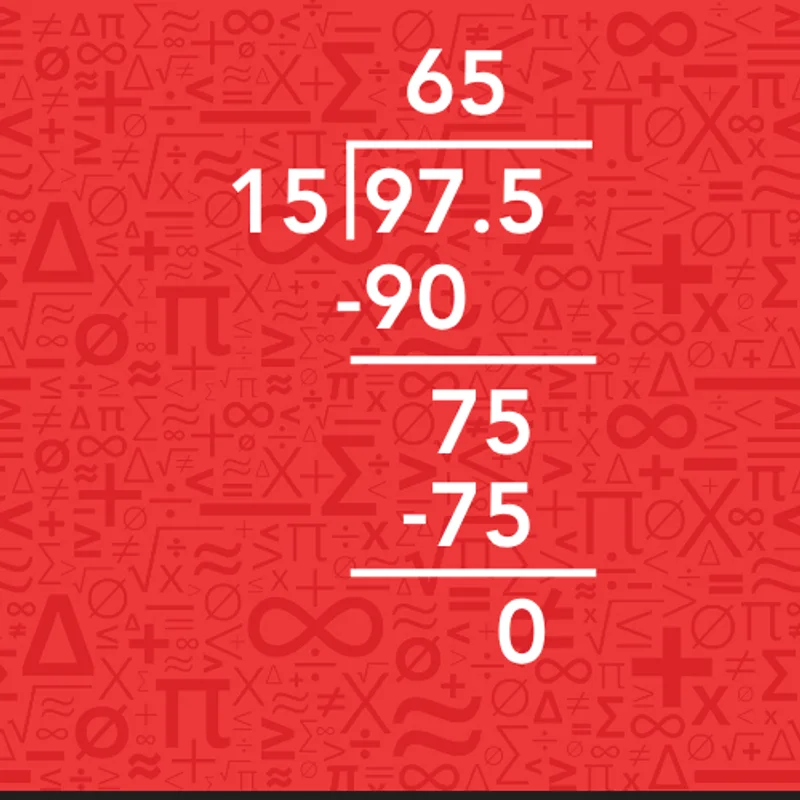
Step 9: Place the Decimal Point
Since we moved the decimal point in 0.975 two places to the right to make it 97.5, we do the same in the quotient. Place the decimal point directly above its position in the dividend, between 6 and 5.
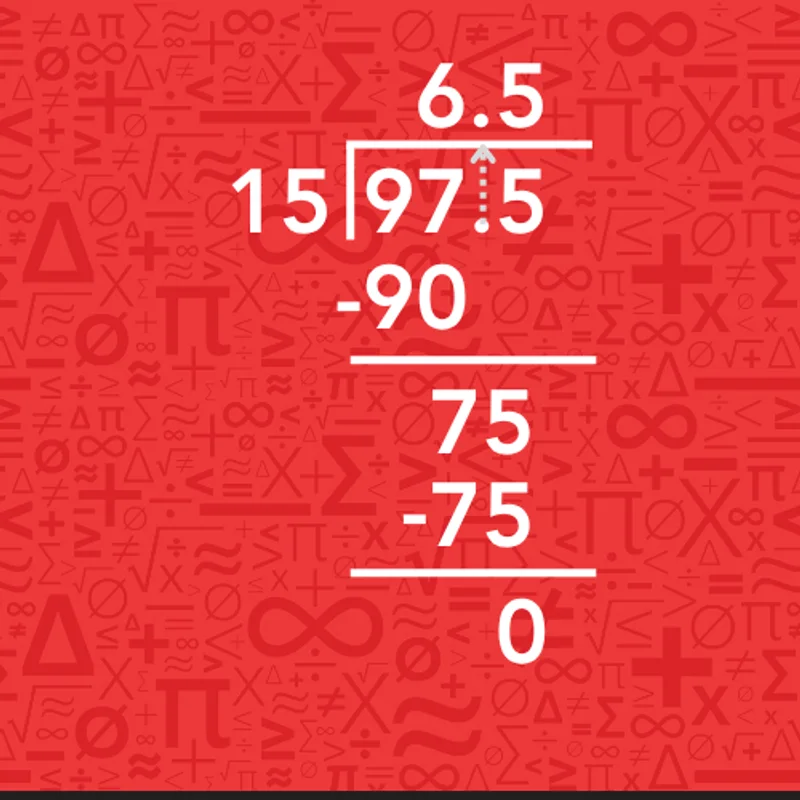
We know we are done because we have brought down every digit from our dividend (97.5) and we have no remainder left.
And that is how we divide a decimal by a decimal!
📕 You May Also Like: How to Do Long Division with Decimals - Kid-Friendly Guide
Try Our Decimal Division Challenges Yourself!
Now that you’ve mastered the steps, put your skills to the test with these two quick challenge problems:
When you’re done, check your answers at the bottom of the guide.

Mathnasium's specially trained tutors guide students through decimal division and other math concepts using a personalized, face-to-face approach
How Mathnasium Helps Students Master Any Math Concept
Mathnasium is a math-only learning center empowering K-12 students of all skill levels to excel in math.
We help students build the kind of understanding that makes math make sense, whether the topic is decimal division or something else entirely.
Our proprietary teaching approach, the Mathnasium Method™, powers this.
Here is how it works.
Each student starts with a diagnostic assessment that identifies their current skills, strengths, and gaps. From those insights, we build a personalized learning plan customized to their goals, whether that means strengthening place value understanding, building comfort with each type of decimal division one at a time, or developing the estimation habits that help students catch mistakes on their own
With the plan in place, our tutors follow it closely, delivering face-to-face instruction in a supportive environment. We teach for understanding, using clear everyday language and a mix of verbal, visual, mental, tactile, and written techniques so each concept lands before we move forward.
When students get stuck, we break the concept down into manageable steps and work through both the how and the why, so students leave each session with problem-solving skills they can apply independently.
We make sessions engaging, too. Games, earned rewards, and consistent celebration of progress keep learning purposeful and help students build confidence alongside fluency.
The results speak for themselves:
-
94% of parents report improvement in their child's math skills and understanding
-
93% of parents report an improved attitude toward math after attending Mathnasium
-
90% of students saw improvement in their school grades
With over 1,100 learning centers across North America, there is likely a Mathnasium close to you.
For families in or near Farmington, Mathnasium of Farmington is a trusted local center with a proven record of building confident math thinkers.
Whether your child is looking to catch up, keep up, or get ahead in math, we can support them.
Ready to get started?
📅 Schedule a Free Assessment at Mathnasium of Farmington
Not near Farmington?
📍 Find a Mathnasium Learning Center Near You
Pssst! Check Your Answers Here
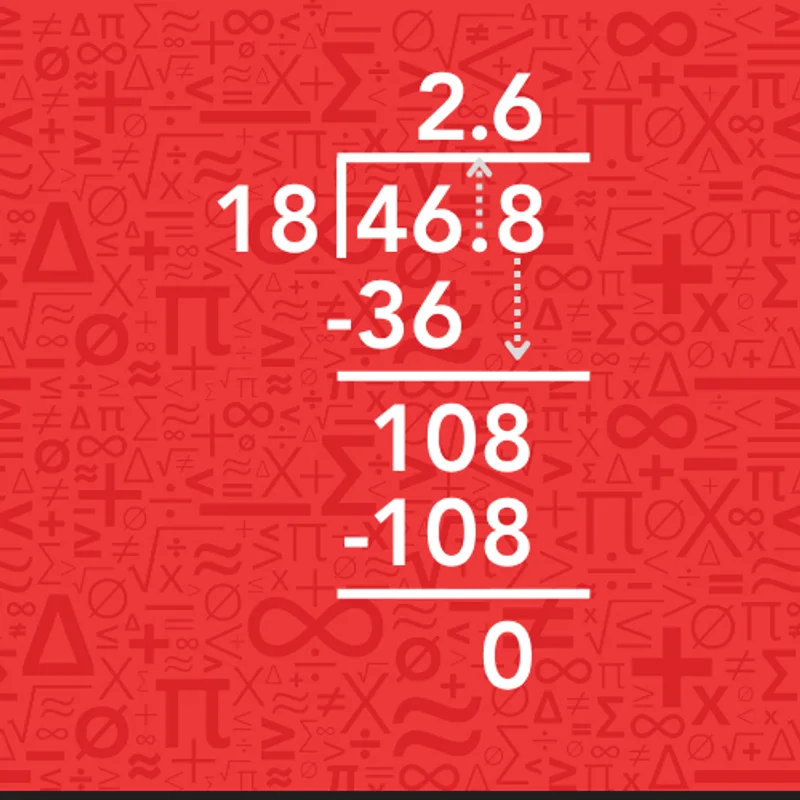
If you’ve given our decimal division challenges a try, check your answers here! We’ve built them out visually following standard step-by-step long division so you can compare your work line by line.
Challenge 1
Move the decimal in 0.17 two places to the right to make it 17.
Move the decimal in 425 two places to the right to make it 42,500.
New Problem: 42,500 ÷ 17
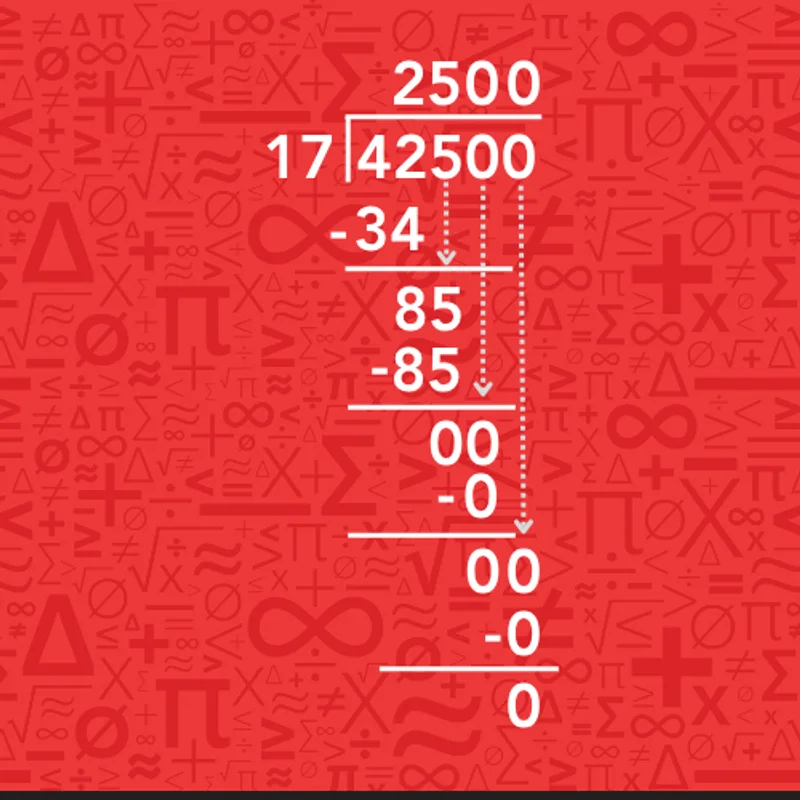
Challenge 2
Move the decimal in 0.18 two places to the right to make it 18.
Move the decimal in 0.468 two places to the right to make it 46.8.
New Problem: 46.8 ÷ 18


 (801) 928-7671
 (801) 928-7671