Advanced math students often outgrow standard classroom lessons quickly. To support them, Plano ISD offers specialized programs that accelerate learning, deepen problem-solving skills, and foster creative logic.
Today, education specialists at Mathnasium of Plano Legacy West break down three Plano ISD advanced math programs in terms of how they work, who qualifies, and how to apply, as well as three practical ways you can help your child nurture their math skills at home.

What You Need to Know About Plano ISD’s Options for Advanced Math Learners
Plano ISD offers three options that may be relevant for students who need additional challenge in math:
Each pathway targets a different type of academic growth and operates on a unique schedule.
To help you understand how these programs work and how they handle math instruction, we provide you with a complete overview of all three below.
1. Math Rocks
Math Rocks Plano ISD’s Math Rocks program is designed for students in grades 4 through 8 who show high achievement and aptitude in mathematics. The district spots potential participants using multiple measures, such as MAP Math and CogAT assessment scores.
Math Rocks takes the place of a student’s regular math class. The curriculum covers standard Texas Essential Knowledge and Skills (TEKS) alongside extra Math Rocks enrichment and deep and engaging math experiences.
Plano ISD built this enrichment curriculum in close partnership with math educators at the University of Texas at Dallas. The path moves kids through these grade levels:
-
Grades 4 and 5: Math Rocks enrichment combined with fourth- through sixth-grade math standards
-
Grade 6: Seventh- and eighth-grade math standards
-
Grade 7: Algebra 1 Honors
-
Grade 8: Geometry Honors
2. Honors Math Pathway & Credit by Exam (CBE)
Plano ISD provides two different paths for students who want to move through math at a faster pace: Honors Math and Credit by Exam (CBE).
A. Honors Math
Plano ISD’s middle-school Honors Math pathway is built for students ready for a quicker pace. Students in this sequence tackle the learning goals for grades 6, 7, and 8 over two years instead of three, and clear the way to finish middle school math by the end of 7th grade and take Algebra 1 Honors in 8th grade.
Because the pathway moves fast, students need a solid foundation in prior math concepts. The district notes that stepping into the accelerated sequence after the start of 6th grade requires meeting specific prerequisites.
B. Credit by Exam (CBE)
Credit by Exam gives eligible students a way to prove they have already mastered grade-level or course content. Depending on the test, your child's score, and district rules, CBE can help them earn credit or move straight into a more advanced math class.
For middle school math, Plano ISD offers specific CBE options for targeted placements:
-
Moving to Honors Math 7: For students who have finished 5th-grade math and take the Honors Math 6 CBE.
-
Moving to Honors Algebra 1: For students who have finished Honors Math 6 and take the Honors Math 7 CBE.
-
Math 8 CBE: Available for current 7th-grade students looking to test into Honors Algebra 1.
CBE can also open the door to whole-grade acceleration. To skip an entire grade in grades 6 through 8, students must score at least 80% on criterion-referenced tests across science, social studies, English language arts, and math. This means passing just the math exam is not enough to skip a whole grade.
The right math path always depends on your child's personal readiness, prior coursework, test results, and what your specific school campus offers. For current CBE rules, deadlines, and registration help, reach out directly to your campus counselor.
3. PACE (Plano Academic and Creative Education)
Plano ISD’s PACE program is the district's primary advanced learning option for students in kindergarten through grade 12.
Unlike Math Rocks or Honors Math, PACE is not a standalone math class. Instead, it weaves enriched learning across all core subjects, which offers differentiated learning in math, language arts, science, and social studies.
How PACE is delivered changes depending on your child's grade level:
-
Elementary School: Students receive daily differentiated instruction in their regular classrooms—often grouped with other PACE peers—alongside weekly pull-out sessions with a dedicated PACE Specialist using specialized, district-designed curricula.
-
Middle School: PACE shifts into a daily Humanities experience integrated directly within social studies coursework.
-
High School: Students can continue their advanced track through specialized interdisciplinary coursework and advanced classes.
Because PACE provides broader advanced support rather than a dedicated subject block, your child can participate in PACE at the same time they take Math Rocks or Honors Math. The right mix depends entirely on qualifying scores, academic stamina, and school schedule limits.

Who Qualifies for Each Plano ISD's Advanced Math Program?
Plano ISD evaluates students using standardized test metrics and district assessments to determine eligibility for advanced coursework.
|
Program
|
Primary Academic Focus
|
Official Qualification Criteria
|
How Entry Works
|
|
Math Rocks
|
Enriched problem solving and accelerated math progression
|
Multiple measures of math achievement and aptitude, including MAP Math and CogAT
|
District identification; no parent referral required
|
|
Honors Math
|
Accelerated pacing through middle-school math standards
|
District Honors Math criteria and course prerequisites
|
Campus placement and course-registration process
|
|
Credit by Exam (CBE)
|
Demonstrating mastery for possible acceleration or credit
|
Varies by exam; 80% or higher on all four core-subject tests for full grade-level advancement in grades 6–8
|
Parent/student request through the campus counselor
|
|
PACE
|
Advanced academic enrichment across subjects
|
District review of multiple measures and evidence of a need for advanced learning options
|
Parent, teacher, student, counselor, or administrator referral followed by district assessment and committee review
|
While tests and district rules set the final eligibility, your child's daily habits can help guide what you might want to discuss with the school team. A few home clues can point you toward the right fit:
-
Math Rocks: Look into this path if your child loves finding multiple ways to solve a puzzle and stays hooked on tough, unusual math problems.
-
Honors Math: Consider this track if your child picks up grade-level ideas fast and wants a quicker pace with less review.
-
Credit by Exam (CBE): Ask about tests if your child already knows a full year of math and needs a bump to the next level.
-
PACE: Choose this route for students who need advanced work across all subjects and love linking different ideas together.
How to Apply for Each Plano ISD's Advanced Math Program?
How to apply for Plano ISD’s advanced tracks depends entirely on the program's specific administrative path and testing schedule.
1. Math Rocks
You do not need to submit an application or referral for Math Rocks. The district automatically reviews annual MAP Math and CogAT scores for third through fifth graders during the winter and early spring assessment cycles.
If your student qualifies, they receive formal invitation emails directly from the district in early April for placement starting the following school year.
2. Honors Math & Credit by Exam (CBE)
For Honors Math placement, contact your child’s math teacher or campus counselor to discuss current placement requirements and course-registration options.
For Credit by Exam (CBE), obtain the application from your child’s campus counselor and return it to the counselor, who submits it to Plano ISD’s Credit by Exam Office. Application deadlines and test dates are listed on the district’s current CBE Test Calendar, so contact the counselor well before your preferred testing window.
3. PACE
To refer your child for PACE, submit the appropriate district referral form by the published deadline. Parents, teachers, and students may make referrals.
For the 2026–27 school year, Plano ISD’s elementary referral window closes at 5 p.m. on October 9, 2026. The secondary referral window for grades 6–8 closes at 5 p.m. on January 8, 2027.
Elementary students are assessed during the first semester for services beginning in the spring, while middle-school students are assessed in the spring for participation the following fall.
How to Nurture Your Child’s Math Mind at Home
Children who love math spot patterns quickly, tackle puzzles for fun, and ask big questions. But even naturally strong students need the right support to keep growing.
You don't need to transform your home into a classroom or pile on extra worksheets. Small, everyday habits, such as asking curious questions, exploring fun topics, and framing mistakes as normal, go a long way.
Here are three simple ways to nurture your child's math mind while keeping learning enjoyable and low-pressure:
1. Encourage Deeper Thinking, Instead of Just Quick Answers
Waxman and colleagues recommend that parents can support mathematically talented children by focusing on how their child thinks, rather than simply on getting the right answer.
In other words, conversations about patterns, number relationships, and different ways to solve a problem can help children build deeper mathematical understanding.
At home, you can choose problems that allow more than one strategy or answer. Instead of giving your child a long list of calculation questions, try a challenge such as “How many different rectangles can you make with an area of 36 square units?”
Then keep the conversation going with questions like:
-
“Can you solve it another way?”
-
“What pattern do you notice?”
-
“How do you know your method will always work?”
-
“What would happen if we doubled the number?”
These questions help your child explain their ideas, test their reasoning, and see math as something to explore, rather than finish quickly.
📕 You May Also Like: How Math Builds Problem-Solving & Critical Thinking Skills
2. Build on What Your Child Already Knows
The National Association for Gifted Children recommends identifying what a student has already mastered and replacing unnecessary repetition with more challenging learning. This may involve enrichment that deepens learning, acceleration to move ahead in a subject, or a combination of both.
At home, this does not always mean moving straight to the next grade’s math. Instead, help your child explore the parts of math they already understand and enjoy in more depth.
You could try:
-
Strategy games, logic puzzles, or pattern challenges.
-
Real-life math activities, such as planning a budget, comparing phone plans, measuring a room, or analyzing sports statistics.
-
A longer math project, such as designing a garden layout using area and perimeter, comparing costs, or surveying family members and turning the results into a graph.
-
Books, videos, or hands-on activities that explore topics beyond regular schoolwork, such as games about chance, secret-code puzzles, repeating patterns in nature, or symmetrical art. These activities can show children how math connects to games, art, and technology.
Before you introduce a more advanced topic, make sure your child has a solid understanding of the skills they are building on. If they move too quickly, it can leave gaps, while the right level of challenge can help your child stay interested and continue to grow.
Set aside time each week for math exploration. Let your child choose a question, test their ideas, look for patterns, and share what they discover. This gives them ownership of their learning and helps them see math as more than a list of schoolwork problems.
📕 You May Also Like: 12 Logic Puzzles that Build Mathematical Thinking
3. Encourage a Positive Approach to Challenge
Although advanced students may seem confident in math, they can still feel frustrated when they run into a problem that is not easy right away. Some may avoid difficult tasks or worry about making mistakes because they are used to finding math easy.
The U.S. Department of Education advises parents to encourage a positive attitude toward math and emphasize effort when children face challenges. Its guidance notes that students benefit when adults help them approach difficult work constructively.
At home, treat mistakes, revisions, and changing strategies as normal parts of learning. Focus your feedback on your child’s thinking and effort rather than on being fast or naturally smart.
You could say:
-
“You kept testing ideas even when the first one did not work.”
-
“Your diagram helped you see the relationship.”
-
“What did that mistake teach you?”
-
“This is challenging because you are learning something new.”
These small responses can help your child see difficult problems as opportunities to learn. This way, they can build persistence, confidence, and a healthier relationship with math even when the answer does not come right away.
📕 You May Also Like: Why Parents Should Teach Kids to Embrace Math Mistakes

At Mathnasium, we provide our students with the right level of math challenge with support that helps them think more deeply and keep growing.
How Mathnasium Helps Advanced Learners Stay Engaged and Get Ahead
Mathnasium is a math-only learning center that works with K–12 students of all skill levels, including well-performing students who need a higher level of challenge to stay engaged.
Our proprietary teaching approach, the Mathnasium Method™, is built around the idea that every student can excel in math when instruction meets them at their exact starting point
Each student begins their Mathnasium journey with a diagnostic assessment that identifies where they currently stand with math, how far their understanding extends, and where the next challenge should begin.
We use these insights to build a personalized learning plan tailored to each student's specific goals. Because every plan adapts to the learner, the path forward is customized to what your child needs to thrive.
For advanced students looking to get ahead, we work to expand their math skills and help them achieve their greatest potential. They can explore topics beyond their school's math curriculum, tackle complex problem-solving, and receive personalized support to reach their unique academic goals.
Our specially trained tutors use a mix of verbal, visual, mental, tactile, and written techniques to help children understand math in a deeper way. As problems become more demanding, instruction focuses on building problem-solving skills and critical thinking.
Learners receive support when they need it, but they are also given space to think, test their ideas, and work through challenges on their own. That balance helps math stay engaging while building skills that carry into higher-level math and beyond.
Sessions are fun, too. They often include game-based activities and guided questions that give advanced learners new ways to reason and approach unfamiliar problems. Students learn to approach a difficult problem as a puzzle rather than a verdict on their ability and to keep going when the answer isn't immediate.
The results speak for themselves:
-
94% of parents report an improvement in their child's math skills and understanding
-
93% of parents report their child's improved attitude toward math after attending Mathnasium
-
90% of students saw an improvement in their school grades
With over 1,100 active learning centers, Mathnasium brings top-rated math instruction close to your community.
For families in or near Plano and the Colony, TX, Mathnasium of Legacy West is a local center with years of experience helping advanced learners master advanced math tracks, tackle competitive problem-solving, and build lasting confidence.
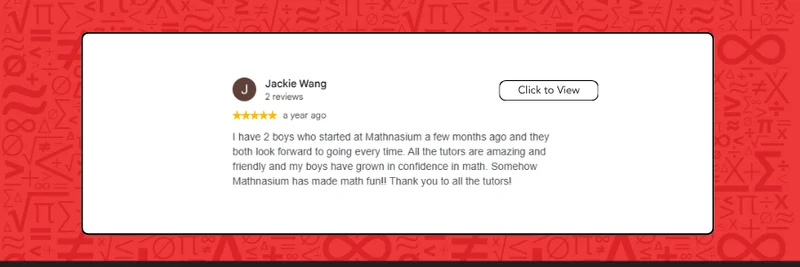
With over 100 five-star Google reviews, our community recognizes our dedication to building confident math thinkers.
Here's what one parent had to share about our center:
Whether your child needs to prepare for advanced math programs, sharpen their problem-solving skills, or simply build greater math confidence, our team is ready to help.
📅 Schedule a Free Diagnostic Assessment at Mathnasium of Legacy West
Not near Plano?
📍 Find Mathnasium Learning Centers Near You


 (214) 618-0558
 (214) 618-0558