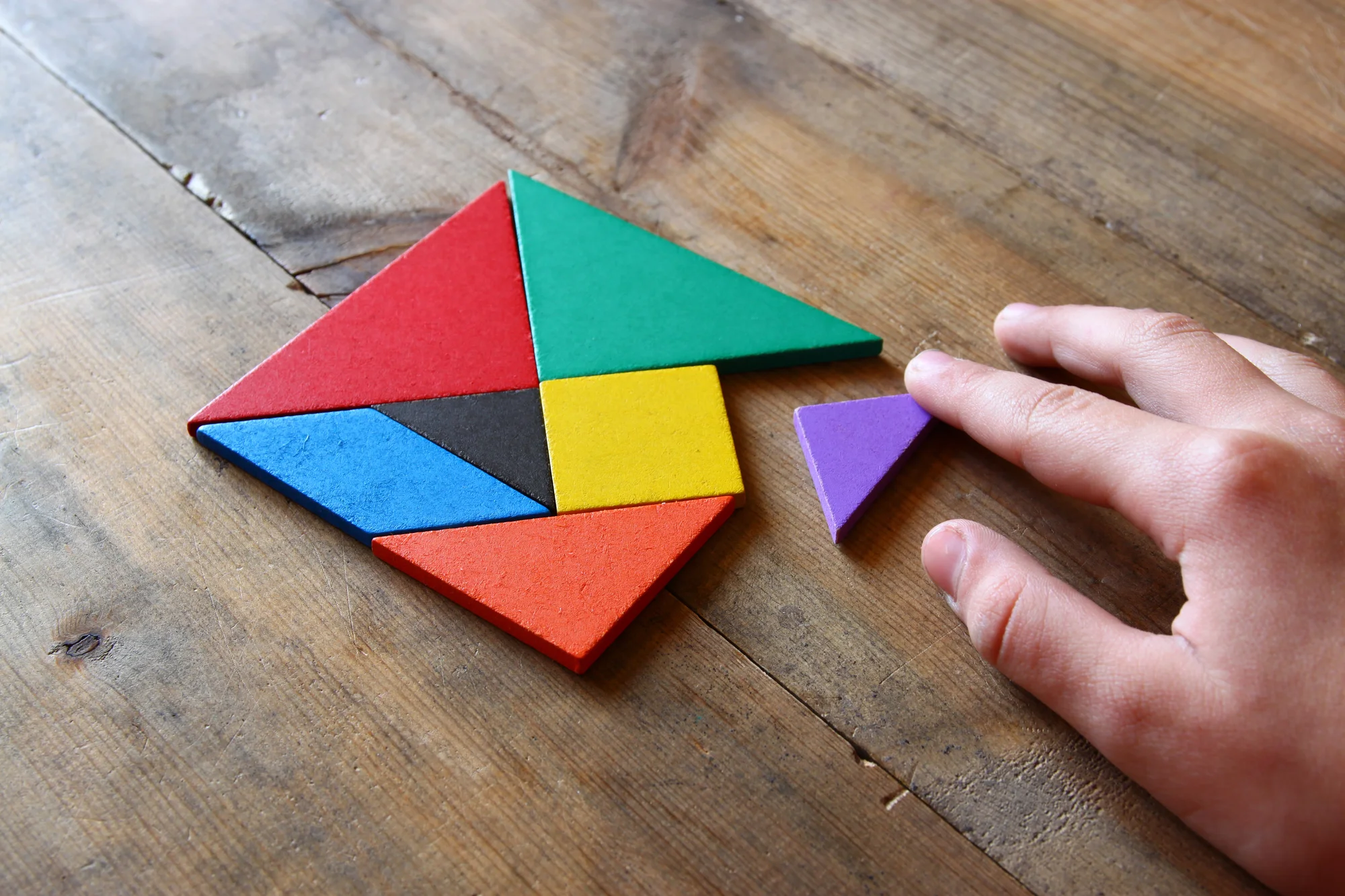
The word adjacent shows up across geometry, in angles, in polygons, and even in 3D solids. The same word can mean slightly different things depending on where we see it, so getting comfortable with it early helps avoid mix-ups later on.
Today, our Mathnasium tutors cover what adjacent actually means, how to spot it across different shapes in geometry, and a few real-life examples. Let’s dive in!

What Does Adjacent Mean?
Adjacent simply means next to, or sharing a common side or boundary.
Let's see that through an easy example. If we take two puzzle pieces and fit them together, that border where they touch makes them adjacent. Pull them apart, and that shared border disappears along with it.
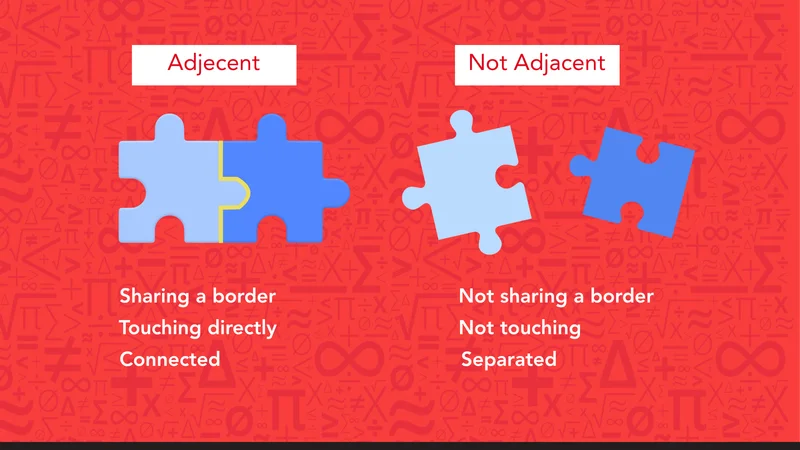
In geometry, adjacent works the same way. Two things count as adjacent whenever they share that same kind of border, a side, a corner, or an edge, depending on what we're looking at.
📕 You May Also Like: What Is Adjacent in Math? A Guide for Parents & Students
Where Does Adjacent Appear in Geometry?
In geometry, "adjacent" applies to different parts of a shape depending on what they share.
We can look at adjacent parts in three main areas of:
-
Angles
-
Polygons
-
3D shapes
1. Adjacent Angles
Adjacent angles are two angles that share the same vertex and one common side, without overlapping each other.
Remember our puzzle pieces from earlier? We spotted their shared border by looking at where the two pieces touched. Let's try that same thing here.
Take a look at these two angles, ∠ABC and ∠CBD, and see if we can spot what they share.
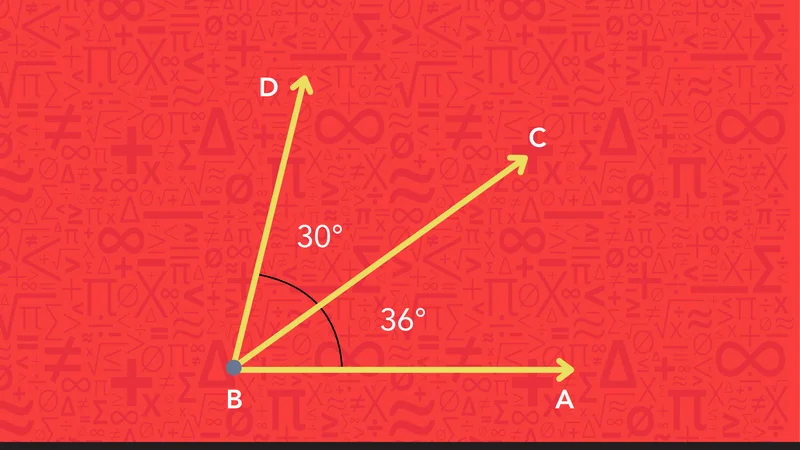
Looking closely, we can see that both angles touch at the same vertex, B, and that they share one side, BC, between them.
Those two shared points are what make these angles adjacent.
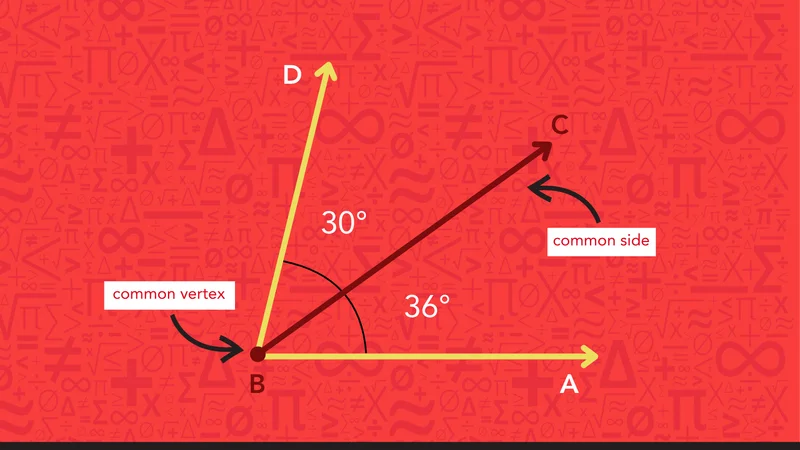
What should we look for to spot adjacent angles?
-
Common vertex: Two angles meeting at the same corner point.
-
Common side: Two angles sharing one ray or arm between them.
-
Separate space: Each angle keeps its own space, without overlapping the other.
📕 You May Also Like: Complementary and Supplementary Angles - A Complete Guide
2. Adjacent Sides in Polygons
Adjacent sides in a polygon are any two sides that share a common corner point, known as a vertex. They sit right next to each other and help form the interior angles of the shape.
Let's use a square as our example. If we look at our square and take one side, like side AB, can we see where it meets side BC?
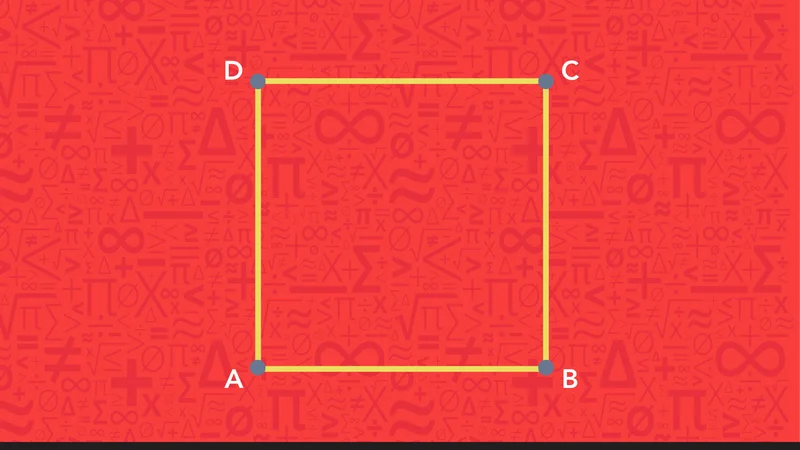
That's right! They meet at vertex B. That makes these two sides of the square adjacent.
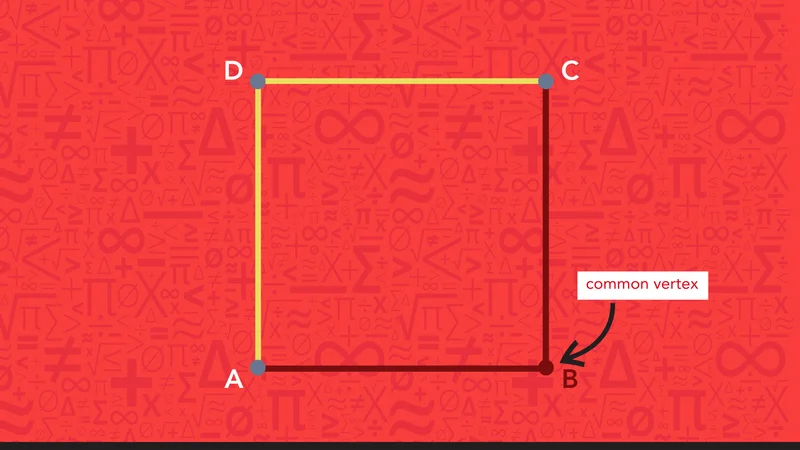
But did we miss something? Let's take a closer look at our square one more time.
Ah, yes! Side AB also touches side DA at vertex A, which means it has another adjacent side!
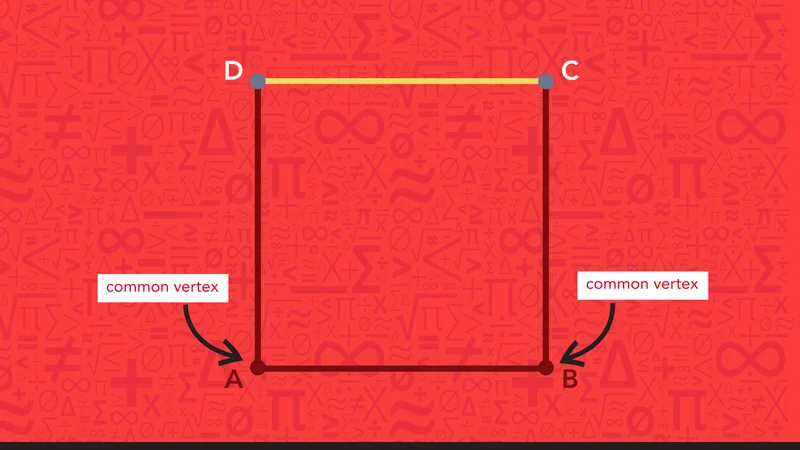
That points us to a rule every polygon follows. Every side of a polygon has exactly two adjacent sides, one on each end.
Yes, exactly! Because a triangle only has three sides, every single side connects directly to the other two at its corners.
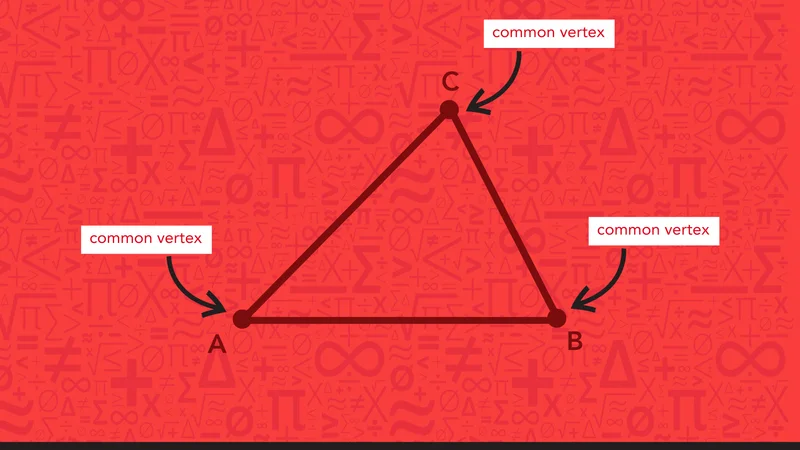
Let's test it out with triangle ABC.
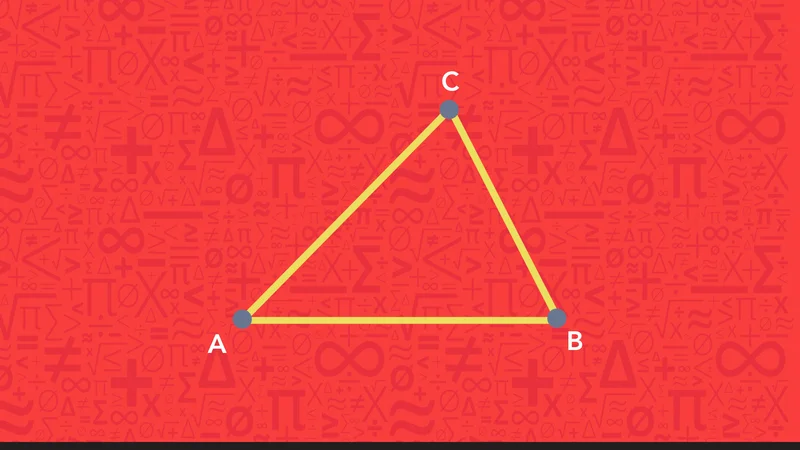
If we pick side AB, it meets side BC at vertex B, and side CA at vertex A.
Both of the other sides touch side AB directly, and that means that all sides are adjacent in a triangle.
A quick word of caution here.
In trigonometry (right-triangle math), you will hear "the adjacent side" used to describe the specific leg next to an angle, excluding the hypotenuse (the longest side). That is a special rule for calculating angle ratios, whereas in general geometry, any two sides that meet at a corner are adjacent!
Here's what makes two sides of a polygon adjacent:
📕 You May Also Like: 2D Shape Names: The Complete List from 3 to 12 Sides
3. Adjacent Faces in 3D Shapes
Adjacent faces in a 3D shape are flat or curved surfaces that sit right next to each other and share a common boundary, which we call an edge.
Let's use a cube as our example. If we look at the top face of our cube and the front face right below it, can we see where they touch?
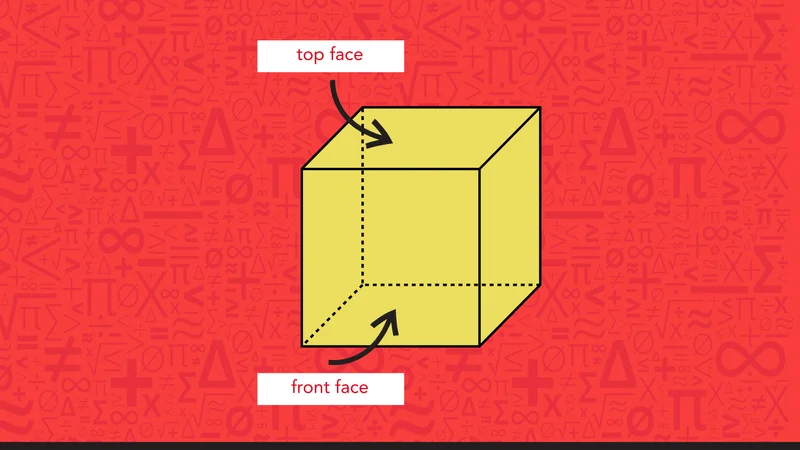
They meet right along the top front edge. Sharing that one edge between them is what makes those two faces adjacent.
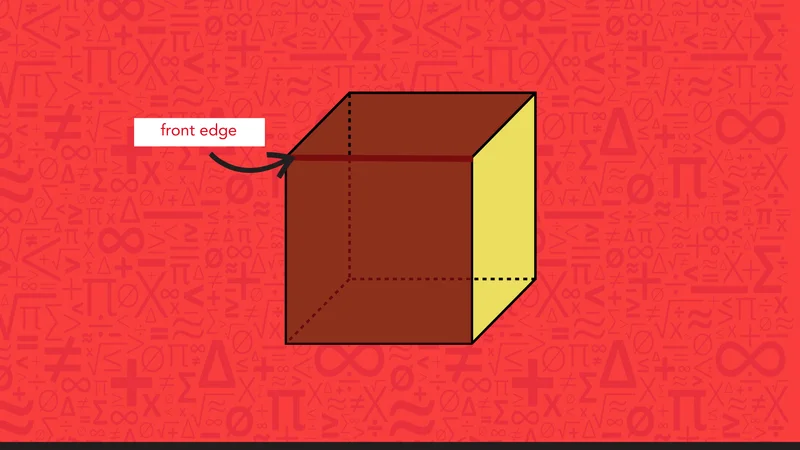
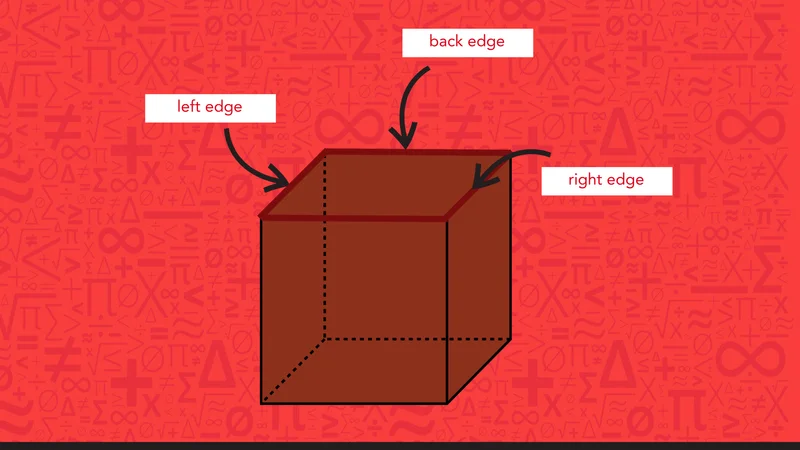
Now, let's take a closer look at that top face one more time and see if it has more adjacent faces.
The top face touches three other faces: the back, left, and right faces. That means it has four adjacent faces in total!
What about a sphere?
A sphere is made of just one single, continuous curved surface. Since there's only one face, there's nothing else for it to share an edge with.
That's why a sphere has zero edges and zero adjacent faces.

Here's what to look for in a 3D shape to find adjacent faces:
📕 You May Also Like: 3D Shapes in Geometry: A Kid-Friendly Guide to Faces, Edges, and Vertices
Real-Life Examples of Adjacent Parts in Geometry
Adjacent parts show up all around us, no matter what we're looking at, angles, sides, or faces. The same question works every time.
Do the two parts touch directly, sharing a point or a line, with nothing sitting between them?
Here are a few examples our Mathnasium tutors picked out.
|
Context
|
Example
|
Why It's Adjacent
|
|
Angles
|
Pizza slices
|
Two slices sitting side by side share a vertex at the center of the pizza and one edge where they touch.
|
|
Angles
|
An open book
|
The two pages share the crease running down the middle, the shared side between the two angles they form.
|
|
Polygon Sides
|
A room's walls
|
Two walls meeting at a corner share that single vertex where they join.
|
|
Polygon Sides
|
A picture frame
|
Two sides of the frame meet at a corner, sharing that same point.
|
| 3D Faces |
A cardboard box
|
The front and side panels meet along one edge, making those two faces adjacent.
|
|
3D Faces
|
A die
|
Two faces of a die share an edge along one side, the same relationship we see on any cube.
|

Mathnasium tutors use clear examples and hands-on practice to help concepts like adjacent parts truly make sense.
How Mathnasium Helps Students Master Any Math Concept
Mathnasium is a math-only learning center dedicated to helping K–12 students of all skill levels learn and master math.
When students need support with concepts like "adjacent", or any other geometry topic or math topic, we focus on building a deep, lasting understanding rather than just memorizing definitions.
We do that through the Mathnasium Method™, our proven approach designed to help students truly understand and even enjoy math.
Here's how it works in practice:
-
Diagnostic Assessment and Personalized Learning Plans: Every student begins with a diagnostic assessment that identifies both visible skill gaps and the reasoning patterns behind them. From that starting point, we build a personalized learning plan tailored to their needs and goals.
-
Teaching for Understanding: Our specially trained tutors use plain, everyday language and a mix of verbal, visual, mental, tactile, and written techniques so concepts like adjacent parts make sense to every student.
-
Problem-Solving and Critical Thinking: When a concept feels challenging, we break it down into manageable parts and guide students through both the how and the why. Over time, this builds the problem-solving skills and critical thinking they can use in math and everyday life.
-
An Engaging and Fun Learning Environment: Our sessions are often game-based and hands-on, and we celebrate every bit of progress. Over time, students build a more positive relationship with math and greater confidence in their own abilities.
The results reflect that approach:
-
94% of parents report an improvement in their child's math skills and understanding
-
93% of parents report an improved attitude toward math after attending Mathnasium
-
90% of students saw an improvement in their school grades
We operate over 1,100 centers across North America, bringing our proven approach to communities everywhere.
Families across McKinney, TX, can visit Mathnasium of McKinney, a trusted local center with a proven record of building confident math thinkers.
Whether your student is looking to catch up, keep up, or get ahead in math, our local team is happy to help!
📅 Schedule a Free Diagnostic Assessment at Mathnasium of McKinney
Not near McKinney?
📍 Find a Mathnasium Learning Center Near You


 (972) 784-4141