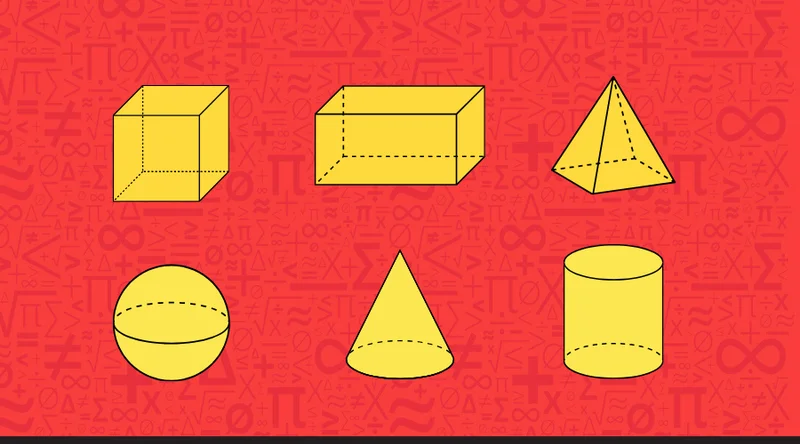
Shapes are everywhere we look, from the box under the tree to the ball rolling across the yard. Some of those shapes lie flat, and some of them we can pick up and hold. That difference is where geometry really starts to make sense.
Today, our tutors explain what makes a shape three-dimensional, the properties every 3D shape shares, and six shapes we run into all the time, from the cube in a board game to the sphere on a basketball court.

What Is a 3D Shape?
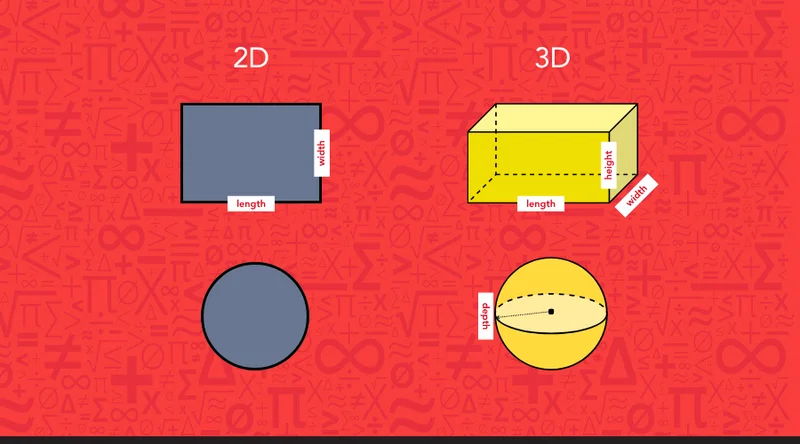
A 3D shape is a solid, three-dimensional object defined by three measurements, which are length, width, and depth, sometimes called height.
A 2D shape, like a square we draw on paper, is flat. It only has length and width.
So what does that extra measurement of depth actually do?
It gives our shape an inside as well as an outline, and that's what makes it possible to hold when we pick something up.
Let's take a basketball as an example. It has depth going in every direction, so it's a solid ball with weight, one we can bounce and hold in our hands.
That's what makes it a 3D shape.
📕 You May Also Like: 2D Shape Names: The Complete List from 3 to 12 Sides
Common 3D Shapes and Their Properties
3D shapes come in all shapes and sizes, but we can describe every one of them using three basic properties:
-
Faces: A face is a flat or curved surface on a 3D shape.
-
Edges: An edge is the straight or curved line where two faces meet.
-
Vertices: A vertex is a corner where edges meet. The plural is vertices.
These three properties show up again and again as we look at different 3D shapes. Some shapes, like the cube, have flat faces, straight edges, and sharp vertices. Other shapes, like the sphere, curve around so smoothly that some of these properties disappear entirely.
Our Mathnasium tutors picked six shapes we see all the time. So, let's count up the faces, edges, and vertices on each one, and see how these properties play out differently from shape to shape.
1. Cube
A cube is a solid 3D shape that looks like a box, with all of its sides the exact same size, like a die from a board game.
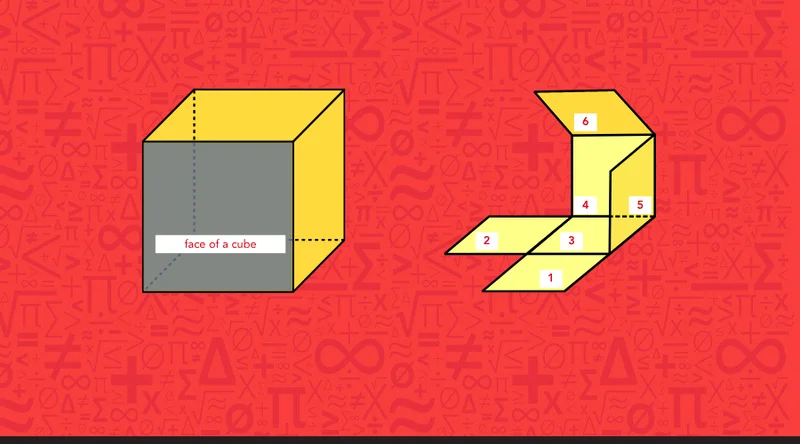
Let's explore its properties, starting with the faces.
On a cube, each flat side we see is a face, and they are all equal squares. Let's count them together on our cube: one, two, three, four, five, six. A cube has 6 faces in total.
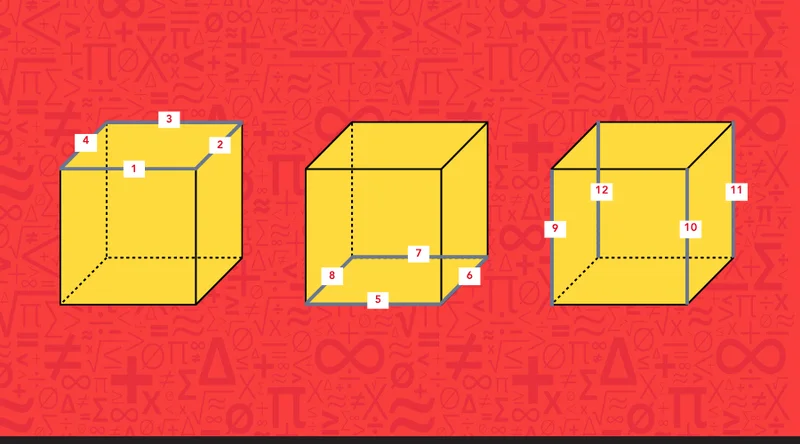
Let's find the edges next, the lines that run along the border of each face.
A cube has four edges around its top square, four edges around its bottom square, and four more edges connecting the top square to the bottom square.
That gives us 12 edges in total.
Finally, let's find the vertices, the points where those edges meet. A cube has four vertices around the top square and four more around the bottom square.
That gives us 8 vertices in total.
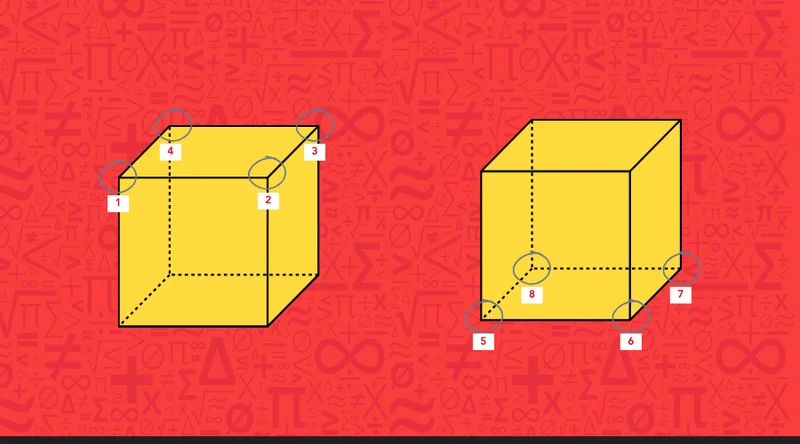
Here's what we counted:
-
Faces: 6
-
Edges: 12
-
Vertices: 8
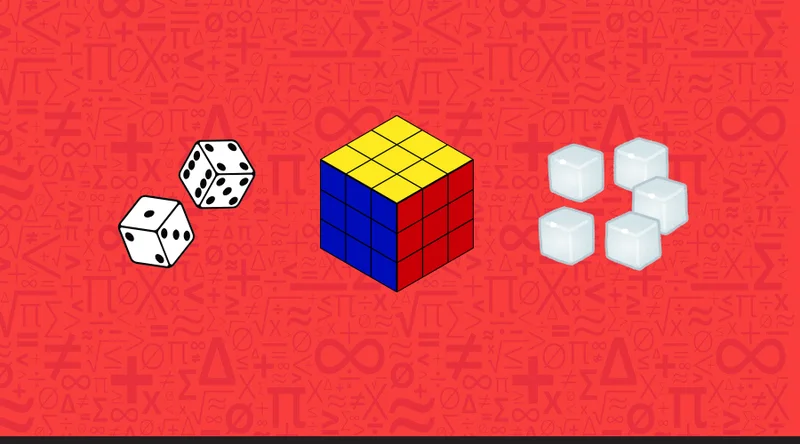
Here is where we can see cubes as shapes appearing in real life:
-
Playing dice
-
Ice cubes
-
Toy building blocks
-
Rubik's cubes
📕 You May Also Like: Regular vs. Irregular Polygons: What's the Difference?
2. Rectangular Prism
A rectangular prism is a solid 3D shape where opposite sides match in size, though each pair of sides can be a different size from the others, like a shoebox.
Let's dig into its properties, beginning with the faces.
We've got a top and a bottom, a front and a back, and two ends. That gives us 6 faces in total, the same count as a cube, except here the faces are rectangles instead of squares.
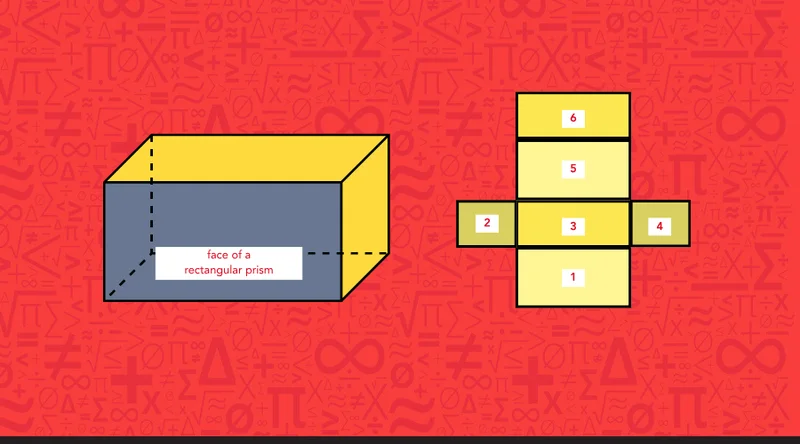
Next, let's find the edges, the lines that run along the border of each face.
A rectangular prism has four edges around its top rectangle, four edges around its bottom rectangle, and four more edges connecting the top to the bottom.
That gives us 12 edges in total, the same count as a cube.
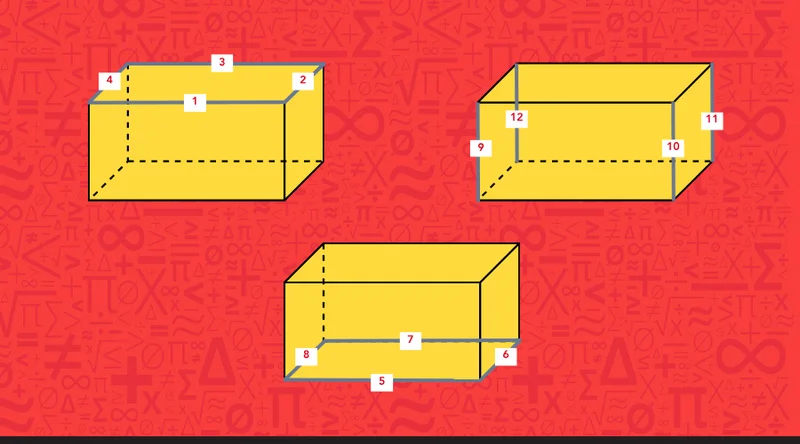
Last, let's find the vertices, the points where those edges meet.
A rectangular prism has four vertices around the top rectangle and four more around the bottom rectangle.
That gives us 8 vertices in total, just like on the cube.
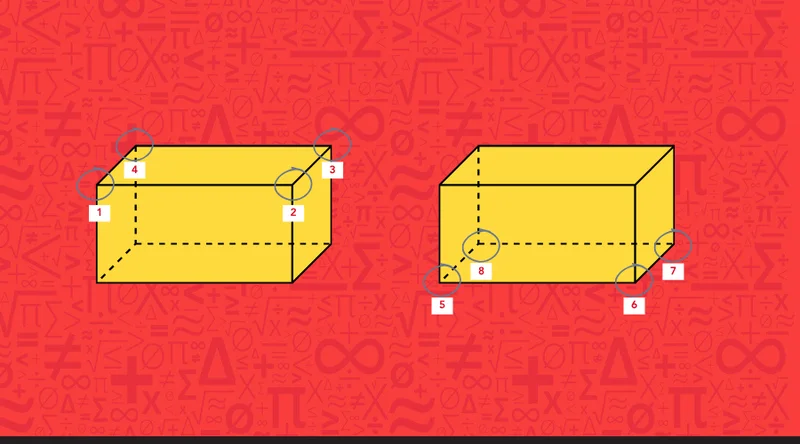
Here's what we counted:
-
Faces: 6
-
Edges: 12
-
Vertices: 8
Rectangular prisms appear everywhere around us, in:
-
Shoeboxes
-
Bricks
-
Cereal boxes
-
Books

3. Pyramid
A pyramid is a solid 3D shape with a flat base and triangular sides that rise up and meet at a single point on top, like the Pyramids of Giza.
A pyramid's faces look a little different from our last two shapes. What shape do we see if we look straight at one side?
We've got one square base on the bottom, plus four triangles leaning in to meet at the top.
That gives us 5 faces in total, one fewer than a cube or a rectangular prism.
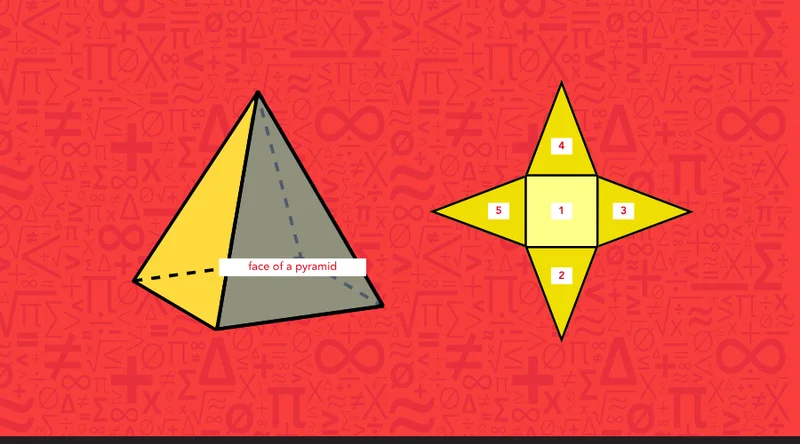
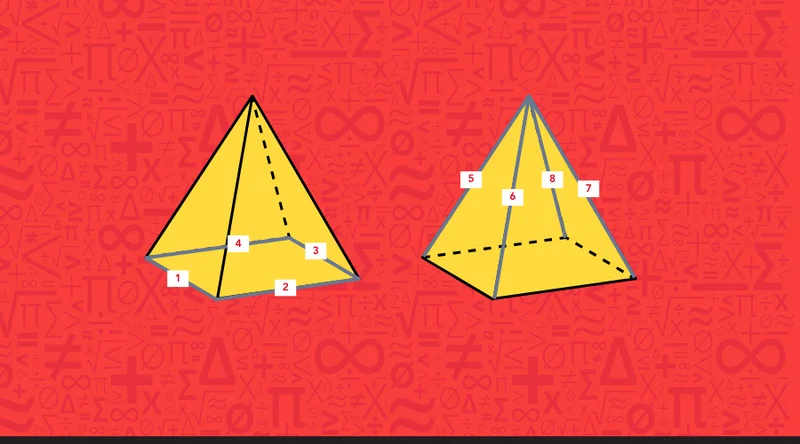
From there, let's find the edges, the lines that run along the border of each face. A pyramid has four edges around its square base, plus four more edges running up each corner to the peak.
That gives us 8 edges in total.
To finish, let's find the vertices, the points where those edges meet. A pyramid has four vertices around its base, plus one more vertex at the very top, the point where all four triangles meet.
That gives us 5 vertices in total.
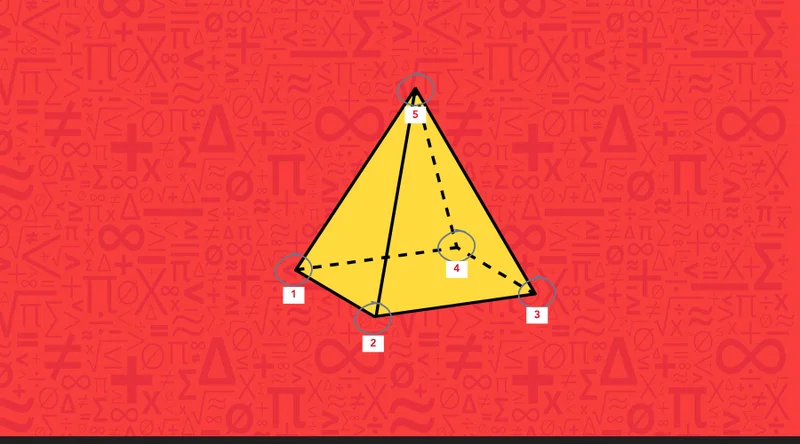
Here's what we counted:
-
Faces: 5
-
Edges: 8
-
Vertices: 5
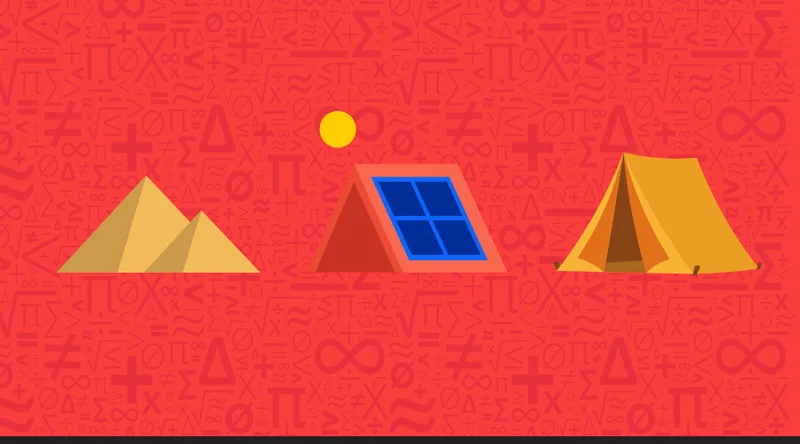
Here are a few places where we can see pyramids:
-
The Egyptian pyramids
-
Tents
-
Rooftops
📕 You May Also Like: Types of Triangles for Grades 4–8: A Complete Guide
4. Sphere
A sphere is a solid 3D shape that's perfectly round in every direction, like a basketball or a marble.
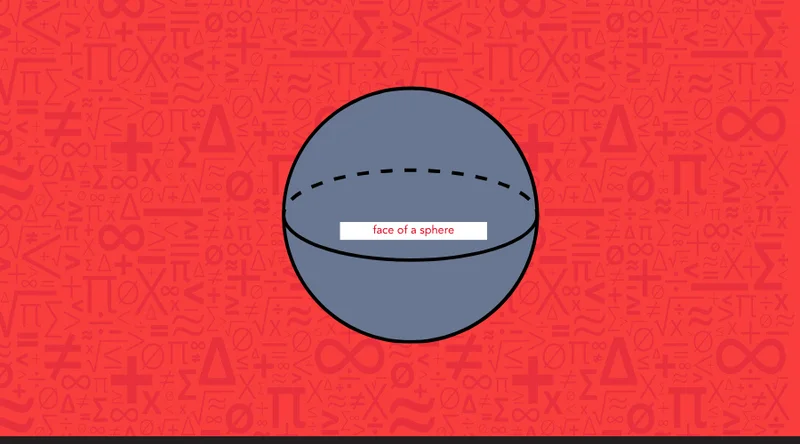
A sphere's face looks a little different from the ones on our last three shapes.
Instead of flat squares or triangles, a sphere has one smooth, curved surface that wraps all the way around.
That gives us just 1 face in total.
Now, can we spot any edges or vertices on a sphere?
Run a finger over a basketball, and every spot we touch feels the same, smooth and curved all the way around. That single face wraps around and meets itself, which is exactly why a sphere has zero edges and zero vertices.
That single curved face is what makes a sphere roll so easily in every direction, unlike a cube, prism, or pyramid, which all come to a stop at a flat face or a sharp corner.
Here's what we counted:
-
Faces: 1
-
Edges: 0
-
Vertices: 0
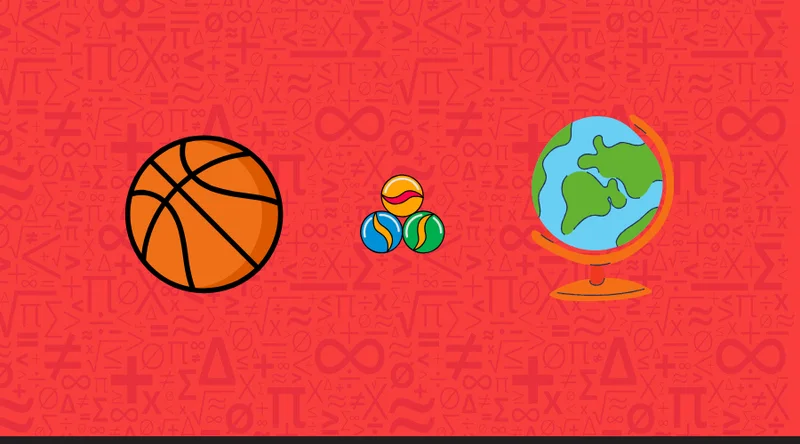
We run into spheres all the time. Here are a few places we see them:
-
Basketballs
-
Marbles
-
Globes
-
Bubbles
📕 You May Also Like: Circles and Pi in Real Life: Wheels, Clocks, and Pizza Math
5. Cylinder
A cylinder is a solid 3D shape with two flat circular ends connected by one curved surface, like a can of soup.
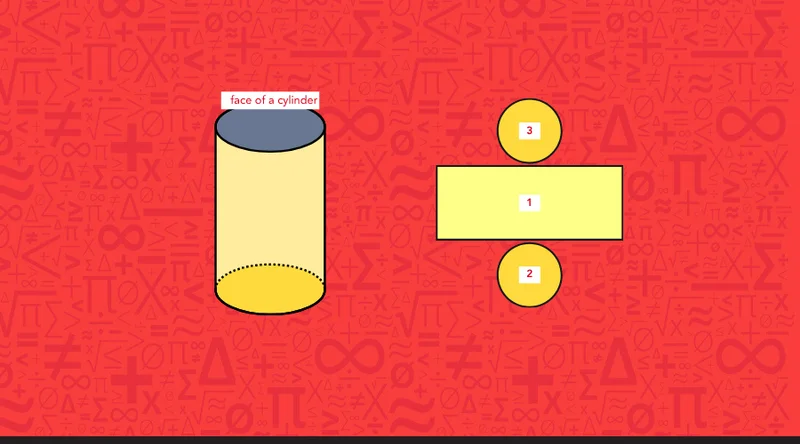
Let's start with the faces. A cylinder has a flat circle on top, a flat circle on the bottom, and one curved surface wrapping around the middle.
That gives us 3 faces in total.
Now, where do we find the edges?
An edge forms wherever two faces meet, and on a cylinder, that happens twice, once where the curved surface meets the top circle, and once where it meets the bottom circle.
That gives us 2 edges in total, both curved instead of straight.
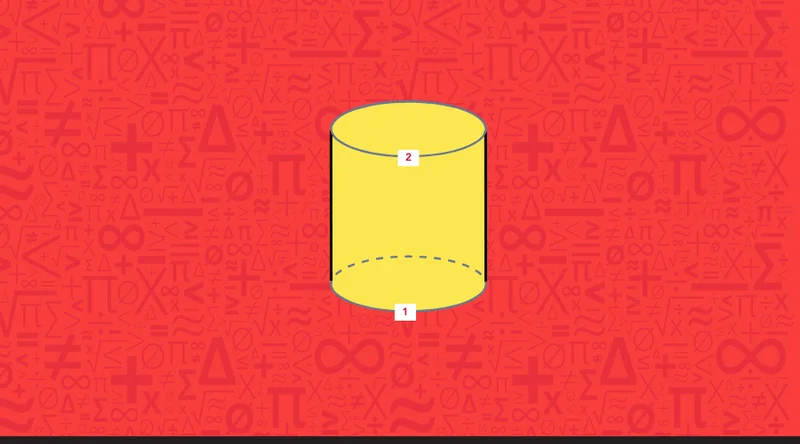
What about the vertices then? A vertex forms wherever edges come together at a point, and on a cylinder, the two edges run in circles that never come to a point anywhere. That gives us zero vertices.
Here's what we counted:
-
Faces: 3
-
Edges: 2
-
Vertices: 0
Cylinders show up in plenty of everyday objects. Here are a few of them:
-
Soup cans
-
Batteries
-
Candles
-
Drinking glasses

6. Cone
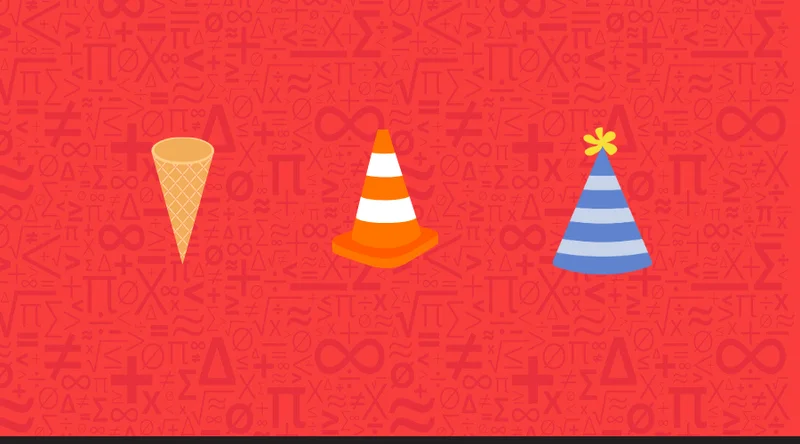
A cone is a solid 3D shape with one flat circular base and one curved surface that narrows to a single point on top, like an ice cream cone or a party hat.
Let's explore our last shape of the day and its properties.
A cone has one flat circle on the bottom and one curved surface that wraps around and rises to a point at the top.
That gives us 2 faces in total.
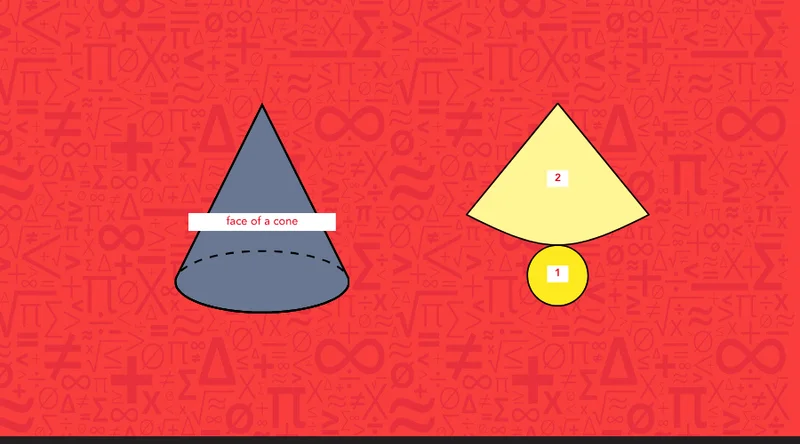
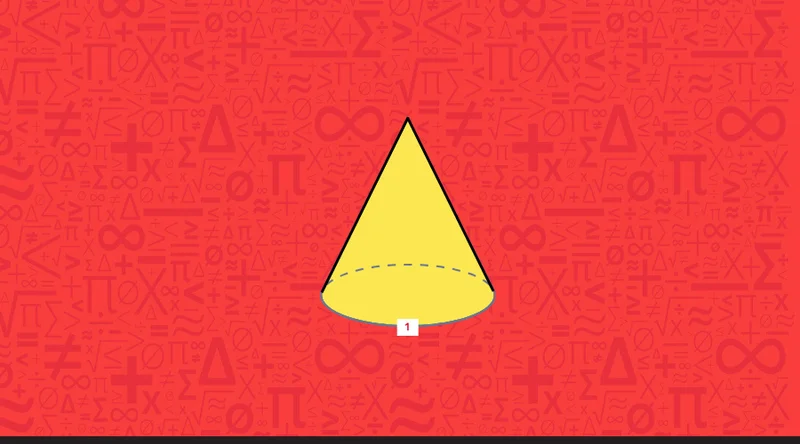
An edge forms wherever two faces meet, and on a cone, that happens once, right where the curved surface meets the flat circle at the base.
That gives us 1 edge in total, curved all the way around.
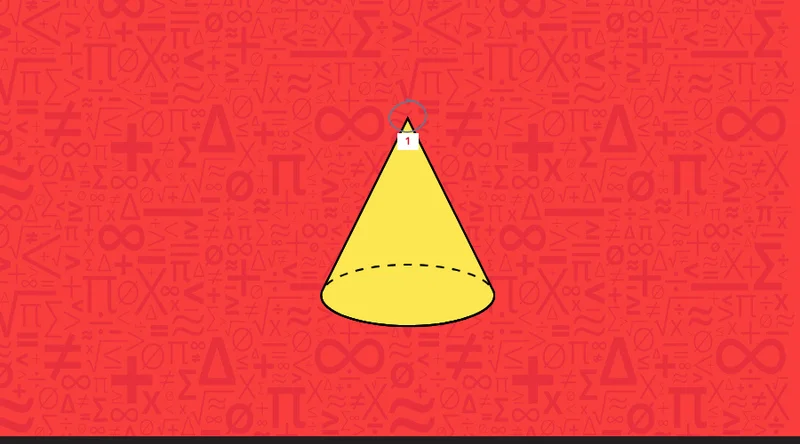
A vertex forms wherever edges come together at a point, and on a cone, the curved surface rises up and closes in on itself right at the top.
That gives us 1 vertex in total, the sharp point we see at the tip.
Here's what we counted:
-
Faces: 2
-
Edges: 1
-
Vertices: 1
Cones show up in plenty of everyday objects. Here are a few of them:
-
Ice cream cones
-
Party hats
-
Traffic cones
-
Funnels
FAQs About 3D Shapes
Our Mathnasium tutors gathered a few common questions students have about 3D shapes and answered them here.
1. At what grade do kids start learning 3D shapes in school?
Most students meet 3D shapes for the first time in kindergarten or first grade, when we learn to name and sort shapes like cubes, spheres, and cones.
From there, we build on that foundation every year, counting faces, edges, and vertices in elementary school, then moving into surface area and volume in middle school.
2. What's the difference between height and depth?
Height and depth both describe the same third dimension, the one that gives a shape volume.
We usually use height when we're measuring how tall a shape stands, like a cylinder or a pyramid. We use depth when we're describing how far a shape extends inward or backward, like the depth of a box. Either word works to describe that third measurement alongside length and width.
3. Why do curved edges still count as edges if they're not straight lines?
An edge is simply the line where two faces meet, and that line doesn't have to be straight to count.
On a cylinder, the curved surface meets each flat circle in a curved line, and that line is still an edge, since it still marks the exact spot where two faces come together.

Mathnasium tutors bring math concepts to life through clear explanations, visual aids, and hands-on practice.
How Mathnasium Helps Students Master Geometry
Mathnasium is a math-only learning center dedicated to helping K–12 students of all skill levels learn and master math.
Whether a student needs to build a foundation in geometry basics like shapes and their properties or is ready to move into more advanced measurement and spatial reasoning, we teach for deep understanding, not rote memorization.
To help students reach that level of understanding, we use a proprietary teaching approach called the Mathnasium Method™.
Here's how it works in practice:
-
Diagnostic Assessment and Personalized Learning Plans: Every student begins with a diagnostic assessment that identifies both visible skill gaps and the reasoning patterns behind them. From that starting point, we build a personalized learning plan tailored to their needs and goals.
-
Teaching for Understanding: Our specially trained tutors use plain, everyday language and a mix of verbal, visual, mental, tactile, and written techniques so concepts like 3D shapes make sense to every student.
-
Problem-Solving and Critical Thinking: When a concept feels challenging, we break it down into manageable parts and guide students through both the how and the why. Over time, this builds the problem-solving skills and critical thinking they can use in math and everyday life.
-
An Engaging and Fun Learning Environment: Our sessions are often game-based and hands-on, and we celebrate every bit of progress. Over time, students build a more positive relationship with math and greater confidence in their own abilities.
The results reflect that approach:
-
94% of parents report an improvement in their child's math skills and understanding
-
93% of parents report an improved attitude toward math after attending Mathnasium
-
90% of students saw an improvement in their school grades
We operate over 1,100 centers across North America, bringing our proven approach to communities everywhere.
Families across Cape Coral, FL, can visit Mathnasium of Cape Coral, a trusted local center with a proven record of building confident math thinkers.
Whether your child is looking to catch up, keep up, or get ahead in math, our local team is happy to help!
📅 Schedule a Free Diagnostic Assessment at Mathnasium of Cape Coral
Not near Cape Coral?
📍 Find a Mathnasium Learning Center Near You


 (239) 540-6284