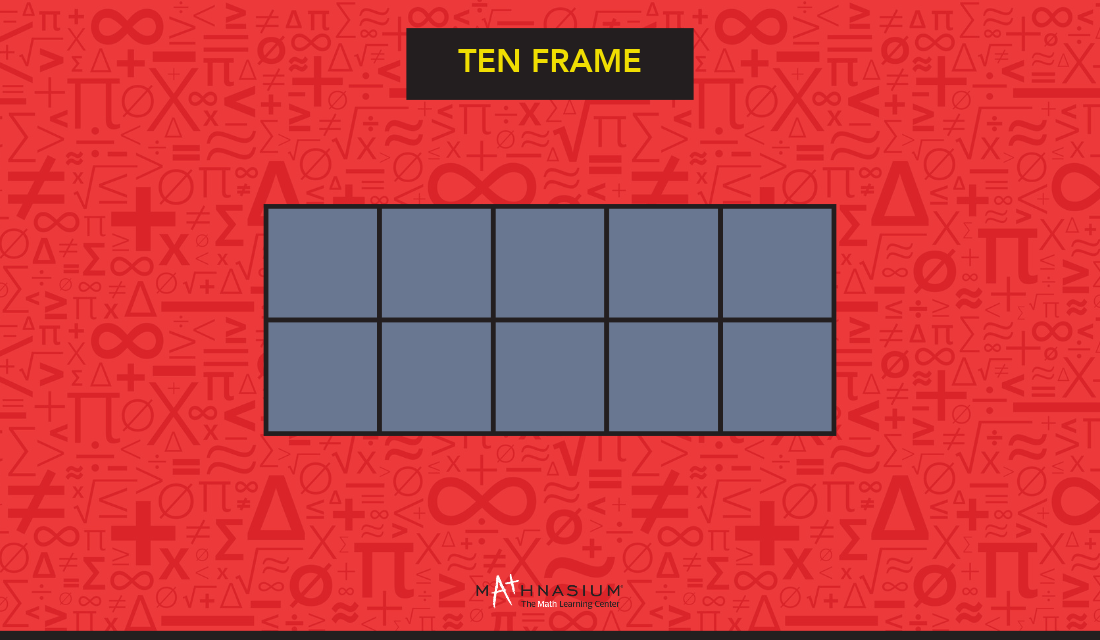
If you have a kindergartener or 1st grader, you may have heard their teacher talk about "ten frames" or seen a grid of 10 boxes come home on a math worksheet. While it looks simple, this visual tool is one of the most effective ways to help young kids understand how numbers work.
Today, Mathnasium tutors explain what a ten frame is, why it works so well for building early number sense, and how you can use simple household items to play math games with your child at home.

What Is a Ten Frame?
A ten frame is a rectangular mathematical tool divided into two rows of five equal boxes, used to help young students visualize numbers up to ten. Each filled box adds one to the number the ten frame shows.
To see how it works, let's fill in a few boxes and count them together. We fill the entire top row of five, then add one more box in the bottom row.
5 + 1 = 6
That's a ten frame showing 6.
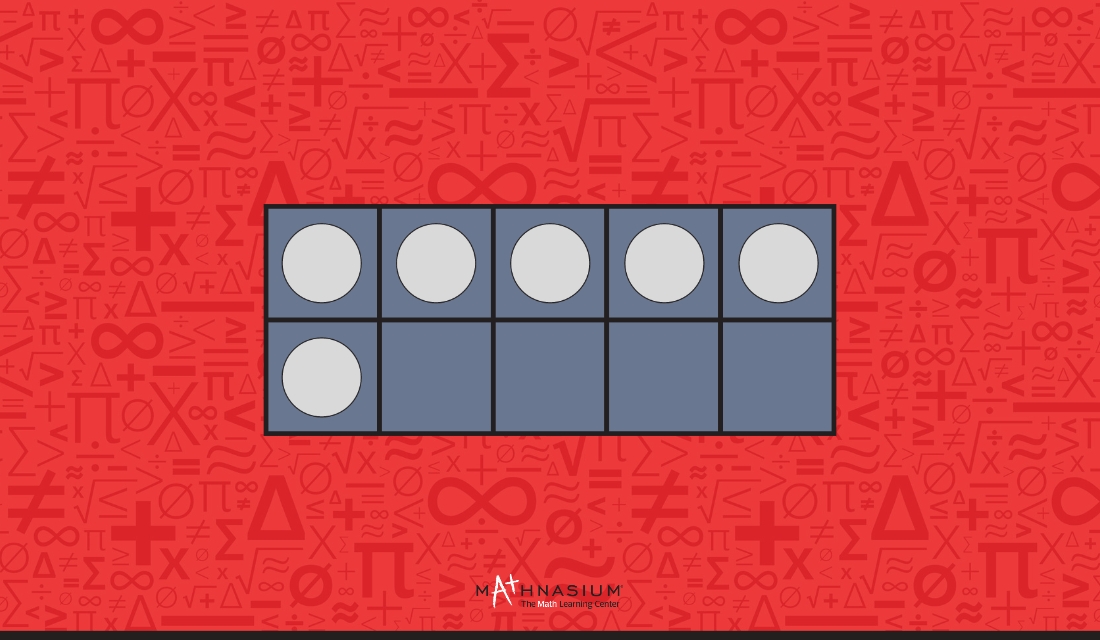
The empty boxes matter just as much as the filled ones. They show us exactly how far a number sits from 10.
So why 10 boxes, and not 8 or 12?
Our number system is built around groups of ten. A ten frame builds a mental picture of 10 as a full set. That picture carries forward into larger numbers like 24 or 137, which are simply several full sets of ten with a little extra counted on top.

6 Ways Ten Frames Build Early Math Skills
Young children start their math journey by counting items one by one on their fingers, but that strategy quickly becomes inefficient as numbers grow. A ten frame bridges the gap between basic counting and higher-level arithmetic by turning abstract numbers into visual patterns.
It builds a child's number sense in six connected ways, with each skill laying the foundation for the next.
1. Counting
The first skill a child learns with a ten frame is counting to ten.
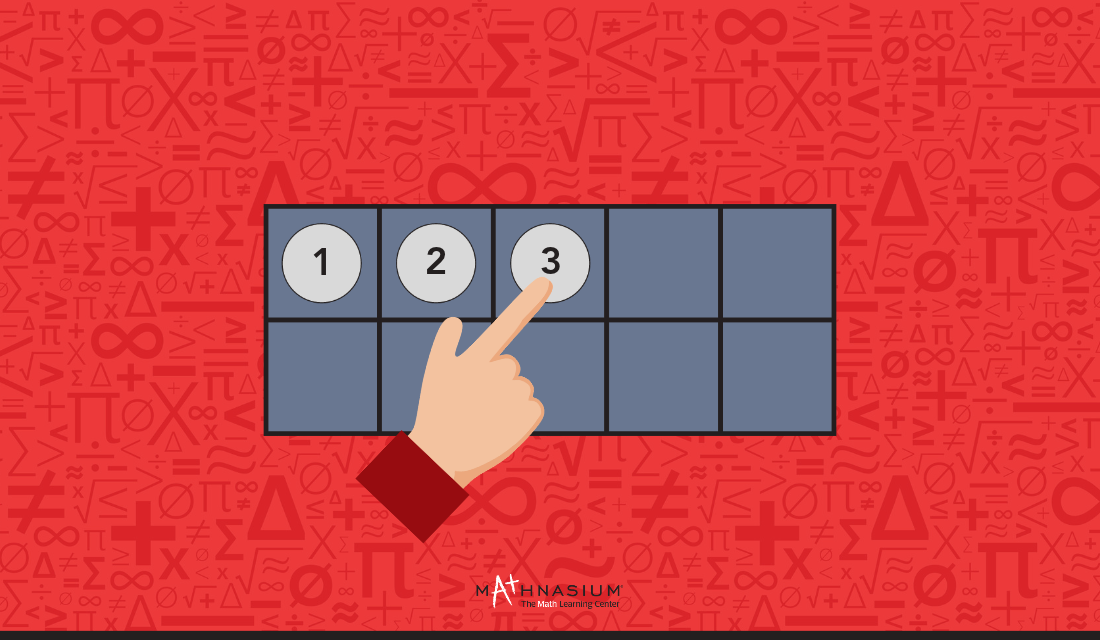
An empty frame starts the count at 0. From there, each filled box adds one more, moving left to right, then top to bottom, with a number said aloud for every box touched. The frame turns an abstract count into a number that builds step by step, from 0 up to 10.
📕 You May Also Like: How Children Learn to Count in Preschool & Kindergarten
2. Subitizing
Subitizing is the ability to recognize a quantity at a glance, without counting each box one by one.
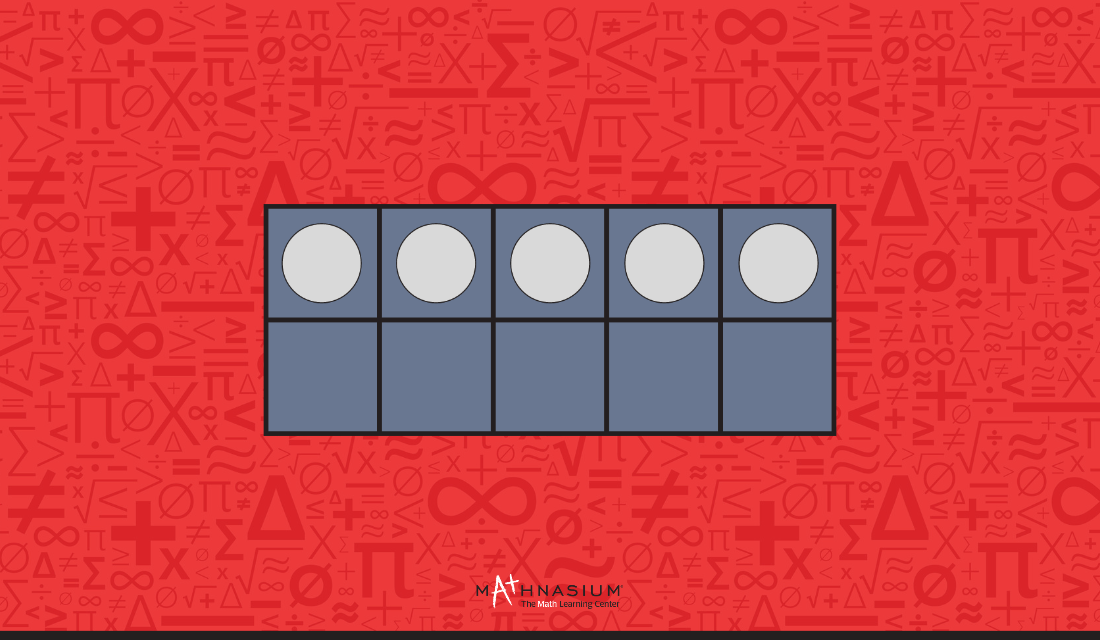
Because a ten frame is arranged in two rows of five, a full top row always shows 5. A child sees that pattern enough times to recognize it instantly, the same way we recognize the dot pattern on a die without counting each dot.
3. Anchoring to 5 and 10
A ten frame measures every number against two fixed points, 5 and 10.
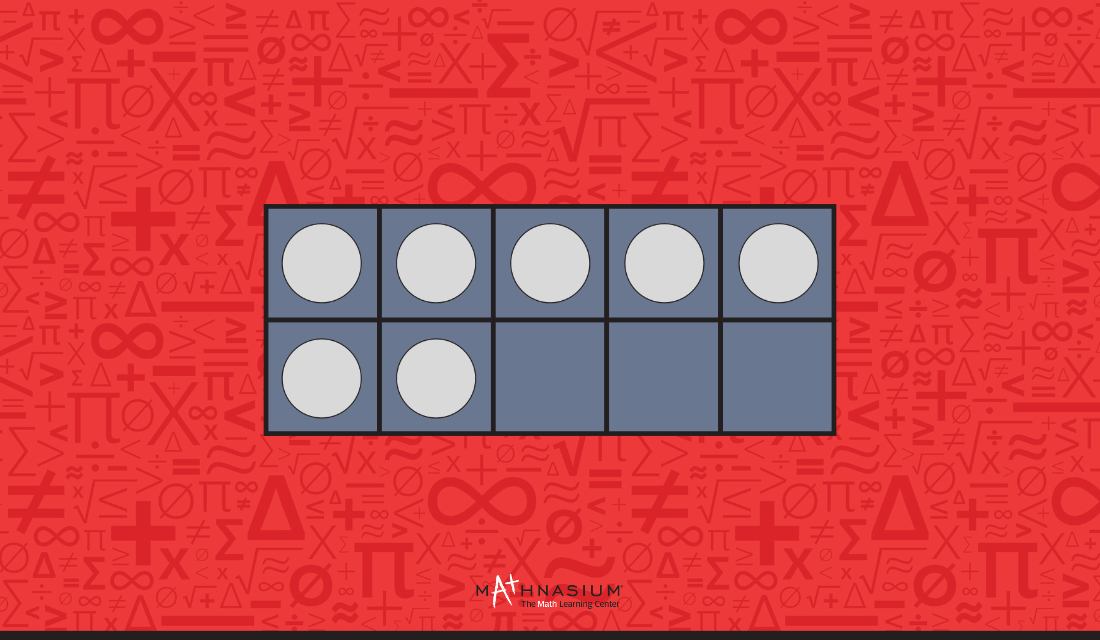
Take the number 7. Instead of seeing 7 as seven isolated counters, a ten frame splits it into a full top row of 5 plus 2 extra boxes below.
5 + 2 = 7
This gives your child two pieces of information at once. The frame shows how far the number is from 5, and how close it is to 10.
📕 You May Also Like: How to Use Math Anchor Charts to Support Learning at Home
4. Composing and Decomposing Numbers
A ten frame can also show your child how a number breaks into smaller parts and how those parts combine back into the whole.
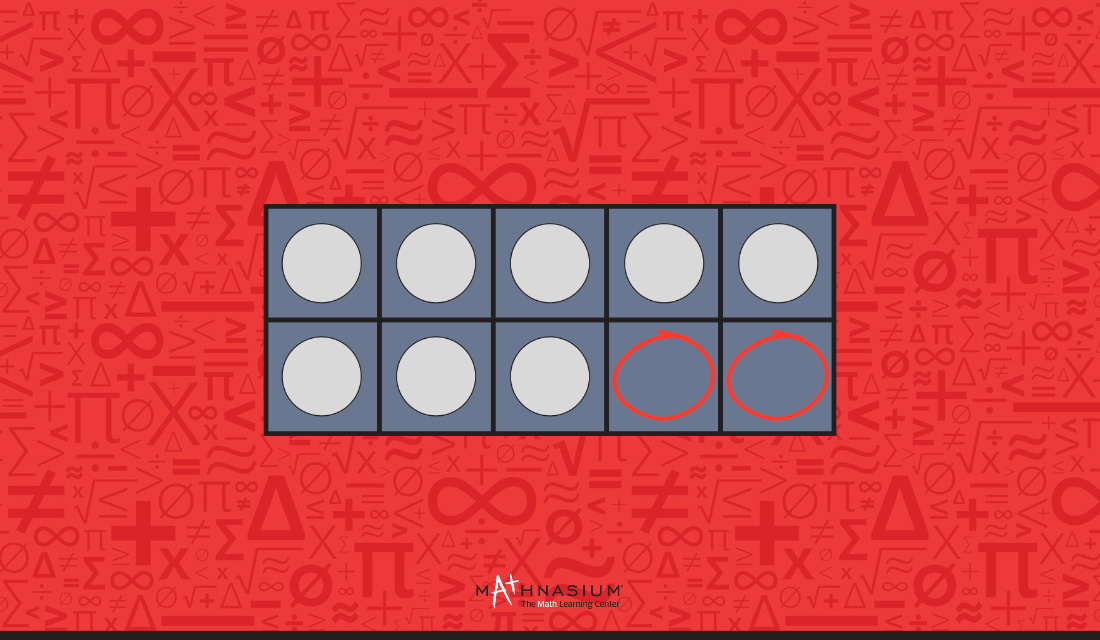
Because the grid always totals 10, a ten frame visually reveals missing parts. With 2 filled boxes, the 8 empty boxes show exactly what is needed to complete the set.
2 + 8 = 10
At a glance, a child sees two sides of the same relationship. 2 and 8 put together make 10, and 10 broken apart leaves 2 and 8. This back-and-forth is the foundation for early addition and subtraction.
📕 You May Also Like: How to Use Math Manipulatives Effectively at Home
5. Operations: Addition and Subtraction
A ten frame turns addition and subtraction into something a child can see, rather than a fact to memorize.
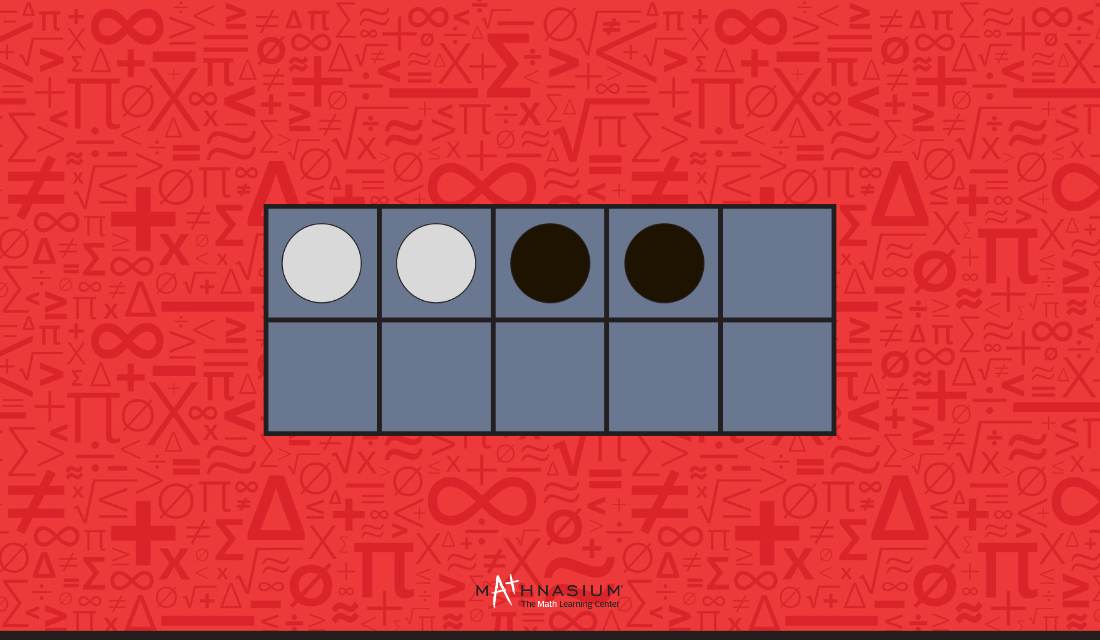
For addition, we can fill one ten frame with 2 boxes in one color, then add 2 more boxes in a second color and count the new total.
2 + 2 = 4
For subtraction, start with a full frame of 5 boxes, then physically remove 3 boxes one at a time and count what remains.
5 − 3 = 2
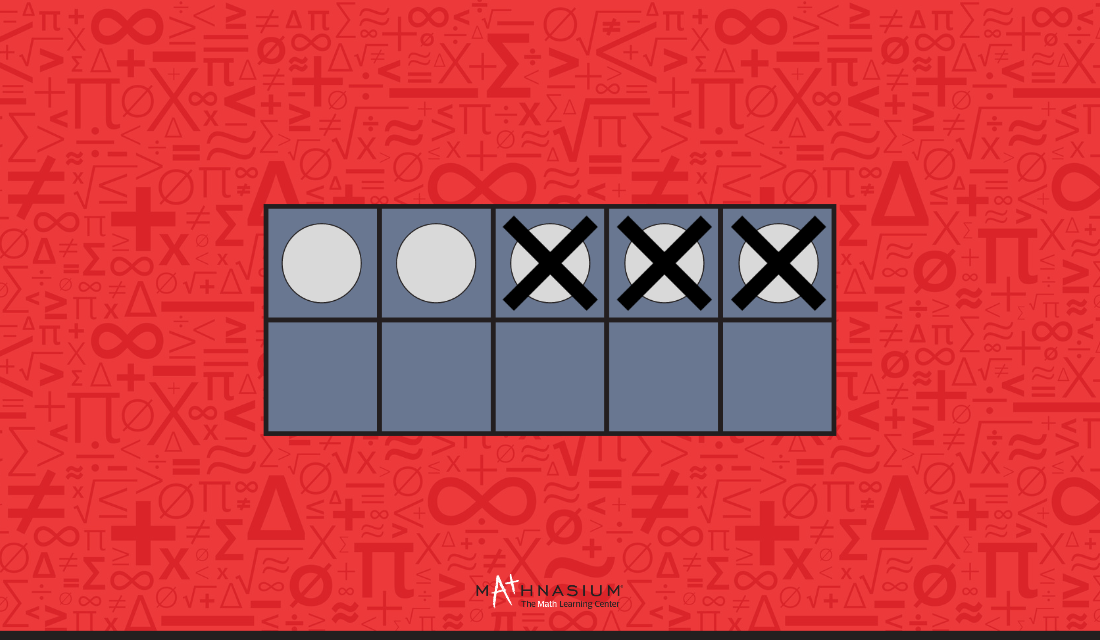
Both operations use the same grid and the same physical action of filling or clearing boxes. That shared action keeps the two skills connected instead of separate.
6. Understanding Place Value
Because a single ten frame caps out at 10, numbers past 10 naturally require a second frame.
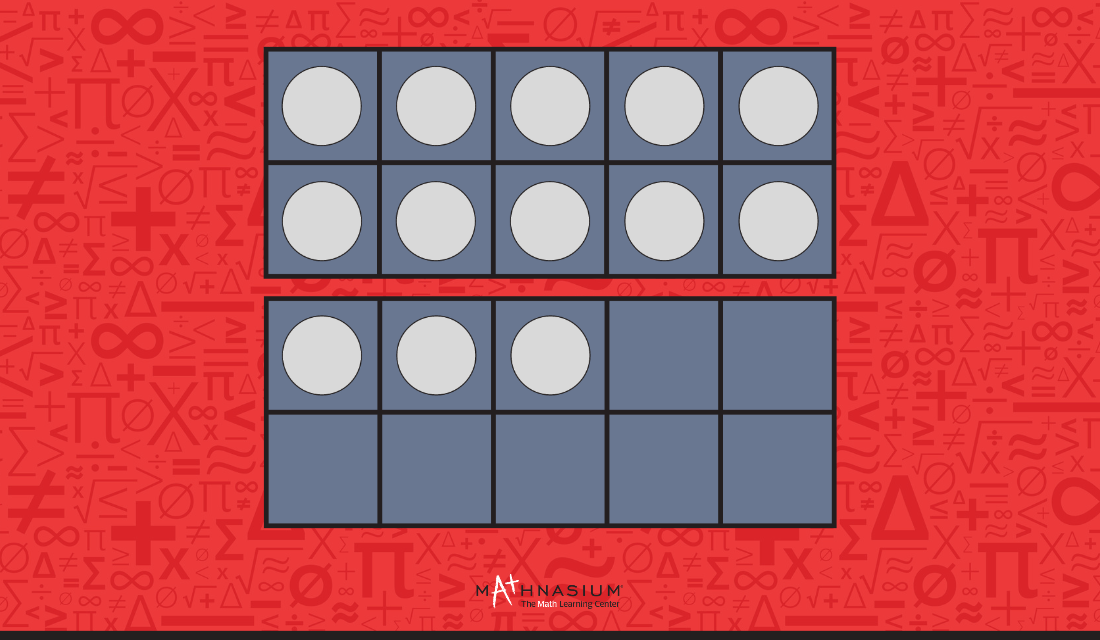
Take the number 13. One full ten frame accounts for a complete group of ten, and a second, partially filled frame holds the remaining 3.
10 + 3 = 13
Instead of viewing 13 as thirteen individual units, two frames side by side can show your child the structure of place value. One frame gives a complete group of ten, and the second gives the three extra ones.
📕 You May Also Like: A Parent's 6-Step Guide to Teaching Place Value at Home
How to Use a Ten Frame at Home
A DIY ten frame requires minimal preparation and basic materials. With a blank grid and a small pile of household items, a child has everything needed to start counting, adding, and subtracting.
You will need only three basic items for this activity:
-
Grid: A ten frame drawn on paper, printed from a template, or an egg carton cut down to 10 spots (two rows of five).
-
Counters: 10 small, identical items like buttons, coins, cereal pieces, dried beans, small fruit, or nuts.
-
Workspace: A flat surface like a table or the floor.
Set the ten frame and a pile of 10 counters in front of your child, and the workspace is ready.
Our tutors recommend trying these simple games. The frame and counters stay the same throughout, and only the question changes as your child progresses.
| Activity |
How to Play |
Try Asking |
| Counting |
The child places one counter in each box, moving left to right, then top to bottom, and says the number aloud with each box filled. |
"Can you count each filled box out loud as you touch it?" |
| Basic Counting |
Call out a number between 0 and 10. The child places one counter in each box until the frame matches the number called, then counts the filled boxes out loud to confirm the total. Empty the frame and repeat with a new number. |
"Can you fill the frame to show the number 6?" |
| Two-Color Addition |
Give the child two colors of the same object. Call out an addition problem, such as "3 plus 2." The child fills 3 boxes with one color, then 2 more boxes with a second color, and counts the total. |
"How many boxes do we have now that we added the second color?" |
| Subtraction |
Start with a full or partly filled frame. Call out a subtraction problem, such as "5 minus 2." The child removes 2 counters one at a time and counts what remains. |
"If we take 2 boxes away, how many are left on the frame?" |
| Missing Number |
Fill part of the frame and count the empty boxes together to find how many more are needed to reach 10. |
"How many more boxes get us to 10?" |
 Mathnasium tutors use personalized learning plans and hands-on techniques to help young learners make sense of numbers from the very start.
How Mathnasium Helps Young Learners Build Number Sense (and Beyond)
Mathnasium is a math-only learning center dedicated to helping K–12 students of all skill levels learn and master math.
Whether a student needs to build a foundation with counting and number sense or is ready to move into addition and subtraction as a first grader, we teach for lasting understanding.
To get there, we use a proprietary teaching approach called the Mathnasium Method™.
Here's how it works in practice:
-
Diagnostic Assessment and Personalized Learning Plans: Every student begins with a diagnostic assessment that identifies both visible skill gaps and the reasoning patterns behind them. From that starting point, we build a personalized learning plan tailored to their needs and goals.
-
Teaching for Understanding: Our specially trained tutors use plain, everyday language and a mix of verbal, visual, mental, tactile, and written techniques so concepts like subitizing and place value make sense to every student.
-
Problem-Solving and Critical Thinking: When a concept feels challenging, we break it down into manageable parts and guide students through both the how and the why. This builds the problem-solving skills and critical thinking that students use in math and everyday life.
-
An Engaging and Fun Learning Environment: Our sessions use games and hands-on activities, and we celebrate every bit of progress. Students build a more positive relationship with math and greater confidence in their own abilities.
The results reflect that approach:
-
94% of parents report an improvement in their child's math skills and understanding
-
93% of parents report an improved attitude toward math after attending Mathnasium
-
90% of students saw an improvement in their school grades
We operate over 1,100 centers across North America, bringing our proven approach to communities everywhere.
Families across Midlothian, Chesterfield, and Richmond can visit Mathnasium of Midlothian, a trusted local center with a proven record of building confident math thinkers.
Whether your child is looking to catch up, keep up, or get ahead in math, our team is happy to help!
📅 Schedule a Free Diagnostic Assessment at Mathnasium of Midlothian
Not near Midlothian?
📍 Find a Mathnasium Learning Center Near You


 (804) 378-2211