Parents may hear about the making ten strategy for the first time after it appears in their child's homework assignment or a note from the teacher. At first, it can look like an unusual way to solve a simple addition problem.
Once we understand the thinking behind it, though, it becomes clear why teachers spend so much time helping young learners think about numbers in this way.
Our Mathnasium tutors created this guide to explain how the making ten strategy works, why it becomes such an important foundation for later math, and how you can help your child practice it with confidence at home.

What Is the Making Ten Strategy?
The making ten strategy is an addition method in which students break one number apart to complete the other to ten, then add what remains.
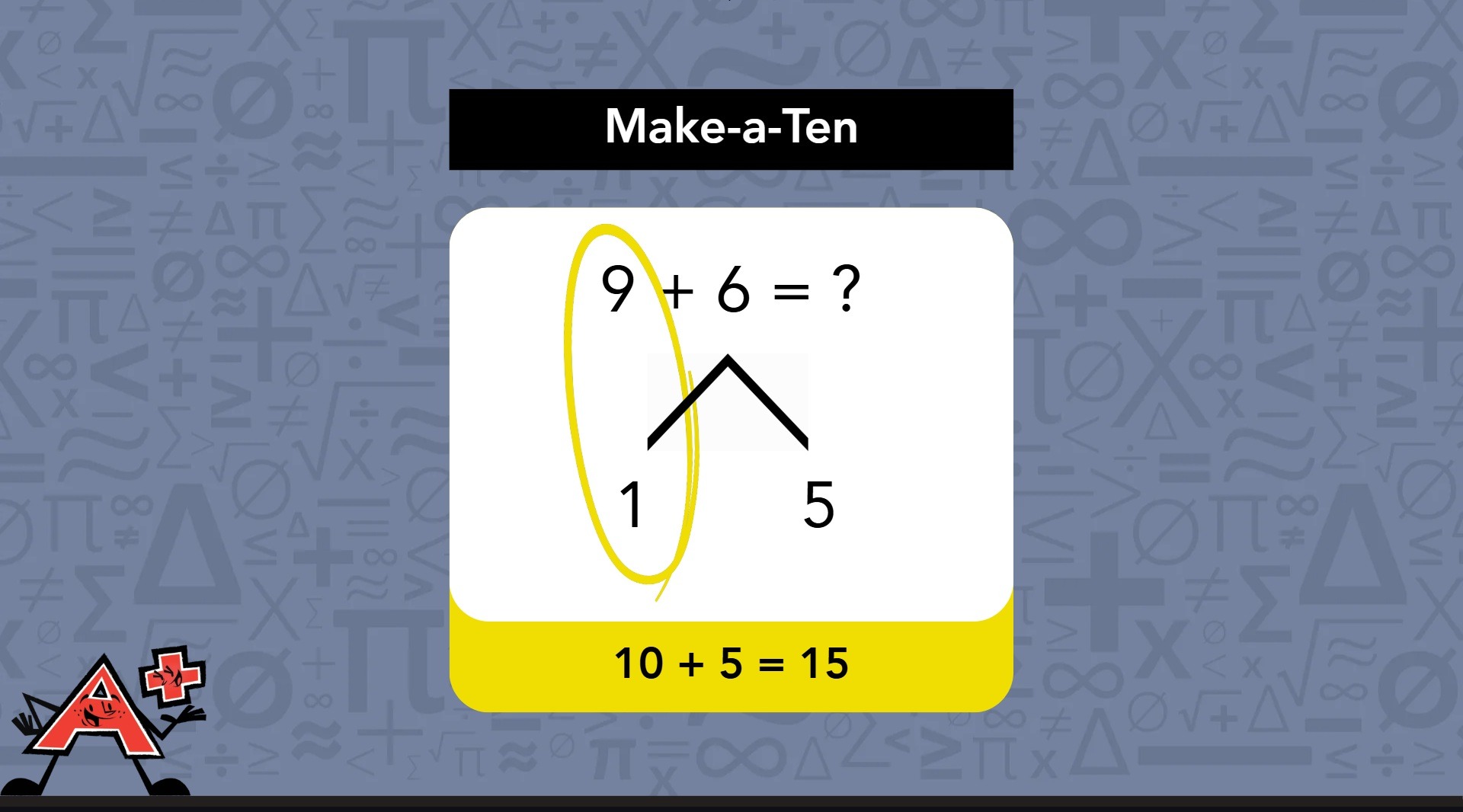
In other words, instead of solving 9 + 6 by counting six more, we take 1 from 6 to make 10. That leaves 5, so the problem becomes 10 + 5 = 15.
Two ideas make this strategy much easier to understand:
-
Our number system is built around ten. Ten is the easiest number to work with mentally because it follows a predictable pattern. Once we reach 10, adding 3 gives us 13, adding 7 gives us 17, and so on.
-
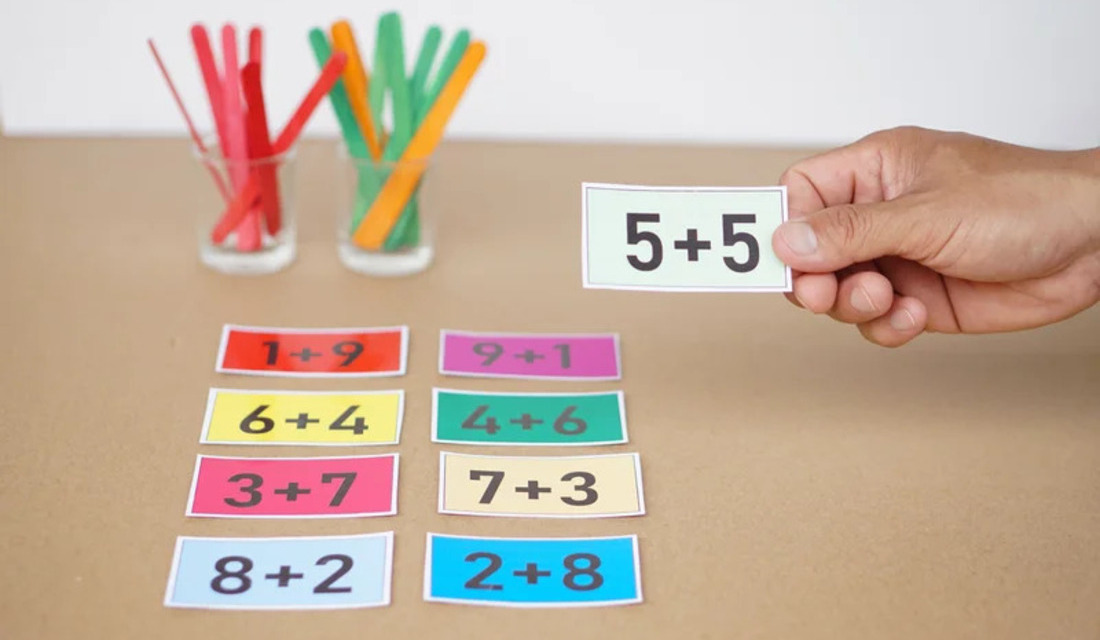
Students need to know their "friends of ten." These are the number pairs that make 10: 9 + 1, 8 + 2, 7 + 3, 6 + 4, and 5 + 5. Once we know these pairs, it becomes much simpler to break numbers apart during addition.
Teachers first introduce the making ten strategy in Kindergarten, then continue building on it throughout Grades 1 and 2 as addition facts become more complex. The reasoning our young learners develop here supports many of the mental math strategies they will use in later grades.
📕 You May Also Like: Key Counting Strategies for Preschoolers and Kindergartners
How the Making Ten Strategy Works Step-by-Step
Mathnasium tutors often use visual models like ten-frames because they help young learners see both what we do and why we do it. With making ten, the objective is to see why making 10 first makes addition easier, so we can build reasoning alongside calculation.
Let's break the making ten strategy into four simple steps:
-
Step 1: Start with the larger number. This helps us see how close we already are to making 10.
-
Step 2: Find what the larger number needs to reach ten. That tells us how much we need to borrow from the other number.
-
Step 3: Complete the ten-frame. We take only the number we need from the second group to make 10, and leave the rest for the final step.
-
Step 4: Add what is left. We add the remaining part to 10 to find the final answer.
Now, let's put those four steps into practice with 8 + 5.
Step 1: Start with the larger number. First, we place 8 in the ten-frame. We can immediately see that 2 spaces are still empty.
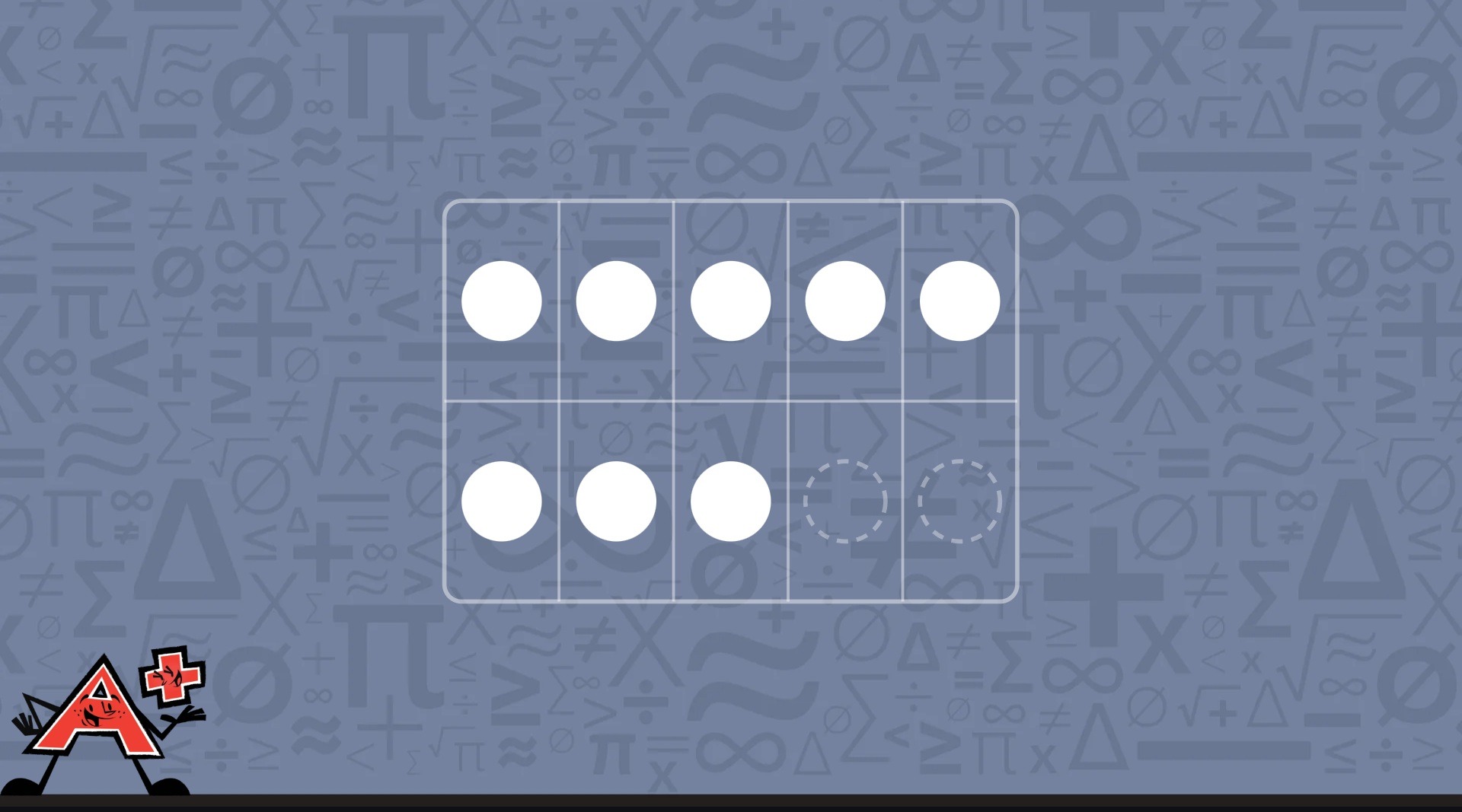
Step 2: Find what the larger number needs to reach ten. Since 8 needs 2 more to make 10, we take 2 from the 5.
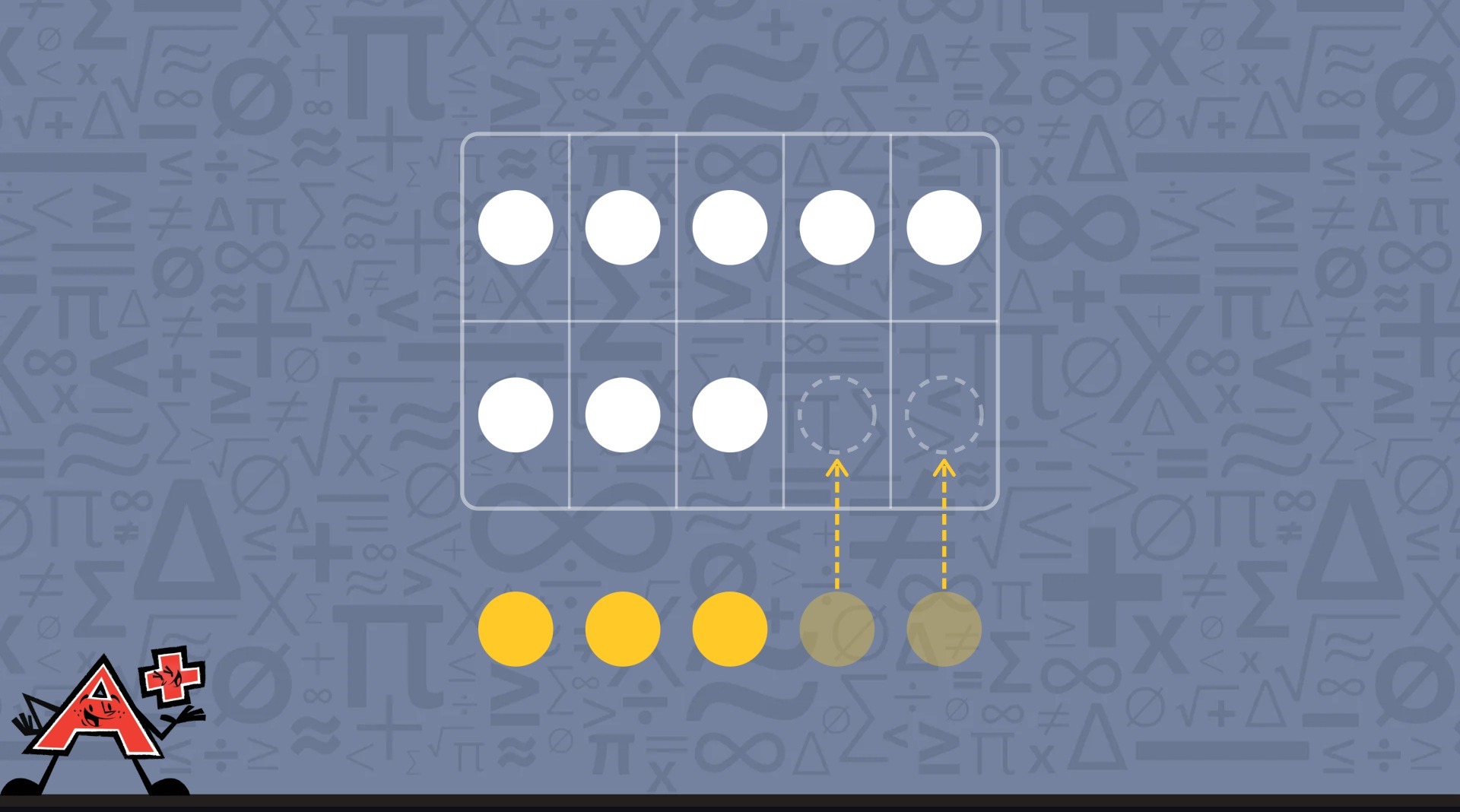
Step 3: Complete the ten-frame. We move those 2 counters into the empty spaces. The ten-frame is now full, so we have made 10.
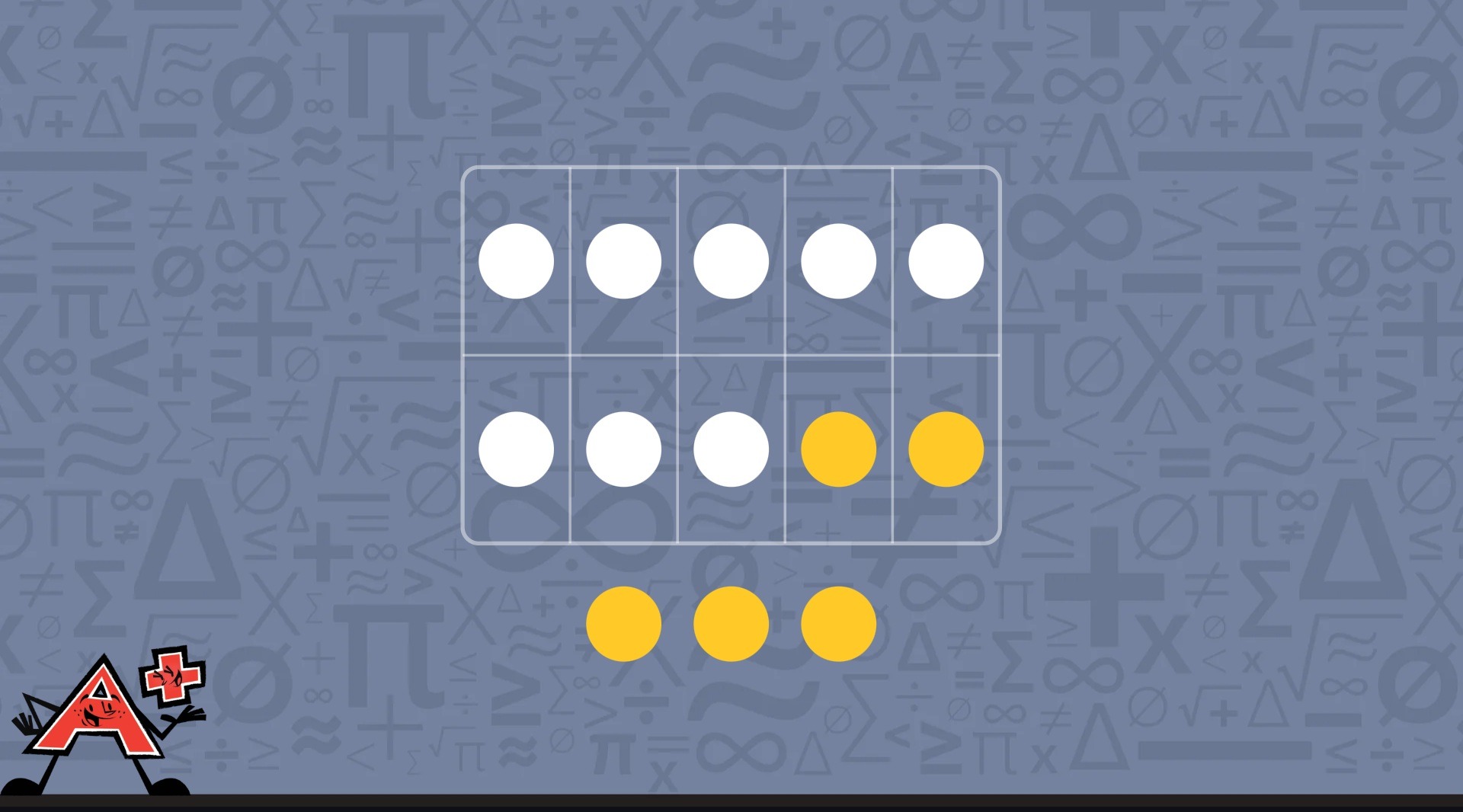
Step 4: Add what is left. After taking 2 from 5, we have 3 remaining, so the problem becomes 10 + 3 = 13.
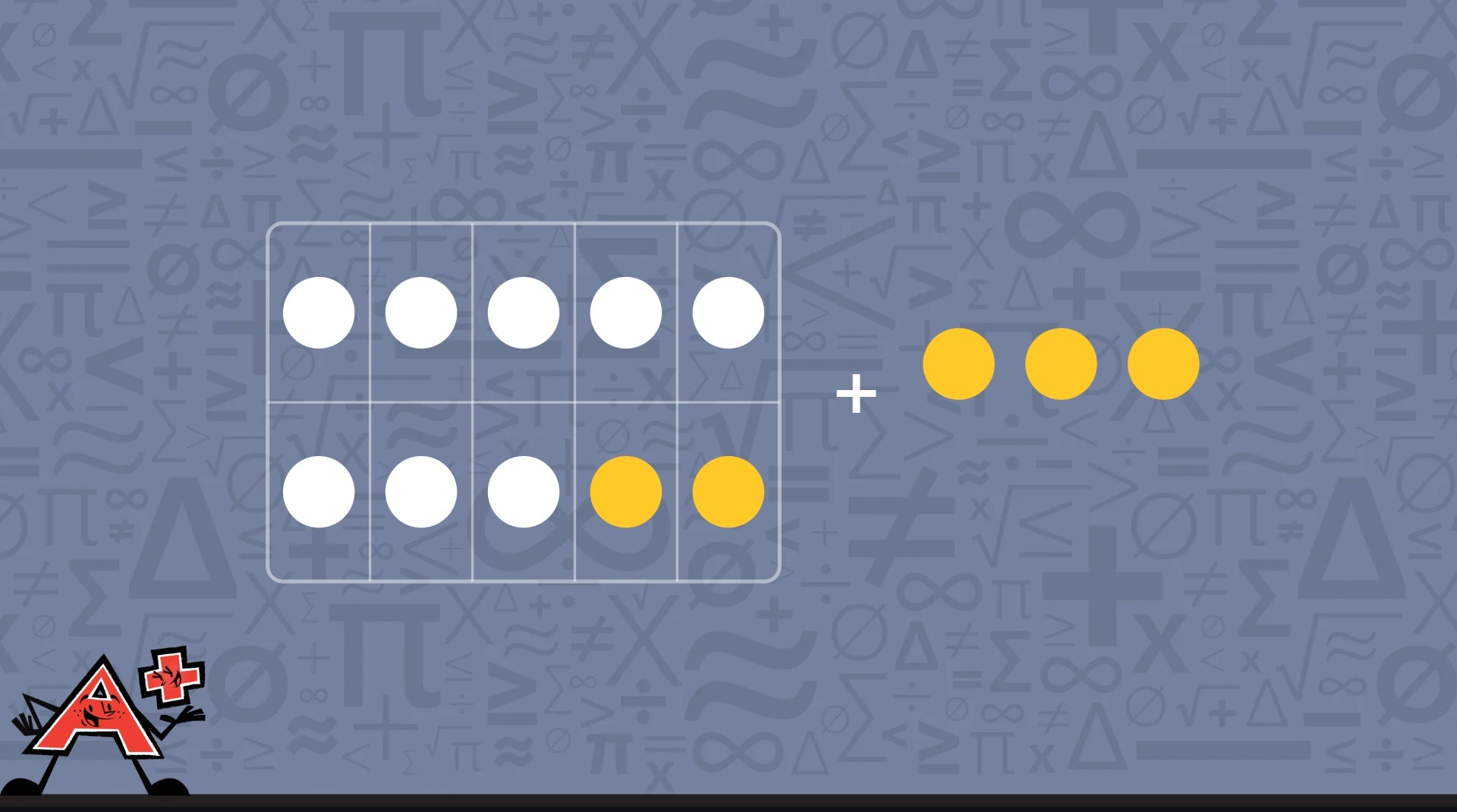
Instead of counting on from 8, we used what we know about making 10 to reorganize the problem into one we could solve more efficiently. We replaced a counting strategy with a reasoning strategy based on number relationships.
📕 You May Also Like: What Are Double Facts in Math? A Complete Overview
Why Making Ten Goes Beyond Single-Digit Addition
The making ten strategy develops number sense by showing that numbers can be broken apart and put back together in different ways without changing the answer.
The same way of thinking helps children long after they move beyond single-digit addition. Let's take a closer look at what children gain from this strategy.
-
Mathematical reasoning grows alongside fact fluency. Instead of memorizing one answer at a time, children learn how numbers relate to one another. That understanding supports fluency because they know why an addition fact works, rather than just what the answer is.
-
Larger addition problems use the same reasoning. The same thinking behind 8 + 5 also works for 38 + 5. We take 2 from 5 to make 40, then add the remaining 3 to reach 43.
-
Subtraction builds on the same number relationships. If we know that 8 + 2 = 10, we can use that same relationship to solve 10 − 2 = 8 without counting backward.
With that foundation in place, we can start helping children practice this way of thinking in everyday situations.
📕 You May Also Like: 5 Easy Steps to Help Your Child Build Math Fact Fluency
How to Practice Making Ten at Home
You don't need worksheets or special materials to practice the making ten strategy at home. Familiar objects and a few short conversations throughout the day are often all it takes.
Here are a few activities to try at home:
-
Fingers as a ten-frame. Hold up 8 fingers and ask your child how many more are needed to show all ten. Once they answer 2, raise the remaining 2 fingers to complete the full set of 10. This mirrors exactly what a ten-frame does in the classroom.
-
Egg carton ten-frame. Cut an egg carton down to 10 slots and fill 7 of them with pennies or small counters. Next, ask your child how many more are needed to make 10, then place the remaining 3 counters into the empty spaces.
-
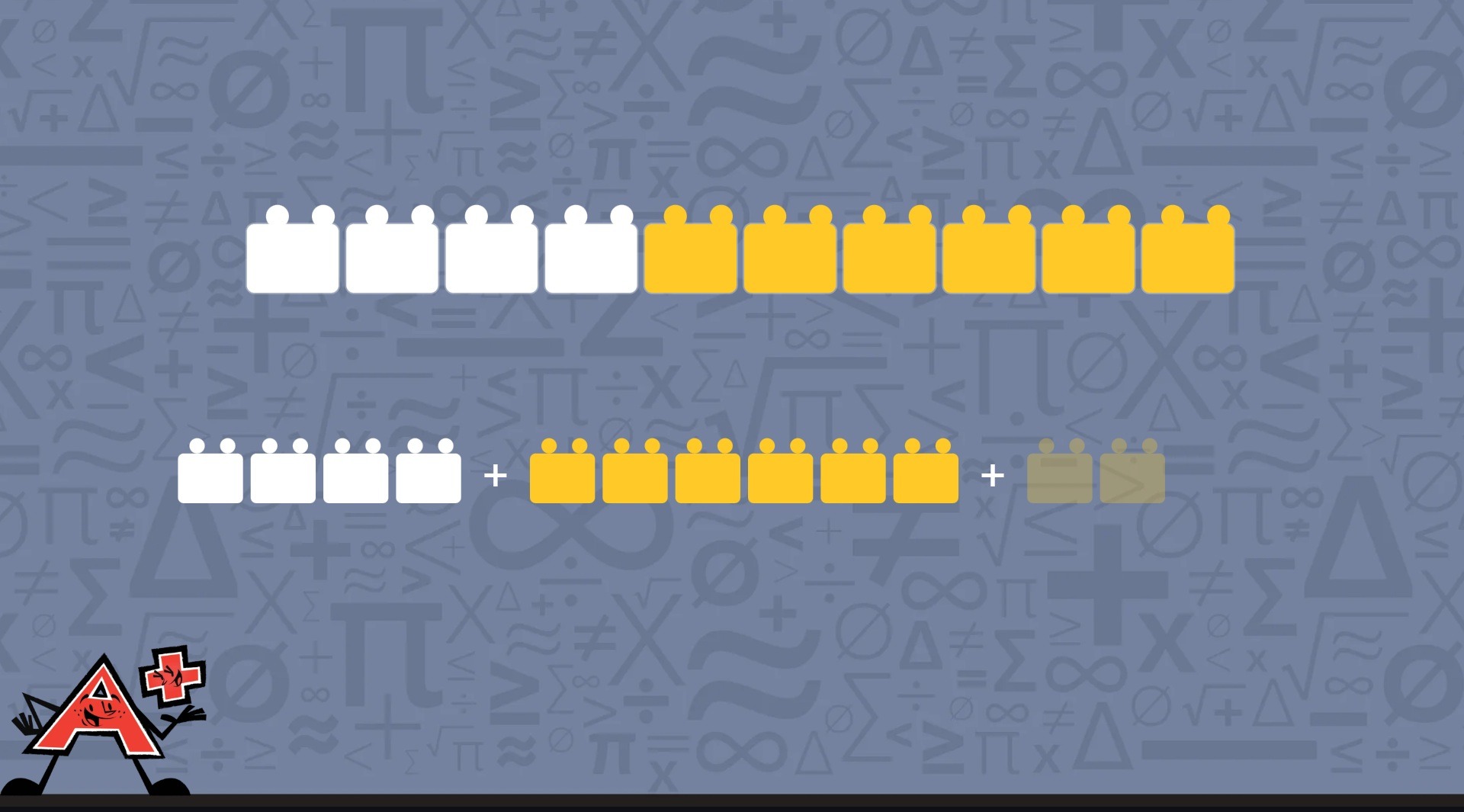
Building bricks. Build a row of 10 bricks, but begin with only 4 in place. Give your child 8 more bricks and ask them to use only the number needed to complete the row of 10. Count the remaining bricks together and finish by saying, "4 + 8 is the same as 10 + 2."
📕 You May Also Like: How to Use Math Manipulatives Effectively at Home: A Parent’s Guide
Over to You: Practice Making Ten
Let's put the making ten strategy into practice. Try each addition problem by following the same four steps we used earlier.
1. Add 9 + 4.
2. Add 7 + 5.
3. Add 6 + 8.
Once you've worked through all three problems, compare your thinking with the solutions at the end of the article.
 At Mathnasium, we use visual models, natural language, and hands-on learning to help children understand why math works.
How Mathnasium Helps Children Build Number Sense
Mathnasium is a math-only learning center dedicated to helping K–12 students of all skill levels excel in math.
Whether children are building early number sense, strengthening fact fluency, or preparing for more advanced operations, we can support them.
Our proprietary teaching approach, the Mathnasium Method™, is designed around each student's needs and learning style to help them learn and master math. Our approach includes:
-
Assessment and Personalized Learning Plans: Each student begins their Mathnasium journey with a diagnostic assessment that identifies current skills, strengths, and gaps. From those findings, we build a personalized learning plan tailored to their goals, whether they are developing number sense through strategies like making ten or preparing for more advanced strategies.
-
Teaching for Understanding: Our specially trained tutors use natural language and a mix of verbal, visual, mental, tactile, and written techniques so each concept lands before we move forward.
-
Problem-Solving and Critical Thinking: We give students time to work through problems independently. That productive struggle helps them learn to trust their own reasoning. When we do step in, we explain both the how and the why behind each answer, so students build problem-solving and critical thinking skills they can use in math and beyond.
-
An Engaging and Fun Learning Environment: Sessions include games, earned rewards, and consistent celebration of progress. Students build confidence alongside fluency, and many develop a more positive relationship with math over time.
The impact extends beyond the classroom:
-
94% of parents report improvement in their child's math skills and understanding
-
93% of parents report an improved attitude toward math after attending Mathnasium
-
90% of students saw improvement in their school grades
With over 1,100 learning centers across North America, there is likely a Mathnasium close to you.
Families across Severna Park and nearby areas, including Millersville, Glen Burnie, Pasadena, Arnold, and Anne Arundel County, trust Mathnasium of Severna Park to help their children build lasting confidence in math.
If the making ten strategy or any other early math concept is giving your child trouble, our team is ready to help.
📅 Schedule a Free Assessment at Mathnasium of Severna Park
Not near Severna Park?
📍 Find a Mathnasium Learning Center Near You
Psst! Check Your Answers Here
How did you do? Let’s find out together.
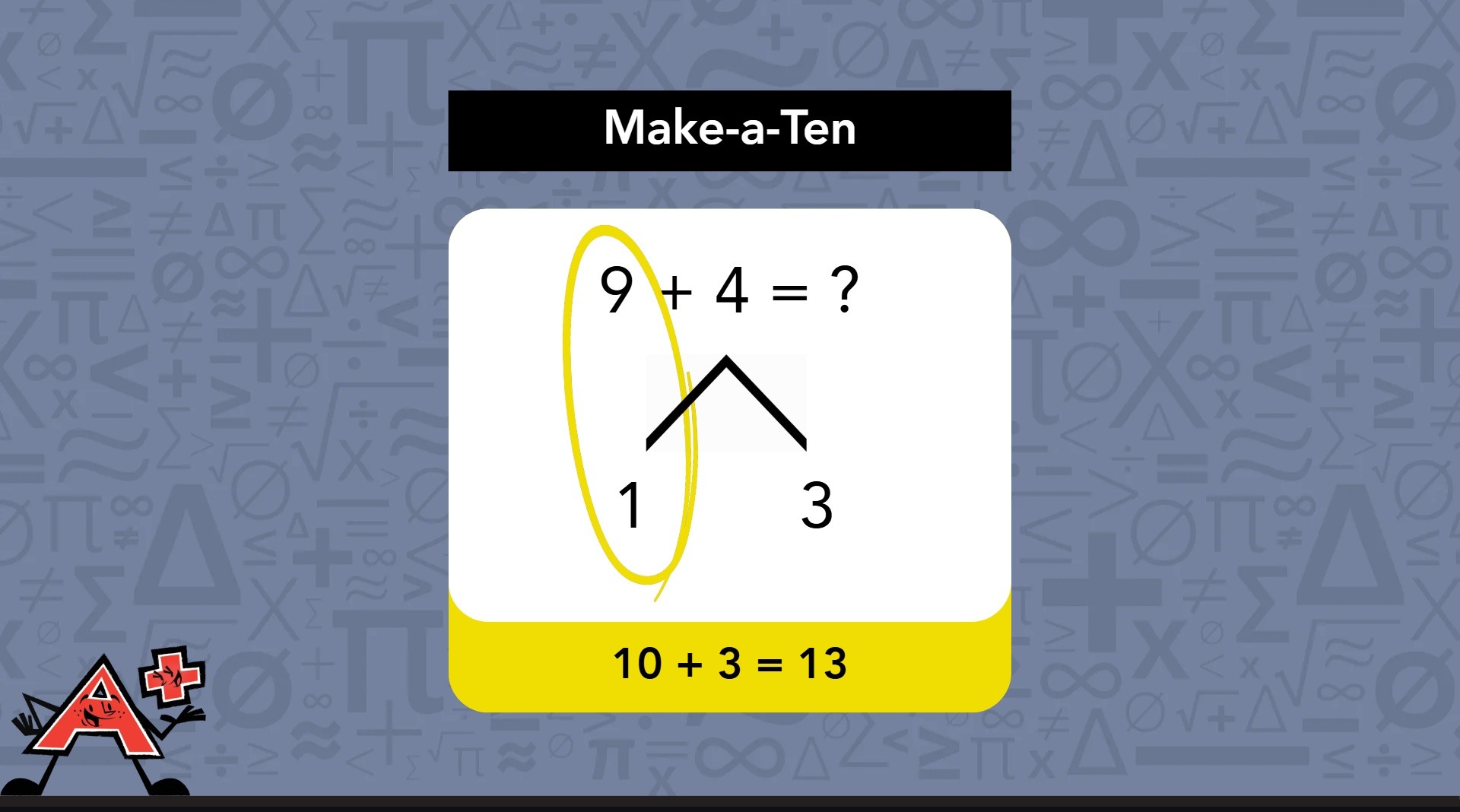
1. We start with 9 because it is closer to 10. Since 9 needs 1 more to make 10, we take 1 from 4, which leaves 3. So, the solution is 10 + 3 = 13.
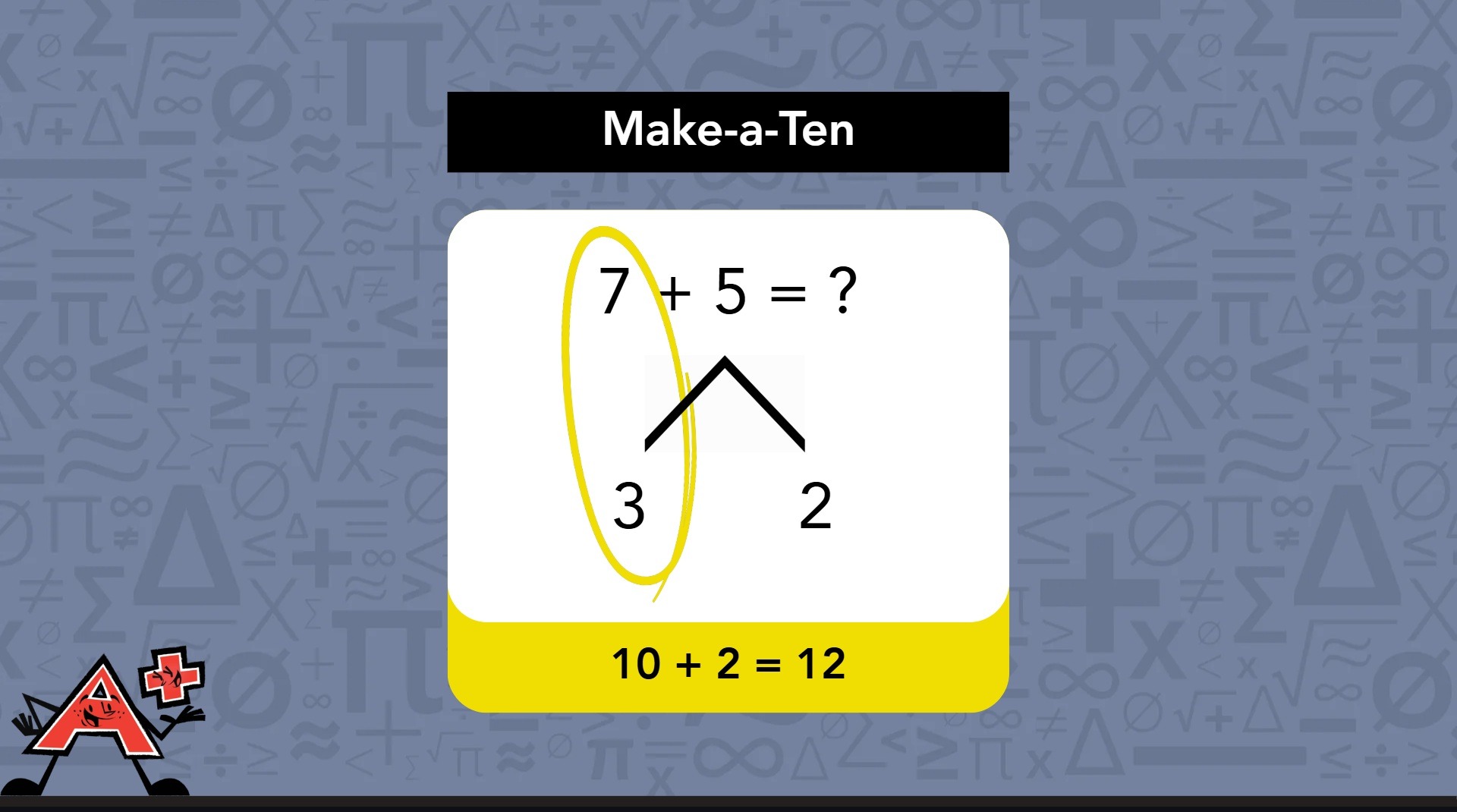
2. We start with 7, and since it needs 3 more to make 10, we take 3 from 5, which leaves 2. The solution is 10 + 2 = 12.
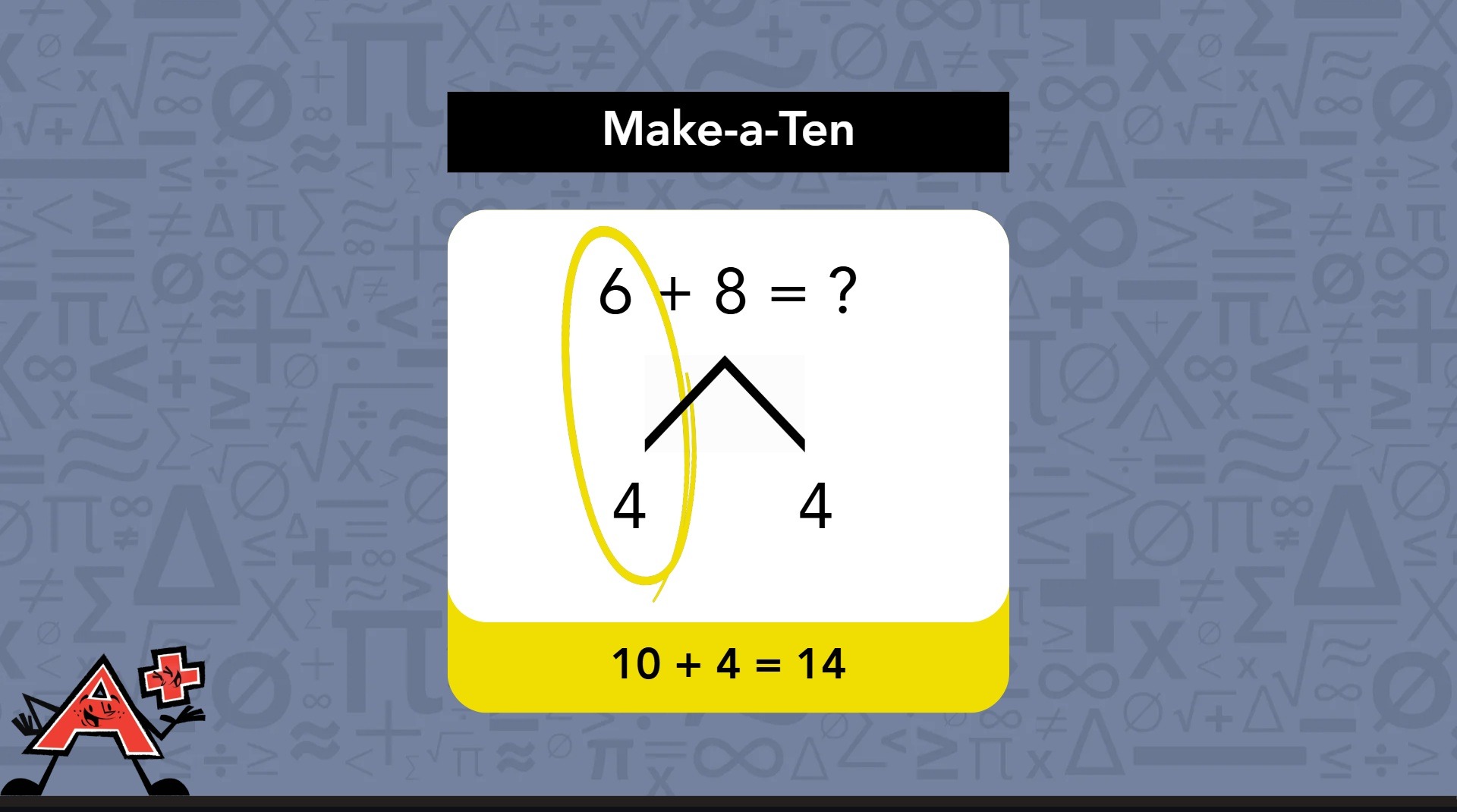
3. We start with 6. Since we need 4 more to make 10, we take 4 from 8, which leaves 4. So, the solution becomes 10 + 4 = 14.


 (410) 544-6284