
 (805) 261-1234











Math Shortfalls and the Opportunity to Act
Oct 6, 2026 | Simi Hills

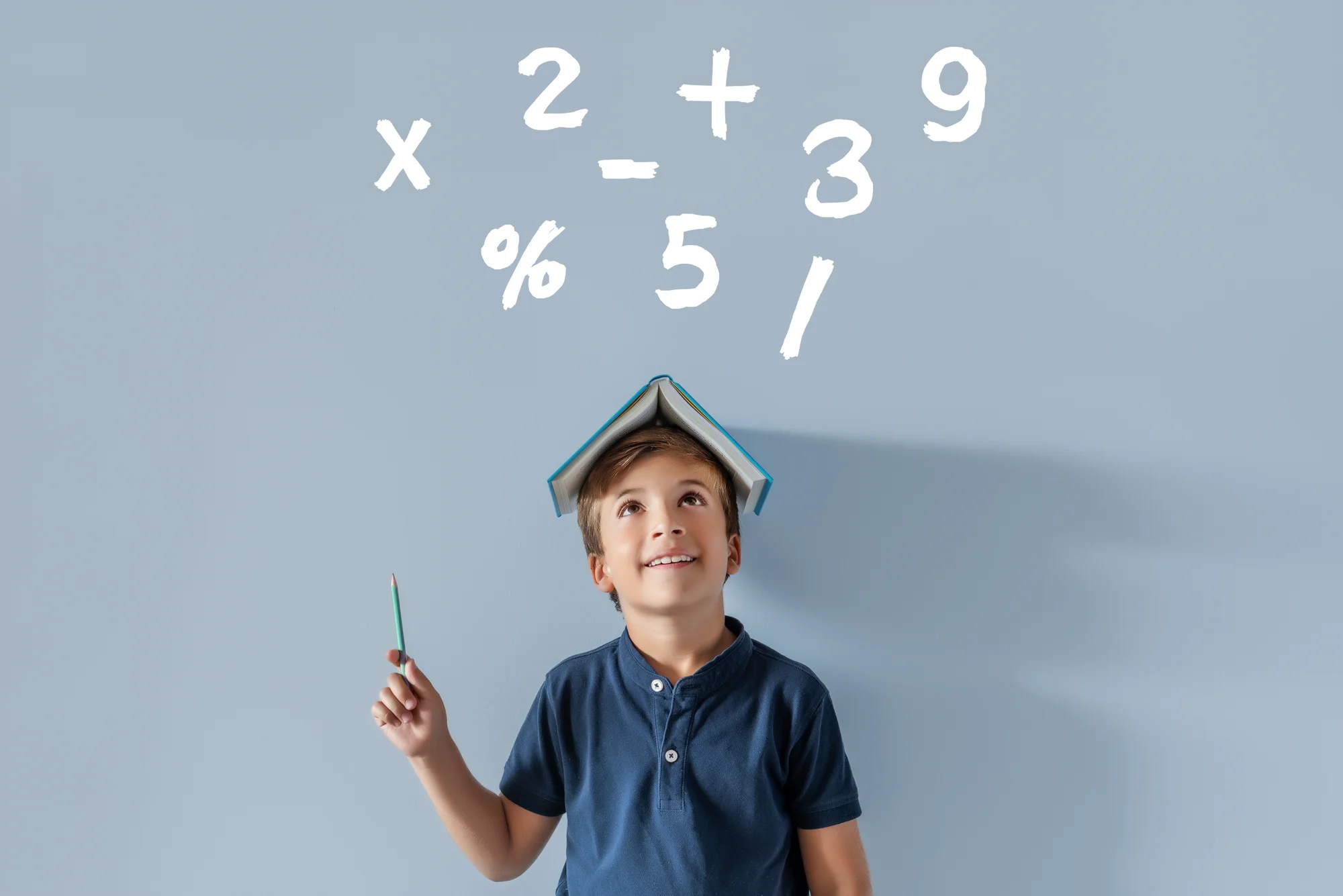
At Mathnasium, we often hear parents worry about their child's uneven pace in math. They may notice that their child understands some concepts quickly but spends weeks working through others before the idea finally comes together.
From our experience, some students need more time with a concept before it fully makes sense, but that does not necessarily mean they are struggling. Your child may still be building the connections they need to grasp the idea.
Today, our education specialists will explore:
what happens in your learner's brain when they get math,
why understanding can take longer for some children,
how to support them along the way.
To explain what may be happening in your child's brain when math starts to make sense, we'll combine what our tutors observe during sessions with findings from research on the brain. These changes build on one another and overlap rather than following a step-by-step sequence.
As your child gets more familiar with a math topic, the brain does not need to work through every answer step by step. Familiar facts become easier to retrieve from memory, which frees up mental space for the rest of the problem.
For example, your student may count 6 + 3 on their fingers at first. With practice, they can begin to remember that 6 + 3 = 9 without recounting each time. The fact becomes easier to pull from long-term memory, so they can reach the answer more efficiently.
Researchers describe this shift in a few ways:
Rivera et al. (2005) explain that as arithmetic becomes more automatic, the brain relies less on areas involved in working memory and control, while regions involved in number processing take on a greater role.
In their research (2007), Grabner et al. found that the angular gyrus, a brain region involved in retrieving learned information, became more active as students relied more on stored math facts. In other words, the brain was retrieving familiar answers from memory instead of calculating them from the beginning each time.
📕 You May Also Like: When Memorizing Math Helps - and When It Hurts
Math understanding starts to deepen when different pieces of knowledge begin working together in the brain. Instead of treating each idea separately, the brain builds connections between numerical information, visual representations, real-life applications, and other concepts.
Let’s get a glimpse of this process in the brain through Peters and De Smedt’s 2017 study. They looked at connectivity between regions involved in numerical processing and visual recognition and found that these brain systems work together during arithmetic.
Their work suggests that students with tighter connectivity between these regions tended to perform better in arithmetic.
You can think of it like a group project where each person brings a different skill. One system helps your child recognize a number, another helps them picture it, and another connects it to the real world and what they already know. The more smoothly these systems work together, the more easily your child can understand and use the concept.
When your student suddenly understands a math concept, it can feel like the idea clicked all at once. According to Qin et al.’s research (2014), these “aha” moments involve a brief burst of activity in a brain region linked to insight.
But that spike is only one moment in a much longer process. We see this in Rosenberg-Lee et al.’s study (2018), which shows that brain activity and connectivity reorganize over months and years rather than changing all at once.
This means your child needs time to build understanding step by step and give the information time to settle before that breakthrough happens.
So, celebrate the lightbulb moment when it happens, but don’t take it as proof that the concept is fully mastered. Your student still needs practice and repeated use before the idea becomes secure.
Math ability depends on many things at once, including prior learning, memory, emotions, instruction, and age. That’s why your child and their classmate can have similar grades or skills on paper but still need very different amounts of time to reach the same level of understanding.
Part of that difference may come from how closely certain brain regions connect to each other, which can vary from one child to the next even when their skills seem the same on the surface, per research (2017) by Peters and De Smedt.
The way your child’s brain supports math learning also changes as they grow. For instance, Qin et al.’s (2014) research argues that a brain region tied to memory formation, the hippocampus, plays an active role while a child is between about 7 and 10 years old, but later its role shifts as other brain networks take over to process familiar math more efficiently.
So, put together, some of what looks like "taking longer" is your child's brain building connections and shifting how it works at its individual pace.
This aligns with what we see in our tutoring work. Students do not all reach understanding at the same pace because they come in with different starting points, learning styles, goals, and math needs.
To understand those differences, we use a diagnostic assessment, which helps us identify each student’s specific learning needs. From there, we build a personalized learning plan around the skills that require support, and our tutors adjust the pace and instruction as the student progresses.
This way, your child gets more time with a concept when they need it and can move forward when they are ready.
📕 You May Also Like: Why Personalized Math Tutoring Makes All the Difference
Keeping in mind that math breakthroughs are the visible result of much bigger processes in your learner's brain, you can use a few strategies to help those processes happen more frequently. We developed these ideas from our tutoring experience and the research on how children learn math.
When your child can recall familiar math facts more easily, they have more mental space available for new or harder ideas.
In their research (2011), Emerson and Cantlon point out that each time a student successfully recalls something they have learned, that information becomes easier to retrieve from long-term memory later.
You can put this into practice this way. Ask your child a familiar fact, such as “What’s 6 × 4?” and have them answer from memory. If they know it, ask, “How did you know?” If they are unsure, let them work it out, then come back to the same fact a few minutes later and see whether they can recall it more easily.
Activities that ask your child to show the same math idea in different ways can reinforce the connections between math symbols and what they represent.
During math sessions, our tutors may move between hands-on materials, visuals, real-life examples, and verbal explanations so students can approach the same concept from several angles.
Try a similar approach at home. Give your child a simple fraction, such as \(\Large\frac{3}{4}\), and ask them to show it with fraction strips, on a number line, as a shaded drawing, and in words. Then ask how each representation shows the same amount.
Or, you can turn it into a challenge. Write an incorrect statement such as “\(\Large\frac{3}{5}\) is greater than \(\Large\frac{4}{5}\)” and ask your student to prove you wrong. Encourage them to come up with more than one reason or representation before accepting that \(\Large\frac{4}{5}\) is greater than \(\Large\frac{3}{5}\).
📕 You May Also Like: How Multiple Representations Improve Understanding of Math
With new math topics, we suggest breaking the work into smaller steps and giving your learner a worked example as a clear starting point.
According to a 2025 systematic review by Romadon et al., worked examples and guided questions can help reduce excessive mental overload during math learning.
At home, try this with a problem such as 3x + 5 = 20. Solve the first step together by subtracting 5 from both sides. Then ask your child to take over and solve 3x = 15. The next time you use a similar equation, prompt them only if they get stuck. As the steps become more familiar, let them handle the full problem on their own.
When your learner connects a new math idea to something they already understand, the new concept has an existing foundation to build on.
Menon and Chang’s findings support this by showing that the brain draws on prior knowledge as it learns something new. Those connections can also help the new information become easier to retain and use later.
Here’s what you can do. Say your student is learning percentages. Ask whether the idea connects to something they already know about fractions or decimals. Then have them explain the connection in their own words.
We use the same idea at Mathnasium. We start with what your child understands, then build new skills from there through a personalized learning plan. That way, new concepts connect to knowledge that is already in place instead of feeling like completely separate pieces.
📕 You May Also Like: 3 Surprising Links Between Math and Brain Development

Mathnasium is a math-only learning center dedicated to helping K–12 students of all skill levels excel in math.
Mathnasium is a math-only learning center dedicated to helping K–12 students of all skill levels excel in math.
We help students reach the point where a concept truly makes sense and connects to what they already know.
To reach that kind of understanding, we use the Mathnasium Method™, our proprietary teaching approach, to meet students where they are and guide them forward step by step.
Each student begins with a diagnostic assessment that helps us understand their current skill level, knowledge gaps, goals, and how they think and feel about math. Using what we learn, we create a personalized learning plan focused on the skills and concepts they need most.
Our specially trained tutors follow the plan closely and provide live, face-to-face instruction in a caring and fun group environment. They use mental, verbal, visual, tactile, and written techniques to help students connect new ideas to prior knowledge and make abstract concepts easier to understand.
Students also get room to think through problems before tutors step in. Our tutors guide them to explain their reasoning, make connections, and check whether an answer makes sense. This helps students build problem-solving skills, critical thinking, and greater independence in math.
Fun is part of the approach, too. We use game-based activities, rewards, and consistent encouragement to help students stay engaged as they revisit ideas, practice new skills, and build toward math mastery.
The results speak for themselves:
94% of parents report an improvement in their child's math skills and understanding
93% of parents report their child's improved attitude toward math after attending Mathnasium
90% of students saw an improvement in their school grades
With over 1,100 learning centers across North America, there is likely a Mathnasium close to you.
For families in and near Simi Hills, Mathnasium of Simi Hills brings that same approach close to home, with specially trained tutors who help students connect math ideas and keep progressing toward new breakthroughs.
Whether your child needs to catch up, keep up, or get ahead, a free diagnostic assessment is a great place to start. Using what we learn, we create a personalized learning plan focused on the skills and concepts they need next.
📅 Schedule a Free Assessment at Mathnasium of Simi Hills
Not near Simi Hills?
Mathnasium of Simi Hills is a math-only learning center for K-12 students in Simi Valley, CA. Trusted by over a million parents, Mathnasium uses personalized learning plans and the proprietary Mathnasium Method™ to help students catch up, keep up, and get ahead on their math journey.
Our specially trained tutors deliver face-to-face instruction in a supportive and fun small-group environment, working with students both in center and online to develop a deep understanding of math, build confidence, and improve academic performance.
Schedule Free Assessment
