Middle school is when math starts to feel more abstract and more layered for many students.
Seventh grade is the second year of this experience, deepening the concepts students began exploring in sixth grade and bringing new challenges like proportional relationships, operations with rational numbers, algebraic expressions and equations, and geometric reasoning.
And let's be honest, when students tackle these topics, challenges come with the territory.
At Mathnasium, we support 7th graders through these challenges every single day.
Drawing on what our tutors see across the centers, we're sharing the obstacles that commonly trip students up, along with practical strategies that build true understanding and support grade 7 math success.
Common Math Challenges in 7th Grade
The Common Core standards for seventh grade set clear expectations. Students should develop fluency with:
These standards provide important mathematical foundations that prepare students for high school algebra and beyond.
However, the demands of this coursework often present specific challenges for middle schoolers, and these challenges show up consistently across our centers.
-
The leap to abstract thinking with integers and rational numbers. Operating with negative numbers requires new mental models: understanding that -3 is different from 3, that absolute value measures distance from zero. When fractions, decimals, and integers mix in the same problem, the complexity jumps significantly.
-
Transitioning from arithmetic to algebraic reasoning. Instead of "find the answer," students now "find the unknown" using variables. Many still want to guess-and-check rather than use algebraic methods, which becomes impractical as problems get more complex.
-
Ratios, rates, and proportional relationships are central to 7th grade. Students need to recognize proportional relationships and apply them accurately to real-world situations. Setting up and solving proportions with understanding (not just cross-multiplying by rote) takes practice.
-
Multi-step problem solving and planning. Problems rarely have one-step solutions anymore. Students must break them down, decide on the right approach, and check that the result actually makes sense. These are all skills that require planning abilities still developing in middle schoolers.
-
Translating word problems into mathematical expressions. The gap between everyday language and math language ("five more than twice a number" becomes 2n + 5) trips up many students before they even begin calculating.
-
Applying geometric formulas meaningfully. Memorizing formulas without understanding when and why to use them creates confusion: students might calculate volume when they need area.
📕 You May Also Like: Common Middle School Math Struggles & How to Bridge the Gaps
Mathnasium-Backed Strategies for Improving 7th Grade Math Skills
Now that we’ve identified the challenges, let’s focus on what actually helps.
The strategies below come straight from our instructors’ day-to-day work with seventh graders. Each one targets the skills students are expected to use in class and reflects how they truly learn math.
1. Master Operations with Integers and Rational Numbers Through Number Sense
Seventh graders work with negative numbers, fractions, and decimals all mixed together now (think: -\(\Large\frac{3}{4}\) + 1.5). The key is building a deep understanding of number magnitude and relationships before jumping straight to algorithms.
Our instructors find these approaches especially effective:
-
Use number lines to visualize integer operations. When students see that -3 - 5 means "starting at -3, moving 5 more to the left," integer operations start making sense instead of feeling like arbitrary rules.
-
Explore why negative × negative equals positive through numerical patterns. Rather than just memorizing the rule, students can see the pattern: 3 × 2 = 6, then 3 × 1 = 3, then 3 × 0 = 0, then 3 × -1 = -3. Following this pattern, -3 × -1 must equal 3.
-
Practice flexible thinking about number forms. Recognizing that -\(\Large\frac{1}{2}\) and -0.5 are the same number means students can choose whichever form makes a problem easier to solve.
Here's what it looks like in action:
Before solving -2.5 × 4, a student should estimate. "This is between -2 × 4 and -3 × 4, so somewhere between -8 and -12." That number sense prevents common errors and builds the confidence to tackle problems independently.
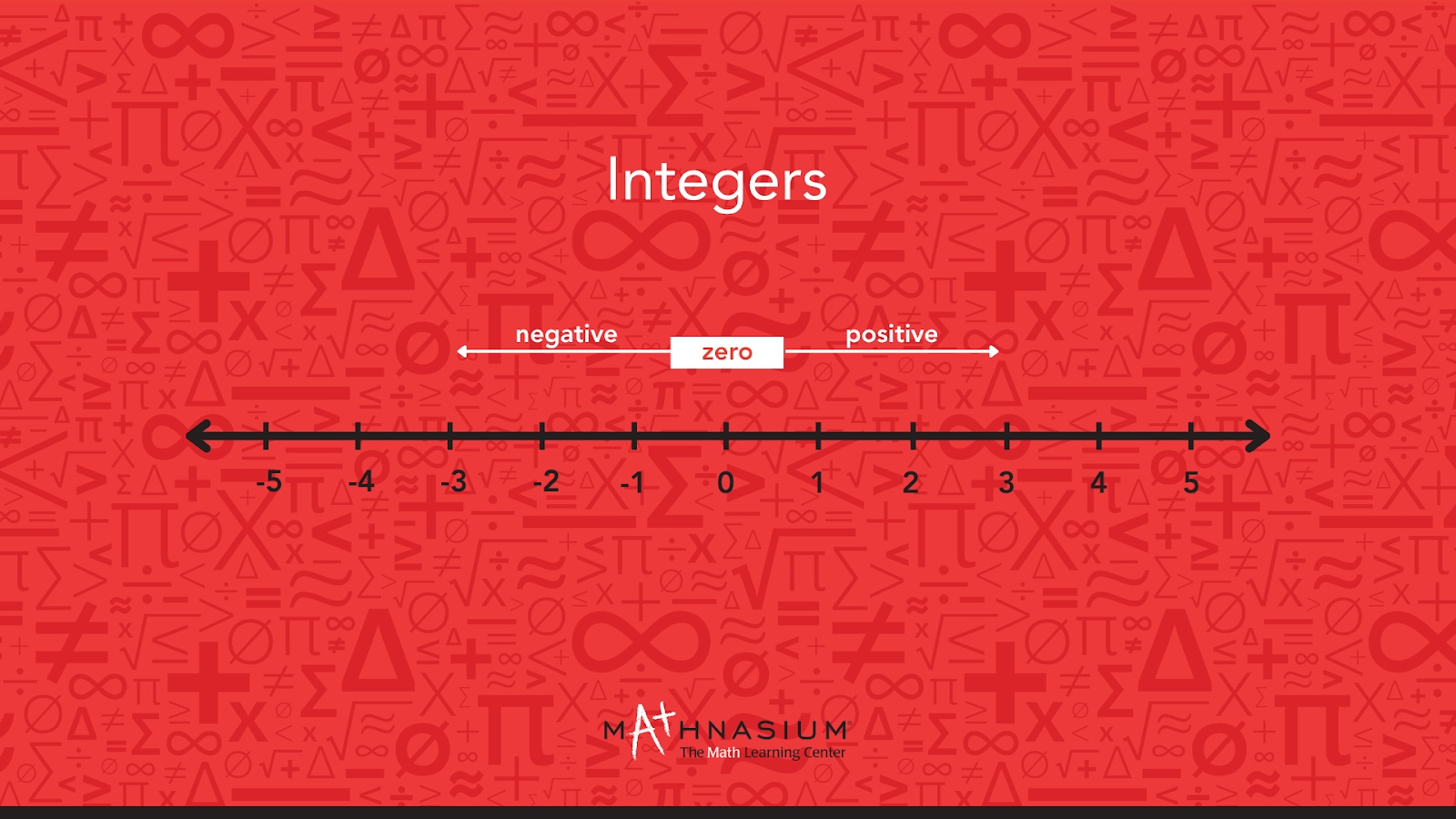
Number lines help 7th graders visualize integer operations.
2. Build Algebraic Thinking from Concrete to Abstract
The bridge from arithmetic to algebra happens gradually, and our instructors find these approaches effective:
-
Start with numerical expressions, then introduce variables. Students already understand that 5 + 5 + 5 is the same as 3 × 5. From there, it's a small step to see that if we don't know what number we're adding three times, we can call it "x" and write 3x. The concept hasn't changed, just the notation.
-
Use manipulatives to make expressions tangible. Algebra tiles or area models let students literally see and manipulate expressions like 2x + 5. When they can physically combine tiles or sketch rectangles, abstract expressions become concrete objects they can work with.
-
Solve equations by "undoing" operations in logical order. Rather than learning procedures by heart, students learn to think through inverse operations: "This equation added 7, so I'll subtract 7 to undo it." Understanding the logic behind each step builds confidence and transfers to new equation types.
-
Write expressions from word problems by identifying the variable first. Before students can translate words into math, they need to pause and ask: "What don't I know here? What am I trying to find?" Once the unknown is clear, the rest falls into place.
Consider this example:
"Jake has 7 more marbles than Sarah" becomes J = S + 7 when students learn to identify what's unknown (both amounts) and what's known (the relationship between them).
Starting with simple scenarios like this builds the translation skills they'll need for more complex problems throughout the year.
📕 You May Also Like: 5 Tips for Students Struggling with Algebraic Expressions
3. Develop Proportional Reasoning with Multiple Representations
Ratios, rates, proportions, and percents form the backbone of seventh-grade math and show up constantly in real-world situations. The solution is helping students move fluently between different ways of representing the same proportional relationship.
In practice, this means:
-
Using ratio tables to see scaling patterns. When students organize information in a table, they can spot how quantities grow together proportionally.
-
Applying double number lines to visualize equivalent ratios. This tool makes it clear how two quantities relate and scale together.
-
Connecting fractions, decimals, and percents as different expressions of the same relationship. Recognizing that \(\Large\frac{3}{4}\), 0.75, and 75% all represent the same proportional relationship builds flexibility.
-
Solving proportions by understanding equivalence. While cross-multiplication works, understanding why the ratios are equivalent creates deeper comprehension that transfers to new problems.
📕 You May Also Like: How Multiple Representations Improve Understanding of Math
4. Strengthen Multi-Step Problem-Solving Skills
Seventh-grade math problems rarely have obvious one-step solutions anymore. Students need to plan their approach, choose the right tools, and work through multiple steps in logical order.
Our instructors teach an explicit problem-solving process that works across different problem types.
Let’s see how it unfolds with a typical problem: "A rectangular garden is 8 feet longer than it is wide. If the perimeter is 60 feet, find the dimensions.”
-
Identify what you're looking for. In our case, the width and length of the garden.
-
Determine what information you have and what you need. You know the length is 8 more than the width, and the perimeter is 60. You need a way to connect these facts mathematically.
-
Choose the right mathematical tool. This is a perimeter problem, so P = 2L + 2W applies. Since length depends on width, express L as W + 8.
-
Execute the solution step-by-step. Substitute: 2W + 2(W + 8) = 60. Distribute: 2W + 2W + 16 = 60. Combine: 4W + 16 = 60. Solve: 4W = 44, so W = 11.
-
Check if the answer makes sense. If the width is 11 feet, the length is 19 feet. Does 2(11) + 2(19) = 60? Yes. The length is indeed 8 feet longer, and the dimensions are reasonable.
This framework turns 'I don't know where to start' into a clear plan of action.
5. Practice Translating Between Words, Numbers, and Symbols
Word problems trip up seventh graders because the language of math doesn't match everyday language. "Five more than twice a number" needs to become 2n + 5 before students can work with it.
Our tutors explicitly teach this translation process:
-
Identify key phrases: "more than" signals addition, "times as much" means multiplication, "per" indicates division or a rate
-
Write expressions from verbal descriptions: Turn "the sale price is 25% off the original price" into S = P - 0.25P or S = 0.75P
-
Create story contexts for given expressions: Reverse the process. What real situation does 3x + 7 represent?
-
Recognize which mathematical tool fits the situation: Does this problem need a proportion, an equation, or a formula?
Flexible translation between these forms shows students have moved past procedural work into real comprehension.
6. Connect Geometric Formulas to Conceptual Understanding
Students who memorize formulas as disconnected rules end up using the wrong one at the wrong time. For example, they might calculate volume when the problem asks for surface area because they can't remember which is which.
The solution isn't more memorization but showing students where formulas actually come from:
-
Circles: Students learn that the circumference connects directly to the diameter, which is why π shows up in the formula. Area makes sense once they see it as "radius squared, then multiplied by π."
-
Surface area: Rather than jumping straight to formulas, students unfold 3D shapes into flat nets. Having them look at all the faces laid out helps them understand what they're actually measuring.
-
Volume: Volume becomes much clearer when students think of it as stacking layers. A cylinder is just a circular base stacked upward, just like a rectangular prism is a rectangle stacked upward.
-
Angles: Instead of memorizing terms like supplementary and complementary, students look at how angles fit together and why those relationships always add up the same way.
📕 You May Also Like: What Is a Diameter & How to Measure It? A Beginner’s Guide
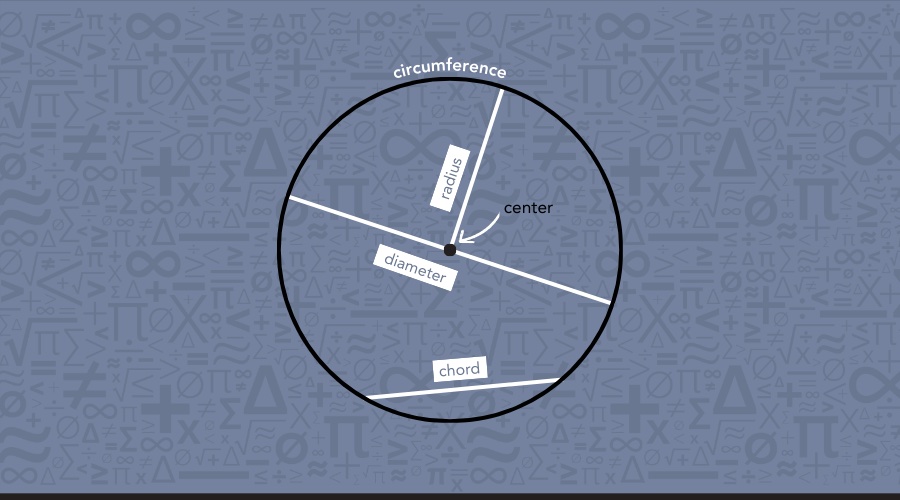
Seeing how parts of a circle connect helps students understand geometry concepts more clearly.
How Mathnasium Supports 7th Graders on Their Math Journey
Mathnasium is a math-only learning center dedicated to helping K-12 students of all skill levels learn and master math.
We’ve worked with thousands of seventh graders, from students adjusting to abstract thinking to those ready to stretch into more advanced material. Because no two students think about math in the same way, instruction should never follow a one-size-fits-all model.
Our teaching approach, the Mathnasium Method™, is personalized and designed to empower each student to unlock their true math potential.
To build deep mastery of math, our approach includes:
-
Personalization on a granular level: Each student begins their Mathnasium enrollment with a diagnostic assessment. The assessment helps us identify their strengths, gaps, and how they think through problems. Using these insights, we build a customized plan that meets them exactly where they are.
-
Teaching for understanding: Our instructors use natural, everyday language and face-to-face instruction, supported by a mix of verbal, visual, mental, tactile, and written techniques. This helps students truly make sense of the math concepts they are learning.
-
Caring, trained instructors: Our tutors are skilled in both content and connection. They know how to support students when they are struggling and challenge them when they’re ready for it.
-
Independent thinking and critical problem-solving: Each session includes time for students to work independently before reviewing with their tutor. We teach both the how and the why, helping students build the reasoning and problem-solving tools they’ll use in math and life.
-
Singular focus on math: We specialize in math and math only. Our proprietary curriculum is built from thousands of thoughtfully developed pages, continually refined to reflect how students absorb, learn, and retain math best.
-
A confidence-building, fun environment: Parents frequently tell us Mathnasium sessions don’t feel like traditional lectures. That’s by design. We use game-based activities, small wins, and reward systems to keep students engaged and proud of their progress.
The results speak for themselves:
-
94% of parents report an improvement in their child’s math skills and understanding
-
93% of parents report improved attitude toward math after attending Mathnasium
-
90% of students saw an improvement in their school grades
For families based in or near Surprise, AZ, Mathnasium of Surprise is a trusted local center with a proven record of helping students excel in math.
If your child is looking to catch up, keep up, or get ahead in math, our team is more than happy to help!
📅 Schedule a Free Diagnostic Assessment at Mathnasium of Surprise
Not near Surprise, AZ?
📍 Find a Mathnasium Learning Center Near You


 (623) 533-4503