Leon County Schools follows Florida's B.E.S.T. Mathematics Standards, a framework that defines what your child is expected to know and do in math from kindergarten through high school.
What those standards require changes substantially from one grade band to the next, and those shifts are where your child's preparation is tested most.
Our education specialists at Mathnasium of Tallahassee South work closely with LCS families at every stage of that progression. Today, we’ll cover what the curriculum expects at each level, what warning signs to watch for at home, and how to respond.
What Florida's B.E.S.T. Standards Mean for Leon County Schools Math
Florida's B.E.S.T. Mathematics Standards define the state-mandated learning benchmarks that every Leon County Schools (LCS) student is expected to know and do in math at each grade level. The B.E.S.T. standards place equal weight on conceptual understanding and procedural fluency, and your child is expected to demonstrate both.
In LCS classrooms, your child will regularly encounter questions that go beyond simple calculation. They may be asked to:
-
Show the reasoning behind an answer.
-
Choose between two strategies and explain their choice.
-
Apply a familiar concept to a problem they have not seen before.
Leon County Schools follows a standard course progression from kindergarten through Algebra 1, Geometry, and into advanced high school courses. Individual LCS schools may use different instructional materials, but all are aligned to the same B.E.S.T. benchmarks.
These benchmarks represent the state-mandated learning goals for all students. If your child is on an IEP or in an accelerated program, their specific path through the curriculum will differ, but the grade-level expectations covered in this article reflect what LCS teaches in the general curriculum.
Progress against those benchmarks is measured through the Florida Assessment of Student Thinking (FAST) Mathematics, administered in grades 3 through 8.
FAST results break down your child's performance by math strand, giving you a clear picture of which concepts are secure and which need more work before the next grade level builds on them.
📕 You May Also Like: Must-Know Math Skills: Preparing for the Next Grade (K-12 Guide)
What Leon County Schools Math Covers by Grade
Leon County Schools math follows Florida's B.E.S.T. standards from kindergarten through high school, with the content shifting substantially at each level.
The overview below is organized by grade band so you can go directly to the section that matches your child's grade.
1. Elementary School (Grades K–5)
Elementary math under B.E.S.T. moves from concrete, hands-on understanding into increasingly abstract reasoning, with each grade building directly on the one before it.
At each stage, your child's relationship with math changes:
-
In kindergarten and first grade, your child counts physical objects and learns what numbers represent before working with them abstractly
-
In second grade, your child uses drawings and hands-on tools to understand place value and build addition and subtraction fluency
-
By third grade, your child connects what they know about addition to multiplication and begins working with fractions as numbers
-
By fifth grade, your child is expected to reason through multi-step problems and explain their thinking, not only produce a correct answer
📕 You May Also Like: 4 Elementary Math Foundations Parents Should Not Skip
2. Middle School (Grades 6–8)
Middle school math under B.E.S.T. shifts from arithmetic into abstract reasoning, and your child is now expected to work with variables, proportional relationships, and functions.
At each stage, what your child is expected to do with math changes significantly:
-
In sixth grade, your child moves from working with whole numbers to ratios and negative numbers, and begins writing and interpreting algebraic expressions
-
In seventh grade, your child works with rational numbers, solving multi-step equations and connecting proportional relationships to real-world situations
-
In eighth grade, your child is expected to interpret graphs, reason through functions, and apply the Pythagorean theorem to solve problems on a coordinate plane
📕 You May Also Like: How to Make Sure Your Child Is Ready for Algebra
3. High School Entry (Algebra 1 and Beyond)
High school math under B.E.S.T. opens with Algebra 1, the course that draws on everything your child built in middle school and sets the direction for their entire high school math path.
|
Course
|
Primary Math Focus
|
|
Algebra 1
|
Linear equations, functions, systems of equations, and quadratic relationships
|
|
Geometry
|
Geometric reasoning, proofs, similarity, trigonometry
|
|
Advanced courses
|
Algebra 2, Pre-calculus, Statistics, and beyond
|
The demands on your child's reasoning grow with each course:
-
In Algebra 1, your child is expected to work fluently with variables, interpret functions, and solve multi-step equations, drawing directly on the proportional reasoning and equation work from grades 6 through 8
-
In Geometry, your child applies logical reasoning to prove relationships between shapes and develops spatial thinking alongside algebraic skills
-
In advanced courses, your child is expected to connect multiple mathematical ideas across topics and apply them to increasingly complex real-world problems
✍️ Not sure where your child stands? Take Mathnasium's Grade-Level Math Check-Up
What to Watch for Before Math Gaps Grow
The signals that a math gap is forming show up at home before they appear in grades. They surface in how your child explains their work, how they respond to unfamiliar problems, and whether they attempt math independently or wait to be shown every step.
Watch for these signs:
-
Correct answers without explanation: B.E.S.T. and FAST both expect your child to show their thinking, not only produce a result. They can score well on a homework page and still struggle on a FAST question that asks them to explain why their method works or apply it to a problem they have not seen before.
-
Stalling when a familiar concept appears in a new format: If your child can solve a fraction problem on a worksheet but gets stuck when fractions appear in a word problem or a table, they have learned the steps without understanding the concept behind them. B.E.S.T.-aligned questions regularly present the same concept in different formats.
-
Steady classroom grades, but a gap in FAST results: Classroom grades reflect whether your child completes work correctly. FAST questions ask them to reason through problems, explain their approach, and apply concepts in ways that following a practiced procedure alone cannot handle.
-
Skipping steps or avoiding showing work: Under B.E.S.T., the process carries weight alongside the answer. Your child can arrive at the right answer and still signal through skipped steps that they are not sure why each step is necessary.
📕 You May Also Like: What Happens When Math Gaps Go Unaddressed (+ How to Prevent Them)
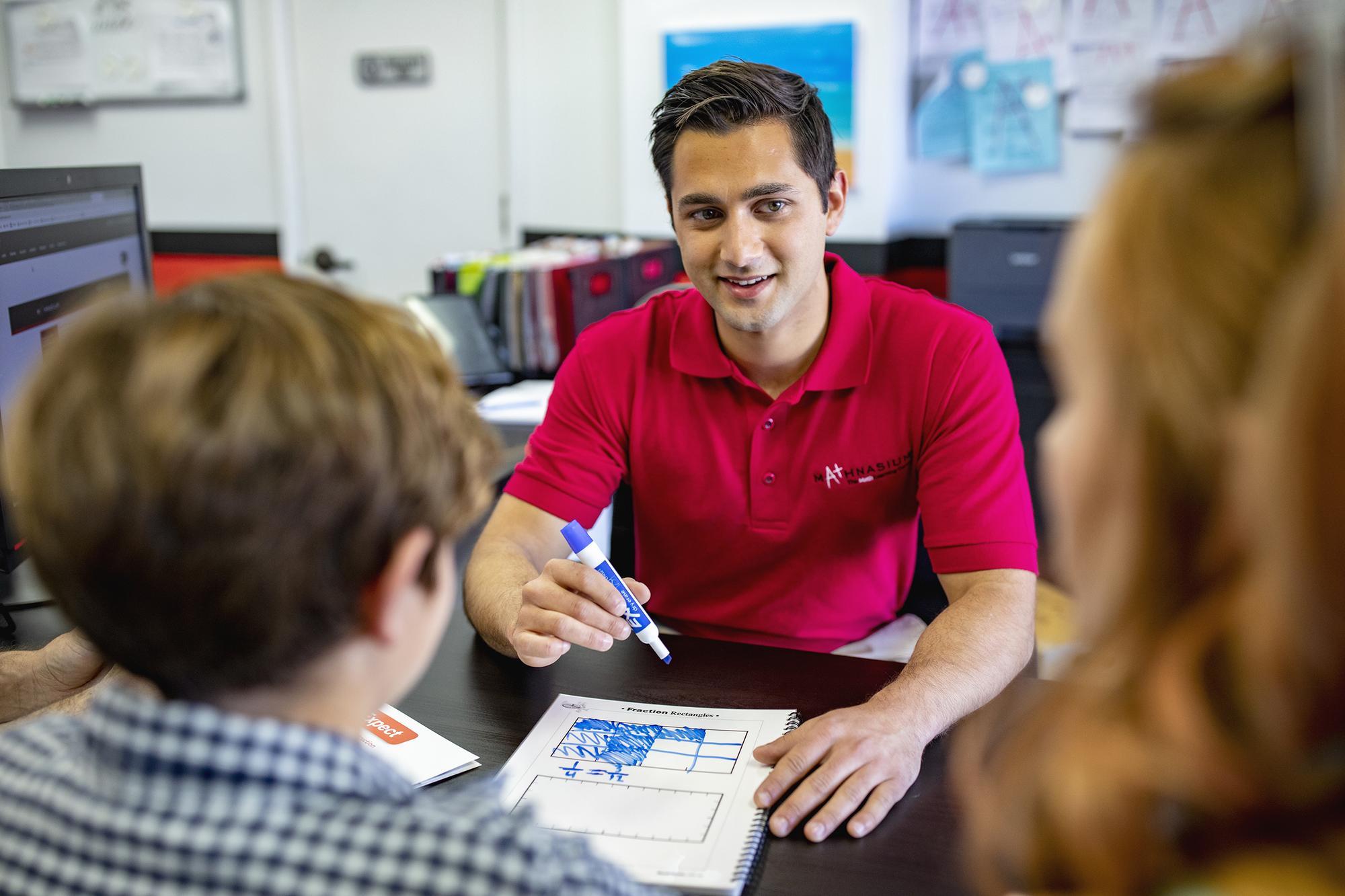
Our tutors at Mathnasium of Tallahassee South identify these signals through a diagnostic assessment that shows exactly where your child's understanding is secure and where it needs support.
How Mathnasium of Tallahassee South Helps Your Child Meet LCS Math Expectations
Mathnasium is a math-only learning center dedicated to helping K–12 students of all skill levels catch up, keep up, and get ahead in math.
For LCS families, the most effective support starts with knowing exactly which B.E.S.T. benchmarks your child has already mastered and which grade-level skills still need work. Mathnasium of Tallahassee South can align each student's personalized learning plan directly to the B.E.S.T. standards LCS schools implement at every grade level.
Each student begins with a diagnostic assessment that identifies which concepts are truly secure, which skills are familiar but still fragile, and where gaps exist. From there, we build a personalized learning plan tailored to your child's needs and goals.
Our specially trained tutors follow that plan closely, guided by the Mathnasium Method™, our proprietary teaching approach designed around each student's individual needs and learning style.
They deliver face-to-face instruction using a mix of verbal, visual, mental, tactile, and written techniques so each concept lands clearly.
We place special focus on problem-solving and critical thinking, teaching your child to explain their reasoning, make connections between concepts, and approach unfamiliar problems with confidence. Those are exactly the habits B.E.S.T. rewards and FAST measures.
Fun is built into how we work. Game-based activities, earned rewards, and consistent celebration of progress keep students engaged and build confidence alongside understanding.
The results speak for themselves:
-
94% of parents report an improvement in their child's math skills and understanding
-
93% of parents report their child's improved attitude toward math after attending Mathnasium
-
90% of students saw an improvement in their school grades
With over 1,100 learning centers across North America, there is likely a Mathnasium close to you.
Families across Tallahassee, Buck Lake, Southwood, Buckhead, and Welaunee trust Mathnasium of Tallahassee South to help their children build the math foundation that B.E.S.T. standards and LCS schools expect at every grade level.
If you would like to see exactly where your child stands and what support they need, our team is ready to help.
📅 Schedule a Free Assessment at Mathnasium of Tallahassee South
Not near Tallahassee South?
📍 Find a Mathnasium Learning Center Near You


 (850) 988-5549