When Common Core was introduced in 2010, math instruction changed in ways that are still catching parents off guard today.
If you have sat down to help with homework and found yourself looking at a number line, an area model, or a bar diagram, wondering, "What do I do here?" that reaction is completely understandable. Many parents have felt exactly the same way.
We use these strategies every day to help our students learn and master math. This time, we wanted to help the parents sitting across the table from them.
Read on as we break down the Common Core math strategies your child's teacher relies on most and show you the ones you can easily use at home.

Math Strategies Common Core Relies on
Common Core asks students to do more than execute procedures. It pushed for genuine conceptual understanding: knowing why a method works, not only how to carry it out.
Students are also expected to approach problems flexibly, choosing the most efficient strategy rather than defaulting to a single learned procedure.
To support that, Common Core relies on a set of visual and conceptual tools that may look unfamiliar but are grounded in how children actually build mathematical understanding:
-
Number lines: A straight line with numbers placed at equal intervals, used to make the size and position of numbers visible.
-
Area models: Visual grids for multiplication, fractions, and ratios, breaking problems into rectangles (e.g., 12 × 15 as partial products in a grid).
-
Place value strategies: Decomposing numbers into tens/ones or expanded form with blocks or drawings, such as (40 + 20) + (7 + 6) for addition.
-
Bar models: Rectangular diagrams for word problems in ratios, fractions, or algebra, showing parts-to-whole relationships visually.
-
Partial products and the distributive property: Breaking multiplication into simpler chunks (e.g., 23 × 14 as 20 × 10 + 20 × 4 + 3 × 10 + 3 × 4).
-
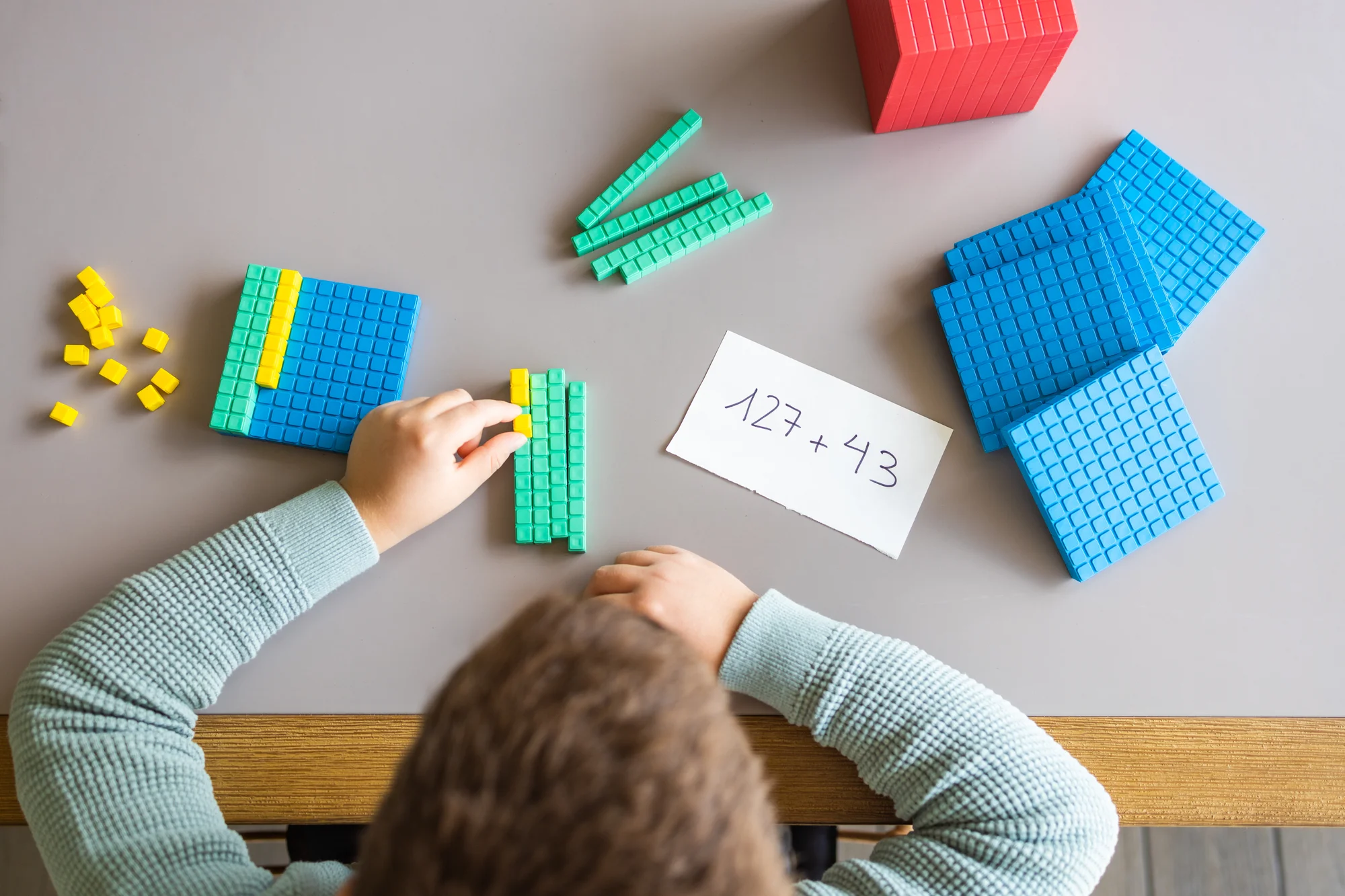
Manipulatives and drawings: Hands-on tools like base-10 blocks, counters, or sketches for operations, place value, and geometry to make abstract ideas concrete.
📕 You May Also Like: What Parents Need to Know About Common Core Math Standards
Common Core Math Strategies You Can Use at Home
Common Core strategies have a reputation for being confusing, but that reputation is mostly earned at first glance. Once you get to know them, they are some of the most effective (and even fun) tools for making math make sense.
For this occasion, we’ve picked the ones that translate most naturally to a home setting.
1. Number Lines
If there is one Common Core tool worth getting comfortable with, this is it.
Number lines work across almost every grade and operation, and after you see how they work, they are surprisingly easy to use at home.
The idea is simple: instead of working with abstract symbols, your child can see exactly where a number lives, how far it is from another, and which direction to move.
Here is what that looks like at different stages:
-
Grades 2–3: Children add and subtract by jumping forward and backward along the line. For 47 + 26, a student might jump to 50, then to 70, then to 73, watching each step land before moving to the next.
-
Grades 3–4: Number lines bring fractions to life. Seeing that \(\Large\frac{3}{4}\) sits closer to 1 than \(\Large\frac{1}{2}\) does on a line is worth more than any procedure for comparing fractions.
-
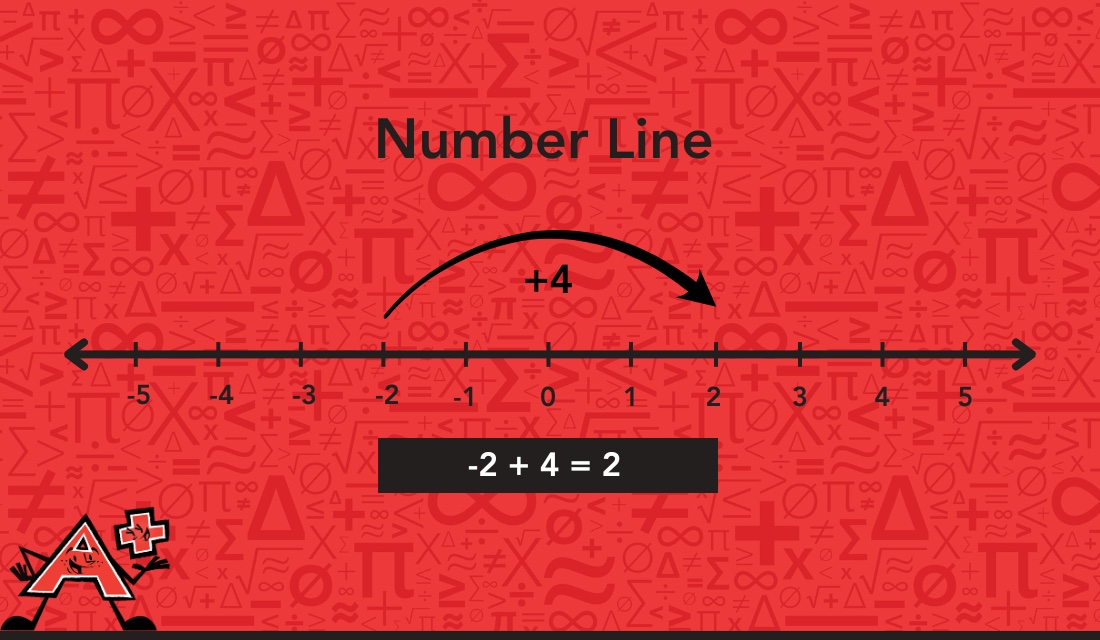
Grades 6–7: Number lines extend to integers. Take −2 + 4: start at −2, jump forward 4, and land on 2. The answer is right there on the line, no guesswork needed.
2. Manipulatives
Before numbers make sense on a page, they need to make sense in a child's hands. That is the thinking behind manipulatives, and it is why you will find blocks, coins, counters, and measuring cups in elementary classrooms across the country.
Physical objects give abstract concepts somewhere to land.
Hands-on experience, like sorting 12 grapes into 3 equal bowls, builds an understanding of division that no worksheet can replicate. That experience becomes the mental picture they reach for later, when the numbers get harder.
Depending on what your child is working on, here are a few ways to put everyday objects to work:
-
Addition and subtraction: Build two towers of blocks, one with 8 bricks and one with 5. Ask your child how many more the taller tower has, then snap them together and count the total.
-
Multiplication and division: Line up 30 pennies and ask your child to sort them into equal groups of 5. How many groups did they make? Now ask them to sort the same 30 pennies into 6 groups. Same coins, two different problems.
-
Fractions: Ask your child to fill a whole cup using only the half-cup measure. How many pours does it take? Try the same with a quarter-cup. Fractions become something they can pour and count.
-
Place value: Trade 10 pennies for a dime, then 10 dimes for a dollar. Each swap makes the structure of our number system something your child can hold in their hands.
The most important thing is that your young learner is moving the math around, touching it, testing it, making it real.

Coins, blocks, and everyday objects are some of the most effective math tools a child can work with.
3. Area Models for Multiplication
An area model is a visual grid that makes multiplication transparent in a way that traditional algorithms do not.
Instead of stacking numbers and carrying digits, students draw a rectangle, split it according to place value, and solve each section separately. The partial answers are then added together to get the final result.
It takes an extra minute to set up, but every step of the calculation stays visible throughout, and that visibility is what makes the difference for students who learn best when they can see what is happening.
How does that look in action? Say we have 12 × 13. Here is what an area model makes of it:
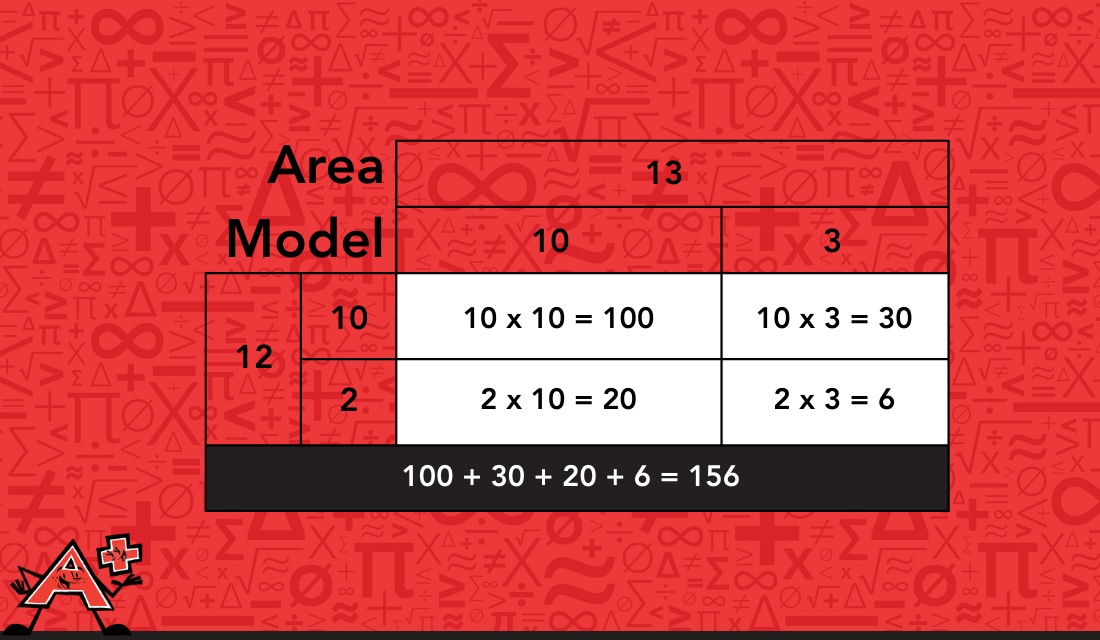
Pretty neat, right?
Now that you know the principle, you can try this with any multiplication problem your child brings home. The grid stays the same; only the numbers change.
4. Bar Models
If your child has ever stared at a word problem and had no idea where to start, bar models might be the most useful strategy on this list.
Also called tape diagrams, bar models are rectangular diagrams that map out the structure of a word problem before any calculation begins.
The idea is to draw what the problem is describing, such as the whole, the parts, and what is missing, so that the math becomes visible before a single number is touched.
Most students struggle with word problems, not because the math is too hard, but because they can't figure out what the problem is asking. A bar model puts the structure on the page first and lets the calculation follow.
Here is what that looks like across grades:
-
Grades 3–4: For "Maria has 24 stickers and gives away 9. How many does she have left?" A bar model shows the whole and the missing part side by side. Students can see whether to add or subtract before touching the numbers.
-
Grades 5–6: Bar models make fraction and ratio problems visual. If \(\Large\frac{3}{5}\) of a class of 30 students passed a test, dividing the bar into 5 equal parts gives you the answer without a formula in sight.
-
Grade 7: Bar models step into algebra territory, with unknown quantities shown as unlabeled sections of the bar. It is a natural stepping stone to equation-solving.
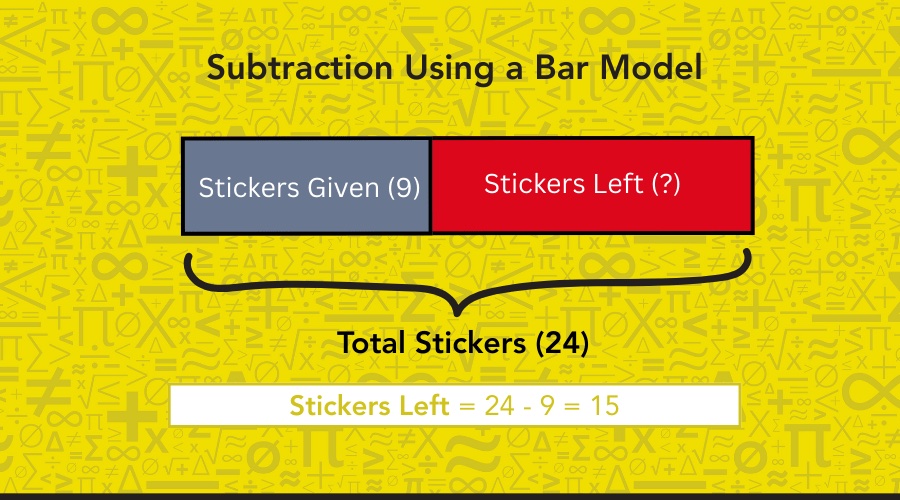
Before any calculation, the bar model shows exactly what the problem is asking.
So there you have it. A little context goes a long way, and now you have more than a little. Next time one of these strategies shows up at the homework table, you will know exactly what to do with it.
How Mathnasium Builds Conceptual Understanding of Math
Common Core math standards guide students toward deep conceptual understanding, problem-solving skills, and real-world application. Those are exactly the goals Mathnasium is built around.
We are a math-only learning center dedicated to helping K-12 students of all skill levels truly understand math. To do that, we rely on our proprietary teaching approach, the Mathnasium Method™, rather than a one-size-fits-all program.
Each student begins with a diagnostic assessment that pinpoints what they already know, where they need support, and how they approach math in general. From there, we build a personalized learning plan tailored to their specific needs.
With the plan in place, our specially trained tutors deliver face-to-face instruction in a supportive setting, using natural language and a mix of verbal, visual, mental, tactile, and written techniques. This helps students see math from different angles and find the approach that works best for them.
Sessions are often game-based and hands-on. We incorporate rewards to keep students motivated, celebrate every milestone, and make sure progress never goes unnoticed. That is what builds lasting confidence in math.
Our approach brings measurable results:
-
94% of parents report an improvement in their child's math skills and understanding
-
93% of parents report an improved attitude toward math after attending Mathnasium
-
90% of students saw an improvement in their school grades
Mathnasium operates over 1,100 learning centers, bringing our proven approach close to your home.
For families in or near Waldorf, MD, Mathnasium of Waldorf is a trusted local center with years of experience helping students build the kind of mathematical understanding that lasts.
Whether your child is looking to catch up, keep up, or get ahead in math, our team is happy to assist.
📅 Schedule a Free Diagnostic Assessment at Mathnasium of Waldorf
Not near Waldorf?
📍 Find a Mathnasium Learning Center Near You


 (301) 310-7482
 (301) 310-7482