Angles show up everywhere in math, and students usually meet them formally around 4th grade. That's the moment this concept takes root, following students throughout the rest of their math education. A clear, solid start here goes a long way for the geometry journey ahead.
That's why today, our Mathnasium tutors will explain what makes up an angle, the four main types we'll run into, and a simple way to tell them apart.

What Is an Angle in Geometry?
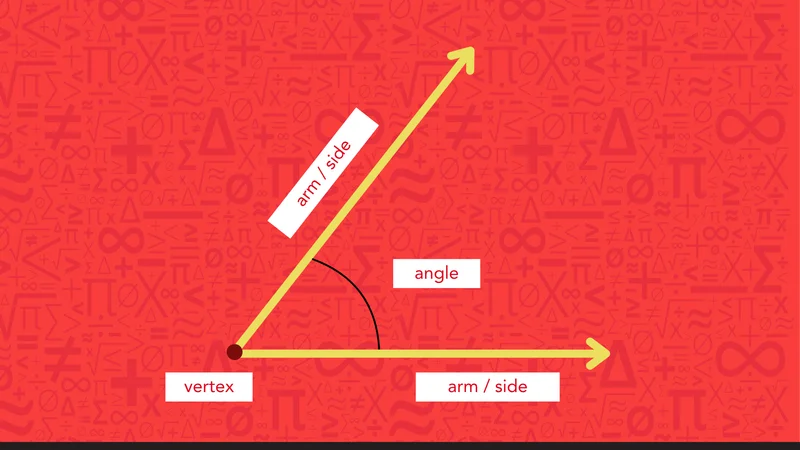
An angle in geometry is the space, or degree of opening, formed when two lines or rays share a common starting point called a vertex.
Let's picture two lines lying flat, touching at one end. If we spread the other ends apart, that opening between them is the angle.
The two lines themselves, stretching out from the vertex, are called the arms, sometimes called the sides.
So, how do we know how big an angle is? We measure it using units called degrees, using the symbol °.
To find that measurement, we can use a tool called a protractor. We line the protractor up along one arm, with its center point sitting right on the vertex, and read the number where the other arm crosses the scale.
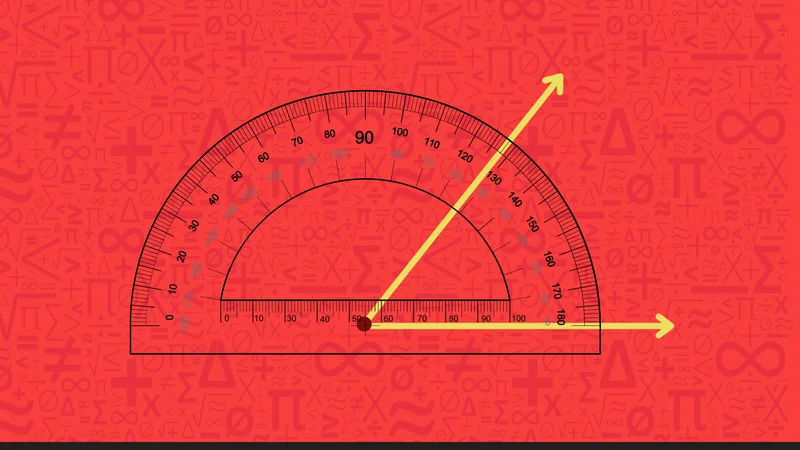
That degree measurement is what tells us which type of angle we're looking at, and that's what we'll explore next.
📕 You May Also Like: What Is a Vertex? Everything You Need to Know
Types of Angles in Geometry
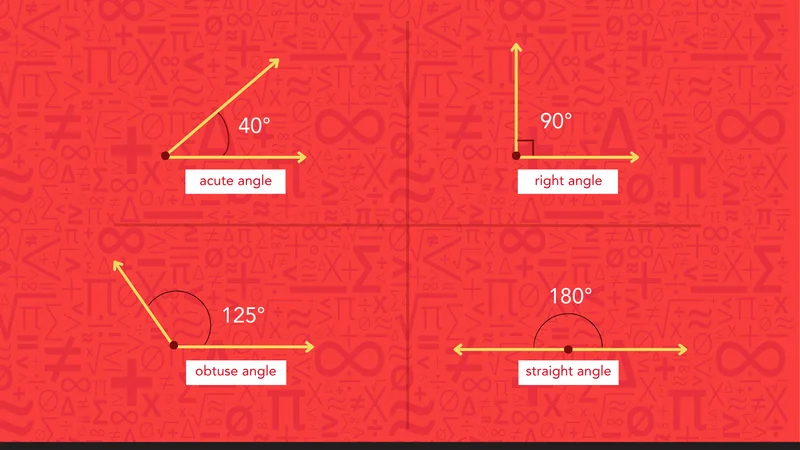
There are four main types of angles in geometry:
-
Right
-
Acute
-
Straight
-
Obtuse
Each one is defined by its own degree measurement, and with a little practice, we can start recognizing each type just by looking at it.
We’ll take a look at each one together, with a few real-life examples along the way.
1. Right Angle
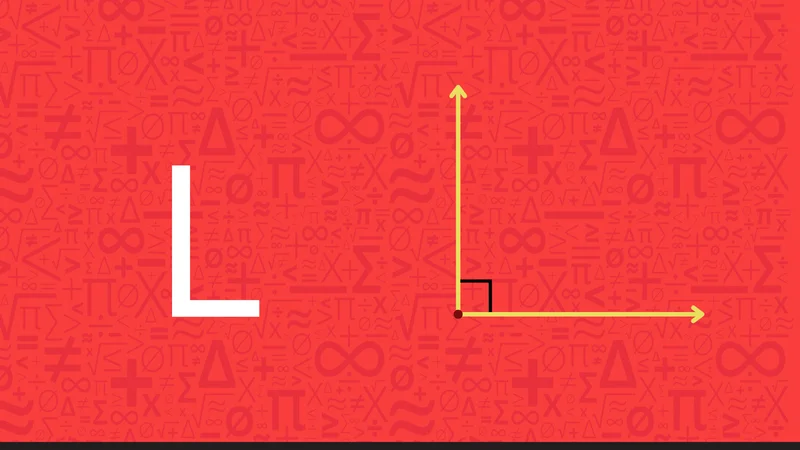
A right angle is an angle that measures exactly 90 degrees, made by two lines that cross or touch straight up and down.
We can picture the letter L. Where its two sides meet, they form a perfectly square corner. That square corner is a right angle, and it measures exactly 90 degrees.
In geometry, right angles often have a tiny square box drawn right in the corner to show they measure 90 degrees.
Now, let's check this angle with our protractor.
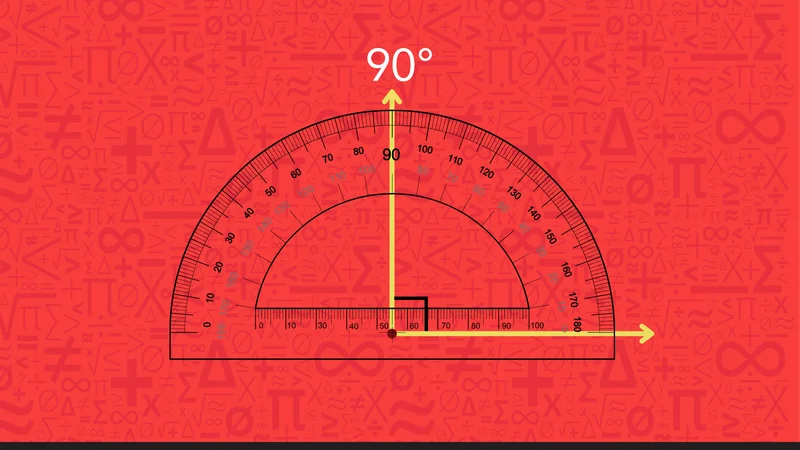
It sits at exactly 90 degrees.
We can spot right angles all around us:
-
Books and paper: The four corners of a notebook page or hardcover book.
-
Screens: The corners of a television, computer monitor, or smartphone.
-
Doors and windows: The square corners of window frames and open doors.
📕 You May Also Like: Complementary and Supplementary Angles - A Complete Guide
2. Acute Angle
An acute angle is a small, sharp angle that measures more than 0 degrees and less than 90 degrees. The important thing to remember is that it's always smaller than a right angle.
Let's imagine a slice of delicious pizza, cut nice and thin. The point where the two edges meet is much sharper than the square corner of a right angle. That sharp, narrow opening is an acute angle.

Let's check this one with our protractor. If the arm lands anywhere before the 90-degree mark, we've got an acute angle.
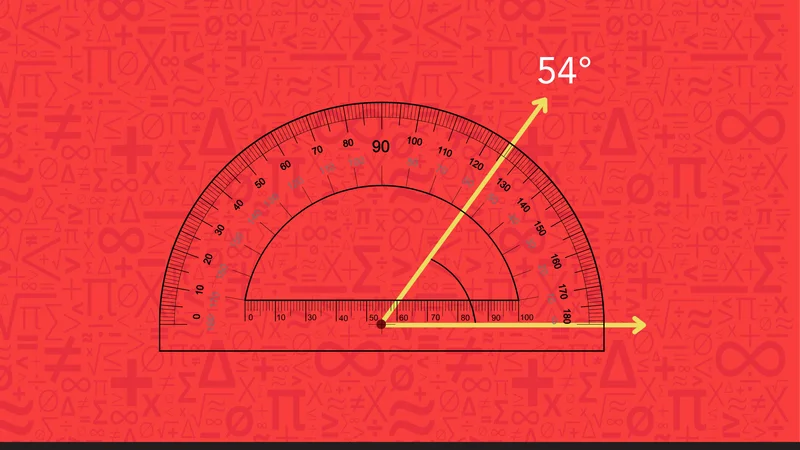
It's 54 degrees!
We can see acute angles appear in:
-
Ice cream cone: The bottom end of a waffle cone comes down to a sharp point.
-
Crocodile jaws: An open mouth makes a narrow gap.
-
Roof peaks: The slanted sides of a house roof meet at a sharp top.
📕 You May Also Like: Types of Triangles for Grades 4–8: A Complete Guide
3. Obtuse Angle
An obtuse angle is a wide angle that measures more than 90 degrees and less than 180 degrees. It's bigger than a right angle and smaller than a straight angle.
We can think of a boomerang and its two arms that spread out wide.
How does that spread compare to the square corner we saw with a right angle? It opens up much wider, past the square corner and close to flat. That wide spread is what makes an angle obtuse.
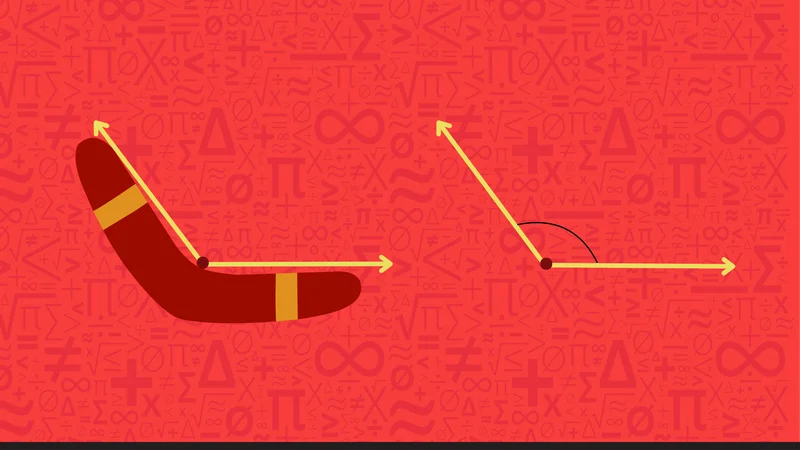
We can also check this one with our protractor, just to be sure. If the arm lands somewhere past the 90-degree mark but before 180, we've got an obtuse angle.
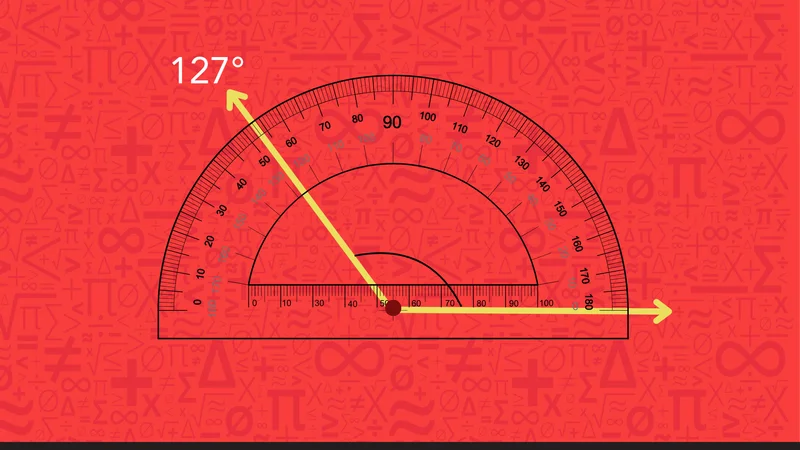
This one measures 127 degrees!
Obtuse angles show up in:
-
Laptop screens: Pushed back wide for comfortable viewing.
-
Reclining chairs: The seat and backrest pushed past a straight upright position.
-
Hockey stick: The bend between the long handle and the flat blade.
4. Straight Angle
A straight angle measures exactly 180 degrees stretched all the way open until it forms a flat, unbroken line.
We can think of a ruler lying flat on a table. Its two arms have opened up so far that there's no bend left at all, just one straight edge running from end to end.
So, how does that compare to the wide bend we saw in an obtuse angle? An obtuse angle still holds a bend, while a straight angle has opened all the way into a flat line.
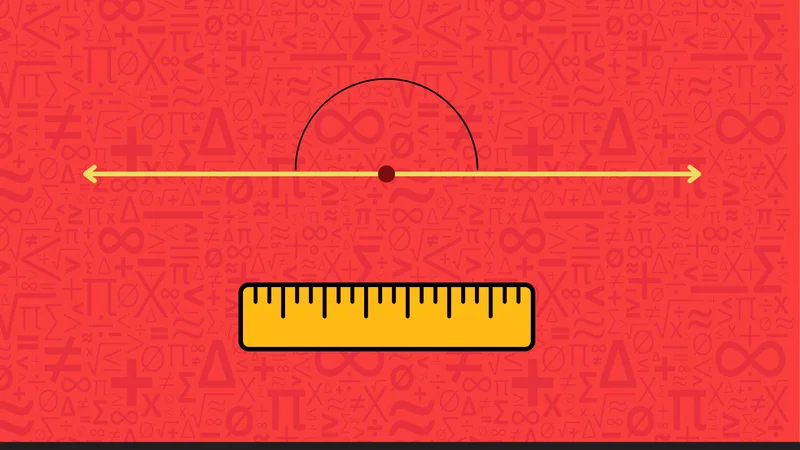
Let’s make use of our protractor again. If the arm lands right on the 180-degree mark, we've got a straight angle.
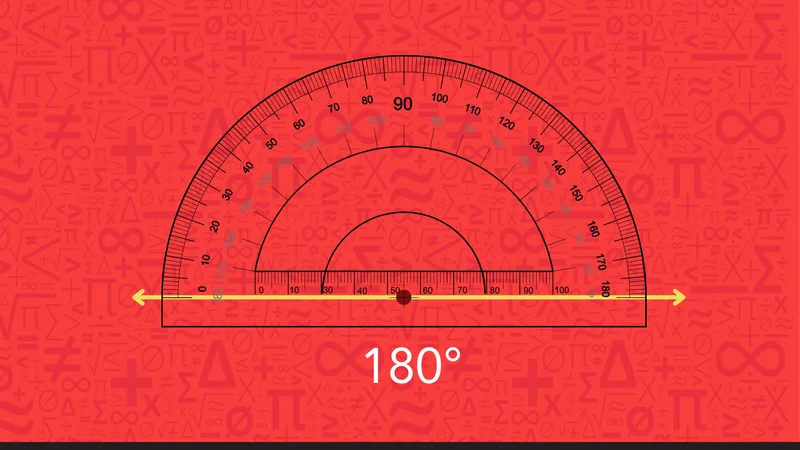
It is precisely 180 degrees!
Straight angles show up everywhere around us:
-
The horizon: Where the flat sea meets the sky, creating a wide, straight line across our view.
-
Tables and desks: The top of a kitchen table or school desk has to be a flat angle so pencils and drinks don't roll off.
-
An open book: Laid completely flat, with both pages forming one flat surface.
📕 You May Also Like: What Is a Straight Angle? A Complete Overview
How to Identify Any Angle (Simple Method)
We can spot most angles just by looking at them, on a page or in real life, without reaching for a protractor first. We just compare the angle to a right angle or a straight line, and that comparison tells us most of what we need to know.
We can simply use a piece of paper. The corner of our paper has a 90-degree angle, which we can use as our benchmark.
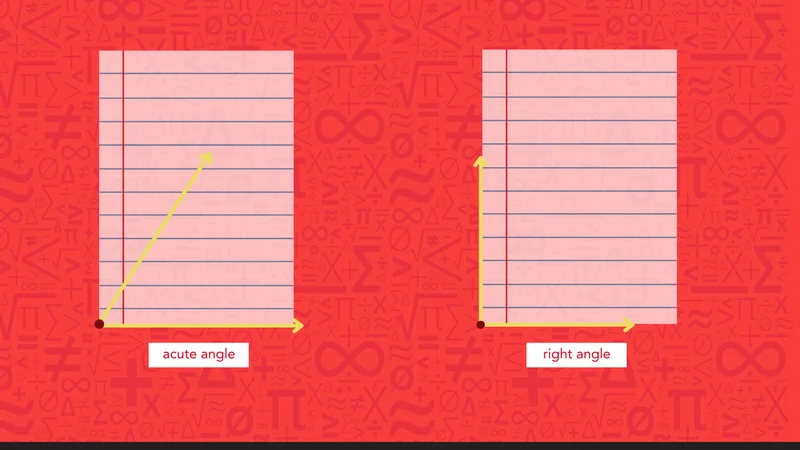
Whenever we aren't sure, we can grab the corner of a piece of paper and slide it right into the angle's vertex, the corner point.
-
If the angle hides behind the paper's edge, it's acute.
-
If it lines up perfectly with the paper's edges, it's right.
-
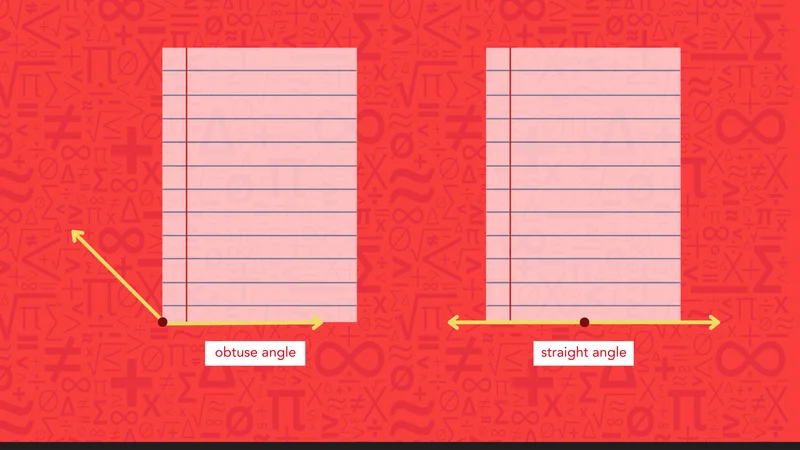
If we can see the line stretching out past the paper, it's obtuse.
-
If the line lays completely flat against the paper's edge, it's straight.
Here's a quick summary of our angles:
|
Angle Type
|
Angle Size
|
What Makes It Different
|
|
Acute
|
Less than 90°
|
Small and sharp, tighter than a square corner |
|
Right
|
Exactly 90°
|
Forms a perfect square corner |
|
Obtuse
|
Between 90° and 180°
|
Wide, opens past a square corner but keeps a bend
|
|
Straight
|
Exactly 180°
|
Flat, with no bend left at all |
Quiz: Can You Identify These Angles?
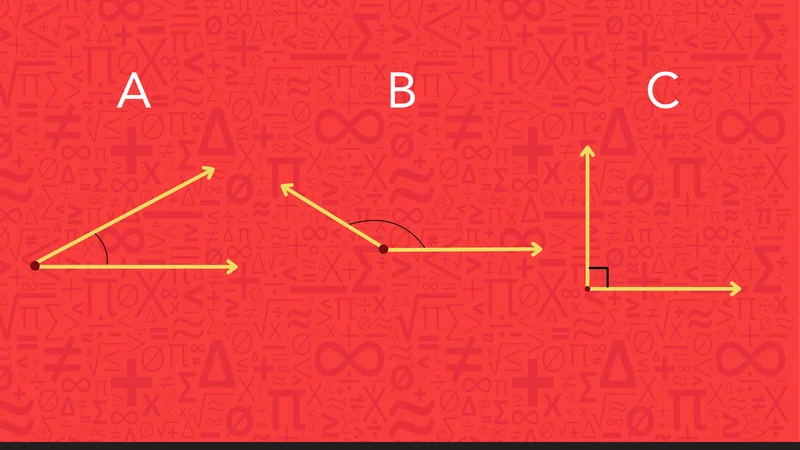
Our Mathnasium tutors put together five questions to test what we've learned. For each one, decide which type of angle is being described: acute, right, obtuse, or straight.
Question 1: Look at Angle A. What type of angle is it?
Question 2: Look at Angle B. What type of angle is it?
Question 3: Look at Angle C. What type of angle is it?
Question 4: An angle measures exactly 180 degrees. What type of angle is it?
Question 5: The corner of a sheet of paper matches an angle perfectly. What type of angle is it?
Check the answers at the bottom of the guide.

Mathnasium tutors use personalized learning plans and hands-on techniques to help students make sense of angles and every geometry concept that follows.
How Mathnasium Helps Students Master Geometry
Mathnasium is a math-only learning center dedicated to helping K–12 students of all skill levels learn and master math.
Angles are a skill students carry for years, showing up again in triangles, polygons, and eventually trigonometry. To build a deep understanding of angles and any other math concept, we rely on the Mathnasium Method™, our proprietary teaching approach.
Here's how it works in practice:
-
Diagnostic Assessment and Personalized Learning Plans. Every student begins with a diagnostic assessment that identifies both visible skill gaps and the reasoning patterns behind them. From that starting point, we build a personalized learning plan tailored to their needs and goals.
-
Teaching for Understanding. Our specially trained tutors use plain, everyday language and a mix of verbal, visual, mental, tactile, and written techniques so concepts like angles make sense to every student.
-
Problem-Solving and Critical Thinking. When a concept feels challenging, we break it down into manageable parts and guide students through both the how and the why. Over time, this builds the problem-solving skills and critical thinking they can use in math and everyday life.
-
An Engaging and Fun Learning Environment. Our sessions are often game-based and hands-on, and we celebrate every bit of progress. Over time, students build a more positive relationship with math and greater confidence in their own abilities.
The results reflect that approach:
-
94% of parents report an improvement in their child's math skills and understanding
-
93% of parents report an improved attitude toward math after attending Mathnasium
-
90% of students saw an improvement in their school grades
We operate over 1,100 centers across North America, bringing our proven approach to communities everywhere.
Families across West Houston, TX, can visit Mathnasium of West Houston, a trusted local center with a proven record of building confident math thinkers.
Whether your student is looking to catch up, keep up, or get ahead in math, our local team is happy to help!
📅 Schedule a Free Diagnostic Assessment at Mathnasium of West Houston
Not near West Houston?
📍 Find a Mathnasium Learning Center Near You
Pssst! Check Your Answers Here
If you've tried our quiz, here's what each angle turned out to be.
Question 1: Angle A is an acute angle.
Question 2: Angle B is an obtuse angle.
Question 3: Angle C is a right angle.
Question 4: An angle measuring exactly 180 degrees is a straight angle.
Question 5: A paper corner is a 90-degree benchmark, so an angle matching it perfectly is a right angle.


 (281) 465-4990