Every brain develops differently, and our understanding of ADHD continues to evolve as researchers learn more about how the brain works. One thing that is already clear is that the brain is remarkably adaptable.
The idea behind supporting students with ADHD is to create a learning environment that helps them use their strengths more effectively while respecting how their brains work.
Schools, workplaces, and daily routines reflect one way society has chosen to organize itself, but they do not define the only way people learn, think, or succeed.
At Mathnasium, we work with students of all skill levels and learning needs every day, and we have seen that students with ADHD can thrive in math with consistent support, personalized instruction, and an encouraging learning environment.
In this guide, we share seven practical strategies to help your child study math with greater focus and confidence.

How ADHD Affects the Math-Learning Brain
ADHD can affect the executive functions that math demands most heavily, which is why math practice can feel overwhelming even for students who understand the underlying concepts.
Executive functions are the cognitive tools the brain uses to organize, monitor, and complete a task. In plain terms, they include:
-
Planning: deciding which steps to take and in what order
-
Sequencing: carrying out those steps without losing track of where you are
-
Impulse regulation: pausing to check what a problem is asking before jumping to calculate
-
Working memory: holding several pieces of changing information in mind at the same time while actively using them
Math places constant demands on all four of these functions simultaneously. Math problems often require students to remember information, choose the correct operation, complete each step in order, and check their work, all within a single problem.
That is why a student may understand the math but still find the process of solving the problem much harder.
📕 You May Also Like: How Executive Functioning Skills Boost Math Success
3 Common Math Challenges for Students with ADHD
ADHD can impact several parts of the problem-solving process, from keeping track of information to maintaining focus and resisting impulsive responses.
Here are some common patterns that can make math feel more challenging for students with ADHD.
A. Working Memory Overload
Working memory is the brain's mental workspace. Every multi-step math problem relies on that workspace to keep track of information from one step to the next.
For example, during a long division problem, your child needs to multiply, subtract, bring down the next digit, and carry the result forward into the next round — then repeat the whole cycle, keeping track of where they are each time.
Students with ADHD can run out of space in that mental workspace before they finish the problem, and they may forget where they are in the calculation even though they understand the concept.
B. Starting Before Reading the Problem
ADHD can make it harder to pause before acting, which shows up in math as starting to calculate before reading the whole problem.
After practicing addition all week, your child may automatically add two numbers even though the worksheet shows a subtraction problem. The familiar pattern from the week's practice takes over before the actual question registers.
C. Visual Overwhelm (Too Much on the Page)
Visual clutter can make it difficult for students with ADHD to focus on one problem at a time.
Worksheets with 20 dense questions may trigger task paralysis because many students with ADHD may have more difficulty filtering visual clutter to focus on one question at a time. The entire page becomes distracting, rather than just the next question.
📕 You May Also Like: 5 Ways Math Practice Impacts Brain Development for K-12 Students

Students with ADHD often learn best in environments that reduce distractions and support sustained attention.
7 Math Study Strategies to Support Students with ADHD
Every student with ADHD responds differently, so finding the right combination of strategies may take time.
To help you get started, we will share seven practical strategies you can try at home to support your child during math practice.
1. Focus on One Problem at a Time
Students with ADHD often have difficulty filtering out irrelevant visual information, which can make it harder to decide where to begin and may lead to task paralysis.
One way to reduce that overload is to cover the rest of the worksheet with a blank index card or sheet of paper so your child sees only one problem at a time. For example, if the assignment includes a full page of multiplication problems, reveal each new problem only after the previous one is complete.
This simple change reduces competing visual distractions and helps students focus on the problem in front of them. Physical barriers like an index card help the ADHD brain filter out unnecessary information.
2. Mark the Operation Before Starting the Problem
Impulsivity can cause students to begin solving a problem before they have fully processed what it is asking. You can slow that process by asking your child to highlight every operation symbol before solving any questions.
For example, on a fractions worksheet that mixes addition, subtraction, multiplication, and division, your child can highlight each operation symbol and name it out loud before writing a single number.
Students who stop to highlight the operation insert a brief but meaningful delay between seeing the problem and attempting to solve it. Even a short pause re-engages the part of the brain responsible for checking rather than rushing, which is exactly the step impulsivity often interrupts.
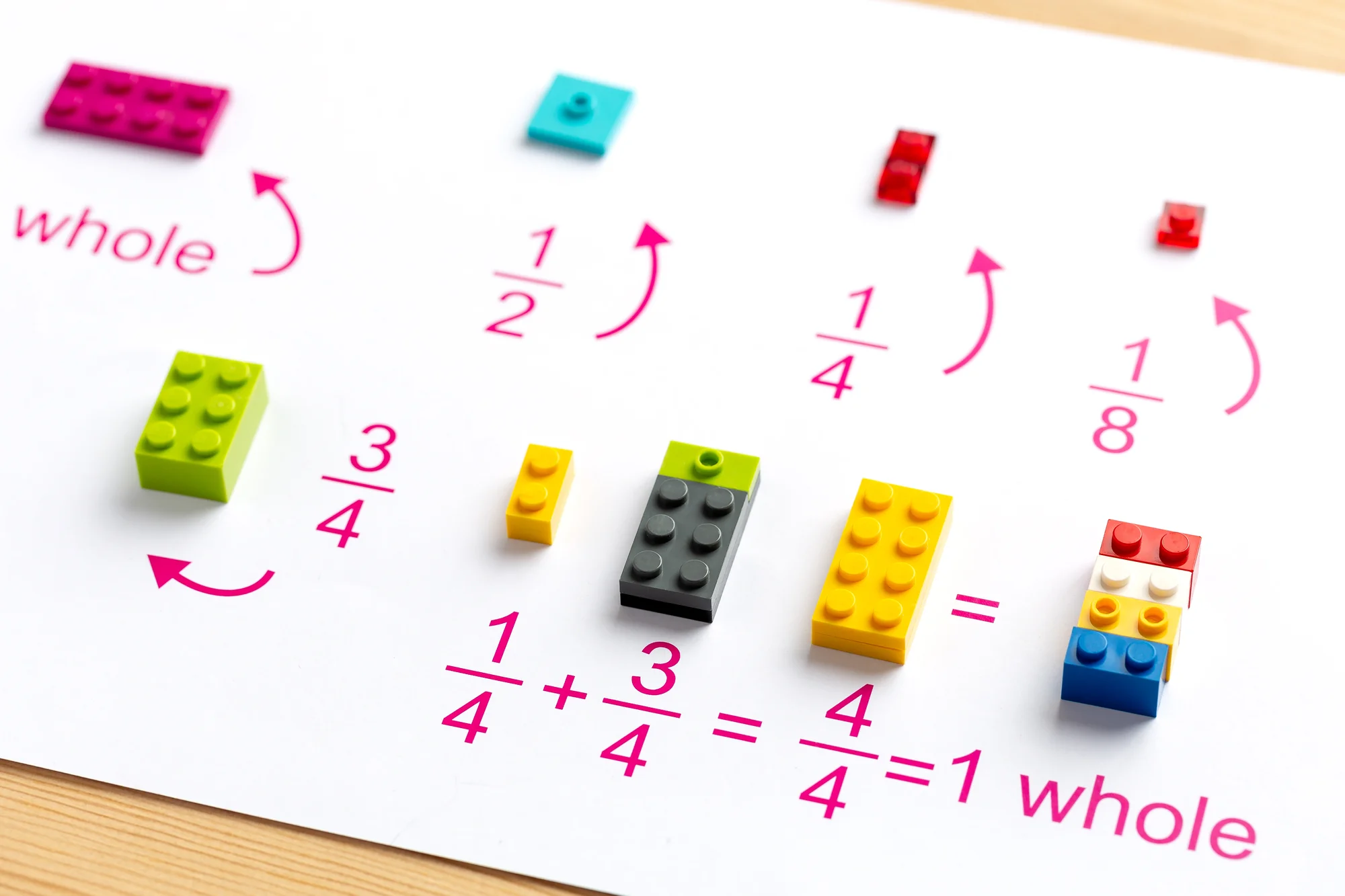
Encourage your child to mark the operation symbol before solving. Here, highlighting the plus sign reinforces that the fractions should be added.
3. Write Formulas in the Margin
Multi-step math problems ask students to remember rules while solving calculations, which can quickly overload working memory. To reduce that demand, try asking your child to write important formulas in the margin before starting the assignment.
For example, before beginning a geometry worksheet, your child can write the area and perimeter formulas in the corner of the page. During the practice, those formulas stay visible, so your child can refer back to them instead of trying to remember each one while solving the problem.
Research shows that working memory is closely connected to mathematical performance, which is why reducing unnecessary memory demands can help students who struggle in this area.
Written references keep formulas available throughout the assignment, so students can focus more of their attention on reasoning through each step, rather than recalling formulas.
📕 You May Also Like: Perimeter vs. Area: Why Kids Mix Them Up and How to Teach the Difference
4. Work in Short-Timed Intervals
Long periods of uninterrupted math practice can become difficult for students with ADHD because attention naturally declines over time.
We suggest breaking study sessions into shorter, structured intervals by setting a timer for 10 to 15 minutes of focused work, followed by a 2- to 3-minute movement break before returning to the next set of problems.
A 2017 study found that children with ADHD were more affected by time on task than their peers on measures of attention. The authors suggest that short breaks may help reduce attention lapses before they become more noticeable, which is why brief movement breaks between study intervals can be so helpful.
5. Switch to Graph Paper
Multi-digit calculations depend on keeping every digit in the correct place value. If numbers move between the hundreds, tens, and ones columns, even a correct method can produce the wrong answer. You can ask your child to use graph paper and write one digit in each box so every step stays aligned.
Students with ADHD often have more difficulty keeping track of where numbers visually belong as calculations grow longer. When the brain has to organize that spatial information while solving the problem, visual working memory becomes less efficient.

Graph paper provides external spatial organization, which helps students keep numbers aligned without relying as heavily on visual working memory.
6. Make Abstract Math Visible
Some math ideas are difficult because students must visualize them before they can solve them. Instead of relying on mental images, encourage your child to draw what the problem represents.
For example, when adding negative numbers, start by drawing a number line. If the problem is −4 + 6, place a point on −4, then make six jumps to the right, one space at a time.
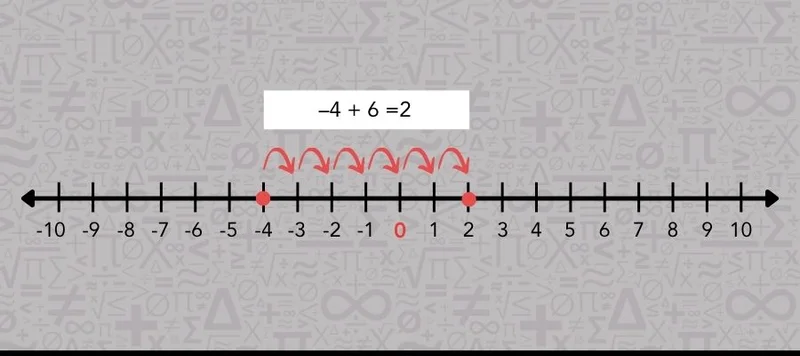
Each jump represents adding one. The final jump lands on 2, making it easier to see why the answer is correct.
Abstract math places greater demands on visual working memory because students must keep track of both the numbers and their positions while solving the problem.
When your child draws a number line, it provides a visual and spatial guide that reduces the mental load and allows them to focus on the mathematical idea rather than trying to imagine it.
📕 You May Also Like: Below Zero: How Negative Numbers Describe the Real World
7. Build a Self-Monitoring Routine
Students with ADHD often rush into solving a problem before they have a clear plan. Self-monitoring helps them slow down and decide how to approach the problem rather than jumping straight into the calculations.
Before your child begins writing, ask one simple question: "What is your first step?"
Next, your child can explain the plan out loud before putting anything on paper. This short conversation slows the process and encourages them to think through their approach.
Once your child finishes the problem, ask one more question: "Does your answer make sense?" This quick review helps your child develop the habit of checking their own work before moving on.
The first question encourages planning before solving the problem, while the second encourages reflection afterward. Together, they help your child build self-monitoring into every math problem rather than an afterthought once a mistake occurs.
📕 You May Also Like: How to Understand & Support Your Child’s Math Learning Style

At Mathnasium, we help students build solid math skills through personalized instruction that meets them where they are.
How Mathnasium Supports Students with ADHD
Mathnasium is a math-only learning center dedicated to helping K–12 students of all skill levels excel in math.
Mathnasium does not diagnose or treat ADHD. We also do not offer an ADHD program. Instead, we provide a structured, low-pressure learning environment that helps reduce many of the cognitive demands that can make math feel overwhelming.
We support students with a consistent approach that helps them build confidence, make steady progress, and develop the skills they need for long-term success in math.
At the heart of that support is the Mathnasium Method™, our proprietary teaching approach, which is designed around each student's needs and learning style to help them learn and master math. It includes:
-
Assessment and Personalized Learning Plans: Each student begins their Mathnasium journey with a diagnostic assessment that identifies current skills, strengths, and gaps. From those findings, we build a personalized learning plan tailored to their goals, whether that means closing foundational gaps, building fluency in a low-pressure environment, or developing the independent problem-solving skills that math demands.
-
Teaching for Understanding: Our tutors use natural language and a mix of verbal, visual, mental, tactile, and written techniques so each concept lands before we move forward. Different ways of presenting a concept give students with ADHD more than one path to understanding, whether they benefit from visual tools such as number lines, hands-on activities, or verbal explanations.
-
Problem-Solving and Critical Thinking: We give students time to work through problems independently. That productive struggle helps them learn to trust their own reasoning. When we do step in, we explain both the how and the why behind each answer, so students build problem-solving and critical thinking skills they can use in math and beyond. That balance between independence and guidance helps students stay engaged without feeling overwhelmed.
-
An Engaging and Fun Learning Environment: Sessions include games, earned rewards, and consistent celebration of progress, so students actively participate, solve problems, and engage with math instead of simply listening to a lesson. They build confidence alongside fluency, and many develop a more positive relationship with math over time.
The impact extends beyond the classroom:
-
94% of parents report an improvement in their child's math skills and understanding
-
93% of parents report their child's improved attitude toward math after attending Mathnasium
-
90% of students saw an improvement in their school grades
With over 1,100 learning centers across North America, there is likely a Mathnasium close to you.
Whether your student is looking to catch up, keep up, or get ahead in math, your local Mathnasium center can help.
Start by booking a diagnostic assessment, and together we'll create a personalized plan for math mastery.