At Mathnasium, we don't lead with memorization of math formulas. Instead, we build deep understanding by breaking concepts into manageable parts, so your child grasps both the why behind each formula and the what.
However, even the most mathematically confident students hit moments where a formula just won't last. Tests are timed. Practice moves fast. And sometimes, your child needs a quick mental hook to bridge the gap while deeper mastery is still taking shape.
That's exactly what these tips are for. Think of them as training wheels, practical memory aids that keep your child moving forward until the true understanding kicks in.
7 Tried-and-True Tips for Memorizing Math Formulas
These tips work best as a toolkit, so mix and match based on what works for your child. Some learners are visual, some are musical, some just need to move. Let your child try a few and own the ones that feel natural.
1. Use Mnemonics
A mnemonic is a memory device, a phrase, word, or pattern that gives abstract information a mental hook to hang on. In math, they work particularly well for formulas and rules that involve a specific sequence of steps.
Our tutors reach for them most often when explaining order of operations. To solve a math expression correctly, students need to work through Parentheses, then Exponents, then Multiplication and Division, then Addition and Subtraction.
That's quite a few steps to keep in order. So we call in a mnemonic: PEMDAS, or "Please Excuse My Dear Aunt Sally."
Math has a few other famous ones that have stood the test of time:
This is not just anecdotal. Research on children’s memory shows that simple mnemonic tricks can actually reshape how kids’ brains store and recall abstract information, including math formulas.
The best part is that your child can make their own.
Ask them to come up with a silly phrase for a rule they keep forgetting, then have them teach it back to you. The sillier and more personal, the better, and that second pass of teaching it out loud is where it really lands.
2. Visualize Formulas as Pictures
According to research on visual learning, we're wired to remember what we see, which makes visual tools particularly effective for retaining abstract information like math formulas.
That's why we encourage students to give every formula a visual form before anything else.
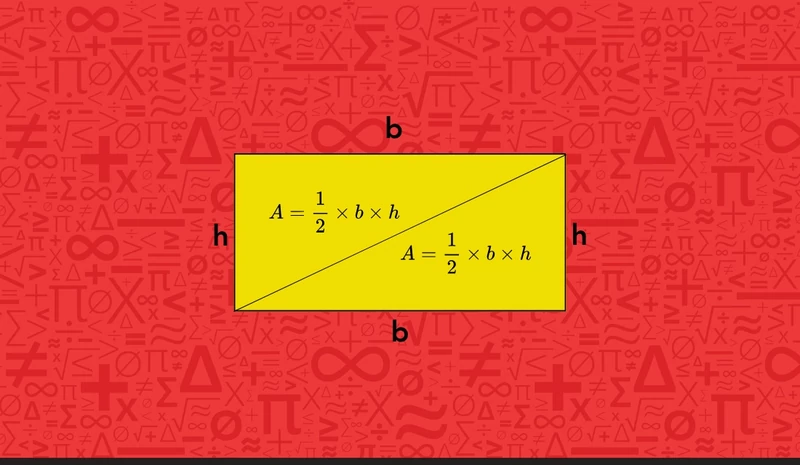
Let’s take the area of a triangle formula ( \(A = \Large\frac{1}{2}b × h\)). Instead of staring at symbols, ask your child to draw a rectangle, then cut it in half diagonally. Each half is a triangle, and suddenly, the \(\Large\frac{1}{2}\) in the formula becomes the rectangle cut in two. The base and height of the triangle are on the sides of that rectangle.
You can try these at home:
-
Ask your child to sketch a quick drawing for each formula they're learning
-
Let them label the parts in their own words
-
Keep a small "formula sketchbook" that they can flip through before a test
The drawing doesn't have to be perfect. The act of creating it is what makes the formula last.
📕 You May Also Like: How to Teach Math to Visual Learners
3. Sing or Rap the Formula
This one might get a few eye-rolls from older students, but bear with it. The brain responds to music and rhythm in ways few other memory tools can match, and your child is no exception.
Here's something that worked for many of our students who had trouble recalling the Pythagorean theorem (a² + b² = c²). You can set it to a familiar tune like "Twinkle Twinkle Little Star": "A squared plus B squared equals C squared."
It sounds simple, but after a few repetitions, it lodges itself in long-term memory.
Here are a few ways to make it work at home:
-
Let your child pick the tune. Their favorite song will work better than yours, even if it's one you've never heard of.
-
If they're willing, encourage them to rewrite the lyrics for a formula they keep forgetting.
-
A quick voice memo on your phone can work as a last-minute refresher before a test.
A two-minute song can save twenty minutes of blank staring at a test.
4. Chunk Into Familiar Patterns
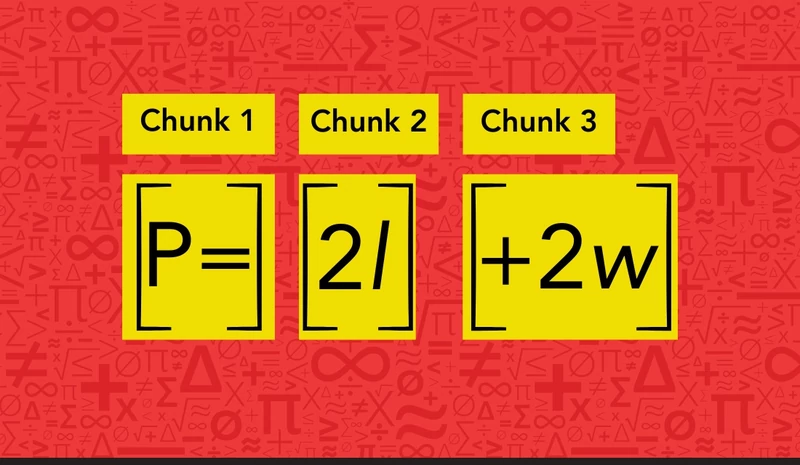
Some formulas look more complicated than they actually are. The perimeter formula, P = 2l + 2w, is a good example. Those repeated 2s can trip students up at first glance, but broken into three speakable chunks, it becomes manageable:
-
"P equals"
-
"2 times length"
-
"plus 2 times width"
Say each part out loud a few times and the formula starts to feel like something owned rather than something memorized.
If you’d like to test this at home, you can:
-
Write the formula out and draw brackets around each chunk
-
Have your child say each part aloud three times before putting it together
-
Practice with real objects, a book, a table edge, anything with a measurable perimeter, to make each chunk concrete
📕 You May Also Like: How to Break Down Any Math Problem Into Steps
5. Link to Real-Life Anchors
Studies of hands-on learning in math and science find that when children connect abstract ideas to real-world actions, their understanding and memory both improve.
In practice, that means giving every formula a physical home before it becomes a symbol on a page.
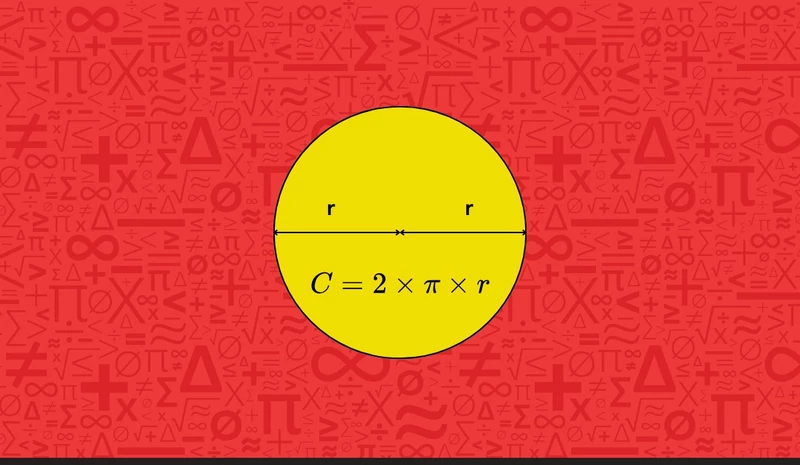
Take circumference (C = 2πr). Grab a jar lid and a piece of string. Measure the radius from center to edge, lay it out twice, and multiply by pi (roughly 3.14). Your child just calculated the circumference, hands-on, before the formula even appeared.
Here are a few more you can try at home:
-
Bake together and use the area of a rectangle (A = l × w) to figure out how many brownies fit in the pan
-
Measure the edges of a garden bed or a room with a tape measure to make perimeter feel like a practical tool
-
Use a clock face to explore fractions of a circle, connecting the position of the hands to degrees
-
Count floor tiles in a room before introducing the area formula, so the numbers already mean something
The more personal and tangible the anchor, the longer it lasts with your child.
6. Practice With Flashcards and Spaced Repetition
Flashcards may feel like an old-fashioned approach, but if you pair them with the right strategy, they're one of the most effective memory tools your child can use.
Write the formula on one side of the card. On the back, add a quick sketch or the mnemonic your child came up with in the earlier tips. Then, space out the review sessions: daily at first, then every few days as the formula starts to sink in.
Try this at home:
-
Let your child design and decorate their own flashcards
-
Review them together for five minutes before bedtime
-
Set aside cards your child knows confidently and focus on the ones that need more work
Learning science calls this ‘spaced repetition,’ and it typically outperforms last‑minute cramming for long‑term recall.
7. Teach It to Someone Else
Research on active learning shows that when children explain and act out their ideas, their memory and understanding grow deeper. That makes teaching one of the most powerful ways to truly own a formula, and your child might be surprised by how well it works.
After your child learns a new formula, ask them to explain it to you, a sibling, or even a stuffed animal. The act of teaching forces them to organize their thinking, fill in any gaps, and put the concept into their own words.
It doesn't take much to make this part of your routine:
-
Setting aside five minutes after each study session for your child to "teach back" what they learned
-
Asking them questions as they explain, like "But why does that work?"
-
Letting them use their sketchbook or flashcards as props
Your child will quickly discover that the formulas they can teach are the ones they actually understand. And they will carry that confidence straight into the classroom.
📕 You May Also Like: 7 Strategies to Move Beyond Memorization in Multiplication

At Mathnasium, specially trained tutors build the understanding that makes formulas last.
How Mathnasium Builds a Deep Understanding of Math
Memorization tricks are a great starting point, and it's perfectly fine to lean on them while a deeper understanding is still taking shape. But math mastery goes beyond what any mnemonic or flashcard can offer.
That's where Mathnasium comes in. Our math-only learning center employs the Mathnasium Method™, a proprietary teaching approach designed to unlock your student's full math potential by making math make sense.
Each student begins with a diagnostic assessment, a relaxed interaction where we pinpoint their strengths, knowledge gaps, and how they naturally think about math. Those insights inform a personalized learning plan tailored to their specific needs and goals.
With the plan in place, our specially trained tutors deliver face-to-face instruction guided by it. We use natural, everyday language alongside a mix of verbal, visual, mental, tactile, and written techniques, so concepts land in a way that builds true understanding rather than temporary recall.
Problem-solving and critical thinking are central to how we work. We give students time to productively struggle, then rejoin them to check and correct their process.
We teach both the how and the why behind each concept, because understanding both builds the reasoning skills students need well beyond the next test.
Fun is built into the method. Sessions are often game-based and hands-on, and we mark and celebrate every bit of progress, big and small. Students stay aware of how far they have come, and confidence grows with every session.
The results speak for themselves:
-
94% of parents report an improvement in their child's math skills and understanding
-
93% of parents report an improved attitude toward math after attending Mathnasium
-
90% of students saw an improvement in their school grades
Mathnasium operates over 1,100 learning centers, bringing our proven approach close to your community.
For families in and around Mason, OH, Mathnasium of Mason is a trusted local center with years of experience helping students catch up, keep up, and get ahead in math.
The center has been recognized by the local community as a:
Whether your learner needs to build formula fluency, close foundational gaps, or push toward more advanced math, our team is ready to help.
📅 Schedule a Free Diagnostic Assessment at Mathnasium of Mason
Not near Mason?
📍 Find a Mathnasium Learning Center Near You


 (513) 984-1212
 (513) 984-1212