(972) 231-6284
 (972) 231-6284










Mathnasium of Richardson West Awarded in Reader's Choice Contest for Best Tutoring and Best Early Education
Aug 11, 2026 | Richardson West

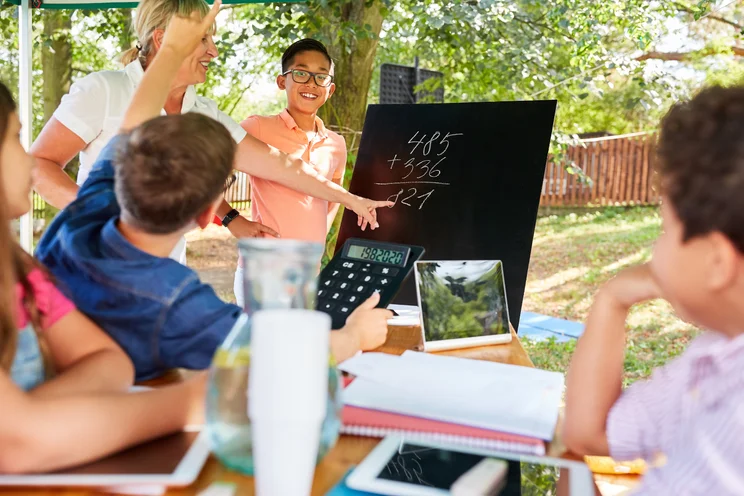
Most elementary students lose ground in math over the summer. According to NWEA, one of the largest educational assessment organizations in the U.S., summer learning loss tends to be larger in math than in any other subject.
For kids in grades 1 through 4, that loss hits at the worst possible time. These are the years when children build the core skills everything else depends on: number sense, place value, multiplication, and fractions. A gap that forms in June is harder to close by September.
A little goes a long way, though. About an hour of math per week, spread across a few short sessions, is enough to keep your child's skills sharp and their confidence intact heading into fall.
Today, we guide you through four grade-specific 8-week plans, one for each grade your child just completed, aligned with Texas math standards (TEKS). The activities are flexible, low-pressure, and designed to fit into a real summer.
Each plan covers 8 weeks and targets one skill area per week. The weekly activities are simple by design: most require nothing more than a deck of cards, a pair of dice, or objects you already have at home.
A rhythm that works well for most families:
Start with two or three minutes of casual back-and-forth about the week's topic.
Spend the bulk of the time, around 10 to 15 minutes, on the main activity.
Close with one question or a quick recap of what they figured out.
Find a consistent time that fits your child’s summer routine and go with it. Morning tends to work best before the day fills up, but the right time is whatever your child will actually show up for.
The plans are not fixed schedules. You can repeat a favorite week, swap the order, or do more some weeks and less in others. Aim for consistency over intensity.
📕 You May Also Like: Why Summer Is the Best Time to Get Ahead in Math
Your child just spent a year learning to count, add, subtract, and make sense of numbers for the first time.
This plan keeps those early skills warm and builds a little confidence heading into 2nd grade. Aim for one focus per week and one or two short activities, nothing that feels like school.
Fluent counting and confident number comparison make everything that comes next easier. This week, keep it casual. A few ideas:
Count everyday objects around the house.
Practice counting forward and backward from different starting points.
Ask simple comparison questions: Which pile has more? Which number comes before 7?
Combinations that make 10 are one of the most useful early math skills your child can have. Use small objects like coins, buttons, or cereal pieces to build different pairs that add up to 10. Quick questions work well here, too: "5 plus what equals 10?"
Subtraction lands faster when it feels like a story rather than a problem on a page. A few simple ways to bring it to life:
Act out "take-away" situations using snacks, toys, or anything nearby.
Draw pictures together for "How many are left?" questions.
Let your child narrate what is happening as you go.
Two-digit numbers are made of tens and ones, and this week is about making that visible. Build numbers using bundles of sticks, drawings, or small objects grouped into tens. Then, compare two numbers and talk through which is bigger and why.
📕 You May Also Like: What Is Regrouping in Math? A Complete Guide
Take math off the page this week. Go on a shape hunt around the house or outside, name what you find, and talk about what makes each shape different. Sorting objects by shape is a simple activity that sharpens your child’s observation skills without feeling like a lesson.
You do not need a ruler this week. Use informal units like hand spans, blocks, or pencils to measure everyday objects. Line things up, compare what is longer or shorter, and let your child make predictions before measuring.

Hands-on comparison activities help children develop measurement intuition long before formal rulers and units come into play.
A clock is easier to read when it connects to your child's actual day. Ask "What time is it now?" at natural moments, and follow up with "What will we be doing in one hour?" Stick to hours and half-hours, which is where 1st graders typically finish the year.
📕 You May Also Like: 9 Ways Analog Clocks Teach Both Time and Fractions
End the plan on a high note. Pull out a board game or a deck of cards and let the playing do the work. Look for natural moments to count, compare, or recall a fact from earlier in the summer. Your child will be reviewing skills without realizing it.
📕 You May Also Like: 5 Math Games That Help Kids Rediscover the Joy of Learning
By the end of 2nd grade, your child has tackled 3-digit numbers, addition and subtraction within 1,000, simple fractions, and measurement.
This plan keeps those skills active so they walk into 3rd grade ready. One focus per week, a few short activities, and no worksheets required.
A solid grasp of place value makes every operation easier. This week, read, write, and compare 3-digit numbers together. Build numbers using hundreds, tens, and ones with blocks, drawings, or grouped objects, then order a few numbers from smallest to largest and talk through the reasoning.
Keep 2-digit addition familiar by connecting it to everyday situations. A few simple ways to practice:
Add small prices together at the grocery store or while looking through a menu.
Keep score in a game and add totals after each round.
Pose quick mental math questions during car rides or walks.
Subtraction makes more sense in context. Ask questions like "How many are left?" and "How many more do we need?" in situations that come up naturally during the day. Let your child figure out the answer before you confirm it.
This week, stretch the numbers a little. Short story problems tied to real situations work well here:
How many miles did we drive on our last trip?
How many more points does your favorite team need to reach 500?
How many days until school starts?
Money is one of the best real-world math tools available. Count coins together, compare prices, and make simple calculations at the store. You can also run a quick family survey, tally the results, and draw a simple bar graph together.
📕 You May Also Like: How to Teach Kids Money Skills with Math
Two practical skills that come up every day. For time, ask "What time is it?" at natural moments and work toward reading clocks to 5-minute intervals. For length, measure and compare household objects using a ruler and talk about the differences.
Fractions land better if your child can see and touch them. Cut food into equal parts, shade simple shapes divided into halves, thirds, and fourths, and ask your child to name what they see. Keep it visual and hands-on.
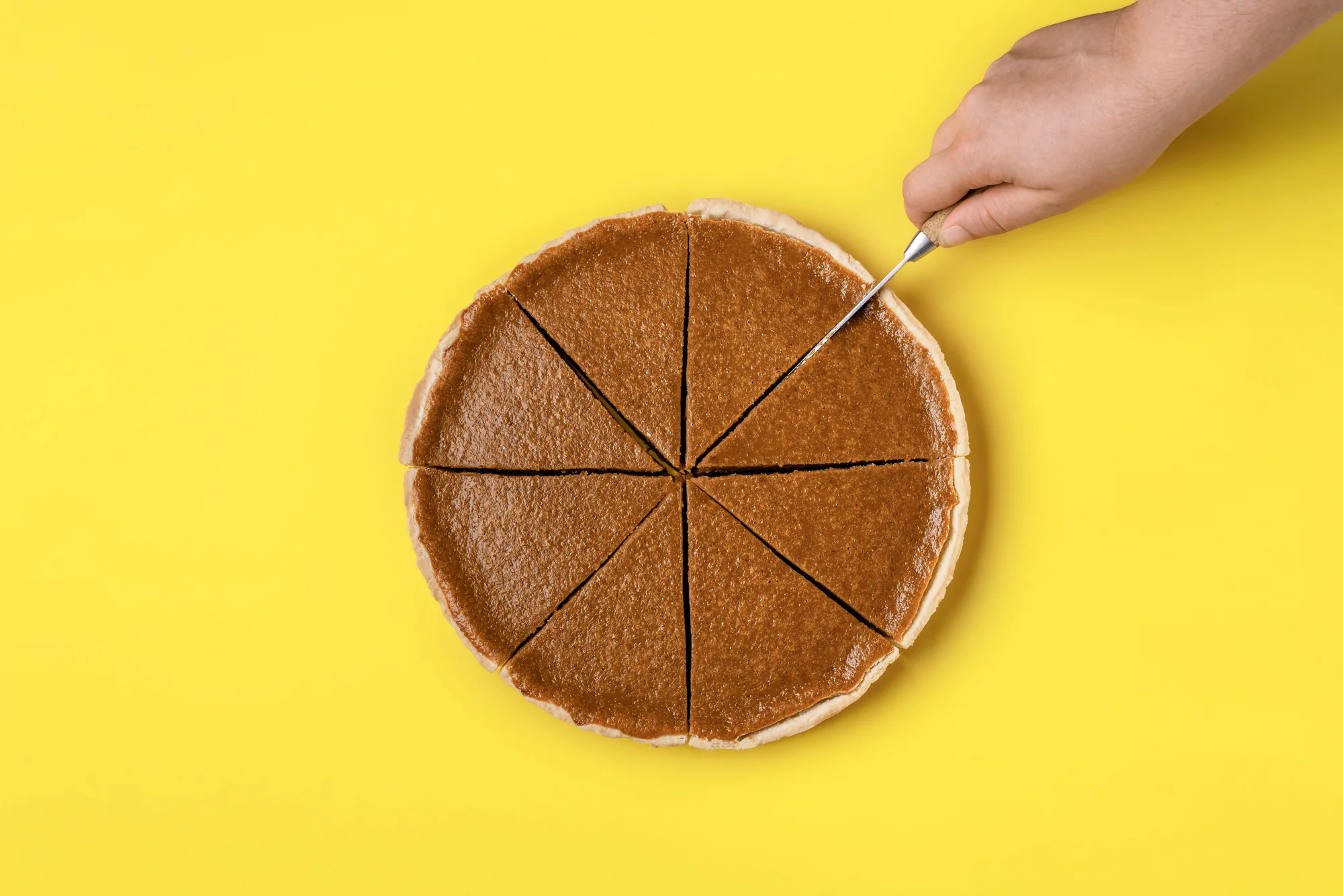
Cutting food into equal parts gives fractions a concrete meaning that diagrams and worksheets rarely can.
Bring the summer together with a few short problems that mix operations, time, and money. Then, flip it around. Ask your child to come up with their own "summer story problem" for you to solve. Both directions count: posing a problem and solving one require the same math thinking.
By the end of 3rd grade, your child has been introduced to multiplication and division, worked with fractions, and tackled multi-digit addition and subtraction.
This plan keeps those skills from fading over the summer. One focus per week, short and flexible activities, and nothing that feels like extra homework.
Multiplication facts are easy to lose over a long break, so this week is a good time to bring them back. Skip counting is a great way back in:
Count by 2s, 5s, and 10s during car rides or walks.
Practice a handful of facts with a deck of cards or dice.
Keep sessions short and competitive rather than drill-heavy.
📕 You May Also Like: 5 Fun Math Card Games You Can Play with a Standard Deck
Multiplication makes more sense if your child can see it. Use small objects to build arrays together, write the matching multiplication sentence, and talk through what the rows and columns represent. A dozen eggs or a grid of floor tiles works just as well as any math tool.
Division lands fastest when it starts as a fair-sharing problem. Split a pile of objects into equal groups and ask:
How many in each group?
How many groups did we make?
Connect each division situation back to the matching multiplication fact.
Keep multi-digit operations familiar with short word problems tied to real contexts:
Distances between cities on a road trip
Scores or totals from a game or competition
Days, miles, or dollars from everyday situations
Fractions are easier to grasp with something tangible in hand. Use food, paper folding, or drawn shapes to show fractions as equal parts of a whole. Ask your child to name the fraction, identify the numerator and denominator, and explain what each number represents.
A number line gives fractions a place in the order of numbers, which many children find clarifying. Draw a simple number line together and mark common fractions like \(\Large\frac{1}{2}\), \(\Large\frac{1}{4}\), and \(\Large\frac{3}{4}\). Then compare two fractions and talk through which is bigger and why.
This week, keep these practical skills active:
Measure and compare lengths around the house.
Calculate simple perimeters using a ruler and everyday objects.
Read or create a basic bar graph using data your child finds interesting.
📕 You May Also Like: How to Read 4 Most Common Graphs - A Kid-Friendly Guide
Bring the summer together with three or four short problems that mix multiplication, division, addition, subtraction, and fractions. After your child solves each one, ask them to explain how they decided which operation to use. The reasoning matters as much as the answer.
By the end of 4th grade, your child has worked with multi-digit multiplication and division, equivalent fractions, decimals, and multi-step word problems.
This plan keeps those skills sharp over the summer so they walk into 5th grade on solid ground. One focus per week, short activities, and nothing that requires a tutor to set up.
Strong fact fluency frees up mental energy for harder problems. This week, keep practice short and varied:
Run through a handful of facts with a deck of cards or dice
Draw arrays or area models for selected facts to keep the visual connection alive
Mix in a timed challenge every few days to build speed without pressure
This week, stretch fact fluency into larger numbers. Use simple real-world scenarios to frame the problems:
How many seats are in a theater with 24 rows of 18?
How much would 15 tickets cost at $12 each?
Keep the context concrete, and arithmetic feels purposeful.
Remainders may confuse your child because the question of what we do with them varies depending on the situation. Pose story problems that leave a remainder and ask your child to decide if you round up or down, or if the remainder matters on its own. That decision is where the deeper math thinking happens.
Equivalent fractions are easier to see than to memorize. Use fraction strips, bar models, or folded paper to show why \(\Large\frac{1}{2}\) and \(\Large\frac{2}{4}\) are the same. Then, compare two fractions and ask your child to explain which is larger and how they know.
Keep fraction operations familiar with problems drawn from everyday contexts:
Add fractions representing portions of food or ingredients in a recipe.
Subtract fractions to figure out how much of something is left.
Take some time with like denominators, which is where 4th graders typically finish the year.
Money is the most intuitive entry point into decimals. Read and compare prices, add small decimal amounts, and calculate simple totals. Ask your child to estimate before calculating, and then check how close they were.
Take geometry off the page this week. Use grid paper, a measuring tape, or real rooms and surfaces to explore perimeter and area. Measure a room, calculate its area, and compare it to another. Let your child lead the measuring process.
End the summer with problems that ask your child to combine two or three ideas at once, such as fractions and measurement together, or multiplication and decimals. Before they calculate anything, ask them to talk through their plan. A child with a clear plan almost always gets the right answer.

Mathnasium centers are open year-round, helping students stay sharp over the summer and hit the ground running in September.
A consistent home routine goes a long way, but some children come out of the school year with gaps that need more structured attention than a weekly plan can provide.
Mathnasium is a math-only learning center dedicated to helping K-12 students learn and master math at every level.
Summer is one of the most valuable times to address knowledge gaps before they compound into bigger problems in the fall. The longer a gap sits unaddressed, the harder the next school year becomes.
Mathnasium's summer program gives students the structured, targeted support that turns a potential setback into a head start.
Our specially trained tutors use the Mathnasium Method™, a proprietary teaching approach that helps students understand math and build lasting confidence.
Each student begins with a diagnostic assessment that identifies exactly where they are and what they need. From there, tutors build a personalized learning plan tailored to their pace and goals.
We teach for understanding using natural language rather than heavy jargon and a mix of verbal, visual, mental, tactile, and written techniques. This helps build students' comfort with concepts and confidence as well.
When students get stuck, we break the concept down into manageable steps and guide them through both the how and the why. Over time, students internalize that approach and develop problem-solving and critical thinking skills they can use in the classroom and beyond.
Fun is an important part of the Mathnasium Method™. Our activities are often game-based and hands-on. We let students earn their rewards and celebrate each step of progress together, so their confidence grows with each session.
The results speak for themselves:
94% of parents report an improvement in their child's math skills and understanding
93% of parents report an improved attitude toward math
90% of students saw an improvement in their school grades
Mathnasium operates over 1,100 learning centers, bringing our top-rated math instruction close to your community.
For families in and around Richardson, TX, Mathnasium of Richardson West brings that same approach to the local community.
With over 100 five-star Google reviews and multiple Reader's Choice Awards from Living Magazine, our center has been recognized for:
Best Tutoring in 2022-2024
Best Early Education in 2024
📅 Schedule a Free Assessment at Mathnasium of Richardson West
Not located near Richardson?
Mathnasium of Richardson West is a math-only learning center for K-12 students in Richardson, TX. Trusted by over a million parents, Mathnasium uses personalized learning plans and the proprietary Mathnasium Method™ to help students catch up, keep up, and get ahead on their math journey.
Our specially trained tutors deliver face-to-face instruction in a supportive and fun small-group environment, working with students both in center and online to develop a deep understanding of math, build confidence, and improve academic performance.
Schedule Free Assessment