Model drawing, also known as bar modeling, is a visual problem-solving strategy that helps students represent word problems with simple bars. Instead of jumping straight to equations, students use these drawings to organize information, understand relationships, and decide what operation to use.
This method is especially helpful for students in grades 2–6 who are learning to make sense of multi-step problems, comparison situations, or real-world math scenarios. By turning abstract language into clear visuals, model drawing builds stronger problem-solving skills and boosts confidence.
Today, our instructors will walk through how to use model drawing step by step, using real examples to show how it works. You’ll learn how to turn words into pictures, and pictures into math solutions.

Step 1: Read the Problem Carefully
Before we draw anything, let’s look at our problem and ask: What is this problem really saying?
Word problems can feel tricky simply because there’s a lot to read and understand. That’s why the first step is always to read the entire problem carefully before trying to solve it.
After you’ve read it, ask yourself:
-
What is the situation about?
-
What information is already known?
-
What are we trying to find out?
Let’s try with an easy example to illustrate the process:
Zoe has 3 doughnuts. Ethan has 5 doughnuts. How many doughnuts do they have altogether?
Here’s what we know:
Now that we understand the problem, we can move on to the next step: organizing what we know. But before we do, here’s a tip we give students at Mathnasium:
Underline or circle the important numbers and keywords in the problem. Words like “altogether,” “how many more,” or “shared equally” help you decide what the problem is really asking and which operation you’ll need later.
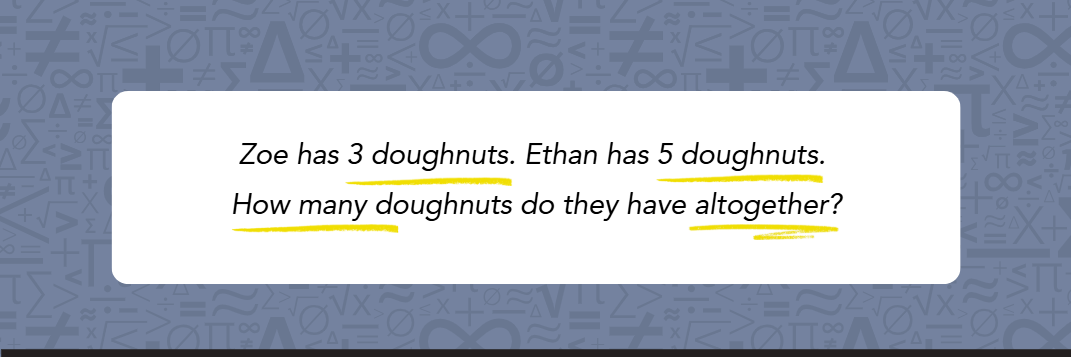
Take the time to understand what’s going on in the problem, and solving it becomes much easier. That’s why this step is so important.
Step 2: Identify the Who and the What
Now that we’ve read the problem and know what it’s asking, our next job is to figure out who is involved and what they have.
This might seem obvious, but writing it down helps you stay organized, especially in longer problems.
Let’s go back to our example with Zoe and Ethan.
Here’s how we identify the “who” and the “what”:
-
Who? Zoe and Ethan
-
What? Doughnuts
We’re comparing how many doughnuts each person has, and we want to find the total.
Once you’ve picked out the people or objects in the problem, label them clearly. You can write their names above their upcoming bars (we’ll draw these next) or next to them in your drawing. That way, you’ll always know which part of your model matches each part of the problem.

Being clear about the “who” and the “what” sets you up for a strong model in the next step: drawing the bars.
Step 3: Draw the Bars
Now comes the fun part: drawing the bars.
Bar models help turn word problems into something you can see. Instead of trying to imagine the math in your head, you build a picture of the problem with simple rectangles. This makes it easier to understand what’s going on and what you need to solve.
We already know the “who” and the “what”:
So we’ll draw one bar for Zoe and one bar for Ethan.
-
Make Zoe’s bar shorter, because she has 3 doughnuts.
-
Make Ethan’s bar longer, because he has 5 doughnuts.
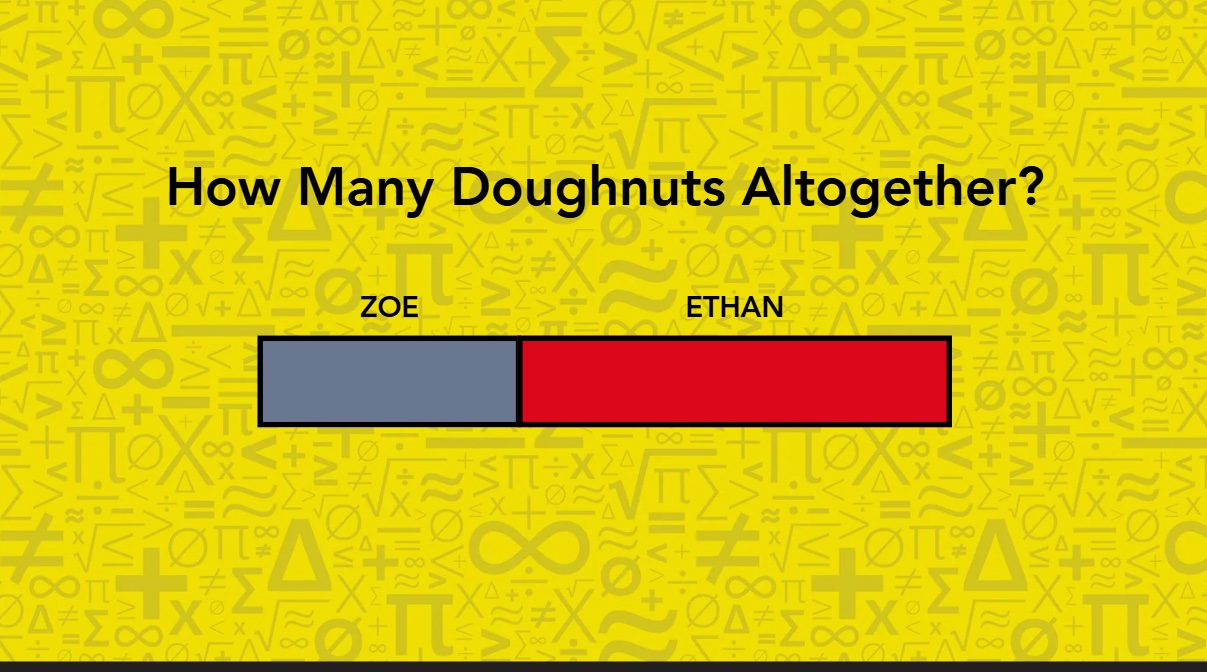
You don’t need to measure the bars perfectly, but try to keep their sizes roughly proportional. That means Zoe’s bar should be smaller than Ethan’s, because 3 is less than 5.
Label each bar with the number of doughnuts:
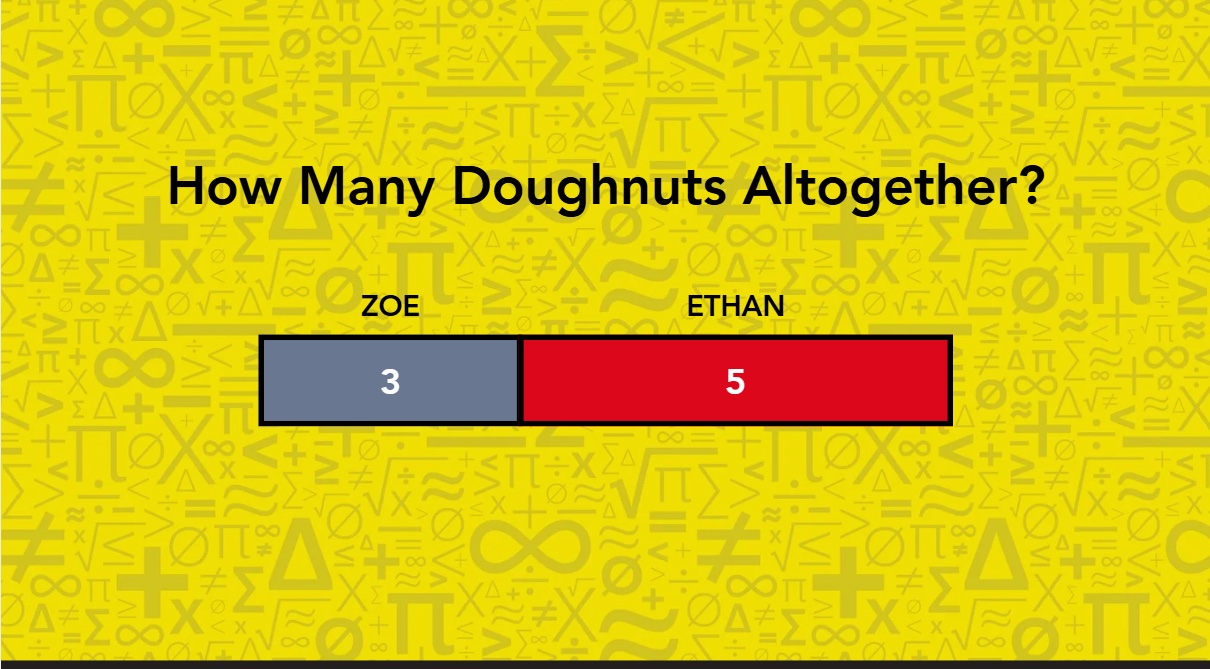
This is the visual part of the model drawing. The bars represent amounts, and they help you see the relationship between the numbers. In this case, we’re looking to find the total when we combine both bars.
Let’s head to the next step: filling in the information.
📕 You May Also Like: What Is a Bar Model in Math? A Complete Overview
Step 4: Fill in Known and Unknown Values
Once you’ve drawn your bars, it’s time to fill in what you know and mark what you don’t know yet.
You’ve already drawn two bars:
-
Zoe’s bar is labeled 3
-
Ethan’s bar is labeled 5
Now you need to show what the problem is asking.
It’s asking for the total number of doughnuts Zoe and Ethan have together. So we need to figure out the total length of both bars combined.
Here’s how we show that in our model:
-
Leave the combined length of both bars as a mystery.his is what we’re solving for.
-
Draw a bracket over both bars, and write a “?” or “Total = ?” above or below it.
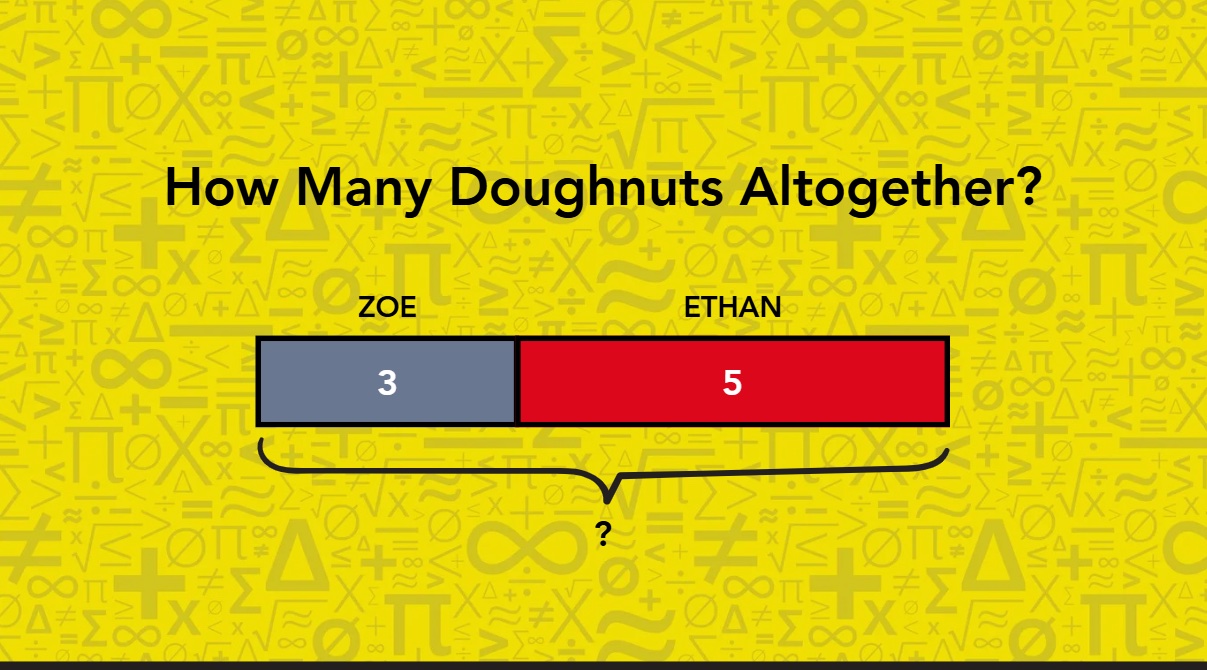
This bracket shows the relationship between the parts (3 and 5) and the total. You’re saying, “I know the parts, but I’m looking for the total.”
Step 5: Use the Visual to Set Up the Equation
Now that your model is complete with labeled bars for Zoe and Ethan, and a bracket showing the total, it’s time to turn the drawing into an equation.
Let’s look again:
Your bar model shows two parts and a missing total. That’s a clue to use addition.
So, from the model, we can write:
3 + 5 = ?
Now we solve it:
3 + 5 = 8
That’s it! The total is 8 doughnuts.
As we said, this was an easy example. Model drawing is particularly helpful when problems get longer or involve multiple steps. It gives you a place to “map out” the math before jumping into calculations.
After you’ve solved the equation, you’re almost done. Let’s make sure we answer the question properly in the final step, and then we’ll look at a couple more examples.
📕 You May Also Like: Is Your Child Guessing in Math? 5 Telltale Signs to Look For
Step 6: Answer the Question in a Sentence
You’ve read the problem, drawn the bars, filled in the values, and solved the equation. Now it’s time for the final step: write your answer clearly, in a full sentence.
Let’s go back to the question one more time:
Zoe has 3 doughnuts. Ethan has 5 doughnuts. How many doughnuts do they have altogether?
We figured out that:
3 + 5 = 8
So our final answer should be:
Zoe and Ethan have 8 doughnuts altogether.
Why do we write a sentence?
Because it shows that you understood what the question was asking, both the math part and the language part too. Writing your answer this way helps make sure you solved the right problem.
📕 You May Also Like: Parents’ Guide to Identifying Early Math Gaps (Grades 2-8)
Example Problems Using Model Drawing
Model drawing works best when we want to understand abstract ideas, like comparisons and sharing, by turning them into something we can see.
Let’s look at two common problem types.
Example 1: Comparison Problem
Comparison problems can be confusing because students need to understand how two quantities relate. A bar model clearly shows the “more than” or “less than” relationship between the parts.
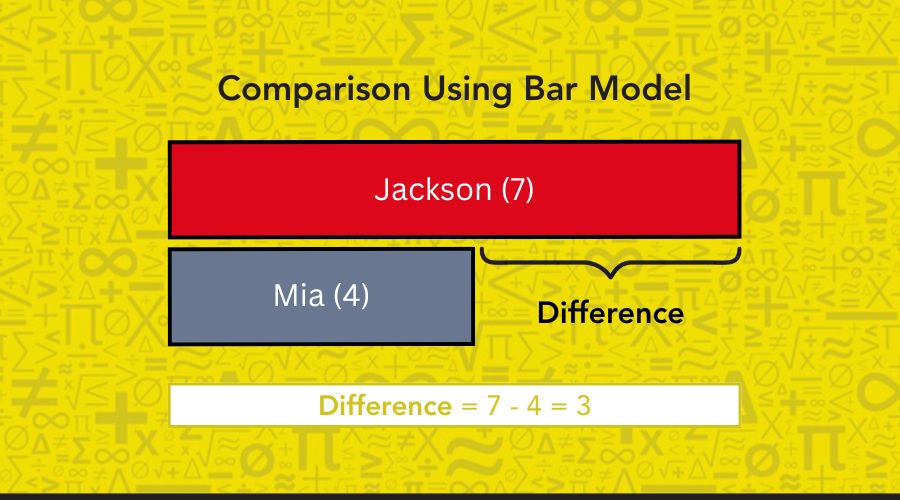
Let's look at an example:
Noah has 8 pencils. Lily has 5 more pencils than Noah. How many pencils does Lily have? How many do they have altogether?
Now we'll follow the steps to solve it:
1. Draw one bar for Noah and label it 8.
2. Draw a second bar for Lily that is the same size as Noah’s, plus an extra section to represent the 5 more.
3. Label Lily’s bar with a question mark since we don’t know her total.
4. Set up the equation: 8 + 5 = 13 -> Lily has 13 pencils.
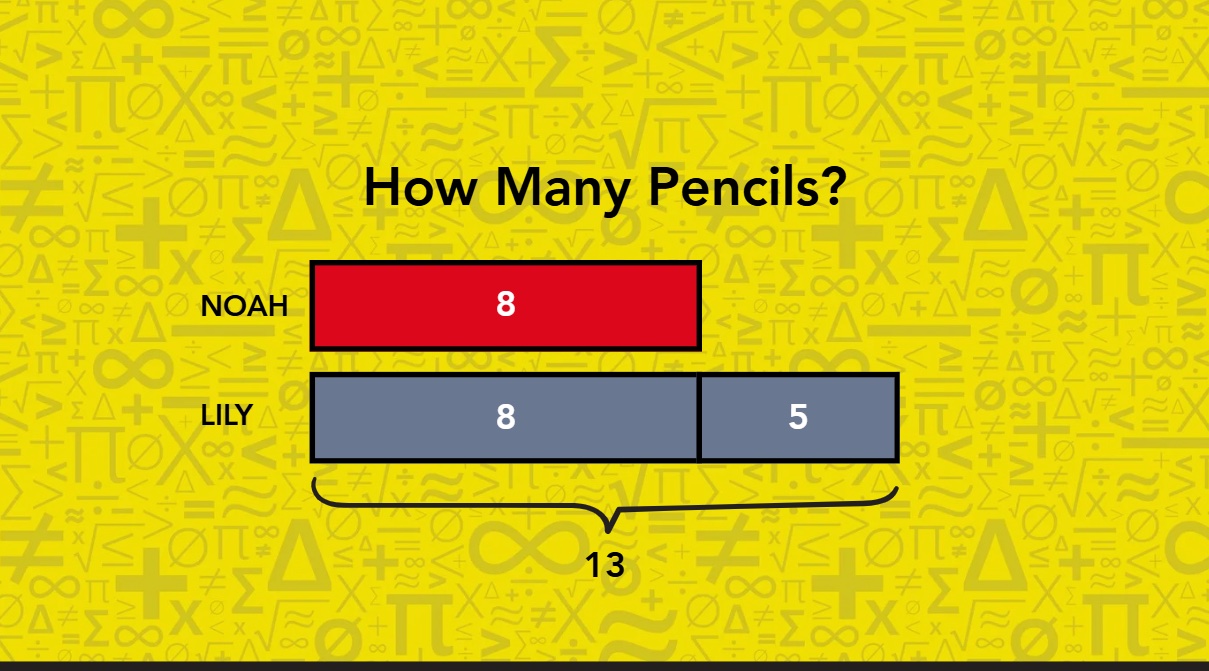
5. Find the total: 8 + 13 = 21 -> Together, they have 21 pencils.
6. Answer in complete sentences: "Lily has 13 pencils. Together, they have 21 pencils."
Example 2: Equal Sharing Problem
When a total amount is being divided among equal parts, a model helps you see how to break that total into smaller, equal groups.
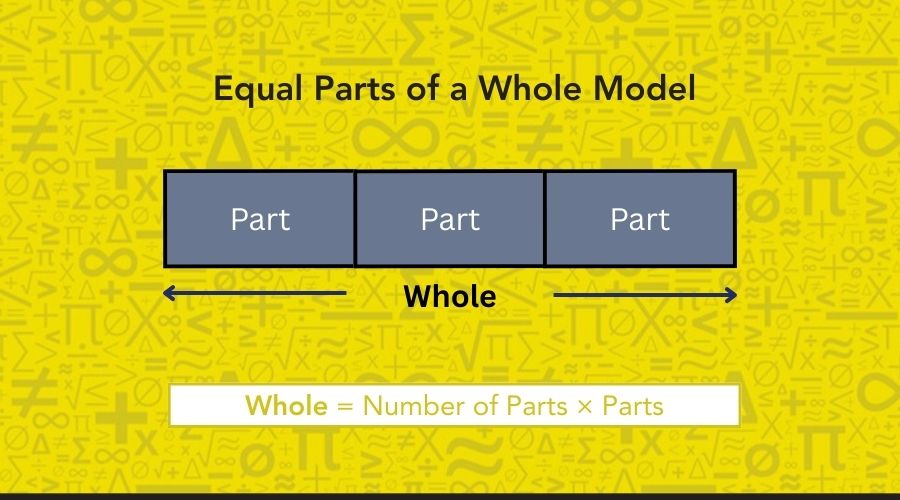
Let's look at an example:
Sofia baked 24 cookies and shared them equally among 4 friends. How many cookies did each friend get?
Now we'll follow the steps to solve it:
1. Draw one long bar labeled 24 to represent all the cookies.
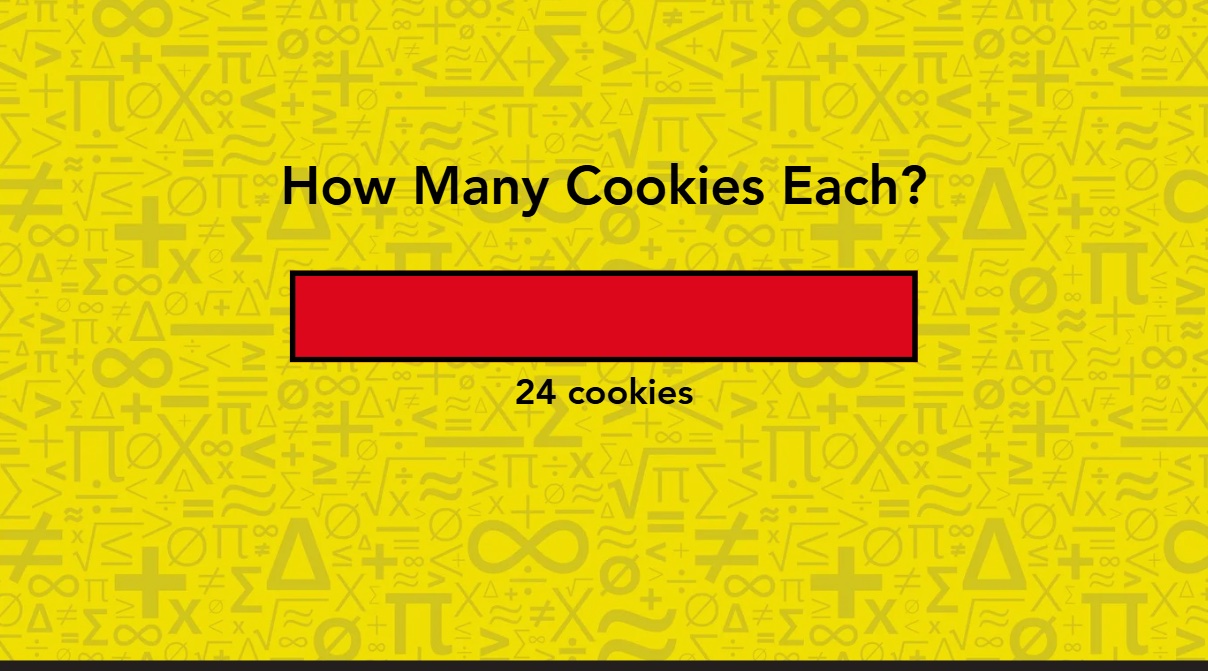
2. Divide the bar into 4 equal parts—one for each friend.
3. Label each part with a question mark.
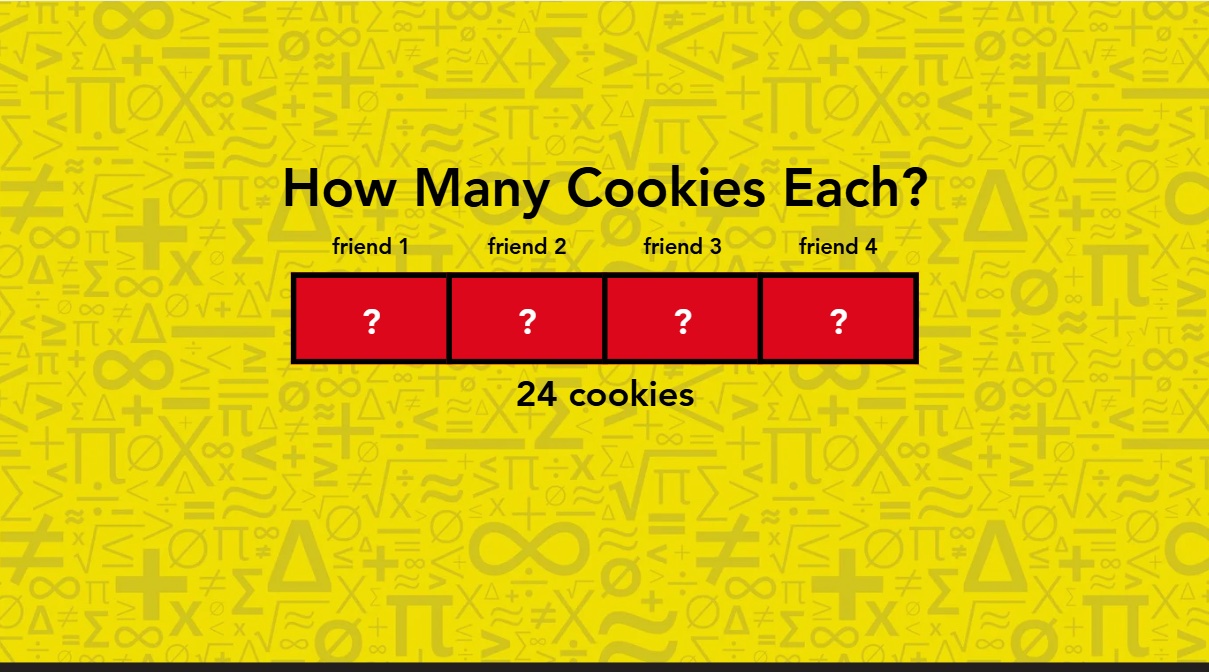
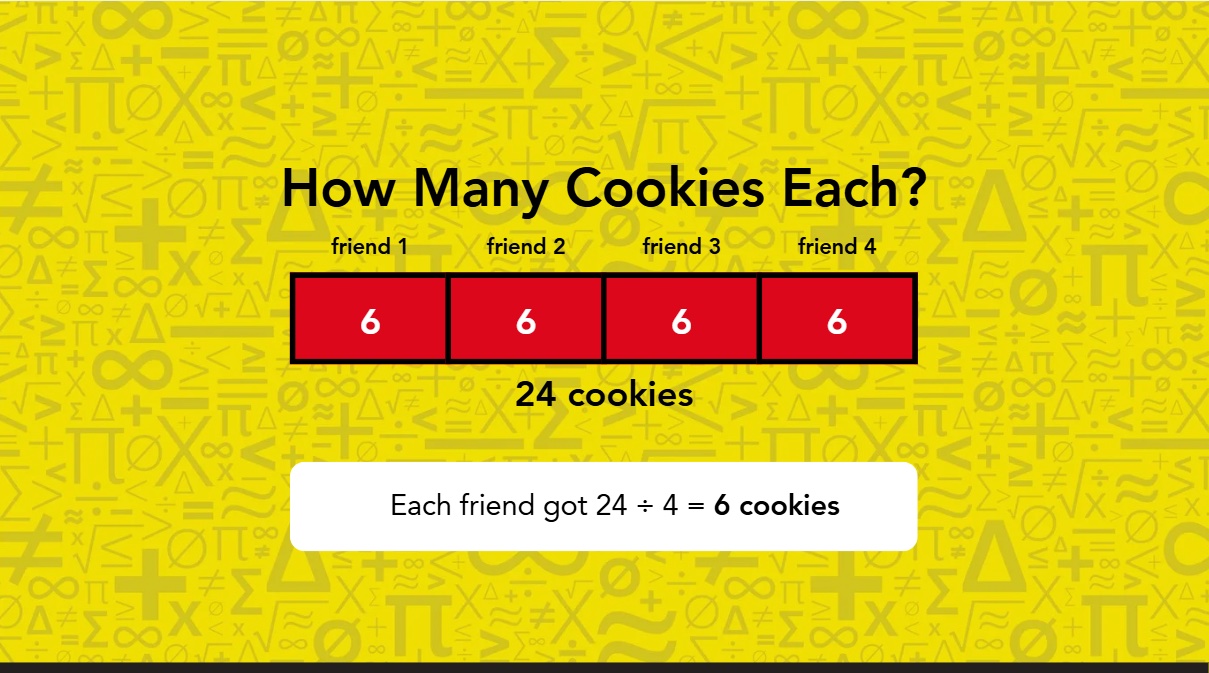
4. Set up the equation: 24 ÷ 4 = 6 -> Each friend gets 6 cookies.
5. Answer in a complete sentence: "Each friend got 6 cookies."
Why Students Excel with Word Problems at Mathnasium
Mathnasium is a math-only learning center for K-12 students of all skill levels.
We teach students to think through problems step by step, just like they did in this guide. With strategies like model drawing, students learn to break down complex word problems into simple, visual parts they can understand and solve with confidence.
Using personalized learning plans and face-to-face instruction in a caring and fun group environment, our tutors help students develop strong problem-solving skills and a deep understanding of math.
Whether it’s mastering one-step equations or preparing for advanced concepts, we meet students where they are and guide them to where they need to go.
With a network of over 1,100 learning centers across the U.S., we bring our proven teaching approach and top-rated tutors close to your community.
For families based in or near Richmond, VA, Mathnasium of Tuckahoe is a trusted local center with years of experience helping students reach their goals in math.
Whether your student is looking to catch up, keep up, or even get ahead in math, our learning center is delighted to help.
Ready to get started?
📅 Schedule a Free Diagnostic Assessment at Mathansium of Tuckahoe!
Not near Richmond?
📍 Find Mathnasium Learning Centers Near You


 (804) 282-3805