

Belsize Park
6 England's Lane
, Belsize Park
London, NW3 4TG
London, NW3 4TG
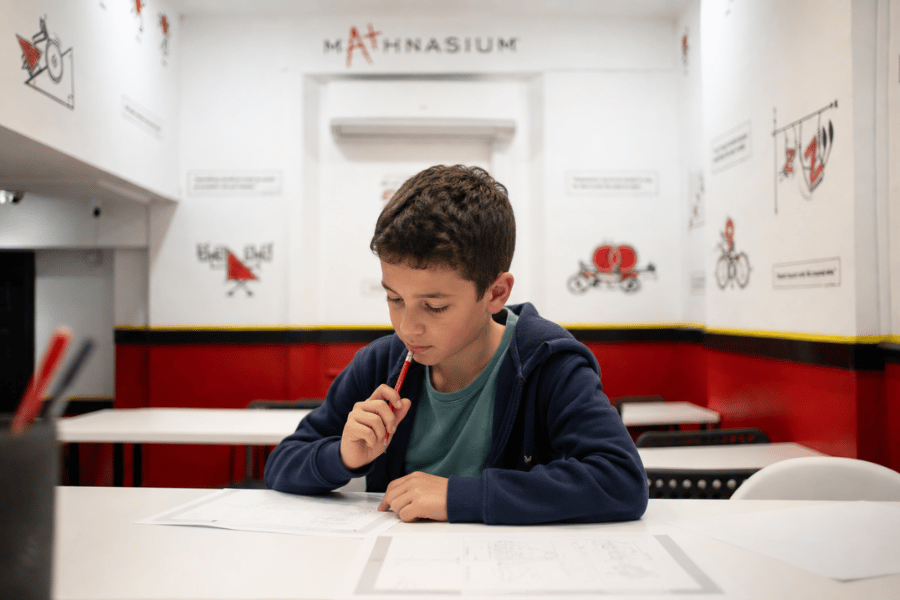
Should I get a private tutor?
My answer often surprised parents: not always.
At every parents' evening that I can remember, I have been asked the same question: "should I get a private tutor?" You might think that I would want all the help I could get, considering the pressure I was under to get good exam results for the maths department. Yet, I would often advise against it.
Why? These four reasons:
Hidden Dependence
Inconsistent Pedagogy
Short Term Thinking
Negative associations
Hidden Dependence
Some tutors, often with the best intentions, can provide more guidance than a student really needs as they go through problems with a student, whether consciously or not. This can be as subtle as facial expressions that allow an unsure child to guess their way to an answer; it can be as explicit as the tutor openly talking through the difficult thinking themselves and only asking the child to think about the simpler elements:
Tutor: “So, because these two lines cross like this and these two angles are positioned here and here, they must add up to 180…so…what’s 180-50?”
Student: “Uhh, 130?”
Tutor: “Great, that’s right. So it looks like you understand how to use co-interior angles”.
This habit is as common as it is pernicious, and will often lead to everyone involved believing that the student understands more than they actually do. Genuine exam anxiety notwithstanding, this is often the real cause of the all-too-common “seems to get it but can’t do it in the exam” phenomenon.
The solution?
Mathnasium uses a pedagogic model of “teach → separate → check” that provides high-quality instruction followed by, crucially, enforced phases of independent work. This moment of separation is essential for developing and testing the student’s own understanding; if they can’t do it on their own yet, then they need more instruction, but there’s no doubt that they need to get to that point eventually.
Inconsistent Pedagogy
Private tutors almost always have a strong academic background, but their effectiveness as teachers and their methods of instruction can vary widely. The quality and approach of private tutors can vary significantly. Some are excellent teachers, while others may have strong subject knowledge but limited experience in how children learn maths. Counter-intuitively, strong mathematicians often don't make good maths teachers because they suffer from the "curse of knowledge": Someone who never struggled with maths at school may not have had to think hard about the misconceptions that less confident learners can develop. They may never have needed the concept of fraction division to be explained diagrammatically because they just “got it”, so will they be ready to offer such explanations now that they are tutoring?
The solution?
Whatever their background, Mathnasium ensures that all our instructors complete a rigorous training programme that gives them effective, evidence-based pedagogic tools to support every type of student. Our teaching materials are designed to complement these methods, which ensures that students get a consistent experience from their instructor and their worksheets.
Short Term Thinking
When considering a private tutor, most parents and students are, understandably, very goal orientated. Maybe homework is causing stress in the evenings or recent mock exams haven’t gone as well as hoped. Private tutors seem like a solution to this problem, and they will often offer to help with homework or work through past papers because these activities address immediate concerns. . This feels useful in the moment because it addresses an immediate worry, but it does not solve the real problem, that being a lack of confidence with maths. Homework time is a pleasure and exams do not spike anxiety when a student is confident with maths. But learning is a long-term, deep process; it requires sustained and organised effort, not occasional and disconnected interventions.
Tutors going through past papers is, in my experience, a deceptively ineffective use of time. Understandably, students just want to be able to answer the questions in the exam, so looking at those exam questions seems to be the obvious thing to do. The bad news is that exam questions are written by very skilled mathematicians and educators and they know exactly how to test underlying knowledge in unpredictable ways; there is very little margin in memorising exam problems or learning “exam technique”, at least not when divorced from the sustained and organised development of mathematical knowledge.
The solution?
Mathnasium makes a long-term commitment to students and has a curriculum designed to take them on a personalised journey from wherever they are to wherever they need to be. Instructors see students regularly and really get to know them; the work is carefully personalised and updated with the help of regular, detailed assessments; and the curriculum is designed to lead students carefully through the fundamental ideas that they need to learn to be better mathematicians.
Negative Associations
My final objection to private tuition is simply that it often does not feel good for the child. This is not the fault of the tutors themselves. It is implicit in the act of hiring a tutor that something is not quite right: are they falling behind their classmates? Are they finding homework too difficult? Even if the tutor is being hired just to provide extension, this implies that the child perhaps isn’t fulfilling their potential in some way. By definition, private tutors work with students away from their peers in a setting that feels very different from the learning community of their school. This can be an isolating experience or even feel like a punishment in the worst case.
The solution?
Mathnasium combines personalised instruction with a structured learning environment. Students work alongside peers, receive regular encouragement from instructors and experience the satisfaction that comes from solving problems independently. Although an atmosphere of quiet focus is expected, students sit alongside others who are doing the same thing they are: working hard to learn more maths. They earn tangible rewards as well as genuine praise from their instructors for their efforts. Nobody feels isolated or incapable at any moment.
If you're considering additional maths support, it's worth asking not just who will teach your child, but how they will be taught. The right support should build confidence, independence and long-term understanding, not simply help them through next week's homework.
Discover Your Child's Maths Confidence Level
If you're wondering whether your child would benefit from additional maths support, the best place to start is with a comprehensive Mathnasium Assessment.
Our assessments help identify strengths, uncover knowledge gaps and provide a clear picture of your child's current mathematical understanding. We'll then talk you through the results and explain how a personalised learning plan could help them make progress.
Book a Free Assessment at Mathnasium of Belsize Park today.

 0203 997 3441
 07586 599921