In everyday life, we come across boxes, buildings, books, and other familiar objects. Some have flat, rectangular sides, while others have triangular or even six-sided ends. Although they may look quite different, many share the same geometric structure. In math, we call shapes like these prisms.
Today, we'll learn how to recognize prisms, compare five different types, see some examples in the real world, and find out how to calculate their surface area and volume.

What Is a Prism in Simple Terms?
A prism is a three-dimensional (3D) solid with two matching, parallel bases connected by flat side faces. The bases are polygons, or closed, flat shapes made of straight sides.
In simpler words, picture a shoebox. Its opposite ends are matching rectangles, and the flat surfaces between them connect those ends. We call this shape a right prism because its side faces are rectangles. Other prisms can have slanted side faces shaped like parallelograms.
Besides bases, we use three other geometry terms to describe the parts of a prism.
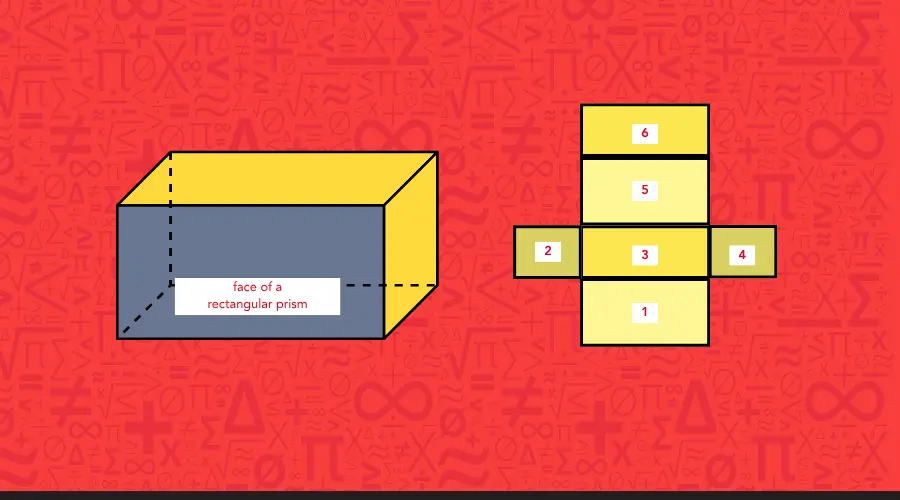
Faces are the flat surfaces that make up the solid, including its bases.
Edges are the straight line segments where two faces meet.
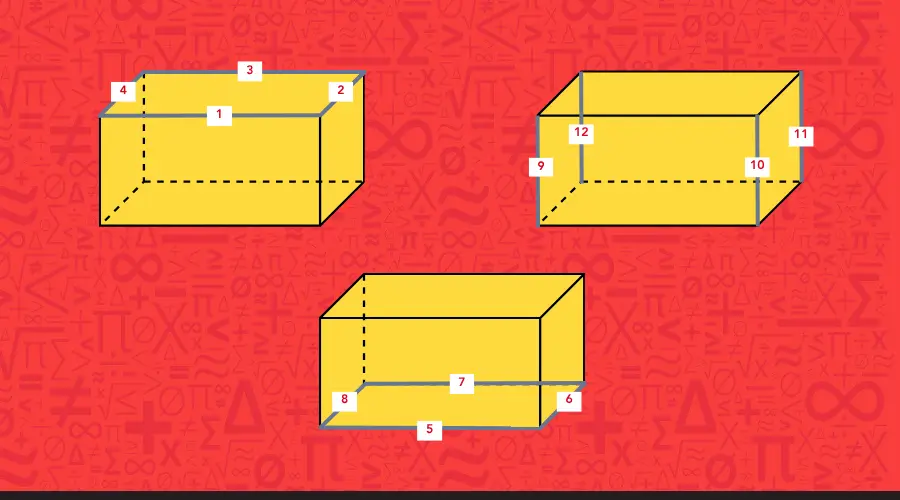
Vertices are the corners where edges meet.
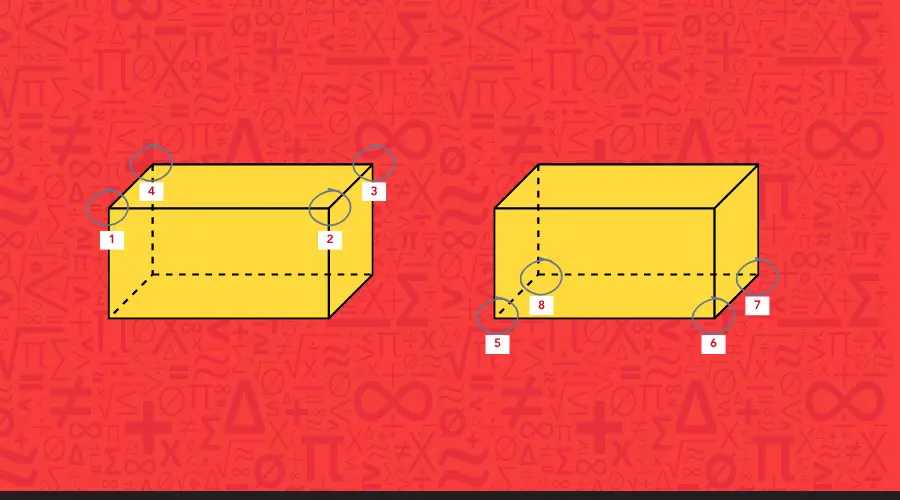
Students learn to recognize and describe three-dimensional shapes, including prisms, in elementary school. By Grade 5, they learn to calculate the volume of rectangular prisms. In Grade 6, they work with more advanced geometry involving prisms, including surface area and other measurements.
📕 You May Also Like: What Are Vertices, Edges, and Faces? A Complete Overview

What Are the Different Types of Prisms?
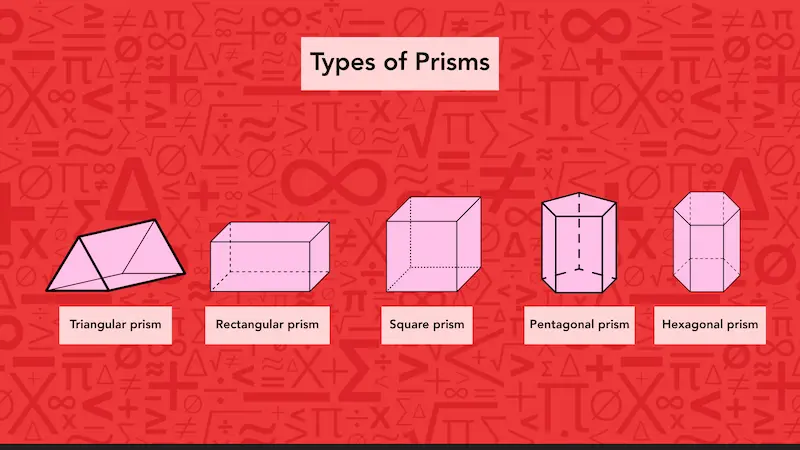
Prisms get their names from the shape of their bases. There are many types, including prisms with seven-sided, eight-sided, or even more complex polygon bases.
We'll look at five useful examples, from triangular to hexagonal prisms, including two closely related four-sided types. Let's see what makes each one different and where we can find similar shapes in everyday life.
1. Triangular Prism
A triangular prism has two matching triangular bases connected by three side faces. Altogether, it has 5 faces, 9 edges, and 6 vertices.
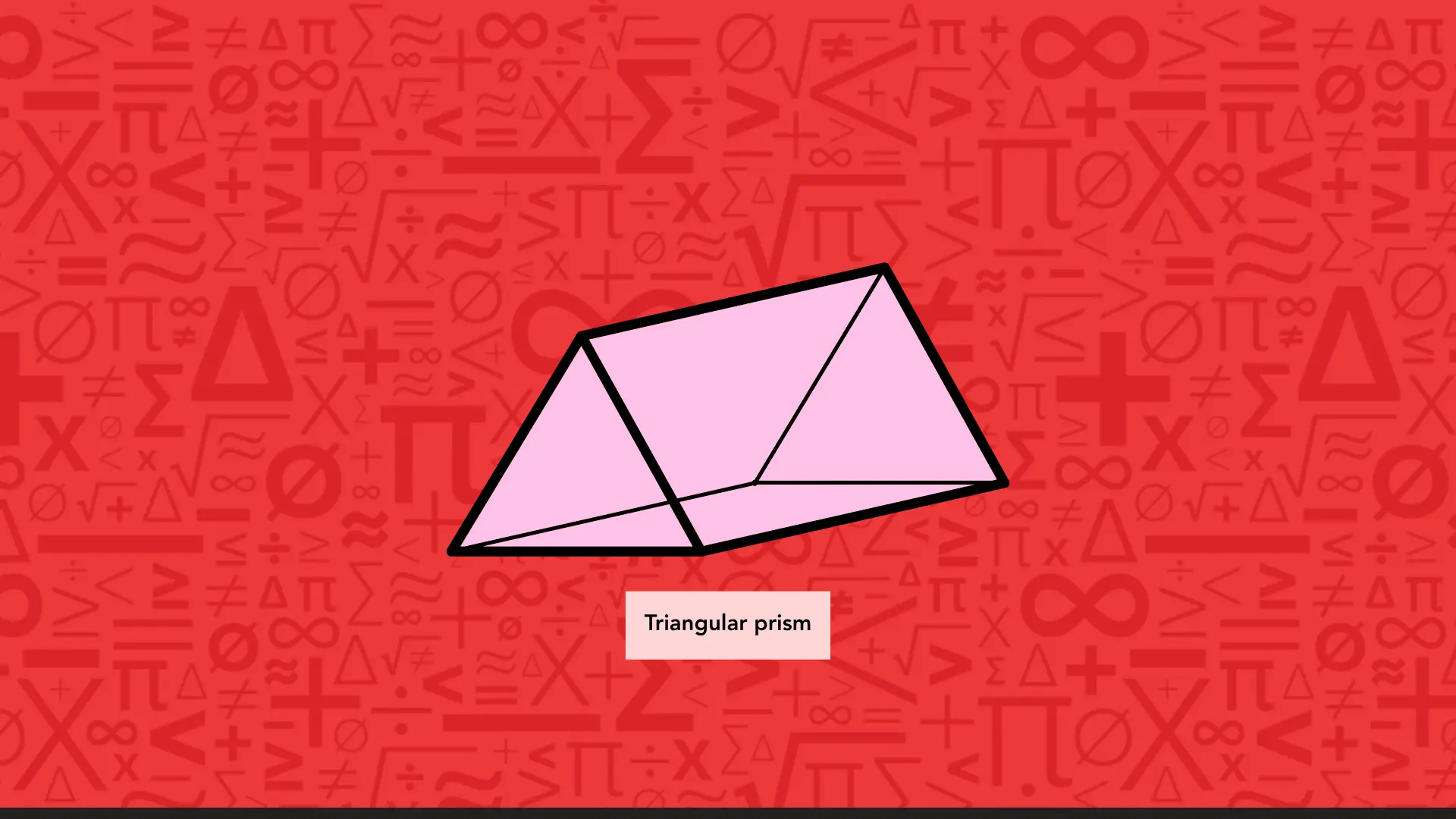
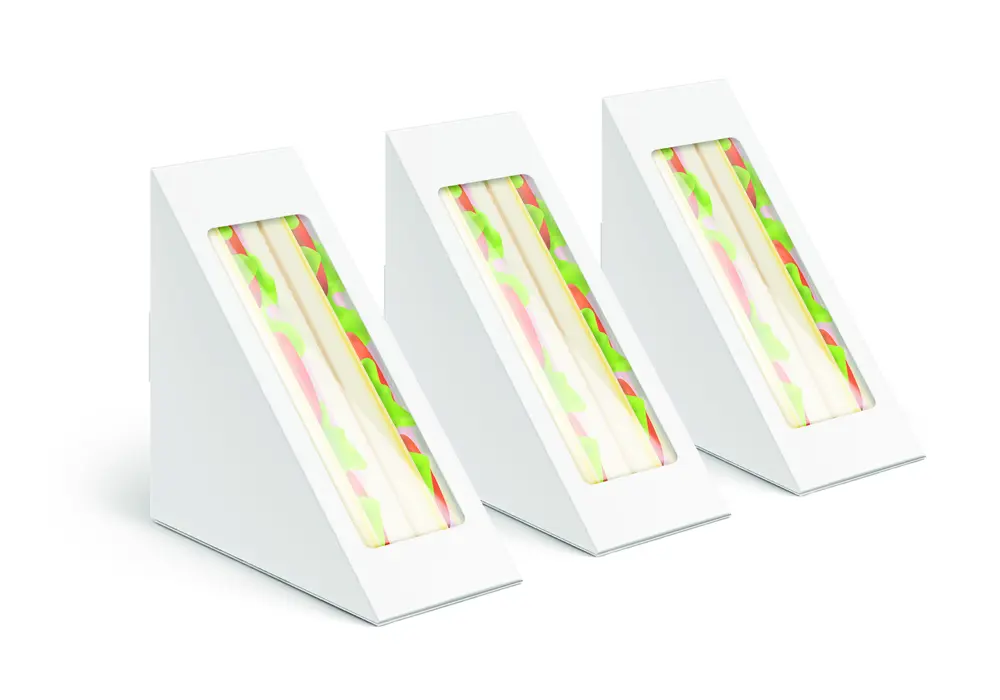
Some chocolate bars come in triangular prism-shaped packaging, such as Toblerone. We can also find this shape in triangular sandwich boxes. If we look at the ends of these packages, we can recognize the two matching triangles.
2. Rectangular Prism
A rectangular prism has two matching rectangular bases connected by four side faces. In a right rectangular prism, all six faces are rectangles, although they don't have to be the same size. The solid has 6 faces, 12 edges, and 8 vertices.
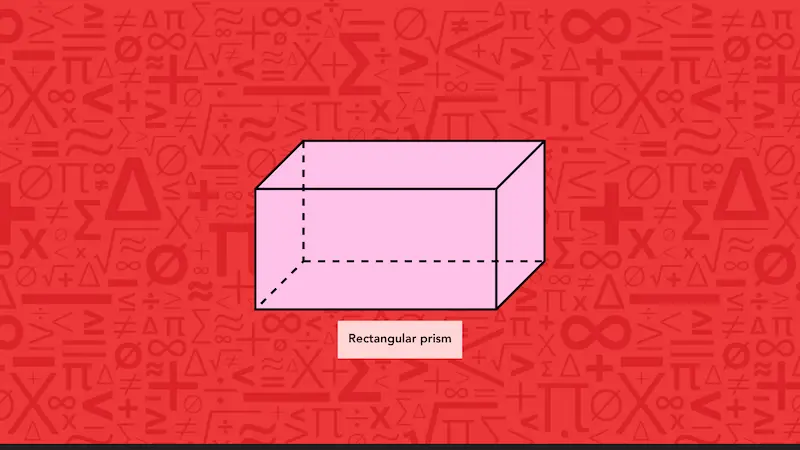
We can find rectangular prism shapes in cereal boxes and many hardcover books. Their length, width, and height give them their familiar box-like appearance.

📕 You May Also Like: A Kid-Friendly Guide to Understanding the Surface Area of a Rectangular Prism
3. Square Prism
A square prism has two matching square bases connected by four side faces. Since every square is also a rectangle, a square prism is a special type of rectangular prism. Both have 6 faces, 12 edges, and 8 vertices.
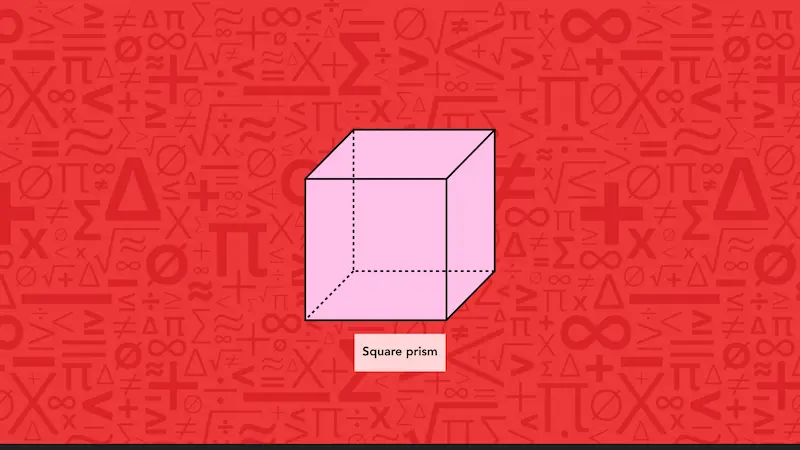
If all its edges have the same length and its side faces are squares, the square prism is a cube.
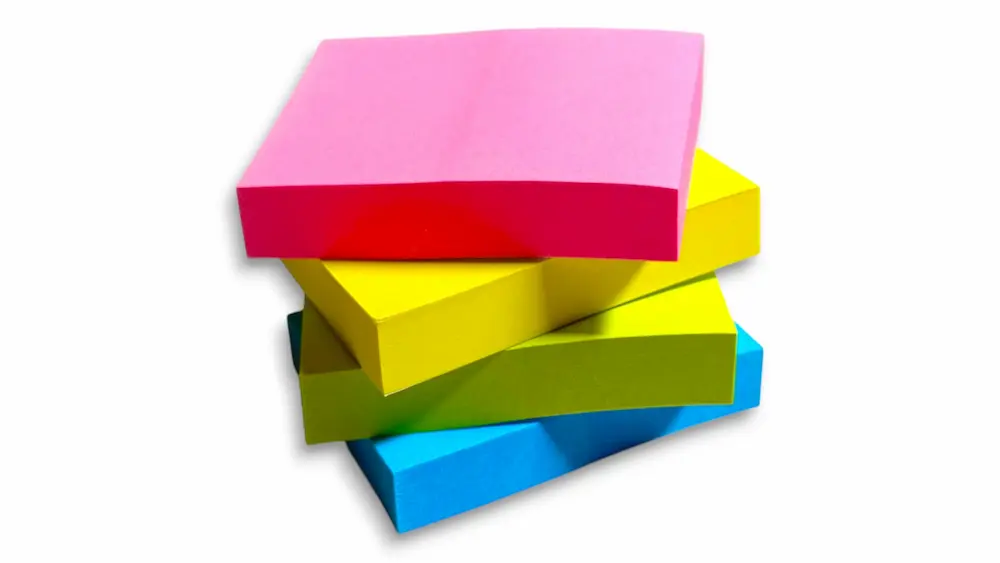
We can picture a square prism by looking at a thick stack of square sticky notes. The top and bottom form squares, while the sides show the height of the stack.
📕 You May Also Like: Perfect Cubes in Math – A Complete Overview
4. Pentagonal Prism
A pentagonal prism has two matching five-sided bases connected by five side faces, for a total of 7 faces, 15 edges, and 10 vertices.
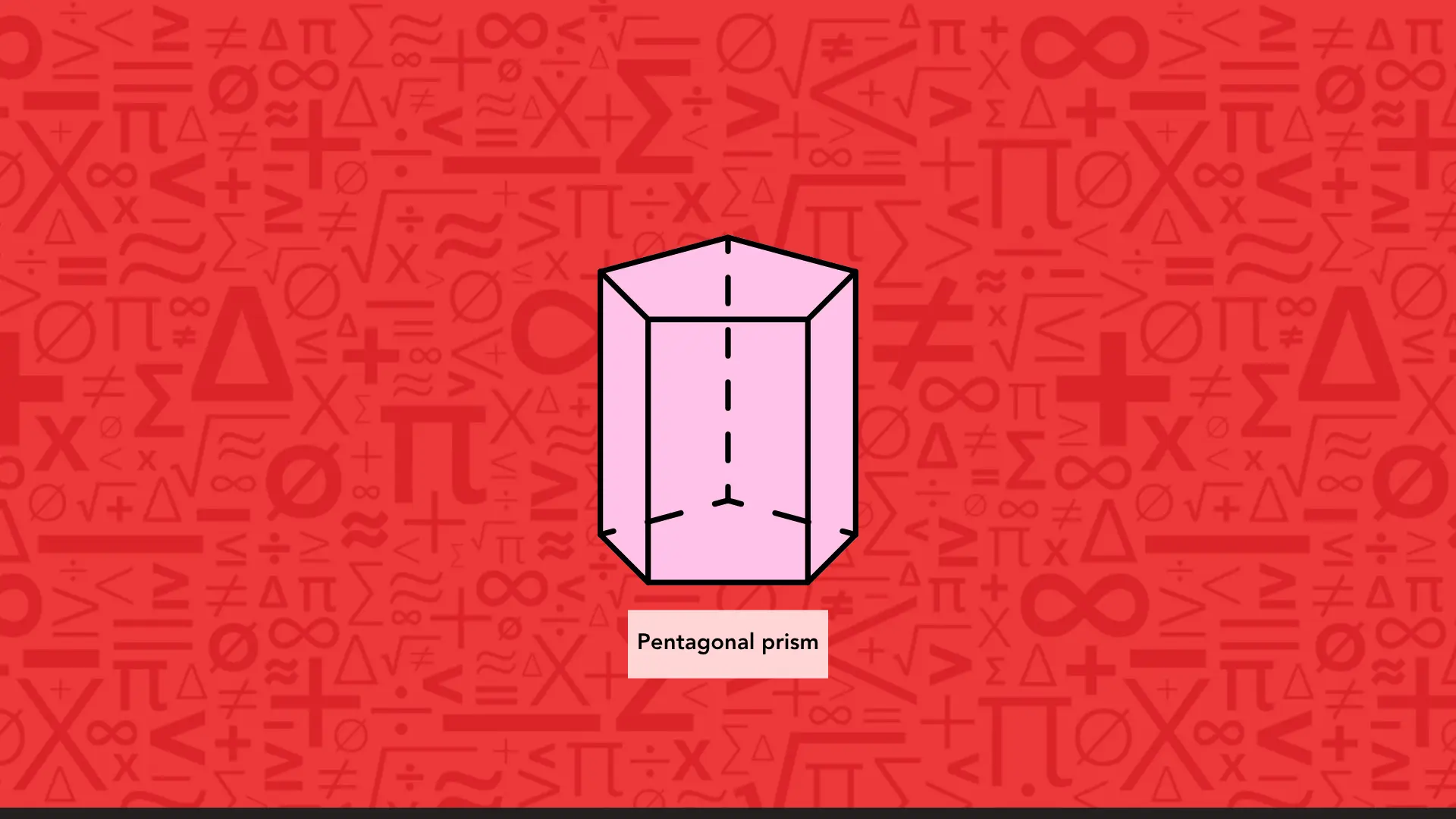
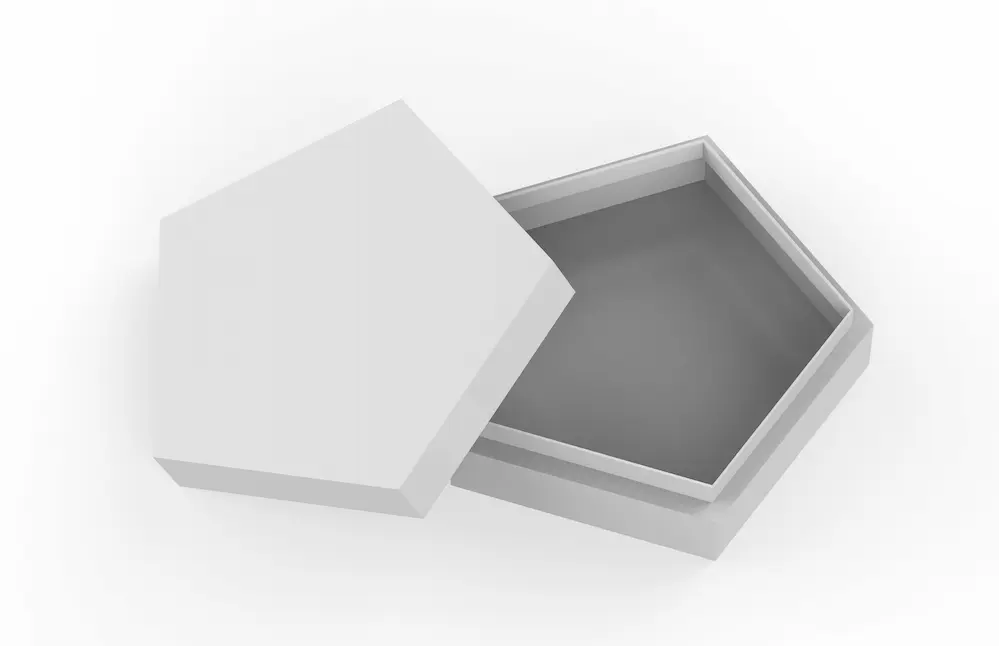
Some decorative gift boxes have pentagon-shaped ends. When the five-sided ends match and the sides connect them, the box has the shape of a pentagonal prism.
5. Hexagonal Prism
A hexagonal prism has two matching six-sided bases connected by six side faces. We can count 8 faces, 18 edges, and 12 vertices.
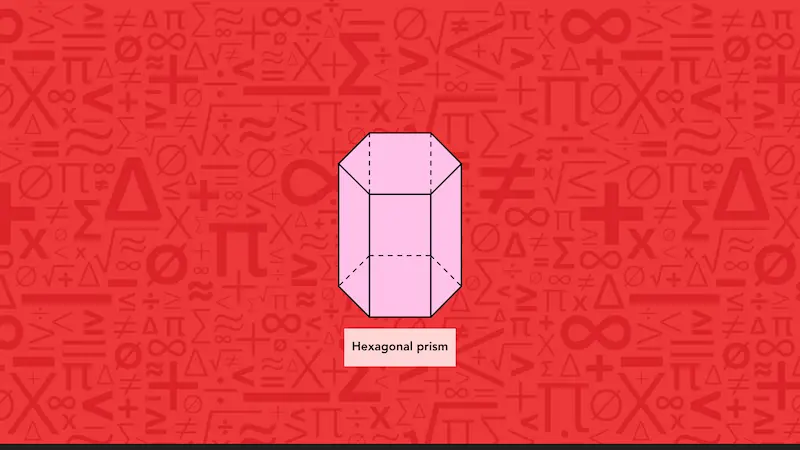
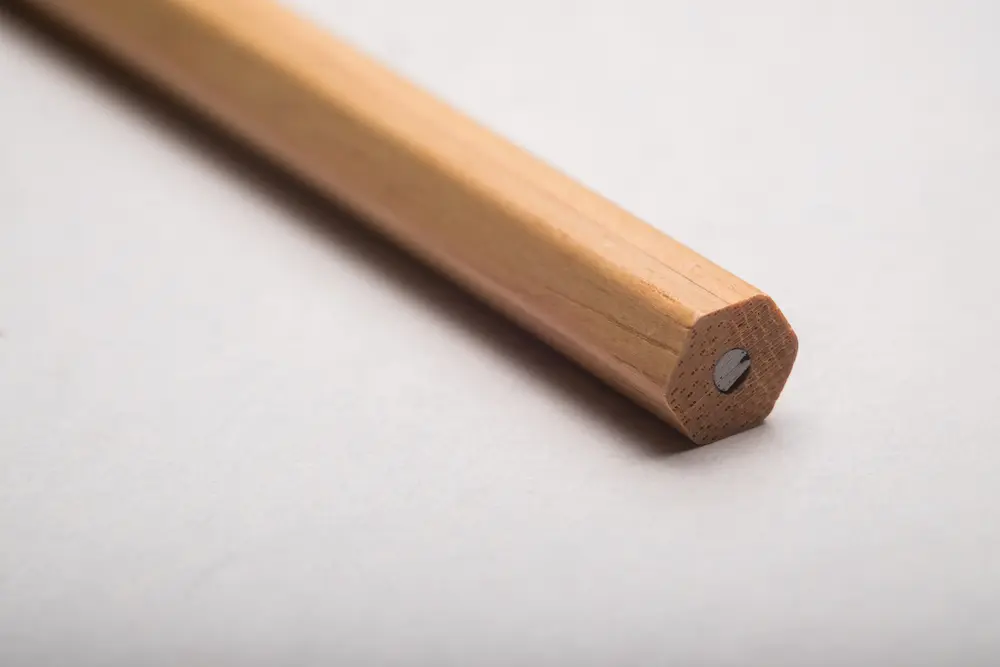
We can recognize this shape in many wooden pencils, which have six flat sides running along their length. Before sharpening, each pencil has two matching hexagonal ends, so its body forms a hexagonal prism.
📕 You May Also Like: Geometry in Real Life: How We Use Shapes, Angles, and Measurements
How Do We Find the Surface Area and Volume of a Prism?
After learning how to recognize different prisms and describe their parts, we can use what we know about their shapes to measure them.
Two useful measurements are surface area, which tells us how much space their outer faces cover, and volume, which tells us how much three-dimensional space they occupy.
We'll use two simple examples with a triangular prism to see how we can calculate its surface area and volume. The formulas work for all prisms, although finding the areas of their bases and side faces depends on their shapes.
1. Surface Area
The surface area of a prism is the total area of all its faces, including its two bases. Imagine covering a prism-shaped box with wrapping paper. We'd need enough paper to cover every outside face, and surface area tells us how much that would be.
To find it, we calculate the area of each face and add those areas together. We measure surface area in square units, such as square inches (in²) or square centimeters (cm²).
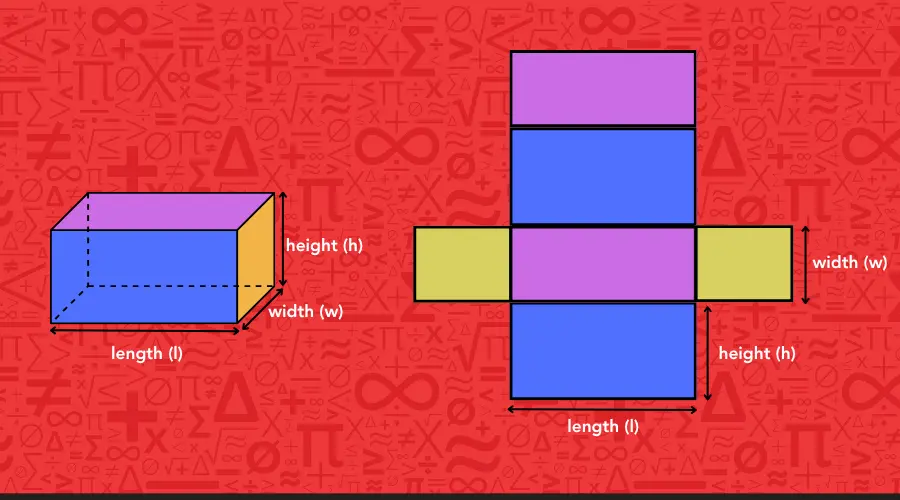
We can see a rectangular prism on the left and its unfolded net on the right. The six colored rectangles represent all its faces, which together make up its total surface area.
Since every prism has two matching bases, we can find the area of one base and multiply it by two. We then add the combined area of the side faces to find the total surface area.
We can express this relationship with the formula SA = 2B + L, where:
Let's try a simple example. Suppose a triangular prism has two matching bases, each with an area of 6 square inches. Its three side faces have a combined area of 72 square inches. What is its total surface area?
Since each triangular base covers 6 square inches, we know that B = 6. The three side faces together cover 72 square inches, so we write L = 72.
We can now replace the letters in our formula with these values. First, 2B means we multiply the area of one base by 2 to include both bases, so 2 × 6 = 12 square inches. Then we add the 72 square inches covered by the side faces, which gives us SA = 2 × 6 + 72 = 84 square inches.
Our triangular prism therefore has a total surface area of 84 in².
2. Volume
The volume of a prism is the amount of three-dimensional space inside the solid. We can picture this with a prism-shaped container filled with water. Volume tells us how much water it can hold. We measure it in cubic units, such as cubic inches (in³) or cubic centimeters (cm³).
Because a prism has two matching, parallel bases, we can think of its volume as a series of layers of the same shape. Each layer has the same area as the base, and the perpendicular height tells us how far the prism extends between its bases.
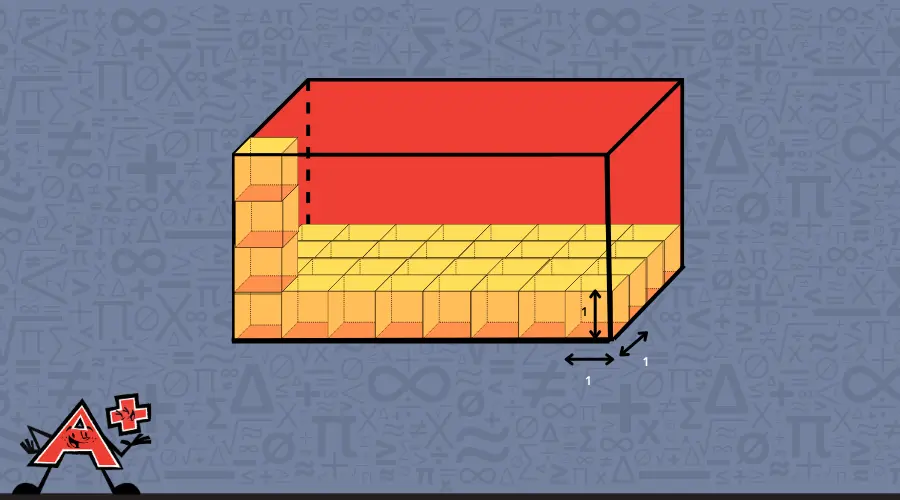
The rectangular prism is partly filled with unit cubes, each representing one cubic unit and showing how we can measure the space inside a solid.
To calculate volume, we multiply the area of one base by the perpendicular height between the bases.
We express this relationship with the formula V = B × h, where:
Let's now find the volume of a triangular prism whose bases each cover 6 square inches, with a perpendicular distance of 6 inches between them.
The base area gives us B = 6, and the perpendicular height gives us h = 6. We substitute these values into our formula to get V = 6 × 6 = 36 cubic inches.
Our triangular prism therefore has a volume of 36 in³.
📕 You May Also Like: How to Find the Volume of a Rectangular Prism: A Student-Friendly Guide

At Mathnasium, we help students build a deeper understanding of geometry through visual learning and guided problem-solving.
How Mathnasium Helps Students Master Geometry and Beyond
Mathnasium is a math-only learning center dedicated to helping K–12 students of all skill levels excel in math.
Whether your child is learning to recognize three-dimensional shapes, calculate the surface area and volume of prisms, or tackle more advanced geometry, our specially trained geometry tutors can help. We support students as they develop foundational geometry skills and move on to topics such as triangles, transformations, congruence, and geometric proofs.
Our tutors help students understand how geometric ideas connect, from recognizing the properties of shapes to explaining why a formula works. We do this through the Mathnasium Method™, our proprietary teaching approach, which is designed around each student's needs and learning style.
Our approach includes:
-
Assessment and Personalized Learning Plans: Each student begins their Mathnasium journey with a diagnostic assessment that identifies current skills, strengths, and gaps. From those findings, we build a personalized learning plan tailored to their goals.
-
Teaching for Understanding: Our specially trained tutors use natural language and a mix of verbal, visual, mental, tactile, and written techniques so each concept lands before we move forward. In geometry, students may work with diagrams and physical models to explore how shapes are constructed and measured.
-
Problem-Solving and Critical Thinking: We give students time to work through problems independently. That productive struggle helps them learn to trust their own reasoning. When we do step in, we explain both the how and the why behind each answer, so students build problem-solving and critical thinking skills they can use in math and beyond.
-
An Engaging and Fun Learning Environment: Sessions include games, earned rewards, and consistent celebration of progress. Students build confidence alongside fluency, and many develop a more positive relationship with math over time.
The impact extends beyond the classroom:
-
94% of parents report an improvement in their child's math skills and understanding
-
93% of parents report their child's improved attitude toward math after attending Mathnasium
-
90% of students saw an improvement in their school grades
With over 1,200 learning centers across North America, there is likely a Mathnasium close to you.
Families throughout West University and nearby communities, including River Oaks and Texas Medical Center, trust Mathnasium of West University to help their children build lasting confidence in math.
If your child needs help understanding prisms, calculating surface area and volume, or working through another math topic, our team is ready to help.
📅 Schedule a Free Assessment at Mathnasium of West University
Not near West University?
📍 Find a Mathnasium Learning Center Near You


 (713) 697-6284