0207 0787 000





Christmas Maths Activities To Make Learning Fun This December
Dec 14, 2026 |

The October half term provides a welcome pause from the daily routine of morning alarm clocks and school runs, but it can also present a subtle challenge for parents. A complete break from structured thinking over a week or two can easily lead to a mid-term dip in focus, numerical fluency and confidence.
Reclaiming that time does not mean replicating a strict classroom environment at the kitchen table or forcing children to sit through tedious holiday workbooks. Instead, half term is the ideal opportunity to introduce practical, tactile opportunities that keep critical thinking active while keeping the holiday fun and engaging.
Here are five simple, engaging ways to weave maths into your family’s half term plans:
1. Kitchen ratios and baking
Involve your child in seasonal baking or cooking, using kitchen tools to ground abstract concepts like weight, volume and fractions in visual understanding. E.g. Ask them to measure ingredients out on digital scales or count out items in equal groups to build foundational number sense.
2. Outdoor nature scavenger hunts
Turn a walk through the park into an interactive exercise in estimation, pattern recognition and data collection using fallen leaves and acorns. Have your child collect different objects and group them by symmetry, estimate the total height of a tree using shadow length, or build a bar chart on the ground using sticks to represent different leaf colours.
3. Family board game nights
Replace screen time with strategic games. Classic games like Monopoly teach budgeting and mental addition, games like Yahtzee sharpen probability and abstract strategy games like Chess build working memory.
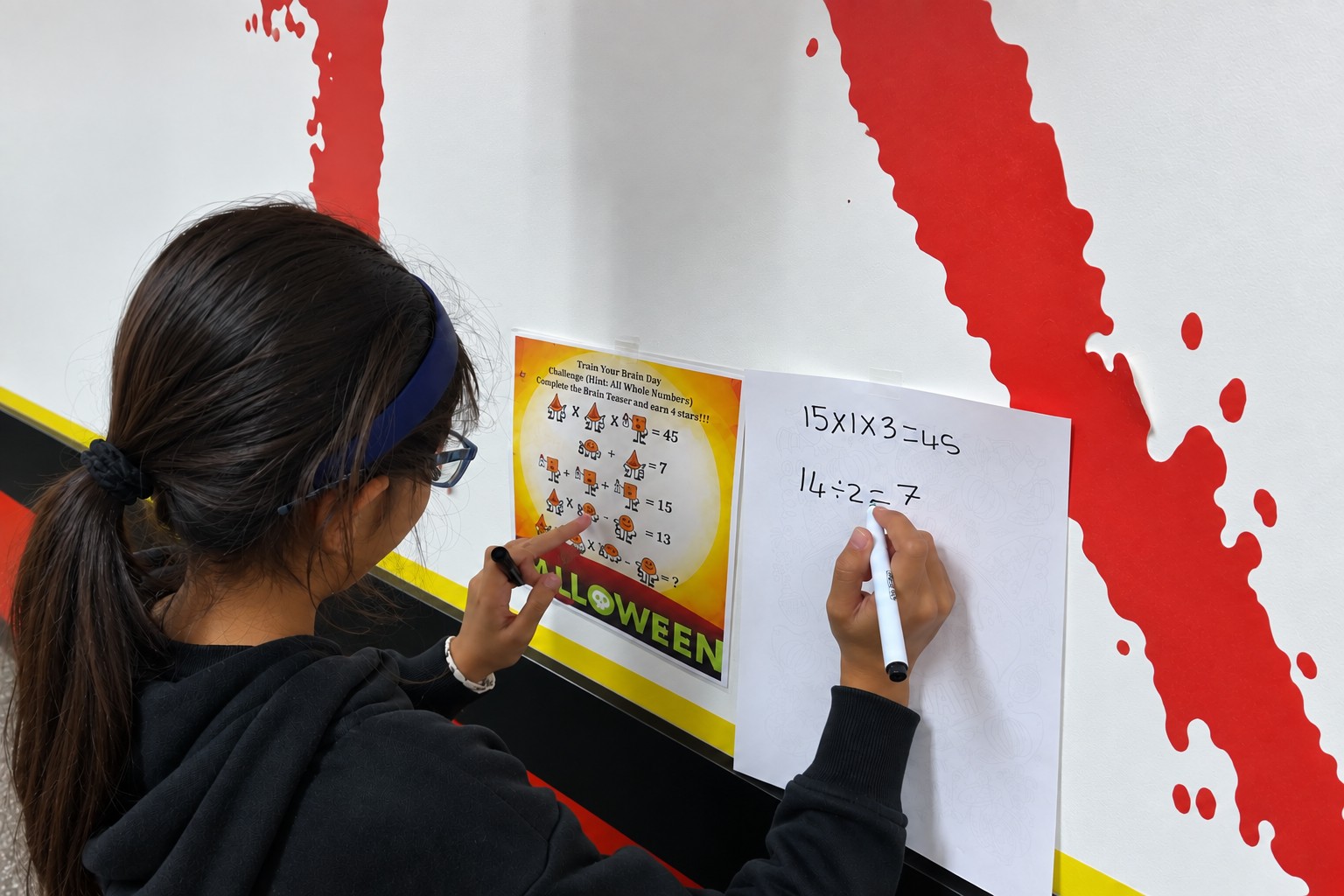
4. Halloween problem solving riddles
Set up daily logic puzzles or riddles around the house leading up to Halloween. You can leave a clue on the kitchen table each morning that requires solving a multi-step maths problem to unlock the location of a hidden treat or potion ingredient. This turns abstract problem-solving into an exciting treasure hunt, encouraging step by step thinking to earn rewards.
5. Real world budgeting challenges
Give your child a small, real budget for a half term day trip or local cinema outing, tasking them with managing the money. Have them research entry prices, estimate snack sub totals and work out exact change in real time before making purchases at the counter.
To make these activities feel natural rather than forced, anchor them into existing routines. Dedicate twenty minutes after breakfast to a quick logic puzzle or board game before heading out for the day. This keeps the mind primed for active problem-solving without eating into precious relaxation time.
Demonstrating that maths is a living, visual language outside of classroom worksheets helps children build genuine numerical fluency and curiosity. When children see how practical and enjoyable numbers can be, their overall attitude toward the subject shifts dramatically.
At Mathnasium, we use the Mathnasium Method™ to meet every child where they are. Through bespoke learning plans built around your child’s unique strengths and knowledge gaps, our friendly instructors teach maths so that children understand it, master it and love it.
If you want to maintain this momentum and help your child build lasting maths confidence this term, book a free assessment at Mathnasium today.