
 (208) 888-0020
 (208) 888-0020











Now Offering In-Home Private Math Tutoring
Mar 24, 2024 | Meridian


"Basic math" sounds so simple, doesn't it? So when a teacher mentions your child is struggling with it, it's natural to think they're talking about easy stuff or concepts your kid should've nailed down ages ago.
But basic doesn’t always mean simple. In education, it refers to foundational math skills or core understandings that support everything from first-grade subtraction to middle school equations. These skills develop unevenly, and if one is missing, even familiar math can feel difficult.
Struggling with basic math is not a reflection of ability. It signals the need to revisit and strengthen the building blocks that support future learning.
That’s why our tutors are breaking down what basic math really includes, why it may still feel hard, and how to provide effective basic math help step by step at home.
Hearing the term “basic math,” most think of early topics taught in the first few years of school. But in education, basic refers to core understandings that support all future learning. So these are not just skills tied to a specific grade.
At Mathnasium, we call these foundational math skills, and they span six essential areas:
Number Sense: The ability to understand, compare, and work with quantities, including how numbers can be composed, decomposed, and related.
Operations: The core processes of addition, subtraction, multiplication, and division, including how they function and relate to one another.
Place Value: The structure of the base-ten number system, where a digit’s position determines its value in relation to ones, tens, hundreds, and beyond.
Measurement: The study of length, time, weight, volume, and other attributes using defined units and tools for comparison.
Data: The organization, representation, and interpretation of information using charts, graphs, tables, and visual formats.
Geometry: The study of shapes, angles, spatial relationships, and properties of figures in two and three dimensions.
Why are these six areas foundational?
They underpin nearly every math concept students encounter across grades. Rather than being isolated topics, they’re the structure behind how math is learned, applied, and understood.
Without a solid grasp of even one, students may develop shaky strategies, rely on memorization, or struggle to connect ideas. Gaps often stay hidden until the math becomes more layered. At that point, what once felt manageable can suddenly feel confusing or unpredictable.
📕 You May Also Like: Is My Child “Bad at Math” or Missing Foundational Skills?
Struggles with basic math usually reflect skills that were never fully understood or reinforced. These are not surface-level mistakes. They point to missing connections that cause math to feel disconnected or unclear.
As concepts stack on top of weak foundations, even familiar tasks can become harder to manage.
Several instructional breakdowns show up most frequently in students who need basic math support:
Gaps in understanding compound quietly: Students may recall answers but lack a working model for what’s happening. As math becomes more layered, surface-level recall no longer holds up.
Fluency was never fully developed: Without automatic recall of basic facts, too much energy goes into early steps. Students lose track of the problem itself.
Reasoning was replaced by memorization: Memorized steps are fragile. They work great until the problem is worded differently or the numbers are arranged in a new way. Then the whole approach crumbles.
Instruction moved on before mastery: Classroom pacing typically advances before a skill is secure. That unfinished layer becomes the weak point in every concept that follows.
Math anxiety interferes with recall: A notable study found that math anxiety functions more like test anxiety than general anxiety. It disrupts working memory during calculations and interacts directly with low math self-concept. In many students, it’s the compounded result of earlier gaps.
To put it differently, students who hesitate on familiar problems or avoid multi-step tasks aren’t showing a lack of effort. They’re working without the internal structure math depends on. Before progress can feel consistent, that structure has to be reestablished with purpose.
📕 You May Also Like: Why Prioritize Critical Thinking Over Memorizing in Math
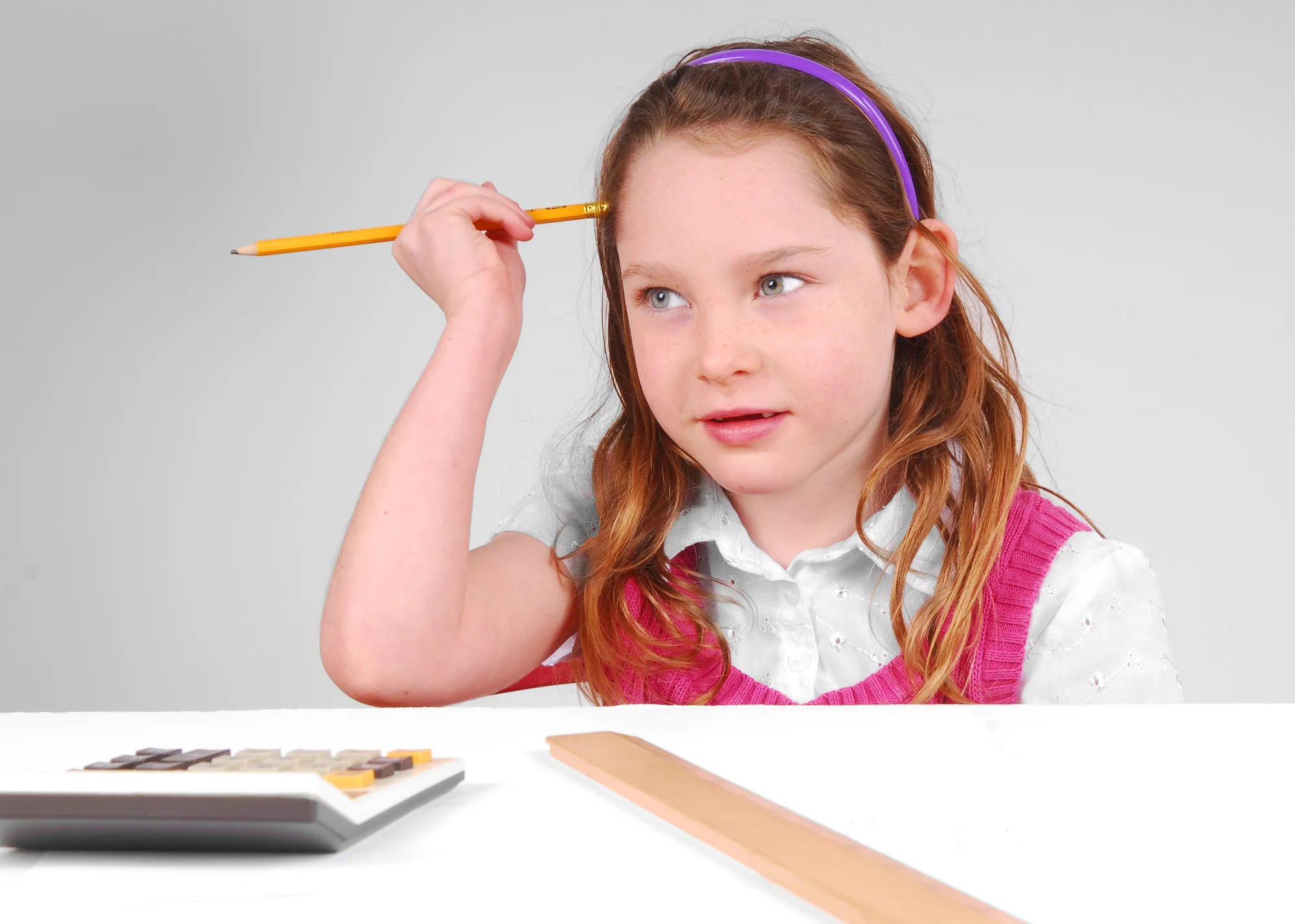
Basic math struggles often stem from gaps in understanding, and not a lack of effort.
Supporting your child with basic math help step by step starts with rebuilding how they see numbers, then moves toward fluency, flexibility, and application.
If you're starting with number sense, you should know that this is where quantity meets intuition. Before children can reason flexibly with numbers, they need to recognize them as visual and structured.
With that in mind, we’ve got a few Mathnasium-approved ways to help your child solidify it:
Use dot cards or ten-frames to show quantities up to 10
Ask, “How many do you see?” and “How do you see them?”
Encourage your child to describe the groups they notice (e.g., “I saw 4 and 2”)
Rearrange the same number of dots in a different layout and ask again
Use small objects (coins, beans, cereal) to make the activity tactile and visual
These early steps build the visual and spatial awareness students need before facts or equations can take hold.
📕 You May Also Like: How Playing with Patterns Boosts Your Child’s Math Skills
Place value gives numbers structure, but many students treat digits as isolated rather than positional. To help your child see how numbers are built and how each digit carries weight, use tools that bring this structure into view.
Try these strategies to support deeper place value understanding:
Use coins, base-ten blocks, or index cards to build two- and three-digit numbers
Ask, “What does the 3 mean in 342?” to connect the digits to the actual value
Rearrange digits (e.g., 132 → 312) and talk through how the value changed
Practice adding or subtracting tens and hundreds mentally (e.g., 241 + 10)
Compare similar numbers and ask, “Which is greater, and how do you know?”
The more students build and break numbers apart, the more they see place value as a clear, logical structure.
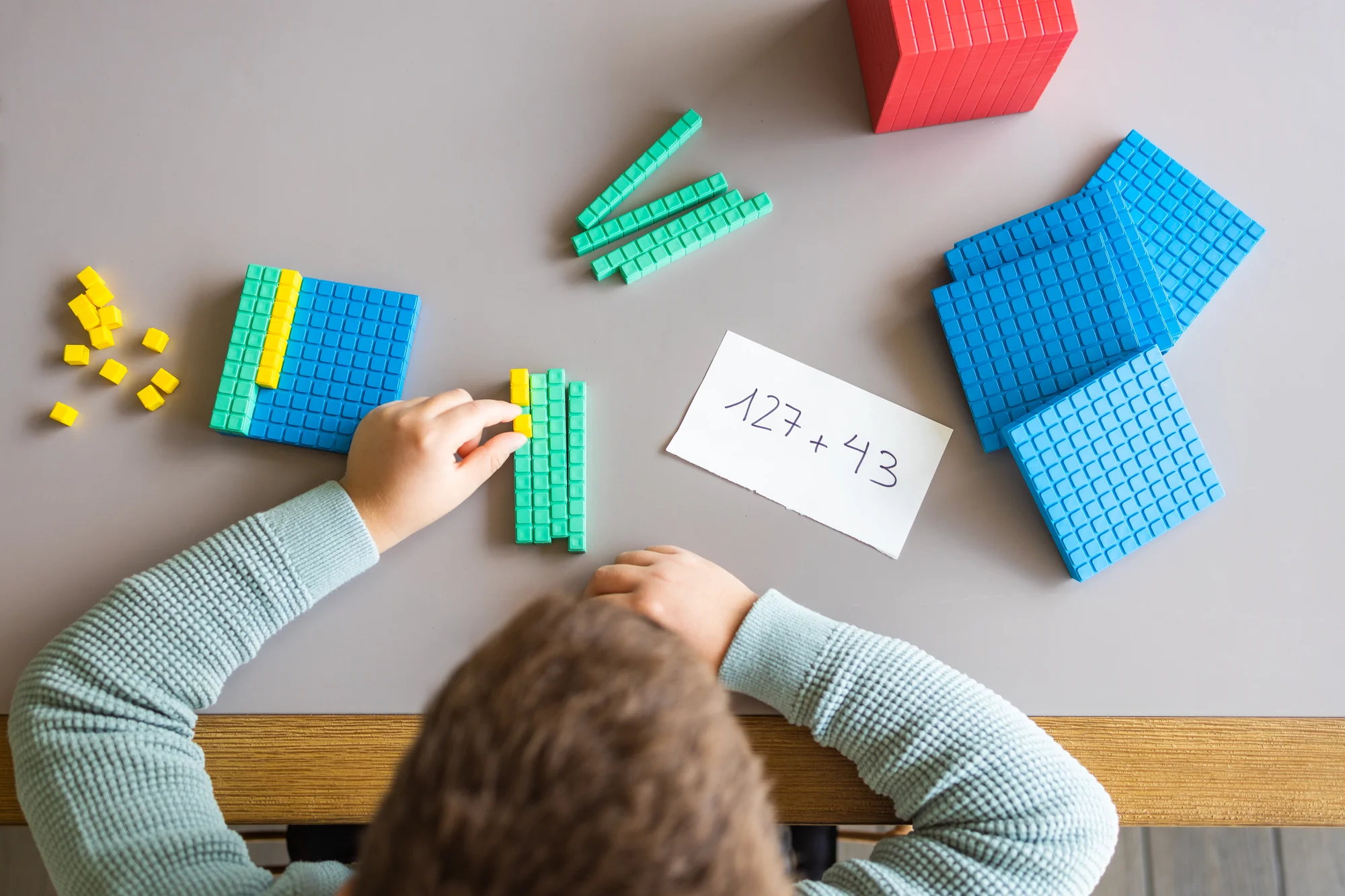
Place value makes more sense when students can build it, break it, and see it take shape.
We constantly hear the misconception that fast answers mean strong math skills.
Mathnasium looks at this a little differently. Fact fluency comes from recognition or seeing how numbers relate, not racing to a result. When that structure is in place, speed follows naturally.
What does that mean for you?
You're not trying to drill facts until they stick. You're helping your child notice patterns, reuse strategies, and develop mental shortcuts that make sense to them.
Here's how you can support that kind of fluency:
Sort facts into strategy groups. Start with one structure, like doubles (4 + 4, 6 + 6), and stay there until it feels solid. Then move to near-doubles or make-a-ten facts.
Use real equations, not flashcards. Present a single problem (e.g., 8 + 7) and ask your child how they’d solve it. Guide them toward structured strategies like 8 + 2 + 5.
Highlight how facts connect. After solving 6 + 7, ask what else they now know (e.g., 7 + 6, 13 – 6, 13 – 7). This reinforces fact families and inverse thinking.
Keep visual tools nearby. Use number lines, dot cards, or ten-frames to anchor thinking when facts feel out of reach.
Set goals around clarity, not speed. Praise how your child solved a fact, not whether it was right. This reinforces thinking over guessing.
📕 You May Also Like: 9 Tips to Help Your Child Master Multiplication Facts
Mathnasium tutors think of mental math like a well-packed toolbox. Students don’t need every tool at once, but the more tools they have, the more problems they can solve without hesitation.
We value mental math because it shows how a student is thinking, not only what they remember. It makes math feel manageable, particularly when the numbers look messy on paper.
So, instead of pressing for fast answers, parents can focus on helping their child think flexibly and work comfortably with numbers in real time.
Try a “Make a Ten” challenge. Ask, “What’s 9 + 7? Could you turn 9 into 10 first?” Then try 8 + 6 or 7 + 5 and talk through the adjustments out loud.
Use the “Double and Adjust” routine. Start with facts like 6 + 7 or 8 + 9. Say, “What’s the nearest double? How would you tweak it to get the answer?”
Practice “Add from Left” with two-digit numbers. Try 43 + 25. Ask, “What’s 40 plus 20? Now what’s left?” Breaking by place builds stronger reasoning than lining up digits.
Explore “Compensation” for subtraction. For 301 – 198, ask, “What if we rounded 198 up to 200?” Let your child adjust and then balance the change.
Use “Close Enough” estimates in real life. While shopping or baking, ask, “If each snack costs $1.75, what’s a quick estimate for 4 of them?” Rounding and adjusting builds number sense in everyday decisions.
📕 You May Also Like: 5 Ways Mental Math Supports Long-Term Math Success
Abraham Arcavi, Professor of Science Teaching at the Weizmann Institute, describes visualization as a thinking tool, one that gives students access to complex ideas that language alone can’t fully express.
This mirrors what we see every day in our centers. Many students hit that a-ha moment when they stop trying to follow the steps and start sketching out what the problem really means.
To reflect this at home, you may turn to visuals if your child feels stuck or the numbers feel too abstract to organize mentally.
Use number lines to compare or combine values. Ask your child to place 17 and 42 on a number line, then estimate how far apart they are or where a new number would land.
Try bar models for word problems. For a problem like “Lena has 14 apples, Sam has 6 fewer,” help your child sketch two bars to represent that relationship, rather than starting with an equation.
Use grids or graph paper for multiplication. Drawing arrays or partial products helps organize multi-digit work and reinforces structure.
Sketch place value stacks. For large numbers, ask your child to draw ones, tens, and hundreds as boxes or dots to visualize size and composition.
Use tally marks or icons to track totals. Great for real-life counting tasks like snacks, chores, or goals, turning quantities into something visual and manageable.
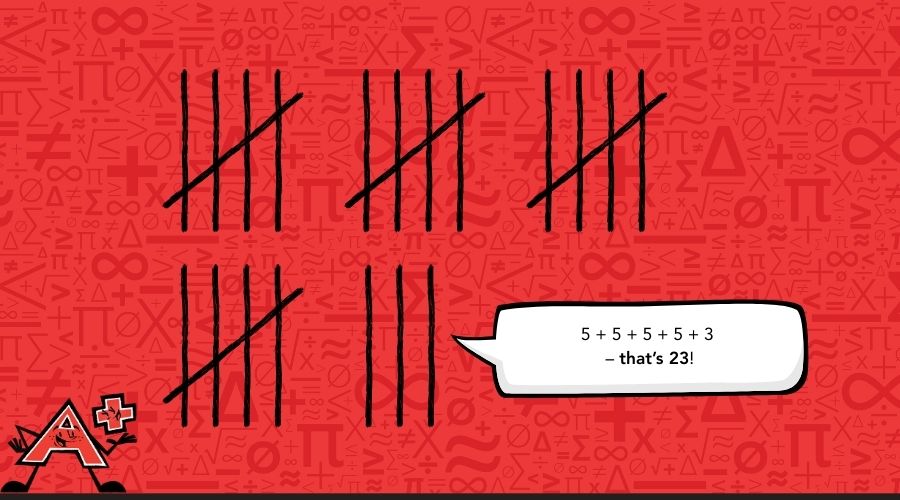
Tally marks make quantity easy to see and count.
Measurement connects math to real-world thinking. It teaches students to anchor quantities to what they see or use, whether that’s pouring water, estimating height, or comparing distances.
Students who measure with intention develop a genuine sense of size and scale, moving beyond the mechanical application of units.
At home, you can build this skill using whatever's around. No tools, no worksheets, just opportunities to notice, compare, and ask "why do you think that is?"
Use “Which is Longer?” prompts. Compare items around the house: a pencil vs. a spoon, two shoes, or arms—and ask your child to estimate first, then measure with a ruler or string.
Estimate and check. Pour water into different containers and guess which holds more. Then test it. Estimation followed by action sharpens judgment.
Track time in tasks. Ask, “How long do you think it’ll take to clean your room?” Time it, then compare. This builds a sense of duration tied to real activities.
Measure with informal units. Instead of inches, use paperclips, hands, or blocks to measure lengths and heights. This reinforces counting, comparison, and repetition.
Discuss tools and units. Ask why we use rulers for length, clocks for time, or measuring cups for baking. Let your child connect the tool to its purpose.
📕 You May Also Like: How Estimation and Rounding Support Number Sense in Math
While kids work with data, they're building logic. Grouping, comparing, and interpreting information helps them make sense of patterns.
This reasoning shows up everywhere in math: place value, probability, you name it. It starts with simple questions that connect what they see to what they understand.
Help your child explore data with:
Sort and label real items. Ask your child to group household objects (like coins, toys, or snacks) in more than one way: by size, type, or use. Then discuss which groups make the most sense and why.
Track something meaningful. Choose a daily variable, like minutes of screen time, books read, or cups of water, and sketch a quick bar or picture graph together. Talk through what the graph shows.
Ask: “What do you notice?” Whether looking at a calendar, menu, or sports schedule, prompt your child to observe patterns or relationships. This builds early inference without formal data sets.
Use real polls. Ask family or friends a simple question (like favorite fruit or game), tally the answers, and have your child organize the results. Then ask, “What do these results tell us?”
Challenge predictions. Show a simple chart and ask, “If this pattern continues, what might happen next?” Encourage reasoning out loud so you can check their logic.
Geometry helps students learn to think in space. It sharpens how they see relationships between sides, corners, angles, and movements. More than just naming shapes, geometry builds the kind of thinking students use to solve puzzles, read graphs, and visualize word problems.
At home, skip the formulas. Give your child chances to notice structure, direction, and balance using everyday objects and movement.
Walk the angles. Have your child walk or trace shapes using their body or a jump rope. Ask, “Which turns are sharp? Which feel wide?” Movement builds spatial intuition.
Use paper folding. Fold a square in half and ask, “What do you notice about the sides?” Explore symmetry, equal parts, and reflection without needing formal terms.
Build and compare with blocks or cutouts. Create two shapes and ask, “Which holds more?” or “Which one would take longer to walk around?” This links shape to measurement.
Play “Guess the Shape” with attributes. Give clues like, “It has four sides, but not all sides are equal,” and let your child sketch or find it.
Spot geometry in the real world. Look for parallel lines on the road, symmetry in logos, or angles in furniture. Ask, “What shapes do you see here that you’ve seen in math?”
Geometry builds mental structure. The more students interact with shape and space, the more confident they become in organizing the math they can’t yet see on paper.
📕 You May Also Like: Is Your Student Ready for Their Geometry Class? [+Quiz]

In a Mathnasium center, each student begins with a diagnostic assessment, so we know exactly where to start and how to strengthen your child’s foundational skills.
Across our centers, Mathnasium has worked with thousands of students looking to strengthen basic math, or, as we call it, foundational skills. For some families, this is the reason they walk in on day one. For others, the need becomes clear after our diagnostic assessment.
No matter when it’s discovered, we don’t approach foundational gaps with a one-size-fits-all curriculum. Each student brings a different mindset and learning style. That’s why we use the Mathnasium Method™, a proprietary teaching approach that’s been helping students make sense of math for more than 20 years.
To build deep mastery, The Mathnasium Method™ focuses on:
Personalization on a granular level: Each student begins with a diagnostic assessment that identifies what they know, how they think, and where support is needed. From there, we design a customized learning plan tailored to their unique strengths and goals.
Teaching for understanding: We explain math in everyday language and teach through a blend of visual, verbal, mental, tactile, and written methods. These multi-sensory strategies help students connect ideas and retain them with confidence.
Caring, specially trained instructors: Our instructors are trained not only in math, but in how to connect with students. They know how to support productive struggle, encourage progress, and recognize when a student is ready to go further.
Problem-solving and critical thinking tools: Students work independently before reviewing their thinking with an instructor. This structure builds ownership, encourages reflection, and supports long-term growth in mathematical reasoning.
A singular focus on math: We specialize in math and math only. Our curriculum spans more than 1,000 continuously refined learning pages, designed to help students absorb, apply, and transfer what they learn.
A motivating, confidence-building environment: Our centers are structured and goal-driven, with built-in incentives, games, and progress milestones that keep students engaged and eager to advance.
And it works.
94% of parents report an improvement in their child's math skills and understanding
93% of parents report an improved attitude towards math after attending Mathnasium
90% of students saw an improvement in their school grades
With over 1,100 learning centers across the nation, we bring top-rated math instruction close to your community.
If you are based in or near Meridian, ID, Mathnasium of Meridian is a trusted local center with years of experience helping students excel in math.
Whether your child is looking to catch up, keep up, or get ahead, our team is happy to assist!
Ready to get started?
📅 Schedule a Free Diagnostic Assessment at Mathnasium of Meridian!
Not near Meridian?
Mathnasium of Meridian is a math-only learning center for K-12 students in Meridian, ID. Trusted by over a million parents, Mathnasium uses personalized learning plans and the proprietary Mathnasium Method™ to help students catch up, keep up, and get ahead on their math journey.
Our specially trained tutors deliver face-to-face instruction in a supportive and fun small-group environment, working with students both in center and online to develop a deep understanding of math, build confidence, and improve academic performance.
Schedule Free Assessment
