




















The First Half-Term Check-In: How Is Your Child Really Getting On With Maths?
Oct 23, 2026 |
When we see a list like 2, 3, 5, 7, 11, 13 and 17, it may not be immediately clear why these particular numbers belong together. They are all prime numbers and what puts them in the same group comes down to which numbers can divide them evenly.
But even a simple list of prime numbers can leave us with a few more questions. Why isn’t 1 prime even though it comes before 2? Or how can we tell whether a larger number belongs on the list?
Today, we’ll get all the answers, including what makes a number prime, find all the prime numbers up to 100, test numbers for ourselves and answer a few more common questions along the way.
Prime numbers are whole numbers greater than 1 that have only two positive factors, 1 and the number itself. In other words, we can divide a prime number evenly by 1 or by itself, without leaving a remainder.
Let’s take 7 as an example. We can divide it evenly by 1 and 7, but no other positive whole number works. So, 7 has two positive factors and is a prime number.
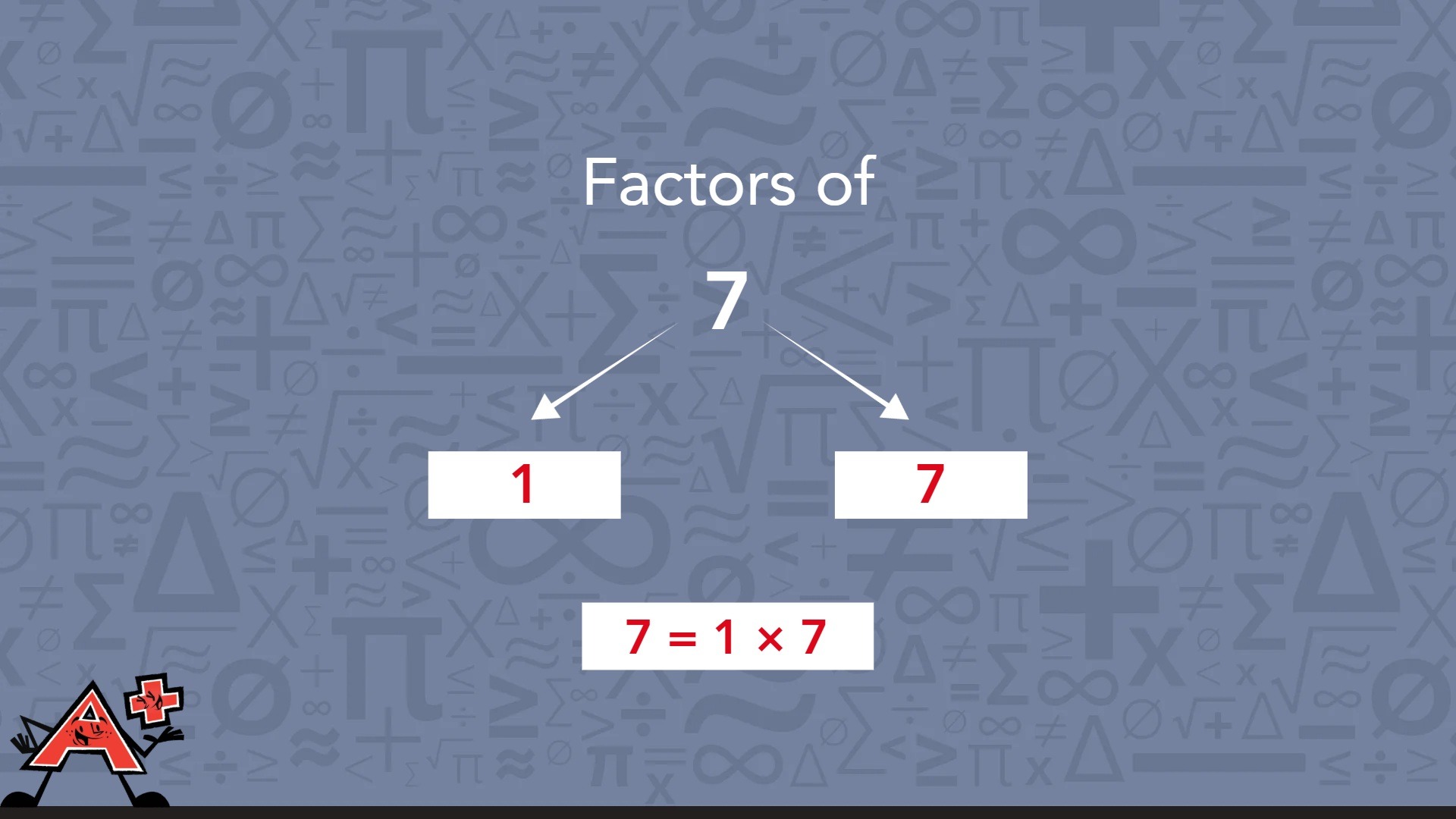
We can also group factors into factor pairs, where two positive whole numbers multiply together to make the original number. For 7, there is only one such multiplication: 1 × 7 = 7.
Now, let’s compare that with a few other numbers:
|
Number
|
Factor pairs
|
Prime?
|
| 2 | 1 × 2 | One factor pair, so yes |
| 5 | 1 × 5 | One factor pair, so yes |
| 9 | 1 × 9, 3 × 3 | Two factor pairs, so no |
| 12 | 1 × 12, 2 × 6, 3 × 4 | Three factor pairs, so no |
What difference do you notice between the numbers marked as prime and those that aren’t?
For 2 and 5, the only multiplication we can make with positive whole-number factors is 1 × 2 or 1 × 5.
With 9 and 12, we can make additional multiplication pairs, which means they also have additional factors that divide into them evenly. That is why 9 and 12 are not prime numbers.
📕 You May Also Like: National Numbers Day: Play with Numbers at Home
The number 1 is not prime because it has only one positive factor, 1 itself. Prime numbers need two positive factors, so 1 does not meet the rule we just learned.
We can see the difference straight away with the next two numbers:
1 has one positive factor, 1.
2 has two positive factors, 1 and 2.
3 has two positive factors, 1 and 3.
There is another reason why mathematicians keep 1 outside the prime-number family, and we can see it by playing with multiplication.
Let’s look at 12. We can build it from prime numbers like this:
12 = 2 × 2 × 3
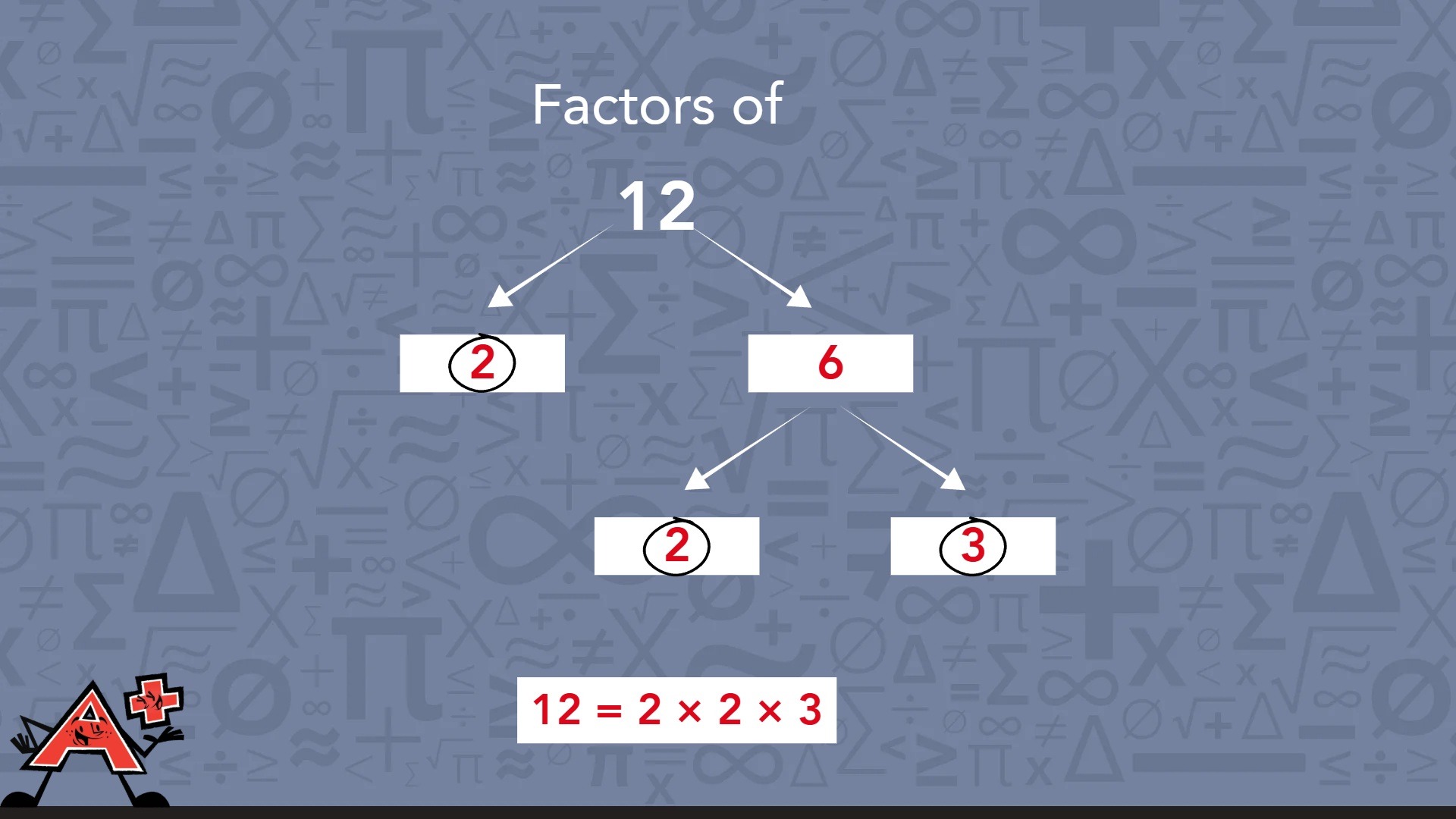
No matter how we arrange those prime factors, we still have the same set of 2, 2 and 3. Every whole number greater than 1 works this way. We can break it down into prime factors in one unique way, apart from changing their order.
If 1 were prime, we could keep multiplying by it without changing the result:
12 = 2 × 2 × 3 = 1 × 2 × 2 × 3 = 1 × 1 × 2 × 2 × 3 ...
Suddenly, the same number could then have infinitely many different versions of its prime factorisation because we could include as many 1s as we wanted. That’s why 1 is excluded from the prime numbers, so each number keeps one unique prime factorisation.
And what about 2?
Two is the only even prime number. Every other even number can be divided evenly by 2, which gives it a factor other than 1 and itself. For 2, however, 2 is the number itself, so its only positive factors are 1 and 2.
📕 You May Also Like: Making Maths Support Work for Busy Families
We can find all the prime numbers up to 100 using a process called the Sieve of Eratosthenes. The name may sound a little intimidating at first, but it becomes much friendlier once we learn where it comes from.
Eratosthenes was an ancient Greek mathematician who lived more than 2,000 years ago and developed a method we still use to find prime numbers.
His method became known as a “sieve” because it works much like one. We cross out the numbers that cannot be prime and gradually sift them away until only the prime numbers remain.
 Let’s sift the numbers like a baker sifts the flour.
Here’s how we can do it:
Write the whole numbers from 1 to 100.
Cross out 1 because we already know it is not prime.
Circle 2, then cross out its multiples greater than 2, such as 4, 6, 8 and 10.
Circle 3, the next number that has not been crossed out, then cross out its multiples greater than 3 that are still showing, starting with 9.
Continue with 5 and 7 in the same way.
Check what remains. The numbers that have not been crossed out are our prime numbers.
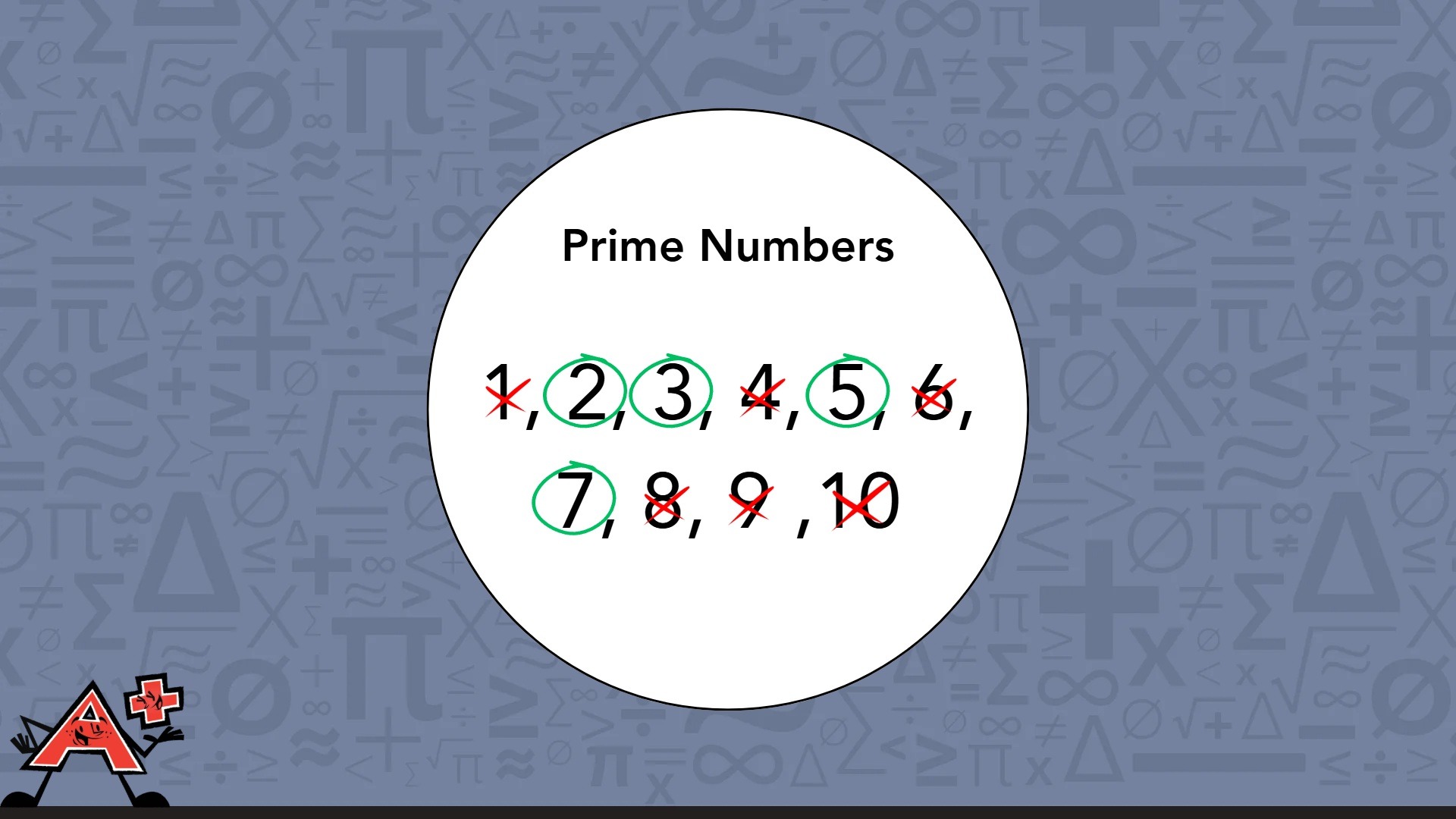
But why can we stop at 7 instead of continuing through the entire chart?
Any number up to 100 that is not prime can be made by multiplying two smaller whole numbers. At least one of those factors must be 10 or smaller. If both were greater than 10, multiplying them would give us a number greater than 100.
The prime numbers up to 10 are 2, 3, 5 and 7, so those are the only prime factors we need to check. Once we have crossed out their multiples, every non-prime number up to 100 has already been removed.
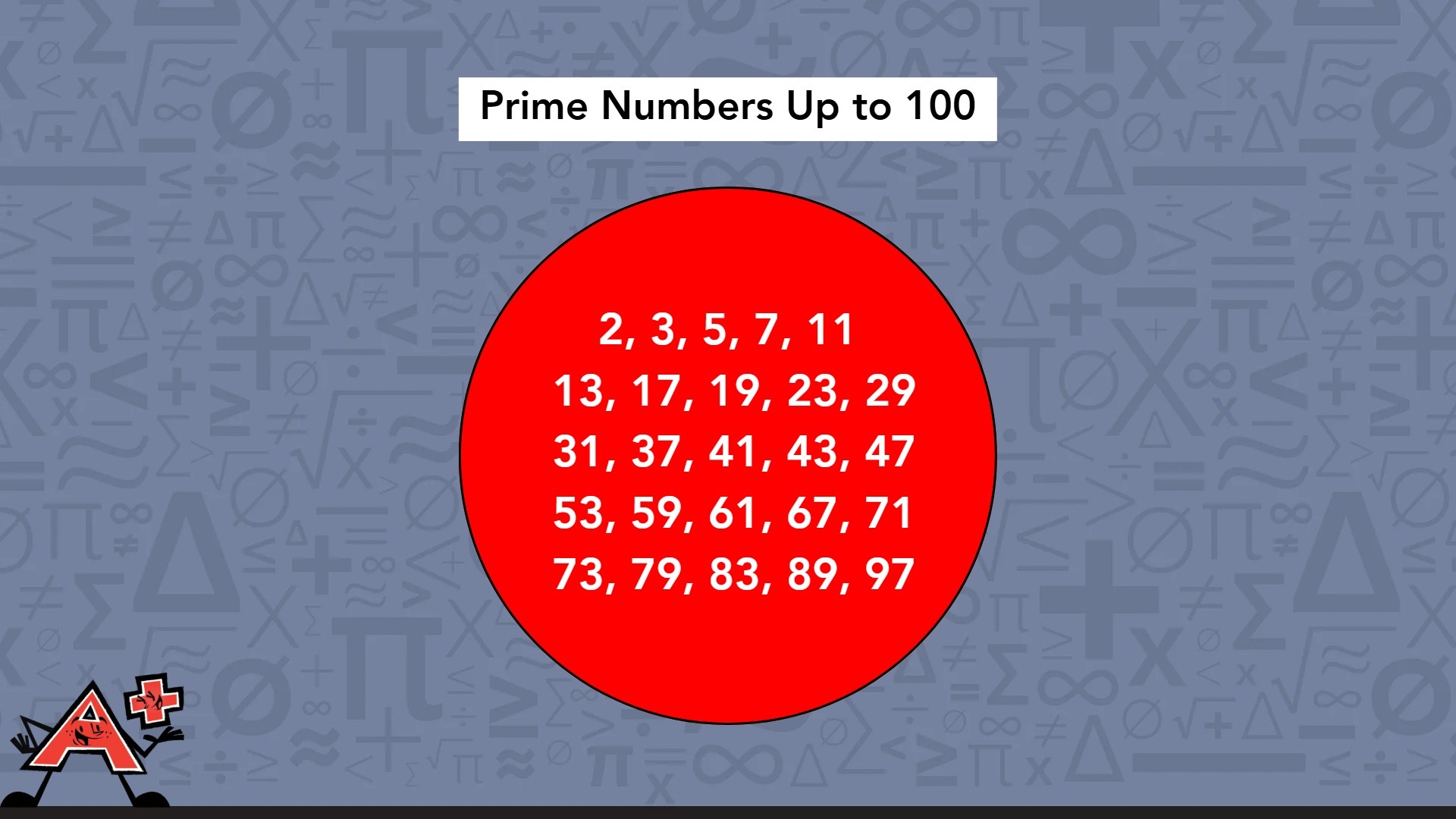
That leaves us with 25 prime numbers.
📕 You May Also Like: Why Maths Confidence Matters More Than Maths Grades
We can use a few quick divisibility checks to find out whether a two-digit whole number is prime without trying to divide it by every number. We only need to check whether it divides evenly by 2, 3, 5 or 7, the same four primes we used in the sieve.
Here’s what to look for:
Check 2. If the number is even and greater than 2, it is not prime. For example, 46 is divisible by 2, so it is not prime.
Check 3. Add the digits together. If their sum is divisible by 3, the original number is too. For 51, we get 5 + 1 = 6. Since 6 is divisible by 3, so is 51, which means 51 is not prime.
Check 5. Any number ending in 0 or 5, apart from 5 itself, is divisible by 5 and is not prime. For example, 65 ends in 5, so we know it divides evenly by 5 and is not prime.
Check 7. This one takes a little more thought, so try dividing the number by 7. Numbers such as 49, 77 and 91 divide evenly by 7 and are not prime.
What if our number makes it through every check?
Let’s try 97. It is not even, since 9 + 7 = 16, which is not divisible by 3. It does not end in 0 or 5 and 7 does not divide into it evenly. That means 97 is prime.
We don’t need to test any larger prime divisors for a two-digit number. As we saw with the Sieve of Eratosthenes, any non-prime number below 100 must have a prime factor among 2, 3, 5 and 7.
📕 You May Also Like: How to Do Long Division: A Step-by-Step Guide
We’ve covered how to recognise and find prime numbers, but there are always a few more questions our students and readers ask.
Let’s answer some common questions about where we meet primes in maths and why they are so interesting.
Students across the UK encounter prime numbers as part of their work with factors, multiples and number properties, although the curriculum is organised differently in each country. In England, the National Curriculum for mathematics introduces prime numbers in Year 5, when students learn to identify whether a number up to 100 is prime and recall the prime numbers up to 19.
In Wales, prime numbers appear in Progression Step 3 alongside factors, multiples and square numbers in the Mathematics and Numeracy learning journey. In Scotland, prime numbers are taught alongside multiples and factors within numeracy and mathematics.
Northern Ireland also includes prime numbers within its mathematics curriculum, with students continuing to use primes and prime factorisation in later study.
Yes, there are infinitely many prime numbers, so no matter how far we count, we can always find another one. The Greek mathematician Euclid proved this more than 2,000 years ago.
That means our list of 25 primes up to 100 is only a tiny part of a sequence that never ends.
Prime numbers have practical uses in mathematics, computer science and digital security. One particularly important application in digital security is public-key cryptography, where systems such as RSA use very large prime numbers.
Computers can multiply these primes together relatively easily, but finding the original prime factors from the resulting number can be extremely difficult. This mathematical property has been used to help protect information sent online.
Prime numbers do not follow a simple repeating pattern that tells us which number will be prime next. For example, the gap from 5 to 7 is 2, from 7 to 11 it is 4, from 11 to 13 it is 2 and from 23 to 29 it is 6.
As we can see, the gaps keep changing, so there is no clear repeating pattern we can use to find the next prime number.
Mathematicians have found broader patterns in how prime numbers appear among other numbers, but there is no simple rule we can follow to predict every next prime.
 At Mathnasium, we go far beyond traditional tutoring to help children understand and develop a love for maths.
Mathnasium is a maths-only learning centre dedicated to helping students of all skill levels excel in maths.
Our instructors work with students in Year 1 through GCSE to help them learn and master any maths concept, including how numbers relate to one another, from factors and prime numbers to the multiplication and division concepts behind them.
Instead of one-size-fits-all curricula, we use the Mathnasium Method™, our proprietary teaching approach designed to develop a deep understanding of maths through a combination of customised learning plans and proven teaching techniques.
Our approach includes:
Assessment and personalised learning plans. Every student begins their time at Mathnasium with a diagnostic assessment that identifies their current skills, strengths and knowledge gaps. We use those insights to create a bespoke learning plan around their individual needs and goals.
Teaching for understanding. Our specially trained instructors use mental, verbal, visual, tactile and written techniques. Different ways of presenting a concept give students more than one path to understanding, whether they benefit from visual tools, hands-on activities or verbal explanations.
Face-to-face instruction. Students learn in an engaging and fun setting, following their tailored learning plan and working with instructors face-to-face at the pace that's right for them, whether in-centre or online.
Confidence and engagement. Sessions include games, earned rewards, and consistent celebration of progress, so students actively participate, solve problems, and engage with maths instead of simply listening to a lesson. They build confidence alongside fluency and many develop a more positive relationship with maths over time.
The results show what this approach can achieve:
94% of parents report an improvement in their child's maths skills and understanding
93% of parents report their child's improved attitude towards maths after attending Mathnasium
90% of students saw an improvement in their school grades
With over 1,250 centres worldwide, including over 40 across the UK, there is likely a Mathnasium centre near you.
Whether your student is looking to catch up, keep up or get ahead in maths, your local Mathnasium centre can help.
Answer a few questions to see how it works
My Child is:


Mathnasium meets your child where they are and helps them with the customised program they need, for any level of mathematics.
We have over 1,100 centres and we're expanding rapidly in the UK. Get started now.