020 8090 4185





The Power of Many Minds: How Mathnasium Stanmore's Team of Instructors Accelerates Progress
Jul 14, 2026 | Stanmore

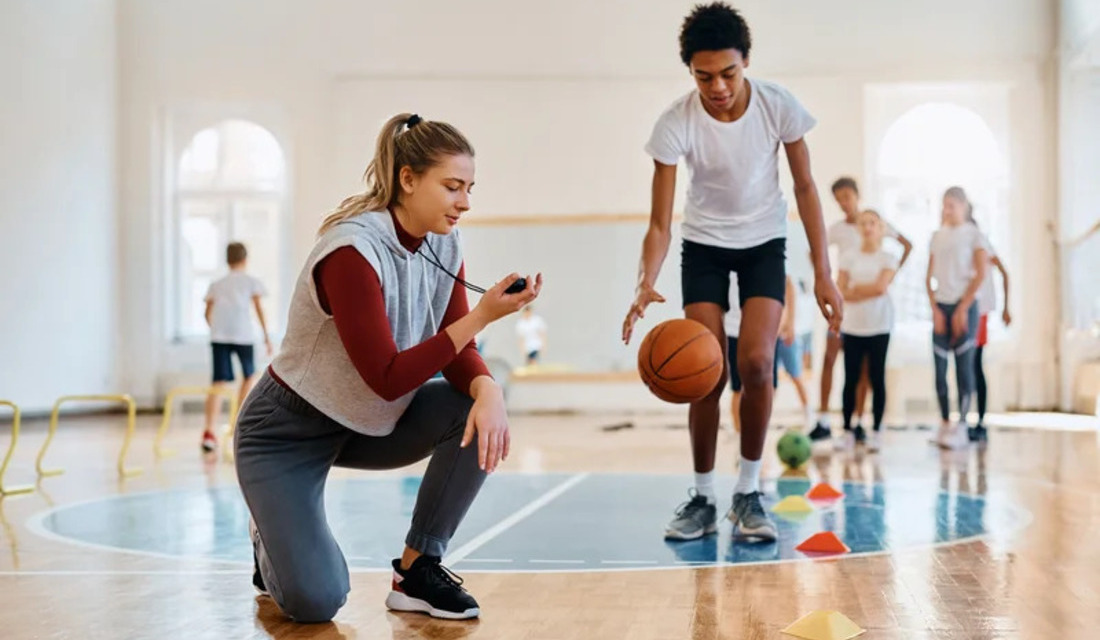
Could basketball help children understand fractions? In a 2026 study involving 309 Danish children aged 11 to 13, researchers found that those who took part in basketball sessions incorporating maths performed 15% better on a fractions test than a control group after eight weeks.¹
During the sessions, children counted their successful shots, expressed them as fractions and converted those fractions into percentages. The findings offer an example of how children can learn maths through sporting activities when mathematical ideas are deliberately included.
For children who love sport, familiar experiences may also offer useful ways to approach mathematical challenges. We'll look at the maths behind their favourite sports, the learning habits they may develop through practice and how parents can use both to support their progress.
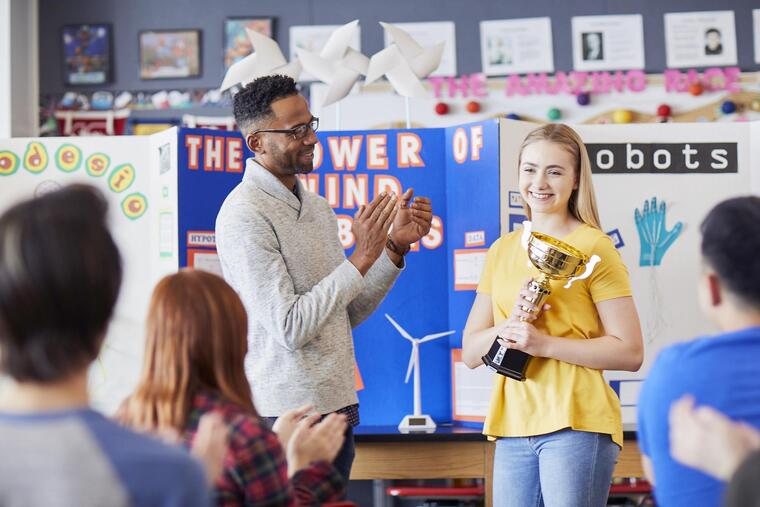
Children can bring habits from sport, such as pattern recognition and persistence, to their maths learning. Pierce, Gould and Camiré’s research suggests that whether children carry what they learn in sport into other areas depends partly on their experiences and the guidance they receive.
With that in mind, parents and teachers can help children recognise connections between sporting experiences and mathematical challenges. Four habits are particularly relevant:
Recognise patterns and plan ahead. Hockey players learn to notice how opponents move and anticipate where the ball might go next. In maths, children can recognise a number sequence that increases by three each time and use the pattern to predict the next number.
Set goals and practise with purpose. Gymnasts may aim to master a new routine by working on one part of their technique. Children can use the same goal-focused approach to maths by choosing a times table they want to know more confidently and practising the facts they haven't yet mastered.
Review mistakes and adjust. After a badminton match, young players may review which shots they missed and what they could improve. When a maths answer is incorrect, children can also look back at their working to find the mistake and decide what to change.
Persist through challenges. Children may need several attempts and guidance from a coach before they master a difficult sporting technique. In maths, persistence can mean revisiting an explanation, asking questions or trying another method when their first attempt doesn't work.
Sporting habits support how children approach maths, but they still need the mathematical knowledge to solve problems. Their favourite sports also give children chances to work with numbers and measurements directly, in situations they already enjoy.
📕 You May Also Like: Number Sense: The Foundation of Primary School Maths
Children encounter maths in sport whenever they compare results, calculate scores, measure performance or work out distances.
Here are four examples of how mathematical ideas appear in different sports:
| Sport | Maths involved | Example |
| Football | Addition and multiplication | In many football leagues, teams earn 3 points for a win and 1 for a draw. If your child's team wins 4 matches and draws 2, they earn (4 × 3) + (2 × 1) = 14 points. |
| Swimming | Time and subtraction | If your child completes a 50-metre swim in 58 seconds, then manages 54 seconds in their next attempt, they can subtract 54 from 58 to find they've improved their time by 4 seconds. |
| Athletics | Measurement, decimals and unit conversion | Suppose your child jumps 3.45 metres in the long jump and their friend jumps 3.60 metres. They can subtract 3.45 from 3.60 to find the difference: 3.60 − 3.45 = 0.15 metres, or 15 centimetres. |
| Tennis | Geometry and measurement | Standard full-size singles tennis courts measure 23.77 metres long and 8.23 metres wide. To find the distance around the court, children can add all four sides. Since opposite sides are equal, they can also calculate 2 × (23.77 + 8.23) = 64 metres. |
Children can go further by collecting results over several matches or training sessions and looking for patterns.
For example, they could record five swimming times on a graph to see how their times have changed, or compare the number of goals scored across several football matches to find an average. Both activities move beyond a single calculation and give children a reason to interpret the numbers.
STEM Learning offers a Heart Rate Investigation for ages 11–14, where children measure their heart rate during different exercises, record recovery times and plot graphs to compare the results. The activity also asks them to predict how a footballer's heart rate might change during a match.
For children of different ages and those interested in different sports, the University of Cambridge's Maths and Sport collection provides problem-solving activities organised by Key Stage and sport.
📕 You May Also Like: Maths Is Everywhere: 7 Surprising Places Your Child Is Already Using It
Parents can draw on their child's interest in sport through questions, encouragement and feedback that help children take a more active role in their maths learning.
Here are three practical ways to make that connection at home.
Sports coaches help young athletes improve by picking out one part of a technique to work on. Parents can use a similar approach when their child needs help with a maths topic.
For example, if your child finds long division difficult, ask them to work through a problem and explain each step. You may discover that they understand the division process but are unsure about their multiplication facts. Together, you can choose which facts to revisit before trying another division problem.
The Education Endowment Foundation's guidance identifies planning, monitoring and evaluating learning as skills children can develop with explicit support. At home, you can encourage your child to explain what they plan to do, check whether their approach is working and decide what they need to revisit.
Children sometimes know that an answer is wrong without knowing where they went wrong. Just as a coach might help a basketball player examine a missed shot, parents can help children look at the steps behind a maths answer.
If your child answers 24 ÷ 4 = 8, you could first ask how they arrived at that answer. Together, you can explore what division means by arranging 24 counters or building blocks into four equal groups. Your child can then count six objects in each group and see that 24 ÷ 4 = 6.
Once your child understands why the answer is 6, you could try a similar problem, such as 20 ÷ 4, and see whether they can explain how to solve it without the counters.
Competitive sports often motivate children through scores and rankings, but comparisons with classmates can feel discouraging when they struggle with maths.
If your child is upset because someone else finishes their work faster, you can relate their experience to how athletes measure improvement against their own earlier performances. For instance, runners might record their times over the same distance each week, while gymnasts might keep track of which elements of a routine they can now perform independently.
Parents can make progress similarly visible in maths by revisiting a problem their child initially found difficult. After some practice, you could compare their earlier attempt with how they approach the same problem now and look at what they understand or can do independently.
When you recognise their progress, be specific about what has changed. You might notice that your child now checks calculations on their own or can explain a method they previously needed help with.
📕 You May Also Like: How to Help With Maths Homework Without the Stress
 From Reception to GCSE, including 11+ preparation, our programmes build solid maths skills, deepen understanding and develop confidence.
Mathnasium is a maths-only learning centre dedicated to helping students of all skill levels excel in maths.
We help children build solid mathematical foundations and understand how maths works, so they can apply what they learn both in the classroom and in everyday activities, including sport. Our instructors build on each child's existing knowledge and develop their understanding step by step.
We deliver this support through the Mathnasium Method™, our proprietary teaching approach designed to help children build maths mastery through deep understanding. Our approach includes:
Assessment and customised learning plans. Every child begins their Mathnasium journey with a diagnostic assessment that identifies their strengths and gaps in their maths knowledge. We use those insights to create a bespoke learning plan based on what they already know and what they need to learn next.
Teaching for understanding. Our specially trained instructors teach children how and why maths works using mental, verbal, visual, tactile and written techniques. Children develop a deeper understanding of mathematical concepts rather than simply memorising methods.
Face-to-face instruction. Children work face-to-face with specially trained instructors in a caring and fun group environment and follow their bespoke learning plan at a pace that is right for them. At Mathnasium of Stanmore, families can choose between in-centre and live online instruction through Mathnasium@home.
Confidence and engagement. Our instructors create an encouraging learning environment where children can enjoy maths through games, activities and earned rewards. As their skills and understanding develop, children can also grow in confidence and develop a more positive attitude towards maths.
The impact extends beyond the classroom:
94% of parents report an improvement in their child's maths skills and understanding
93% of parents report their child's improved attitude towards maths after attending Mathnasium
90% of students saw an improvement in their school results
With over 1,250 centres worldwide and over 40 across the UK, there is likely a Mathnasium centre near you.
Families in Stanmore, Queensbury, Canons Park, Kenton, Kingsbury, Hatch End and Belmont can visit Mathnasium of Stanmore for maths support tailored to their child's needs. Our centre works with children from Reception through GCSE and offers preparation for the 7+, 11+, 13+, KS2 SATs and GCSE maths.
Whether your child is curious about the maths they encounter through sport or needs support with more challenging topics at school, our team is here to help them make continued progress.
✉️ Click Contact Us to get in touch with Mathnasium of Stanmore
Not near Stanmore?
📍 Find a Mathnasium Centre Near You
References:
1. Jensen, O. E., et al. (2026). Integrating fractions into physical education classes can improve mathematical performance in 11–13-year-olds: The Basketball Mathematics project. Educational Psychology Review, 38, Article 85. https://link.springer.com/article/10.1007/s10648-026-10175-y
Mathnasium of Stanmore is a math-only learning centre for K-12 students in Stanmore, LON. Trusted by over a million parents, Mathnasium uses personalized learning plans and the proprietary Mathnasium Method™ to help students catch up, keep up, and get ahead on their math journey.
Our specially trained tutors deliver face-to-face instruction in a supportive and fun small-group environment, working with students to develop a deep understanding of math, build confidence, and improve academic performance.
Contact Us