Though we typically think of numbers in terms of the quantities they represent, they can tell us much more. As we learn maths, we begin to notice how numbers relate to one another, how we can break them apart and put them back together and how we can approach the same calculation in different ways.
Number sense describes this understanding of numbers and their relationships, which develops throughout primary school maths.
Today, we’ll learn more about number sense, how it works alongside times-table fluency and how it can support our understanding of fractions, decimals, percentages and other KS2 maths.
What Is Number Sense?
Number sense is our intuitive understanding of numbers, their values and how they relate to one another. It allows us to use numbers flexibly to solve problems.
We use number sense to:
-
recognise whether an answer makes sense
-
estimate efficiently and judge whether an answer is reasonable
-
break numbers apart and put them back together in useful ways
-
understand place value and number patterns
-
choose an efficient strategy when solving a problem
Let’s see what this can look like with a simple addition: 29 + 31. We could add 29 and 31 directly, but we could also notice that 29 is only 1 away from 30. If we take 1 from 31 and add it to 29, both numbers become 30, so we get 30 + 30. The total stays the same, so our answer is 60.
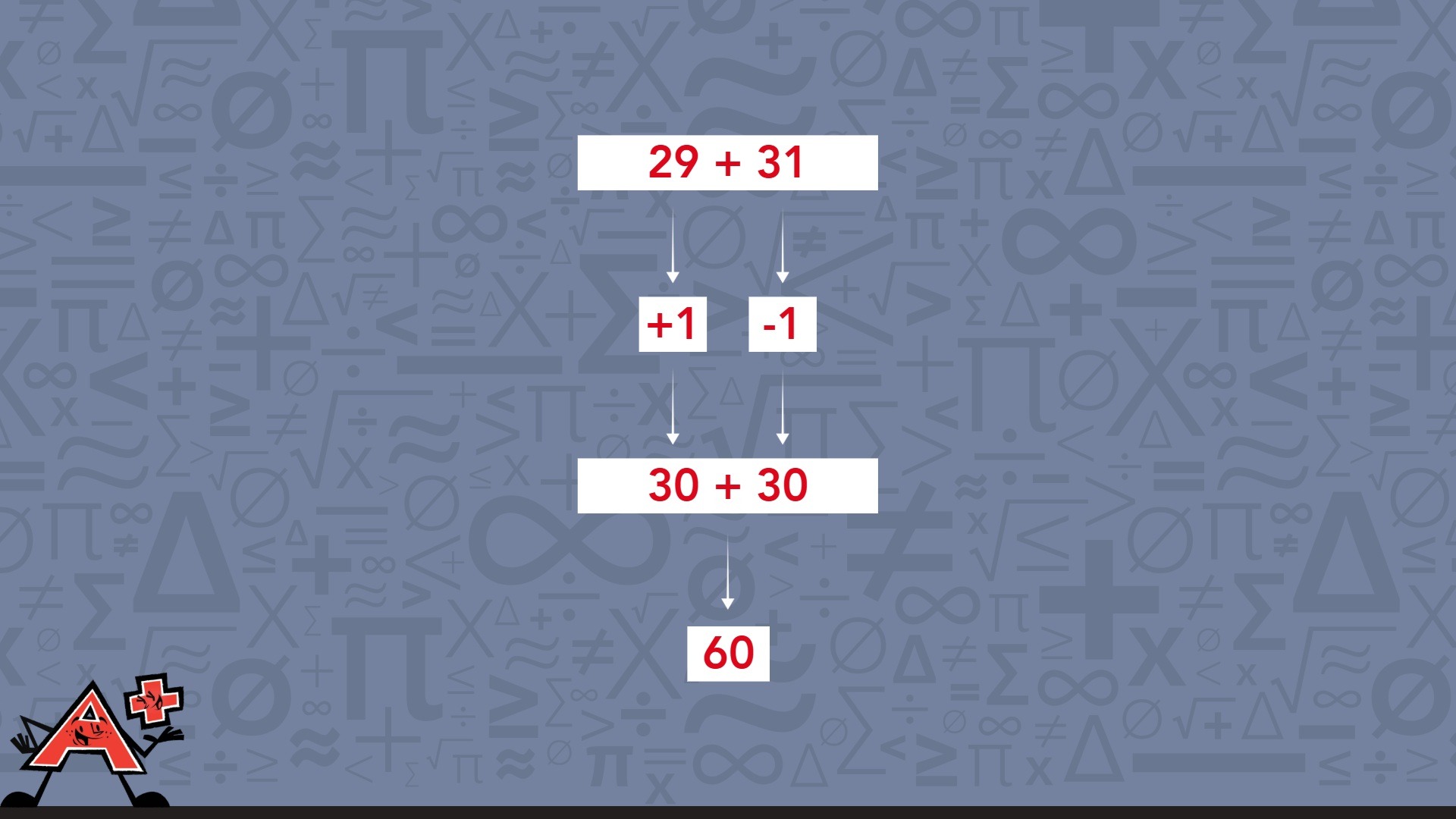
Here, number sense allows us to recognise how 29 and 31 relate to 30 and use that relationship to make the calculation simpler.
📕 You May Also Like: Multiplication Tables Check 2026: A Guide to Year 4 Times Tables
How Does Number Sense Begin in Early Primary School?
Number sense begins in early primary school during Years 1 and 2 (KS1), when children learn to count, compare quantities and recognise relationships between small numbers.
England’s national curriculum for mathematics develops this understanding through number and place value, number bonds, addition and subtraction.
For example, children learn number bonds to 10, such as 6 + 4 = 10, so we know that 6 needs 4 to make 10. We can then use subtraction to reverse the addition, so 10 − 4 = 6.
Addition and subtraction work as inverse operations and recognising that relationship lets us use one number fact to work out another.
The DfE’s primary mathematics guidance identifies number bonds to 10 as a foundation for later addition and subtraction. As children move into Years 3 to 6, they use their number sense with larger numbers, times tables, fractions and decimals.
📕 You May Also Like: What Is Place Value and Why Does It Underpin KS2 Maths?
Is Number Sense the Same as Knowing Times Tables?
Times-table fluency and number sense are closely connected, but they describe different skills. Times-table fluency lets us recall multiplication facts quickly and accurately, while number sense lets us connect those facts to other calculations.
Here’s how the two compare:
| Times-table fluency |
Number sense |
| Recalls multiplication facts quickly |
Recognises relationships between numbers and facts |
| Builds speed and accuracy with known facts |
Allows us to choose and adapt a strategy |
| Gives us multiplication facts we can use for division |
Connects multiplication and division through their inverse relationship |
| Makes familiar calculations easier to retrieve |
Applies familiar facts to new calculations |
For example, if we know 6 × 7 = 42, we can use place value to see how the fact changes when either factor is multiplied by 10:
-
60 × 7 = 420
-
6 × 70 = 420
We can also connect multiplication and division through equal groups because they work as inverse operations. If 6 groups of 7 make 42, then 42 ÷ 6 = 7.
So, both skills have their place. Times-table fluency gives us a reliable bank of number facts, while number sense allows us to use those facts in flexible ways as maths becomes more complex.
📕 You May Also Like: How to Do Long Division: A Step-by-Step Guide
How Does Number Sense Support Later KS2 Maths?
Number sense supports later KS2 maths by showing us how to use familiar number relationships as we work with more advanced concepts.
In England, the DfE’s primary maths programme of study connects multiplication and division with fractions, decimals, percentages and ratio in upper KS2 before children begin using algebra to solve problems.
We can see how number sense carries across these areas in a few simple examples.
1. Fractions, Decimals and Percentages
Fractions, decimals and percentages draw on number sense because we need to recognise equivalent ways of representing the same proportion.
For example, we can recognise that \(\Large\frac{1}{4}\), 0.25 and 25% all represent one quarter of a whole.
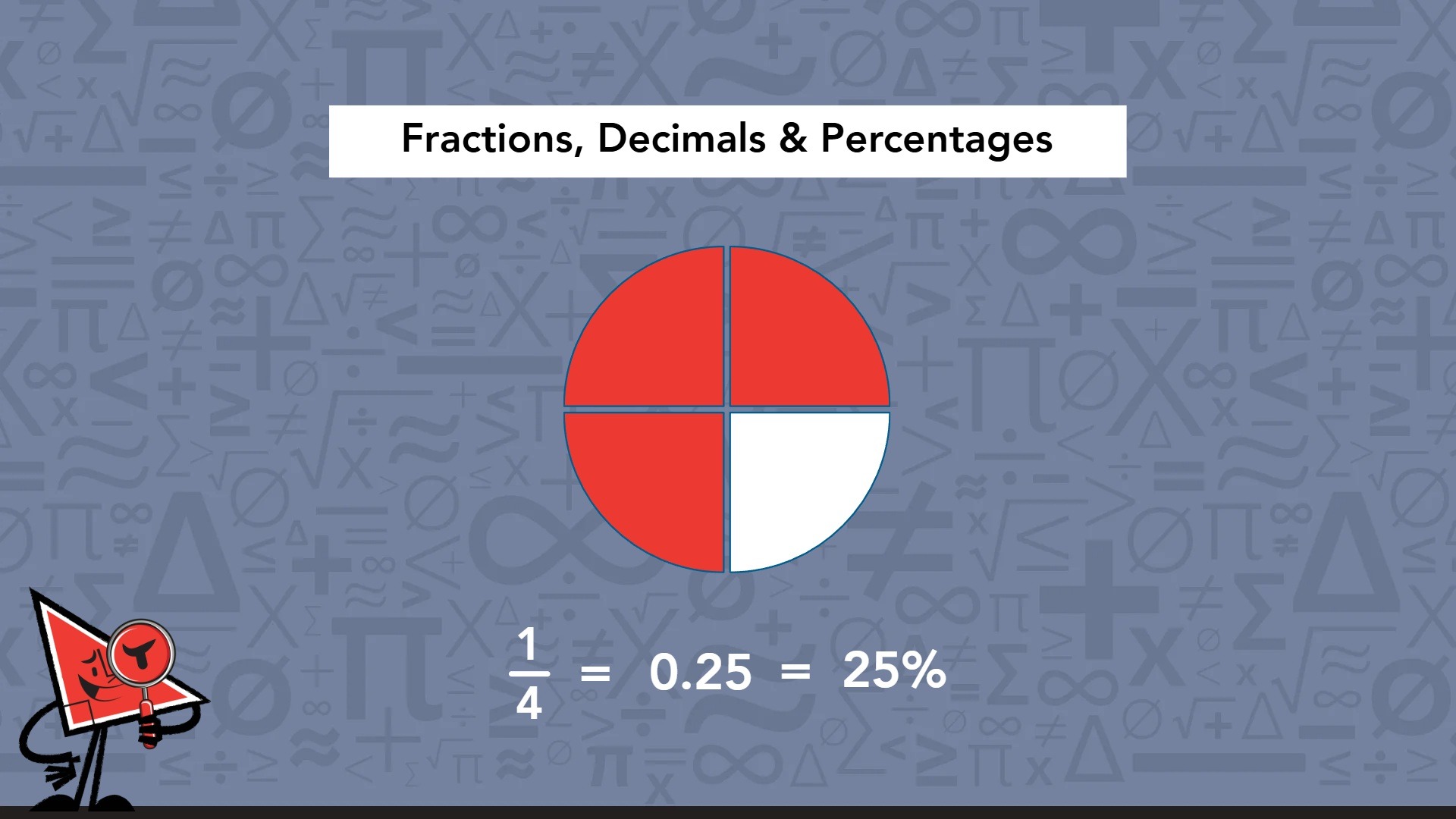
That connection can also make calculations easier. To find 25% of 84, we can recognise 25% as one quarter.
One quarter then means dividing the whole into 4 equal parts, so 84 ÷ 4 = 21.
We can use the same understanding with decimals. If 0.25 of a quantity represents one quarter of it, we know that 0.25 of 84 is also 21.
📕 You May Also Like: Why Fractions, Decimals & Percentages Confuse Your Child
2. Ratio
Number sense supports ratio because we use relationships between quantities to work out new amounts.
To illustrate what we mean by this, suppose 3 identical books cost £12 and we want to find the cost of 5 books. We can break £12 into 3 equal amounts to find the cost of one book, so £12 ÷ 3 = £4.
Once we know that 1 book costs £4, we can use that relationship to find the cost of 5 books: 5 × £4 = £20.
As we can see, the relationship between the number of books and their cost stays proportional throughout:
-
3 books → £12
-
1 book → £4
-
5 books → £20
3. Algebra
Algebra builds on our understanding of relationships between numbers, including values we do not yet know.
Let’s compare □ + 8 = 15 and x + 8 = 15.
Both equations ask us to find the missing value that makes the statement true by using different notation. We can use the inverse relationship between addition and subtraction to calculate 15 − 8 = 7, so the missing value is 7 in both cases.
Our earlier understanding of addition and subtraction still applies even though x has replaced the empty box. Here, we draw on number sense to recognise the relationship between the known and unknown values and solve the equation.
📕 You May Also Like: Why Being Good at Maths Looks Different in Primary and Secondary School
How Can Children Practise Number Sense?
From our work with children at Mathnasium, we noticed that number sense grows through regular opportunities to estimate, try another route and think about how one calculation relates to another.
Our instructors use questions and different approaches to teach children how and why maths works and we can use the same kind of thinking in simple practice at home.
-
Estimate before calculating. Before finding a right answer, we can first work out roughly what we expect. Take 198 + 304. We can round 198 to 200 and 304 to 300, which gives us an estimate of 500. We can then calculate the correct answer, 198 + 304 = 502. Since 502 is very close to our estimate of 500, we have a useful check that our answer is reasonable.
-
Find another way. After solving a calculation, we can ask ourselves whether another route reaches the same answer. For example, if we have 7 × 8, we might recall 56 from our times tables or break the calculation into 5 × 8 + 2 × 8 = 40 + 16 = 56. We start to see more clearly how multiplication facts are connected when we work with the same numbers in more than one way.
-
Change one number. We can also take a calculation we understand and see what happens after altering one value. Suppose we know 25 + 25 = 50. If we change the second 25 to 26, we do not need to start the addition again because the second number has increased by 1, so the total must also increase by 1 to 51. The exercise trains us to notice how a change in one number affects the answer.
Regular practice can also show us where certain number relationships still feel less secure. If the same difficulty keeps appearing across different calculations, it may be useful to understand what is causing it.
At Mathnasium, we use a diagnostic assessment to identify those gaps. The assessment includes verbal and written activities and covers skills including number sense, which gives our instructors the information they need to create a customised learning plan.
📕 You May Also Like: How to Help Your Child Through Their Maths Homework Without the Stress
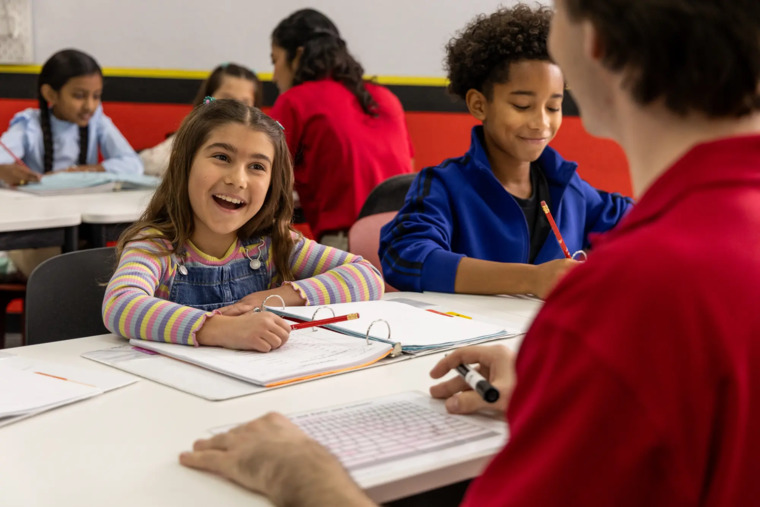 At Mathnasium, we combine a proprietary teaching approach with a comprehensive assessment and bespoke learning plan, all delivered by specially trained maths instructors.
How Mathnasium Helps Children Build Number Sense and Beyond
Mathnasium is a maths-only learning centre dedicated to helping students of all skill levels excel in maths.
Number sense is part of how we teach maths at Mathnasium. We work on children’s understanding of what numbers mean and how they work together, from early skills such as counting and understanding wholes and parts to proportional thinking and later algebra.
Our primary school maths programme also develops fluency in addition, subtraction, multiplication, division, fractions, decimals and percentages as children build their mathematical thinking.
No matter what your child is working towards in maths, we can support them through the Mathnasium Method™, our proprietary teaching approach designed to build maths mastery through deep understanding.
Our approach includes:
-
Assessment and customised learning plans. Every child begins their Mathnasium journey with a diagnostic assessment that identifies their current skills, strengths and knowledge gaps. We use those insights to create a bespoke learning plan around their individual needs and goals.
-
Teaching for understanding. Our specially trained instructors use mental, verbal, visual, tactile and written techniques. We present concepts in different ways, which gives children more than one path to understanding, whether they benefit from visual tools, hands-on activities or verbal explanations.
-
Face-to-face instruction. Children learn in a fun and engaging environment, working with instructors face-to-face at the pace that's right for them, both in-centre and online.
-
Confidence and engagement. Sessions include games and earned rewards, so children actively participate, solve problems and engage with maths instead of simply listening to a lesson. They build confidence alongside fluency and many become more willing to try a problem they might otherwise avoid.
The results show what this approach can achieve:
-
94% of parents report an improvement in their child's maths skills and understanding
-
93% of parents report improved attitude toward maths after attending Mathnasium
-
90% of students saw an improvement in their school grades
With over 1,250 centres worldwide, including over 40 across the UK, there is likely a Mathnasium centre near you.
Families across Whetstone, Totteridge, North Finchley, Cockfosters, New Barnet, East Barnet and Oakwood trust Mathnasium of Whetstone to help their children build lasting maths confidence.
If number sense or any other maths topic is giving your child trouble, our team is ready to help.
✉️ Click Contact Us to get in touch with Mathnasium of Whetstone
Not near Whetstone?
📍 Find a Mathnasium Centre Near You


 0208 090 4605