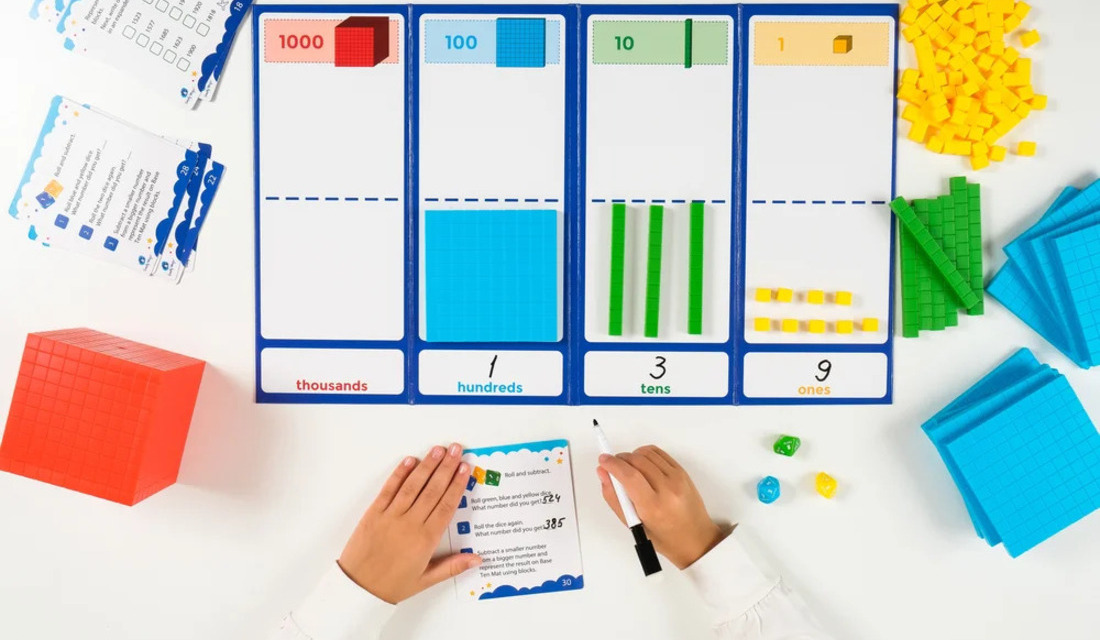
Place value runs through much of the number work we do in primary school. We use it to read and work with whole numbers and decimals and it becomes particularly important when we begin using written methods for calculations.
But why does the position of a single digit affect so much of the maths we do?
To answer this question and learn more about place value, we’ll look at how it works across our base-10 number system, why written methods depend on it and how the same place-value relationships explain several common mistakes in KS2 maths.
What Is Place Value in Simple Terms?
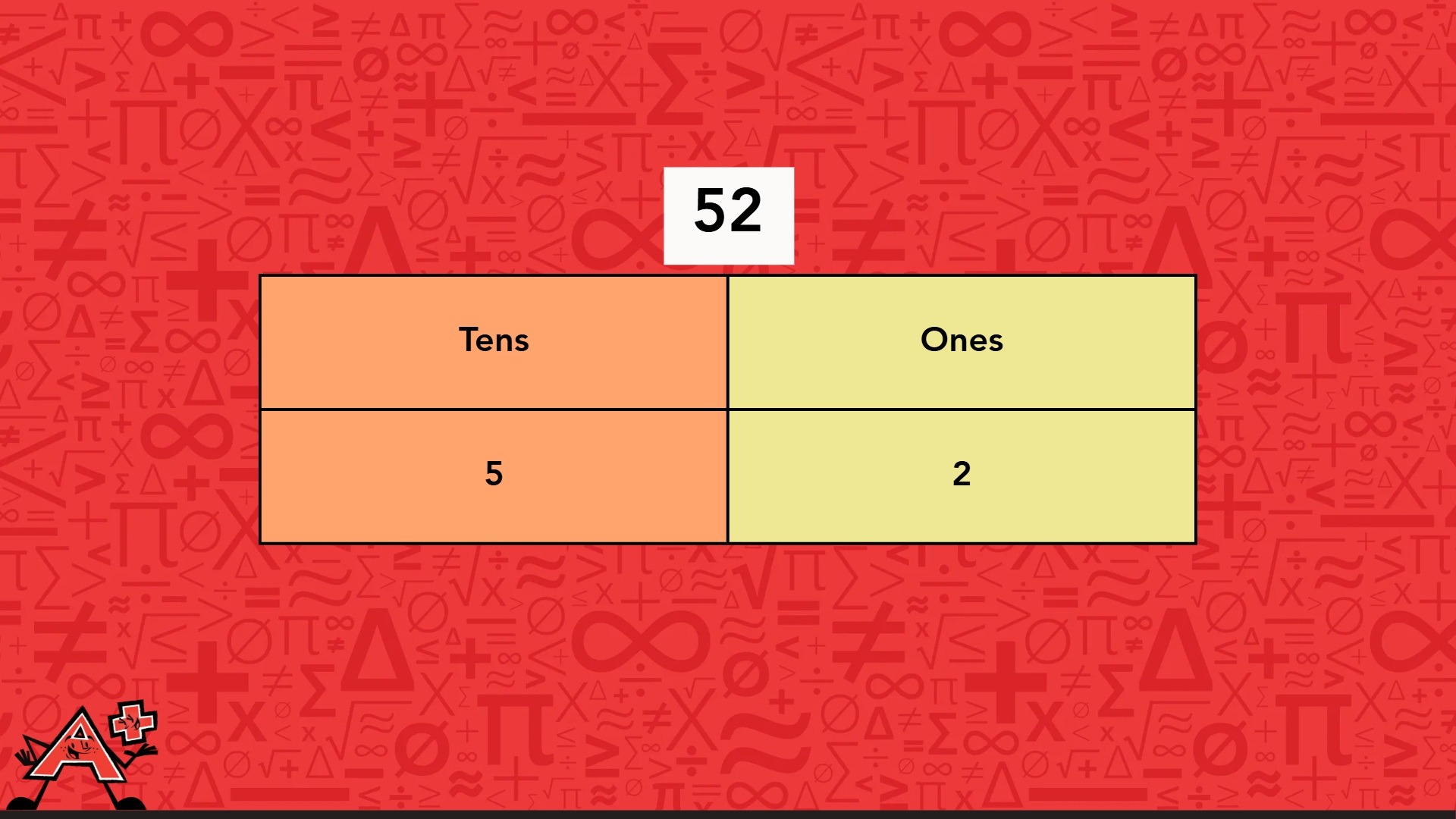
Place value is the value of a digit based on its position in a number. In other words, a digit’s placement in the ones, tens or hundreds place tells us the value it represents.
Let’s see what that means with the digit 5:
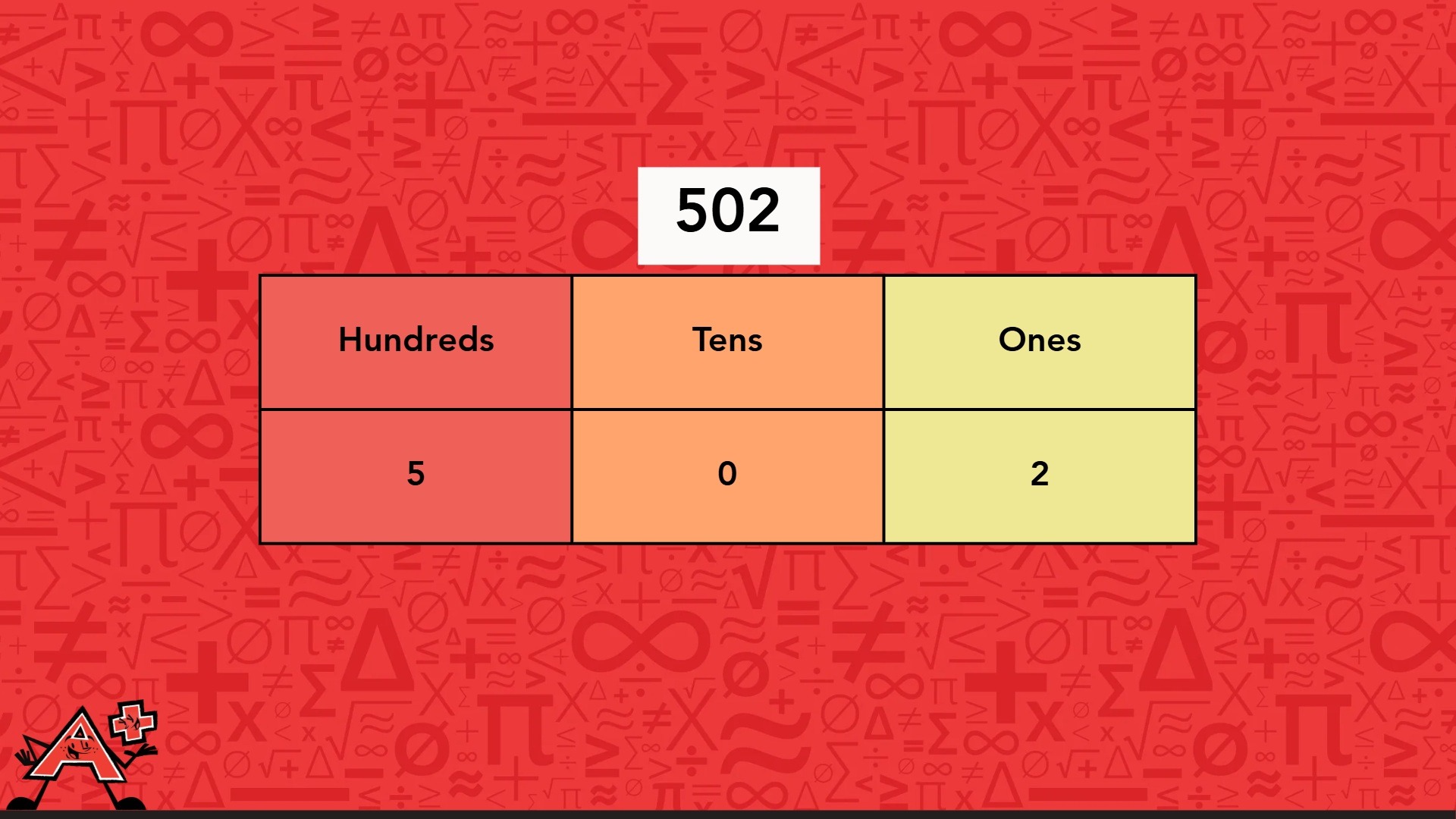
Since each position in a number has a particular value, we also need a way to show when one of those positions is empty, which is where zero comes in.
In 6,009, the zeros show that there are no hundreds and no tens. They keep those positions visible, so the 6 is in the thousands place and represents 6,000, while the 9 is in the ones place and represents 9.
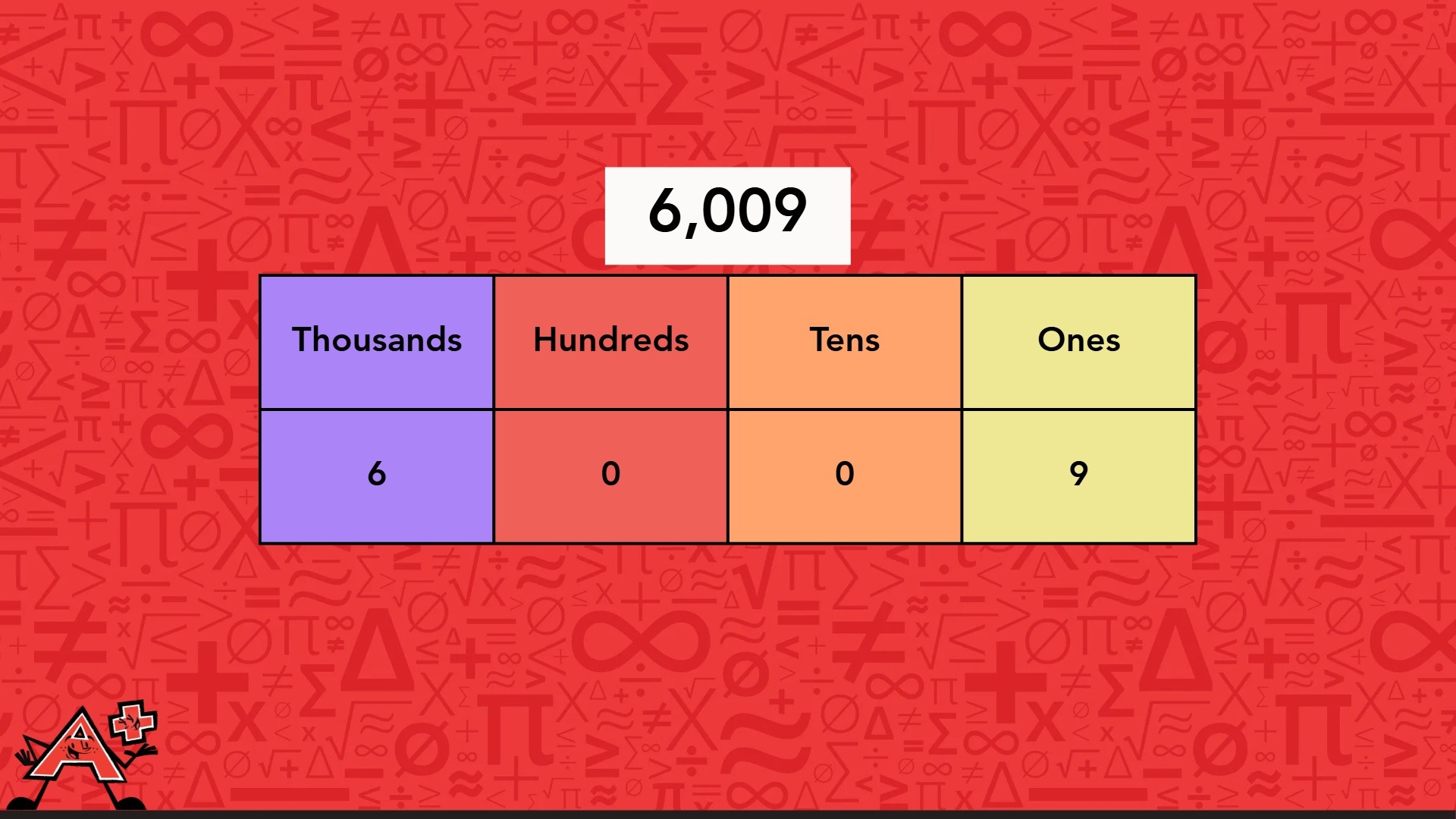
So, to read a number correctly, we need to look at the position of every digit, including zeros that mark places with no value of their own.
📕 You May Also Like: Number Sense: The Foundation of Primary School Maths
How Does Place Value Work Across the Number System?
Our number system works in base 10, so every place has a value ten times the place immediately to its right. Move a digit one place to the left and its value becomes ten times greater; move it one place to the right and its value becomes one tenth as great.
Place values continue from ones through tens, hundreds, thousands and millions. To the right of the ones place, the decimal point separates the whole-number part from the fractional part of a number. The first three places after it are tenths, hundredths and thousandths.
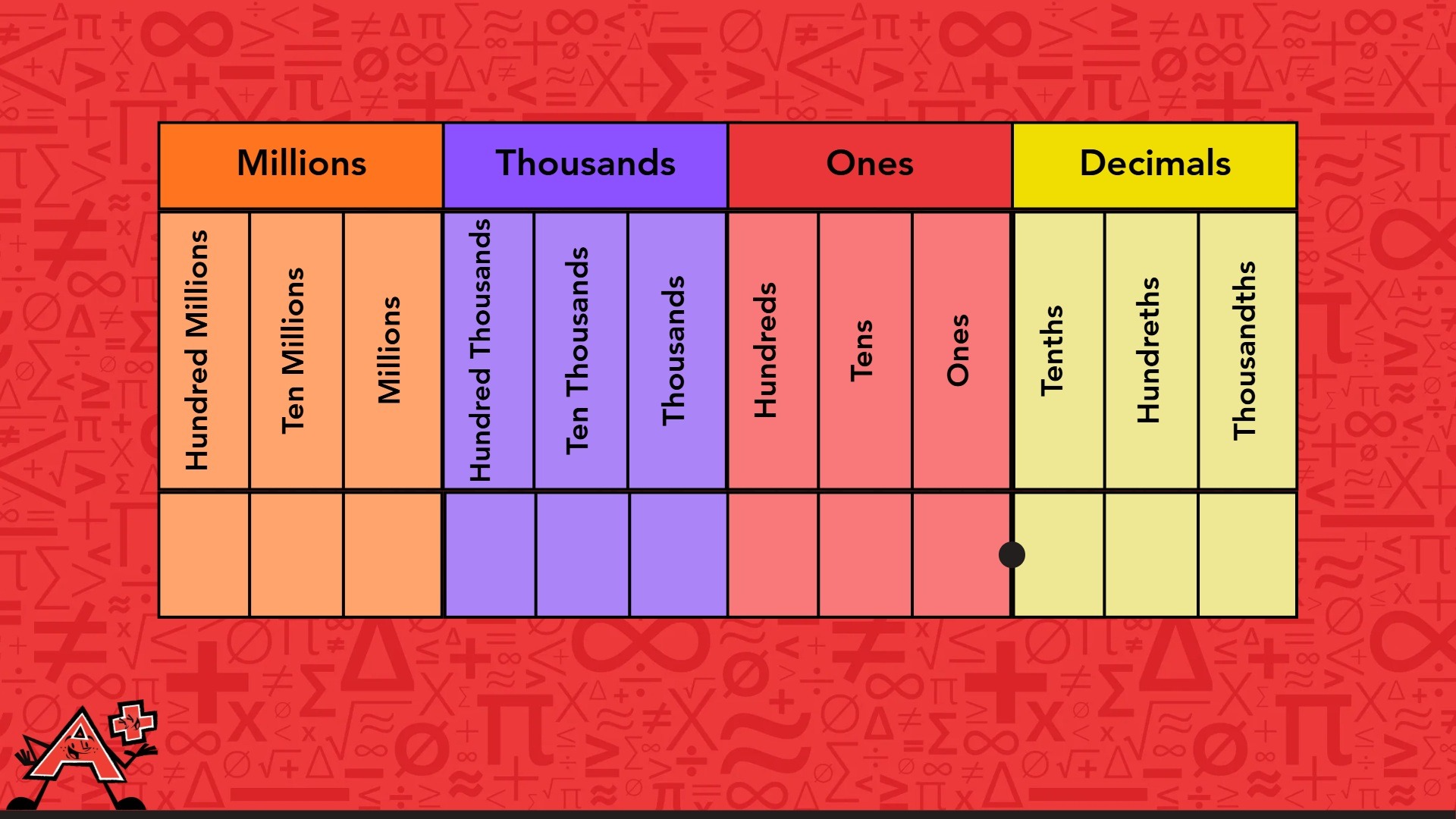
We can see how the same base-10 relationship works on both sides of the decimal point by looking at whole numbers and decimals.
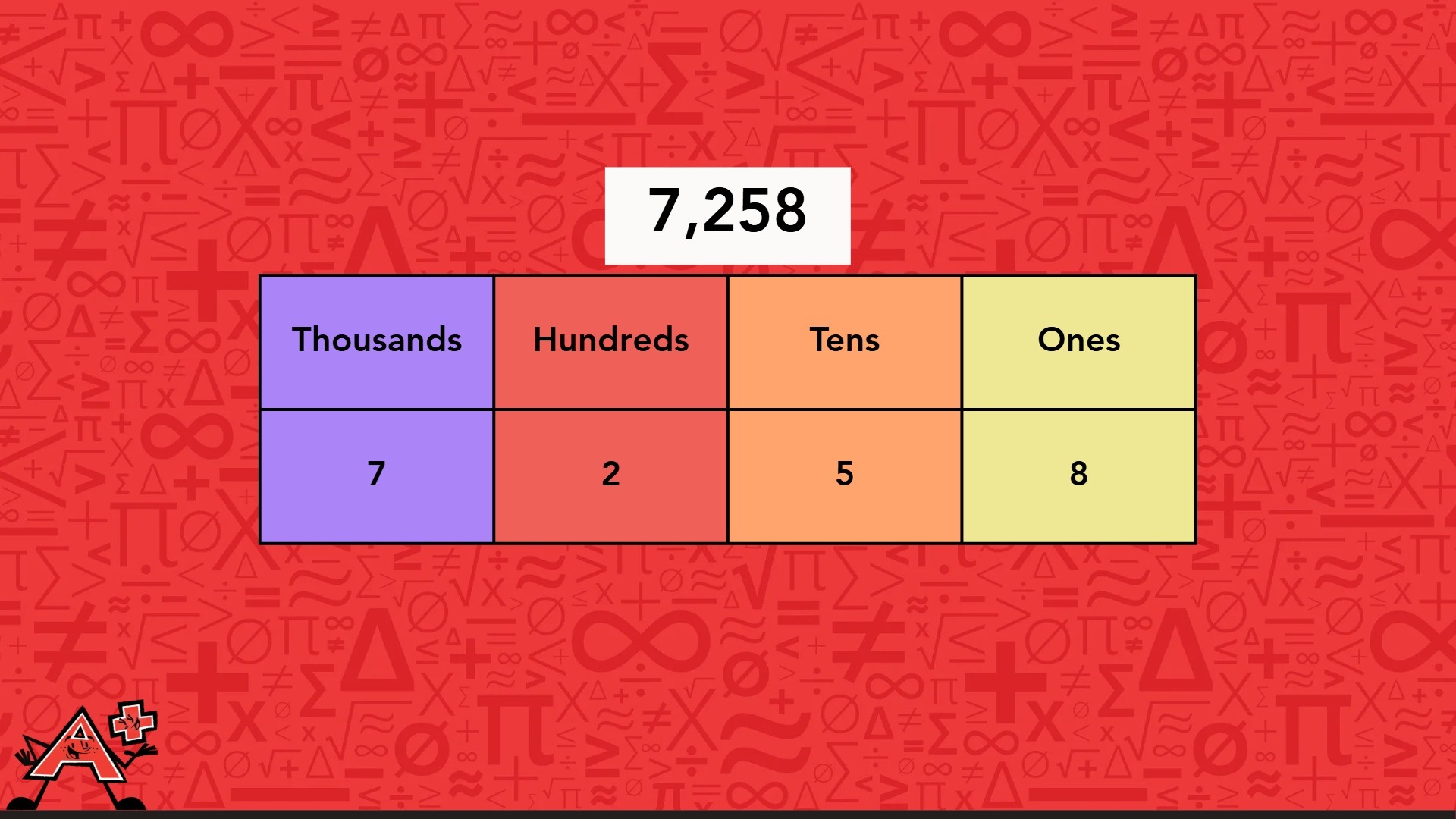
Let’s start with the whole number 7,258. The 7 is in the thousands place and represents 7,000, the 2 represents 200, the 5 represents 50 and the 8 represents 8 ones.
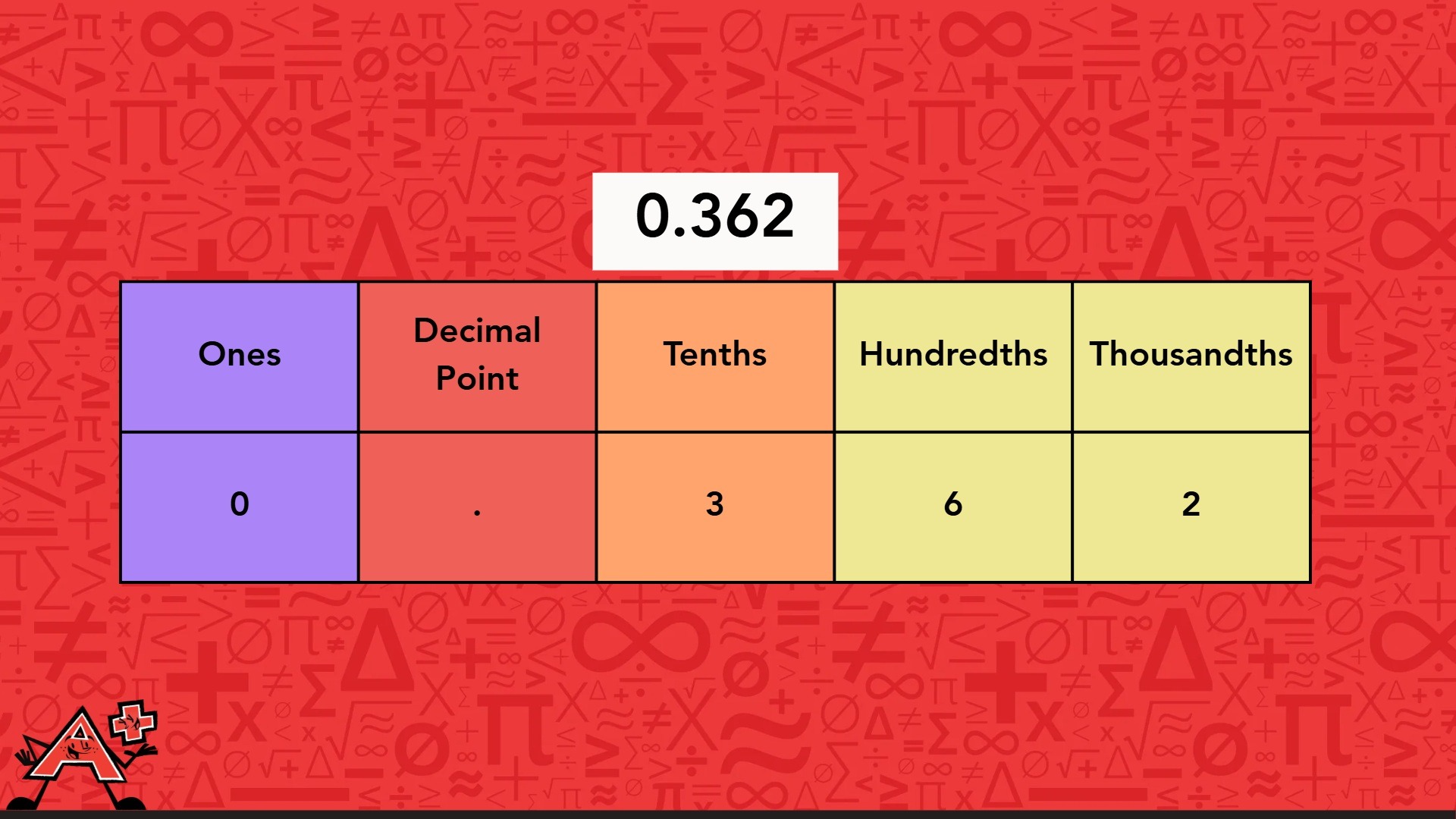
Now let’s see how place value works in the decimal 0.362. The 3 represents 3 tenths, the 6 represents 6 hundredths and the 2 represents 2 thousandths. From tenths to hundredths to thousandths, each place has one tenth the value of the place to its left.
Students use place value with increasingly larger whole numbers and decimals throughout KS2. According to the DfE’s national curriculum in England for mathematics, Year 5 students read, write, order and compare numbers to at least 1,000,000 and work with numbers up to three decimal places.
By Year 6, they work with whole numbers up to 10,000,000 and identify the value of each digit in numbers given to three decimal places.
📕 You May Also Like: Year 6 Maths Skills Children Need for Secondary School
Why Does Place Value Underpin Written Methods in KS2?
Written methods for addition, subtraction, multiplication and division depend on place value because we calculate with digits according to the values they represent.
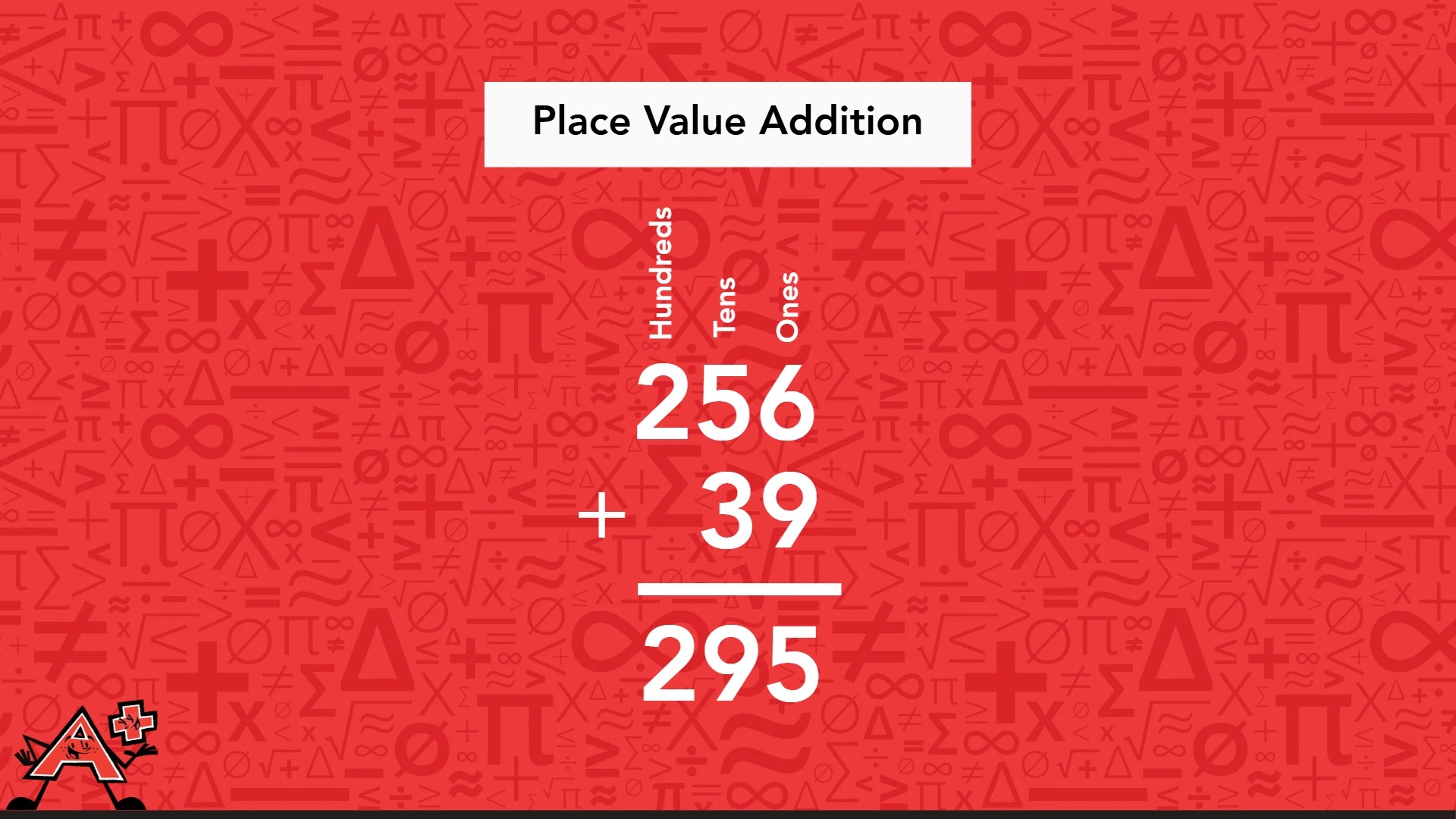
In column methods, ones must line up with ones, tens with tens and hundreds with hundreds before we can calculate accurately.
We can see this in the column addition 256 + 39. The 9 lines up with the 6 because both represent ones, while the 3 lines up with the 5 because both represent tens. Since 39 has no hundreds, there is no digit to place under the 2 in the hundreds column.
Place value also explains how exchange works in column subtraction.
Let’s look at 32 − 8. We need to subtract 8 ones, but 32 has only 2 ones. We can take 1 ten from the 3 tens and turn it into 10 ones. We now have 2 tens left and 12 ones to work with. Together, they still make 32, and we can subtract 8 from 12 to get 4, while the 2 tens give us 20. The answer is 24.
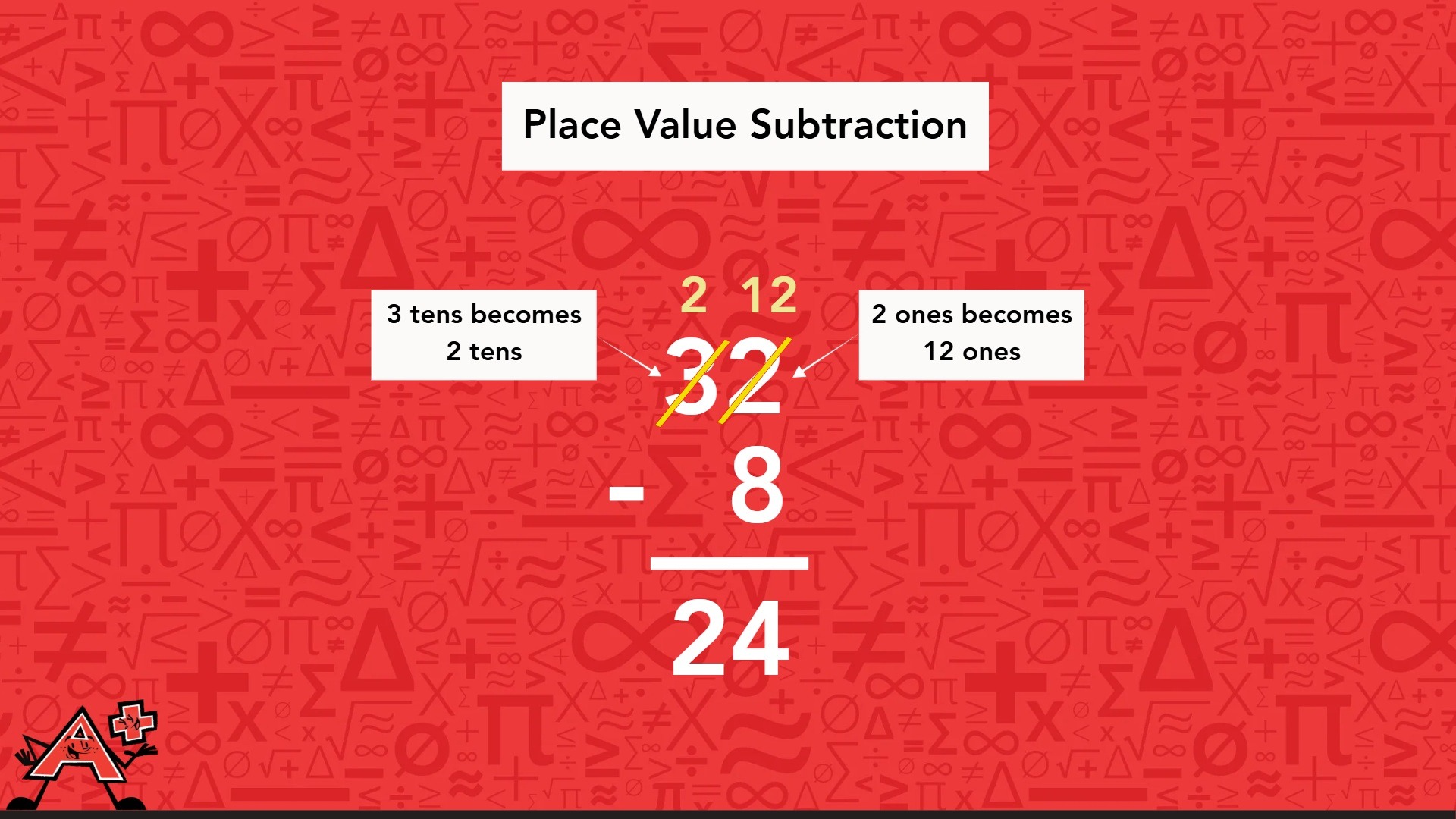
The exchange works because 1 ten = 10 ones. The DfE uses the same relationship for larger place values, where 10 tens = 1 hundred.
Multiplication and division rely on place value too. In long multiplication, we need to know whether a digit represents ones, tens, hundreds or another place value before we multiply it. Long division also requires us to keep track of the value represented by each digit as we work through the number.
Place value therefore gives the steps in written methods their mathematical meaning. Once we understand what each digit represents, alignment and exchange become part of the number relationships we are using rather than steps we simply have to remember.
📕 You May Also Like: How to Do Long Division: A Step-by-Step Guide
How Can Place Value Misconceptions Affect KS2 Maths?
Students use place value in KS2 to decide what digits represent as they calculate, compare and round numbers. If they focus on the digits themselves instead of their positions, the same misconception can lead to different errors across these areas of maths.
Here are three common examples and the place-value reasoning we can use to correct them.
1. The Add-a-Zero Trap
We may first see multiplication by 10 with whole numbers such as 7 × 10 = 70, which can make it seem as though we simply add a zero.
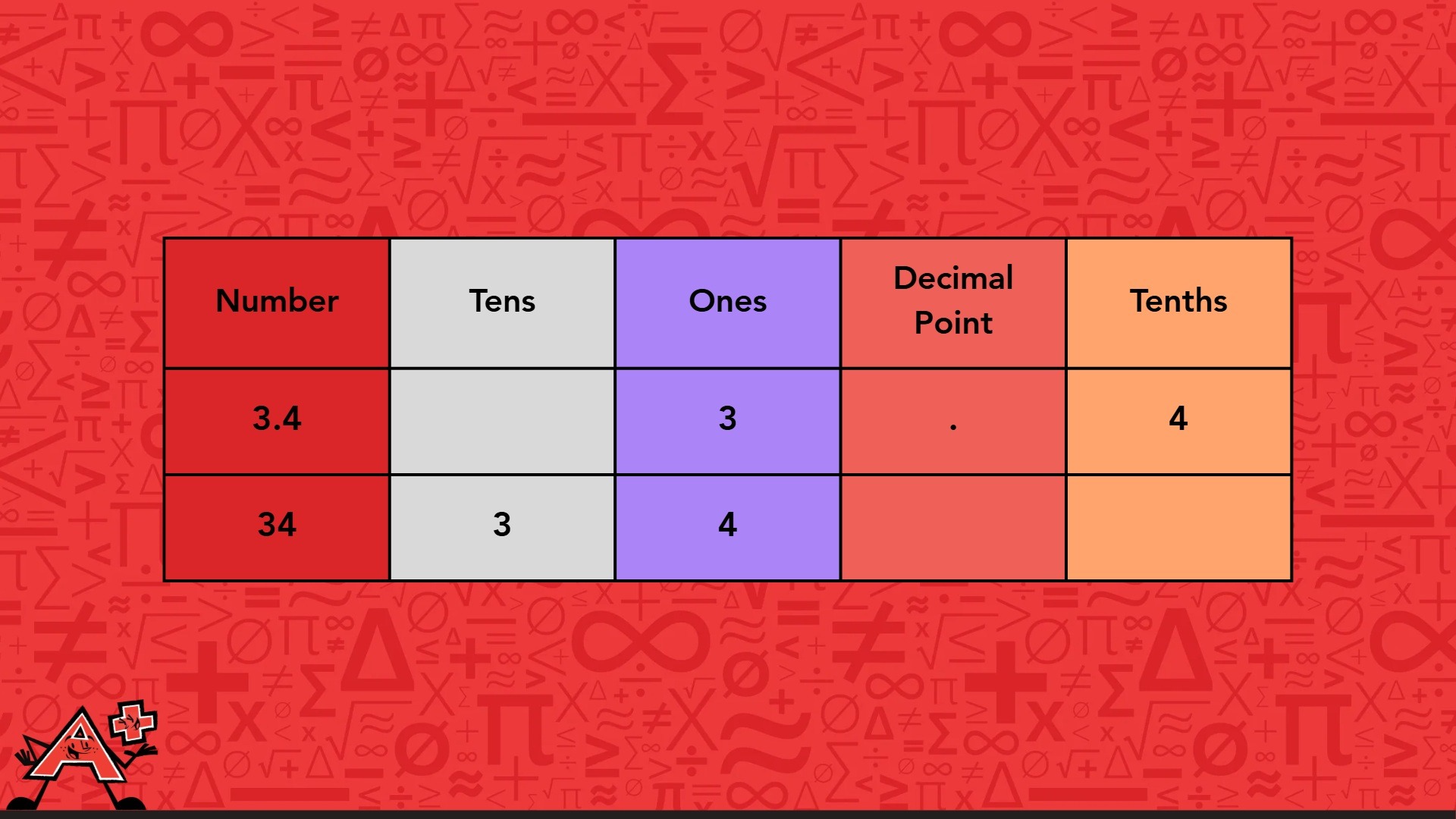
But decimals give us a different situation. If we use the same idea for 3.4 × 10 and write 3.40, we make a mistake because 3.40 is still equal to 3.4.
To multiply 3.4 by 10 correctly, we move each digit one place to the left. The 3 moves from the ones place to the tens place, while the 4 moves from the tenths place to the ones place. This gives us 34, so 3.4 × 10 = 34.
The National Centre for Excellence in the Teaching of Mathematics (NCETM) discusses this same misconception in its primary maths materials and explains that students need to understand what happens to the place value of the original digits before they use “put a zero on the end” as an efficient rule for whole numbers.
2. Decimal Size Confusion
We can compare decimals correctly by looking at the same place-value positions from left to right. For example, students may think 0.125 is greater than 0.3 because 125 > 3. However, 125 and 3 are not the values represented by the decimal parts of these numbers.
To compare the place values directly, we can write 0.3 as 0.300. When we add zeros to the right of a decimal, its value does not change.
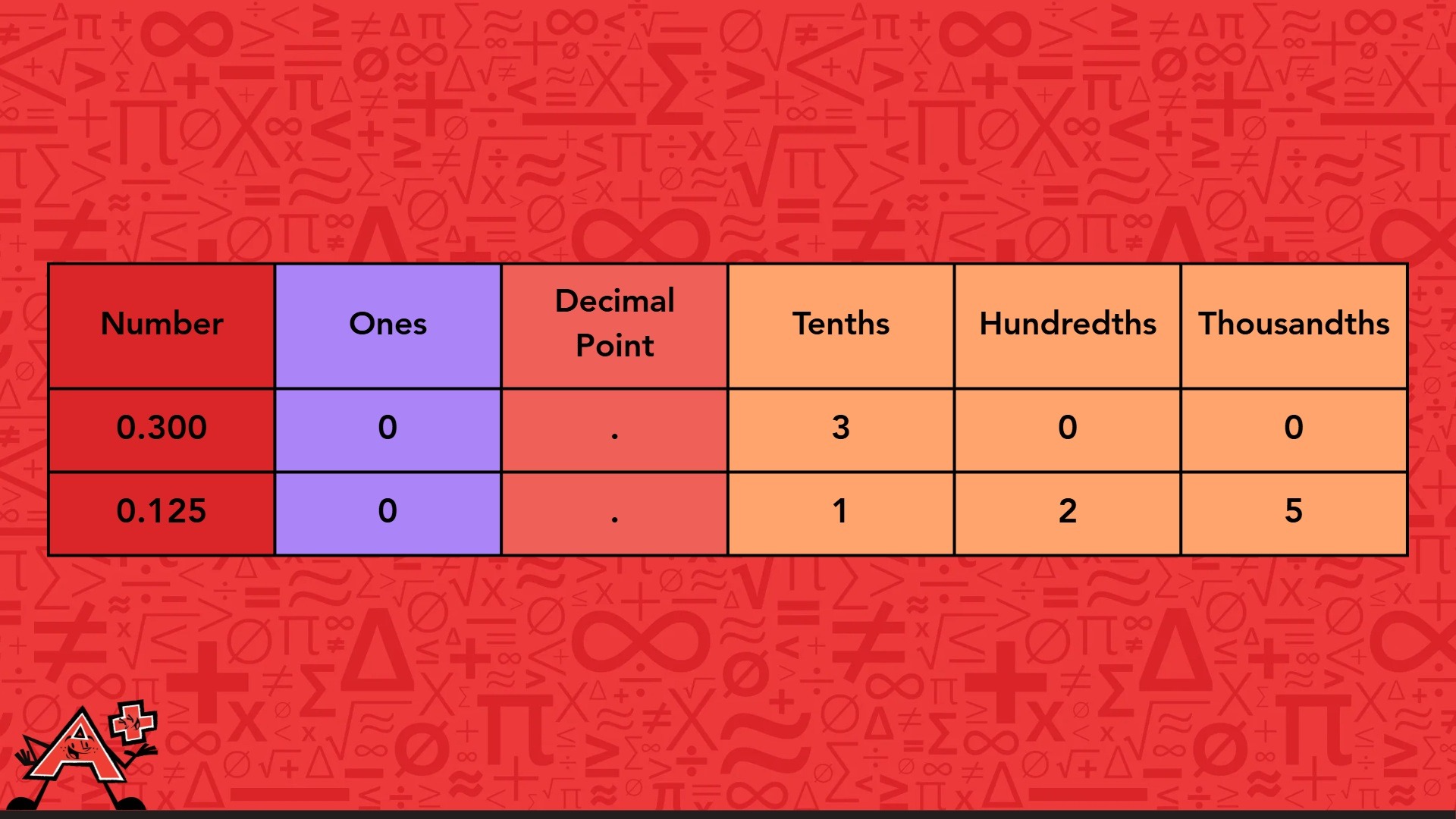
Now we compare the digits from left to right. Both numbers have 0 ones, so we move to the tenths place. In 0.125, the 1 represents 1 tenth, while in 0.300, the 3 represents 3 tenths. Since 3 tenths > 1 tenth, we already know that 0.3 > 0.125.
We only need to move to the hundredths or thousandths if the digits in the places before them are equal. Place value therefore tells us both which digits to compare and the order in which to compare them.
3. Rounding to the Wrong Place
We use place value to identify which digit we are rounding and which neighbouring digit determines the direction.
To round, for example, 4,367 to the nearest hundred, we first find the hundreds digit, 3, and then look at the tens digit, 6.
The tens digit tells us whether 4,367 is closer to 4,300 or 4,400. Since 6 puts the number above the halfway point between these two hundreds, we round 4,367 to 4,400.
📕 You May Also Like: Why Being Good at Maths Looks Different in Primary and Secondary School
 At Mathnasium, we go far beyond traditional tutoring to help children understand and develop a love for maths.
How Mathnasium Helps Children Build Place Value Understanding and More
Mathnasium is a maths-only learning centre dedicated to helping students of all skill levels excel in maths.
Whether students need to strengthen their place value understanding, fill gaps in other areas of maths or work towards greater challenge, our instruction starts from what they already know and builds from there.
Through the Mathnasium Method™, our proprietary teaching approach, we focus on helping children understand how and why maths works.
With place value, for example, that means understanding what each digit represents and how its position affects calculations, rather than simply memorising the steps of a written method.
To find the right starting point for each child, we begin with a diagnostic assessment. It shows us what your child already understands securely and where they have knowledge gaps. We use those findings to create a customised learning plan around their specific needs and goals.
Our specially trained instructors teach for understanding using mental, verbal, visual, tactile and written techniques. Different ways of explaining a concept give children more opportunities to make sense of the maths and connect new ideas with what they already know.
Students work face-to-face with instructors at a pace that suits their learning plan, either in-centre or online through Mathnasium@home. Sessions take place in a caring and fun group environment designed to keep children engaged as they build skills and confidence.
The impact extends beyond the classroom:
-
94% of parents report an improvement in their child's maths skills and understanding
-
93% of parents report an improved attitude towards maths after attending Mathnasium
-
90% of students saw an improvement in their school grades
With over 1,250 centres worldwide, including over 40 across the UK, there is likely a Mathnasium centre near you.
Families across Fulham, Parsons Green, Peterborough Estate, Bishops Park, Munster Village and Sands End trust Mathnasium of Fulham to help their children build lasting maths confidence.
If place value, or any other maths topic, is giving your child trouble, our team is ready to help.
✉️ Click Contact Us to get in touch with Mathnasium of Fulham
Not near Fulham?
📍 Find a Mathnasium Centre Near You


 020 7471 4888
 07502 347505