02081299788











The First Half-Term Check-In: How Is Your Child Really Getting On With Maths?
Oct 23, 2026 |

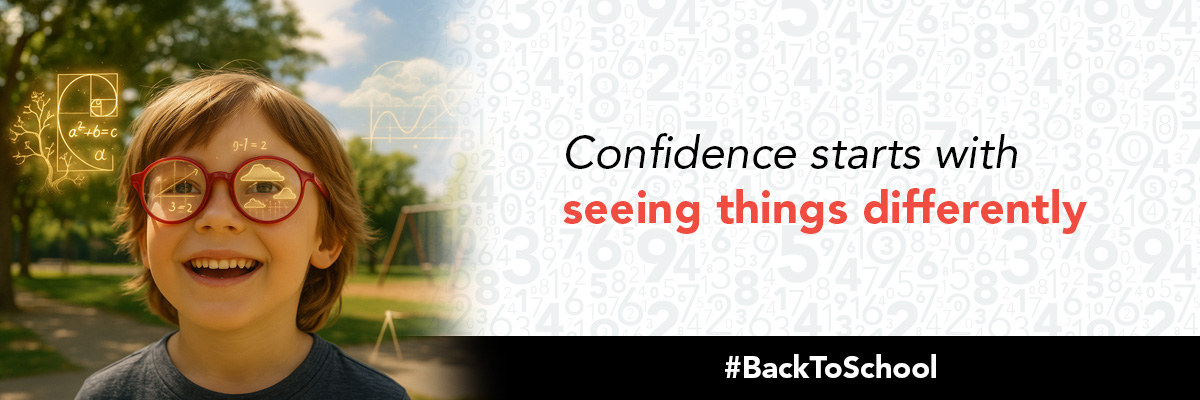
Parents often ask, “How can I help with maths at home?” or “Got any fun Year 5 math games?” This August and September, support your child’s learning with practical, non-screen maths that brings real-world skills to life.
Try these with your child and book a Free Assessment to build on their progress at Mathnasium.
KS1 (Ages 5–7): Foundations Through Play
For younger children, maths is best learned through fun and curiosity. Start with the things they already love, games, food, and stories, and weave maths gently into the mix.
Baking and cooking is a brilliant way to introduce numbers and measurement. From counting out spoonfuls of flour to recognising ½ and ¼ cups, children begin to understand fractions in a hands-on way. Doubling or halving a recipe can naturally introduce multiplication and division without it feeling like a lesson.
Shopping and coin counting give real-world context to money and number recognition. Let your child help sort coins into denominations, count out totals at the checkout, or guess how much change you'll get from a tenner. These everyday moments help children build number sense and confidence with value.
Dice games like “Target 50” or “Addition War” are perfect for rainy days. All you need are two dice and a simple goal (e.g., who can reach 50 first by adding the numbers they roll?). It’s a fantastic way to build fluency without worksheets.
Finally, a shape and pattern hunt around the house or garden can get kids thinking about geometry. Look for repeating patterns in tiles, spot 3D shapes in packaging, or play “I spy” with symmetrical objects.
KS2 (Ages 7–11): Apply and Investigate
As children progress, they begin to apply maths more analytically. At this stage, making connections between school topics and real life is key.
Baking with decimals is a practical way to build confidence with measurements and conversions. Ask your child to help weigh ingredients in grams and millilitres, then convert them to kilograms or litres. You can also scale recipes up or down, doubling or halving amounts, so they get experience working with decimal numbers in real-life contexts. For example, if a recipe calls for 0.25 litres of milk, what’s double that?
Car-journey maths can turn travel into a learning opportunity. Estimate how long it’ll take to get to your destination, read road signs for distances, or calculate average speeds. If you’re filling up with fuel, let your child help tally litres and total cost.
Sales shopping offers a practical way to practise percentages. Ask your child to work out the price after a 20% discount or compare sale items to see which is the best deal. They’ll see why maths matters in everyday decisions.
For a bit of strategic thinking, play battleships on grids. This classic game reinforces knowledge of coordinates, quadrants, and spatial reasoning, and it’s a great way to spend quality time together.
KS3 (Ages 11–14): Deeper Reasoning
By secondary school, maths becomes more abstract, but that doesn’t mean it can’t still be hands-on and enjoyable.
Real-world measurements are a great place to start. Measure the area of the garden, work out how much paint is needed for a room, or compare metric and imperial units in recipes or DIY.
Budgeting and cooking bring together ratios, division, and problem-solving. Try scaling a recipe up or down depending on how many people you’re feeding or plan a weekly meal budget using supermarket prices and deals.
Encourage creativity with DIY board games. Challenge your child to invent a maths-themed board game using dice, cards, and a scoring system. It’s a fun way to explore probability and logic.
Lastly, bring out your inner storyteller with problem-solving scenarios. Pose everyday maths puzzles like: “If Dad buys 3 cinema tickets at £5.95 each and snacks for £4.60, how much change does he get from £25?” These questions build mental maths and reasoning skills in a real-life context.
How Mathnasium Builds on This
These activities are the foundations for the deeper understanding and structured approach we offer at Mathnasium. Using professional assessments and tailored personalised learning plans, we:
● Identify strengths & gaps
● Provide targeted instruction aligned with UK curriculum
● Build confidence through mastery and fun
Ready for the next step? Book a Free Assessment to help your child apply what they’ve learned and grow in maths confidence.