We often encounter brackets in algebra, from simple expressions to more complex calculations. As we progress, we need to know how to expand them correctly, particularly when working with two brackets or expressions that involve negative numbers.
To help you approach these problems with confidence, we’ll work through single and double brackets step by step, explain the grid and FOIL methods and show how to recognise common mistakes in your working.

What Does Expanding Brackets Mean in Algebra?
To expand brackets in algebra, we apply multiplication to the expressions inside them and rewrite the result without brackets. The distributive law allows us to do this by multiplying each part of a sum or difference separately.
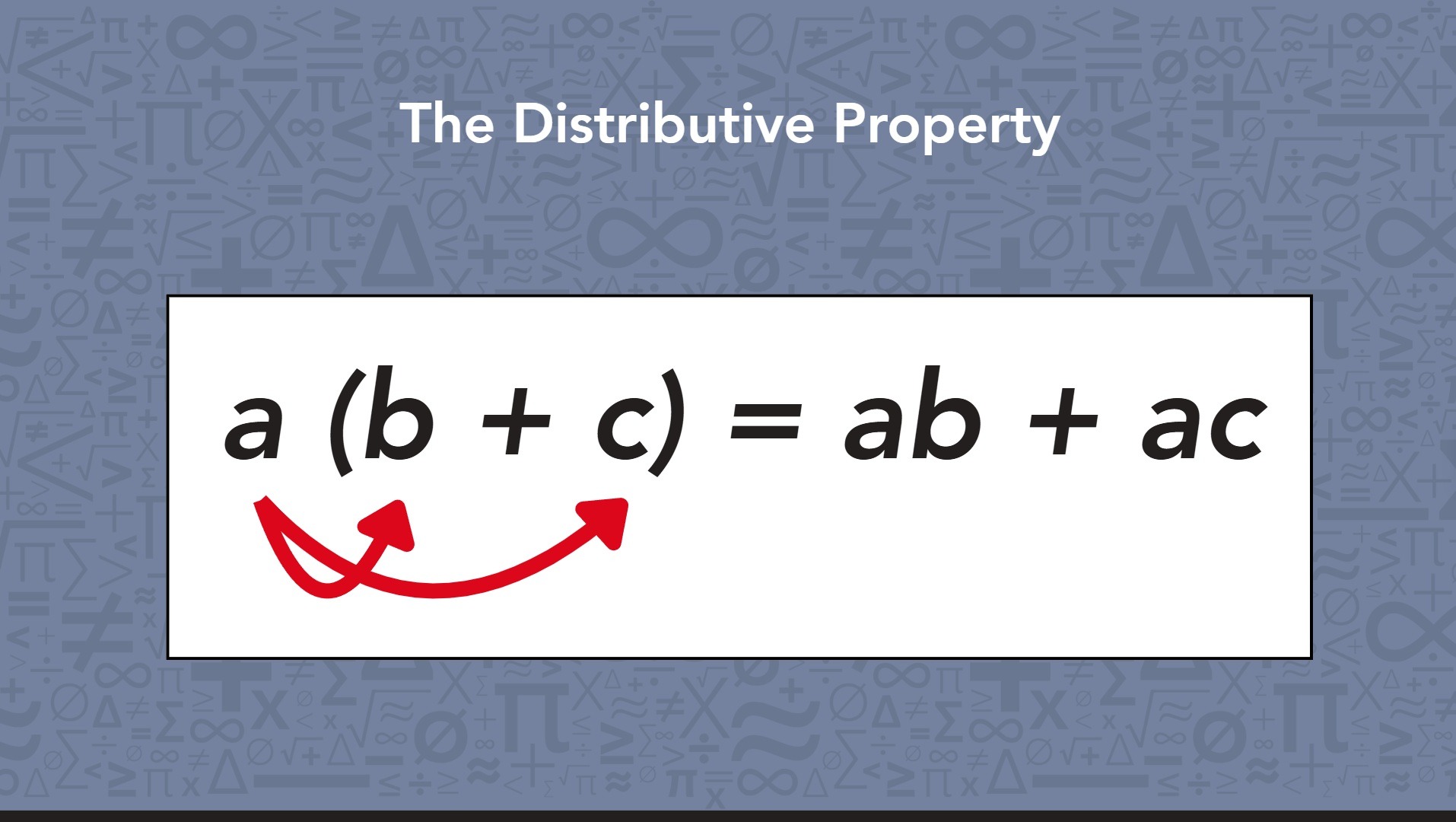
For example, let's calculate 4(6 + 3). We can first add the numbers inside the brackets:
4(6 + 3) = 4 × 9 = 36
Alternatively, we can use the distributive law by multiplying both 6 and 3 by 4 before adding the results:
4 × 6 + 4 × 3 = 24 + 12 = 36
Both calculations give us 36, but the second shows how the distributive law allows us to expand the brackets without first calculating their contents. We follow the same rule in algebra, even when letters represent numbers whose values we don't know.
In England, students learn to expand single brackets and products of two brackets during Key Stage 3, covering Years 7 to 9.
Bracket expansion is also part of GCSE algebra, as outlined in the AQA maths specification, one of England's exam boards. Students can also use AQA's past papers to practise exam-style maths questions.
📕 You May Also Like: Year 10 Maths and the Start of GCSE: A Parent's Guide
How to Expand Single Brackets
To expand a single bracket, multiply every term inside it by the number or letter outside, applying the usual rules for multiplying positive and negative numbers. Single brackets can contain numbers, letters or a combination of both.
Let's see how this works with a positive multiplier first, before moving on to negative numbers and expressions containing letters.
1. Expand a Bracket with a Positive Number
Suppose we want to expand 5(2x + 7). The number 5 multiplies both 2x and 7, even though the two terms are joined by an addition sign.
We can work through the calculation in three steps.
Step 1: Multiply the first term by 5
We multiply 5 by 2x. Since 5 × 2 = 10, we get 5 × 2x = 10x.
Step 2: Multiply the second term by 5
Next, we multiply 5 by 7 to get 5 × 7 = 35.
Step 3: Write the expanded expression
We put the two results together with the original addition sign to get 5(2x + 7) = 10x + 35.
2. Expand a Bracket with a Negative Number
We follow the same steps when the number outside is negative, but we also need to account for the signs of the numerical factors. Two numbers with opposite signs have a negative product, while two negative numbers have a positive product.
Here's how we expand −4(3y − 2).
Step 1: Multiply −4 by 3y
We multiply −4 by the coefficient 3 and keep the y, giving −4 × 3y = −12y.
Step 2: Multiply −4 by −2
Both numerical factors are negative, so their product is positive: −4 × (−2) = +8.
Step 3: Write the expanded expression
We put the two products together to get −4(3y − 2) = −12y + 8.
3. Expand a Bracket with a Letter Outside
We may also encounter an expression such as 2x(x + 5), where the multiplier contains a letter. The calculation follows the same pattern, but we also multiply the letters. For example, x × x = x2, which we read as “x squared”.
Here, we’ll expand 2x(x + 5) step by step.
Step 1: Multiply 2x by x
We multiply the numerical parts and the letters to get 2x × x = 2x2.
Step 2: Multiply 2x by 5
We multiply 2 by 5 and keep the x, which gives 2x × 5 = 10x.
Step 3: Write the expanded expression
We put the two products together to get 2x(x + 5) = 2x2 + 10x.
We leave 2x2 and 10x as separate terms because they contain different powers of x and cannot be combined as like terms.
📕 You May Also Like: Order Of Operations And BIDMAS Explained
How to Expand Double Brackets
To expand double brackets, we multiply each term in the first bracket by each term in the second, then collect any like terms.
For example, (x + 4)(x − 7) means we multiply the two bracketed expressions together, which gives us four products to calculate.
We can organise the calculation using either the grid method or the FOIL method. Both give the same expanded expression, but they help us keep track of the multiplication in different ways.
1. Expand Double Brackets Using the Grid Method
To use the grid method, we arrange the terms from both brackets in a table, with one bracket's terms across the top and the other's down the left side. Each cell shows the product of its row and column headings.
Let's expand (x + 4)(x − 7) using a 2 × 2 grid.
Step 1: Set Up the Grid
First, write x and 4 across the top, then x and −7 down the left side.
We now have four empty cells, one for each multiplication.
Step 2: Multiply the Terms to Fill Each Cell
For each cell, multiply the term at the top of its column by the term at the beginning of its row.
Our completed grid looks like this:
Step 3: Write the Expanded Expression
We write the four products as one expression, with plus signs for positive terms and minus signs for negative terms. We get x2 + 4x − 7x − 28.
Step 4: Collect Like Terms
We can combine 4x and −7x because both contain x to the first power. So, we get 4x − 7x = −3x. However, x2 represents x × x, so it cannot be combined with terms containing only x.
Our final answer is (x + 4)(x − 7) = x2 − 3x − 28.
2. Expand Double Brackets Using the FOIL Method
FOIL stands for First, Outer, Inner and Last, which tells us the order in which to multiply the terms when expanding two brackets that each contain two terms.
To see what each letter means, let's return to (x + 4)(x − 7) and expand it using FOIL.
Step 1: Multiply the First Terms
Multiply the first term in each bracket: x × x = x2.
Step 2: Multiply the Outer Terms
Multiply the first term in the first bracket by the last term in the second: x × (−7) = −7x.
Step 3: Multiply the Inner Terms
Multiply the second term in the first bracket by the first term in the second: 4 × x = 4x.
Step 4: Multiply the Last Terms
Multiply the last term in each bracket: 4 × (−7) = −28.
We now have x2 − 7x + 4x − 28. We can combine the like terms −7x and 4x to get x2 − 3x − 28, the same answer we found using the grid method.
📕 You May Also Like: Mathnasium #MathsTricks: Algebra (Solving Linear Equations Part 1)
3 Common Mistakes When Expanding Brackets
The three common mistakes when expanding brackets are missing a term, losing track of negative signs and squaring a bracket incorrectly. Let’s look at how to recognise each one in your working.
1. Missing a Term When Multiplying
When we expand two brackets, we can overlook one of the four products, particularly if we move straight to simplifying the expression.
For example, (x + 2)(x + 3) might be incorrectly expanded as x2+ 3x + 6. Here, we have missed 2 × x = 2x.
We need to include 2x, so the correct expansion is x2+ 3x + 2x + 6 = x2+ 5x + 6. Before collecting like terms, check that you've calculated all four products.
2. Losing Track of Negative Signs
Students may make sign errors when multiplying negative numbers, particularly when they forget that two negative factors produce a positive result. For example, −3(x − 4) expands to −3x + 12, not −3x − 12, because −3 × (−4) = +12.
You can check each product's sign by looking at whether the two factors have the same sign or opposite signs.
3. Squaring Brackets Incorrectly
Students may assume that squaring a bracket means squaring each term separately. However, (x + 5)2 means (x + 5)(x + 5), so we must multiply every term in the first bracket by every term in the second.
We get (x + 5)2 = x2+ 5x + 5x + 25 = x2+ 10x + 25, not x2 + 25. The two middle products, 5x and 5x, combine to give the 10x term that would otherwise be missing.
📕 You May Also Like: Mathnasium #MathsTricks: Algebra (Solving Linear Equations Part 2)
 At Mathnasium, each child follows a bespoke learning plan, allowing them to spend time on the concepts they need to consolidate and progress when they are ready.
How Mathnasium Helps Students Understand Algebra and Beyond
Mathnasium is a maths-only learning centre dedicated to helping students of all skill levels excel in maths.
When children learn to expand brackets, they apply multiplication across algebraic expressions. Our specially trained instructors help them build on what they already know, from working with numbers and negative signs to simplifying expressions and solving equations.
Our wider algebra tutoring programme supports students across Key Stage 3 and GCSE, covering expressions, equations, inequalities, factorising, functions and other algebra topics. Whether children need help catching up, keeping up or moving ahead, we work to develop their understanding of the mathematical ideas behind each procedure.
We deliver this support through the Mathnasium Method™, our proprietary teaching approach designed to build maths mastery through deep understanding. Our approach includes:
-
Assessment and customised learning plans. Every child begins their Mathnasium journey with a diagnostic assessment that identifies what they already understand and any knowledge gaps. We use those insights to create a bespoke learning plan based on what they need to learn next.
-
Teaching for understanding. Our specially trained instructors use mental, verbal, visual, tactile and written techniques to teach children how and why maths works. For algebra, this means helping students understand the relationships between numbers, letters and operations so they can apply what they learn to unfamiliar expressions and equations.
-
Face-to-face instruction. Children work face-to-face with specially trained instructors in a caring and fun group environment, following their own learning plan at a pace that suits them. Families can choose between in-centre and live online instruction, depending on the options available through their centre.
-
Continued progress and confidence. We monitor your child’s progress as they work through their learning plan and continue building from what they understand. As maths begins to make more sense, children can become more comfortable approaching new problems and more confident in their own mathematical thinking.
Families have reported positive outcomes from their children's experience with Mathnasium:
-
94% of parents report an improvement in their child's maths skills and understanding
-
93% of parents report their child's improved attitude towards maths after attending Mathnasium
-
90% of students saw an improvement in their school grades
With over 1,250 centres worldwide, including over 40 across the UK, there is likely a Mathnasium centre near you.
Families across Ealing Broadway, West Ealing, South Ealing, North Ealing, Gunnersbury, Perivale, Hanwell and Acton trust Mathnasium of Ealing to help their children build lasting maths confidence.
If algebra or another maths topic is proving difficult for your child, our team is ready to help.
✉️ Click Contact Us to get in touch with Mathnasium of Ealing
Not near Ealing?
📍 Find a Mathnasium Centre Near You


 0203 983 1600