You can take an active interest in your child's maths learning even if you don't remember every method you were taught at school. In fact, knowing the answer yourself is only one part of helping a child understand mathematics. How they explain their reasoning and approach unfamiliar questions can be just as revealing as the answer they reach.
But how much should you get involved, particularly as your child becomes more capable of managing their own learning?
Today, we'll take a closer look at that question and discuss how you can support your child's maths learning throughout the school year while giving them room to think and progress at their own pace.

What Can Regular Maths Practice Look Like at Home?
Regular maths practice at home can build on what your child is learning at school. Homework and school-recommended resources are useful starting points because they give you activities connected to the topics your child is studying.
Parents can make practice part of an ordinary school week by setting aside a little time for familiar questions or finding opportunities to use maths in everyday moments. Home practice doesn't have to follow a fixed schedule, but it should be manageable alongside your child's schoolwork and other commitments.
As the school year progresses, children encounter new topics that draw on knowledge from earlier lessons and previous years. Research reviewed by the Education Endowment Foundation (EEF) on retrieval practice suggests that recalling information after some time has passed can help children retain what they've learned, so revisiting foundational lessons benefits children on two levels:
Alongside current schoolwork, you can offer practice opportunities that suit your child's age and progress:
-
Prior topics: Your child can revisit a few questions from their exercise book, perhaps from a topic covered several weeks ago, or practise previously learned number facts using a school-recommended resource.
-
Everyday maths: Younger children might count objects or compare quantities during a game, while older children could calculate discounts when shopping or work out how much of an ingredient a recipe needs. For more ideas, we recommend exploring the EEF's home maths activities, which include suggestions for different ages.
-
Greater challenge: Children who are progressing confidently can explore familiar concepts through problems that require more reasoning. For example, if your child understands percentages, they could compare a single 30% discount with two successive discounts of 20% and 10% to see whether they produce the same result. England's maths curriculum recommends giving children who grasp concepts quickly richer problems before accelerating them to new content.
During busier parts of the school year, you can adjust how much time your child spends practising while keeping opportunities for maths part of their routine.
📕 You May Also Like: How to Help With Maths Homework Without the Stress
How to Encourage Your Child's Maths Confidence and Curiosity
Parents can encourage your child's maths confidence and curiosity by showing interest in how they think through problems and responding positively when they share their ideas.
Children may feel more comfortable asking questions and trying unfamiliar approaches when they know their reasoning is welcome, even if they haven't reached the correct answer. Their explanations can give you a better sense of how they're thinking and open up a conversation about other possibilities.
This is key to how we approach maths learning at Mathnasium. Here, students are encouraged to explore and embrace mistakes as an integral part of learning, which redefines their relationship with maths and builds resilience that translates well beyond the classroom.
The National Centre for Excellence in the Teaching of Mathematics (NCETM) includes relationships, predictions and explanations in its guidance on mathematical thinking. One way to encourage your child's curiosity about maths is to ask whether a mathematical statement is always true.
For example, you could ask whether multiplying two numbers always produces a larger number. Children who have mainly worked with positive whole numbers greater than one may expect the result to increase because 4 × 3 = 12 or 4 × 5 = 20.
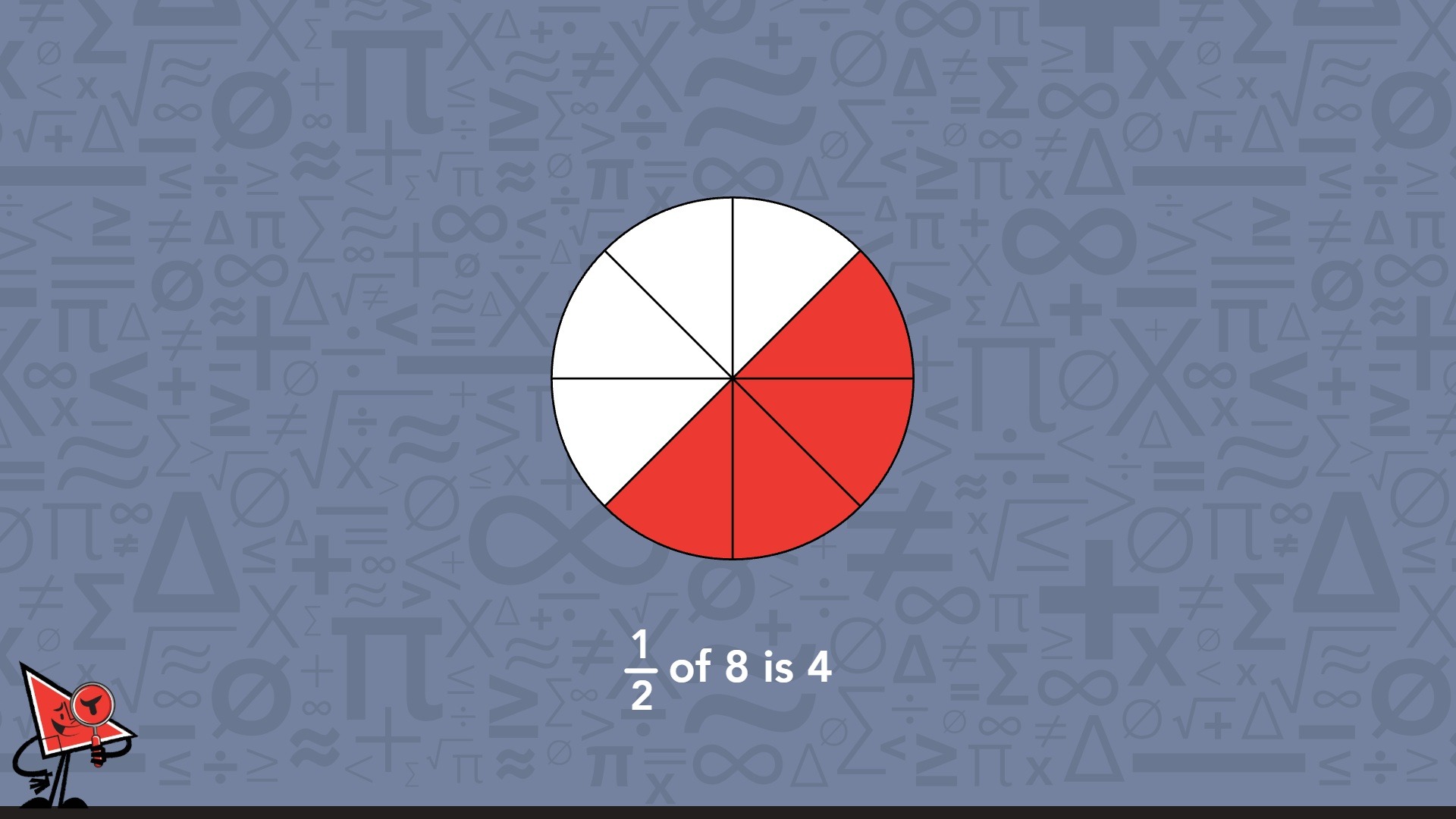
Older children who have learned about decimals can test the statement using 8 × 0.5. Since 0.5 represents one half, 8 × 0.5 = 4. The result is smaller than 8, which shows that multiplication doesn't always increase a number.
Your responses can also influence how willing your child feels to engage with challenging maths. During conversations or schoolwork, you can:
-
Recognise specific progress. Instead of offering general praise, acknowledge something your child has done, such as explaining a method clearly or recognising an error in their calculation.
-
Respond constructively to mistakes. If an answer is incorrect, invite your child to explain their approach so you can understand where the difficulty arose. You can return to an example from their schoolwork if they need a reminder.
-
Make room for questions. Encourage your child to share what seems confusing or surprising, and take an interest in what they want to know. Their questions may reveal ideas they'd like to understand better.
Your child may also become more willing to ask questions when you show that adults don't have all the answers either. You can acknowledge uncertainty and work through an unfamiliar maths question together, so your child sees that mathematical curiosity can continue beyond the classroom.
📕 You May Also Like: Why Maths Confidence Matters More Than Maths Grades
3 Habits That Can Help Your Child Learn Maths More Independently
Help your child become more independent in maths by gradually giving them greater responsibility for their work.
EEF's guidance on metacognition and self-regulated learning explains how children can learn to manage their own learning through planning, checking their progress and reflecting on their work. At home, you can help your child practise each part of that process:
-
Plan before solving a problem. Your child can read a question carefully, identify what they need to find and select a suitable method. Younger children may need help with the first step, while older children can take more responsibility for deciding how to proceed.
-
Check their work as they go. Children can check calculations using estimation, inverse operations or another suitable method. For example, 49 × 6 should give an answer close to 300 because 50 × 6 = 300. Since 49 is slightly smaller than 50, the exact answer should also be slightly smaller than 300. Your child can use that comparison to judge whether their result is reasonable.
-
Review what they've learned. After completing a task, your child can consider which methods worked well and which questions they found difficult. They may recognise something they want to practise further or discuss with their teacher.
Your child's independence may vary between familiar and newer topics because their ability to manage a task also depends on what they already understand.
If they continue to find a particular concept difficult across several tasks, you can use their classwork and teacher feedback to identify the skill that needs closer attention. Greater independence develops alongside mathematical understanding, so children may need additional teaching before they can manage certain questions on their own.
Families in our centre’s neighbourhood of Hammersmith can find additional ways to support maths learning, such as:
-
Library's Homework Help sessions
-
The Hammersmith & Fulham Family Learning programme, which offers courses and activities for parents and children
-
And of course, our maths learning centre, Mathnasium of Hammersmith, where children of all skill levels receive personalised, premium-value maths tuition focused on building lasting mastery
Check with each service for current activities and session details.
📕 You May Also Like: How to Talk to Your Child's Maths Teacher About Progress
 Through clear explanations, encouragement and consistent support, our instructors help children become more confident in their abilities and continue making progress in maths.
How Mathnasium Supports Every Child's Maths Progress During the School Year
Mathnasium is a maths-only learning centre dedicated to helping students of all skill levels excel in maths.
The support children receive at home and at school can work alongside dedicated maths instruction. Our instructors help children develop the skills and confidence to approach mathematical challenges, take greater ownership of their learning and continue progressing throughout the school year.
No matter what your child is working towards, we can support them through the Mathnasium Method™, our proprietary teaching approach designed to help children build maths mastery through deep understanding.
Our approach includes:
-
Assessment and a customised learning plan. Every child begins their Mathnasium journey with a diagnostic assessment that identifies their strengths and knowledge gaps. We use those insights to create a bespoke learning plan based on what they already know and what they need to learn next.
-
Teaching for understanding. Our specially trained instructors use mental, verbal, visual, tactile and written techniques to explain how and why maths works, so children develop a deeper understanding of mathematical concepts.
-
Face-to-face instruction. Children work face-to-face with specially trained instructors in a caring and fun group environment, following their own learning plan at a pace that suits them.
-
Confidence and continued progress. Children work through their learning plan from their current level, whether they need to close gaps, keep pace with school maths or move on to greater challenge. As their understanding develops, they can build confidence and continue progressing.
The impact extends beyond the classroom:
-
94% of parents report an improvement in their child's maths skills and understanding
-
93% of parents report their child's improved attitude towards maths after attending Mathnasium
-
90% of students saw an improvement in their school grades
With over 1,250 centres worldwide, including over 40 across the UK, there is likely a Mathnasium centre near you.
Families across Brook Green, West Kensington, Brackenbury Village, Barons Court, Shepherd's Bush, Askew Village and Ravenscourt Park trust Mathnasium of Hammersmith to help their children build lasting maths confidence.
Whether your child is learning to tackle maths problems more independently or needs help with a particular concept, our team can support their progress throughout the school year.
✉️ Click Contact Us to get in touch with Mathnasium of Hammersmith
Not near Hammersmith?
📍 Find a Mathnasium Centre Near You


 020 8264 0180
 07702 667443